How 48V Telecom Power Systems Control Cabinet Heat at 50°C

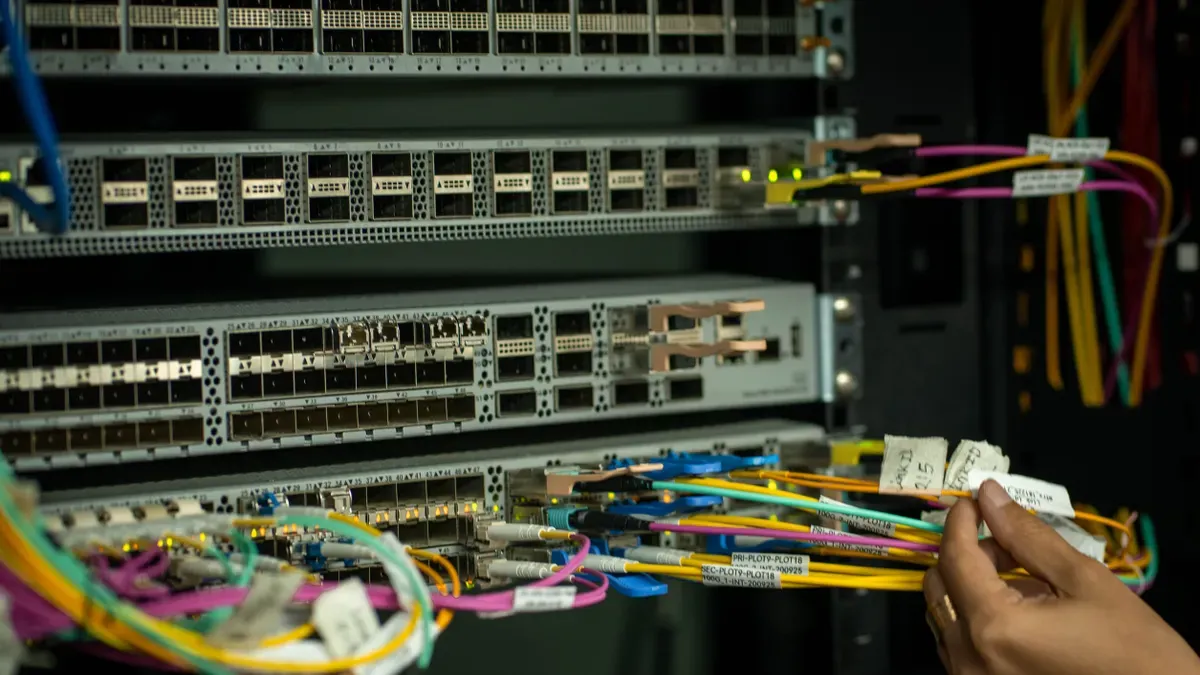
At 50°C ambient, no single method holds a cabinet at the target temperature on its own. Your 48V telecom power systems must combine several defenses at once. Conduction, convection, radiation, and active cooling move heat along four paths. A control layer decides when each path works and how hard it runs, cutting waste. The same 48V DC bus can power in-cabinet fans and controls.
Thermal management starts with the heat itself. You will see where rectifier and battery losses come from, then how passive techniques carry the baseline load. Active cooling covers the peak, and control strategies tie both layers together. Standards and cost trade-offs close the picture.
Key Takeaways
Combine passive and active cooling to manage heat at 50°C ambient.
Reduce internal heat first by using efficient rectifiers and proper battery care.
Use passive cooling for baseline heat and active cooling for peak heat.
Control cooling with sensors and variable fans to save energy and protect equipment.
Match cooling methods to site conditions and standards to avoid overspending.
Heat Sources in 48V Telecom Power Systems
The 48V DC bus is the standard choice for telecom sites. It balances safety, efficiency, and global standardization. The same 48V DC bus can also power in-cabinet cooling units, so one supply feeds both the load and its thermal protection. Before you size any cooling, you need to know where the heat comes from.
Rectifier and Converter Losses
Rectifiers and converters are the dominant continuous heat source. Switching and conduction losses run nonstop while the site is live. Modern rectifier systems in 48V telecom power systems are reported to achieve efficiencies exceeding 96%. That high efficiency keeps power loss and heat generation low, which matters most in dense installations and outdoor deployments. Even so, the remaining loss becomes a steady internal heat load inside a sealed cabinet.
Converters add their own share. Every conversion stage drops a little energy as heat, and those stages stack up. You should treat this continuous load as the base of your total heat load calculation.
Battery Charging Heat
Batteries add a secondary load. Charging and standby operation generate heat, and this load peaks during recharge. Battery temperature matters here. A warm battery ages faster, so you want to hold the battery compartment near 25°C even when the cabinet sees 50°C ambient. Control logic helps: temperature compensation adjusts charging voltage as conditions shift, which limits stress during recharge.
Why 50°C Ambient Shrinks Margins
At 50°C ambient, thermal margins shrink fast. Internal heat load stacks on top of ambient temperature, so the rise inside the cabinet adds to an already high operating temperature. Source-level loss reduction matters before you apply any cooling. Cut the internal heat load first, then let cooling handle the rest. This order protects equipment through high operating temperatures and keeps your total heat load manageable.
Passive Cooling for High-Ambient Outdoor Cabinets
Passive cooling carries the baseline heat load before any fan or compressor starts. You should understand its paths and its limits. This layer sets how much work the active layer must do later.
Heat Sinks and Thermal Paths
Heat leaves a module through conduction first. The baseplate of a rectifier or converter contacts a heat sink or a mounting plate. That plate bolts to the cabinet wall, so heat flows metal to metal into the enclosure shell. A clean, flat contact surface matters here. Gaps, paint layers, and loose fasteners add resistance and slow the path.
Heat-sink fin orientation decides how well the next step works. Vertical fins let air rise freely between them. Horizontal fins trap warm air and stall the flow. You should align fins with the natural upward air path inside the cabinet.
Radiation and natural convection alone cannot hold setpoint at 50°C. The internal heat load stacks on top of a hot ambient, and passive paths shed heat too slowly. They still carry the baseline load, though. That baseline relief shrinks the burden on active cooling.
Cabinet Design and Coatings
Cabinet-level design decides how much heat enters from outside. Double-wall and insulated construction slows solar gain. A sun shield keeps direct sunlight off the main shell. Anti-corrosion powder coating protects the surface from moisture and salt. These choices matter for high ambient outdoor cabinet cooling, because every degree blocked at the wall is a degree the interior never sees.
Sealing cuts both ways. IP55 to IP65 ratings block dust and water, which protects the equipment inside a sealed outdoor enclosure. The same sealing traps heat. This is why passive paths must pair with active cooling in high-ambient conditions.
Climate shapes the design choice. In desert or tropical regions, double-wall cabinets are preferred because solar heat radiation can raise cabinet temperatures to dangerous levels, and double-wall insulation helps prevent overheating. In cold climates, cabinets must retain heat to avoid condensation and freezing; double-wall structures help stabilize internal temperatures and reduce condensation risk. Double-wall cabinets often use advanced coatings and better structural separation to reduce corrosion, with common treatments including powder coating, hot-dip galvanization, and stainless steel construction.
Ambient temperature strongly influences operation. Excessive heat accelerates equipment breakdown, while freezing temperatures harden and deform components. Alternating hot and cold conditions can cause condensation, leading to moisture damage, abrasion, and corrosion of surface coatings. UV exposure and corrosive hazards such as seawater salt degrade external materials. UV-resistant coatings and corrosion-resistant materials such as stainless steel extend cabinet life. A proper heat-load assessment should account for device power consumption, ambient temperature fluctuation, and solar radiation exposure.
ESTEL outdoor telecom cabinets use galvanized steel construction, anti-corrosion powder coating, heat insulation, and IP55–IP65 ratings. These features set the passive thermal baseline before active cooling is added. They give the outdoor electronics cabinet a solid starting point for extreme solar and ambient heat loads.
Active Cooling Options for Outdoor Cabinet Cooling
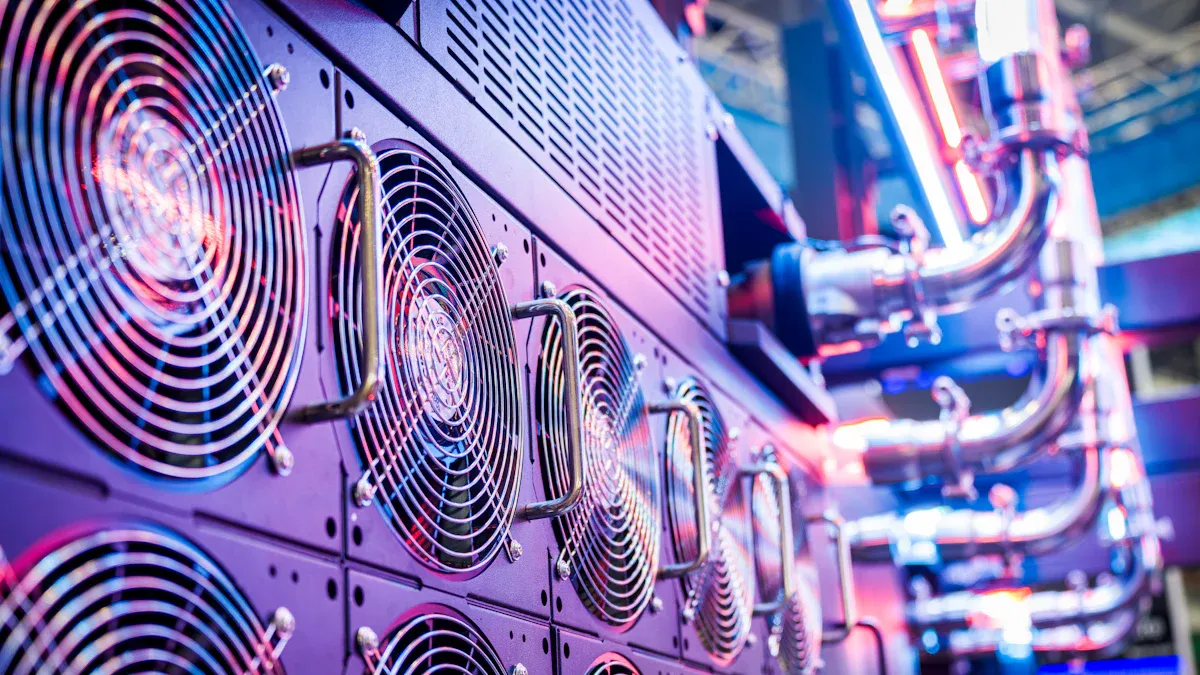
Passive paths carry the baseline. At 50°C ambient, you need an active layer to close the gap. Active cooling comes in several forms, and each one fits a different site profile.
Fan-Assisted Convection and Filtering
Fan-assisted convection pulls outside air through a filtered intake and pushes it across the equipment. This approach draws little power, and it moves a large volume of air for its energy cost. The filter blocks dust, which protects boards and fans alike.
The limitation appears when outside air exceeds the internal setpoint. At 50°C ambient, outside air cannot cool an interior that must stay cooler than the outside. Fans then add heat rather than remove it. You should treat fan-assisted convection as a strong option for mild and moderate sites, and as a supplement elsewhere. It also supports high ambient outdoor cabinet cooling when paired with a closed loop.
Heat Exchangers vs. Air Conditioners
A closed-loop heat exchanger moves heat between two air streams without mixing them. It uses no refrigerant, and it forms a sealed, closed-loop system that keeps dust and moisture outside the cabinet. Dual independent controllers allow continuous operation and precise temperature management. Air-to-air units suit sealed, high-dust sites where filtered intake air is not acceptable.
Compressor-based air conditioners deliver higher lift. They can hold an interior setpoint well below a hot ambient, which matters for enclosure cooling 55c and above. They also draw more power. Thermoelectric cooler assemblies and semi-active closed-loop units sit between these poles as intermediate options.
The data shows where each type fits. At 50°C ambient, a thermoelectric unit delivered 166 W of useful cooling while drawing 259 W. A compressor-based unit delivered 150 W while drawing 340 W. The thermoelectric assembly also weighed 6.3 kg against 17 kg.
Metric (internal/external temp) | Thermoelectric unit | Compressor-based unit |
|---|---|---|
Useful cooling @ L35/L35 | 244 W | 300 W |
Useful cooling @ L35/L50 (50°C ambient) | 166 W | 150 W |
Power usage @ L35/L35 | 290 W | 290 W |
Power usage @ L35/L50 (50°C ambient) | 259 W | 340 W |
Weight | 6.3 kg | 17 kg |
The thermoelectric cooler assembly is up to two times more efficient than the compressor-based unit with proportional control in all test conditions. Overall, the thermoelectric based unit requires less power to maintain the specified set point temperature than a compressor based unit.
ESTEL outdoor telecom cabinets offer air conditioning and heat exchanger systems across 16U, 32U, and 40U configurations. These high-ambient cooling units form the active layer. Heat exchangers fit sealed, dusty sites with moderate loads. Air conditioners fit the hottest loads and the tightest setpoints. The 48v dc bus can feed either type, so one supply serves the load and its cooling.
Temperature Management and Control Strategies
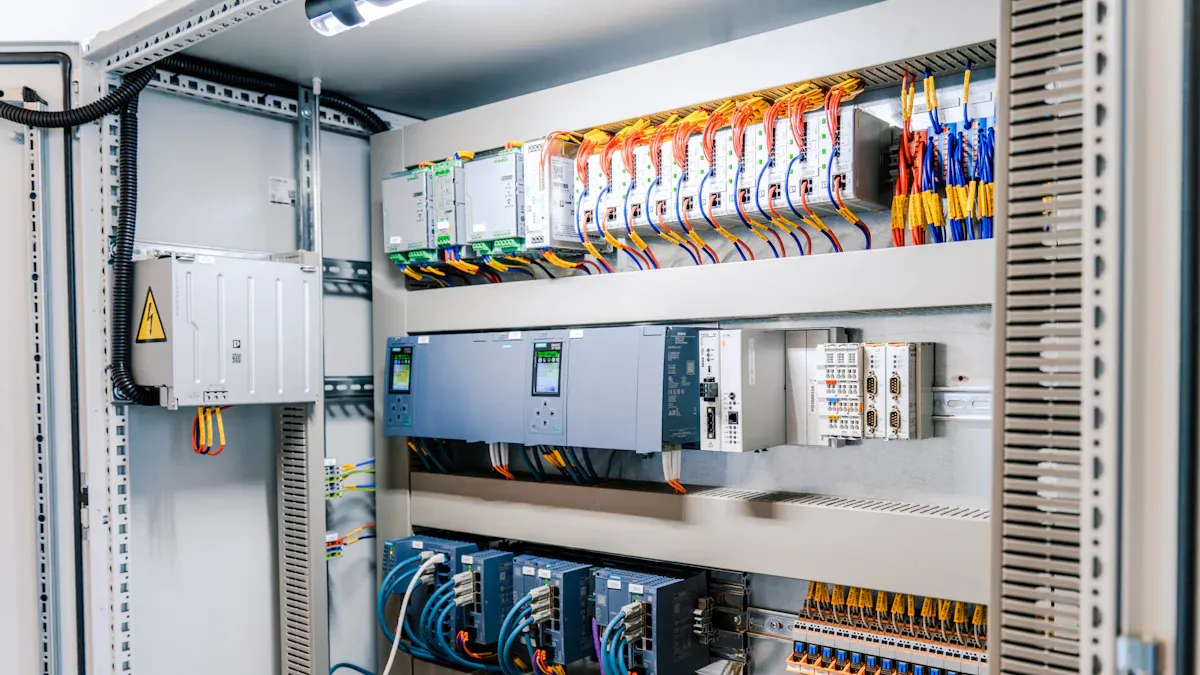
Sensors and logic turn the cooling hardware into a managed system. You gain control over when cooling runs and how hard it works. This layer ties the passive and active paths together.
Sensing and Fan Speed Control
Multi-point temperature sensing gives you a real picture of conditions inside the cabinet. You place sensors at the intake, near the rectifiers, and in the battery zone. Setpoint and hysteresis logic then decide when cooling starts and stops. Hysteresis prevents short cycling, so fans do not switch on and off at every small fluctuation.
Variable fan speed control cuts energy and extends fan life. In outdoor telecom enclosures exposed to fluctuating solar thermal loads, swapping fixed-speed fans for temperature-controlled fans cut enclosure cooling energy by more than 20% and improved battery MTBF. The fan laws explain the gain: a 20% reduction in fan speed yields nearly 50% savings in fan power consumption. Independent testing of EC fans mounted inside the cooling unit produced 18% energy savings. You should specify variable-speed fans for high-ambient conditions, where every watt of cooling counts.
Load Management and Thermal Derating
Control logic can also manage the load itself. You can throttle rectifier output or shed non-critical loads when the internal heat load climbs. This protects equipment from a high operating temperature without adding cooling capacity.
Battery care drives much of this strategy. Batteries operate best below 77°F (25°C). Exceeding this threshold causes battery life to decline rapidly, roughly halving for every 10°C rise. You should maintain battery compartment temperatures below 77°F (25°C) as a working target, and design for a maximum equipment temperature of 95°F while keeping batteries below 77°F. Place batteries at the bottom of the cabinet, where it is cooler, and other equipment at the top. In many cases, a separate compartment for the batteries is necessary to hold the desired zones.
Coordinating Passive and Active Layers
Effective thermal management runs cooling only when needed. The control layer reads temperature, compares it to setpoint, and stages the response. Passive paths carry the baseline. Fans ramp up first. Heat exchangers or air conditioners engage at the peak. This coordination protects network uptime and equipment life across 48v telecom power systems.
Good thermal management also protects the total heat load budget. You avoid oversizing cooling for telecom power systems and avoid running compressors at part load for no reason. The result is a stable temperature profile, a healthy battery temperature, and lower energy use at the site.
Standards, Cost, and Outdoor Telecom Cabinet Selection
Thermal Standards and Ingress Protection
Ingress ratings set the physical rules for any cooling design. You should know what each level actually promises.
IP Rating | NEMA Equivalent | Protection Description |
|---|---|---|
IP55 | NEMA 3R | Dust limited; protected against water spray (low-pressure jets) |
IP65 | NEMA 4 | Dust-tight; protected against water jets from all directions |
IP65 (per EN 60529) provides dust-tight protection and resistance to water jets from all directions, suitable for nearly all outdoor telecom integrations. IP55 offers dust protection and low-pressure water spray resistance but is far less stringent than IP65 and is typically advised against where IP65 is required. For heat-sensitive electronics, sealed and filtered fan modules or thermostatic air-intake devices are needed to maintain ingress protection while managing internal heat loads.
A sealed shell traps heat, so the rating and the cooling choice move together. ISO9001-backed quality control keeps that pairing consistent from unit to unit. Your design must also state the acceptable equipment temperature range, the equipment heat load, the maximum ambient temperature, the noise level, and room for future expansion.
Matching Cooling Cost to Site Conditions
Cost follows the cooling method, and the gap is wide.
Cost Category | Heat Exchanger (passive) | Air Conditioner |
|---|---|---|
Typical unit price | $200–$600 | $500–$2,500 |
Annual energy cost (@ $0.12/kWh) | $50–$85 | $300–$1,050 |
Annual maintenance | $50–$100 | $150–$400 |
10-year total cost of ownership | $1,200–$2,450 | $5,500–$17,500 |
Heat exchangers draw 15–80 W against 300–2,000 W for air conditioners. That advantage holds only where passive cooling can hold the setpoint. Natural cooling suits loads up to 300 W, fan cooling fits 500 W and above, and liquid cooling serves 10 kW and higher. Right-size against the worst-case ambient temperature and the load profile, and you avoid overspend.
ESTEL supplies integrated outdoor telecom cabinets and related equipment meeting international standards. Final cooling selection should follow site conditions, load profile, and standards requirements rather than one universal answer. For enclosure cooling 55c sites, confirm the thermal budget before you commit.
You now have the full picture. Passive paths carry baseline heat, active cooling covers the 50°C peak, and control logic coordinates both. That coordination protects components and holds battery temperature near its target.
No single method wins everywhere. Site conditions, load profile, and standards requirements drive the choice. Match the method to the site, and you avoid overspend.
For engineers sizing 48v telecom power systems, start with a heat-load budget. Confirm the worst-case ambient, then select cooling to match. Good thermal management follows from that order. ESTEL Outdoor Telecom Cabinet options in 16U, 32U, and 40U configurations support integrated builds, with air conditioning and heat exchanger systems for 48v sites.
FAQ
Why does passive cooling alone fail at 50°C ambient?
At 50°C ambient, internal heat stacks on top of an already hot environment. Conduction, convection, and radiation shed heat too slowly to hold setpoint. Passive paths still carry the baseline load. You need active cooling to close the gap.
Which active cooling option fits my site?
Match the method to the site. Heat exchangers suit sealed, dusty sites with moderate loads. Air conditioners handle the hottest loads and tightest setpoints. Fan-assisted convection works well at mild sites. Each cooling option fits a different profile.
How do I protect batteries in a hot cabinet?
Hold the battery compartment near 25°C even when the cabinet sees 50°C ambient. Place batteries at the bottom, where it is cooler. Keep that temperature stable to slow battery aging.
Should I choose IP55 or IP65?
IP65 gives dust-tight protection and resistance to water jets from all directions. IP55 blocks dust and low-pressure spray. A sealed shell traps heat, so pair the rating with active cooling sized for the load.
How does control logic reduce energy use?
Multi-point sensors and hysteresis logic stage the response. Fans ramp up first, then heat exchangers or air conditioners engage at the peak. Variable fan speed cuts cooling energy. This coordination runs cooling only when needed and protects uptime. Good cooling control protects both equipment and batteries.
See Also
Ensuring Ideal Temperature Control for Outdoor Telecom Cabinet Systems
Selecting the Optimal Cooling Approach for ESTEL Telecom Cabinet Solutions
Outdoor Communication Applications Rely on Specialized Telecom Cabinet Air Conditioning
Guaranteeing Consistent Power Supply for Telecom Cabinet Operations
Evaluating and Applying Various Cooling Techniques for Telecom Cabinets
CALL US DIRECTLY
86-13752765943
3A-8, SHUIWAN 1979 SQUARE (PHASE II), NO.111, TAIZI ROAD,SHUIWAN COMMUNITY, ZHAOSHANG STREET, NANSHAN DISTRICT, SHENZHEN, GUANGDONG, CHINA
