48V DC Power Remote Monitoring Made Simple

You can remote monitor a -48V DC power plant without a complicated setup. Watch the critical parameters, install integrated monitoring devices, and rely on standard protocols. That simple formula works.
Truck rolls drain your budget. Blind spots leave you guessing about site conditions. Alarm overload buries the one alert that matters. You deserve a better way.
This walkthrough gives you practical, cost-effective guidance. You will learn how to track 48V DC power health, pick the right hardware, and set up reliable communication. You will also see how to handle alarms, logging, compliance, and costs. Each step stays simple and manageable.
Key Takeaways
Track voltage, current, breaker status, battery voltage, and temperature to catch problems early.
Choose integrated monitoring devices to save money and simplify installation.
Use standard protocols like SNMP or Modbus over Ethernet for reliable data communication.
Set alarm thresholds from real data to avoid alarm fatigue and focus on important alerts.
Start with one site, prove the value, then expand to more sites in phases.
Key Parameters for 48V DC Power
Voltage, Current, and Battery Basics
Continuous visibility into plant health prevents downtime. You see a problem develop before it becomes an outage. That is the core value of continuous monitoring of dc power sources.
Track real-time voltage, current, and breaker status first. These three readings tell you whether your 48v dc power plant is delivering clean output. Watch for voltage fluctuations outside your set window. A drifting voltage often signals a failing rectifier or a loose connection. Breaker status confirms which circuits carry load and which have tripped. Battery basics matter just as much. Battery voltage reveals charge state and string health. A sagging battery voltage under load points to aging cells. You catch that early and schedule a replacement on your terms.
Temperature and Alarm Status
Environmental parameters protect your equipment from conditions that electrical readings miss. High temperature shortens battery life and stresses rectifiers. Humidity invites condensation and corrosion. Smoke and water detection give you the earliest possible warning of fire or flooding. These sensors turn a blind spot into real-time data you can act on.
Which parameters are must-have? Voltage, current, breaker status, battery voltage, and temperature belong on every site. Smoke and water detection are strong additions for unmanned locations. Humidity is nice-to-have for most indoor rooms. This layered approach keeps dc power monitoring practical. It also keeps dc power monitoring in industrial applications affordable, where many sites share one budget.
DC Power Monitoring Hardware
Sensors, Controllers, and Gateways
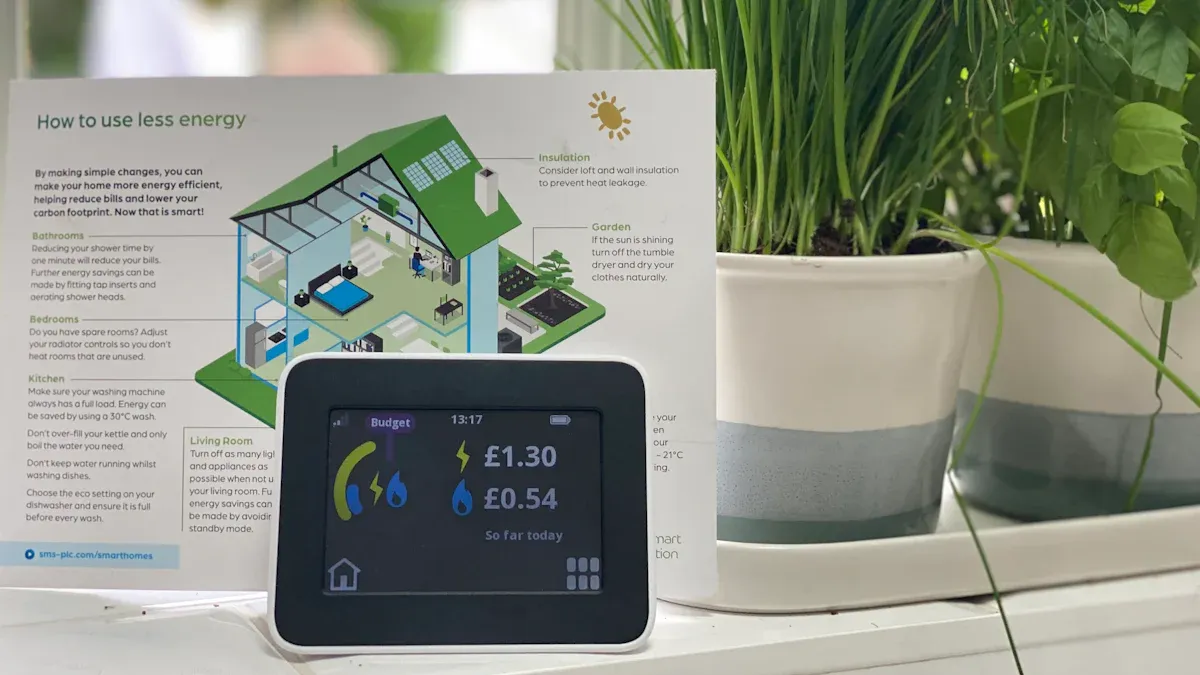
A simple hardware architecture has three layers. Sensors sit closest to the equipment. They measure temperature, humidity, smoke, water, and contact status. Controllers collect sensor readings and decide when a value crosses a threshold. The gateway moves that data onto your network. Think of the chain as sensor to controller to gateway to your management platform. Each gateway passes data upward, so one gateway can serve many sensors at a site.
This layered design keeps dc power monitoring easy to expand. You add a sensor without replacing the gateway. You add a gateway without rewiring every sensor. The controller, gateway, and internet connection form the backbone of any remote monitoring setup.
ESTEL's Environment Monitoring System shows how one integrated unit can cover all three roles. It supports RS485 and RS232 communication for direct integration. High-precision sensors handle temperature, humidity, smoke, and water detection. Relay output alarms trigger immediate notification. The unit runs on 9–52V DC or AC supply, which suits a 48v dc power plant directly. It carries ISO9001 and CE certification and costs $215–500.
Comparison Criteria That Matter
Judge hardware on four fronts: technical performance, application fit, regulatory compliance, and cost. The table below lists the specifications worth checking before choosing the right dc power monitor.
Specification | What it tells you |
|---|---|
Transient response | How fast the unit settles after a load or setting change |
Setting resolution | The smallest selectable change in voltage or current |
Readback accuracy | How close measured values sit to the true output |
Readback resolution | The smallest change the unit can discern |
Remote sense | Whether cable drop is compensated at the load |
Temperature stability | Accuracy drift as ambient temperature moves from room conditions |
Load regulation | Output stability under changing load |
Technical performance separates units built for precise monitoring and remote control from basic models. Application fit decides the rest. A small site needs few inputs; a large plant needs many. Regulatory compliance matters when your buyer or insurer asks for proof. ISO9001 and CE certification answer that question cleanly. Cost closes the loop. An integrated device often beats several separate units on total spend.
No single option wins everywhere. A basic sensor set fits a single cabinet. An integrated system fits multi-site dc power monitoring in industrial applications. A high-end unit fits labs that demand tight readback accuracy. Match the tool to the job, and monitoring stays accurate and reliable monitoring without overspending.
Remote Monitoring Communication Methods

SNMP, Modbus, and Ethernet
Each protocol fits a different job. SNMP sends data over UDP rather than TCP. That design makes it faster, simpler, and more efficient than the TCP-based Modbus IP stack inside Ethernet-enabled devices. Use SNMP when you want your dc power monitor to report into an existing network management platform. Modbus earns its place in industrial SCADA and residential solar contexts. Engineers there trust its speed and reliability for monitoring and remote control. Ethernet carries either protocol across your site network. The table below shows what a solid Ethernet link delivers for dc power monitoring.
Metric | Value / Specification |
|---|---|
Theoretical bandwidth (Gigabit Ethernet) | 1 Gbps |
Actual data transmission rate | Exceeds 800 Mbps |
Error rate under strong EMI | Below 0.001% |
Surge withstand (IEC 61000-4-5 EMC) | ±6 kV lightning surges |
Network availability | 99.999% |
Fault self-healing | Millisecond-level via RSTP/MSTP |
Serial links tell a different story. Rates generally stay below 100 kbps, and a full data transfer can take several hours. Signal attenuation in complex electromagnetic environments pushes error rates above 5%. Those devices also lack self-healing, which raises data-loss risk. Keep serial for short local runs and let Ethernet or a gateway handle the long haul.
When Cellular Fits Best
Cellular wins at remote or hard-to-reach sites. A mountain cabinet, a roadside shelter, or a rural telecommunications hut often has no wired network. A cellular gateway bridges that gap. It forwards sensor data over the mobile network to your platform. You gain 24/7 remote monitoring without trenching cable or renting a line.
Cellular also suits remote generator monitoring. A gateway at the generator reports runtime and fuel status alongside your 48v dc power readings. Pair it with telemetry gateways for sites that need remote generator monitoring systems. Standard protocols keep this simple. Your gateway speaks SNMP or Modbus, so the data lands in tools you already run. That integration turns scattered sites into one telemetry view, and it keeps every gateway easy to swap or upgrade.
Alarms and Logging for Your DC Power Monitor
Thresholds Without Alarm Fatigue
A good alarm tells you something you must act on. A noisy alarm trains you to ignore the panel. Set thresholds from real data, not from guesswork at commissioning. Collect several weeks of readings first, then place warning and critical limits near the upper and lower edges of normal behavior. Widen the sampling window so a brief spike does not fire an alert. Define a lower recovery threshold too, which stops a value from flapping between states.
Track a few simple benchmarks to keep alarm volume healthy.
Benchmark | Target |
|---|---|
Under 6–12 alarms per operator per hour | |
Alarm flood rate during upset conditions | About 10 alarms per 10-minute window at most |
Standing alarms | Under roughly 5% of total configured alarms |
Use dynamic limits when load or season changes the normal range. Review trigger history and widen setpoints that fire on ordinary operation. Shelve an alarm only with a written reason and an automatic expiry. This discipline supports fault detection and safety without drowning your team. ESTEL's Environment Monitoring System includes relay output alarms, so a threshold breach triggers immediate notification through a dry contact your existing equipment already understands.
Logging That Supports Troubleshooting
Event logs record what changed and when. Data logs record the trend. Together they let you detect anomalies after the fact and confirm a fix. When a rectifier trips at 3 a.m., the event log shows the breaker state and the voltage dip that preceded it. The trend log shows whether the battery had been sagging for days. That combination turns a mystery into a timeline.
Logs also feed preventive maintenance. Review monthly trends to spot a battery string losing capacity or a cabinet running warmer each week. Pair logging with monitoring and remote control so you can act on what the record reveals. A simple routine works well: check active alarms daily, review trends weekly, and audit alarm volume each quarter. Adjust thresholds from what the logs teach you. This loop keeps continuous monitoring of dc power sources useful rather than noisy, and it makes every remote monitoring decision easier to defend.
Compliance and Cost Control for Monitoring
Standards and Reporting Basics
Compliance sounds heavy. In practice, two certifications answer most buyer and insurer questions. ISO9001 covers quality management. It tells your customer that the supplier controls its production process. CE marks a product as meeting European health, safety, and environmental requirements. Together they give you a paper trail without a compliance department.
Keep reporting simple. Store the certificate for each device with your site documentation. Note the standard and the certificate number in your asset register. When an auditor or insurer asks, you hand over one page. That small habit supports dc power monitoring in industrial applications, where proof of quality often decides a contract. Treat the paperwork as an enabler, not a burden.
Keeping the Budget in Check
Integrated devices cut total cost. One unit that handles sensors, control, and relay alarms replaces several separate boxes. You buy fewer parts, run fewer cables, and spend less on installation labor. You also maintain one device instead of five. ESTEL's Environment Monitoring System shows this pattern: one unit covers temperature, humidity, smoke, and water detection at $215–500.
Budget for the whole picture, not just the hardware price. Add installation time, cabling, and the hours your team spends on setup. A cheap sensor set can cost more once you count the extra wiring and configuration. A phased rollout protects the budget further. Start with one site, prove the value, then expand. This approach keeps monitoring affordable and keeps the role of dc power monitoring in industrial applications clear: fewer devices, lower spend, better visibility.
Step-by-Step Implementation Guide
Plan, Install, and Configure
A clear plan keeps the project small and predictable. Work through these steps in order.
List every site and rank each one by criticality. Pick the site with the highest risk as your pilot.
Write down the parameters you will watch at that site: voltage, current, breaker status, battery voltage, and temperature. Add smoke and water detection for unmanned cabinets.
Choose one integrated device that covers those inputs. Confirm the supply range suits your 48v dc power plant and the unit carries ISO9001 and CE certification.
Map the signal path before you touch a cable. Sensors feed the controller, the controller feeds the gateway, and the gateway reaches your management platform.
Mount the hardware inside the cabinet, away from heat sources and rectifier exhaust. Keep sensor leads short and route them clear of power cables.
Wire the sensors to the controller and connect the gateway to your network. Label every cable at both ends.
Configure thresholds, IP addresses, and protocol settings. Set warning and critical limits from your first weeks of readings, not from guesswork.
The gateway deserves extra attention during configuration. Give each gateway a fixed address, record its serial number, and confirm it forwards data to the platform before you leave the site. A gateway that reports correctly on day one saves hours later.
Test, Document, and Maintain
Testing proves the system works before an outage tests it for you. Trigger each sensor by hand and confirm the alarm reaches your platform. Pull a breaker and watch the event appear in the log. Verify the relay output fires on a threshold breach. Repeat the check on every input, then record the results.
Documentation turns a one-time install into a repeatable process. Store the site diagram, device list, certificate numbers, threshold settings, and gateway addresses in one folder. Note the firmware version on each unit. A technician who visits next year should understand the setup in minutes.
Ongoing maintenance keeps reliability high. Check active alarms daily, review trends weekly, and audit alarm volume each quarter. Use the logs to drive preventive maintenance, such as scheduling a battery replacement before capacity fades. Pair monitoring and remote control so you can adjust settings without a site visit.
Roll out in phases. Start with one site or one controller, prove the value, then expand to the next tier. Each new gateway follows the same tested pattern. This staged path keeps dc power monitoring affordable and keeps remote monitoring simple. The same routine extends to remote generator monitoring at sites that run backup power, and it scales cleanly to remote generator monitoring systems across a whole region. A dc power monitor you trust at one site becomes the template for every site after it.
Remote monitoring of 48V DC power stays simple when you follow one formula. Watch the critical parameters. Choose integrated hardware. Use standard protocols. Keep alarms and logging practical. Stay compliant within budget. Each choice removes a moving part and a truck roll.
A phased rollout keeps the project manageable and cost-effective. Start with one site or one controller. Prove the value. Then expand to the next tier. Every new gateway follows the same tested pattern.
You now have a practical path. Begin with one site this month. Add the next site once the first runs clean. That is how monitoring a 48V DC plant becomes simple.
FAQ
What does a 48V DC power monitor actually measure?
It tracks voltage, current, breaker status, and battery voltage. Temperature, humidity, smoke, and water sensors add environmental coverage. Together these readings show plant health in real time and catch problems before they cause an outage.
Can I install a monitoring unit on an existing -48V plant?
Yes. Choose a device that accepts a wide supply range. ESTEL's Environment Monitoring System runs on 9–52V DC or AC, so it connects directly to a 48V plant. Relay output alarms then tie into equipment you already own.
Which protocol should I pick for remote sites?
Use SNMP or Modbus over Ethernet when a wired network reaches the site. Pick a cellular gateway for mountain cabinets, roadside shelters, or rural huts with no wired line. Standard protocols keep integration simple either way.
How much does a basic setup cost?
An integrated unit such as ESTEL's Environment Monitoring System costs $215–500. That single device covers temperature, humidity, smoke, and water detection. Add installation time and cabling to your budget for a full picture.
How do I keep alarm volume under control?
Set warning and critical limits from several weeks of real readings. Add a recovery threshold so values stop flapping. Review trigger history each quarter and widen setpoints that fire during ordinary operation. This discipline keeps monitoring useful rather than noisy.
See Also
Ways to Guarantee Best Monitoring for Outdoor Telecom Cabinets
How ESTEL Maintains Correct Voltage Levels for Communication Cabinets
Examining the Amperage Requirements of Communication Cabinet Power Supplies
Methods to Secure Dependable Power Supply in Telecom Cabinets
Understanding Supervision System Integration in ESTEL Outdoor Cabinets
CALL US DIRECTLY
86-13752765943
3A-8, SHUIWAN 1979 SQUARE (PHASE II), NO.111, TAIZI ROAD,SHUIWAN COMMUNITY, ZHAOSHANG STREET, NANSHAN DISTRICT, SHENZHEN, GUANGDONG, CHINA
