Outdoor telecom cabinet thermal management at 50°C by 48V telecom power systems

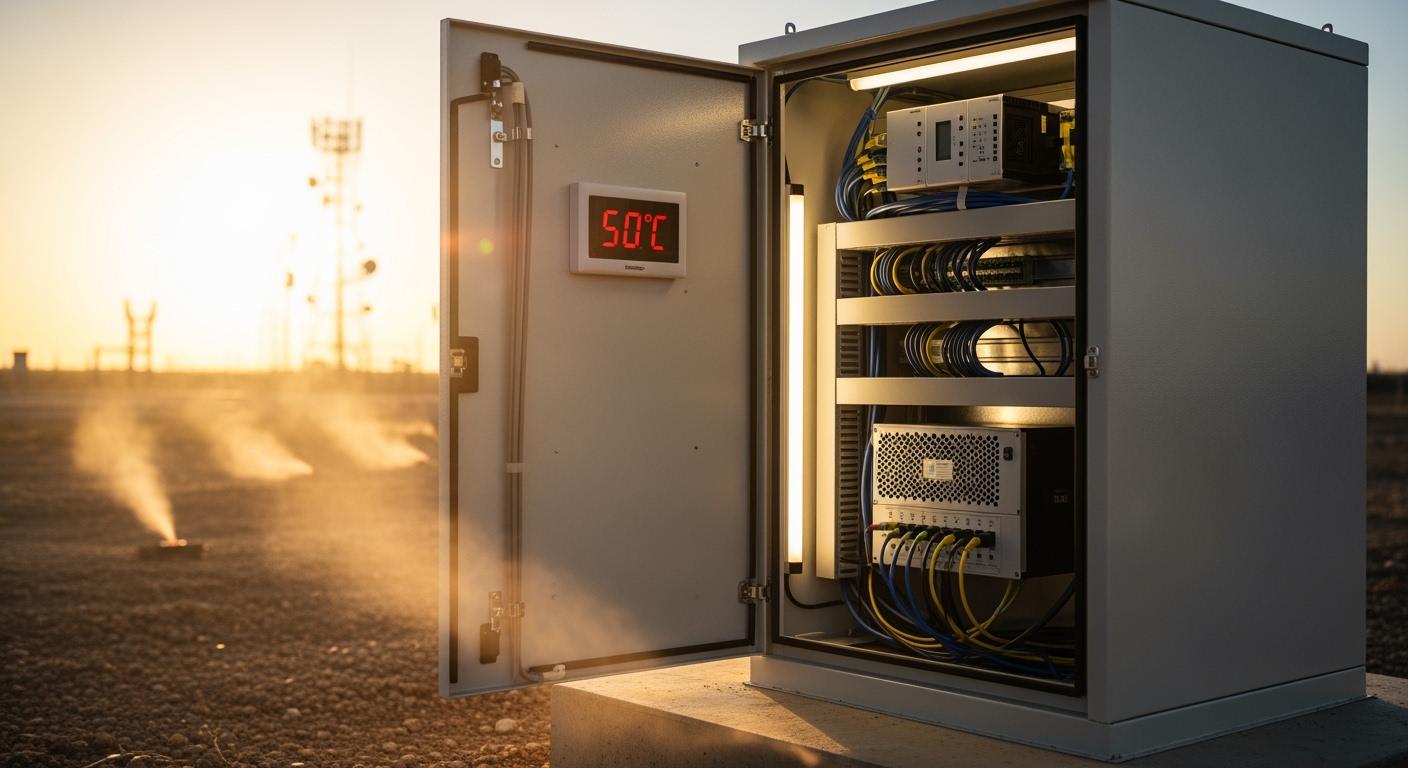
You face tough challenges when your outdoor telecom cabinet operates at 50°C. High temperatures can cause malfunctions in routers and switches, lag in transmissions, instability in device output, and even permanent damage to internal parts. Maintenance costs and downtime rise quickly. Using a 48V telecom power system helps you manage heat more efficiently. Advanced cooling methods, proper integration, and best practices keep your equipment safe. ESTEL offers reliable solutions that protect your network in harsh environments.
Key Takeaways
High temperatures can damage telecom equipment. Use a 48V power system to reduce heat and improve efficiency.
Combine advanced cooling methods with your power system. This prevents overheating and extends equipment life.
Regular monitoring of temperature and humidity is crucial. It helps detect issues early and reduces downtime.
Implement preventive maintenance practices. Regular checks and cleaning keep your cabinet running smoothly in extreme heat.
Choose reliable brands like ESTEL for robust solutions. They offer features that protect your equipment in harsh environments.
Thermal Challenges at 50°C
Heat Stress on Equipment
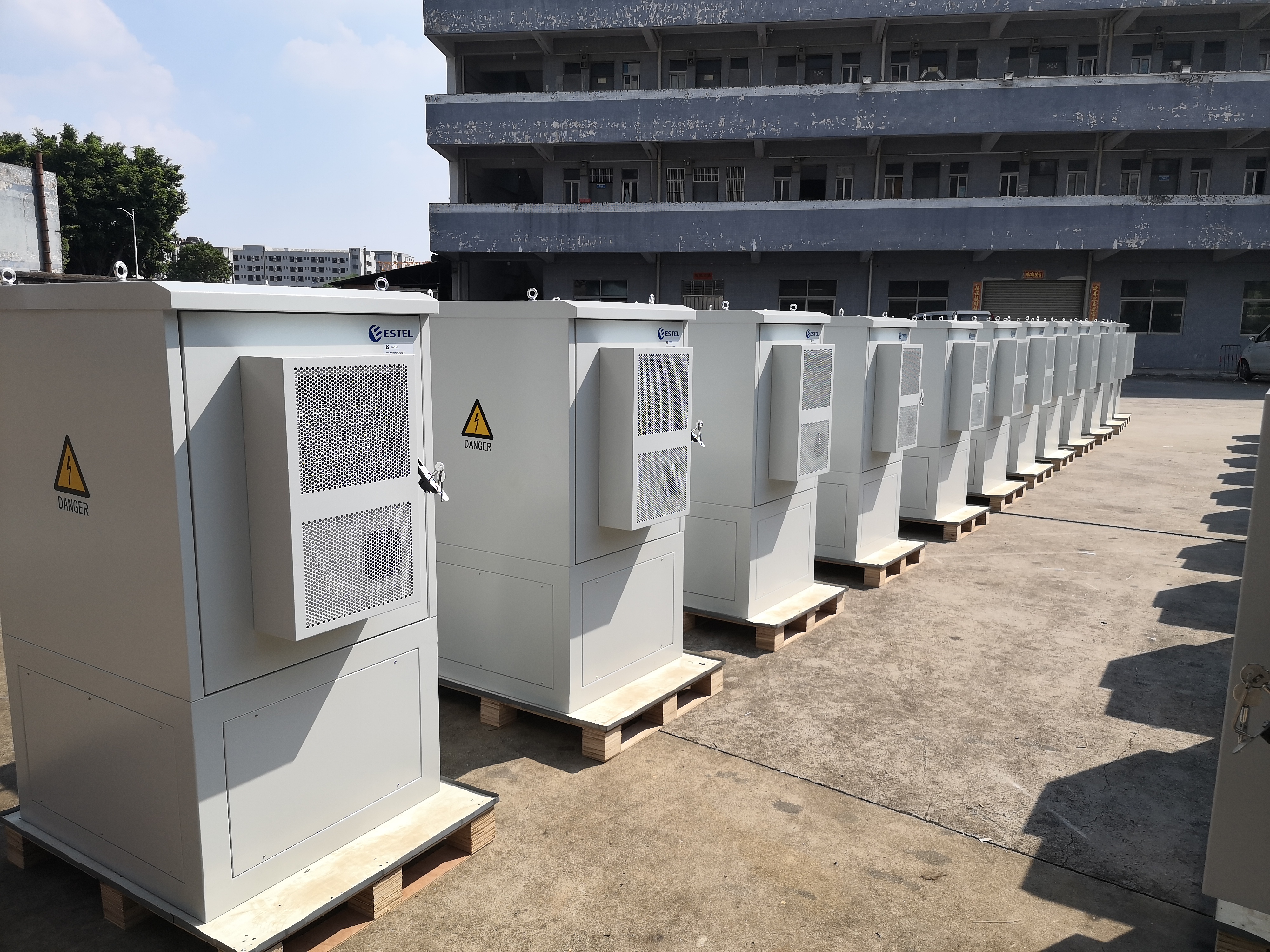
When your outdoor telecom cabinet faces 50°C, equipment inside experiences intense heat stress. High temperatures speed up the aging of electronic parts and batteries. You may see batteries overheat, which can lead to thermal runaway or even fires. Overcharging in hot conditions damages battery cells and shortens their lifespan. Humidity and heat together cause corrosion and chemical breakdowns. The table below shows the main risks you face:
Risk Type | Description |
|---|---|
Accelerated Wear | High temperatures lead to faster degradation of telecom equipment. |
Thermal Runaway | Batteries may experience thermal runaway, risking fires and toxic gas release. |
Overcharging Issues | Excess heat from overcharging damages battery components and shortens lifespan. |
Environmental Factors | High humidity can accelerate battery aging and corrosion. |
Mechanical Failures | Increased temperatures raise the likelihood of mechanical failures. |
Chemical Degradation | High heat can cause chemical breakdown in materials, affecting reliability. |
Safety Hazards | Elevated temperatures pose safety risks, including potential fires. |
Environmental Impacts
You must also consider how the environment affects your cabinet’s cooling. Extreme heat, humidity, and dust all play a role. Dust blocks airflow and reduces cooling efficiency. High humidity causes condensation, which leads to corrosion. Solar radiation adds more heat to the cabinet. The table below highlights these environmental stressors:
Environmental Stressor | Impact on Telecom Cabinets |
|---|---|
Extreme Ambient Temperatures | Contributes to heat buildup and potential equipment failure. |
High Humidity | Can lead to condensation and corrosion of components. |
Dust Accumulation | Blocks airflow and cooling, exacerbating heat issues. |
Other factors, such as reduced air density at high altitudes, make cooling less effective. Lower atmospheric pressure can also increase the risk of electrical discharge. You need enhanced ventilation and proper insulation to manage these challenges.
Downtime Risks
Thermal management failures can lead to costly downtime. If your equipment overheats, you may face service interruptions. Companies often pay fines for not providing reliable service, especially if emergency services are affected. A single outage can cost over $100,000, and some cases have reported losses above $1 million. For example, one operator estimated a refund of CAD 150 million after a major network outage. Using a 48V telecom power system with proper cooling helps you avoid these risks and maintain reliable service.
48V Telecom Power System Role
Power Efficiency and Heat
You want your outdoor telecom cabinet to run cool and efficient, especially at 50°C. The 48V telecom power system helps you achieve this by reducing energy loss during power conversion and distribution. Less energy loss means less heat inside your cabinet. Here are some key benefits you get from using a 48V telecom power system:
Lower energy loss leads to less heat generation.
High-efficiency rectifiers can reach up to 96% efficiency, which keeps energy waste and heat output low.
Lower current draw simplifies wiring and improves thermal management.
Power supply efficiency can reach up to 98%, minimizing heat buildup.
Battery backup works smoothly, so you avoid extra heat from frequent switching or faults.
A telecom company reported a 15% improvement in power efficiency after switching to high-efficiency converters. This change led to cooler cabinets and more reliable equipment.
Integration with Cooling
You can further improve thermal management by combining your 48V telecom power system with advanced cooling technologies. Intelligent airflow, heat sinks, and even liquid cooling work together to keep your cabinet at a safe temperature. This integration protects sensitive components and extends the life of your equipment. When you use these systems together, you prevent overheating and reduce the risk of downtime.
Tip: Pairing efficient power systems with smart cooling gives you the best defense against extreme heat.
ESTEL System Advantages
ESTEL designs its telecom power systems to perform reliably in harsh environments. You get robust features that help your equipment survive high temperatures, humidity, and altitude. The table below highlights some of the key features you can expect from ESTEL's solutions:
Feature | Description |
|---|---|
Operating Temperature Range | –40℃ to +65℃ |
Humidity Tolerance | 5–95% non-condensing humidity |
Altitude Capability | Stable operation at altitudes up to 3000m |
Design | Modular architecture for scalability and robustness |
With ESTEL, you gain a modular design that makes scaling and maintenance easy. You also benefit from natural cooling, which reduces the need for extra fans or air conditioners. These features help you maintain reliable operation, even when outdoor temperatures soar.
Thermal Management Solutions
Passive Cooling Methods
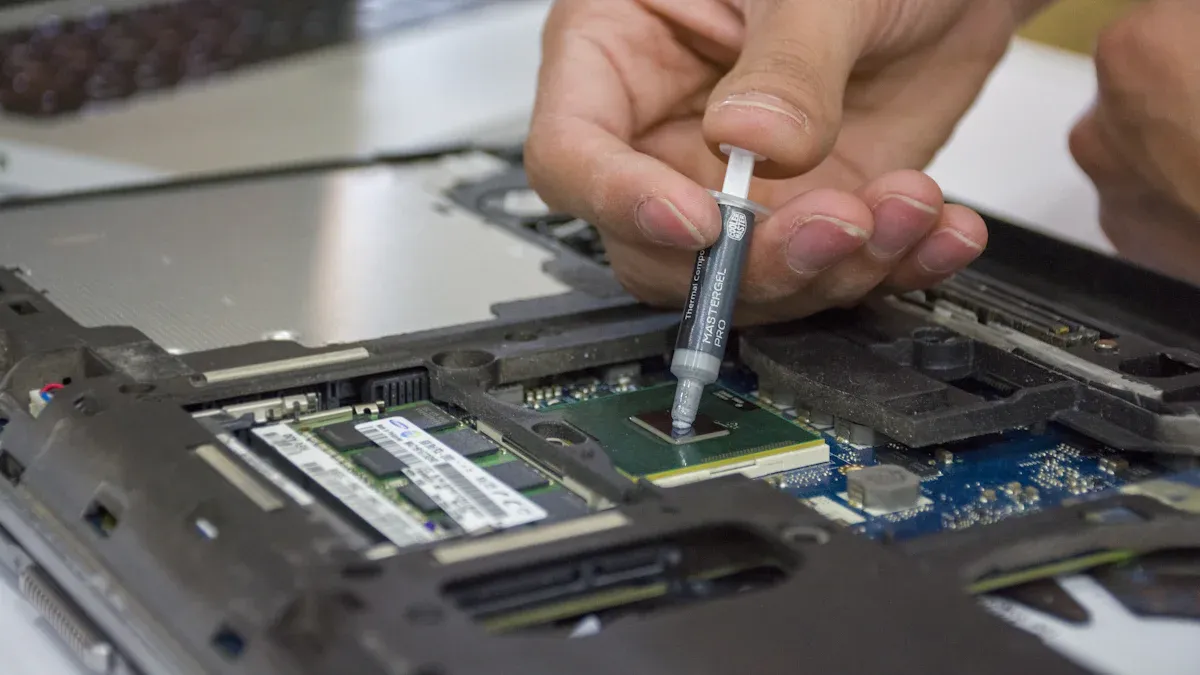
You can use passive cooling methods to manage heat inside your outdoor telecom cabinet. These methods do not require extra energy. Insulation helps keep the cabinet cool by blocking heat from the sun. Heat sinks draw heat away from sensitive components. Ventilation slots allow hot air to escape and cooler air to enter. You can also use reflective coatings on the cabinet surface to reduce heat absorption. These simple steps help you maintain safe temperatures and protect your equipment.
Note: Passive cooling works best in mild climates or as a supplement to active cooling in extreme heat.
Active Cooling Technologies
Active cooling technologies play a key role when temperatures reach 50°C. You can use fans, air conditioners, and heat exchangers to remove heat quickly. Fans circulate air and prevent hotspots. Air conditioners lower the cabinet temperature, but they use more energy. Heat exchangers transfer heat from inside the cabinet to the outside, using natural or forced convection.
Recent advancements have made active cooling more efficient. Compact heat exchangers save space and improve performance. Materials like graphene and enhanced polymers boost conductivity and durability. Eco-friendly exchangers use less energy and produce less noise.
A comparison of cooling solutions shows their strengths:
Solution Type | Cooling Capacity (kW) | Energy Efficiency (EER) | Noise Level (dB) |
|---|---|---|---|
Active Heat Exchanger | 5.0 | 3.5 | 40 |
Passive Heat Exchanger | 4.0 | 2.8 | 30 |
Thermal Management System | 6.0 | 4.0 | 35 |
Refrigerated Equipment | 7.5 | 3.2 | 50 |
Eco-Friendly Exchanger | 5.5 | 3.8 | 38 |
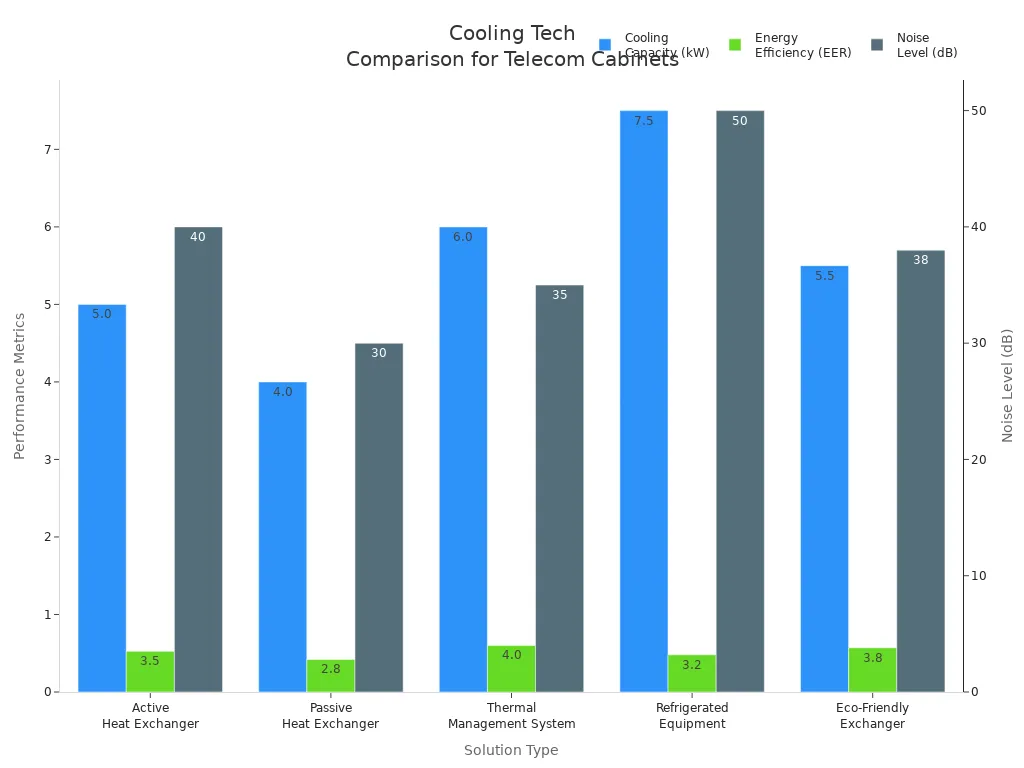
You can choose heat exchangers for better energy efficiency and lower environmental impact. They use natural heat transfer and keep cabinet temperatures close to the outside temperature. Their closed-loop design protects your equipment from dust and moisture. Studies show that heat exchangers reduce the need for air conditioning and lower electricity costs.
A recent report shows that rising temperatures can reduce equipment lifespan by up to 30%. Reliable cooling solutions help you avoid this risk and keep your telecom cabinet running longer.
Airflow and Cabinet Design
Optimizing airflow inside your cabinet is essential for safe operation. Proper ventilation lets heat escape and prevents hotspots. You can use fans and filtered ventilation systems to improve airflow. This keeps temperatures stable and protects your equipment.
Evidence Description |
|---|
Proper ventilation ensures heat dissipates effectively. Fans and filtered ventilation systems improve airflow, preventing hotspots inside the cabinet. |
Optimizing airflow with fans and ventilation systems helps maintain stable temperatures and protect your equipment. |
Cabinet design also affects heat dissipation. You can use natural convection by placing vents at the top and bottom. Hot air rises and exits through upper vents, while cooler air enters from lower vents. Forced convection uses fans or blowers to move air and remove heat faster.
Natural Convection: Hot air rises and cooler air enters through lower vents.
Forced Convection: Fans or blowers move air and enhance heat removal.
You should select cabinets with effective heat dissipation and well-designed ventilation systems. Material choice matters too. Galvanized steel resists corrosion and helps transfer heat away from the cabinet. A well-designed cabinet keeps your equipment safe and extends its lifespan.
ESTEL Outdoor Battery Cabinet
ESTEL offers outdoor battery cabinets that provide advanced thermal management. You get IP55 or IP65 protection, which shields your equipment from dust and water. This is crucial for outdoor environments where dust can cause overheating and short circuits.
Dust Protection | Water Resistance | |
|---|---|---|
IP55 | Limited dust protection | Protection against low-pressure water jets |
IP65 | Complete dust protection | Stronger resistance to rain |
You can maintain proper temperature (20°C to 30°C) for battery longevity and performance. The cabinet uses cooling systems like air conditioners and fans to keep temperatures stable. You also benefit from an environment monitoring system that tracks conditions and alerts you to any issues.
Feature | Description |
|---|---|
Environment Monitoring System | Integrated to ensure optimal performance and convenience for remote monitoring. |
Air Conditioning Unit | Included for effective cooling in outdoor conditions. |
TEC Air Conditioner | Provides effective cooling for the battery cabinet. |
Power Options | Available in DC48V or AC220V configurations. |
You can choose cabinets with embedded rectifier power systems, which support the overall functionality and integrate seamlessly with your 48V telecom power system. These features help you manage heat, protect your batteries, and ensure reliable operation in extreme conditions.
Tip: ESTEL outdoor battery cabinets combine advanced cooling, high protection, and smart monitoring to keep your telecom equipment safe.
Best Practices for Reliable Operation
Monitoring and Control
You need to monitor your outdoor telecom cabinet in real time to prevent equipment failure. Real-time monitoring systems track temperature, humidity, and voltage. These systems alert you to abnormal conditions so you can act quickly. The table below shows how monitoring protects your equipment:
Evidence Description | Impact on Equipment Failure |
|---|---|
Early detection of temperature spikes and humidity fluctuations | Prevents overheating and moisture damage |
Real-time data collection enables immediate response to abnormal conditions | Reduces downtime and costly repairs |
Monitoring key parameters such as voltage, temperature, and power output | Prevents unexpected power interruptions and equipment failures |
You should also inspect cooling and heating systems regularly. Clean vents and airflow paths to prevent dust buildup. Check seals and insulation for gaps. Test backup power systems to ensure they support cooling during outages.
Preventive Maintenance
Regular maintenance keeps your cabinet running smoothly in extreme heat. You should:
Use insulation materials like foam or fiberglass to stabilize internal temperatures.
Add temperature control systems with thermostats for automatic adjustments.
Install cooling systems such as fans or air conditioners to regulate heat.
Inspect and clean cabinets and power systems often.
Maintain AC systems, generators, and battery backups for reliable operation.
Tip: Preventive maintenance reduces the risk of sudden failures and extends the life of your equipment.
System Optimization
Optimizing your system improves thermal management and energy efficiency. You can:
Use effective cooling technologies, including closed loop systems like air conditioners and heat exchangers, to maintain stable temperatures.
Clean filters and inspect coils regularly to ensure optimal performance.
Arrange equipment to promote airflow and reduce heat buildup.
Choose passive cooling systems when possible to save up to 20% in energy compared to active solutions.
Combine active and passive cooling for high-performance needs.
You improve reliability and reduce costs by following these best practices. Your telecom cabinet will operate safely, even at 50°C.
Case Studies and Examples
High-Temperature Deployments
You can learn a lot from real-world deployments of outdoor telecom cabinets in extreme heat. Many telecom operators have faced challenges when temperatures reach 50°C. They use advanced strategies to keep their equipment safe and efficient. Micro-environment designs separate cold and hot air inside the cabinet. This prevents hot spots and protects sensitive components.
Operators often monitor the return air temperature of their cooling systems. For example, the maximum return air temperature of MAVACs reached 38.6℃ in some deployments. Raising the return air temperature from 35℃ to 40℃ improved the energy efficiency ratio of the MAVAC system by about 20%. This change helped operators save energy and reduce costs. These improvements support the construction of 5G networks and make telecom base stations more reliable.
Micro-environment strategies separate cold and hot air, preventing hot spots.
MAVAC systems recorded maximum return air temperatures of 38.6℃.
Raising return air temperature increases energy efficiency by 20%.
Energy savings help build stronger 5G networks.
Lessons Learned
You gain valuable insights from these deployments. Operators found that separating airflow inside the cabinet reduces the risk of overheating. Monitoring temperatures closely allows you to adjust cooling systems for better efficiency. Higher return air temperatures do not always mean more risk. They can actually improve energy efficiency if managed properly.
You should focus on cabinet design and cooling integration. Choose systems that allow for easy monitoring and adjustment. Use micro-environment strategies to keep equipment safe. Energy-efficient cooling not only protects your devices but also lowers operational costs.
Lesson | Benefit |
|---|---|
Separate airflow | Prevents hot spots |
Monitor temperatures | Improves cooling efficiency |
Raise return air temp | Saves energy and reduces costs |
Use smart design | Supports reliable operation |
Tip: You can achieve reliable performance in extreme heat by combining smart cabinet design, efficient cooling, and real-time monitoring.
You can achieve reliable thermal management at 50°C by combining efficient 48V telecom power systems with advanced cooling solutions. Integrate smart monitoring and follow best practices to protect your equipment. Choosing a trusted brand like ESTEL gives you long-term benefits:
Easy installation with modular fans
Remote tracking to prevent overheating
High-quality fans that require minimal maintenance
Assess your current setup and upgrade your systems to handle extreme environments confidently.
FAQ
What is the ideal operating temperature for telecom cabinets?
You should keep your telecom cabinet between 20°C and 30°C. This range protects batteries and electronics from overheating and extends their lifespan.
How does a 48V telecom power system help with heat management?
You benefit from lower energy loss and reduced heat generation. High-efficiency rectifiers minimize waste, keeping your cabinet cooler and your equipment safer.
What cooling methods can you use in extreme heat?
You can use fans, air conditioners, heat exchangers, and insulation. Combining passive and active cooling gives you the best results in harsh environments.
Why choose ESTEL outdoor battery cabinets?
You get IP55/IP65 protection, advanced cooling systems, and real-time monitoring. These features help you maintain safe temperatures and reliable operation outdoors.
How often should you perform maintenance on your cabinet?
You should inspect and clean your cabinet monthly. Regular maintenance prevents dust buildup, checks cooling systems, and ensures your equipment stays safe.
CALL US DIRECTLY
86-13752765943
3A-8, SHUIWAN 1979 SQUARE (PHASE II), NO.111, TAIZI ROAD,SHUIWAN COMMUNITY, ZHAOSHANG STREET, NANSHAN DISTRICT, SHENZHEN, GUANGDONG, CHINA
