Active Harmonic Suppression in Telecom Power Systems for Power Quality Sensitive Scenarios

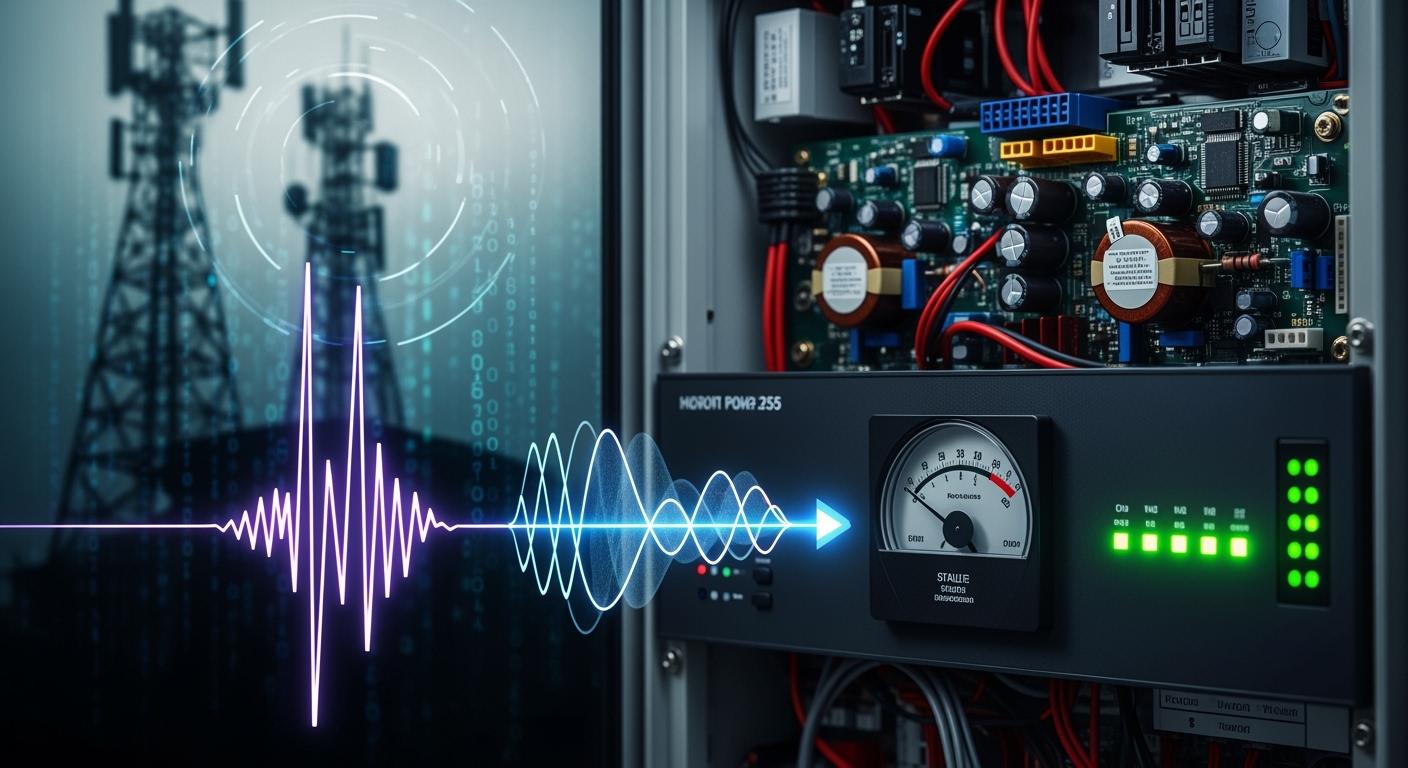
You rely on stable power for your telecom equipment. Harmonics can disrupt this stability, leading to voltage distortion and operational problems. In a Telecom Power System, such disturbances may cause equipment to malfunction or even fail.
Harmonics distort voltage, which affects equipment operation.
Sensitive loads can experience issues from severe harmonics.
Power factor correction capacitors may amplify these disturbances when they resonate with system inductance.
ESTEL focuses on quality and innovation to help you overcome these challenges and maintain reliable telecom operations.
Key Takeaways
Harmonics can disrupt telecom equipment, leading to malfunctions. Regular monitoring helps identify and address these issues early.
Active harmonic suppression is essential for maintaining stable power quality. It cancels harmful harmonics in real time, protecting sensitive devices.
Choosing the right harmonic suppression method is crucial. Active filters adapt to changing loads, while passive filters work for stable environments.
Integrating ESTEL's Telecom Power System enhances power quality. It combines advanced filtering strategies to remove up to 99% of harmful harmonics.
Regular maintenance and monitoring of your power system ensure long-term reliability. Follow best practices to keep your telecom network running smoothly.
Harmonics in Telecom Power Systems

Understanding Harmonics
You may notice that not all electrical currents flow in smooth, regular waves. Harmonics are unwanted frequencies that ride on top of the normal electrical signal. These extra frequencies come from devices that do not draw power in a simple, linear way. In a Telecom Power System, you often find harmonics caused by:
Non-linear loads
Power electronic converters
Transformers
Arcing devices
These sources create distorted waveforms that can travel through your power network. Harmonics can build up and affect the entire system, especially when many devices operate at the same time.
Effects on Telecom Equipment
Harmonics do not just stay in the wires. They can show up in your telecom equipment in several ways:
Your systems may pick up interference because they are close to power cables.
Inductive interference from phase currents can lower the quality of your signal.
Triplens, which are a type of harmonic, can collect in the neutral conductor and cause noise on phone lines.
Harmonics can distort the waveform, making speech harder to understand.
Music and other audio signals may also sound unclear.
Sensitive transmission equipment faces a higher risk of disturbance.
Harmonics can damage capacitors, causing them to bulge, fail, or even explode.
Tip: Regular monitoring helps you spot these problems early and protect your equipment.
Power Quality Sensitivity
Telecom networks need clean, stable power to work well. Even small changes in voltage or current can cause big problems for sensitive devices. Industry standards help you know what levels of harmonics are safe. Here are some key standards:
Standard | Description |
|---|---|
IEC 61000-2-2 | Sets compatibility levels for low voltage public supply networks regarding harmonics, interharmonics, and flicker. |
IEC 61000-3-6 | Technical report related to EMC compatibility levels. |
IEC 61000-3-7 | Technical report related to EMC compatibility levels. |
EN 50160 | Defines voltage characteristics of electricity supplied by public distribution systems, but does not set compatibility levels. |
You should always check that your Telecom Power System meets these standards. This helps you avoid downtime and keeps your network running smoothly.
Harmonic Challenges in Telecom Power Systems
Nonlinear Loads and Harmonic Sources
You encounter many nonlinear loads in telecom facilities. These loads create harmonics that disrupt normal electrical signals. Computers and servers with switch-mode power supplies often generate harmonics. Variable frequency drives, LED and fluorescent lighting, and uninterruptible power supplies also contribute. Electric vehicle chargers add to the problem. Each device changes the shape of the current, causing distortion in your power network.
Note: Nonlinear loads increase the risk of harmonic buildup, especially when you operate multiple devices at the same time.
Impact on Reliability and Performance
Harmonics degrade power quality. You may notice equipment malfunction or reduced efficiency. Sensitive electronic devices suffer from harmonic distortion. This can lead to unexpected shutdowns or data loss. You must comply with regulatory standards to avoid penalties and maintain network integrity. Poor power quality affects the performance of your Telecom Power System and can shorten equipment lifespan.
Degradation of power quality
Compliance with regulatory standards
Impact of harmonic distortion on sensitive electronic equipment
You protect your network by addressing these challenges early.
Case Incidents in Telecom
You can learn from real-world incidents. In one case, a telecom site experienced frequent outages. Harmonic distortion from multiple UPS units caused voltage fluctuations. Technicians traced the issue to overloaded circuits with high harmonic content. After installing active harmonic suppression, the site regained stability. Another incident involved distorted audio signals in a call center. Harmonics from LED lighting interfered with transmission quality. Upgrading the power system improved clarity and reduced complaints.
Tip: Regular assessment and proactive solutions help you prevent similar incidents and ensure reliable telecom operations.
Active Harmonic Suppression Solutions

Active vs. Passive Methods
You face two main options for harmonic suppression: passive and active methods. Passive filters use fixed components like capacitors and inductors. These filters absorb specific harmonic frequencies. Active filters use electronic circuits to detect and cancel unwanted harmonics in real time. You can also find hybrid filters that combine both methods for complex networks.
Filter Type | Main Function | Typical Application |
|---|---|---|
Passive | Absorbs fixed harmonics | Telecom cabinets, servers |
Active | Cancels dynamic harmonics | Data centers, IT racks |
Hybrid | Combines both methods | Complex power networks |
Passive filters work well for stable, predictable loads. You may choose them for basic telecom cabinets. Active filters adapt to changing loads and cancel a wide range of harmonics. You need them in environments with sensitive equipment or frequent load changes. Hybrid filters offer the best of both worlds for large or complex systems.
How Active Power Filters Work
Active power filters (APFs) play a key role in modern Telecom Power System designs. You use these filters to keep your power supply clean and reliable. Here is how they work:
Active filters produce near-sinusoidal current by removing harmonics from the supply current.
These filters reduce total harmonic distortion (THD) and improve power factor.
APFs absorb harmonic currents created by nonlinear loads, which improves power quality.
The performance of APFs depends on digital signal processing speed and the type of loads you connect.
Good reference generation methods help APFs work more effectively.
Different control schemes can boost the performance of active filters.
You benefit from active filters because they respond quickly to changes in your network. They help you maintain stable voltage and current, even when your load changes often. This keeps your telecom equipment safe and your network running smoothly.
Tip: Use active filters in your Telecom Power System if you want the best protection against dynamic harmonics.
Role of ESTEL Telecom Power System
You can rely on ESTEL’s Telecom Power System and Telecom Rectifier System for advanced harmonic suppression. These systems use both passive and active filtering strategies. This combination removes up to 99% of harmful harmonics from your power supply. You get high-quality power delivery, which is essential for reliable telecom operations.
The ESTEL Telecom Rectifier System stands out for its low total harmonic distortion. It achieves a THD of just 1.12%, while many industry standard systems range from 3% to 5%. This means you experience fewer disturbances and less risk of equipment failure.
Metric | ESTEL’s Rectifier System | Industry Standard Systems |
|---|---|---|
Total Harmonic Distortion | 1.12% | 3–5% |
You also benefit from features like wide input voltage range, natural cooling, and modular design. These features make installation and maintenance easy. You can integrate these systems into standard racks or cabinets. Multiple communication ports allow you to monitor and manage your power network efficiently.
When you choose ESTEL, you invest in power quality, network reliability, and long-term cost savings. You protect your sensitive telecom equipment from the risks of harmonics and ensure smooth operation in any environment.
Note: ESTEL’s commitment to innovation and quality helps you meet international standards and keep your telecom network strong.
Implementing Active Suppression in Telecom
Assessing Harmonic Levels
You need to start with a clear understanding of the harmonic environment in your telecom facility. Accurate assessment helps you choose the right suppression strategy and avoid unnecessary costs. Follow these steps to evaluate harmonic levels:
Evaluate your monitoring instruments. Make sure they can measure harmonic distortion accurately.
Conduct a site survey. Gather data about your power system and identify areas with potential issues.
Develop a monitoring program. Tailor it to address specific harmonic concerns in your network.
Select monitoring sites and instruments based on the power quality issues you have identified.
Compile and analyze the results. Use this data to verify your analytical models and pinpoint areas that need attention.
You may find that, before installing active power filters, total harmonic distortion can reach as high as 30.42%. After implementing active suppression, this number can drop to around 3.62%. This dramatic improvement shows the value of a thorough assessment and the right solution.
Tip: Regular monitoring ensures you catch new harmonic issues early and keep your system running smoothly.
Integrating ESTEL Solutions
You can integrate ESTEL solutions into your existing telecom infrastructure with ease. The global trend in telecom networks points toward advanced energy management and renewable integration. Companies worldwide have shown that adding solar-powered systems and efficient power management tools works well in both new and legacy setups.
To get the best results from your ESTEL Telecom Power System or Telecom Rectifier System, follow these strategies:
Assess your energy needs. Make sure your system can handle daily power usage and future growth.
Plan the layout for optimal equipment placement. For solar integration, position panels to maximize sunlight exposure.
Check compatibility. Ensure all components work together to boost overall performance.
Use the modular design of ESTEL systems. This feature allows you to scale up or down as your network changes.
Take advantage of multiple communication ports. These ports help you monitor and manage your power system efficiently.
Regularly monitor and maintain your system. Address any issues quickly to prevent downtime.
You benefit from ESTEL’s wide input voltage range, natural cooling, and flexible installation options. These features make integration straightforward and reliable, whether you upgrade an existing site or build a new one.
Note: ESTEL’s commitment to international standards ensures your network stays compliant and future-ready.
Best Practices for Maintenance
You protect your investment and maintain high power quality by following a solid maintenance routine. Manufacturers recommend several key practices for active harmonic suppression equipment in telecom settings:
Regular inspection: Check all connections, components, and cooling systems for signs of wear or damage.
Performance monitoring: Track total harmonic distortion levels and filter effectiveness on a continuous or periodic basis.
Preventive maintenance: Follow the manufacturer’s service intervals for testing and replacing parts.
Load change response: Adjust your harmonic mitigation strategy when you add new equipment or change your network configuration.
You should keep detailed records of all maintenance activities. This habit helps you spot trends, predict failures, and plan upgrades. A proactive approach ensures your Telecom Power System delivers clean, reliable power year after year.
Tip: Schedule maintenance during low-traffic periods to minimize impact on your network.
You improve telecom power quality when you use active harmonic suppression. ESTEL’s solutions help you achieve reliable operations and adapt to new challenges. Recent trends show rapid progress:
Trend Description | Implication |
|---|---|
Advancements in power electronics | Boosts efficiency and response time with new materials. |
Integration of AI and IoT | Enables predictive control and remote diagnostics. |
Modular and compact solutions | Makes installation and upgrades easier in tight spaces. |
Renewable energy integration | Ensures voltage stability with solar and wind systems. |
You gain long-term benefits by focusing on continuous improvement:
Detect issues early and reduce downtime.
Use remote monitoring to lower repair costs.
Maintain system integrity after upgrades.
Support remote sites with predictive analytics.
ESTEL leads with innovations like advanced energy storage, AI-driven monitoring, and modular designs. You secure your network’s future by choosing solutions that grow with your needs.
FAQ
What are harmonics in telecom power systems?
Harmonics are unwanted frequencies that distort the normal electrical signal. You see them when devices draw power in a non-linear way. Harmonics can cause equipment malfunction and reduce power quality.
How does active harmonic suppression improve telecom reliability?
Active suppression detects and cancels harmful harmonics in real time. You maintain stable voltage and current. This protects sensitive telecom equipment and prevents outages.
Why should you choose ESTEL’s Telecom Power System?
You benefit from ESTEL’s wide input voltage range, modular design, and advanced filtering. These features ensure reliable power delivery and easy integration. You also meet international standards for power quality.
How often should you monitor harmonic levels?
You should monitor harmonic levels regularly. Monthly checks help you spot issues early. Use advanced instruments for accurate measurements. Consistent monitoring keeps your network safe.
See Also
Essential Insights Into Telecom Power Supply Characteristics
Tips for Maintaining Reliable Power Supply in Telecom Cabinets
Solar Energy Storage Solutions for Telecom Equipment Cabinets
Integrated Solar Inverter and Battery Systems for Telecom Cabinets
Advantages of Lithium Batteries Over Other Options in Telecom Cabinets
CALL US DIRECTLY
86-13752765943
3A-8, SHUIWAN 1979 SQUARE (PHASE II), NO.111, TAIZI ROAD,SHUIWAN COMMUNITY, ZHAOSHANG STREET, NANSHAN DISTRICT, SHENZHEN, GUANGDONG, CHINA
