Anti-Condensation Design of Telecom Power Systems: Dry and Stable Operation Inside Cabinets in High-Humidity Areas

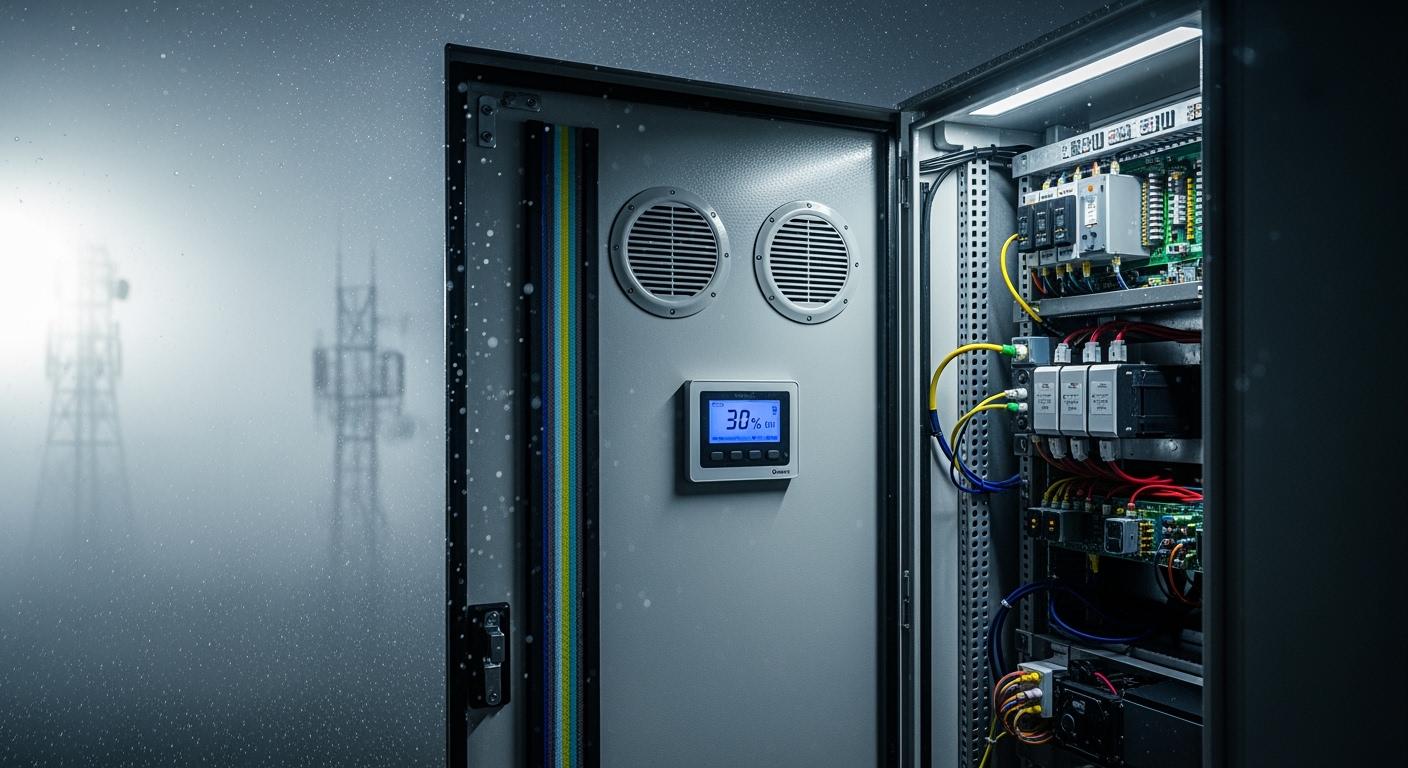
You face a serious challenge when moisture builds up inside telecom cabinets. Warm air meeting cooler surfaces causes condensation, which leads to corrosion and electrical shorts. High humidity increases the risk, making it harder to keep equipment reliable and safe. Monitoring humidity levels helps prevent damage to electronic components. Choosing a robust Telecom Power System is essential for stable operation. ESTEL offers advanced outdoor cabinets and power systems designed to protect your equipment in harsh, damp conditions.
Key Takeaways
Monitor humidity and temperature to prevent condensation in telecom cabinets.
Use heaters and air conditioners to control temperature and reduce moisture.
Choose cabinets with high IP or NEMA ratings for better protection.
Regular maintenance and monitoring help catch problems early.
ESTEL cabinets offer advanced features for high-humidity areas.
Condensation Risks in Telecom Cabinets
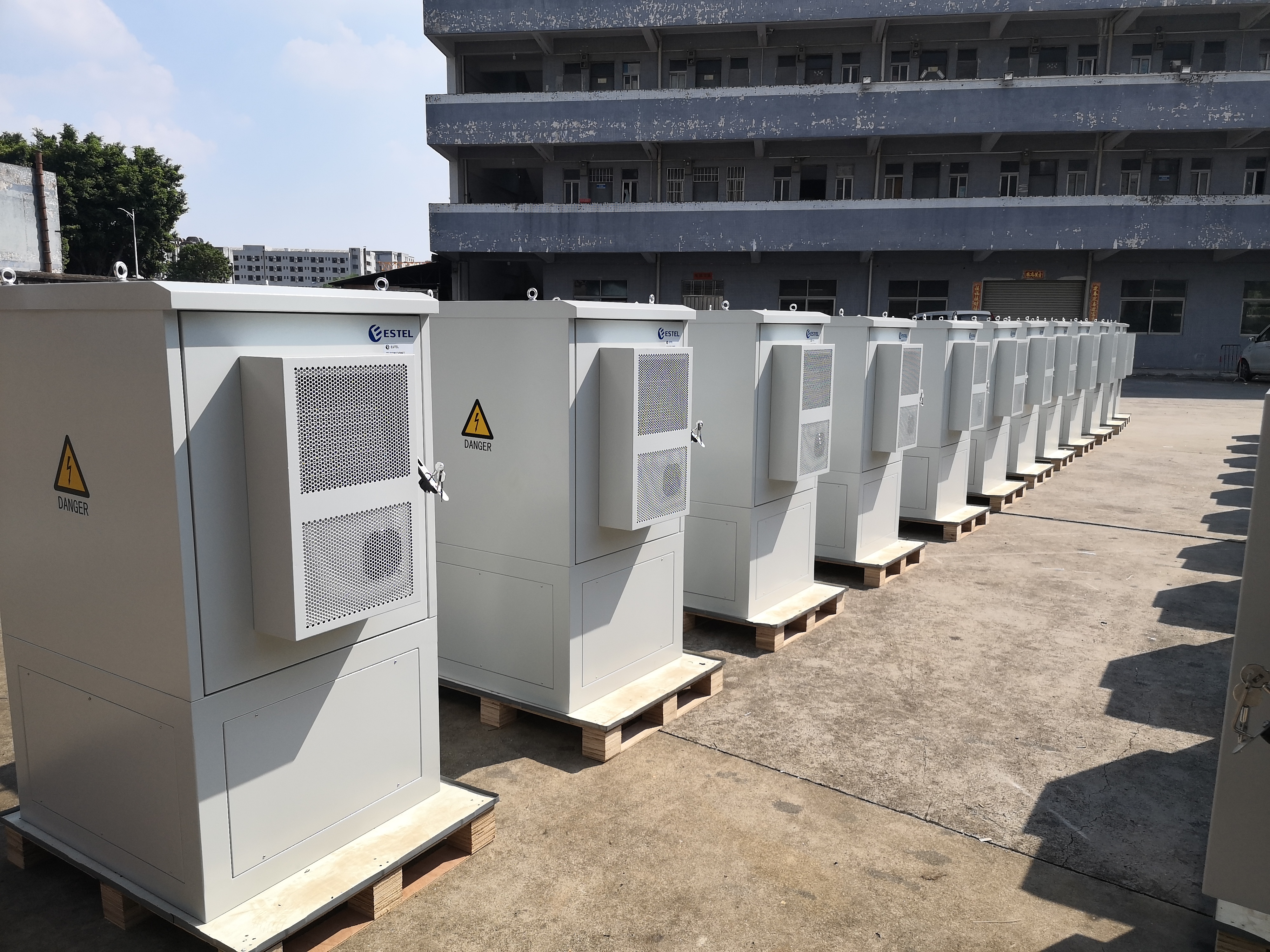
Electrical Failures and Corrosion
You may not notice condensation right away, but it can cause serious electrical problems inside your telecom cabinets. When moisture collects on metal surfaces, it can lead to several types of failures. The table below shows some of the most common electrical issues you might face:
Common Electrical Failures | Causes |
|---|---|
Oxidized ports | Persistent high external humidity |
Malfunctioning optical modules | Aging or damaged door seals |
Short circuits | Malfunctioning or absent dehumidification systems |
Corrosion | Long-term exposure to moisture |
High humidity can attack the metal contacts inside relays and other components. Moisture forms an oxide layer on these metals, which reduces conductivity and leads to poor connections. Over time, this can cause relays to fail or work less efficiently. If temperature and humidity change quickly, condensation can form inside the relay. This moisture can corrode metal contacts and even cause short circuits, damaging the relay and other parts of your Telecom Power System.
Safety Hazards and Service Disruption
Condensation does not just harm equipment. It also creates safety risks and can interrupt your service. Here are some ways condensation increases danger inside your cabinets:
Poor airflow and cooling can trap heat and moisture, making condensation more likely.
Sensitive components may get damaged, leading to electrical shorts or even fires.
Water sensors can help you detect leaks early and prevent electrical hazards.
Wired smoke detectors provide constant monitoring for smoke and heat, giving you early warning of fire risks.
Tip: Regularly check your cabinets for signs of moisture and make sure your cooling and monitoring systems work properly. This helps you avoid costly repairs and keeps your telecom network running safely.
Causes of Condensation in Power Systems
Humidity and Temperature Fluctuations
You often see condensation form inside telecom cabinets when humidity levels rise and temperatures change quickly. Warm, moist air can get trapped inside the cabinet. If the temperature drops after your equipment has been running, water vapor turns into liquid and settles on surfaces. This water buildup can damage electronic components. You may notice corrosion, electrical short circuits, or even system failures if condensation is not controlled.
Temperature differences between the inside and outside of the cabinet play a big role. When the internal temperature is close to the external temperature, especially in high humidity, condensation becomes more likely. Cabinets with fans for heat dissipation, such as IP55-rated models, connect the internal and external air. This connection means that humidity outside can easily affect the inside of your cabinet. You need to manage both temperature and humidity to keep your equipment safe.
Tip: Regularly monitor the temperature and humidity inside your cabinet. Quick changes in either can lead to condensation and equipment damage.
Environmental and Placement Factors
Where you place your telecom cabinet affects how much condensation you face. Outdoor cabinets must handle severe weather, including rain, snow, and extreme temperatures. High humidity in the environment increases the risk. If your cabinet sits near water sources, such as rivers or lakes, moisture levels rise even more.
You should look for cabinets with strong waterproofing, proper sealing, and good insulation. These features help block moisture from entering. Ventilation and cooling systems, such as fans, heat exchangers, or air conditioning, are also important. They help control the temperature and remove excess humidity.
Here are some key environmental factors that increase condensation risk:
High outdoor humidity levels
Placement near water sources
Exposure to rain, snow, or extreme weather
Poor ventilation or cooling inside the cabinet
Environmental Factor | Impact on Condensation Risk |
|---|---|
High humidity outdoors | Increases moisture inside cabinet |
Near water sources | Raises humidity levels |
Severe weather | Adds water and temperature stress |
Poor ventilation/cooling | Traps heat and moisture |
You can reduce condensation by choosing the right cabinet and maintaining proper climate control. This keeps your telecom power system dry and stable, even in tough environments.
Anti-Condensation Solutions for Telecom Power System Cabinets
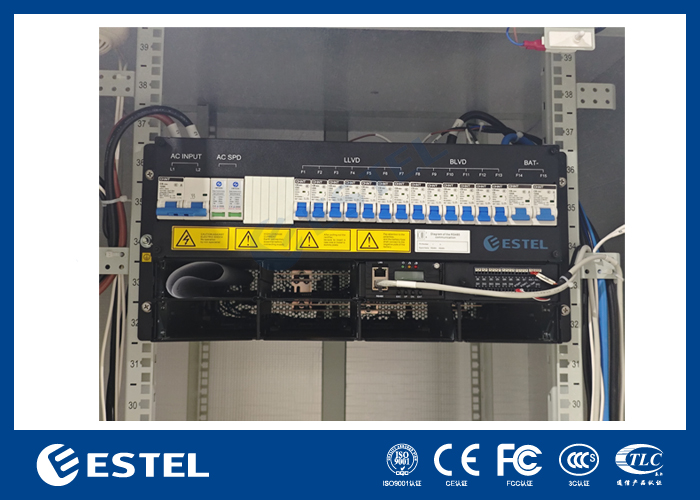
Keeping your telecom equipment dry and stable in high-humidity areas requires a combination of smart design, active climate control, and regular maintenance. You can use several practical solutions to prevent condensation and protect your Telecom Power System from moisture-related failures.
Temperature Control: Heaters and Air Conditioning
You can manage temperature inside your cabinet to prevent condensation. When you keep the internal temperature above the dew point, water vapor does not turn into liquid on surfaces. Here is a comparison of common temperature control methods:
Method | Description | Effectiveness in Preventing Condensation |
|---|---|---|
Heat Exchangers | Use a closed-loop design to prevent contaminants while transferring heat. | High |
Insulated Cabinet Designs | Double-wall construction minimizes heat transfer. | Moderate |
Air Conditioners | Provide precise temperature control in hot climates. | High |
Fan Ventilation | Improves airflow and prevents hotspots. | Moderate |
Micro DC Air Conditioners | Targeted cooling for irregularly shaped components. | High |
Electric Heaters | Provide consistent warmth in cold climates. | High |
PTC Heaters | Self-regulating heaters that adjust output based on temperature. | High |
Fan-Assisted Heaters | Distribute warm air evenly to prevent cold spots. | High |
Air-to-Air Heat Exchangers | Exchange cold external air with warm internal air. | Moderate |
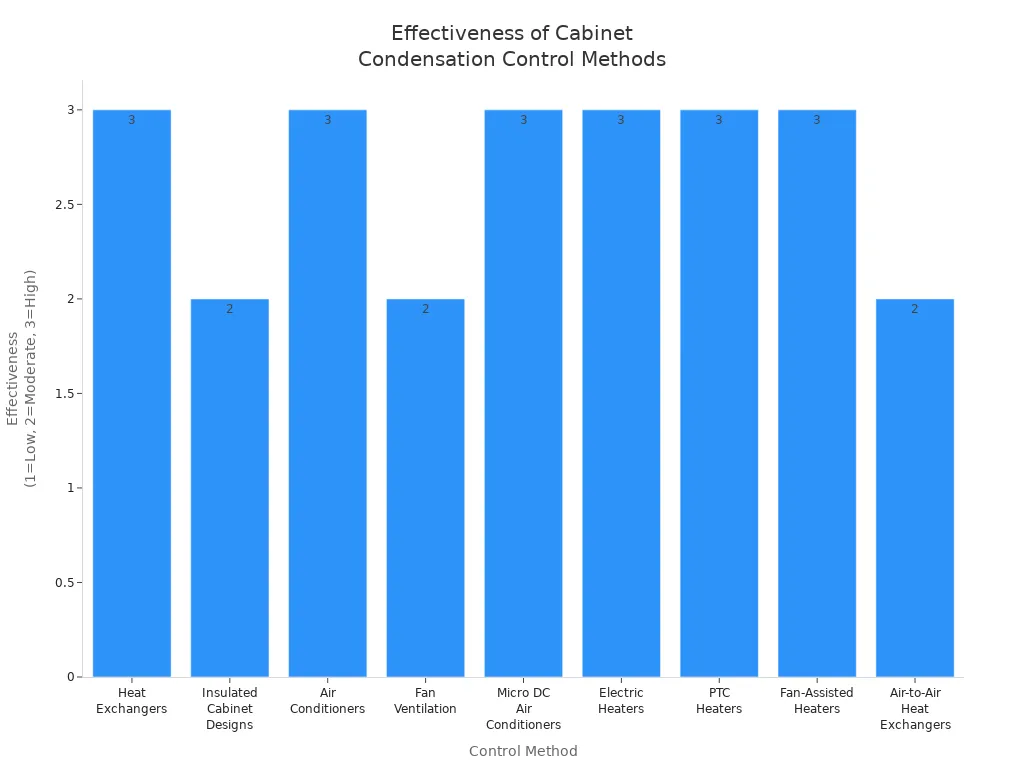
You can choose from several advanced cooling options. Heat exchangers and TEC air conditioning systems offer reliable temperature control and energy savings. These systems protect your Telecom Power System from dust and moisture, making them ideal for outdoor or remote locations. Electric heaters and PTC heaters work well in cold climates, keeping the cabinet temperature stable and preventing condensation.
Tip: Use modular or scalable cooling systems to reduce energy waste and lower operational costs. Advanced systems can increase equipment lifespan by up to 30% and cut total cost of ownership by nearly 20%.
Humidity Reduction: Ventilation, Silica Gel, Desiccants
Reducing humidity inside your cabinet is just as important as controlling temperature. You can use a mix of ventilation, desiccants, and dehumidifiers to keep moisture levels low.
System | Main Use | Cost (€) | Upkeep | Effectiveness |
|---|---|---|---|---|
Heaters | Stop condensation | 50–200 | Low | Good |
Dehumidifiers | Lower air moisture | 100–400 | Medium | Very Good |
Desiccants | Small spaces, backup | 5–40 | High | Fair |
Ventilation | Air flow, passive/active | 30–200 | Low | Good |
Purge Systems | High-risk, critical use | 300–1000+ | Medium | Excellent |
You can install passive vents or small fans to improve airflow. Place vents low for dry air intake and high for moist air exhaust. Fans help move air and prevent moisture from settling. Silica gel packs absorb moisture and work well in small spaces, but you need to replace them regularly. Dehumidifiers provide strong moisture control for larger cabinets or high-risk sites.
Ventilation allows air circulation and reduces trapped moisture.
Fans boost air movement and help keep humidity low.
Silica gel and other desiccants absorb water vapor but require frequent checks.
Note: Always check and replace desiccants before they become saturated. Regular maintenance ensures your Telecom Power System stays dry.
Cabinet Selection: NEMA/IP Ratings and ESTEL Products
Choosing the right cabinet is key to preventing condensation. NEMA and IP ratings show how well a cabinet protects against water, dust, and solid objects. Higher ratings mean better protection, but no cabinet is completely airtight. As temperatures change, moisture-rich air can still enter and condense inside.
You should select cabinets with strong seals, quality insulation, and weatherproof features. ESTEL offers outdoor cabinets with high IP and NEMA ratings, anti-corrosion coatings, and energy-efficient cooling systems. These cabinets support both the Telecom Power System and Rectifier System, providing reliable protection in harsh environments.
Tip: Look for cabinets with double-wall construction, advanced sealing, and integrated climate control. ESTEL’s cabinets meet international standards and help keep your Telecom Power System stable and dry.
Maintenance and Monitoring Practices
Regular maintenance and monitoring help you catch condensation problems early. Follow these best practices to keep your Telecom Power System running smoothly:
Inspect seals and gaskets often. Replace any that show wear or damage.
Clean fans and vents with dry compressed air. Disconnect fans first to prevent dust from spreading.
Monitor temperature and humidity inside the cabinet. Use sensors to detect changes and act quickly.
Test fans and cooling systems after cleaning to ensure proper operation.
Use high-quality sealants to block moisture and dust.
Humidity sensors play a vital role in early detection. They alert you when humidity rises, so you can take action before condensation forms. By combining regular inspections with smart monitoring, you protect your Telecom Power System and avoid costly downtime.
Alert: Never ignore rising humidity or temperature changes. Early intervention prevents corrosion, electrical failures, and service interruptions.
By applying these solutions, you create a dry, stable environment for your Telecom Power System, even in the most challenging high-humidity areas.
ESTEL’s Approach to Reliable Cabinet Design
Product Features: Telecom Power System and Rectifier System
You need a Telecom Power System that stands up to the toughest environments. ESTEL designs its cabinets and power systems with your reliability in mind. In high-humidity areas, condensation can threaten your equipment. ESTEL addresses this by using advanced filtration systems that keep the internal environment clean and dry. This reduces the risk of corrosion and electrical shorts, so your Telecom Power System remains stable.
ESTEL’s Telecom Power System offers a wide AC input voltage range and natural cooling, which helps maintain optimal internal temperatures. The modular design allows you to install the system easily on a standard 19-inch rack or inside a cabinet. The Telecom Rectifier System provides high efficiency and consistent DC output, which is essential for telecom operations. You can find more details about these products on the ESTEL Telecom Power System page and the Telecom Rectifier System page.
Feature | ESTEL's Product | Industry Standard |
|---|---|---|
Energy Efficiency | Variable frequency air conditioners optimize energy | Meets energy efficiency standards |
Durability | High-quality materials for harsh environments | Requires durability in extreme conditions |
Advanced Technology | Customized cooling solutions | Advanced cooling technologies |
Ease of Installation | Modular design for easy setup | Easy installation and maintenance |
Choose lithium-ion batteries for your cabinets. They perform well in extreme temperatures and humidity. Regularly test self-discharge rates and use weatherproof cabinets with real-time monitoring for best results.
Advantages of ESTEL Outdoor Cabinets
You benefit from several design features that keep your equipment dry and stable. ESTEL uses corrosion-resistant materials and advanced treatment processes to extend the life of your outdoor cabinets. Humidity control and dehumidification prevent rust and protect sensitive components. Controlled relative humidity restricts corrosion, ensuring long-term stability for your Telecom Power System.
Elevated cabinet designs keep equipment above ground, avoiding water pooling.
Sloped surfaces direct rainwater away from critical parts.
Corrosion-resistant materials and coatings protect against moisture and air exposure.
You can rely on ESTEL’s cabinets to maintain optimal conditions, even in harsh environments. These features help you avoid costly downtime and extend the lifespan of your Telecom Power System. For more information, visit the ESTEL official website.
You protect your telecom power system best when you combine proactive anti-condensation design with regular maintenance. Monitoring temperature and humidity helps you prevent moisture-related failures and keeps your network reliable. High-quality cabinets, like those from ESTEL, use advanced materials and cooling systems to reduce costs and extend equipment life.
Install anti-condensation units and choose enclosures with strong IP ratings for the best results in humid environments.
Factor | Why It Matters |
|---|---|
Material quality | Prevents corrosion and water damage |
Cooling systems | Maintains stable internal conditions |
Environmental control | Ensures long-term dry operation |
Choose proven solutions and follow industry recommendations to keep your telecom infrastructure dry and stable.
FAQ
What causes condensation inside telecom cabinets?
Condensation forms when warm, humid air meets a cooler surface inside your cabinet. This temperature difference turns water vapor into liquid. High humidity and rapid temperature changes increase the risk.
How can you prevent condensation in outdoor telecom cabinets?
You can use heaters, air conditioners, and dehumidifiers. Choose cabinets with high IP or NEMA ratings. Regularly check seals and monitor humidity. ESTEL’s cabinets offer advanced climate control and strong insulation.
Why is humidity control important for your Telecom Power System?
Humidity can cause corrosion, electrical shorts, and equipment failure. By controlling humidity, you protect your power system and reduce maintenance costs.
Tip: Install humidity sensors for early detection and quick action.
What makes ESTEL cabinets suitable for high-humidity areas?
ESTEL uses corrosion-resistant materials, advanced sealing, and efficient cooling systems. These features keep your equipment dry and stable, even in harsh environments.
Feature | Benefit |
|---|---|
Corrosion resistance | Longer equipment lifespan |
Advanced sealing | Blocks moisture and dust |
Efficient cooling | Maintains stable temperature |
See Also
Exploring Various Cooling Techniques for Telecom Cabinet Efficiency
Ensuring Consistent Power Supply for Telecom Cabinet Operations
Outdoor Communication Solutions: Telecom Cabinet Air Conditioning Insights
Selecting Optimal Cooling Solutions for ESTEL Telecom Cabinets
Maintaining Ideal Temperatures in Outdoor Telecom Cabinet Systems
CALL US DIRECTLY
86-13752765943
3A-8, SHUIWAN 1979 SQUARE (PHASE II), NO.111, TAIZI ROAD,SHUIWAN COMMUNITY, ZHAOSHANG STREET, NANSHAN DISTRICT, SHENZHEN, GUANGDONG, CHINA
