Best battery backup for 48V telecom power systems

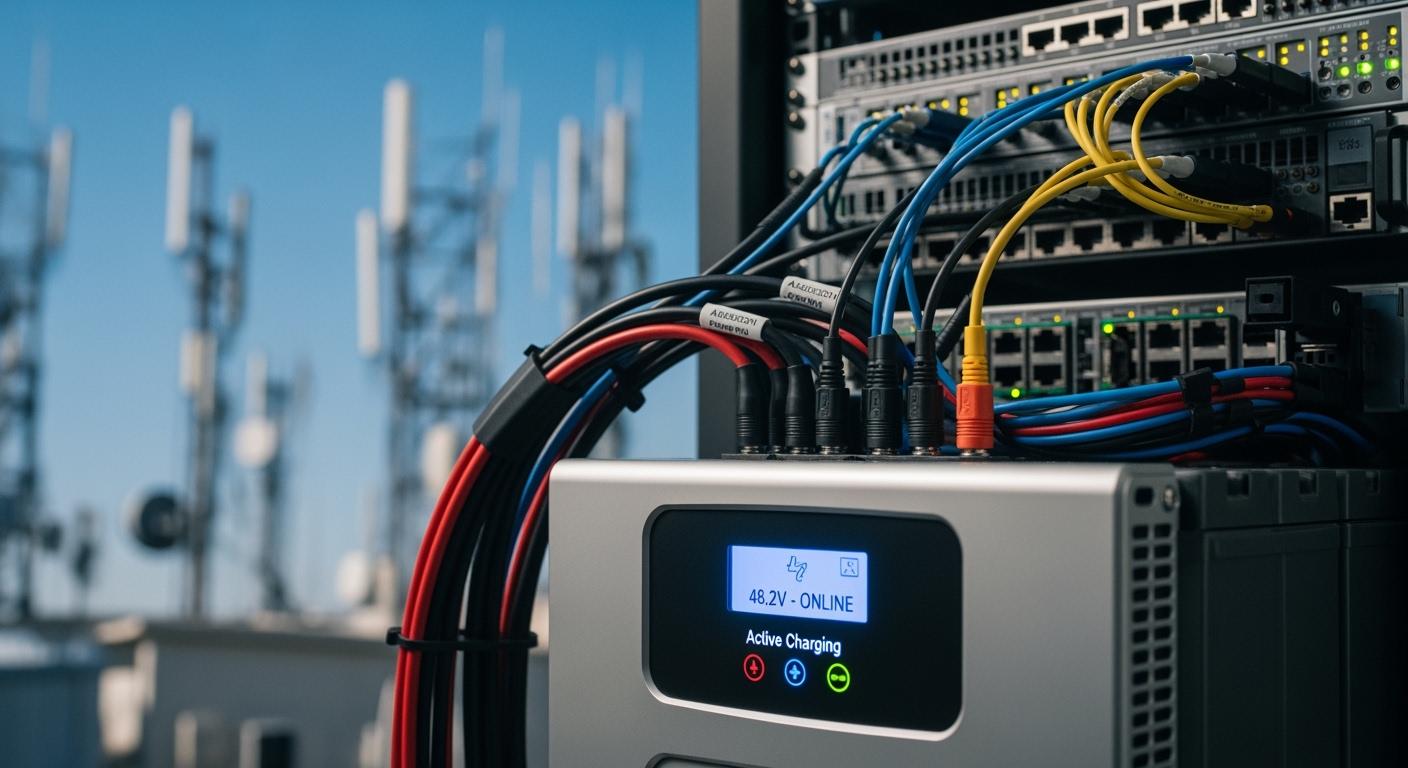
When you choose a battery backup for a 48V telecom power system, you often compare lithium-ion and lead-acid batteries. Most new telecom installations now use lithium-ion batteries because they deliver higher efficiency and longer service life. You want to consider factors like reliability, safety, performance, and the reputation of trusted brands such as ESTEL. The table below shows what matters most when selecting your solution:
Criteria | Description |
|---|---|
Budget | Lead-acid offers the lowest initial cost, while Li-Ion provides long-term savings through durability and efficiency. |
Environment | NiCd excels in extreme temperatures; Li-Ion performs best with climate control. |
Space constraints | Li-Ion’s compact size makes it ideal for urban or indoor telecom cabinets. |
Maintenance access | Remote sites benefit from low-maintenance Li-Ion or robust NiCd options. |
Future-proofing | For 5G and expanding networks, Li-Ion supports scalability and renewable integration. |
You need to keep uptime high and account for environmental conditions. ESTEL’s solutions help you achieve reliable backup power with advanced features and proven durability.
Key Takeaways
Choose lithium-ion batteries for 48V telecom systems. They offer longer life and higher efficiency compared to lead-acid batteries.
Plan for future growth by sizing your battery backup system 20-30% larger than current needs. This prevents unexpected shutdowns during outages.
Regularly inspect your battery system every month. Look for swelling, corrosion, and loose connections to catch issues early.
Follow safety standards like UL 1973 and IEC 62619. Compliance ensures your system is safe and reliable.
Consider using ESTEL’s solutions for advanced features and high efficiency. Their systems are designed for reliability in demanding environments.
Telecom Power Needs
Reliability and Uptime
You depend on your telecom power system to keep networks running 24/7. Reliable power means fewer dropped calls, less downtime, and better service for your customers. To achieve this, you need several key components working together:
Rectifier modules convert AC power to DC, charge your batteries, and keep voltage stable.
Battery backup solutions like LiFePO4 batteries provide power during outages and deliver long-term reliability.
Power Distribution Units (PDUs) manage how power flows, add redundancy, and allow for real-time monitoring.
Tip: Careful planning helps you avoid unexpected failures. Set clear planning intervals, gather accurate load data, and design your system to match future demand.
Choosing the right battery also impacts reliability. For example:
Feature | LiFePO4 Batteries | Lead-Acid Batteries |
|---|---|---|
Lifespan | 8x longer | Shorter |
Footprint | 60% smaller | Larger |
Compatibility | Fully compatible | Needs extra parts |
Environmental Factors
Your telecom equipment faces many environmental challenges. High temperatures can damage sensitive parts like capacitors and circuits. Humidity may cause corrosion and lead to faults that are hard to detect. Poor thermal management can shorten the life of your equipment.
Monitor temperature, humidity, dust, and power surges to prevent overheating and corrosion.
Use cabinets with proper insulation and cooling to protect your batteries and electronics.
Note: ESTEL’s outdoor telecom cabinets offer weatherproofing and efficient cooling, helping you maintain stable conditions even in harsh environments.
Safety Standards
You must follow strict safety standards to protect your equipment and staff. International standards ensure your batteries and systems meet quality and safety requirements.
Safety Standard | Description |
|---|---|
UL 1973 | Ensures safety and performance of batteries in energy storage systems. |
IEC 62619 | Sets safety rules for secondary lithium batteries. |
UN38.3 | Covers transport safety for lithium batteries. |
Standard | What It Means for You |
|---|---|
SELV Compliance | Reduces risk of electric shock. |
ISO9001 | Guarantees consistent quality. |
ETSI | Ensures global telecom compatibility. |
By following these standards, you create a safer, more reliable telecom power system.
48V Telecom Power System Overview

48V Standard Benefits
You see 48V DC as the global standard for telecom power systems. This voltage level appears in data centers, cell towers, and central offices. Industry groups, including the Open Compute Project, support 48V for its balance of safety, efficiency, and reliability.
The 48V telecom power system brings several advantages:
Aspect | Description |
|---|---|
Safety | Operates below dangerous voltage levels, reducing electric shock risks for technicians. |
Efficiency | High efficiency of up to 98.4% minimizes energy loss, leading to lower operational costs. |
Reliability | Ensures stable power delivery, preventing equipment failure and maintaining network uptime. |
Integration | Seamless integration with battery backup systems allows continuous operation during power failures. |
Compliance | Supports compliance with international standards, promoting safety and environmental sustainability. |
You benefit from 48V DC because it reduces the risk of electric shock. The system provides stable voltage delivery, which keeps your telecom network running smoothly. You can connect a wide range of telecom equipment, making upgrades and maintenance easier. When you use 48V, you also cut energy costs and reduce maintenance expenses. Surge protectors and fire suppression systems add another layer of safety, protecting your devices from lightning and fire.
Tip: Transitioning to 48V reduces cable losses by a factor of sixteen compared to 24V, improving power transmission over long distances.
Battery Types: Lithium-ion, Lead-acid
You need to choose the right battery for your 48V telecom power system. The two main options are lithium-ion and lead-acid batteries. Each type has unique strengths and trade-offs.
Feature | 48V Lithium-Ion | 48V Lead-Acid (VRLA/Flooded) |
|---|---|---|
Average Lifespan | 10–15 years | 5–7 years |
Charge/Discharge Efficiency | 95%+ | 70–85% |
Initial Cost | Higher | Lower |
Lithium-ion batteries last longer and deliver higher efficiency. You get more charge cycles and less energy loss. These batteries also take up less space, which helps in compact telecom cabinets. Lead-acid batteries cost less at first, but you will need to replace them more often. They also require more maintenance and have lower efficiency.
You should consider your site’s needs, budget, and maintenance access when choosing between these battery types. For remote or critical sites, lithium-ion batteries often provide the best value over time.
ESTEL Solutions
You can rely on ESTEL for advanced 48V telecom power system solutions. ESTEL’s Telecom Power System and Rectifier System stand out for their reliability and performance.
ESTEL rectifiers achieve over 96% energy efficiency, which reduces your operational costs and minimizes energy loss.
The modular design lets you expand power capacity as your network grows.
These systems operate efficiently in extreme temperatures, thanks to advanced thermal management that prevents overheating.
Intelligent monitoring systems give you real-time performance data, making it easy to spot and fix issues quickly.
You can install ESTEL’s power systems in standard 19-inch racks or outdoor cabinets. This flexibility supports both new deployments and upgrades. The natural cooling design lowers maintenance needs and extends equipment life. With ESTEL, you get robust protection, high efficiency, and seamless integration for your 48V telecom power system.
Note: ESTEL’s commitment to quality and innovation ensures your telecom network stays powered, even in the most demanding environments.
Battery Sizing and Selection
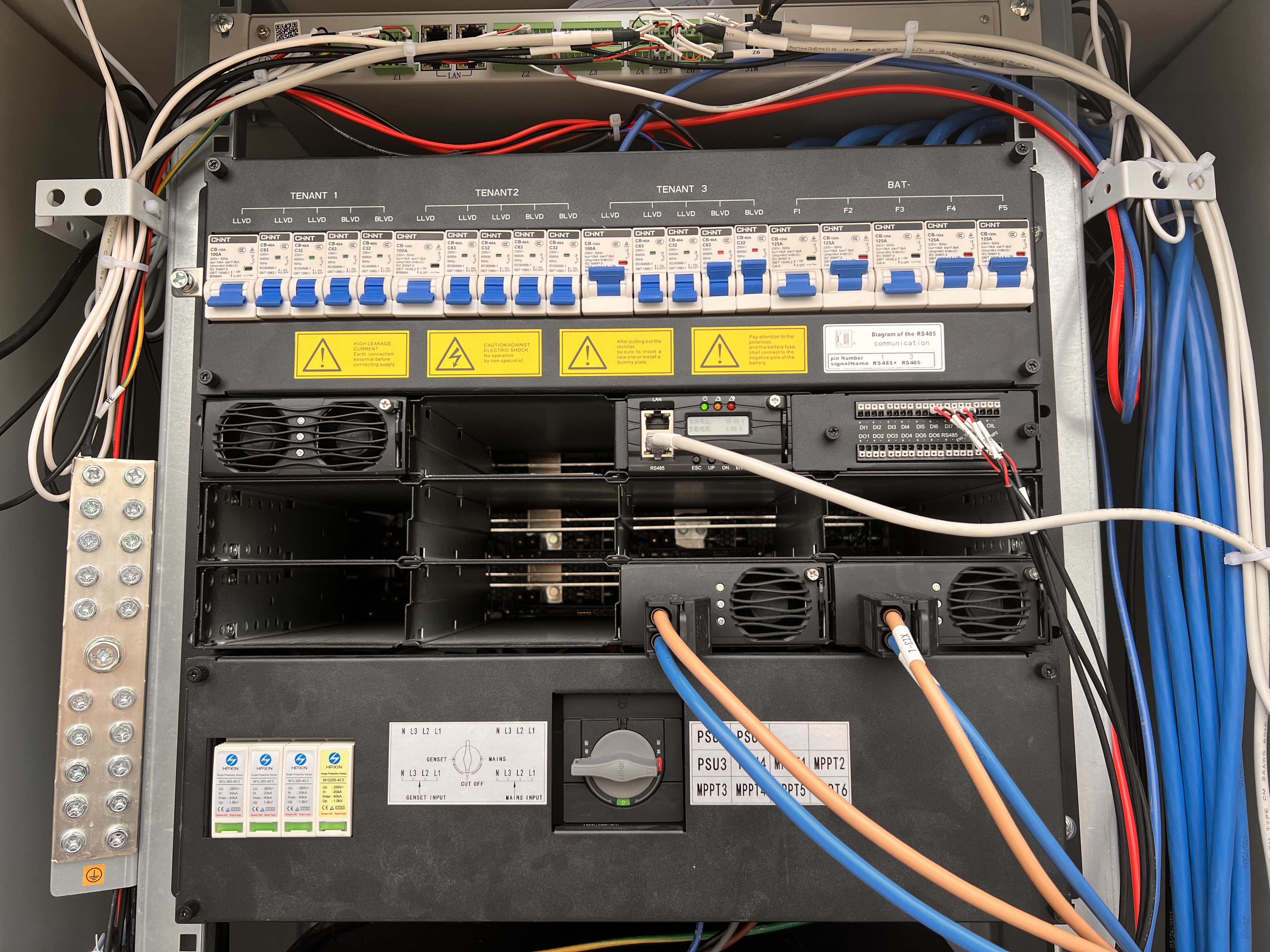
Capacity Calculation
You need to size your battery backup correctly to keep your telecom network running during outages. Start by understanding the main formulas and concepts used in the industry. These help you estimate how much energy your system needs and how long your batteries will last.
Formula/Concept | Description |
|---|---|
Ah (Ampere-hour) | Measures capacity as Current × Time |
Wh (Watt-hour) | Calculates energy stored as Voltage × Ah |
DoD (Depth of Discharge) | Shows the safe percentage of battery capacity you can use |
η (Efficiency) | Accounts for charging/discharging losses (usually 85–95%) |
Backup Time Calculation | Backup Time = (Ah × Voltage × η) ÷ Load (W) |
Required Ah Calculation | Ah Required = (Load × Time) ÷ (Voltage × η) |
Tip: Always use the actual load and desired backup time for your calculations. This ensures your 48V telecom power system has enough reserve to handle emergencies.
Matching Battery to Application
You should match your battery type to your specific telecom application. Different batteries offer unique benefits for base stations, data centers, or remote sites.
Battery Type | Energy Density (Wh/kg) | Cycle Life (Years) | Depth of Discharge (%) | Fast Charging (Hours) | Initial Cost Comparison |
|---|---|---|---|---|---|
Lithium (LiFePO₄) | 120–180 | 5–8 | 80–100 | 2–3 | Higher |
Lead-Acid (VRLA) | 30–50 | 3–5 | ≤50 | N/A | Lower (40–60% of lithium) |
Lithium batteries give you higher energy density and longer life. They also allow deeper discharge and faster charging. Lead-acid batteries cost less at first but need more frequent replacement and maintenance.
Redundancy and Expansion
You should always plan for growth and reliability. Here are best practices for redundancy and future expansion:
Plan for future expansion when sizing your DC power system.
Add extra DC power capacity to support new modules or network upgrades.
Increase your calculated DC power requirement by 20–30% to allow for growth.
Favor modular designs to enhance scalability and reduce integration risks.
Modular systems enable easy scalability, redundancy, and simplify maintenance.
Planning ahead protects your investment and ensures your 48V telecom power system can adapt as your network grows.
Installation and Maintenance
Installation Tips
You want your 48V telecom power system to run smoothly from day one. Start by conducting a thorough site assessment. This helps you understand the installation environment and spot any challenges early. Choose battery types that match your needs, such as VRLA or lithium-ion, and always ensure they are compatible with your system. Follow all regulatory standards to keep your installation safe and compliant.
Proper ventilation is essential. Good airflow prevents gas buildup and keeps batteries at safe temperatures. ESTEL’s outdoor telecom cabinets feature natural cooling and weatherproof designs, making them ideal for harsh environments. You should also set up monitoring protocols right from the start to track system health and performance.
Conduct a site assessment before installation.
Select batteries that fit your application and system.
Ensure compliance with all safety and regulatory standards.
Optimize ventilation to maintain safe temperatures.
Implement monitoring systems for ongoing performance checks.
Tip: ESTEL cabinets come with anti-corrosion coatings and secure locks, adding extra protection and durability to your installation.
Maintenance Practices
Routine maintenance keeps your backup system reliable and extends battery life. You should follow a regular schedule and use best practices to avoid unexpected failures.
Maintenance Practice | Benefit |
|---|---|
Regular Inspections | Detects swelling or corrosion early, preventing failures. |
Voltage and Internal Resistance Checks | Predicts battery end-of-life for timely replacement. |
Environmental Control | Maintains optimal temperature and humidity. |
Adherence to Manufacturer Specs | Prevents damage from improper charging. |
Float Charging | Keeps batteries ready and avoids deep discharge. |
Rotation and Planned Replacement | Balances usage and reduces sudden failures. |
ESTEL’s cabinets simplify maintenance with easy-access panels and robust construction, so you can perform checks quickly and safely.
Monitoring Systems
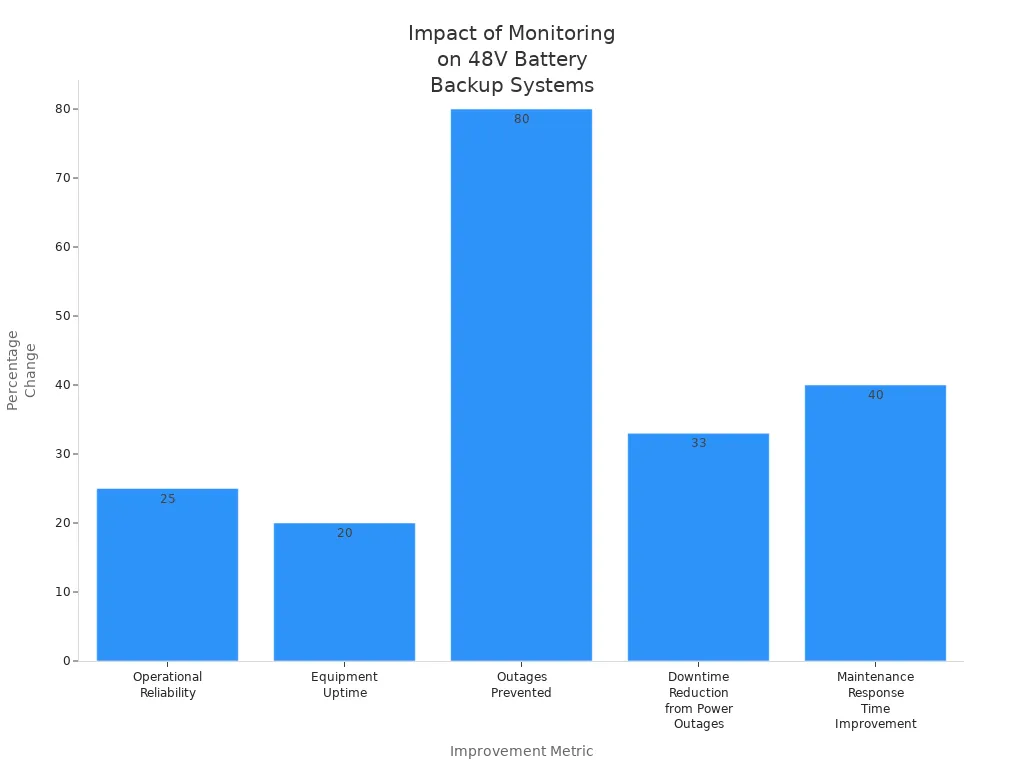
Advanced monitoring systems help you prevent outages and improve reliability. Real-time insights and predictive analytics alert you to issues before they cause downtime. These systems also support compliance with safety standards and use positive grounding to prevent corrosion.
Improvement Metric | Percentage Change |
|---|---|
Operational Reliability | +25% |
Equipment Uptime | +20% |
Outages Prevented | +80% |
Downtime Reduction from Power Outages | -33% |
Maintenance Response Time Improvement | +40% |
You gain peace of mind knowing your system is always monitored. ESTEL’s intelligent monitoring features make it easy to track performance and respond quickly to any issues.
Advanced Backup Strategies
Inverter Integration
You can boost the flexibility of your 48V telecom power system by integrating inverters. Inverters convert DC power from your batteries into AC power. This lets you run AC-powered devices during outages. You can also use inverters to connect renewable energy sources, such as solar panels, to your system. When you add inverters, you create a hybrid setup that supports both DC and AC loads. This approach increases your backup options and helps you adapt to changing network needs.
Tip: Choose inverters that match your battery voltage and load requirements. This ensures stable operation and protects your equipment.
Renewable Energy Options
You can reduce your reliance on the grid by adding renewable energy sources like solar panels to your 48V telecom power system. Solar integration supports sustainable operations and lowers your energy costs. When you combine solar panels with battery banks and inverters, you store excess energy for later use. This setup improves energy storage and keeps your network running during long outages.
Component | Function |
|---|---|
MCU microprocessor control | Manages the operation of the hybrid solar rectifier system. |
Max Power Point Tracking | Ensures optimal energy extraction from solar panels. |
DC 48V output | Supplies power for charging batteries and powering DC loads. |
Hybrid MPPT module | Optimizes solar energy capture and integrates it with battery and grid. |
AC-DC rectifier module | Converts AC and DC inputs to a stable 48V DC output. |
Controller module (RS485&SNMP) | Provides monitoring capabilities for system performance. |
Solar modules | Generate solar power for direct use or battery charging. |
Rectifier modules | Provide floating charge current for communication devices and batteries. |
To get the best results, you should:
Design a system layout that simplifies installation.
Ensure all components are compatible.
Position solar panels for maximum sunlight.
Follow safety measures during installation.
Smart Management
You can optimize your battery backup performance with smart management technologies. These tools help you monitor, control, and protect your power system.
Feature | Description |
|---|---|
Track battery capacity, temperature, and voltage. Send alerts for faults. | |
Temperature Compensation | Adjust charging voltage based on temperature to prevent overcharging. |
Remote Monitoring | Give real-time visibility into battery status for proactive maintenance. |
Charge/Discharge Management | Monitor discharge patterns to maintain battery health. |
Fault Detection | Alert you to voltage or temperature issues before failures occur. |
With smart management, you can extend battery life, reduce downtime, and keep your telecom network reliable.
Common Pitfalls
Under-sizing Risks
You face serious risks if you under-size your 48V telecom battery backup system. When your battery cannot support the load, your network may experience unexpected shutdowns during power outages. This leads to dropped calls, lost data, and unhappy customers. You must avoid common mistakes during installation and setup to ensure your system works as intended:
Organize your tools before starting to prevent delays.
Choose an installation location with stable temperatures and low humidity.
Plan cable routing and management to avoid accidental damage.
Ensure proper grounding to protect your devices from electrical faults.
If your system does not perform as expected, you should:
Check battery connections for tightness and signs of corrosion.
Make sure all breakers are ON and fuses are intact.
Confirm that wire terminations on the DIN rail are secure.
Inspect solar panels for dirt or debris and remove any obstructions.
Check if the system is in Low Voltage Disconnect mode.
Assess if the load Amperage or duty cycle is too high.
Review any added loads that may exceed your system’s capacity.
Tip: Always size your battery backup for both current needs and future growth to avoid costly upgrades.
Battery Failure Prevention
You can reduce battery failure rates by using smart preventive measures. The table below shows effective strategies you can apply:
Preventive Measure | Description |
|---|---|
Intelligent Monitoring | Gives you real-time visibility of battery status and sends alerts for proactive maintenance. |
Weather-linked pre-alerts | Triggers full battery charging before storms or extreme weather events. |
AI-based predictive maintenance | Detects early signs of battery aging or rectifier issues to prevent failures. |
Load prioritization strategies | Keeps core equipment powered longer during outages, improving uptime. |
You should combine these strategies to keep your backup system reliable and extend battery life.
Compliance Issues
You must follow industry standards and regulations when installing and operating your 48V telecom power system. Ignoring compliance can lead to safety hazards, equipment damage, and legal penalties. Standards like UL 1973, IEC 62619, and ISO9001 exist to protect your staff and ensure your equipment works safely. You should always use certified components and follow best practices for installation and maintenance. This approach helps you avoid costly mistakes and keeps your network running smoothly.
Note: Regular audits and documentation help you stay compliant and ready for inspections.
ESTEL Brand and Product Advantages
Why Choose ESTEL
You want a partner who values quality and innovation. ESTEL stands out because the company invests in advanced technology and strict quality control. You benefit from products that deliver reliable performance in every environment. ESTEL’s philosophy centers on providing solutions that meet international standards and adapt to the changing needs of the telecom industry.
Here is how ESTEL’s core values support your network:
Aspect | Description |
|---|---|
ESTEL integrates advanced power distribution systems into its PDUs, ensuring precise voltage regulation and efficient energy management. These intelligent PDUs offer real-time monitoring and control, allowing tracking of voltage, current, and frequency. | |
Commitment to Quality | The company rigorously tests its PDUs to meet the highest performance standards, minimizing equipment failure risk and ensuring uninterrupted operations. |
Exceptional Customer Support | ESTEL’s intelligent PDUs are built to last, providing consistent performance even in demanding environments. |
Product Features
You need equipment that works in real-world conditions. ESTEL’s Telecom Power System and Rectifier System give you flexibility and reliability for your 48V telecom power system. You can install these systems in standard 19-inch racks or outdoor cabinets. The modular design lets you expand your power capacity as your network grows. Natural cooling reduces maintenance and extends the life of your equipment. High efficiency, with rectifiers reaching over 96%, helps you save on energy costs. Intelligent monitoring features allow you to track system performance and respond quickly to any issues.
Customer Support
You deserve support that matches the quality of your equipment. ESTEL provides responsive customer service and technical guidance. You can reach out for help with installation, troubleshooting, or system upgrades. The company’s team works with you to ensure your network stays reliable and efficient. ESTEL’s commitment to customer satisfaction means you get answers and solutions when you need them most.
You can achieve reliable backup for your 48V telecom power system by choosing the right battery technology and following best practices. Proper sizing, installation, and regular maintenance keep your system safe and efficient. Monthly inspections help you spot issues early. ESTEL’s advanced rectifiers and modular designs address space, energy, and monitoring challenges. For the best results, consult with experts to match your solution to your site’s needs.
FAQ
What is the ideal battery type for a 48V telecom power system?
You should choose lithium-ion batteries for most modern telecom sites. They offer high efficiency, long life, and low maintenance. Lead-acid batteries work for budget projects but require more frequent replacement.
How often should you inspect your telecom battery backup system?
You should perform visual inspections monthly. Check for swelling, corrosion, and loose connections. Schedule a full maintenance check every six months to ensure optimal performance.
Can you expand your battery backup system as your network grows?
Yes, you can. Modular systems like ESTEL’s allow you to add more battery or rectifier modules easily. This approach supports future network expansion without major redesign.
What safety standards should your battery backup meet?
Your system should comply with UL 1973, IEC 62619, and ISO9001. These standards ensure safety, quality, and international compatibility.
Where can you find more information about ESTEL’s telecom power solutions?
Visit ESTEL’s official website for detailed product specifications, technical support, and contact information.
See Also
Methods for Calculating Power Systems and Batteries in Telecom
Battery Systems and Inverters for Grid-Connected Telecom Cabinets
Energy Storage Solutions Using Photovoltaics for Telecom Cabinets
Batteries for Energy Storage in ESTEL Telecom Cabinets
Ensuring Consistent Power Supply for Telecom Cabinet Operations
CALL US DIRECTLY
86-13752765943
3A-8, SHUIWAN 1979 SQUARE (PHASE II), NO.111, TAIZI ROAD,SHUIWAN COMMUNITY, ZHAOSHANG STREET, NANSHAN DISTRICT, SHENZHEN, GUANGDONG, CHINA
