Building a Reliable 48V DC Power System: From Rectifier Modules to Battery Backup


You depend on DC48V Telecom Power systems to keep your network running smoothly. Reliable rectifier modules, advanced battery backup, and efficient power distribution protect your operations from unexpected outages. Modern lithium batteries offer greater reliability and less maintenance than older lead-acid options, which helps you maintain high network uptime. ESTEL delivers quality and innovation in telecom power solutions, setting a standard you can trust. Follow practical steps and proven strategies to build a dependable system that meets your needs.
Key Takeaways
Reliable DC48V Telecom Power systems keep your network running smoothly, preventing outages and maintaining customer satisfaction.
Choose high-quality components, like ESTEL's lithium batteries, to reduce maintenance needs and enhance system reliability.
Follow best practices in system design, including accurate data gathering and regular reviews, to avoid costly mistakes.
Implement regular maintenance routines, such as monthly inspections and quarterly tests, to ensure long-term performance and safety.
Stay compliant with industry standards and certifications to enhance safety and operational efficiency in your telecom power system.
Reliability in DC48V Telecom Power Systems
Why Reliability Matters
You rely on DC48V Telecom Power systems to keep your network running every day. Reliable power ensures your telecom equipment stays online, even during unexpected events. When your system fails, you risk dropped calls, lost data, and unhappy customers. Many factors can threaten uptime, but some stand out as the most common causes of downtime:
Severe weather leads to most power outages, making up 58% of outages since 2002. Storms and climate change increase these risks.
Unstable AC grid power forces you to depend on backup systems. If batteries or generators malfunction, your network can go offline.
You need a power system that can handle these challenges. DC48V Telecom Power systems support continuous operation by providing stable voltage and efficient backup. When you choose a reliable system, you protect your business and your reputation.
ESTEL’s Approach to Quality
You want a power solution that delivers consistent performance. ESTEL designs its DC48V Telecom Power systems with quality as the top priority. The company uses strict quality control during production and selects advanced components for every product. You benefit from lower failure rates and longer equipment life.
ESTEL’s telecom batteries stand out in the industry. They reduce battery problems by 98%, which means you experience fewer outages and less maintenance. You can trust ESTEL to provide solutions that keep your network running, even in harsh environments. The company’s commitment to innovation and excellence ensures you get the best possible results.
Industry Standards
You need to know your power system meets international safety and performance standards. ESTEL builds its DC48V Telecom Power systems to comply with ISO9001 and other telecom-specific requirements. This focus on compliance helps you avoid costly failures and improves overall reliability.
Adhering to safety certifications and telecom-specific requirements helps prevent failures and enhances system performance.
When you choose a system that meets these standards, you gain peace of mind. You know your equipment will operate safely and efficiently. ESTEL’s dedication to meeting and exceeding these standards sets the company apart in the telecom industry.
Key Components of a DC48V Telecom Power System
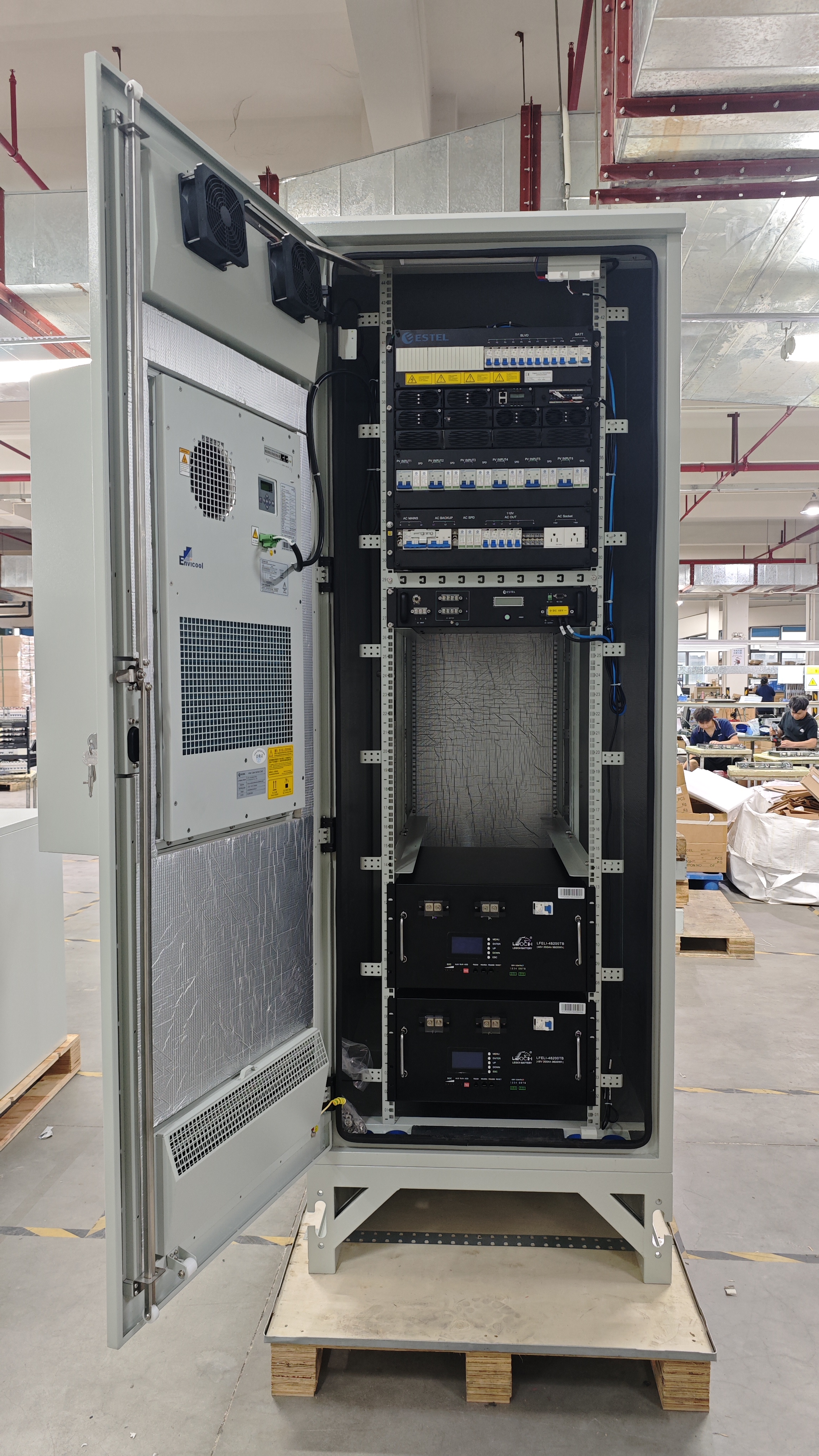
Rectifier Modules Overview
You rely on rectifier modules to convert AC power from the grid into stable DC power for your telecom equipment. These modules play a vital role in every DC48V Telecom Power setup. Their main functions include:
Converting AC power to DC power
Charging backup batteries
Delivering efficient power to telecom devices
Correcting power factor
Filtering electromagnetic interference
Regulating voltage
Most rectifier modules in telecom applications reach efficiency ratings up to 96%. This means you lose only about 4% of power during conversion, which helps you save energy and reduce costs.
Battery Backup Solutions
Battery backup keeps your network running when the main power fails. You can choose between different battery types, but lithium iron phosphate (LiFePO4) batteries are becoming more popular. They offer high energy density, long cycle life, and strong reliability. The table below compares LiFePO4 and lead-acid batteries:
Feature | LiFePO4 Batteries | Lead-Acid Batteries |
|---|---|---|
Lifespan | 8x longer | Shorter |
Footprint | 60% smaller | Larger |
Compatibility | Fully compatible | Needs extra parts |
Deployment Time | 2-hour deployment | Longer |
Most standard battery solutions aim for at least four hours of backup. Many remote sites target eight hours or more to ensure continuous operation.
Power Distribution Units
Power distribution units (PDUs) help you manage and deliver power to all your telecom devices. They improve system reliability by providing redundancy, remote management, and advanced monitoring. PDUs prevent disruptions by keeping critical equipment online during failures. You can monitor power usage and spot issues early, which helps you avoid equipment damage.
ESTEL Telecom Power System Features
ESTEL designs its DC48V Telecom Power systems for flexibility and reliability. You can install them on standard 19-inch racks or inside cabinets. The systems support a wide AC input voltage range and use natural cooling, which reduces maintenance. Multiple communication ports let you integrate the system with your network for easy monitoring and control. With ESTEL, you get a solution that adapts to your needs and keeps your telecom operations running smoothly.
Configuration and Best Practices
System Design Steps
You need a clear plan to build a reliable DC48V Telecom Power system. Follow these steps to ensure your configuration supports both current needs and future growth:
Planning Interval: Set your initial and ultimate planning intervals. This helps you prepare for expansion and avoid costly redesigns.
Data Gathering: Collect data about your load requirements and expected growth rates. Accurate information lets you size your system correctly.
Design Execution: Design your system based on the requirements. Consider battery capacity, rectifier ratings, and the number of distribution units. Make sure every component matches your projected demand.
Tip: Review your design regularly to adjust for changes in network usage or technology upgrades.
You should also avoid common mistakes during the design phase. The table below highlights frequent errors and their impact:
Design Mistake | Description |
|---|---|
Inaccurate Power Capacity Estimation | Ensuring the system is neither underutilized nor overloaded is crucial. |
Inadequate Transfer Mechanism Design | A proper transfer switch prevents issues like tripping or server freezing. |
Improper Equipment Choice | Mismatched power factors can cause overloads and tripping. |
Poor Cabling | Insufficient cable sizing leads to overheating and failures. |
Excessive Load on Single Points | Connecting too many devices to one source risks total power failure. |
Grounding and Polarity
Grounding and polarity play a vital role in the safety and longevity of your DC48V Telecom Power system. You should follow these best practices:
Positive Grounding: Use positive grounding to prevent corrosion and stabilize your communication power supply.
Corrosion Control: Ground the positive terminal to minimize electrochemical reactions that damage metal parts.
Equipment Longevity: Positive grounding extends the life of your telecom cabinets and reduces maintenance costs.
Note: Always check polarity before connecting batteries or rectifiers. Incorrect polarity can damage sensitive equipment.
Safety and Compliance
Safety must be your top priority during installation and maintenance. You face several hazards when working with DC48V Telecom Power systems. The table below lists common risks:
Safety Hazard |
|---|
Accidental contact with energized equipment |
Poorly labeled or unmarked electrical panels |
Inadequate grounding or bonding |
Outdated or non-compliant infrastructure |
Working near overhead or buried power lines |
Lack of proper lockout/tagout (LOTO) procedures |
You also need to meet compliance standards to ensure your system operates safely and legally. The table below shows key certifications for telecom power systems:
Certification | Description |
|---|---|
ISO 9001 | Quality Management |
ISO 14001 | Environmental Management |
ISO 45001 | Occupational Health and Safety |
ITAR | International Traffic in Arms |
NIST SP 1800-171 | Cybersecurity Framework |
Telcordia GR-3169-CORE | Telecom Applications |
UL 60950-1/62368-1 | Industrial Settings |
You should also pay attention to:
Telcordia GR-3169-CORE for telecom applications
UL 60950-1/62368-1 for industrial settings
Always verify that your equipment meets these certifications before installation.
ESTEL Installation Tips
You can maximize system reliability and efficiency by following ESTEL’s installation recommendations. The table below summarizes key tips:
Tip | Description |
|---|---|
Train your team | Train your team to handle installation problems and reduce downtime. |
Space between panels | Leave enough space between rows of panels to avoid shading and maximize energy capture. |
Use safety gear | Use safety gear like harnesses and sturdy ladders when working on rooftop panels. |
Maintenance tracking | Write down all maintenance tasks to track system performance effectively. |
Customize PDU | Customize your power distribution unit for future growth and environmental factors. |
Pro Tip: Regular training and maintenance tracking help you spot issues early and keep your DC48V Telecom Power system running smoothly.
Common Pitfalls and Solutions
Setup Mistakes
You can avoid many installation problems by preparing carefully. Common mistakes include:
Organizing tools in advance. This step helps you work faster and prevents delays.
Choosing the ideal installation location. Select areas with stable temperatures and low humidity to protect your equipment.
Planning cable routing and management. Good cable management prevents damage and keeps your system running smoothly.
Ensuring proper grounding. Grounding protects your devices from electrical faults.
If you run into setup errors, follow these troubleshooting steps:
Check battery connections for tightness and corrosion.
Make sure all breakers are ON.
Verify that fuses are intact.
Confirm wire terminations on the DIN rail are secure.
Inspect solar panels for dirt or debris.
Remove any obstructions that could shade solar panels.
Check if the system is in Low Voltage Disconnect mode.
Assess if the load Amperage or duty cycle is too high.
Review any added loads that may exceed system capacity.
Tip: Careful planning and regular checks help you avoid costly mistakes during installation.
Battery Management Issues
Battery problems can shorten system life and increase costs. You can extend battery life by using protection and balancing features. These prevent overcharging, over-discharging, and overcurrent. Regulate voltage and temperature to keep cells safe. Coordinate multiple cells and modules for consistent performance. Optimize battery lifecycle to maintain uniform output.
Lithium-ion batteries require fewer replacements and less maintenance than lead-acid batteries. They offer durability for high-demand cycling and help you save money over time. Low-maintenance AGM and lithium-ion batteries reduce expenses and improve operational effectiveness.
Maintenance Tips
Regular maintenance keeps your system reliable. Follow these routines:
Perform monthly visual inspections for corrosion, swelling, or damage.
Conduct quarterly performance tests, including voltage and resistance checks.
Replace batteries every three years to prevent sudden failures.
Maintain battery temperatures within the optimal range. Use advanced cooling methods like liquid cooling or phase change materials. Integrate AI-powered heat monitoring for better longevity. Control humidity, dust, and corrosive gases to protect equipment. Clean fans and vents every 3–6 months. Conduct load tests every 6–12 months.
Maintenance Task | Frequency |
|---|---|
Inspect connections | Monthly |
Clean fans and vents | Every 3–6 months |
Conduct load tests | Every 6–12 months |
Note: Consistent maintenance routines help you spot problems early and keep your system running efficiently.
ESTEL Support Resources
You can rely on ESTEL for expert troubleshooting and maintenance services. Advanced tools help you improve operational efficiency. Proactive strategies prevent disruptions before they happen. Tailored maintenance plans help you achieve energy efficiency and reliability. Partnering with ESTEL gives you access to advanced technology and optimized PDU maintenance strategies.
A detailed tool checklist speeds up troubleshooting. Following a four-step localization process improves system uptime. Routine maintenance practices from ESTEL ensure your telecom power system stays dependable.
Pro Tip: ESTEL’s support resources help you maintain high performance and minimize downtime.
You can build a reliable DC48V telecom power system by following industry best practices. Key steps include:
Ensuring enhanced reliability and stability for uninterrupted operation
Increasing safety measures to protect maintenance personnel
Mitigating corrosion to extend equipment lifespan
Improving energy conversion efficiency to lower costs
Integrating seamless backup systems for power continuity
Choosing high-quality components from ESTEL helps you minimize downtime and boost operational efficiency. Regular maintenance and upgrades keep your system future-ready. Consider these important factors:
Consideration | Description |
|---|---|
Compatibility With Existing Power Systems | New lithium batteries should integrate smoothly with your current setup. |
Reliability and High-Temperature Performance | Focus on battery performance in real-world conditions. |
Remote Monitoring and Asset Management | Use real-time monitoring to reduce downtime. |
Vendor Reliability and Certification Compliance | Select vendors with proven reliability and safety certifications. |
Tip: Rely on ESTEL for advanced solutions and long-term reliability in your telecom infrastructure.
FAQ
What is the ideal backup time for a DC48V telecom power system?
You should aim for at least 4 hours of backup time. Many remote sites require 8 hours or more. This ensures your network stays online during power outages.
How often should you inspect and maintain your batteries?
You should inspect batteries monthly for signs of corrosion or damage. Clean fans and vents every 3–6 months. Replace batteries every three years to prevent unexpected failures.
Can you install ESTEL’s Telecom Power System in any environment?
You can install ESTEL’s system in various environments. The system fits standard 19-inch racks or cabinets. It uses natural cooling and withstands harsh outdoor conditions.
What certifications should your telecom power system meet?
You should look for ISO 9001, ISO 14001, and UL 60950-1/62368-1 certifications. These ensure quality, safety, and environmental compliance.
See Also
Integrating Solar Inverters and Batteries for Telecom Power Needs
Strategies for Maintaining Consistent Power Supply in Telecom Cabinets
Solar Energy Storage Solutions for Telecom Cabinet Operations
Calculating Power Systems and Battery Needs for Telecom Cabinets
A Detailed Approach to Assessing Risks of Telecom Cabinet Batteries
CALL US DIRECTLY
86-13752765943
3A-8, SHUIWAN 1979 SQUARE (PHASE II), NO.111, TAIZI ROAD,SHUIWAN COMMUNITY, ZHAOSHANG STREET, NANSHAN DISTRICT, SHENZHEN, GUANGDONG, CHINA
