How to Deploy Smart PDUs in a Hybrid Cloud Environment for Elastic Data Management Across Private and Public Clouds

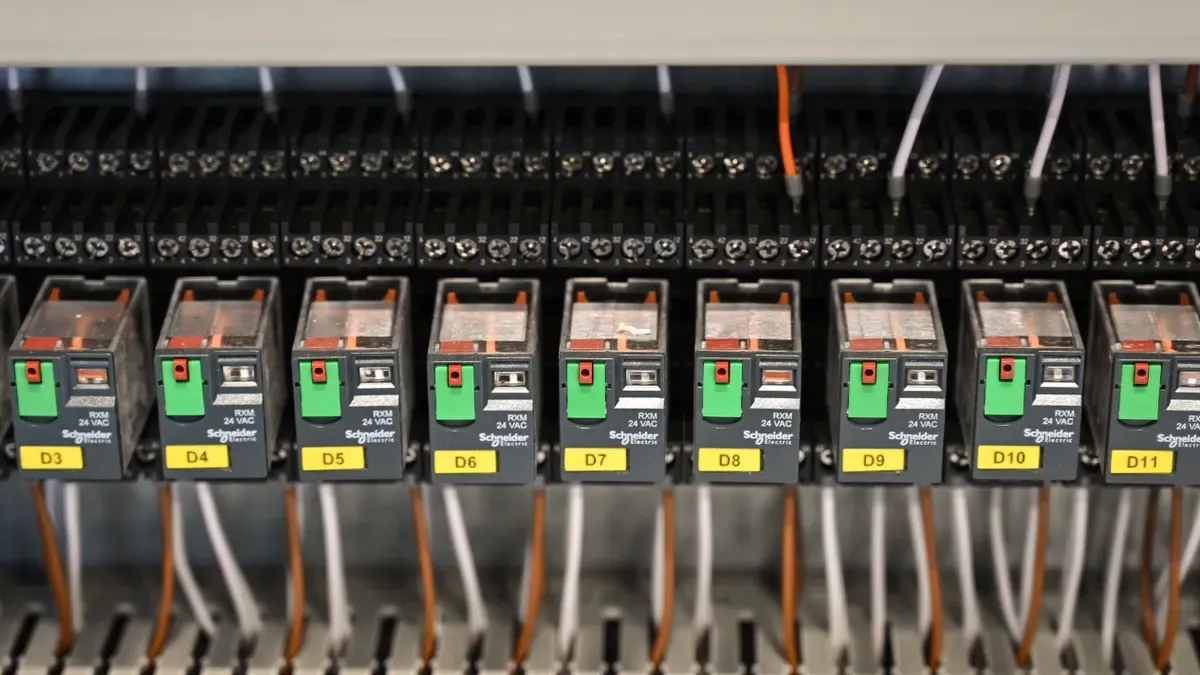
Smart PDUs are rack-mounted power strips with built-in intelligence. They meter power at the outlet level, switch circuits remotely, and report environmental conditions. In a hybrid cloud architecture, they act as the physical control plane for elastic data management. That control plane matters to you directly. Granular power metering, remote switching, and environmental telemetry let you scale data workloads across private and public clouds without guessing at capacity. This article gives you a step-by-step deployment path. You will plan requirements, integrate units in the private cloud, extend control to public cloud workloads, then secure and optimize the result. ESTEL's Smart Power Distribution Unit is built to support this hybrid deployment model.
Key Takeaways
Plan your power needs and check your site before buying smart PDUs.
Install smart PDUs in your private cloud with redundant power feeds and proper networking.
Use APIs to connect smart PDUs to public cloud tools for unified control.
Secure your smart PDUs with strong access controls and encrypted traffic.
Start with a small pilot to prove savings, then expand across your hybrid cloud.
Planning Hybrid Smart PDU Requirements
Needs Analysis and Site Readiness
Start with a written objective list. Decide which racks, workloads, and sites need remote power control and metering. Map every private cloud asset against the public cloud services it talks to. This map shows where power data must flow and which teams will consume it. Hybrid cloud best practices point to three anchors: consistent management, security and compliance, and data integration. Your objective list should reflect all three. A rack that only needs local switching has different requirements from one feeding a latency-sensitive database tier.
Next, walk the site. Confirm rack density, available circuits, and airflow paths before you order hardware. Check that each rack has enough outlet capacity for current loads plus planned growth. Verify network drops reach the PDU location for remote management. Record ambient temperature and humidity ranges at each rack. These readings set your telemetry baselines later.
Compliance and Power Budgeting
Build a power budget per rack. Add the nameplate draw of every device, then apply a realistic utilization factor. Compare the total against the circuit rating and the PDU input rating. Leave headroom for peak loads and future expansion. Document the result in a shared sheet so facilities and IT teams work from the same numbers.
Compliance planning runs in parallel. List the standards your organization must meet, then confirm each candidate device supports the required logging and access controls. Check that audit trails cover both on-premises and cloud-side actions. A clear budget and a clear compliance list narrow the field quickly. At this stage, Smart PDUs move from a generic category to a shortlist of models that fit your racks, circuits, and reporting needs.
Deploying Smart PDUs in the Private Cloud
Rack Integration and Networking
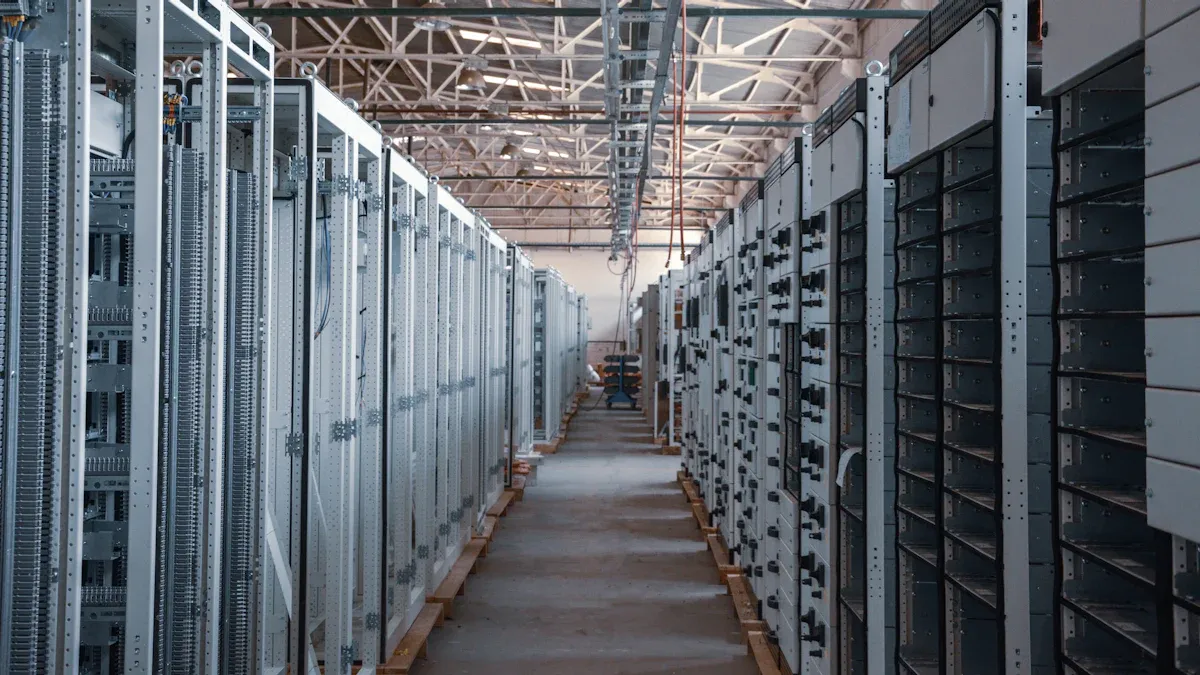
Rack integration starts with redundancy. Feed each rack from two sides, A and B, and crisscross the feeds at the distribution point. Every dual-corded device then draws one cord from each feed. This design keeps loads running when a single feed fails. Balance equipment weight, power draw, and thermal load across the rack so a feed failure does not swing the remaining load past circuit limits. Ground every rack component to a central grounding point.
Cable discipline protects that redundancy. Route power cables through dedicated channels separate from data cables. Keep fiber and copper on opposite sides of the rack to avoid signal interference. Color-code A and B feeds and label every cable so technicians can trace connections fast. Use Velcro ties instead of zip ties for easy adds and replacements.
ESTEL's Smart Power Distribution Unit fits this private cloud rack pattern well. The 8 to 19 outlet configurations cover both sparse and dense racks. The 16A input matches common rack circuit ratings. Surge protection guards connected equipment, and the dehumidifying function keeps humidity in check at sites without precision cooling. The LCD display gives on-site technicians immediate readings during installation.
For remote management, dedicate a separate uplink to the management network. This separation lets you tell a PDU failure apart from a switch failure. Open only the ports the unit needs:
Source | Destination | Protocol | Port | Purpose |
|---|---|---|---|---|
N/A | PDU | SNMP over UDP | 161 | SNMP (user configurable) |
N/A | PDU | SNMP over UDP | 162 | Outgoing SNMPv2 traps |
N/A | PDU | HTTPS over TCP | 443 | Browser interface |
PDU | N/A | Syslog over UDP | 514 | Outgoing Syslog |
PDU | N/A | DHCP over UDP | 546 | DHCP client |
Monitoring and Telemetry
Telemetry turns raw power data into decisions. Enable outlet-level metering so you can isolate faults to a single receptacle and plan capacity from real measurements. Track voltage, current, and energy metrics to spot hotspots and meet service-level agreements. Configure threshold alerts through SMS, SNMP traps, or email so overload conditions reach you before they become outages.
Integrate the units with your DCIM or BMS platform. This integration maintains visibility across geographically dispersed private cloud sites. Support secure protocols such as HTTPS, SNMP, and REST APIs, and keep firmware current through remote updates. Redundant communication paths add another layer of availability.
These Smart PDUs also support sustainability reporting. Carbon usage monitoring and power consumption analysis help you lower PUE targets and justify charge-backs to business units. Start with one pilot rack, confirm the telemetry flows into your management tools, then replicate the configuration across the private cloud footprint.
Extending Smart PDUs to Public Cloud

Virtual PDUs and API Integration
A virtual PDU is a software representation of a physical power strip. It exposes the same outlet states, metering data, and switching commands through an API. You map each physical outlet to a virtual counterpart, then let cloud workloads query and control that mapping. The result is a single interface for data management across on-premises and public cloud resources. Your cloud team sees power state next to compute state, and your facilities team sees the same data from the rack side.
Modern integration relies on open interfaces. A JSON RESTful Web API enables complete automation and integration for DevOps teams and cloud service providers. A CLI over SSH covers script-based automation when you prefer custom tooling. Enterprise features such as Active Directory, IPv6, logging, and monitoring round out management alongside API-driven automation.
A newer generation of operators favors PDUs offering modern, open-source APIs and integration with public cloud management tools, moving away from proprietary software protocols — reflecting an industry shift toward API-driven management.
Hybrid Connectivity and Orchestration
Connectivity ties the two planes together. Run a site-to-site VPN or dedicated link between your private racks and your public cloud tenancy. Keep management traffic on its own segment. Then register the on-premises power endpoints with your orchestration layer so cloud policies can act on physical outlets.
Orchestration tools differ in fit. Azure Arc suits teams standardized on Microsoft cloud services. Google Anthos fits multi-cloud estates that need a consistent Kubernetes layer. Red Hat OpenShift works well for organizations building on container platforms with strong open-source preferences. VMware Tanzu serves shops already invested in VMware virtualization. Whichever you choose, the goal stays the same: one policy engine that scales Smart PDUs and cloud workloads together.
Securing Smart PDUs Across Environments
Security and Compliance Controls
Security starts with identity. Put every PDU behind your central directory and enforce role-based access, so only authorized staff can switch an outlet or change a threshold. Encrypt management traffic with HTTPS and SNMPv3, and disable plain-text protocols on every unit. Send logs to a central syslog server and keep them long enough to satisfy your auditors. Audit trails must cover both the rack side and the cloud side, or a compliance review will find a gap.
Compliance alignment follows the same logic. Map each control to the standard your organization must meet, then verify the device supports the required logging and reporting. Energy regulations are tightening worldwide, and the pressure now reaches the rack. As one industry source puts it:
"Governments worldwide are responding with stricter regulations to curb energy consumption and carbon emissions... Compliance with these regulations necessitates comprehensive monitoring and optimization of energy use."
Key mandates include PUE optimization, ISO 50001 continuous energy management, and ESG reporting for energy and carbon tracking. A PDU that meters energy at the outlet level gives you the raw data these programs demand.
Elasticity and Cost Optimization
Elasticity depends on automation. Write scaling policies that read PDU telemetry and act on it. When a rack approaches its circuit limit, the policy can shift workloads to public cloud capacity before a breaker trips. Orchestration tools then apply the same rule to physical outlets and virtual machines. This closed loop turns power data into a scaling signal.
Cost optimization follows from the same data. Remote management and environmental monitoring deliver savings in several concrete ways:
Real-time kWh tracking helps you find inefficient hardware. A legacy switch drawing 42W at idle versus a modern equivalent at 12W is a clear target, and users report 8–15% annual savings after baseline measurement and targeted replacement.
A 2024 Server Racks Online survey found 68% of mid-sized IT teams now rely on remote PDU reboots as their first-line troubleshooting step for unresponsive devices.
Smart PDUs eliminate 80–90% of "power cycle" site visits, according to aggregated user reports, which directly cuts travel and labor costs.
Precise capacity planning confirms a new GPU server fits within existing circuit limits before deployment, avoiding over-provisioning waste.
Upfront cost runs 2–5× higher than basic PDUs, at $250–$850+ versus $50–$120. Avoided downtime and operational savings offset that gap over time.
ESTEL's Smart Power Distribution Unit supports this work through its LCD display, dehumidifying function, and remote management features. The table below summarizes how specific capabilities translate into savings.
Feature | Cost Optimization Contribution |
|---|---|
Multi-level power metering (breaker, inlet, outlet) | Pinpoints ineffective and costly white-space power consumption in real time |
Remote update and mass configuration (DHCP, TFTP, SFTP) | Avoids time-consuming manual updates per PDU, increasing operational efficiency |
Plug-and-play environmental sensors with customized alerts | Maintains an optimized environment, preventing costly cooling lapses and equipment failures |
Higher capacity and density with three-phase smaller footprint | Maximizes limited rack space and IT infrastructure efficiency |
Ghost server and stranded capacity identification | Enables smarter capacity planning and agile future growth decisions |
Poor planning carries its own cost. Misaligned cooling and energy allocation raise operational expenses and amplify environmental impact. The absence of predictive capacity planning leads to over-provisioning or under-provisioning, and both waste resources.
Best Practices and Pitfalls
Deployment Best Practices
Proven hybrid cloud management rests on four habits. Apply them in order, because each one builds on the last.
Implement unified monitoring and DCIM tools. You gain real-time visibility into power usage, thermal profiles, network health, and capacity constraints.
Adopt zero-trust security policies. Enforce strict identity verification, role-based access control, and continuous traffic inspection.
Prioritize energy efficiency and sustainability. Optimize PUE with eco-friendly hardware, intelligent PDUs, and consolidation software.
Establish robust maintenance and lifecycle management. Schedule regular firmware updates, hardware refreshes, and disaster recovery simulation tests.
These habits map directly to the anchors from your planning phase: clear objectives, consistent management, security, and data integration. Right-size outlet type and density for each rack. Multi-PSU servers need enough receptacles, often 24–48 outlets depending on rack height and server count. Strengthen branch overcurrent protection by moving from traditional 5kAIC breakers to 10kAIC breakers or fuses. Add intelligent circuit protection with alerting, metering, and post-event diagnostics. Perform phase balancing with per-phase monitoring to avoid stranded capacity and overheating. Plan capacity with a three-to-five-year view, and evaluate the whole power and cooling environment rather than treating PDUs in isolation.
Pitfalls to Avoid
Inconsistent monitoring tops the list. Teams that meter some racks and not others lose the baseline they need for capacity planning. Standardize telemetry across every site, including edge and branch locations, so remote monitoring stays reliable as your footprint spreads.
Overlooked compliance is the second trap. Energy regulations are tightening, and auditors expect audit trails that span both the rack side and the cloud side. Map each control to your required standard before deployment, not after.
Poor power budgeting causes the third failure. Skipping the per-rack budget leads to overloaded circuits or wasted headroom. Smart PDUs give you the metering data to correct course, but only if you review it. Treat every alert as a signal to act, and revisit your budget each quarter.
You now have a complete deployment path. Assess your requirements first. Integrate units in the private cloud next. Extend control to public cloud workloads through APIs and hybrid connectivity. Then secure and optimize the whole deployment.
That sequence delivers the core benefit. Smart PDUs give your teams unified, granular power control. Every outlet reports real data. Elastic data management across private and public clouds becomes practical and measurable, not theoretical.
Start small. Deploy a pilot rack, confirm your telemetry flows into your management tools, and prove the savings. Then scale with ESTEL's Smart Power Distribution Unit as your hybrid footprint grows.
FAQ
What makes a PDU "smart" compared with a basic power strip?
A smart PDU meters power at the outlet level, switches circuits remotely, and reports environmental conditions. A basic strip only distributes power. That difference lets you isolate faults to one receptacle, reboot a hung device without a site visit, and feed real consumption data into capacity planning.
Can an on-premises PDU really control public cloud workloads?
Not directly. You map each physical outlet to a virtual PDU, then expose that mapping through an API. Orchestration tools such as Azure Arc or Google Anthos read the mapping and apply one policy to both sides. Power state and compute state then appear in a single interface.
How many outlets should I plan for each rack?
Size the outlet count to your server count and power supply design. Multi-PSU servers need enough receptacles for every cord, and ESTEL's Smart Power Distribution Unit covers 8 to 19 outlets across sparse and dense racks. Leave spare capacity for growth before you finalize the order.
Which security controls should I enable first?
Start with role-based access through your central directory, then encrypt management traffic with HTTPS and SNMPv3. Disable plain-text protocols on every unit. Send logs to a central syslog server and retain them long enough for your auditors. These steps close the most common gaps quickly.
How do I prove the investment pays off?
Run a pilot rack first. Compare metered consumption against your baseline, then count the site visits you avoid. Users report smart PDUs eliminate most power-cycle trips, and that saved labor offsets the higher upfront price over time. Scale once the numbers hold.
See Also
Understanding ESTEL PDUs And Their Key Role In Data Center Cabinets
ESTEL Smart Microgrid Integrated Energy Storage System For Telecom Cabinets
Solar Photovoltaic Energy Storage Power System Designed For Telecom Cabinets
Simple Cable Organization Techniques For Data Center Cabinets
Optimizing Outdoor Cabinets With Integrated Power Cooling And Monitoring Solutions
CALL US DIRECTLY
86-13752765943
3A-8, SHUIWAN 1979 SQUARE (PHASE II), NO.111, TAIZI ROAD,SHUIWAN COMMUNITY, ZHAOSHANG STREET, NANSHAN DISTRICT, SHENZHEN, GUANGDONG, CHINA
