EMC Optimization of Smart Power Distribution Units and Interference Suppression Technology

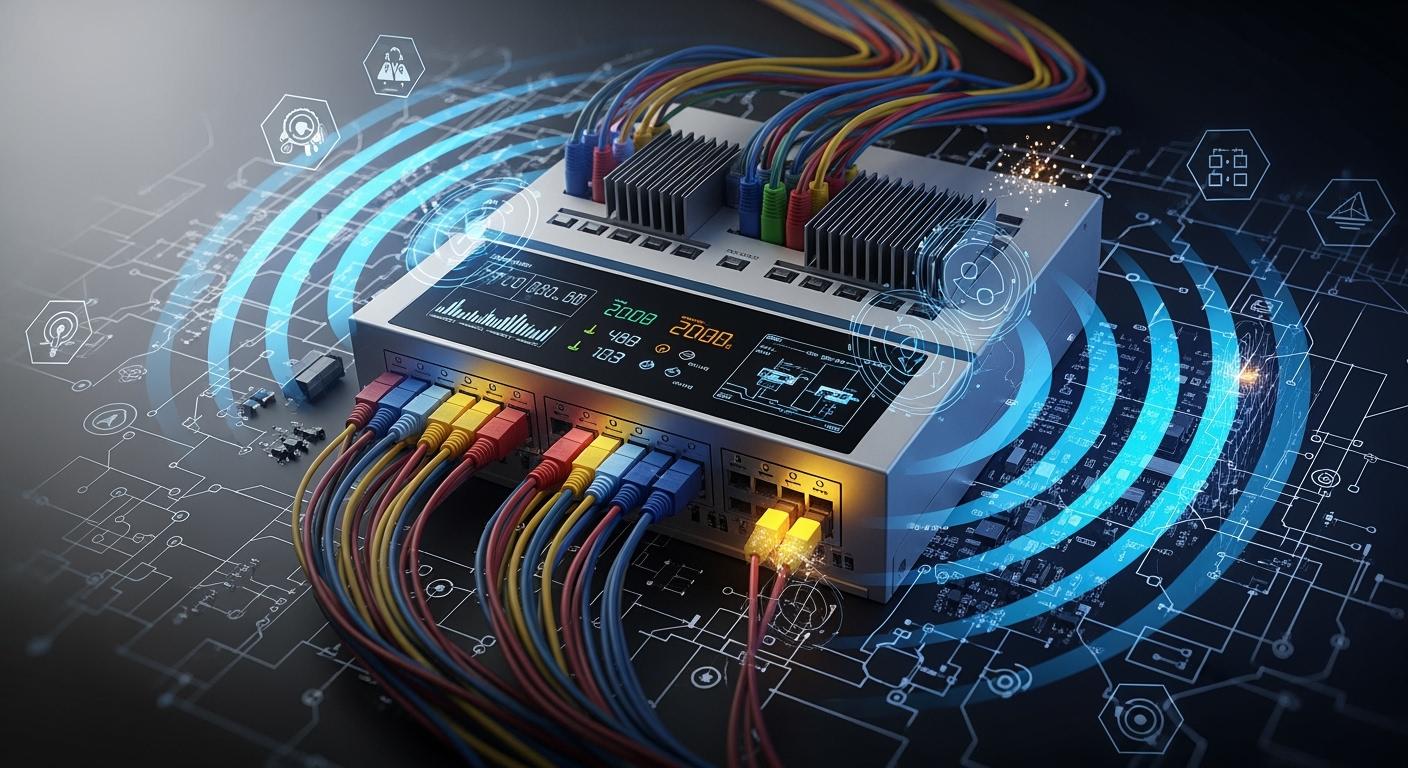
You depend on reliable and safe power management for your network and server environments. EMC optimization protects your Smart Power Distribution Unit from electrical noise, ensuring stable operation and compliance with industry standards. ESTEL leads the telecom infrastructure field, offering advanced solutions for modern power systems. Electromagnetic interference poses real challenges in smart grids, affecting sensors and communication. You need robust EMC strategies to manage these risks and maintain performance in critical applications.
Key Takeaways
Understand electromagnetic compatibility (EMC) to ensure your Smart Power Distribution Unit operates reliably in noisy environments.
Follow international compliance standards like IEC 60601-1-2 and IEC 60335 to avoid penalties and ensure safety.
Implement effective filtering and shielding techniques to reduce electromagnetic interference and protect your equipment.
Use proper grounding methods and smart layout techniques to minimize interference and enhance performance.
Regularly test your Smart Power Distribution Unit for EMC compliance to catch issues early and save time and money.
EMC Basics for Smart Power Distribution Unit
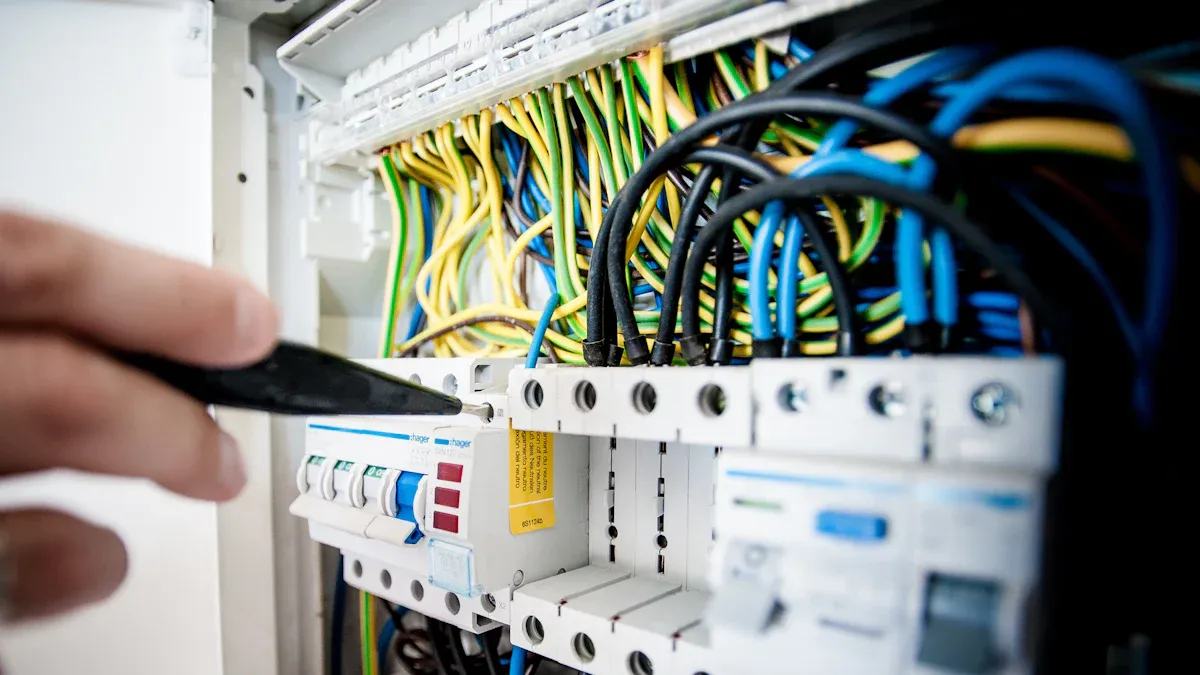
EMC Concepts and Importance
You need to understand electromagnetic compatibility (EMC) to keep your Smart Power Distribution Unit running smoothly. EMC means your equipment can work well even when there is electrical noise around. In smart grids, many things can cause electromagnetic interference (EMI). These include power lines, communication networks, and electronic devices such as smart meters. You will often see two main types of EMI:
Conducted EMI, which travels through power lines.
Radiated EMI, which comes from signals in the air.
You can reduce EMI by shielding your equipment, using filters, and making sure you have proper grounding. As you add more renewable energy systems and wireless networks, you may face new EMC challenges. High-frequency switching devices can also make interference worse. If you want your Smart Power Distribution Unit to stay reliable, you must pay attention to these EMC basics.
Compliance Standards Overview
You must follow international standards to make sure your Smart Power Distribution Unit meets safety and performance rules. These standards help you avoid problems with interference and keep your equipment safe. Here are some common standards you should know:
Standard | Description | Adoption Status |
|---|---|---|
IEC 60601-1-2 | EMC standards for medical devices, used in many environments. | Adopted by the US, Canada, and EU countries; mixed adoption elsewhere. |
IEC 60335 | Safety standards for household appliances. | Widely recognized; adoption details may vary by region. |
If you do not follow these standards, you may face serious penalties:
Type of Penalty | Description |
|---|---|
Legal Consequences | Fines, product recalls, or even criminal charges. |
Operational Impact | Devices may cause interference, leading to malfunctions or data loss. |
Safety Risks | Non-compliance can result in harm to users or damage to equipment. |
ESTEL’s Approach to EMC
You can trust ESTEL to deliver Smart Power Distribution Unit solutions that meet strict international standards. ESTEL follows ISO9001 and other global guidelines to ensure quality and safety. The company uses advanced design and testing methods to reduce EMI and improve reliability. You benefit from products that work well in harsh environments and support stable network operations. ESTEL’s focus on innovation and quality control helps you meet compliance requirements and protect your critical infrastructure.
Interference Challenges in Smart PDUs
EMI Sources and Effects
You face many challenges when you manage a Smart Power Distribution Unit. Electromagnetic interference, or EMI, can disturb the operation of your equipment. EMI comes from both inside and outside your unit. Internal sources include switching power supplies, high-frequency digital signals, and local oscillators used for signal processing. External sources often involve radiated EMI from nearby electronic devices and systems. EMI enters your unit through conduction, capacitive coupling, or induction. You also deal with common mode and differential mode noise, which can affect power signal performance.
Source Type | Description |
|---|---|
Internal Sources | Switching power supplies, high-frequency digital signals, local oscillators used in signal processing. |
External Sources | Radiated EMI from nearby electronic devices and systems. |
Entry Mechanism | Conduction, capacitive coupling, and induction. |
Noise Type | Common mode and differential mode noise affecting power signal performance. |
When EMI disrupts your system, you may see malfunctions or reduced efficiency. EMI can shorten the operational lifespan of your equipment. You must pay attention to these risks to keep your telecom infrastructure reliable.
Conducted and Radiated Interference
You encounter two main types of interference. Conducted interference travels along power lines and cables. Radiated interference spreads through the air from electronic devices. Both types can cause problems in your Smart Power Distribution Unit. Conducted noise often enters through the power supply, while radiated noise comes from wireless signals or nearby equipment. You need to identify the source to apply the right suppression method.
Tip: Use filters and shielding to reduce conducted and radiated interference. Proper grounding helps protect your equipment from EMI.
Smart Grid Environment Considerations
You operate in a smart grid environment where many devices communicate and share power. This environment increases the risk of EMI. High-frequency switching devices, wireless networks, and renewable energy systems add complexity. You must design your unit to handle these challenges. EMI can disrupt operations in telecom systems and create compliance risks. You need to follow standards and use robust EMC strategies to protect your equipment and maintain performance.
EMC Optimization Strategies
Filtering and Shielding Methods
You can control electromagnetic interference in your Smart Power Distribution Unit by using effective filtering and shielding techniques. Filters block unwanted signals and let only the desired power pass through. You have several options for filtering:
Passive EMI filters use capacitors and inductors to absorb and dissipate noise.
Ferrite chokes reduce high-frequency noise in cables and power lines.
Differential mode passive EMI filters target high-frequency currents flowing in opposite directions.
RF chokes block high-frequency alternating currents but allow useful signals.
Power chokes filter noise and ripple in power conversion circuits.
Active EMI filters use advanced circuits for efficient noise suppression.
Amorphous core EMI filters offer high permeability and low core loss for strong noise reduction.
You should also use electromagnetic shielding. Shielding builds a barrier around sensitive parts of your unit. This barrier blocks or redirects unwanted electromagnetic energy. Shielding ensures your Smart Power Distribution Unit operates reliably, even in environments with strong interference. Some advanced systems, like modular shielding transits, also protect against hazards such as fire and water.
Tip: Combine filtering and shielding for the best protection against both conducted and radiated interference.
Grounding and Layout Techniques
You can further reduce electromagnetic interference by using proper grounding and smart layout techniques. Grounding provides a safe path for unwanted electrical energy. Here are common grounding methods:
Grounding Technique | Description |
|---|---|
Single-Point Grounding | Connect all subsystems to one ground point. This minimizes common-mode impedance issues. |
Multipoint Grounding | Bond each subsystem to a low-impedance ground plane. This reduces common-mode currents and EMI. |
Separate Grounds | Use different grounds for structure, signal, and power systems. This helps control interference. |
You should also pay attention to the layout of your printed circuit boards. Good layout practices include:
Build a stack-up with solid, adjacent reference planes for every signal layer.
Avoid routing sensitive traces near the edges of the board.
Minimize trace length and loop area.
Do not leave traces, test points, or unused IC pins floating, as they can act as antennas.
Place decoupling capacitors and EMI filters at noisy entry and exit points.
Use shielded enclosures to contain interference.
These steps help you keep your Smart Power Distribution Unit stable and compliant.
Component Selection for Smart Power Distribution Unit
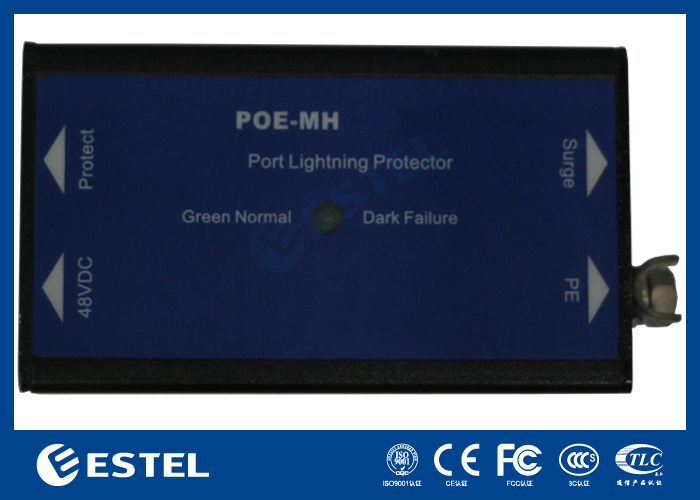
You need to choose components that support EMC goals. Select connectors, cables, and circuit elements that meet international standards. Use components with low noise and high immunity to interference. For example, ESTEL’s Smart Power Distribution Unit uses high-quality copper sticks and IEC-compliant cable plugs. These choices help reduce the risk of EMI and improve reliability.
You should also look for surge protection and dehumidifying features. These features protect your equipment from voltage spikes and moisture, which can worsen interference. ESTEL’s units include surge protection and a dehumidifying function, making them suitable for harsh environments.
Note: High-quality components not only improve EMC but also extend the lifespan of your equipment.
Compliance Testing Practices
You must verify that your Smart Power Distribution Unit meets EMC standards before deployment. Testing ensures your unit does not emit too much noise and can resist interference from other devices. Key testing practices include:
Testing Practice | Description |
|---|---|
Emissions Testing | Measures the electromagnetic noise your unit emits. Ensures it stays within certified limits. |
Susceptibility Testing | Checks if your unit works correctly when exposed to electromagnetic noise. |
Pre-Compliance Testing | Validates your unit before official testing. Helps you find and fix problems early. |
You should use tools like spectrum analyzers, near-field probes, power meters, and vector network analyzers. These tools help you measure emissions, locate noise sources, and verify filter performance.
You also need to follow standards such as FCC Part 15, IEC CISPR, and CENELEC EN. These standards guide you in designing and testing for EMC compliance. By following these practices, you ensure your Smart Power Distribution Unit operates safely and meets legal requirements.
Remember: Early and regular testing saves time and money by catching problems before they reach the field.
Advanced Suppression Technologies by ESTEL
Innovative Materials and Components
You need advanced materials and components to achieve strong electromagnetic compatibility in your power systems. ESTEL uses high-permeability alloys and amorphous cores in their filters. These materials absorb and block unwanted electromagnetic noise. You also find multi-layer shielding in ESTEL products. This shielding protects sensitive circuits from both conducted and radiated interference.
You benefit from connectors and cables that meet strict international standards. ESTEL selects copper sticks and IEC-compliant plugs for their Smart Power Distribution Unit. These choices reduce resistance and improve signal integrity. Surge protection and dehumidifying features add another layer of defense. They keep your equipment safe from voltage spikes and moisture, which can increase interference.
Note: Using innovative materials helps you maintain stable operation in harsh environments.
AI-Driven EMC Design
You can use artificial intelligence to improve electromagnetic compatibility. ESTEL applies AI-driven design tools to predict and solve EMC problems before they happen. These tools analyze circuit layouts, material choices, and system architecture. You get faster design cycles and fewer errors.
AI helps you optimize filter placement and shielding. It can also simulate real-world interference scenarios. This means you can test your Smart Power Distribution Unit virtually and make changes early in the design process. You save time and reduce costs by catching issues before production.
Wide-Bandgap Semiconductor Applications
You see wide-bandgap semiconductors, such as silicon carbide (SiC) and gallium nitride (GaN), in ESTEL’s advanced solutions. These materials handle higher voltages and switch at faster speeds than traditional silicon. You get lower power loss and less heat generation.
Wide-bandgap semiconductors help you reduce electromagnetic emissions. They allow for smaller, more efficient filters and power supplies. You also benefit from improved reliability and longer equipment life. ESTEL integrates these components to give you better performance in demanding telecom environments.
ESTEL Case Studies
You can look at real-world examples to see how ESTEL’s suppression technologies work. In one project, a telecom operator faced frequent outages due to EMI in a remote base station. ESTEL provided a Smart Power Distribution Unit with advanced filtering, shielding, and surge protection. The operator saw a 40% drop in downtime and improved network stability.
In another case, a data center needed to meet strict European EMC standards. ESTEL supplied units with multi-layer shielding and AI-optimized layouts. The data center passed all compliance tests on the first attempt.
Here is how ESTEL’s certifications compare to industry benchmarks:
Certification | Description |
|---|---|
UL Listed Mark | Ensures products are tested for safety against electric shock and fire hazards. |
CE Mark | Indicates compliance with EU safety standards for electronic devices. |
FCC Compliance | Ensures electromagnetic emissions do not interfere with other devices. |
You can trust ESTEL to deliver solutions that meet global safety and EMC requirements. These real-world results show the value of advanced suppression technologies in protecting your critical infrastructure.
You play a key role in keeping your power systems reliable by focusing on EMC optimization and interference suppression. ESTEL leads the way with innovative solutions for telecom infrastructure. To improve EMC in your Smart Power Distribution Unit, you should:
Minimize loop areas in conductors.
Shield high dV/dt conductors.
Avoid unnecessary fast switching.
Watch for gaps in conductive surfaces.
As smart grids advance, you need to update your EMC strategies. New technologies bring more electronic devices and require careful design to prevent interference.
FAQ
What is EMC and why does it matter for Smart Power Distribution Units?
EMC stands for electromagnetic compatibility. You need EMC to ensure your unit works safely and reliably in environments with electrical noise. EMC protects your equipment from interference and helps you meet industry standards.
How does ESTEL’s Smart Power Distribution Unit suppress interference?
You benefit from advanced filtering, shielding, and grounding techniques. ESTEL uses high-quality materials and intelligent design to block unwanted signals. Surge protection and dehumidifying functions add extra defense against environmental risks.
Which standards should you follow for EMC compliance?
You should follow standards like IEC 60335, FCC Part 15, and CE Mark requirements. These standards help you avoid interference, ensure safety, and meet legal regulations in different regions.
Can you monitor and control the Smart Power Distribution Unit remotely?
Yes, you can use remote management features. The unit offers real-time monitoring through an LCD display and supports intelligent protocols. You gain control and visibility from anywhere.
What tools help you test EMC performance?
You use spectrum analyzers, near-field probes, and power meters. These tools measure emissions and locate noise sources. Early testing helps you fix problems before deployment.
See Also
Innovative Energy Storage Solutions for Telecom Cabinet Systems
Ensuring Consistent Power Supply for Telecom Cabinet Operations
Solar-Powered Energy Storage Solutions for Telecom Cabinets
Enhancing Outdoor Cabinets with Power, Cooling, and Oversight
CALL US DIRECTLY
86-13752765943
3A-8, SHUIWAN 1979 SQUARE (PHASE II), NO.111, TAIZI ROAD,SHUIWAN COMMUNITY, ZHAOSHANG STREET, NANSHAN DISTRICT, SHENZHEN, GUANGDONG, CHINA
