How to Ensure Reliability in Your Telecom Rectifier System


You ensure reliability in your telecom rectifier system by focusing on robust design, careful selection of dc components, and ongoing monitoring of every dc supply. Trusted brands like ESTEL set high standards for dc power supply reliability. ESTEL rectifiers deliver over 98% efficiency and advanced protection against voltage fluctuations. These systems operate in extreme temperatures, making them ideal for harsh environments. Avoid common pitfalls in dc rectifier design by watching for thermal, electrical, and environmental failures.
Type of Failure | Description |
|---|---|
Thermal Failures | Excessive heat can cause component breakdown, leading to reduced equipment life. |
Electrical Failures | Common issues include rectifier module wear, voltage spikes, and poor grounding. |
Environmental Failures | Factors like humidity, dust, and improper seals can lead to intermittent faults and damage. |
Key Takeaways
Choose high-quality rectifier modules that offer over 95% efficiency to ensure stable dc output.
Implement regular maintenance checks to prevent unexpected failures and extend the life of your system.
Utilize real-time monitoring tools to detect issues early and reduce downtime significantly.
Incorporate redundancy in your design to maintain continuous power supply during component failures.
Test your system under various conditions to ensure reliability in extreme environments.
Key Challenges in Telecom Rectifier Systems

Common Failure Points
You face several common failure points in any dc rectifier system. The most frequent issues include overheating, component aging, and unstable dc output. When you select a power supply, you must check for weak links in the dc output path. Poor connections, faulty diodes, and worn capacitors can disrupt the output and cause unexpected shutdowns. Regular troubleshooting helps you spot these problems early. Industry surveys show that you also need to watch for intense price competition, supply chain disruptions, and evolving regulatory standards. The table below highlights these challenges:
Challenges |
|---|
Intense price competition |
Supply chain disruptions |
Evolving regulatory standards |
Need for continuous innovation |
Meeting energy efficiency and sustainability requirements |
You should always test the dc output under different loads to ensure stable supply and reliable operation.
Downtime Risks
Downtime in a telecom rectifier system can lead to major service interruptions. If your dc rectifier system fails, you risk losing network uptime and damaging your reputation. You must understand that 33% of downtime comes from power outages. Intelligent power distribution and proactive troubleshooting can prevent up to 80% of recent outages. The table below shows how different factors impact network uptime:
Evidence Type | Description | Impact on Network Uptime |
|---|---|---|
Operational Reliability | Backup power configurations increase reliability by 25%. | Higher uptime, fewer interruptions |
Equipment Uptime | Intelligent PDUs improve uptime by 20%. | Fewer outages, better service quality |
Outage Prevention | Proactive monitoring prevents up to 80% of outages. | Enhanced overall network uptime |
Downtime Source | 33% of downtime comes from power outages. | Highlights importance of power systems |
Maintenance Response | Remote monitoring speeds up maintenance by 40%. | Reduces downtime, improves user experience |
Predictive Analytics | AI analytics predict failures weeks in advance. | Enables scheduled maintenance |
You can reduce downtime by investing in reliable dc supply, monitoring output, and responding quickly to faults.
Environmental Stress Factors
Environmental stress can cause your dc rectifier system to fail. High humidity and temperature extremes affect the internal dc components and reduce output stability. You need to test your dc rectifier system in harsh conditions to ensure the power supply remains stable. Humidity tests show that moisture can damage internal parts, while temperature assessments confirm the durability of your dc output. When you troubleshoot, always check for signs of corrosion or overheating.
Humidity tests demonstrate the impact of moisture on internal components, ensuring rectifiers function effectively in challenging environments.
Temperature and humidity assessments confirm that rectifiers are capable of operating under various environmental conditions, validating their durability through stress testing.
You must also consider the cost of unreliable dc rectifier systems. Increased capital expenditure, higher operational costs, and financial losses from service interruptions all result from poor dc output and supply issues. Focusing on reliable dc rectifier system design and regular troubleshooting will help you avoid these risks and maintain a steady output.
Essential Components for Reliable Power
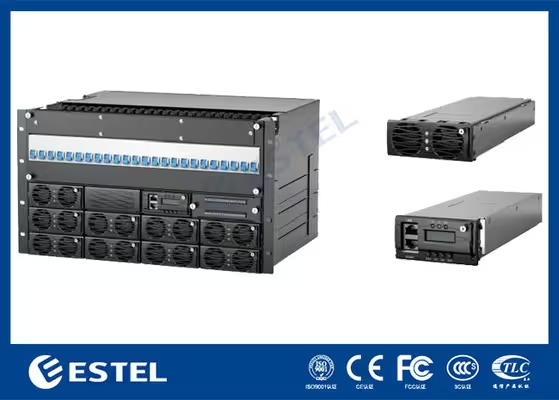
High-Quality Rectifier Modules
You need high-quality rectifier modules to convert AC power into stable dc output. These modules form the backbone of your telecom system. When you choose rectifiers, look for models that deliver over 95% efficiency and support large-scale deployments. Efficient cooling, such as fan cooling, helps maintain reliability and prevents hot spots. The table below compares high-quality rectifier modules with standard modules:
Metric | High-Quality Rectifier Modules | Standard Rectifier Modules |
|---|---|---|
Cooling Method | Fan cooling preferred for reliability | Convection cooling may lead to hot spots |
Reliability | Higher due to efficient cooling | Lower if poorly designed |
Maintenance Cost | Generally higher due to fans | Lower with convection cooling |
System Size Impact | Less impact with efficient design | Can increase size significantly |
You should select rectifier modules that offer redundancy, remote monitoring, and high-density designs. These features optimize space and ensure uninterrupted dc output.
Battery Management Integration
Battery management integration is one of the key components for reliable telecom rectifier systems. You rely on battery backup systems to provide dc output during outages. Modern technologies like VRLA and lithium-ion batteries offer resilience and long life. Battery monitoring plays a vital role in maintaining system reliability. You benefit from features such as live SOC reporting, cycle tracking, temperature sensors, auto-balancing, predictive failure warnings, and remote status integration. These battery monitoring functions help you track battery health and performance, ensuring continuous dc output. With seamless integration, you avoid the need for complete system replacements and meet the growing demands of telecom networks.
Advanced Monitoring Circuits
Advanced monitoring circuits protect your dc rectifier system from unexpected failures. You use real-time monitoring to track voltage, current, and temperature, which allows you to detect issues before they affect the dc output. Redundancy, hot-swap capabilities, and advanced protection features safeguard your system against electrical faults and environmental hazards. Remote monitoring enables you to oversee performance and diagnose problems from any location. Predictive maintenance uses smart sensors and cloud platforms to reduce manual inspections and operational costs. You should monitor key indicators such as voltage, current, and internal resistance to maintain reliable dc output and battery monitoring.
Tip: Regular battery monitoring and real-time output tracking help you prevent downtime and extend equipment life.
ESTEL’s Reliability Standards
ESTEL sets industry-leading standards for telecom rectifier systems. You benefit from rectifier modules that achieve over 98% efficiency and advanced protection against voltage fluctuations. ESTEL’s systems operate in extreme temperatures and harsh environments, ensuring stable dc output. The latest technological advancements include redundancy, remote monitoring, scalability, high-density designs, and energy efficiency. Integration with smart systems enables predictive maintenance and reduces downtime. By choosing ESTEL, you ensure your dc rectifier system meets the highest reliability standards and supports continuous battery monitoring.
Step-by-Step Guide to System Design
A reliable telecom rectifier system starts with a clear step-by-step guide. You need to follow each stage carefully to avoid unexpected voltage drops and ensure stable dc output. This guide helps you build a robust system and avoid common pitfalls in building a rectifier.
Define System Requirements
You begin by defining system requirements. You must understand the voltage, current, and application needs for your telecom network. Accurate design requirements set the foundation for every decision you make. You should list the dc output levels, maximum current, and environmental conditions. This step ensures your design matches the demands of your site and prevents future troubleshooting headaches.
Tip: Always document your system requirements before you start the design process. This habit saves time during testing and troubleshooting.
Prototype and Test the Rectifier Module
You move to prototyping and testing after you set your requirements. You build a prototype to evaluate the dc output and performance. Testing under various loads reveals weaknesses in your design. You should use triple stress testing to simulate grid outages, load surges, and high temperatures. Voltage stress tests help you find internal failures. Current stress tests expose areas prone to wear and tear. Temperature and humidity tests confirm reliable operation in harsh environments. Automated testing tools provide precise data and verify compliance with industry standards.
Triple stress testing identifies vulnerabilities in your rectifier module.
Voltage and current stress tests reinforce system robustness.
Temperature and humidity tests prevent damage and confirm reliability.
Automated testing tools ensure your design meets telecom standards.
Testing and troubleshooting at this stage help you avoid costly mistakes later. You should adjust your design based on test results to improve reliability.
Optimize Circuit Design
You optimize circuit design to enhance reliability and efficiency. You select high-performance components such as SiC and GaN materials for better efficiency. You focus on over-voltage and over-current protection to maintain long-term device reliability. You use heat sinks, forced-air cooling, or liquid-cooled cold plates to manage thermal resistance. Proper gate drive design ensures stable triggering and extends the operational lifetime of your SCRs.
Aspect | Evidence |
|---|---|
Over-voltage protection | Effective over-voltage and over-current protection is essential for maintaining long-term device reliability in industrial power control systems. |
Thermal management | To maintain thermal stability, SCRs employ heat sinks, forced-air cooling, or liquid-cooled cold plates, depending on power rating. Thermal resistance must be minimized to ensure effective heat transfer from the junction to the ambient. |
Gate drive design | Proper gate drive design ensures stable triggering, minimizes false firing, and extends the operational lifetime of the SCR. |
You must choose diodes, capacitors, and ICs that match your dc output needs. You place processors strategically to enable advanced rectifier monitoring and real-time data collection. Optimizing circuit design reduces the risk of unexpected voltage drops and improves system performance.
Implement Monitoring Solutions
You implement monitoring solutions to maintain reliable dc output and prevent failures. You use predictive maintenance to detect potential issues early. Environmental control measures protect rectifier modules from damage. You perform regular performance checks using rectifier monitoring tools to prevent unexpected downtimes.
Routine monitoring ensures rectifier operation and prevents power surges.
Visual inspections help you spot physical damage and overheating.
Electrical testing verifies output voltage and current.
Predictive maintenance strategies identify issues before they cause failures.
Environmental control measures, such as maintaining proper temperature and humidity, extend rectifier lifespan.
High-quality replacement parts ensure reliability and performance.
Monitoring tools and analytics track system health in real-time.
Training programs for personnel improve maintenance practices.
You should integrate rectifier monitoring into your design to enable real-time alerts and data analysis. This step-by-step guide helps you maintain stable dc output and simplifies troubleshooting.
Note: Consistent testing and troubleshooting throughout the design process lead to a more reliable telecom rectifier system.
Step-by-Step Guide Summary
You follow these steps to achieve a robust telecom rectifier system:
Define system requirements for voltage, current, and application.
Prototype and test the rectifier module under various loads.
Optimize circuit design with high-quality components and advanced protection.
Implement monitoring solutions for predictive maintenance and real-time rectifier monitoring.
You repeat testing and troubleshooting at each stage to ensure your dc output remains stable and reliable.
Ensuring Reliable Power in DC Rectifier Systems
Redundancy and Modular Design
You can achieve reliable power in your dc rectifier system by focusing on redundancy and modular design. Redundancy means you add backup rectifiers and batteries to your power supply. If one part fails, the system switches to another, so your telecom rectifier system continues to deliver stable dc output. This approach reduces the risk of outages and keeps your network running without interruption. You also benefit from modular design, which makes installation and maintenance easier. The table below shows how modular design improves your dc rectifier system:
Advantage | Description |
|---|---|
Improved Serviceability | Modular design allows for easy installation and maintenance of rectifier systems. |
Scalability | The modular approach enables the system to be easily scaled to meet demand. |
Reduced Complexity | Simplifies the overall system architecture, enhancing reliability and efficiency. |
You should always include redundancy and modularity in your design to ensure continuous dc output and efficient troubleshooting.
Preventive Maintenance
You need a preventive maintenance plan to keep your dc rectifier system reliable. Regular inspections and cleaning help you avoid unexpected failures in your power supply. Schedule these checks at least once a month. Keep the environment between 20°C and 25°C to improve battery performance and extend battery life. Follow proper charging and discharging protocols to protect your batteries. Preventive maintenance supports stable dc output and reduces the need for emergency troubleshooting. You can extend the life of your dc components and maintain high efficiency by following these steps:
Inspect and clean your dc rectifier system monthly.
Maintain optimal temperature for batteries.
Use correct charging and discharging methods.
You should document all maintenance activities to track system health and improve future troubleshooting.
Real-Time Monitoring with ESTEL
You gain real-time visibility into your dc rectifier system by using ESTEL technology. Real-time monitoring gives you early alerts when abnormal conditions appear. This feature helps you act quickly and prevent equipment failures. The table below highlights the benefits of real-time monitoring with ESTEL:
Benefit | Description |
|---|---|
Early Alerts | Real-time monitoring detects abnormal conditions before they become critical. |
Reduced Battery Failure Rates | Early detection can reduce battery failure rates by up to 98%. |
Improved Maintenance Response | Remote monitoring services improve maintenance response times by 40%. |
Increased Operational Reliability | Facilities with backup power configurations see a 25% increase in operational reliability. |
You can minimize costly downtime and avoid financial losses by using real-time alerts. Proactive power monitoring lets you respond to issues before they affect your dc output. You improve troubleshooting speed and maintain stable dc output. ESTEL’s real-time monitoring tools support efficient design and help you achieve reliable power in your telecom rectifier system.
You can ensure your dc rectifier system remains reliable by following these essential steps:
Perform regular battery maintenance and dc rectifier system checks.
Use predictive maintenance and real-time monitoring to protect your dc rectifier system from unexpected failures.
Invest in quality components and continuous training for your team.
Choose a systematic design approach for your dc rectifier system.
Feature | Impact on dc rectifier system reliability |
|---|---|
Rigorous Testing | Ensures your dc rectifier system meets durability needs |
Modular Design | Reduces dc rectifier system failure risk |
Advanced Safety Features | Protects your dc rectifier system from faults |
Ongoing monitoring of your dc rectifier system reduces after-hours call outs, prevents equipment damage, and avoids costly outages. Trusted brands like ESTEL help you achieve stable dc output and long-term performance. Review your dc rectifier system regularly to keep your dc network strong.
FAQ
What is the most common cause of rectifier system failure?
You often see thermal stress as the main cause. Overheating damages internal components. You should check cooling systems and remove dust regularly to prevent this issue.
How often should you perform maintenance on your telecom rectifier system?
You should inspect and clean your rectifier system every month. Regular checks help you spot early signs of wear or damage. This routine keeps your system reliable.
Why is real-time monitoring important for rectifier systems?
Real-time monitoring gives you instant alerts about abnormal conditions. You can act quickly to prevent failures. This approach reduces downtime and protects your network.
What features should you look for in a reliable rectifier brand?
Look for high efficiency, advanced protection, remote monitoring, and proven performance in harsh environments. Trusted brands like ESTEL offer these features and set industry standards.
See Also
Ensuring Consistent Power Supply For Telecom Cabinets
Essential Insights Into Telecom Power Supply Characteristics
Calculating Power Systems and Battery Needs For Telecom Cabinets
An Introductory Guide To Telecom Power Supply Systems
A Detailed Risk Analysis Guide For Telecom Cabinet Batteries
CALL US DIRECTLY
86-13752765943
3A-8, SHUIWAN 1979 SQUARE (PHASE II), NO.111, TAIZI ROAD,SHUIWAN COMMUNITY, ZHAOSHANG STREET, NANSHAN DISTRICT, SHENZHEN, GUANGDONG, CHINA
