Remote Monitoring for Outdoor Base Stations: FSU and APIs

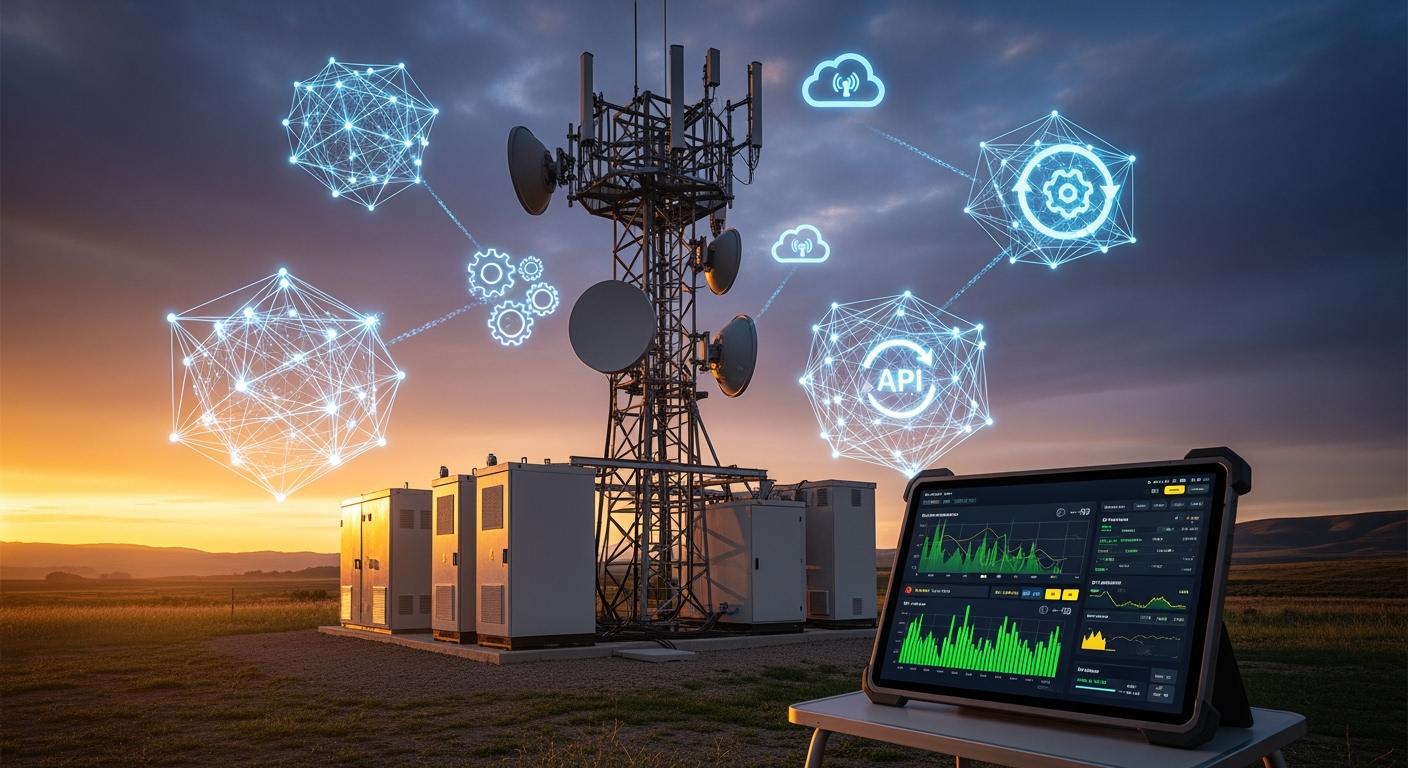
You can achieve reliable remote monitoring for outdoor base stations by leveraging FSU and APIs. This approach gives you 24/7 access to real-time data, so you can view critical information and receive instant alerts when anomalies occur. You benefit from lower maintenance costs as fault alarms and remote diagnostics reduce on-site visits. Intelligent management supports unmanned operation and significantly cuts technical expenses. ESTEL’s commitment to quality and innovation ensures that solutions like the Environment Monitoring System deliver proven results for telecom infrastructure.
Key Takeaways
Remote monitoring allows you to track outdoor base stations without being on-site, ensuring smooth network operations.
Using FSUs and APIs helps you gather real-time data, enabling quick responses to issues and reducing maintenance costs.
Implementing an Environment Monitoring System provides immediate alerts for environmental changes, enhancing equipment protection.
Follow best practices like using durable materials and regular inspections to maintain the reliability of your monitoring system.
Integrating APIs can automate data exchange, improving operational efficiency and allowing for better management of your network.
Remote Monitoring Essentials
What Is Remote Monitoring?
You use remote monitoring to track and manage outdoor base stations without being on-site. This process relies on technology to collect data and send alerts about the status of your equipment. The main goal is to keep your network running smoothly and prevent problems before they affect your customers.
Here is a quick overview of how remote monitoring works in telecom base stations:
Aspect | Description |
|---|---|
Importance | Prevents customers from being the first to report network outages, thus protecting revenue. |
Monitoring Areas | Includes environmental conditions, power conditions, telecom equipment, facility alarms, and tower lights. |
System Components | Typically consists of Remote Telemetry Units (RTUs) that collect alarms and send them to a master console. |
To set up effective remote monitoring, you need several essential components:
Hardware such as sensors for temperature, humidity, and power status
Connectivity options like cellular or satellite links
Software for network setup and communication protocols
Integration between all parts of the system
Security features to protect your data
Why Outdoor Base Stations Need It
Outdoor base stations face unique challenges. You must monitor them closely because they operate in harsh environments. Weather, temperature changes, and unauthorized access can cause problems. Unlike indoor stations, outdoor sites cover larger areas and use more power. Regular inspections are difficult and costly. Remote monitoring helps you detect issues early and reduce maintenance trips. An Environment Monitoring System gives you real-time data, so you can respond quickly and keep your network reliable.
Key Challenges
You will encounter several challenges when monitoring outdoor base stations. The most significant ones include:
Challenge | Description |
|---|---|
Detecting equipment or power failures | Real-time detection is crucial for maintaining service uptime. |
Monitoring temperature and humidity | Essential for preventing equipment damage in extreme conditions. |
Preventing unauthorized access | Security is a major concern for outdoor installations. |
Maintaining stable communication | Harsh conditions can disrupt signal transmission. |
You can overcome these challenges by following industry best practices. Define your objectives, choose the right tools, and work with experienced providers. This approach ensures your monitoring system stays effective and reliable.
FSU in Base Station Monitoring
FSU Overview
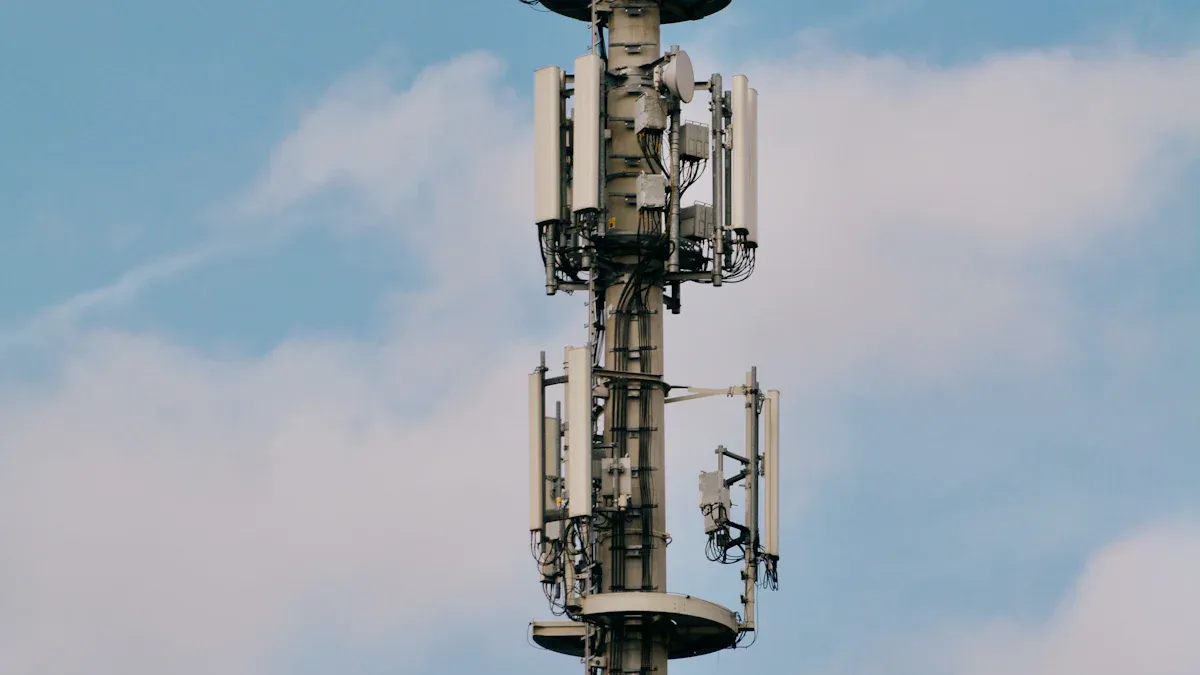
You rely on the Field Monitoring Unit (FSU) to connect your outdoor base station equipment with your monitoring platform. The FSU acts as the central hub that gathers sensor data from your site and sends it to your backend systems. This device ensures that you receive accurate information about temperature, humidity, power status, and other critical parameters. You can trust the FSU for its reliability and compatibility, which are essential for smooth monitoring operations. When you use an Environment Monitoring System, the FSU becomes the bridge between your sensors and your control center.
Real-Time Data and Control
You need real-time data to make quick decisions and maintain network stability. The FSU enables this by collecting information from intelligent management modules and transmitting it to your monitoring platform. The process involves several key components:
Component | Function |
|---|---|
Energy Efficiency Intelligent Management Module | Connects with intelligent devices and communicates with the FSU for data collection. |
Data Collector (FSU) | Collects data from the intelligent management module and uploads it to the MQTT server. |
MQTT Server | Facilitates communication and data management for remote monitoring and control. |
Monitoring Platform | Receives data from the MQTT server for analysis and oversight of the base station's efficiency. |
You can monitor your site in real time and even control certain functions remotely. This setup helps you respond quickly to alarms, adjust settings, and reduce downtime.
Deployment Scenarios
You will find FSUs in a variety of outdoor base station setups. Each scenario uses the FSU to ensure reliable monitoring and power management:
Scenario | Components | Function/Application |
|---|---|---|
Grid Power + Backup Power Storage | Mains power + Battery + FSU monitoring | Supplies power during mains operation; provides short-term backup power during mains outages (Urban base stations, areas with stable power grids) |
Grid Power + Energy Storage + Diesel Generator | Mains power + Battery + Diesel generator + FSU | Mains power → Battery → Diesel generator (three-tier protection) (Remote areas with mains power but occasional outages) |
PV + Grid Power + Energy Storage + Diesel Generator | Rectifier Power Supply + PV Power Cabinet + Battery + Diesel Generator + FSU | Energy Priority: PV > Grid Power > Battery > Diesel Generator (Areas without stable grid power and with ample sunlight) |
Photovoltaic + Energy Storage + Diesel Generator | Fully reliant on renewable energy + diesel generator backup | Priority: Solar > Battery > Diesel generator (DC) (Fully off-grid communication sites) |
You can choose the right deployment based on your site’s location and power needs. The FSU adapts to each scenario, making your monitoring system flexible and robust.
APIs for Integration
API Basics
You use APIs, or Application Programming Interfaces, to connect different systems and share data. In telecom monitoring, APIs help you link your Environment Monitoring System with other platforms. This connection lets you access and control data from many sources. You do not need to be an expert developer to use APIs. Modern APIs focus on making integration easy for everyone in your organization.
Here are the basic principles of API integration in telecom monitoring:
Principle | Description |
|---|---|
Democratization of APIs | Lets more users build and manage APIs, which increases productivity and agility. |
Advanced data access | Gives you control over how you access data, including speed and real-time updates through API calls. |
AI-enabled metadata discovery | Uses AI to find and describe data, making it easier for you to process and use information. |
Automation and Data Exchange
You can automate many tasks with APIs. They allow your monitoring system to generate real-time data from connected devices. You get instant updates on sensor statuses, such as temperature, humidity, and motion. APIs also give you access to events and system information. This seamless data exchange improves your operational efficiency and reduces manual work.
APIs enable real-time data generation from connected products.
You can access sensor statuses, events, and system information.
Automation through APIs streamlines your monitoring and management tasks.
Tip: Automating data exchange with APIs helps you respond faster to changes at your outdoor base stations.
Use Cases in Monitoring
You will find APIs useful in many outdoor base station scenarios. They support smart grid integration, environmental monitoring, and safety systems. The table below shows some impactful use cases:
Use Case | Description |
|---|---|
Smart Grid and Smart Utilities | Connects smart meters for electricity, water, and gas to manage resources. |
Environmental Monitoring | Links air quality sensors, waste bins, and flood detectors for safety. |
Safety and Security | Supports door monitoring, manhole sensors, and smart lighting for security. |
You can use APIs to expand the capabilities of your Environment Monitoring System and create a smarter, more responsive network.
Environment Monitoring System by ESTEL

Product Features and Integration
You need a monitoring solution that adapts to the demands of outdoor base stations. ESTEL’s Environment Monitoring System gives you a complete toolkit for this purpose. The system supports SNMP remote network monitoring, so you can access real-time data through a web interface. You can use the RS232 universal interface for synchronous data acquisition, and Modbus protocol for integrated monitoring across multiple rooms. The system operates on a 12VDC power supply and fits standard 19-inch racks, making installation straightforward in telecom cabinets.
Here is a summary of the main features:
Feature | Description |
|---|---|
Enables remote monitoring through a network interface and web page display. | |
RS232 universal interface | Allows synchronous acquisition of real-time data. |
Modbus field integrated monitoring | Supports integrated monitoring of multiple rooms using the Modbus protocol. |
Working power supply | Operates on a 12VDC power supply. |
Size | Standard 19 inch rack dimensions (423mm223mm45mm). |
6-way relay control output | Provides flexible output control for devices like fans and air conditioners. |
15-way switching value input | Monitors various environmental conditions such as smoke and flooding. |
4 way of analog value | Compatible with transmitters for detecting power, temperature, and pressure. |
You can easily integrate the Environment Monitoring System with FSU devices and APIs. This compatibility lets you connect your sensors, control modules, and management platforms. You gain a unified view of your site’s status and can automate responses to environmental changes. The system’s modular design means you can scale up as your network grows, adding new sensors or control outputs as needed.
Tip: The modular design and protocol support make it easy to upgrade your monitoring setup without replacing your entire system.
Real-Time Alerts and Sensors
You want to know about problems the moment they happen. The Environment Monitoring System delivers real-time monitoring and alarm notifications. You can set custom alarm thresholds for temperature, humidity, smoke, water presence, and more. When a parameter exceeds your set limits, the system sends immediate alerts, so you can act before issues escalate.
You benefit from a wide range of integrated sensors, including:
Temperature and humidity sensors
Smoke detectors
Water leakage sensors
Air quality and gas sensors
Noise and vibration monitors
You can also integrate the system with GIS for spatial analysis, helping you visualize environmental risks across your network. The alarm function plays a critical role. It provides automated alerts when temperature or humidity move outside safe ranges or when contamination is detected. This feature enables you to take immediate action and prevent equipment damage or service interruptions.
The system’s real-time alert mechanisms help you reduce downtime. You receive immediate environmental data, which supports quick decision-making and enhances public safety. Early detection of severe weather or environmental threats allows you to respond faster. The system connects with mass notification platforms, so you can disseminate warnings rapidly. Backup power ensures the system keeps working during outages or harsh weather.
Feature | Description |
|---|---|
Real-time Data | Provides immediate environmental data to inform decisions and enhance public safety. |
Early Detection | Identifies severe weather threats early, facilitating quicker emergency responses. |
Integration with Alerts | Connects with mass notification systems to disseminate warnings rapidly. |
Reliable Performance | Equipped with backup power to maintain operation during severe weather and power outages. |
Scalability and Reliability
You need a monitoring system that grows with your network. ESTEL’s Environment Monitoring System supports large-scale deployments. The system works seamlessly with hybrid power solutions, meeting the increased energy demands of 5G technology. Remote monitoring features help you manage many sites efficiently, reducing the need for on-site visits.
ESTEL designs its power distribution units (PDUs) and monitoring systems for adaptability. You can expand your infrastructure without worrying about compatibility. The system’s advanced monitoring capabilities, combined with hybrid power support, enhance both reliability and efficiency.
Evidence Type | Description |
|---|---|
ESTEL’s scalable power systems meet the increased energy demands of 5G technology. | |
Remote Monitoring | Remote monitoring enhances operational efficiency, allowing for better management of large networks. |
Adaptability | ESTEL PDUs are designed to adapt to expanding infrastructure seamlessly, providing necessary flexibility. |
Advanced Monitoring | By combining hybrid power solutions with advanced monitoring capabilities, ESTEL enhances reliability and efficiency. |
You can trust the system’s reliability in harsh outdoor environments. It meets ISO9001 and CE certification standards, so you know it has passed strict quality checks. The modular design allows for easy upgrades and maintenance. For telecom operators, this means lower operational costs, improved uptime, and a future-proof investment.
Note: ESTEL’s Environment Monitoring System gives you the flexibility, reliability, and real-time insight you need to keep your outdoor base stations running smoothly.
Benefits and Best Practices
Operational Advantages
You gain several operational advantages when you use remote monitoring with FSU and APIs at your outdoor base stations. These systems help you collect data from hundreds of devices every 100 milliseconds. Your supervision center receives this data on a regular basis, so you can monitor and respond quickly. You can also adjust the sampling frequency, which lets you gather more metrics and alarm data. This flexibility improves your operational efficiency and helps you make better decisions.
Enhanced data acquisition from multiple devices in real time
Timely monitoring and response through periodic data delivery
Flexible configuration of sampling frequency for detailed metrics
Improved operational efficiency with automated alarm management
You can see how these features streamline your daily operations and reduce manual work.
Security and Reliability
You must protect your remote monitoring system from both physical and cyber threats. Security and access control prevent theft and vandalism. Intrusion alerts, CCTV integration, and RFID-based access systems help you secure your sites. You also need to protect your data flows. VPNs, firewalls, and traffic segregation keep your IT, IoT, and OT data safe.
Security Measure | Description |
|---|---|
Security & Access Control | Prevent theft and vandalism with intrusion alerts, CCTV, and RFID systems. |
VPNs, Firewalls, Traffic Segregation | Protect IT, IoT, and OT data flows from cyber threats. |
Reliability can be a challenge. Poor data transmission stability, harsh environments, and complex management can affect your system. You may face delays, packet loss, or interruptions if your communication infrastructure is weak. Low temperatures, humidity, and dust can also impact equipment. Managing many remote sites adds complexity, but remote monitoring helps you overcome these issues.
Implementation Tips
You can follow best practices to ensure your remote monitoring system works well:
Choose durable housing materials for your equipment.
Ensure proper ventilation and airflow to prevent overheating.
Use sealants and gaskets to block moisture and dust.
Inspect and maintain your sites regularly.
Monitor environmental conditions to spot risks early.
Implement pest control to protect your equipment.
Keep your sites clean to avoid dust buildup.
Upgrade and renovate your system as needed for better performance.
You may encounter challenges like connectivity problems, data security concerns, and integration with older systems. Scalability and initial costs can also be issues. Planning ahead and following these tips will help you build a reliable and secure monitoring solution.
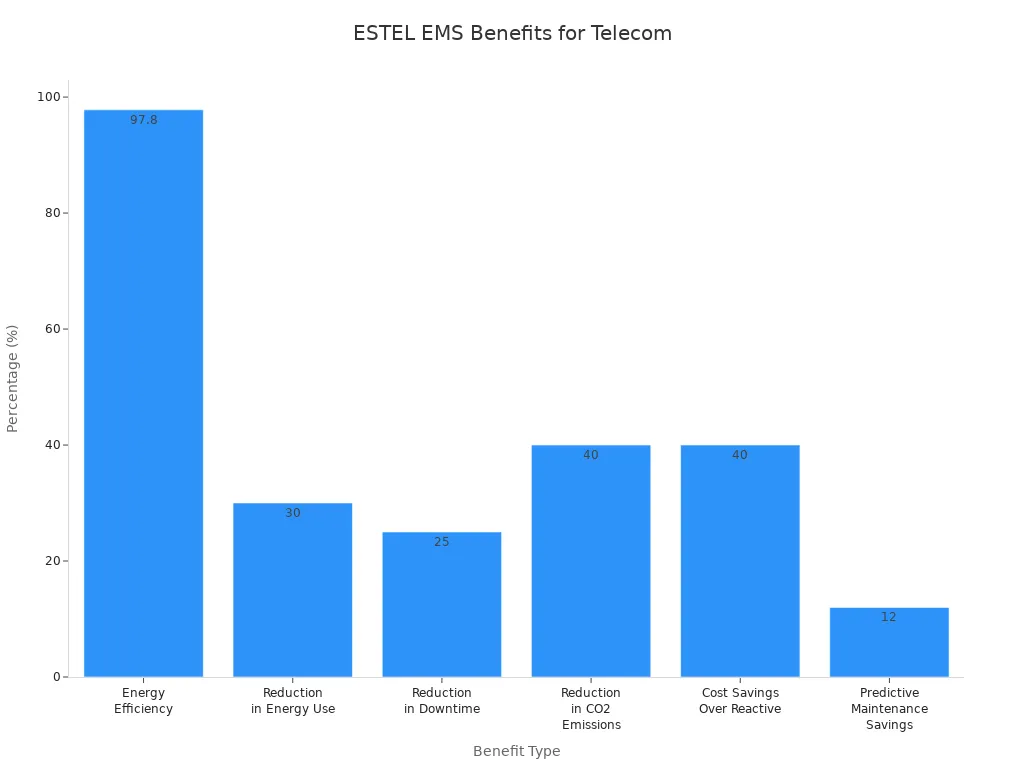
You create a powerful remote monitoring solution when you combine FSUs, APIs, and ESTEL’s Environment Monitoring System. This integration boosts reliability, reduces downtime, and cuts costs. Telecom operators report impressive results:
Benefit Type | Percentage/Value |
|---|---|
Energy Efficiency | |
Reduction in Energy Use | 30% |
Reduction in Downtime | 25% |
Reduction in CO2 Emissions | 40% |
Up to 40% |
You can future-proof your network by following these steps:
Install ESTEL software on your central server or cloud.
Connect sensors and power hardware.
Configure monitoring parameters.
Set up real-time alerts.
Start monitoring all sites from your dashboard.
Explore ESTEL’s videos, brochures, and webinars to learn more about advanced remote monitoring for your telecom infrastructure.
FAQ
How does remote monitoring help you reduce maintenance costs?
You receive instant alerts about issues. This lets you fix problems before they grow. You avoid unnecessary site visits. You save money on repairs and labor.
What sensors can you connect to ESTEL’s Environment Monitoring System?
You can connect temperature, humidity, smoke, water leakage, and air quality sensors. The system also supports noise and vibration monitors. This flexibility helps you track many environmental factors.
Can you integrate the system with your existing telecom equipment?
Yes, you can. The system supports RS232, RS485, and Modbus protocols. This makes integration with most telecom devices simple and efficient.
Is the Environment Monitoring System reliable in harsh outdoor conditions?
Feature | Benefit |
|---|---|
IP55 Protection | Shields against dust and water |
ISO9001, CE | Meets global standards |
Backup Power | Keeps system running |
You can trust the system to work in tough environments.
See Also
Best Practices for Monitoring Outdoor Telecom Equipment Effectively
Integrating Supervision Systems in ESTEL Outdoor Cabinets Simplified
Creating Dependable Outdoor Communication Cabinets for Any Weather
The Importance of Outdoor Communication Cabinets in Telecommunications
Essential Features of Outdoor Communication Cabinets for Surveillance Systems
CALL US DIRECTLY
86-13752765943
3A-8, SHUIWAN 1979 SQUARE (PHASE II), NO.111, TAIZI ROAD,SHUIWAN COMMUNITY, ZHAOSHANG STREET, NANSHAN DISTRICT, SHENZHEN, GUANGDONG, CHINA
