Linked Alarm Between Telecom Power Systems and Environment Systems: Audible/Visual+SMS Alerts for Power Anomalies

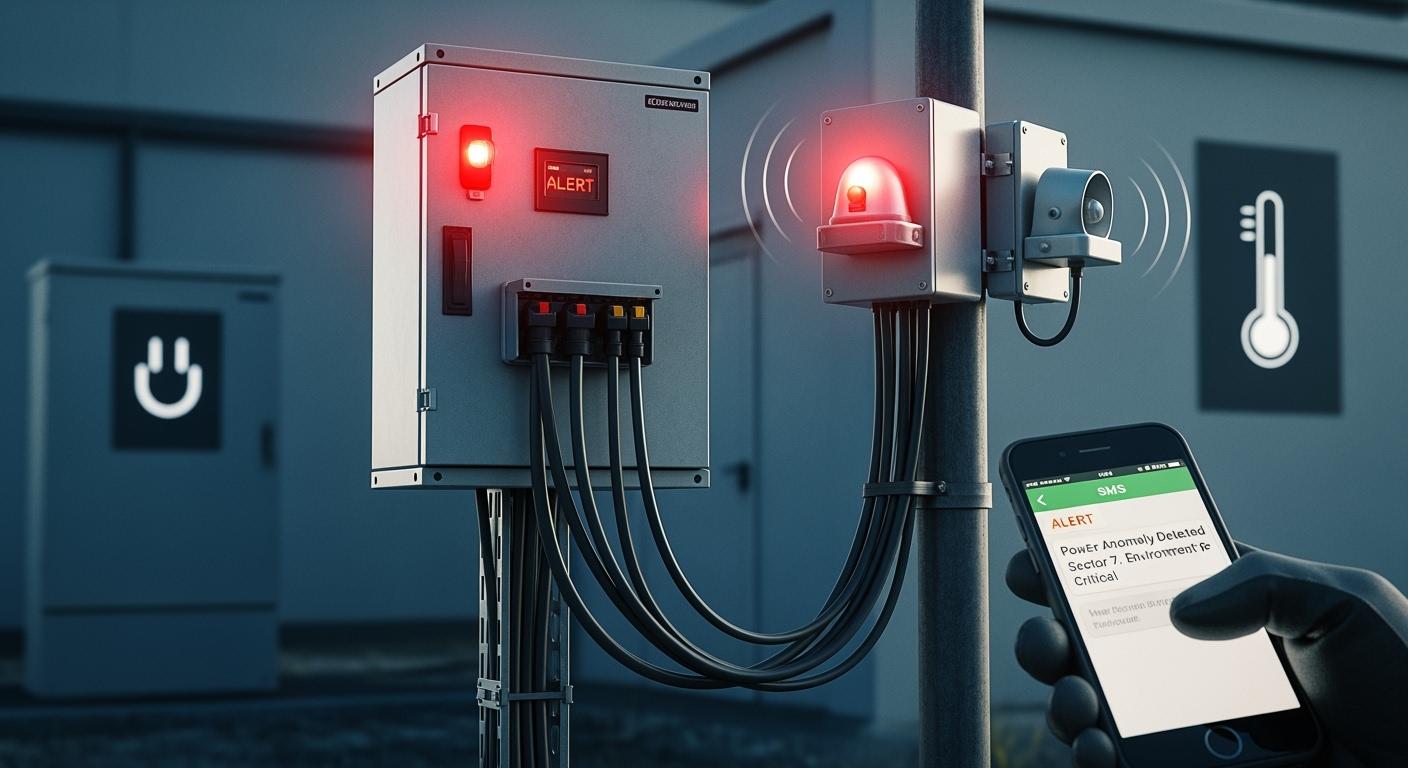
You rely on your telecom systems to run smoothly, but unexpected power anomalies can disrupt services and put safety at risk. Linked alarm systems connect your power setup with an Environment Monitoring System for real-time supervision. Here’s how immediate alerts make a difference:
Audible and visual alarms grab attention on-site for quick action.
SMS notifications reach your team wherever they are, reducing response time.
Fault Type | Causes | Impact/Notes |
|---|---|---|
Storms, equipment faults | Service disruption, lost data | |
Voltage Instabilities | Heavy loads | Risk of blackout |
Power Surges | Lightning, load switching | Damaged electronics |
ESTEL’s integrated solutions offer reliability and speed, helping you stay ahead of failures.
Key Takeaways
Integrate your telecom power and environment systems for real-time monitoring. This helps you detect issues quickly and respond before they escalate.
Utilize audible and visual alerts to ensure immediate attention to problems. These alerts can prevent equipment damage and service interruptions.
Set up SMS notifications to keep your team informed, even when they are off-site. This reduces response time and enhances operational efficiency.
Regularly inspect and maintain your systems to prevent future problems. A clean and well-organized setup ensures reliable performance.
Choose advanced monitoring solutions that comply with international standards. This guarantees safety, quality, and long-term reliability for your telecom infrastructure.
System Integration and Importance
Linking Power and Environment Systems
You can achieve unified alarm management by integrating your telecom power system with an Environment Monitoring System. This process connects the power supply, sensors, and communication modules into one network. When you link these systems, you create a single point of control for both power and environmental conditions. This setup helps you detect issues quickly and respond before they become serious problems.
To set up this integration, you should follow these steps:
Inspect your telecom cabinet for dust and moisture. Clean the area to prevent future problems.
Mount the power distribution unit (PDU) securely using the provided hardware.
Connect the input power cable, making sure the voltage and current ratings match the unit’s requirements.
Attach your devices to the outlets and label each connection for easy identification.
Power on the unit and watch the LCD display for startup information.
Test each outlet to confirm that surge protection and monitoring features work as expected.
You can use communication protocols like RS485, Modbus, or Ethernet to connect the Environment Monitoring System with your power equipment. These protocols allow different devices to share data and alarms in real time. The table below shows common protocols and their features:
Protocol | Scalability Features | Device Addressing & Management | Bandwidth & Communication Efficiency | Additional Notes |
|---|---|---|---|---|
Ethernet | High bandwidth, supports many devices | Uses switches and repeaters for segmentation | Handles many devices simultaneously | Supports wired, optical, and wireless media |
RS485 | Up to 32 drivers/receivers per segment | Half/full duplex, error checking | Up to 10 Mbps on short distances | Suitable for long distances and multiple nodes |
Modbus | Up to 247 clients per server | Addressed messages, function codes | Uses RS485 or Ethernet variants | Scalable with dedicated servers for monitoring |
SNMP | Scalable remote monitoring | Centralized management | Depends on IP network | Well-suited for large, modern telecom networks |
When you use ESTEL’s Environment Monitoring System and Telecom Power System together, you get a solution that supports these protocols and ensures seamless integration. This makes it easier for you to monitor, control, and manage your telecom site from a central location.
Reliability and Safety Benefits
Integrating your power and environment systems brings major benefits for reliability and safety. You can respond instantly to power outages or environmental hazards. This reduces downtime and protects your equipment from damage.
When you use a unified system, you get instant power response, ultra-fast recharging, and stable performance. These features help you keep your telecom site running, even during harsh conditions.
The table below highlights how integration improves your operations:
Feature | Benefit |
|---|---|
Instant power response | Enhances reliability during power outages |
Ultra-fast recharging | Reduces downtime and improves operational efficiency |
Extended operational lifespan | Lowers maintenance costs and increases reliability |
Stable performance | Ensures consistent operation in harsh environments |
You also gain other advantages:
Environmental data helps you choose sustainable sites.
You reduce your environmental impact during infrastructure development.
You improve long-term operational efficiency.
You ensure compliance with regulations.
ESTEL’s commitment to quality and innovation means you get products made from high-grade materials. Their alarm solutions work reliably, even in tough environments. ESTEL invests in research and development to bring you advanced monitoring tools. These tools give you real-time data, so you can spot inefficiencies and optimize your operations.
When you choose ESTEL’s Environment Monitoring System and Telecom Power System, you invest in safety, reliability, and future-ready technology.
Environment Monitoring System and Alert Types
Audible and Visual Alerts
You need fast, clear signals when something goes wrong at your telecom site. The Environment Monitoring System gives you both audible and visual alerts to make sure you notice problems right away. Sirens or buzzers sound loudly if the system detects issues like high temperature, water leaks, or smoke. At the same time, indicator lights flash on the control panel. These alerts help you and your team act quickly to prevent equipment damage or service interruptions.
The Environment Monitoring System uses advanced sensors to track temperature, humidity, smoke, and water presence. When any reading goes beyond safe limits, the system triggers alarms automatically. You can set custom thresholds for each parameter. This flexibility lets you match the alert settings to your specific site needs.
Here is a quick look at some features that support alert management:
Feature | Description |
|---|---|
Automated Alarms | Alerts when temperature, humidity, or contamination exceeds safe limits, enabling immediate action. |
Customizable Alarm Function | Set specific thresholds and choose alert channels (SMS, email, notifications). |
Wide Range of Monitoring Data | Monitors temperature, humidity, air quality, gas levels, noise, and vibration for comprehensive oversight. |
Imagine a scenario where a cooling unit fails inside your telecom cabinet. The temperature rises quickly. The Environment Monitoring System detects the change and sounds a siren while flashing a red light. Your on-site staff can respond before the heat damages sensitive equipment.
SMS Alerts for Remote Notification
You cannot always be on-site, but you still need to know about critical events. The Environment Monitoring System sends SMS alerts to your registered mobile numbers. This feature keeps you informed wherever you are, so you can take action or dispatch a technician without delay.
The system uses communication protocols like GSM and IoT technologies to transmit alert information. Sensors monitor the environment continuously. When a problem occurs, the system sends a warning message directly to your phone. You receive real-time updates about temperature spikes, water leaks, or power failures.
Here is how the alert process works:
Step | Description |
|---|---|
Data Sensing | Sensors monitor environmental conditions around the clock. |
Data Transmission | The system sends data via GSM to registered mobile numbers and web platforms. |
Alert Mechanism | If a parameter exceeds its threshold, the system sends an SMS alert. |
For example, if a water sensor detects a leak during a storm, you get an SMS alert instantly. You can then arrange for repairs before the water causes major damage.
The Environment Monitoring System from ESTEL helps you manage risks with both local and remote alerts. You gain peace of mind knowing you will not miss important warnings, no matter where you are.
Technical Integration with ESTEL Solutions
Key Components and Protocols
When you integrate ESTEL’s Telecom Power System and Environment Monitoring System, you create a robust network that keeps your telecom site running smoothly. The integration relies on several key components that work together to collect, manage, and analyze data.
Description | |
|---|---|
Scalable Sensor Network | Gathers data on temperature, humidity, airflow, and other environmental metrics. |
Central Management Repository | Aggregates all data into a user-friendly interface for easy access and analysis. |
Integration with DCIM Tools | Allows seamless data flow between systems, improving operational efficiency. |
Communication protocols play a vital role in this setup. RS485 and RS232 protocols help your systems communicate reliably, even in challenging environments.
RS485 uses balanced differential signaling, which cancels out electrical noise and supports long-distance data transmission.
This protocol allows you to connect multiple devices, making it ideal for telecom sites with many sensors and controllers.
RS485’s noise immunity ensures reliable communication, even when electrical interference is high.
RS232 is also used for serial communication, especially for shorter distances or direct device connections.
By using these protocols, you ensure that your power and environment systems share data quickly and accurately.
Real-World Application in Telecom Sites
You can see the benefits of integration in real-world telecom sites. Many operators follow a clear process to implement ESTEL’s solutions:
Description | |
|---|---|
Assessment and Planning | Evaluate your current setup, check power loads, and plan for future growth. |
Product Selection | Choose products that fit your needs and allow for customization. |
Integration and Scalability | Integrate products with IoT platforms and ensure modular design for easy expansion. |
Ongoing Operations Management | Use real-time monitoring and maintenance practices to keep your site efficient. |
For example, a mobile operator in Southeast Asia reduced site visits by 38% and saved $500,000 annually after integrating ESTEL’s systems. Another European tower company improved uptime by 22% and cut emergency trips in half. These results show that technical integration not only boosts reliability but also lowers maintenance costs and energy use.
When you use ESTEL’s Telecom Power System and Telecom Rectifier System, you gain a scalable, efficient, and future-ready solution for your telecom infrastructure.
Stakeholder Benefits and Common Concerns
Value for Operators and Managers
You gain many advantages when you use a linked alarm system for your telecom site. These systems help you improve safety by integrating power and environment monitoring. You streamline your daily operations, which means you spend less time managing separate systems. You also boost your emergency response, so you can act quickly when something goes wrong.
You move from reacting to problems to preventing them. This proactive approach helps you avoid costly outages and equipment damage.
You get faster and more accurate alerts, which means you can assess threats and respond before they escalate.
You enjoy peace of mind because your site receives continuous monitoring, not just basic alarms.
You meet and exceed safety and compliance requirements, which protects your business and your team.
You also see a reduction in downtime and operational costs. Real-time alerts help you prevent service interruptions, which keeps your customers satisfied. Automated monitoring means you spend less on emergency repairs and site visits.
Tip: Continuous monitoring and automated alerts give you better control over your network, making your job easier and your site safer.
Addressing Challenges and Compliance
Upgrading legacy alarm systems can bring challenges. You may worry about costs, compatibility, or training your staff on new technology. Older systems often do not support modern communication methods, which makes integration harder. Data migration can take time and may risk errors. You must also ensure that your new system meets strict regulatory standards.
ESTEL addresses these concerns with advanced technology that reduces false alarms. The system distinguishes real threats from harmless changes, so you do not waste time on unnecessary interventions. ESTEL’s modular design makes upgrades easier and helps you manage costs. You can train your team quickly with user-friendly interfaces.
You also benefit from products that meet international standards. The table below shows key certifications:
Standard | Description |
|---|---|
ISO 9001 | Ensures quality management systems are in place for consistent performance. |
CE | Indicates compliance with health, safety, and environmental protection standards for products sold within the European Economic Area. |
Compliance with ISO9001 and CE means you get reliable, safe, and long-lasting solutions. These certifications show that ESTEL products meet high benchmarks for safety and quality, which helps you prevent accidents and extend the life of your equipment.
You gain better reliability, safety, and efficiency when you link your telecom power and environment systems. For best results, follow these steps:
Integrate all alarms into one system.
Upgrade for legacy compatibility.
Use map-based interfaces.
Allow access for multiple users.
Choose telco-grade hardware.
You should also review your current alarm setup. Try statistical analysis, baseline comparisons, and multi-layered detection to find gaps. ESTEL’s solutions help you stay ahead of risks and keep your network secure.
FAQ
How does the Environment Monitoring System alert you to power anomalies?
You receive alerts through loud sirens, flashing lights, and SMS messages. These notifications help you act quickly to prevent equipment damage or service interruptions.
Can you customize the alert thresholds for your site?
Yes. You set your own thresholds for temperature, humidity, smoke, and water detection. This flexibility lets you match the system to your site’s unique needs.
What communication protocols do ESTEL systems support?
You can use RS485, RS232, Modbus, and Ethernet. These protocols ensure reliable data sharing between your power and environment systems.
Are ESTEL’s solutions compliant with international standards?
Standard | What It Means |
|---|---|
ISO9001 | Quality management certified |
CE | Meets European safety rules |
You get products that meet strict safety and quality requirements.
See Also
Exploring ESTEL's Power System for Telecom Cabinets
Solar Energy Storage Solutions for Telecom Cabinet Systems
Best Practices for Monitoring Outdoor Telecom Cabinets Effectively
The Importance of Outdoor Communication Cabinets in Telecom
A Complete Guide to Analyzing Risks of Telecom Cabinet Batteries
CALL US DIRECTLY
86-13752765943
3A-8, SHUIWAN 1979 SQUARE (PHASE II), NO.111, TAIZI ROAD,SHUIWAN COMMUNITY, ZHAOSHANG STREET, NANSHAN DISTRICT, SHENZHEN, GUANGDONG, CHINA
