Harmonic Suppression Technology of Smart PDUs: Pure Power Output Guaranteed with THD<3%

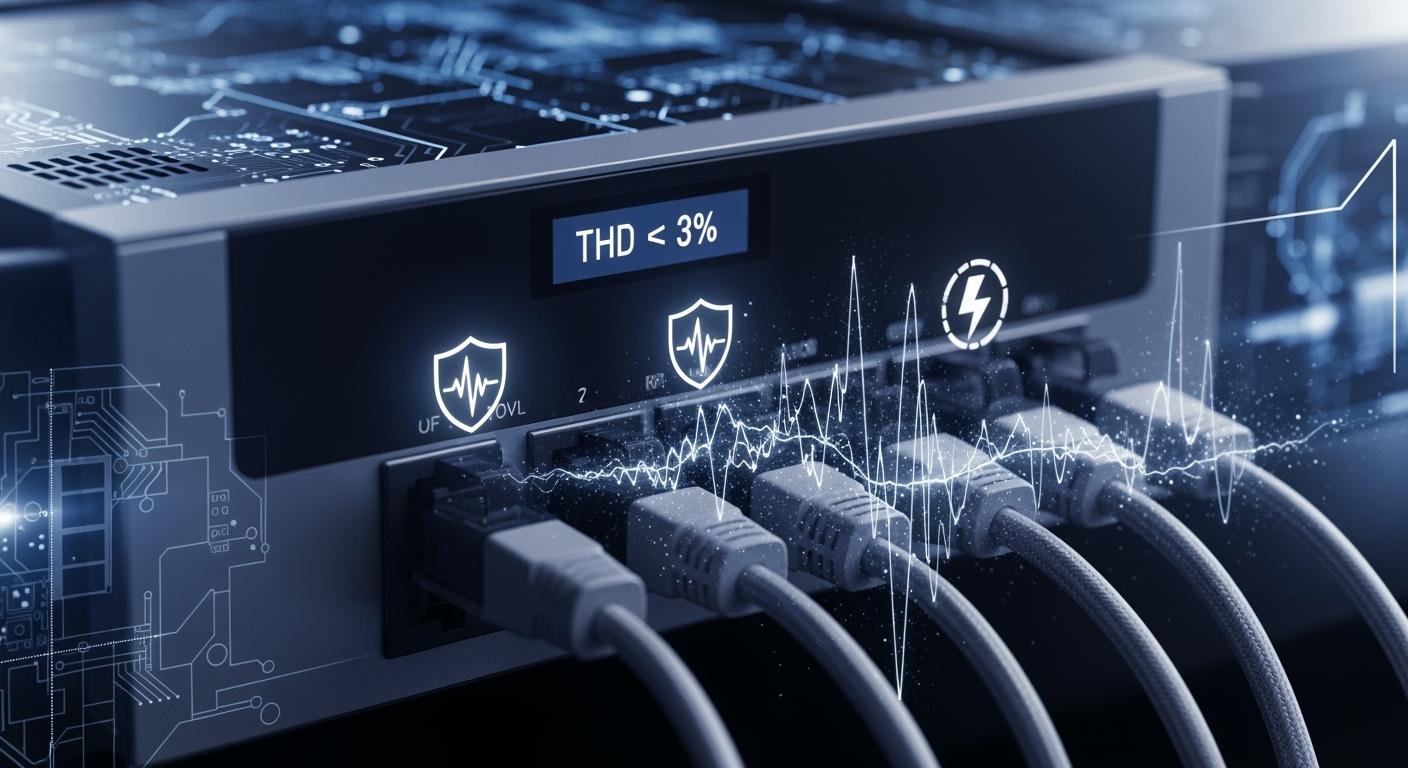
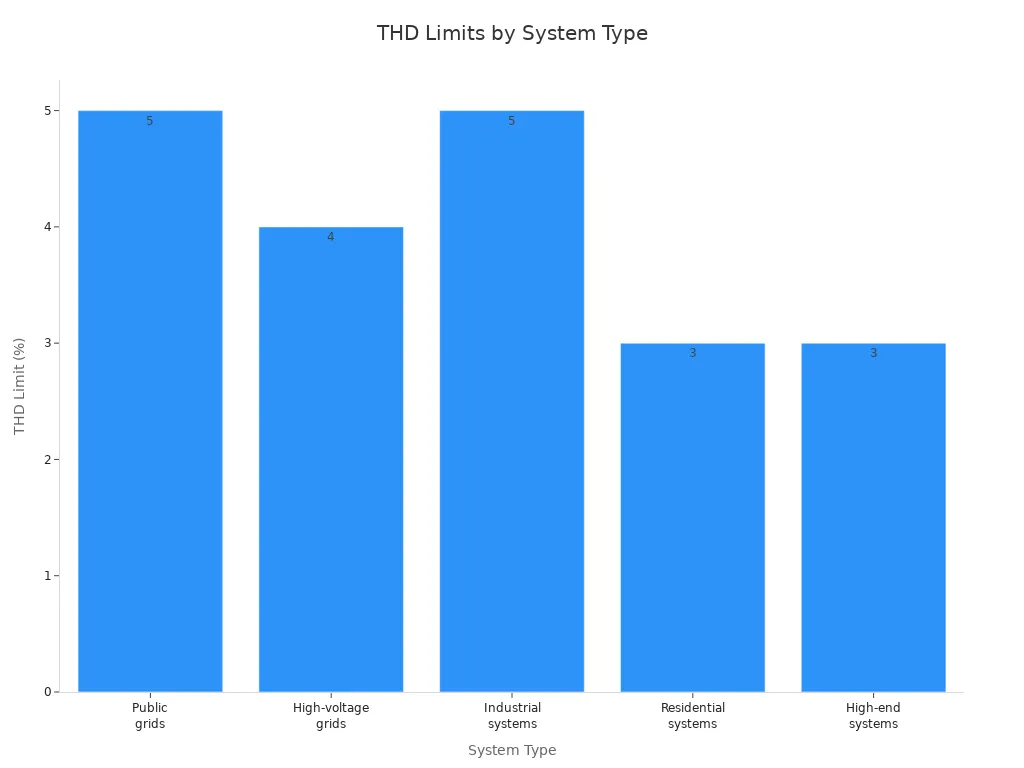
You demand reliable power for your telecom and data center equipment. ESTEL’s Smart Power Distribution Unit delivers pure power output with total harmonic distortion (THD) below 3% through advanced harmonic suppression. Harmonics threaten your operational efficiency and equipment reliability. International standards set strict THD limits for high-end and residential systems, as shown below:
System Type | THD Limit |
|---|---|
Public grids | < 5% |
High-voltage grids | < 4% |
Industrial systems | < 5% |
Residential systems | < 3% |
High-end systems | < 3% |
You care about power purity, stability, and compliance. ESTEL helps you meet these goals, supporting your critical infrastructure every day.
Key Takeaways
Harmonic suppression technology ensures your equipment receives pure power with total harmonic distortion (THD) below 3%. This leads to improved efficiency and reliability.
Using ESTEL’s Smart Power Distribution Unit can reduce maintenance costs by up to 75% and extend equipment lifespan significantly, saving you money in the long run.
Lower THD minimizes overheating and equipment failures, ensuring your telecom and data center operations run smoothly and continuously.
Compliance with international standards for power quality protects your investment and helps avoid regulatory penalties, ensuring your systems operate effectively.
Pure Power Output with Harmonic Suppression
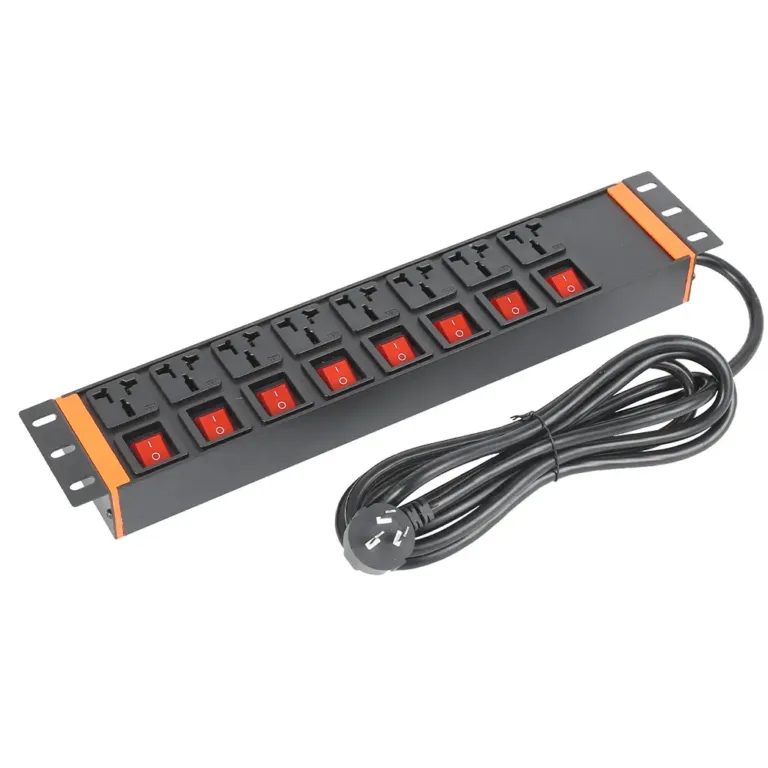
How Harmonic Suppression Works
You want your equipment to run smoothly and efficiently. Harmonic suppression technology helps you achieve this goal. Harmonics are unwanted frequencies that distort the electrical waveform. These distortions can cause overheating, reduce efficiency, and shorten the lifespan of your devices.
The Smart Power Distribution Unit uses several mechanisms to reduce total harmonic distortion (THD) to less than 3%. You benefit from a cleaner, more stable power supply. The technology combines active power filters, hybrid filters, and optimized filter configurations. These components work together to transform distorted current waveforms into smooth sine waves.
Mechanism | Description |
|---|---|
Active Power Filters (APF) | APFs generate harmonic currents and provide dynamic compensation for reactive power. |
Hybrid Filters | Hybrid filters combine active and passive elements to enhance harmonic control. |
Filter Configuration | Algorithms optimize filter placement and capacity to suppress harmonics in the network. |
Current Waveform Improvement | Filters smooth out distorted waveforms, reducing distortion rates from 19.99% to 2.54%. |
Tip: Lower THD means your equipment receives power that closely matches the ideal waveform. This reduces stress on components and improves reliability.
ESTEL’s Smart Power Distribution Unit Advantage
You gain a clear advantage when you choose ESTEL’s Smart Power Distribution Unit. The advanced harmonic suppression technology ensures pure power output, which is essential for telecom and data center environments. You see direct benefits in operational efficiency, equipment protection, and cost savings.
You experience up to 75% reduction in maintenance costs.
Your equipment lifespan extends significantly.
You save up to 30% on failure-related expenses.
You maintain nonstop operation throughout the year.
Metric | Outcome |
|---|---|
Maintenance Reduction | 75% reduction in costs |
Equipment Lifespan | Significant extension |
Cost Reduction | 30% reduction in failure costs |
Uptime Maintenance | 365-day nonstop operation |
You also help the environment by improving energy efficiency. Lower harmonics mean less heat and fewer breaker trips. You avoid oversizing transformers, which saves energy and reduces utility costs. Your power quality improves, minimizing interference with other systems.
Benefit | Description |
|---|---|
Increased energy efficiency | Enhanced transformer efficiency, lower energy losses, longer lifespan |
Less Heat | Prevents overheating, prolongs equipment life |
Proper transformer sizing | No need for oversized transformers, saves energy and costs |
Fewer breaker trips | High-quality power reduces faults and keeps production running |
Low interference | Minimizes interference with nearby electrical systems |
Note: The Smart Power Distribution Unit supports your critical infrastructure by delivering power that meets international standards. You protect your investment and ensure reliable operation for your telecom and data center equipment.
You see measurable improvements in uptime, cost savings, and environmental impact. The Smart Power Distribution Unit gives you the confidence to operate at peak performance every day.
Understanding Harmonics in Power Systems
What Are Harmonics?
You encounter harmonics every time you use modern electrical equipment. Harmonics are extra frequencies that ride along with the main electrical signal. These frequencies are integer multiples of the fundamental frequency, which is usually 50 or 60 Hz. Harmonics distort the ideal sine wave, making the power less pure.
You can see harmonics in both voltage and current. Voltage harmonics change the voltage waveform, while current harmonics affect the flow of electricity. Engineers classify harmonics by their order, such as even, odd, or triplen. In three-phase systems, harmonics also have phase sequences: positive, negative, or zero.
Type of Harmonic | Description |
|---|---|
Voltage Harmonics | Sinusoidal waves with frequencies that are integer multiples of the fundamental frequency affecting voltage levels. |
Current Harmonics | Sinusoidal waves with frequencies that are integer multiples of the fundamental frequency affecting current levels. |
Order of Harmonic | Classification based on whether the harmonic is even, odd, triplen, or non-triplen odd. |
Phase Sequence | In three-phase systems, harmonics can be classified as positive, negative, or zero phase sequence. |
You find harmonics in many places. Devices like variable frequency drives, uninterruptible power supplies, computers, LED lighting, and electric vehicle chargers all produce harmonics. Arc furnaces and welding equipment also create highly distorted waveforms.
Impact on Power Quality
Harmonics lower the quality of your power supply. You may notice overheating in cables and transformers. Sensitive electronic equipment can malfunction or even burn out. Harmonics cause voltage flicker, nuisance trips, and reduced capacity in your electrical network. You face compliance challenges when harmonics exceed permissible limits.
Harmonics can disrupt data processing in computers.
Communication equipment may experience errors due to harmonic interference.
Sensitive components may overheat and fail.
Increased temperature from harmonics shortens the service life of electrical devices.
High harmonic distortion can lead to failures or malfunctions of electrical devices.
You protect your equipment and improve reliability when you use solutions like the Smart Power Distribution Unit. Lower harmonic distortion means fewer errors, less downtime, and longer equipment life. You maintain stable operation in telecom and data center facilities by keeping harmonics under control.
Tip: Monitoring and suppressing harmonics helps you meet international standards and ensures your power system runs smoothly.
Sources of Harmonics in Distribution Units
Nonlinear Loads and Devices
You encounter nonlinear loads every day in modern electrical systems. These devices do not draw current in a smooth, sinusoidal pattern. Instead, they pull current in short bursts or irregular shapes. This behavior creates harmonic currents that distort the original power waveform.
Nonlinear loads include many common devices:
Variable frequency drives (VFDs)
Electronic circuits that convert AC to DC
Computers and servers
LED lighting systems
When you use these devices, the current drawn does not match the voltage waveform. This mismatch causes harmonics to appear in your power distribution unit. You may notice that high harmonic currents can overload your distribution network. Power factor correction capacitors also face risks from these currents. If you ignore these effects, you may see equipment overheating or unexpected shutdowns.
Nonlinear loads, such as VFDs and electronic circuits, distort the original sine wave by producing harmonic currents. This distortion happens because the current drawn does not align with the voltage waveform applied, leading to significant harmonic generation in power distribution units.
Power Conversion Equipment
You rely on power conversion equipment to keep your data center and telecom systems running. Devices like uninterruptible power supplies (UPS), rectifiers, and switching power supplies convert AC to DC or change voltage levels. These conversions introduce harmonics into your electrical system.
In data centers, you find many sources of harmonic distortion:
Motors and IT power supplies
UPS units and servers
Cooling fans and battery chargers
These non-linear devices create currents that deviate from the expected sine wave pattern. Harmonic distortion significantly affects power quality in data centers. You may not realize that about 25% of electrical system issues come from harmonic distortion. Data center operators monitor power quality closely to prevent failures. Mitigating THD is essential for protecting equipment and maintaining reliable operations.
Tip: By understanding where harmonics come from, you can take steps to reduce their impact and ensure your power distribution unit delivers clean, stable energy.
Harmonic Suppression Technologies in Smart Power Distribution Unit

Passive and Active Filtering
You rely on filtering technologies to keep your power clean and stable. Passive filters use inductors, capacitors, and resistors to block unwanted harmonic frequencies. These components absorb or divert harmonics, improving the quality of your electrical supply. You see passive filters installed directly in the power path. They work best for fixed-frequency harmonics and offer a simple solution for many telecom and data center applications.
Active filters take harmonic suppression further. You use these devices to detect and counteract harmonics in real time. Active filters inject equal and opposite currents to cancel out distortion. You benefit from dynamic compensation, which adapts to changing loads and conditions. Hybrid filters combine passive and active elements, giving you flexibility and enhanced performance. You achieve lower THD and protect sensitive equipment from power disturbances.
Filter Type | Main Function | Typical Application |
|---|---|---|
Passive | Absorbs fixed harmonics | Telecom cabinets, servers |
Active | Cancels dynamic harmonics | Data centers, IT racks |
Hybrid | Combines both methods | Complex power networks |
Tip: You improve power quality and extend equipment life when you choose the right filter for your Smart Power Distribution Unit.
Advanced Control Algorithms
You gain even greater harmonic suppression with advanced control algorithms. These algorithms monitor power quality and adjust filtering actions automatically. Artificial neural network (ANN) controllers, NARMA-L2 controllers, and PI controllers optimized with adaptive learning algorithms (ALA) deliver impressive results.
ANN controllers reduce source current THD to 1.46%, a dramatic improvement from an uncompensated THD of 21.74%.
NARMA-L2 controllers achieve a THD of 2.29%.
PI controllers optimized with ALA lower THD to 3.09%.
You see measurable benefits in your Smart Power Distribution Unit. These algorithms ensure compliance with international standards like IEC60309 and ISO9001. You protect your telecom and data center equipment from harmonic-related failures. You maintain reliable operation and meet strict power quality requirements.
Note: Advanced control strategies adapt to your changing power environment, giving you confidence in the purity and stability of your electrical supply.
Compliance and Benefits for Telecom Applications
Meeting International Standards
You must ensure your telecom infrastructure meets strict international standards for power quality and harmonic suppression. These standards, such as those set by the IEC and ISO, define how equipment should perform in real-world environments. The following table outlines key categories from the IEC 1000 series that guide compliance:
Category | Description |
|---|---|
General | Definitions, terminology, and basic concepts (IEC 1000-1-x) |
Environment | Environmental characteristics for equipment (1000-2-x) |
Limits | Emission limits for allowable disturbances (1000-3-x) |
Testing and Measurement | Equipment and procedures for testing (1000-4-x) |
Installation and Mitigation | Guidelines for solving power quality issues (1000-5-x) |
Generic and Product Standards | Immunity levels for equipment (1000-6-x) |
You benefit from compliance because it helps you meet regulatory requirements and pass industry audits. ISO standards also support your efforts to obtain regulatory approval, which is essential for operating in global markets. Many telecom leaders recognize that regulatory risks can significantly affect business performance.
Equipment Protection and Reliability
You face real risks when harmonics go unchecked. Power quality issues, such as voltage fluctuations and harmonic distortions, can cause your telecom equipment to malfunction. You may see reduced efficiency and higher maintenance costs. Excessive harmonics often lead to overheating in transformers and motors. This overheating results from eddy currents, which can damage internal components and shorten equipment life.
You can prevent these problems by using advanced solutions. Smart PDUs with monitoring, harmonic filters, and load balancing help you detect and address issues early. These features protect your equipment, improve reliability, and reduce operational costs. Regular Telecom Expense Management audits also help you identify compliance gaps and prevent violations.
Tip: Reliable power quality means fewer failures, less downtime, and longer equipment life for your telecom network.
ESTEL’s Performance Guarantees
You gain peace of mind when you choose ESTEL’s Smart Power Distribution Unit. ESTEL designs its products to meet or exceed international standards for harmonic suppression and power quality. You receive equipment that delivers pure power output with THD below 3%. This performance helps you avoid regulatory penalties and ensures your network operates smoothly.
ESTEL backs its solutions with measurable guarantees:
You maintain compliance with global standards.
You protect sensitive telecom equipment from power disturbances.
You reduce maintenance costs and extend equipment lifespan.
You can trust ESTEL to support your critical infrastructure with reliable, standards-compliant power distribution.
You achieve pure power output with THD below 3% when you use ESTEL’s Smart Power Distribution Unit. You see measurable improvements in energy consumption, uptime, and operational costs.
Intelligent power management and remote monitoring help you identify inefficiencies.
Modular design supports easy upgrades.
Active harmonic filters extend equipment lifespan and reduce failures.
Benefit Type | Description |
|---|---|
Reduced Electricity Expenditures | Lower energy losses in transformers and cabling lead to significant savings on electricity costs. |
Improved ROI | Enhanced efficiency and reliability increase your return on investment. |
You protect your equipment, meet compliance standards, and enjoy long-term cost savings. Choose ESTEL for reliable, standards-compliant power distribution.
FAQ
What is THD and why does it matter for my equipment?
THD stands for Total Harmonic Distortion. You need low THD to ensure your equipment receives clean power. High THD can cause overheating, malfunctions, and shorter equipment life.
How does the Smart Power Distribution Unit reduce harmonics?
You benefit from advanced filtering and control algorithms. These technologies detect and suppress unwanted frequencies, keeping your power supply stable and pure.
Can I monitor power quality remotely with ESTEL’s Smart PDU?
Yes. You can use remote management features to monitor power quality, check THD levels, and control outlets from anywhere.
Does the Smart PDU meet international standards?
Yes. You get a product that complies with IEC and ISO standards, ensuring reliable performance and global acceptance.
See Also
Ensuring Consistent Power Supply for Telecom Equipment Cabinets
Exploring Global Standards for Communication Power Supply Systems
Key Features to Consider in Telecom Power Supplies
CALL US DIRECTLY
86-13752765943
3A-8, SHUIWAN 1979 SQUARE (PHASE II), NO.111, TAIZI ROAD,SHUIWAN COMMUNITY, ZHAOSHANG STREET, NANSHAN DISTRICT, SHENZHEN, GUANGDONG, CHINA
