What Is a Hybrid Rectifier System and How Does It Work

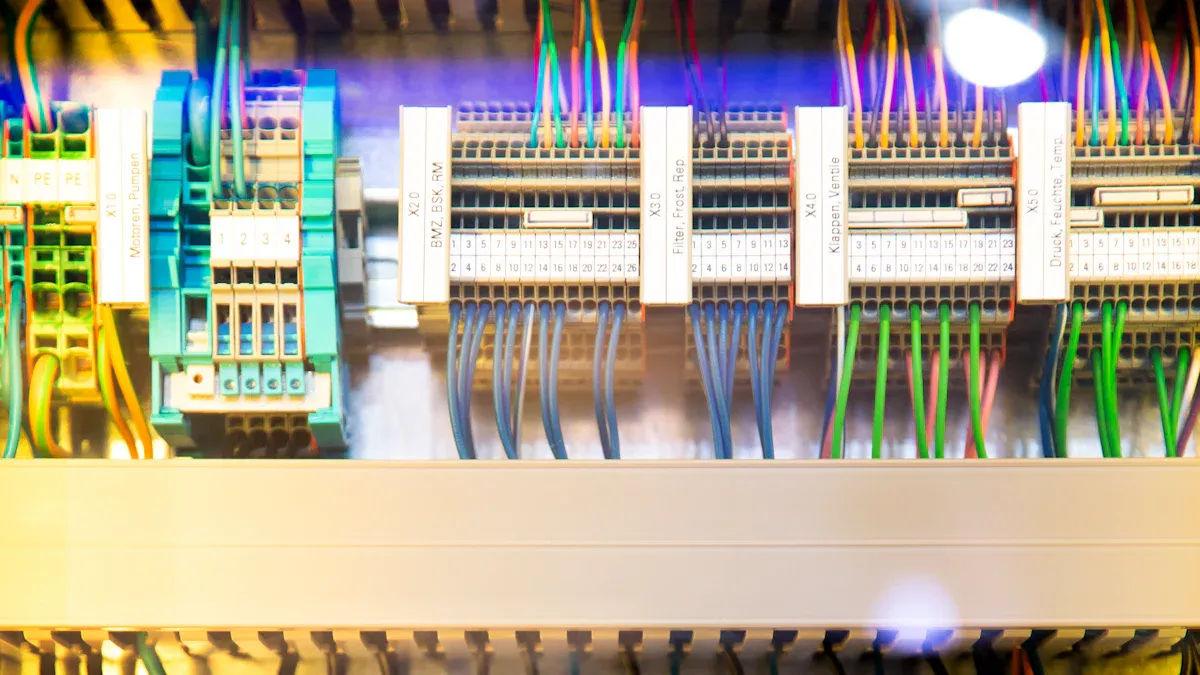
A hybrid rectifier system combines the functions of an inverter and a rectifier. It changes alternating current (AC) and solar photovoltaic (PV) energy into direct current (DC) for reliable power supply. This system supports modern energy management by improving efficiency and supporting renewable energy sources. ESTEL stands out as a notable brand in hybrid rectifier technology.
Key Takeaways
Hybrid rectifier systems combine inverter and rectifier functions to convert AC and solar energy into reliable DC power.
These systems improve energy efficiency and support renewable sources, making them ideal for modern energy management.
Advanced features like modular design and real-time monitoring enhance reliability and reduce operational costs.
Using hybrid rectifiers can lead to significant energy savings, with some users reporting up to 20% reductions in energy consumption.
Hybrid rectifier systems play a crucial role in supporting industries like telecom and renewable energy, ensuring stable power supply.
Hybrid Rectifier System Overview
What Is a Hybrid Rectifier System
A hybrid rectifier system combines the capabilities of both an inverter and a rectifier. This system converts alternating current from the grid and solar photovoltaic energy into direct current, which supports a wide range of applications. The dual functionality allows the system to manage energy from multiple sources, making it adaptable for modern energy needs. The hybrid inverter component enables the system to switch between AC and DC power, ensuring a stable supply even when one source fluctuates. This flexibility is essential for industries that require continuous and reliable power.
Recent advancements in hybrid rectifier system technology reflect the growing demand for high-power and high-efficiency solutions. The renewable energy sector, automotive industry, and telecom operators increasingly rely on these systems. The shift toward electric vehicles and the expansion of 5G networks have accelerated the need for compact and efficient rectifiers. Manufacturers now use wide bandgap semiconductors, such as silicon carbide (SiC) and gallium nitride (GaN), to improve switching speeds and energy efficiency. These innovations result in smaller, more affordable systems that meet the requirements of modern electronic devices.
Key Features and Functions
Hybrid rectifier systems integrate both passive and active rectifier features to optimize energy conversion. Active rectifiers conserve more energy than passive ones, but they also introduce additional power consumption due to extra circuits. By combining both types, the system can adjust its operation based on input power levels, which increases adaptability and efficiency. This approach proves valuable in applications where energy demands change frequently, such as biomedical equipment and renewable energy installations.
Note: Hybrid rectifier systems offer significant advantages over traditional systems. They provide redundancy and fault tolerance, which improves system availability and reliability.
Redundancy Type | Description | Fault Tolerance | Impact on System Availability |
|---|---|---|---|
N+1 | Adds one extra component beyond minimum capacity (N) | Can handle one component failure or maintenance without downtime | Provides basic redundancy, allowing continuous operation during a single failure or maintenance event |
N+2 | Adds two extra components beyond minimum capacity (N) | Can handle two simultaneous component failures or maintenance without downtime | Offers higher availability and resiliency, minimizing risk during multiple failures or concurrent maintenance |
Hybrid rectifier systems also feature modular designs, which allow users to scale power deployment as needed. Regular maintenance and advanced monitoring technologies help reduce ongoing expenses, making these systems cost-effective over their lifecycle.
The environmental impact of hybrid rectifier systems is another important consideration. Systems configured without battery energy storage or diesel generators emit significantly less CO2 over their lifecycle. For example, one configuration emits only 17.9 grams of CO2 per kilowatt-hour, which is much lower than other setups. This reduction in greenhouse gas emissions supports global efforts to mitigate climate change.
Technological advancements in the past decade have further improved hybrid rectifier system performance. Manufacturers have integrated advanced semiconductor materials, enhanced energy efficiency, and improved compatibility with renewable energy sources. Modern DC rectifiers now reach up to 97% efficiency, and advanced control systems enable real-time performance monitoring. Enhanced thermal management allows diodes to operate at higher temperatures without losing efficiency.
ESTEL has established itself as a leading brand in hybrid rectifier technology. The company’s rectifier cabinets achieve over 96% efficiency, setting new standards for energy conservation. ESTEL integrates renewable energy compatibility and advanced thermal management systems, which help reduce environmental impact. A telecom operator in Southeast Asia reported a 20% energy savings after deploying ESTEL’s modular rectifiers.
ESTEL’s rectifier cabinets reach over 96% efficiency.
Advanced thermal management and renewable energy compatibility lower environmental impact.
Telecom operators have achieved up to 20% energy savings with ESTEL’s modular designs.
Hybrid rectifier systems continue to evolve, driven by the need for energy-efficient solutions and advanced manufacturing technologies. These systems play a vital role in supporting renewable energy projects, reducing operational costs, and minimizing environmental impact.
Main Components
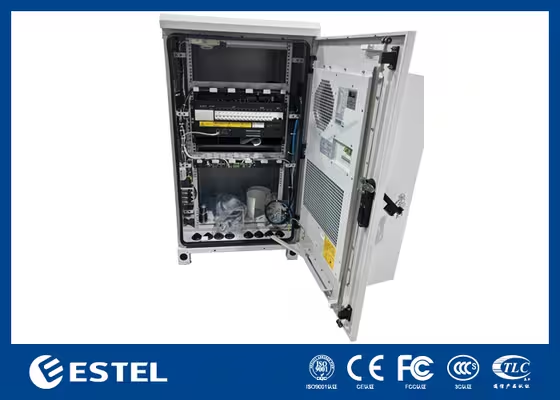
AC and Solar PV Inputs
Hybrid rectifier systems rely on both AC and solar PV inputs to maximize energy conversion. The system uses a hybrid inverter to manage these sources, ensuring compatibility with various solar PV modules and AC sources. The hybrid inverter converts DC power from solar panels into AC power for devices, and also changes AC power from the grid into DC power for battery storage. This dual capability allows the system to optimize energy use and maintain stable output. The interaction between AC and DC components requires a converter, which directs surplus energy to batteries or compensates for shortfalls based on load requirements.
Diodes ensure electricity flows in one direction, protecting sensitive electronics.
Transformers adjust voltage levels for safe power delivery.
Filters smooth out fluctuations in DC power, providing stable output.
Voltage regulators maintain consistent power levels, preventing surges.
Rectifier and Inverter Units
The heart of the system includes the rectifier and inverter units. The inverter plays a crucial role by converting DC from solar PV into AC, achieving conversion efficiencies up to 90%. The rectifier changes AC from the grid into DC, supporting battery charging and direct power supply. ESTEL has introduced advanced designs in these units, using materials like silicon carbide and gallium nitride. Their telecom rectifiers reach efficiency levels up to 97.8%, reducing energy loss and improving reliability. The Rectiverter integrates both rectifier and inverter functions in a single module, making it suitable for systems that require flexible AC and DC power management.
Control and Monitoring
Control and monitoring subsystems enhance performance and reliability. Advanced control strategies, such as Model Predictive Control, proactively manage generator operations and battery charging, improving fuel efficiency and system stability.
Advanced control strategies such as Model Predictive Control (MPC) can enhance system performance by proactively managing generator operations and battery charging. This leads to improved fuel efficiency and system stability, addressing disturbances proactively.
Operators use IoT sensors for real-time monitoring of voltage, current, and battery state-of-charge. SCADA platforms enable remote system status monitoring and fault detection. Machine learning methods forecast system conditions and optimize generator usage. Real-time monitoring supports proactive detection, resource optimization, and predictive maintenance, reducing operational costs.
Standard | Description |
|---|---|
IEC EN62368 | A safety standard for audio, video, information, and telecommunications technology equipment. |
How Hybrid Rectifier Systems Work
Power Conversion Process
A hybrid rectifier system uses a step-by-step process to convert both AC and solar PV energy into DC power. This process ensures stable and efficient energy delivery for various applications. The system manages energy from solar panels and the grid, using advanced electronics to optimize conversion.
Solar panels generate DC voltage when exposed to sunlight.
The generated DC enters the hybrid inverter, which manages the conversion process.
Maximum Power Point Tracking (MPPT) extracts the highest possible power from the solar panels.
The system uses DC-to-DC conversion to condition or boost the DC voltage for further processing.
The inverter controls and processes the energy flow, preparing it for conversion.
DC-to-AC conversion takes place, using power electronics to create an AC output.
The system synchronizes the AC output with the grid frequency, ensuring compatibility.
A pure sine wave AC output is generated for use by connected devices.
In grid-tied mode, excess AC power feeds back into the grid.
In off-grid mode, the system supplies power using stored energy in batteries.
Monitoring and control features allow users to track performance and configure settings.
When converting AC from the grid, the system follows another sequence:
A transformer reduces high AC voltage to a safer, lower level.
A bridge rectifier uses diodes to convert AC into pulsating DC.
A filter capacitor smooths the pulsating DC, providing stable output.
A low-dropout regulator ensures consistent voltage for connected devices.
This dual-path approach allows the hybrid rectifier system to deliver reliable DC power from both solar and grid sources. The hybrid inverter plays a central role in managing these conversions, supporting efficient energy use and stable operation.
Switching Between Sources
Hybrid rectifier systems excel at managing energy flow when switching between AC and solar PV sources. The system uses bidirectional converters to control the direction and quality of energy transfer. These converters adjust their operation based on voltage levels at the Point of Common Coupling (PCC) and the battery.
The system maintains optimal voltage at the PCC by monitoring battery and PCC levels.
When renewable energy output falls below battery voltage, the converter operates in boost mode, supplying power from the battery to the PCC.
If the PCC voltage rises above battery voltage, the converter switches to buck mode, allowing the PCC to charge the battery.
Accurate State of Charge (SOC) estimation ensures efficient battery use, with preferred SOC levels between 20% and 90%.
Tip: Maintaining SOC within the recommended range helps extend battery life and ensures reliable backup during source switching.
Energy management in a hybrid rectifier system relies on real-time monitoring and intelligent control. The system tracks voltage, current, and battery status, making adjustments to optimize performance. This approach supports seamless transitions between sources, reduces downtime, and improves overall reliability.
The hybrid inverter coordinates these operations, ensuring that power delivery remains stable regardless of changes in energy supply. By integrating advanced control strategies, the system adapts to fluctuating loads and varying energy inputs, supporting efficient and resilient power management.
Applications and Benefits
Solar Hybrid Inverter Use Cases
A solar hybrid inverter supports many commercial and industrial sectors. It provides stable power and efficient energy management. The following table shows common use cases for solar hybrid inverter systems:
Sector | Use Case Description |
|---|---|
Manufacturing & Heavy Industries | Continuous power supply during outages, stable voltage for machinery, reduced fuel consumption. |
Industrial Warehouses, Storage & Logistics | Backup power during operations, energy supply during off-peak hours, reduced reliance on grid power. |
Cold Storage & Food Processing | Stable energy supply for refrigeration, lower grid consumption, enhanced product quality. |
Metal Fabrication & High-Load Workshops | Clean and stable AC output, reduced voltage fluctuations, enhanced performance of heavy equipment. |
Data Centers & IT Infrastructure | Instantaneous backup capabilities, efficient load balancing, reduced reliance on UPS and diesel generators. |
Pharmaceutical Units & Clean Room Operations | Regulated voltage for sensitive instruments, reliable power for HVAC systems, compliance with quality standards. |
Remote Sites & Mining Operations | Efficient off-grid operation, seamless integration of power sources, long-duration backup. |
Commercial Buildings & Retail Chains | Management of high daytime loads, peak shaving, backup power for essential infrastructure. |
A hybrid inverter system in these settings ensures reliable power backup and supports critical operations. It can charge the battery during periods of excess solar generation and provide backup when grid power fails.
Efficiency and Reliability
Hybrid inverter systems deliver high conversion efficiency and reliability. The inverter increases conversion efficiency from 94% to 98%, which reduces power loss and heat. This improvement saves energy and lowers operational costs. The system also increases power density, allowing more power in a smaller space. Users save up to 50% of space compared to traditional modules.
Efficiency Improvement Aspect | Description and Impact |
|---|---|
Conversion Efficiency | Increased from 94% to 98%, reducing conversion power loss by 66%. |
Power Density | Improved, saving 50% user space compared to traditional modules. |
Reliability | Reduced power failure rates and noise levels, enhancing system stability. |
ESTEL hybrid rectifiers stand out in telecom and data center applications. They achieve up to 96% efficiency and feature modular designs that expand to five rectifier modules. Their durability ensures consistent performance in harsh conditions. Remote management allows centralized monitoring, reducing maintenance needs. These rectifiers integrate with renewable sources, supporting sustainable operations.
Hybrid Inverter in Renewable Energy
Hybrid inverter systems play a key role in renewable energy integration. They manage energy flow, convert DC from solar panels into AC for immediate use, and charge the battery for later use. The inverter facilitates seamless transitions between energy sources, optimizing energy utilization. It enhances energy independence and resilience by enabling interaction with the grid.
Hybrid rectifier systems improve reliability in renewable energy applications. They integrate energy storage systems, which help manage the intermittent nature of solar and wind. These systems regulate frequency and voltage, improving energy quality and reducing fluctuations. Strategic placement of the energy storage system increases the value of energy supply during peak times.
A hybrid inverter system also contributes to grid stability in regions with high renewable penetration. Coordinated control architectures integrate advanced devices and energy storage, reducing fault recovery time and maintaining low harmonic distortion. The system demonstrates stable operation even with 80% renewable penetration, improving hosting capacity and maintaining performance across diverse climates.
Tip: Using a hybrid inverter system with advanced battery management ensures reliable power backup and supports efficient energy use in renewable energy projects.
A hybrid rectifier system uses a full wave bridge rectifier to convert AC into DC, utilizing four diodes arranged in a bridge pattern. This design allows current to flow in one direction during both halves of the AC cycle, producing a stable DC output. Filtering capacitors smooth out ripple voltages, ensuring reliable power for electronic devices.
Hybrid rectifier systems support modern energy solutions in several ways:
They manage energy from sources like solar and wind with advanced inverters and rectifiers.
They improve sustainability by capturing and reusing energy that would otherwise be wasted.
ESTEL stands out as a reliable choice for hybrid rectifier technology.
Feature | Description |
|---|---|
High Efficiency | Achieves efficiency rates of over 91%, reducing energy waste and costs. |
Reliability | Features like remote monitoring ensure consistent performance. |
Energy-Saving Modes | Eco-friendly modes that cut down on power consumption. |
Versatility | Suitable for various applications, including 5G networks and industrial automation. |
Ultra-Modular Design | Facilitates easy scaling of systems. |
Advanced AI Integration | Ensures optimal performance with minimal power losses. |
FAQ
What is the main advantage of a hybrid rectifier system?
A hybrid rectifier system increases energy efficiency by combining AC and solar PV sources. It provides reliable DC power for critical applications. This system also supports renewable energy integration and reduces operational costs.
How does a hybrid rectifier system handle power outages?
The system switches to battery backup or alternative energy sources during power outages. It ensures continuous power supply for essential equipment. Advanced monitoring helps manage the transition smoothly.
Can hybrid rectifier systems work with existing solar panels?
Yes, hybrid rectifier systems support most standard solar PV modules. They integrate with existing solar setups and optimize energy conversion. This flexibility makes them suitable for upgrades and new installations.
What maintenance does a hybrid rectifier system require?
Routine maintenance includes checking connections, cleaning filters, and monitoring system performance. Remote monitoring tools help detect issues early. Regular inspections ensure long-term reliability and efficiency.
Why do industries prefer ESTEL hybrid rectifiers?
Industries choose ESTEL for high efficiency, modular design, and advanced monitoring features. ESTEL rectifiers reduce energy loss and support renewable integration. Their reliability makes them ideal for telecom, data centers, and industrial applications.
See Also
Integrated Solar Inverter And Battery Setup For Telecom Cabinets
Calculating Power Systems And Battery Needs For Telecom Cabinets
An Introductory Guide To Telecom Power Supply Systems
CALL US DIRECTLY
86-13752765943
3A-8, SHUIWAN 1979 SQUARE (PHASE II), NO.111, TAIZI ROAD,SHUIWAN COMMUNITY, ZHAOSHANG STREET, NANSHAN DISTRICT, SHENZHEN, GUANGDONG, CHINA
