Improving Predictive Maintenance Accuracy of Smart PDUs in Telecom Cabinets: Algorithm Iteration and Data Accumulation


You can boost predictive maintenance accuracy for smart PDUs in telecom cabinets by using advanced algorithms and building strong data sets. Reliable power management keeps telecom systems running smoothly. ESTEL’s Smart Power Distribution Unit brings innovation and safety to your network. Predictive maintenance cuts unplanned downtime by 25% and can save you up to $600 per cabinet each year. Take a look at the proven impact below:
Metric | Impact |
|---|---|
Improvement in operational efficiency | |
Reduction in mean time to repair | From 4.8 hours to 3.1 hours |
Increase in operational reliability | 25% increase |
Reduction in emergency repairs | Up to 25% lower maintenance expenses |
Improvement in equipment uptime | 20% improvement |
Reliable power management depends on energy capacity, monitoring, and surge protection to keep your telecom equipment safe and operational.
Key Takeaways
Boost predictive maintenance accuracy by refining algorithms and accumulating quality data. This helps reduce downtime and lower costs.
Utilize real-time monitoring with Smart Power Distribution Units to track power usage and spot issues early. This keeps your telecom network reliable.
Collect essential data types like voltage, current, and temperature to predict equipment failures. This proactive approach enhances operational efficiency.
Train your team to interpret predictive alerts effectively. Proper training ensures quick responses to potential issues, minimizing service interruptions.
Integrate machine learning and AI to improve predictive maintenance strategies. These technologies enhance fault detection and optimize power management.
Smart Power Distribution Unit in Telecom Cabinets
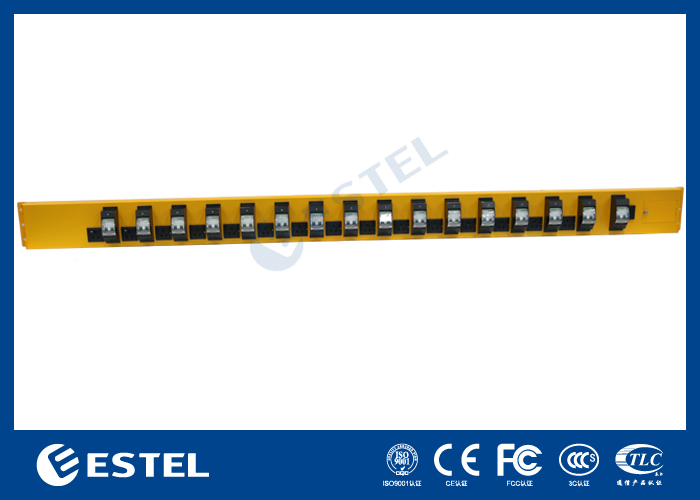
Power Reliability and Monitoring
You need steady and reliable power to keep telecom cabinets running without interruption. A Smart Power Distribution Unit ensures that all your equipment receives consistent electricity, which helps prevent disruptions. These units offer real-time monitoring, so you can track power usage and spot issues before they become problems. With remote access, you can control outlets and resolve faults quickly, reducing downtime and maintenance costs. Environmental monitoring features help you save energy by adjusting power distribution based on actual needs.
Tip: Real-time monitoring and remote management are essential for modern telecom operations. They give you the ability to respond to issues instantly, which keeps your network reliable.
Modern Smart Power Distribution Units also use smart circuit breakers and intelligent monitoring modules. These advancements allow you to receive precise energy consumption reports and predictive insights. By analyzing current and power trends, you can make better decisions about maintenance and energy management.
ESTEL’s Product Features
ESTEL stands out as a leader in telecom infrastructure solutions. You can explore their full range of products on their official website or view the Smart Power Distribution Unit product page. ESTEL’s Smart Power Distribution Unit offers several advantages:
Consistent power delivery with essential safety features, suitable for both small businesses and large data centers.
Robust materials protect your devices from power surges and damage, ensuring smooth operation.
Cost-effective design provides high quality and advanced features at a competitive price.
Easy setup and operation save you time during installation and maintenance.
Overload protection, compact design for standard racks, and high capacity for powering multiple devices.
Here is a quick overview of the technical specifications:
Category | Specification |
|---|---|
Technical Parameter | Manual/Auto: Yes, Safety Padlock: Yes, Status Query: Yes, Host/Platform Control: Yes, Automatic Reclosing: Settable, Timing Settings: Yes, Backup Power Setting: Yes, Oil Generator Service: Yes, Exemption Period: Yes |
Electrical Characteristics | Frame Size: 63A/125A, Voltage: DC24V~DC48V, Insulation Voltage: 300V, Frequency: 50Hz/60Hz, Standby Power: ≤1.2W |
Mechanical Properties | Open Time: 0.1s, Close Time: 0.2s, Mechanical Life: 20,000 cycles |
Environmental | Operating Temp: -25℃ |
Communication | Baudrate: 9600 (default), Data Bit: 8, Stop Bit: 1, Device Address: 1 (default) |
When you choose ESTEL’s Smart Power Distribution Unit, you gain access to advanced technology that supports predictive maintenance and reliable power management in any telecom environment.
Predictive Maintenance Challenges
Common Issues in Telecom Cabinets
You face several challenges when managing telecom cabinets. Power-related failures often cause network downtime, making reliable maintenance essential. Many cabinets use older infrastructure, which complicates the integration of new predictive maintenance systems. You must also secure sensitive data, using encryption and access controls to protect information. Training your team to interpret predictive alerts and respond quickly is another key factor.
Here is a summary of the most common challenges:
Challenge | Description |
|---|---|
Integration with Legacy Systems | Telecom operators struggle to integrate predictive maintenance systems with older infrastructure, leading to operational inefficiencies. |
Data Management | Securing data is crucial, with encryption and access controls being implemented to protect confidentiality. |
Training | Training programs are essential for workers to effectively interpret predictive alerts and respond appropriately. |
Failures in telecom cabinets happen frequently when predictive maintenance is inadequate. Power-related issues account for nearly one-third of network downtime. Predictive maintenance and real-time monitoring have prevented up to 80% of recent outages. You can see how these improvements boost equipment uptime by 20%.
Evidence Type | Details |
|---|---|
Frequency of Failures | Power-related failures account for nearly one-third of telecom network downtime. |
Impact of Predictive Maintenance | Predictive maintenance and real-time monitoring have prevented up to 80% of recent outages. |
Improvement in Equipment Uptime | Predictive maintenance improved equipment uptime by 20%. |
Regular inspections and proactive upgrades help you build resilience against future demands. Combining modular design with advanced real-time monitoring enhances system reliability.
Importance of Accurate Predictions
Accurate predictions play a vital role in keeping your telecom cabinets reliable. AI-enabled predictive maintenance analyzes sensor data to forecast faults, which improves early fault detection. You benefit from enhanced operational efficiency and higher customer satisfaction when you use proactive maintenance strategies.
Evidence Description | Source |
|---|---|
AI-enabled predictive maintenance analyzes sensor data to forecast faults, improving early fault detection. | Reliability Verification of Telecom Cabinet Communication Power Systems |
AI-powered predictive maintenance enhances operational efficiency and customer satisfaction through proactive maintenance strategies. | Role of Artificial Intelligence in Predictive Maintenance |
You can mitigate operational risks by using real-time monitoring to track voltage, temperature, power output, and battery health. Built-in safeguards like overload protection and thermal management help you detect issues early. Remote management capabilities allow you to resolve problems quickly, minimizing service interruptions. Predictive analytics help you anticipate maintenance needs, optimize performance, and reduce downtime.
Real-time monitoring tracks key metrics such as voltage, temperature, power output, and battery health, allowing for early detection of anomalies.
Built-in safeguards like overload protection and thermal management proactively detect issues.
Remote management capabilities enable quick problem resolution, minimizing service interruptions.
Predictive analytics help anticipate maintenance needs, optimizing performance and reducing downtime.
Accurate predictive maintenance ensures your telecom cabinets stay reliable and efficient, supporting continuous service for your customers.
Algorithm Iteration for Maintenance Accuracy
Model Development and Refinement
You improve predictive maintenance accuracy by developing and refining your algorithms. Start by collecting data from your smart PDUs, focusing on metrics like voltage, current, and temperature. Use this information to build models that predict failures before they happen. You need to test these models regularly and adjust them as new data becomes available. This process helps you catch issues early and reduce downtime.
Automated warehouses have shown that monitoring critical assets, such as air compressors, leads to better maintenance outcomes.
Facilities that track small conveyor motors prove that focusing on easily replaceable assets can deliver quick validation for predictive maintenance.
You should set clear metrics and Key Performance Indicators (KPIs) to measure your progress. These KPIs might include reductions in emergency repairs or improvements in operational efficiency. Align your KPIs with your current maintenance maturity level to ensure you see meaningful results.
Establish metrics and KPIs to demonstrate the effectiveness of your predictive maintenance strategy.
Choose KPIs that match your maintenance maturity, such as tracking fewer emergency repairs or higher efficiency.
A semiconductor manufacturer discovered that vacuum pump failures could disrupt global supply chains. This insight justified their investment in predictive maintenance, showing how understanding asset impact drives smarter decisions.
Machine Learning and AI Integration
You can boost your predictive maintenance strategy by integrating machine learning and AI technologies. These tools analyze real-time sensor data from your smart PDUs, helping you spot early signs of equipment degradation. Machine learning models learn from historical data and improve their predictions over time. AI systems automate power adjustments based on workload, which increases efficiency and reduces manual intervention.
AI integration uses real-time sensor data to enhance predictive maintenance.
Machine learning identifies early equipment degradation, enabling proactive maintenance.
Automation adjusts power distribution according to workload demands, improving efficiency.
Digital twin simulations let you test efficiency measures virtually before applying them to your telecom cabinets. You can analyze power usage at both the unit and outlet levels, which helps you detect anomalies early and prevent failures.
Data Accumulation for Predictive Models
Types of Data Collected
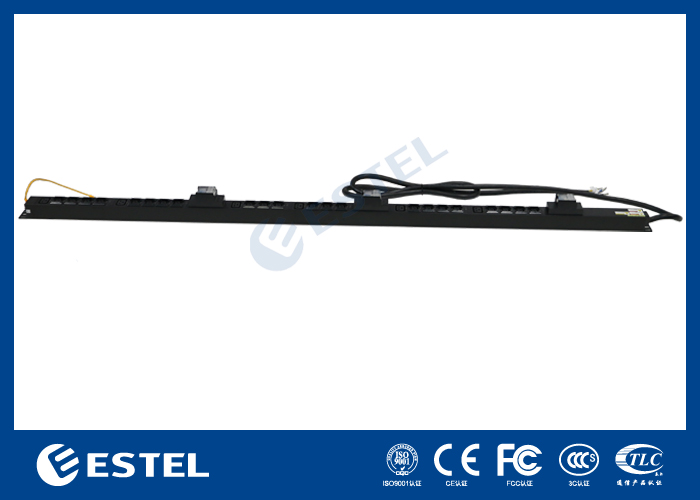
You need to gather the right data to make predictive maintenance work for your smart PDUs. The most important data types help you understand how your equipment performs and when it might fail. You should focus on collecting load cycle data, voltage and current readings, and temperature measurements. Each type of data gives you a different view of your system’s health.
Here is a table that shows the most critical data types and why they matter:
Data Type | Importance |
|---|---|
Load Cycle Data | Essential for modeling remaining useful life (RUL) by tracking charge-discharge cycles and stress on components. |
Voltage and Current | Critical for assessing health of power systems; fluctuations can indicate potential failures and inefficiencies. |
Temperature Data | Vital for predicting RUL; high temperatures can accelerate degradation and risk of failure. |
You can use this data to spot trends and predict when maintenance is needed. For example, if you see rising temperatures or unusual voltage changes, you know to check your equipment before a failure happens.
Impact on Model Performance
The quality and amount of data you collect have a big impact on how well your predictive models work. If your data is incomplete or inconsistent, your predictions will not be accurate. You may face several challenges when collecting data from smart PDUs:
Inconsistent, incomplete, or faulty sensor data can lead to inaccurate predictions.
Incomplete data collection is common, especially in remote locations with poor connectivity, resulting in gaps in data transmission.
Inconsistent data formats across different manufacturers create hurdles for AI systems, reducing prediction accuracy.
Real-time data processing delays can hinder timely responses to equipment failures.
You improve your model’s performance by making sure your data is clean, complete, and collected in real time. High-quality data helps your AI systems learn faster and make better predictions. When you address these challenges, you get more reliable maintenance schedules and fewer unexpected failures. This means your telecom cabinets stay up and running, and you avoid costly downtime.
Tip: Regularly check your sensors and data collection systems to ensure you get the best results from your predictive maintenance models.
Integrating Algorithms and Data for Optimal Results
Synergy of Iteration and Data
You achieve the highest accuracy in predictive maintenance when you combine algorithm iteration with continuous data accumulation. Each time you refine your predictive models, you use new data to improve their performance. This process helps you catch faults earlier and respond faster. When you collect high-quality data from your telecom cabinets, you give your algorithms the information they need to learn and adapt.
You can process data closer to its source with edge computing solutions. This reduces latency and improves service quality for your network.
You should use real-time analytics platforms to monitor data streams. These platforms help you identify issues before they become serious problems. You can also use data processing technologies to analyze large datasets and make informed decisions. When you build streaming data pipelines, you keep your information up to date and ready for analysis.
Best practices for integrating predictive algorithms with real-time data streams include:
Process data at the edge to minimize delays.
Monitor data continuously with real-time analytics.
Use scalable data processing systems for large volumes.
Move data efficiently to reduce latency.
Optimize data flows for multiple uses.
Choose platforms that allow easy management of data pipelines.
Ensure data processing operates without interruption.
You need clean and reliable data for accurate predictive analytics. Protect sensitive information with robust security measures. Modern infrastructure supports your growing data needs. A skilled team helps you leverage data and drive business value.
ESTEL’s Approach and Case Examples
ESTEL uses a combination of advanced algorithms and strong data accumulation to deliver reliable predictive maintenance for telecom cabinets. You benefit from real-time monitoring of key parameters such as temperature, humidity, vibration, and power usage. Customizable threshold alerts notify your team when conditions approach critical limits. Centralized access to data allows you to make better decisions and intervene quickly.
ESTEL’s Smart Power Distribution Unit helps you maintain operational efficiency and protect sensitive equipment from damage.
You see clear results when you use ESTEL’s solutions:
The network stays operational during power changes, reducing downtime.
Fewer site visits and quicker repairs lower your maintenance costs.
Improved energy efficiency leads to less wasted power and lower operating expenses.
Sensitive equipment remains safe from surges and overloads.
Metric | Value |
|---|---|
Maintenance Cost Reduction | 93% (to 7% of traditional) |
Battery Life | 10 years (vs. 2 years) |
Operational Efficiency | 30% improvement |
Mean Time to Repair | Reduced from 4.8 to 3.1 hours |
You also save energy and money over time:
Efficiency Level | Annual Energy Savings (kWh) | Cumulative Savings Over 5 Years (£) |
|---|---|---|
92% | 3,726 | N/A |
98% | 6,013 | 9,000,000 |
Industry practices show that predictive maintenance lowers operational costs and increases reliability. ESTEL’s approach gives you real-time insights and actionable alerts, helping you prevent failures and extend equipment life. You can trust the Smart Power Distribution Unit to support your network and keep your telecom cabinets running smoothly.
You can improve predictive maintenance accuracy by refining your algorithms and building strong data sets. Combining these strategies helps you reduce downtime, lower costs, and extend equipment life. Use tools like the Smart Power Distribution Unit to monitor your network in real time and respond quickly to issues. Evaluate your current processes, invest in workforce training, and choose scalable data solutions. The future of telecom power management will focus on smarter systems, modular designs, and renewable energy integration.
FAQ
How does predictive maintenance help you reduce downtime in telecom cabinets?
Predictive maintenance lets you spot problems before they cause failures. You can schedule repairs at the right time. This approach keeps your network running and lowers the risk of unexpected outages.
What data should you collect from smart PDUs for accurate predictions?
You should gather voltage, current, temperature, and load cycle data. These metrics help you understand equipment health and predict when maintenance is needed.
Tip: Regular sensor checks improve data quality and model accuracy.
Can you manage ESTEL’s Smart Power Distribution Unit remotely?
Yes, you can control and monitor the unit from anywhere. Remote management helps you respond quickly to faults and adjust power settings without visiting the site.
What safety features protect your telecom equipment?
ESTEL’s Smart Power Distribution Unit includes surge protection, overload safeguards, and a dehumidifying function. These features keep your devices safe from electrical hazards and environmental risks.
How do you improve predictive maintenance accuracy over time?
You refine your algorithms with new data. Each update makes predictions more reliable. Continuous data accumulation and model iteration help you catch faults earlier and extend equipment life.
See Also
Ensuring Consistent Power Supply for Telecom Cabinets
Calculating Power Systems and Battery Needs for Telecom Cabinets
Achieving Effective Monitoring for Outdoor Telecom Cabinets
CALL US DIRECTLY
86-13752765943
3A-8, SHUIWAN 1979 SQUARE (PHASE II), NO.111, TAIZI ROAD,SHUIWAN COMMUNITY, ZHAOSHANG STREET, NANSHAN DISTRICT, SHENZHEN, GUANGDONG, CHINA
