Integration of Photovoltaic + Energy Storage + DC Power Supply: Innovative Integration Solution for Telecom Power and New Energy

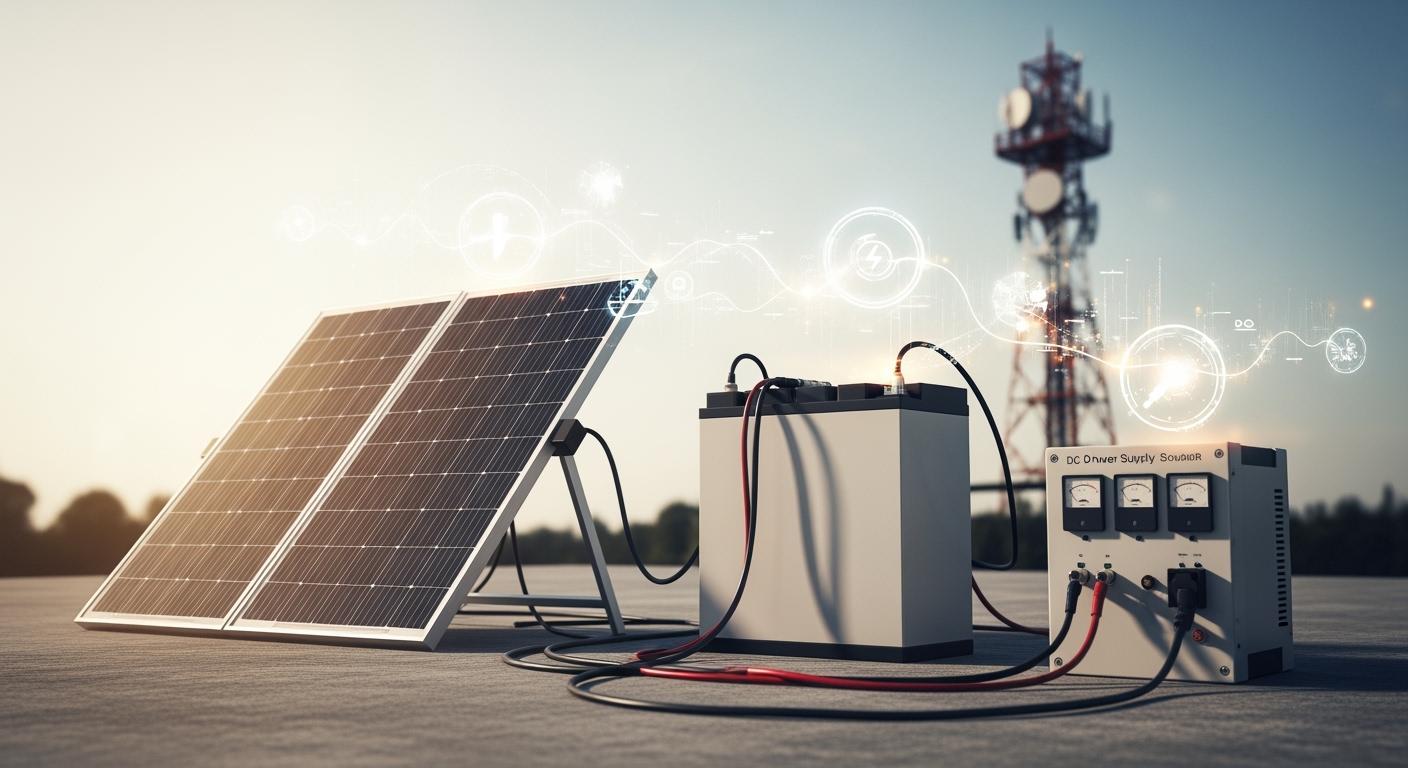
You see rapid changes in telecom power and new energy sectors. Integrating photovoltaic, energy storage, and DC power supply brings greater reliability and efficiency. ESTEL leads in innovative telecom infrastructure solutions, helping you meet demanding requirements. Advanced power systems improve sustainability for telecom operators and infrastructure providers. Market adoption rates show strong growth, with DC Power Systems holding a 63% share in 2023 and expected to reach 34.2% in 2026. The synergy between these technologies transforms how you manage your Telecom Power System.
Component | Market Share (%) | Year |
|---|---|---|
DC Power Systems | 63 | 2023 |
DC Power Systems | 34.2 | 2026 |
Key Takeaways
Integrating photovoltaic systems with energy storage enhances reliability and efficiency for telecom power solutions.
Using lithium iron phosphate (LiFePO4) batteries provides long-lasting energy storage, ensuring continuous power during outages.
Hybrid power management systems can reduce operational costs by up to 30% and CO₂ emissions by up to 55%.
Advanced monitoring and predictive maintenance improve uptime and reduce maintenance needs for telecom networks.
Adopting integrated power solutions supports sustainability goals while lowering operational costs and enhancing network performance.
System Components Overview
Photovoltaic Integration
You see solar panels as the foundation of renewable energy generation for telecom sites. These panels convert sunlight into electricity, supporting your network with clean power. Typical photovoltaic systems for telecom applications meet strict safety and performance standards. You can check the specifications below:
Specification Type | Details |
|---|---|
Safety Standards | UL1730, UL/IEC61730, UL7103 |
Performance Standards | IEC 61215, IEC 61646 |
Typical Power Ratings | 250 to 400 watts |
Efficiency Range | 18% to 25% |
Temperature Coefficient | -0.30%/°C to -0.41%/°C |
Warranty | 80% capacity after 25 years, max 0.7% decline per year |
Solar panels work with hybrid inverters, charge controllers, and energy management systems to optimize power flow and protect your batteries.
Energy Storage Solutions
You rely on energy storage to keep your telecom equipment running during cloudy days or at night. Lithium iron phosphate (LiFePO4) batteries offer high energy density, long lifespan, and excellent thermal stability. You can cycle these batteries thousands of times with minimal degradation. Other options include lead-acid (VRLA), nickel-cadmium (Ni-Cd), and flow batteries. Each technology has unique strengths, but LiFePO4 batteries stand out for efficiency and reliability in telecom environments.
Solar Panels: Generate renewable energy.
LiFePO4 Battery Bank: Store energy for backup.
Battery Management System (BMS): Monitor and control battery parameters.
Energy Management System (EMS): Optimize energy usage.
DC Power Supply
You need a stable DC power supply to operate telecom equipment. Most telecom infrastructure uses -48V DC, which matches the requirements of base stations and network devices. The current varies based on your equipment and load demands.
Voltage | Current Requirements |
|---|---|
-48V DC | Varies by equipment and load |
Charge controllers regulate electricity flow, protecting your batteries and ensuring consistent performance. Inverters convert DC to AC if your site needs it.
ESTEL Product Highlights
ESTEL delivers advanced solutions for telecom power integration. You benefit from the Telecom Power System, which adapts to different voltage ranges and provides natural cooling. The Telecom Rectifier System offers unmatched efficiency and durability, crucial for reliable network operations. Modular designs and AI integration help you scale your network as demand grows. ESTEL modules achieve over 95% efficiency, saving energy and reducing costs. You can trust these systems to ensure steady connections for critical services like streaming and emergency calls. Over 1 billion people relied on 5G services in 2023, showing the importance of reliable infrastructure. ESTEL’s Telecom Power System stands out for its adaptability and performance in diverse environments.
Telecom Power System Working Modes
Grid-Connected Operation
You can connect your Telecom Power System directly to the main electricity grid. This setup uses advanced technologies like SMPS (Switched Mode Power Supply) to convert AC power into stable DC power for your telecom equipment. You benefit from high efficiency and quick response to changing load demands. IMPS (Integrated Modular Power System) gives you scalability and energy optimization. With grid-connected operation, you ensure reliable power delivery and can take advantage of peak shaving to lower your energy costs during high-demand periods. You also have the option to store excess energy from renewable sources for later use.
SMPS provides stable DC power.
IMPS allows you to scale your system as your network grows.
Peak shaving reduces your maximum power demand.
Off-Grid and Backup Modes
You may need to operate your Telecom Power System in off-grid or backup mode, especially in remote areas or during grid outages. Energy storage systems, such as lithium-ion batteries, store excess energy generated by solar panels. These batteries supply power when sunlight is not available, ensuring your telecom site stays online day and night. EFOY fuel cells and hybrid systems also provide uninterruptible power for critical components, keeping communication lines open during emergencies. You reduce your reliance on diesel generators, which leads to cost savings and supports environmental goals.
Note: Off-grid and backup modes help you maintain continuous service, even in challenging conditions.
Hybrid Power Management
You can combine grid, solar, and battery power in a hybrid system. This approach gives you the flexibility to switch between energy sources based on availability and cost. Hybrid power management reduces operational costs by up to 30%, cuts CO₂ emissions by up to 55%, and lowers diesel use by up to 70%. You also gain enhanced reliability, as the system uses renewable energy during outages. Advanced features like AI-driven monitoring and predictive maintenance help you optimize performance and prevent downtime.
Advantage | Hybrid Power Management | Traditional Single-Source Solutions |
|---|---|---|
Operational Cost Reduction | N/A | |
CO₂ Emission Reduction | Up to 55% reduction | N/A |
Diesel Use Reduction | Up to 70% reduction | N/A |
Reliability | Enhanced with renewables | Limited to single energy source |
ESTEL Application Scenarios
You see real-world success with ESTEL’s Telecom Power System in diverse environments. In Southeast Asia, operators use ESTEL’s 48V power supply systems to power 5G small cells and macro base stations. This leads to lower energy costs and better network performance. In Europe, a data center integrates ESTEL’s 48V systems to achieve stable power delivery and minimize downtime. These examples show how you can rely on ESTEL for flexible, efficient, and reliable telecom power solutions.
Benefits and Applications
Energy Management Efficiency
You gain measurable improvements in energy management when you use integrated photovoltaic and energy storage systems at your telecom sites. These systems help you optimize power usage and reduce waste. You can see the impact in the following table:
Improvement Type | Measurement |
|---|---|
Up to 84% |
You benefit from several enhancements:
You integrate renewable energy sources easily.
You participate in grid peak regulation.
You reduce wind and solar curtailment.
You empower demand-side management.
You enhance generation-side efficiency.
You support microgrid operation.
The integration of energy storage and DC power supply directly supplies power to devices designed for DC operation. This minimizes conversion losses and lowers energy consumption. You avoid the inefficiencies of converting AC to DC, which reduces energy wastage. These systems also help you meet sustainability goals by lowering harmful gas emissions and cooling requirements.
Reliability for Telecom Sites
You improve uptime and reduce maintenance requirements with integrated power systems. You detect power issues early, allowing proactive intervention before outages occur. Environmental condition monitoring helps you maintain optimal operating conditions for your telecom equipment. You reduce mean time to repair, ensuring quicker responses to incidents and minimizing downtime. Predictive maintenance lets you schedule repairs during low-traffic periods, which reduces service disruption. Automation and edge response capabilities decrease reliance on human intervention, enhancing operational efficiency.
You achieve higher reliability and operational stability, which is crucial for telecom networks supporting 5G and IoT.
ESTEL’s Telecom Power System and rectifier modules deliver consistent performance. You see a 98% reduction in battery failure rates from 2018 to 2024. Electricity system inefficiency drops to 17.43%. Rectifiers achieve over 96% efficiency, minimizing energy waste and supporting network uptime.
Cost Savings and Sustainability
You achieve significant cost savings by adopting integrated photovoltaic and energy storage systems. The following table shows how you optimize energy consumption and reduce reliance on diesel generators:
Evidence Type | Description |
|---|---|
Reduced Operational Costs | Optimized energy consumption and reduced reliance on diesel generators will lower operational expenses. |
Improved Energy Efficiency | Energy Storage Systems allow for optimized energy management, ensuring effective power utilization and minimizing waste, leading to reduced operational costs and improved network efficiency. |
Solar-powered telecom sites can reduce CO₂ emissions by up to 55%. With the expansion of 5G technology, this reduction can reach 58%. You lower operational costs by reducing grid electricity expenses by up to 30% and diesel usage by as much as 70%. Hybrid systems that utilize solar power enhance energy reliability and efficiency, contributing to sustainability.
You benefit from clean energy for off-grid telecom towers, which supports sustainability and reduces operational costs. Battery storage systems ensure a continuous power supply during periods without sunlight, enhancing the reliability of your network. These solutions help you achieve energy optimization while minimizing environmental impact. You align your operations with decarbonization goals, ensuring a sustainable and resilient future for the telecom industry.
ESTEL’s integrated power solutions lead to improved energy usage and cost-effective operation. The levelized energy expenditure is maintained at 17.16 ¢/kWh. ESTEL’s modular design allows you to scale your network as demand grows, supporting both hot and cold climates.
ESTEL Case Studies
You see real-world benefits from ESTEL’s integrated power solutions. ESTEL’s battery systems are designed for reliability and efficiency, which is crucial for modern telecom networks. Hybrid power solutions combine renewable energy with traditional sources, reducing carbon footprints while meeting telecom demands. Advanced monitoring systems provide real-time alerts and predictive analytics, ensuring high network uptime.
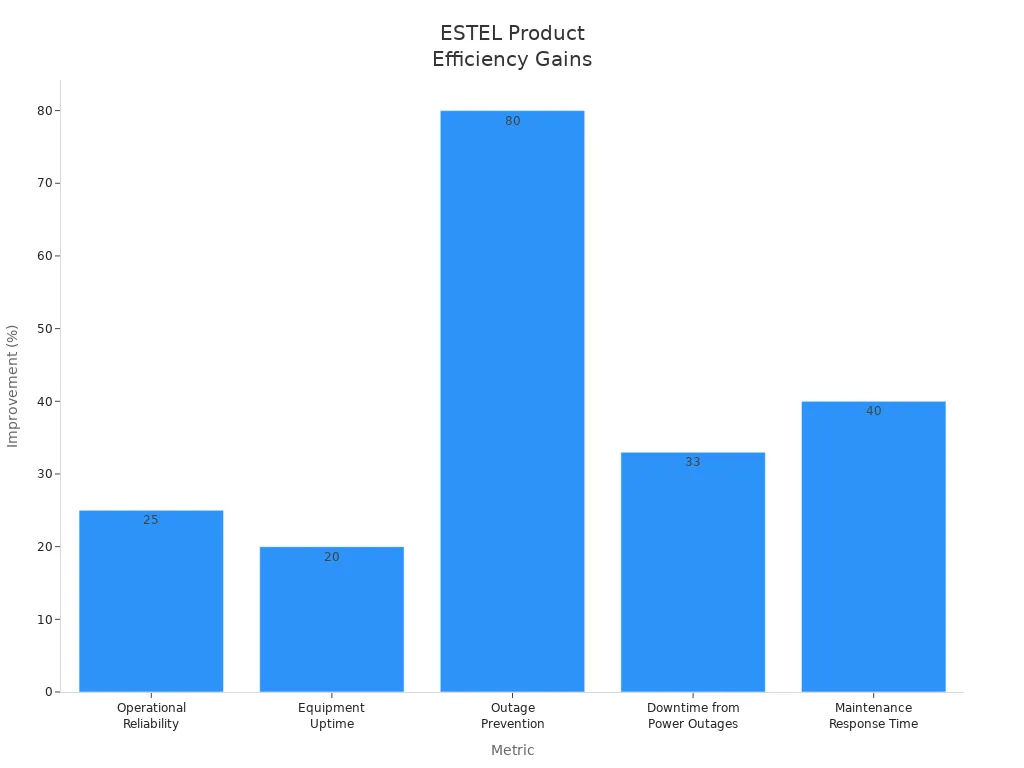
You can review the following improvements from ESTEL product deployments:
Metric | Improvement |
|---|---|
25% increase | |
Equipment Uptime | 20% improvement |
Outage Prevention | 80% of outages prevented |
Downtime from Power Outages | 33% reduction |
Maintenance Response Time | 40% faster |
Predictive Analytics | Weeks in advance |
You see a rural telecom operator in Southeast Asia reduce operational costs by 35% after switching to ESTEL’s hybrid power systems. IBM achieves 30% energy savings in data centers by using ESTEL’s real-time monitoring. The U.S. General Services Administration saves $13.5 million annually with smart PDUs from ESTEL.
You face challenges such as intermittency of renewables, system complexity, and rising energy costs. ESTEL helps you tackle these challenges with intelligent controllers and modular microgrids. You benefit from advanced solutions that optimize energy storage and support reliable telecom services.
You support the scalability and expansion of your network in emerging markets. Off-grid solutions accounted for 59.3% of the telecom power system market in 2024. These solutions are vital for expanding networks into underserved regions. The market is projected to reach $6.4 billion by 2028, driven by network expansion and efficiency upgrades.
You choose ESTEL for high-quality performance at competitive prices, consistent stable output, and user-friendly features. Conversion rates exceed 96% for energy efficiency. You scale your network easily with modular designs.
You meet industry standards and certifications such as IEEE 1662-2023, ISO 9001, TL 9000, and ESD S20.20. Regulatory policies and incentives support microgrid deployment and reliability, helping you achieve your business goals.
You gain many advantages by integrating photovoltaic, energy storage, and DC power supply. This approach boosts reliability, lowers costs, and supports sustainability for telecom and new energy sectors. You see rapid growth in integrated power solutions, driven by AI, renewable energy, and smart grid demand.
Solar panels now deliver higher efficiency.
Energy storage systems offer better thermal stability.
Smart grid and IoT integration enable real-time control.
ESTEL leads with advanced features and real-world results:
Feature | Impact |
|---|---|
Renewable energy compatibility | Reduces environmental impact |
Lowers energy loss and costs | |
AI-driven maintenance | Increases reliability and uptime |
Modularity and scalability | Eases network upgrades |
You can expect continued innovation and smarter, greener telecom power systems in the future.
FAQ
What is a Telecom Power System?
You use a Telecom Power System to supply reliable power to your telecom equipment. This system converts electricity into the right voltage and current for your devices. It helps you maintain stable network operations in different environments.
How does energy storage improve telecom site reliability?
You rely on energy storage to keep your telecom site running during power outages. Batteries store energy from solar panels or the grid. You avoid downtime and ensure continuous service for your customers.
Can you integrate solar panels with existing telecom infrastructure?
You can add solar panels to your current telecom setup. Hybrid systems let you combine solar, battery, and grid power. You reduce energy costs and support sustainability goals.
What maintenance does a Telecom Power System require?
You check connections, monitor battery health, and update software regularly. You schedule inspections to prevent failures. Predictive analytics help you spot issues early and keep your system running smoothly.
How do you reduce operational costs with integrated power solutions?
You optimize energy use by combining solar, batteries, and efficient DC power supply. You lower grid electricity expenses and minimize diesel generator use. Smart monitoring helps you track and manage energy consumption.
See Also
Telecom Cabinets Utilizing Photovoltaic Energy Storage Solutions
Telecom Cabinets Featuring Grid-Connected Inverter And Battery Systems
Smart Energy Storage Systems For ESTEL Telecom Cabinets
Batteries Designed For Energy Storage In ESTEL Cabinets
Methods For Calculating Power Systems And Batteries In Telecom Cabinets
CALL US DIRECTLY
86-13752765943
3A-8, SHUIWAN 1979 SQUARE (PHASE II), NO.111, TAIZI ROAD,SHUIWAN COMMUNITY, ZHAOSHANG STREET, NANSHAN DISTRICT, SHENZHEN, GUANGDONG, CHINA
