IP/NEMA compliance and UL standards for 48V telecom power systems

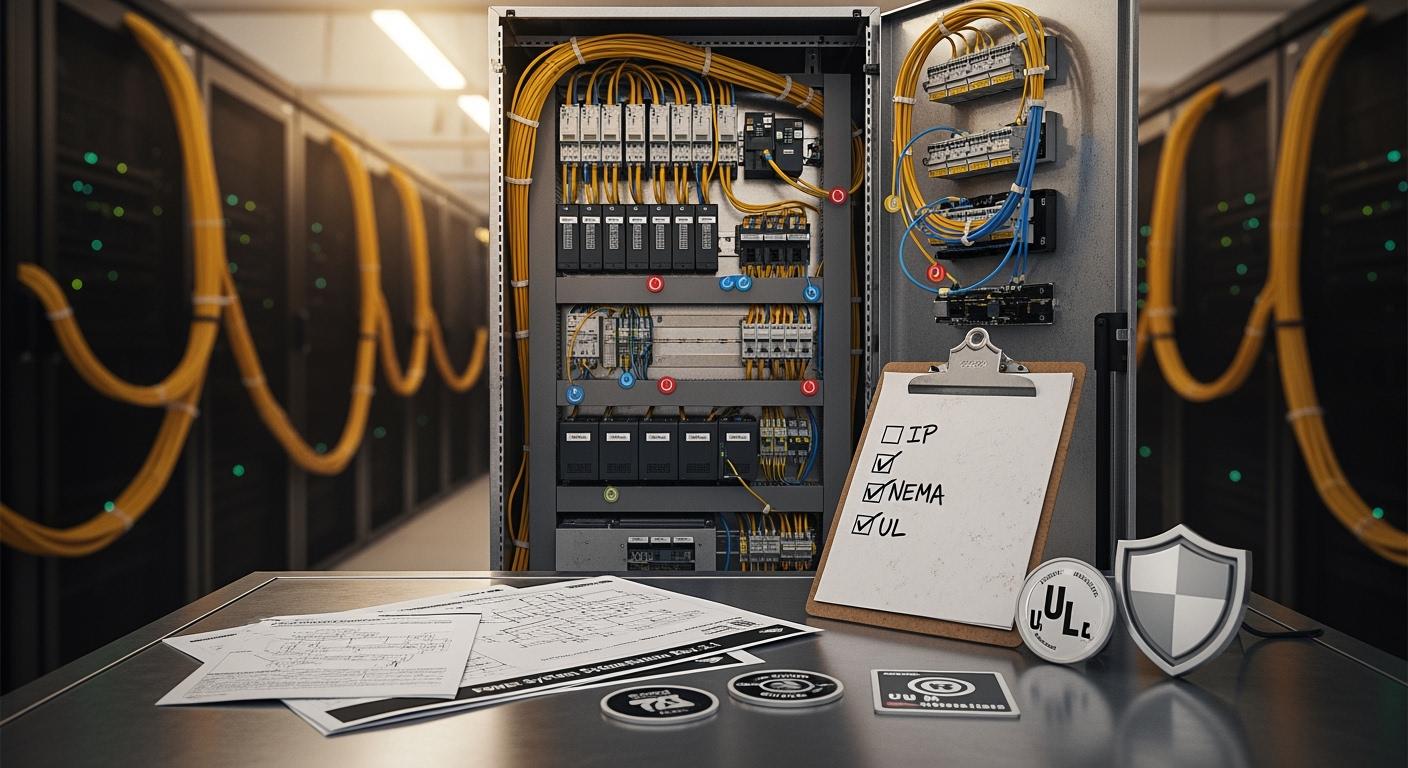
When you select equipment for a 48V telecom power system, IP and NEMA compliance show how well enclosures protect against dust, water, corrosion, and even icing. These ratings help you ensure your equipment works reliably in challenging environments. UL standards go further by verifying safety and compliance through independent testing. You gain confidence in your choices and meet regulatory demands. ESTEL delivers solutions that meet these international requirements, giving you peace of mind when building or upgrading your telecom infrastructure.
Key Takeaways
Understand IP ratings to protect your telecom power system from dust and water. Choose enclosures with ratings like IP55 or higher for outdoor installations.
NEMA ratings help you select enclosures based on environmental conditions. Use NEMA 3R for rain protection and NEMA 4X for corrosion resistance.
Ensure your equipment meets UL standards for safety and performance. Look for the UL mark to confirm compliance and reduce risks of electrical hazards.
Select the right enclosure by assessing environmental factors like temperature and humidity. Match the rating to your site’s specific needs for reliable operation.
Choose ESTEL’s certified solutions for enhanced safety and efficiency. Their products help you save on energy costs and reduce maintenance needs.
IP, NEMA, and UL Standards Overview
IP Ratings Explained
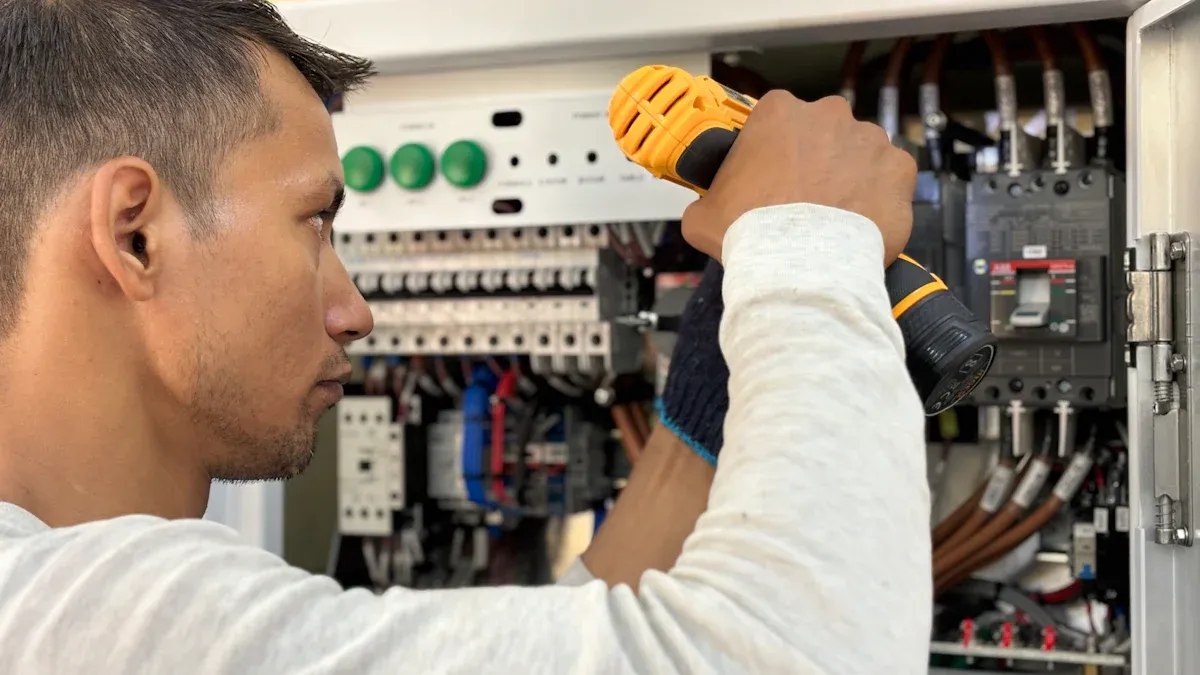
You need to understand how IP ratings protect your 48V telecom power system from environmental hazards. IP, or Ingress Protection, uses a two-digit code to show how well an enclosure resists dust and water. For example, an IP55 rating means your equipment has limited dust ingress protection and can withstand low-pressure water jets. This level of protection is important for outdoor telecom sites, where dust and water can cause overheating or corrosion. The table below shows common IP ratings and what they mean for your equipment:
IP Rating | Solid Object Protection | Liquid Protection |
|---|---|---|
IP54 | Limited dust ingress | Protection against splashes |
IP55 | Limited dust ingress | Protection against low-pressure water jets |
IP56 | Fully dust-tight | Protection against powerful water jets |
IP67 | Fully dust-tight | Protection against immersion in water |
NEMA Ratings Explained
NEMA ratings help you choose enclosures that can handle specific environmental conditions. The National Electrical Manufacturers Association (NEMA) classifies enclosures based on their ability to protect against dust, water, and corrosion. For a 48V telecom power system, you might see NEMA 3R or NEMA 4X enclosures. NEMA 3R protects against rain, snow, and sleet, making it suitable for outdoor use. NEMA 4X adds resistance to corrosion and extreme weather. The table below highlights common NEMA ratings:
NEMA Rating | Description | Environmental Factors Addressed |
|---|---|---|
NEMA 1 | Basic protection against dust and light impacts | Dust, light impacts |
NEMA 3R | Protects from rain, snow, and sleet | Rain, snow, sleet |
NEMA 4X | Water-tight, corrosion-resistant | Water, corrosion, extreme weather |
UL Standards for Telecom
UL standards focus on safety and performance for telecom equipment. For your 48V telecom power system, UL 60950-1 is a key standard. It ensures electrical safety for telecom rectifiers and other information technology equipment. Other standards, like IEC 60950-1 and EN 60950-1, cover international and European requirements. Meeting these standards helps you ensure your system is safe and reliable. Here are some important UL and related standards:
Standard | Description |
|---|---|
UL 60950-1 | Ensures electrical safety in telecom rectifiers |
IEC 60950-1 / VDE 0805 | International safety standard for telecom applications |
EN 60950-1 | European safety standard for telecom rectifiers |
CAN/CSA-22.2 NO. 60950-1-03 | Canadian safety standard for telecom systems |
ESTEL demonstrates a strong commitment to international standards. You benefit from their thorough testing for electromagnetic compatibility, safety, and performance. ESTEL uses advanced monitoring tools to maintain compliance with NEMA and IP ratings. Strict quality control ensures every Telecom Rectifier System meets or exceeds these standards.
Environmental Protection for 48V Telecom Power System
IP Protection Levels
You face many environmental hazards when you install a 48V telecom power system outdoors. Dust, water, and extreme weather can damage sensitive equipment. IP ratings help you understand how well an enclosure protects against these threats. For example, an IP65 rating means the cabinet is dust-tight and can resist water jets. IP67 means the enclosure can handle temporary immersion in water. These ratings keep your system reliable, even in harsh conditions. You reduce the risk of short circuits and equipment failure by choosing the right IP level.
ESTEL’s outdoor telecom cabinets feature high IP ratings, such as IP55 and above. You can trust these cabinets to shield your power systems from dust, rain, and accidental water exposure.
NEMA Environmental Factors
NEMA ratings give you another way to measure protection. These ratings focus on how well enclosures handle rain, snow, dust, and corrosion. Outdoor installations often use NEMA 3R or NEMA 4X cabinets. NEMA 3R protects against rain and snow, while NEMA 4X adds corrosion resistance for coastal or industrial sites. The table below shows common NEMA ratings and their protection levels:
NEMA Rating | Environmental Protection Level |
|---|---|
1 | Indoor use, limited protection |
3 | Outdoor use, protection against rain and dust |
4 | Outdoor use, protection against splashing water, dust |
4X | Outdoor use, corrosion-resistant, water, dust |
12 | Indoor use, dust and non-corrosive liquids |
13 | Indoor use, dust and water spray |
You lower the risk of equipment failure by selecting cabinets with the right NEMA rating. ESTEL’s cabinets meet these standards, so you can install them in challenging environments with confidence.
Durability and Corrosion Resistance
You need cabinets that last in tough conditions. The materials and design features of your enclosure play a big role in durability. Painted steel adds a protective layer. Galvanized steel resists corrosion, making it good for both indoor and outdoor use. Stainless steel offers the highest corrosion resistance for long-term reliability. The table below highlights common materials:
Material Type | Description |
|---|---|
Painted Steel | Protective layer for durability |
Galvanized Steel | Corrosion resistance for indoor and outdoor use |
Stainless Steel | High corrosion resistance for harsh environments |
Robust enclosures protect against dust and moisture. Modular racks let you upgrade or repair equipment easily. Accessible doors make maintenance quick. Thermal management options, such as fans and air conditioning, prevent overheating during heatwaves.
ESTEL’s outdoor cabinets use advanced materials and smart designs. You get long-lasting protection for your 48V telecom power system, even in areas with typhoons, snow, or salt spray.
UL Compliance in 48V Telecom Power System
UL Safety Requirements
You need to make sure your 48V telecom power system meets strict safety standards. UL, or Underwriters Laboratories, sets these standards to protect people and equipment from electrical hazards. For telecom power systems, UL 60950-1 and the newer UL 62368-1 are the main standards. These standards cover risks such as electric shock, fire, and energy hazards. You can trust that equipment with a UL mark has passed rigorous testing for insulation, wiring, and component safety.
UL standards also address the performance of your system under normal and abnormal conditions. For example, they test how the system reacts to power surges or overheating. This helps you avoid costly downtime and ensures your equipment operates safely in the field. When you choose UL-certified products, you show your commitment to safety and reliability.
Tip: Always check for the UL mark on your telecom power system components. This mark gives you confidence that the equipment meets recognized safety benchmarks.
Certification Process
You must follow a clear process to achieve UL certification for your 48V telecom power system. First, you submit your product design and technical documents to UL. Next, UL engineers review your design and test samples in their labs. They check for compliance with all relevant standards, including electrical safety, fire resistance, and mechanical strength.
If your product passes all tests, UL issues a certification and allows you to use the UL mark. You must also agree to ongoing inspections. UL inspectors visit your manufacturing site to make sure you keep up with the required standards. This process helps you maintain high quality and safety over time.
The certification process may seem demanding, but it brings many benefits. You reduce the risk of product recalls and liability issues. You also gain a reputation for quality, which can help you win more business in the telecom industry.
Regulatory Approval
You need UL certification to access major markets like the United States and Europe. Regulatory bodies in these regions require proof that your 48V telecom power system meets safety and performance standards. UL 62368-1 is now the main standard for communication technology equipment. Meeting this standard helps you comply with complex regulations and reduces your compliance risks.
The table below shows how UL certification impacts regulatory approval in key markets:
Aspect | Description |
|---|---|
Certification Importance | Ensures compliance with safety and performance standards for telecom power systems. |
Standards Involved | UL 62368-1 governs safety for communication technology equipment. |
Market Access | Compliance with standards facilitates access to major markets like the US and Europe. |
Risk Reduction | Helps manufacturers navigate complex regulations and reduce compliance risks. |
Regulatory Requirements | Meeting standards is essential for obtaining approvals such as the CE mark in Europe. |
You gain several advantages when you choose UL-certified equipment:
You enhance product safety and efficiency.
You increase your competitiveness in the market.
You open doors to global markets by meeting unified regulatory frameworks.
ESTEL offers a range of UL-compliant products, including the Telecom Power System and Telecom Rectifier System. These solutions help you meet regulatory requirements and ensure safe, reliable operation in your telecom network. You can learn more about these products on the ESTEL official website.
Comparing IP and NEMA Ratings
Key Differences
You often see both IP and NEMA ratings when you select enclosures for telecom equipment. These two systems have important differences. NEMA ratings focus on overall protection against a wide range of environmental hazards. IP ratings measure how well an enclosure resists dust and water. NEMA ratings are mostly used in North America, while IP ratings are recognized worldwide. Manufacturers usually self-declare NEMA ratings, but IP ratings require testing by certified laboratories.
Aspect | NEMA Ratings | IP Ratings |
|---|---|---|
Focus | Overall protection against various environmental hazards | Protection against dust and water ingress |
Testing Method | Based on self-declaration by manufacturers | Requires rigorous testing by certified laboratories |
Recognition | Primarily recognized in North America | Recognized globally |
Tip: Always check which rating system your project location requires before making a decision.
Equivalency Chart
You may need to compare NEMA and IP ratings when you choose enclosures for your 48V telecom power system. An equivalency chart helps you convert between the two systems. This makes it easier to select the right enclosure, especially if you work with international teams or suppliers.
NEMA Rating | IP Rating | Description |
|---|---|---|
1 | IP20 | Indoor use, limited protection against dust |
3 | IP54 | Outdoor use, protection against rain and dust |
4 | IP65 | Protection against water jets and dust ingress |
Note: These equivalencies are approximate. Always check the specific requirements for your application.
Choosing the Right Rating
You should consider several factors when choosing between IP and NEMA ratings. Start by looking at the environmental conditions. Think about temperature, humidity, dust, and water exposure. Decide if you need indoor or outdoor protection. Check the structural requirements for durability and functionality. Make sure your choice meets industry-specific standards and regulations.
Factor | Description |
|---|---|
Environmental Conditions | Assessing factors like temperature, humidity, dust, and water exposure is essential for reliable operation. |
Indoor/Outdoor Use | Determines the required protection levels based on whether the enclosure is used indoors or outdoors. |
Structural Requirements | Considers the physical requirements of the enclosure, ensuring durability and functionality. |
Industry-Specific Standards | Ensures compliance with relevant industry standards and regulations for specific applications. |
You make the best choice by matching the rating to your site’s needs. This ensures your telecom equipment stays safe and reliable.
Practical Selection Guidance
Assessing Site Requirements
You should start by evaluating your site before selecting equipment. Follow these steps to ensure you meet all operational needs:
Assess power requirements and calculate the total load for your network equipment. Include all active devices and plan for redundancy.
Select high-quality rectifiers, reliable batteries, and suitable power distribution units based on your calculated load and performance needs.
Review the physical space available. Plan cable routing and confirm proper grounding and bonding.
Complete installation and wiring with secure connections. Test the system thoroughly after setup.
Monitor power usage and battery health regularly. Schedule maintenance to keep your system performing well.
Tip: Careful planning at this stage helps you avoid costly mistakes and ensures long-term reliability.
Selecting ESTEL Telecom Power System
You can address common site challenges by choosing the right equipment. ESTEL’s Telecom Power System and Telecom Rectifier System offer features that support reliable operation in harsh environments and limited spaces.
Feature | Description |
|---|---|
Efficiency | Up to 96% efficiency reduces operating costs. |
Temperature Range | Operates from -10°C to +50°C for flexible deployment. |
Altitude | Functions at altitudes up to 4000m. |
Reliability | Maintains stable power in challenging conditions. |
High-temperature batteries work from -40°F to 160°F, providing backup in extreme weather.
Cold start mechanisms allow operation at -30°C, ensuring quick startup with minimal battery power.
Long-duration backup options can keep base stations running for 72 hours or more during outages.
You can trust ESTEL’s systems to deliver consistent performance and protect your investment.
Ensuring Proper Certification
You must verify certification before installation. Look for recognized safety and transport compliance. Check for stationary battery safety listings and make sure test reports are available for inspection. For shipments, confirm UN 38.3 testing. In some telecom central office environments, NEBS-aligned practices may be required.
Compliance Status | Cost Implications |
|---|---|
Non-Compliant | Legal liabilities, voided insurance, system interference, and extra costs |
Compliant | Better reliability, longer warranties, reduced risks, and long-term cost savings |
Note: Using non-compliant systems can lead to equipment failure, fire hazards, and voided warranties. Always keep documentation organized and respond promptly to system alerts.
By following these steps, you ensure your 48V telecom power system meets safety, performance, and regulatory requirements.
You improve safety and reliability when you choose 48V telecom power systems with IP, NEMA, and UL compliance. You also lower your total cost of ownership. The table below shows how certified systems help you save money and reduce downtime:
Benefit | Description |
|---|---|
Energy Cost Savings | |
Maintenance Cost Reduction | Drops to 7% of traditional systems |
Cost Reduction | Up to 30% less than outdated designs |
Operational Improvements | Fewer outages and better reliability |
You can trust ESTEL’s certified solutions to protect your network and support your business goals.
FAQ
What does IP55 mean for my telecom power system?
IP55 means your enclosure resists dust and low-pressure water jets. You can install equipment outdoors with confidence. This rating helps you protect sensitive electronics from weather and debris.
How do NEMA and IP ratings differ?
NEMA ratings cover a wider range of environmental factors, including corrosion and ice. IP ratings focus on dust and water. You should check both when choosing enclosures for your site.
Why is UL certification important for telecom power systems?
UL certification shows your equipment meets strict safety standards. You reduce fire and shock risks. Many regions require UL marks for regulatory approval.
Does ESTEL offer UL-certified telecom power solutions?
Yes, ESTEL provides UL-compliant Telecom Power Systems and Rectifier Systems. You can find certified products for reliable and safe operation on the ESTEL website.
See Also
Ensuring Consistent Power Supply for Telecom Equipment Cabinets
Key International Guidelines for Telecom Power Supply Systems
Essential Features of Power Supplies for Telecom Systems
Comprehensive Guide to Telecom Cabinet Standards and Needs
Specifications for Outdoor Telecom Cabinets and Equipment Needs
CALL US DIRECTLY
86-13752765943
3A-8, SHUIWAN 1979 SQUARE (PHASE II), NO.111, TAIZI ROAD,SHUIWAN COMMUNITY, ZHAOSHANG STREET, NANSHAN DISTRICT, SHENZHEN, GUANGDONG, CHINA
