Lightweight Design of Telecom Power Systems: Detail Optimization to Reduce Transportation and Installation Costs

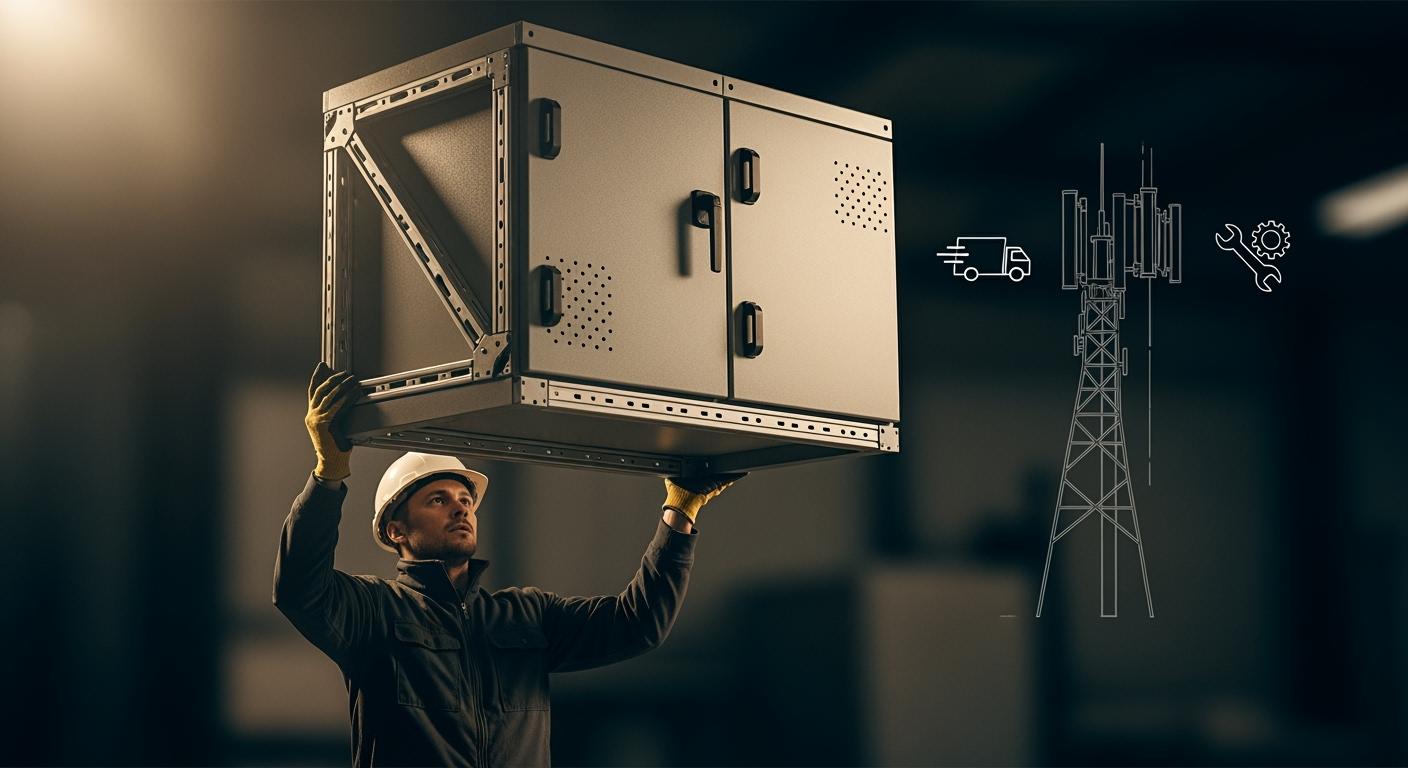
You can lower your expenses by choosing lightweight designs for Telecom Power Systems. Lighter equipment means you pay less for transport and installation. For example, modular rectifiers can cut operational costs by 20–30%, and ESTEL rectifiers reduce energy use by 20%.
Evidence Description | Cost Savings/Impact |
|---|---|
Reduction in operational costs after upgrading to modular rectifiers | 20–30% |
Energy consumption reduction by ESTEL rectifiers | 20% |
ESTEL stands out with a strong record of innovation. Since 2007, ESTEL has developed energy-saving ventilation, heat exchangers, and advanced air conditioning for outdoor telecom cabinets. These advances help you save money and time on every project.
Key Takeaways
Choose lightweight designs for telecom power systems to lower transportation and installation costs significantly.
Modular and compact solutions speed up installation times and reduce labor costs, allowing for quicker project completion.
Utilize advanced materials like Structural Battery Composites to achieve weight reduction while enhancing energy efficiency.
Integrate multifunctional components to streamline setups, minimize parts, and simplify maintenance for better operational efficiency.
Regularly audit telecom bills and optimize service plans to control costs and maximize savings throughout the project lifecycle.
Weight Impact on Telecom Power Systems
Transportation Cost Drivers
You face significant transportation costs when moving telecom power systems. The weight of each component directly affects the type of vehicle, lifting equipment, and logistics planning you need. For example, monopole base sections often weigh between 15,000 and 25,000 pounds. This weight matches the size of a school bus. You must select cranes with enough lifting power and reach. A 130-ton all-terrain crane is usually recommended for lifting 200-foot monopoles. Heavier equipment increases fuel consumption and requires more robust vehicles. You pay more for shipping and handling. Lighter designs help you reduce these expenses.
Tip: Choosing lightweight power systems can lower your transportation costs and simplify logistics.
Aspect | Impact on Performance and Cost |
|---|---|
Reducing weight in PSUs is crucial for operational efficiency and overall system performance. | |
gNodeB Product Choice | The weight of gNodeB products affects installation ease and site coverage, impacting competitiveness. |
Cable Weight | Heavy cables increase costs and installation complexity; using higher voltages can reduce cable weight. |
PSU Design Considerations | Higher voltages may improve efficiency and reduce operational costs, similar to trends in data centers. |
Installation Cost Drivers
You encounter extra costs during installation when equipment is heavy. Heavier systems require more workers, longer installation times, and specialized tools. Cranes with greater lifting capacity cost more to rent and operate. The working radius of a crane also matters. If you need to reach farther, you must use a crane with more lifting power, which increases your budget. Heavy cables add complexity and slow down your team. You may need to reinforce mounting structures to support the extra weight. Lighter telecom power systems allow you to finish installations faster and with fewer resources.
You save on labor costs.
You reduce the need for specialized equipment.
You minimize site preparation and structural reinforcement.
Lighter designs give you a competitive edge. You complete projects quickly and keep costs under control.
Lightweight Design Principles for Telecom Power Systems

Material Choices and Alternatives
You can achieve significant weight reduction by selecting advanced materials for telecom power systems. Many manufacturers now use Structural Battery Composites (SBCs), which combine energy storage and structural support. This approach reduces the need for separate battery units and heavy frames. SBCs also help lower manufacturing costs and promote environmental sustainability. You benefit from easier recycling and repurposing of materials.
Advantage | Description |
|---|---|
Weight Reduction | SBCs combine energy storage and structural components, reducing overall weight in telecom systems. |
Energy Efficiency | They provide energy storage similar to traditional batteries while serving as structural elements. |
Lower Manufacturing Costs | By reducing the amount of structural materials needed, SBCs can cut down on manufacturing expenses. |
Environmental Benefits | SBCs promote energy-efficient designs and facilitate easier recycling and repurposing of materials. |
You also see improvements when using lightweight battery technologies. These batteries offer high energy density, long cycle life, and maintenance-free operation. You install them quickly and manage them easily, which increases operational efficiency.
Feature | Description |
|---|---|
Energy Density | High energy density for efficient power storage. |
Safety | Redundant safety design to minimize risks. |
Cycle Life | Long cycle life for extended usage. |
Weight | Lightweight for easier installation and handling. |
Installation Flexibility | Easy to install, enhancing operational efficiency. |
Maintenance | Maintenance-free, reducing operational costs. |
Monitoring and Control | Extensive monitoring and controlling capabilities for better management. |
ESTEL’s Telecom Power System uses natural cooling and supports installation on standard racks. You get a system that is easy to handle and fits seamlessly into your existing infrastructure.
Structural Optimization
You can further reduce weight by optimizing the structure of telecom power systems. Progressive optimization techniques, such as modal analysis and topography optimization, help you design components that are strong yet lightweight. Engineers often use carbon fiber reinforced plastics (CFRP) to replace heavier traditional materials. This change leads to substantial weight savings.
Technique | Description | Weight Reduction Ratio |
|---|---|---|
Progressive Optimization | Involves conceptual and detailed design stages, including modal analysis and topography optimization. | 61.1% (theoretical), 57% (actual) |
Material Used | Carbon Fiber Reinforced Plastics (CFRP) replacing traditional materials. | N/A |
Application | Demonstrated on CFRP key components in aerospace. | N/A |
You see these principles in ESTEL’s Telecom Rectifier System. The modular design and rack-mount compatibility allow you to optimize space and reduce the need for heavy support structures. You benefit from easier installation and lower transportation costs.
Note: Structural optimization not only reduces weight but also improves durability and reliability. You spend less on maintenance and replacements over time.
Modular and Compact Solutions
You can maximize efficiency by choosing modular and compact solutions for telecom power systems. Modular designs provide high power density and occupy less space. You install these systems faster and with fewer resources.
Modular power systems deliver a power density of 2.5–3 kW/L.
The footprint is 30% smaller than traditional systems.
These systems are 40% lighter, which makes transportation and installation easier.
You reduce installation time from 4 hours to 1.5 hours, speeding up deployment.
ESTEL’s Telecom Power System and Telecom Rectifier System both feature modular construction. You can scale your setup as needed and integrate new components without major changes. The natural cooling feature eliminates the need for bulky air conditioning units, further reducing weight and complexity.
Tip: Modular and compact solutions help you save time and money. You complete projects faster and reduce labor costs.
You gain a competitive advantage by adopting these lightweight design principles. You lower your transportation and installation expenses, improve operational efficiency, and ensure your telecom infrastructure remains adaptable for future upgrades.
Detail Optimization for Cost Savings
Component Weight Reduction
You can achieve major cost savings by focusing on reducing the weight of individual components in Telecom Power Systems. When you select lighter materials for power modules, battery units, and mounting hardware, you lower shipping costs and make installation easier. ESTEL’s Telecom Power System uses natural cooling and compact rack-mount designs, which eliminate the need for heavy air conditioning units and bulky support frames. You benefit from a system that weighs less than 10kg without the rectifier module, making it simple to transport and install.
You should also audit your telecom bills regularly to spot overcharges and misapplied fees. By optimizing your service plan and negotiating contract terms, you can secure lower rates and bundle services for extra discounts. These strategies help you control costs at every stage, from procurement to deployment.
Choose lightweight materials for modules and batteries.
Audit bills and optimize service plans.
Negotiate contracts and bundle services.
You see the impact of component-level optimization in reduced labor, faster setup, and fewer logistical challenges.
Multifunctional Integration
You can further reduce costs by integrating multifunctional components into your Telecom Power Systems. When you combine energy storage, structural support, and monitoring features into a single unit, you minimize the number of separate parts. ESTEL’s modular rectifier systems offer advanced control features and multiple communication ports, allowing you to manage power delivery and system health from one dashboard.
You can leverage analytics-driven energy management to optimize resource allocation. By sharing network infrastructure and decommissioning legacy systems, you lower energy consumption and maintenance costs. Transitioning to cloud-based communications also helps you eliminate hardware maintenance and scale your operations flexibly.
Integrate energy storage and structural support.
Use analytics for energy management.
Share network infrastructure.
Decommission outdated systems.
Move to cloud-based communications.
Multifunctional integration streamlines your setup, reduces the number of components, and simplifies maintenance.
Easy Assembly and Handling
You save time and money when you choose Telecom Power Systems designed for easy assembly and handling. ESTEL’s systems feature plug-and-play installation, modular components, and remote diagnostics. These features allow you to set up equipment quickly, replace parts with minimal effort, and monitor system health without frequent site visits.
Benefit | Description |
|---|---|
Plug-and-play installation | Reduces setup time significantly. |
Modular components | Allows for quick replacements and upgrades. |
Remote diagnostics | Minimizes on-site maintenance requirements, lowering costs. |
ESTEL supports user-friendly installation with a guided setup wizard, intuitive dashboard design, and comprehensive support. You receive setup assistance, troubleshooting, and regular training sessions to maximize the benefits of your system.
Feature | Description |
|---|---|
Guided Setup Wizard | Reduces installation time and ensures all critical monitoring features are active from the start. |
Intuitive Dashboard | Features an intuitive layout and clear navigation, making it easy for new users to learn quickly. |
Comprehensive Support | Includes setup assistance, troubleshooting, and regular training sessions. |
Tip: When you choose systems with easy assembly and handling, you reduce installation time, lower labor costs, and minimize downtime.
You gain a competitive advantage by optimizing every detail. You control costs, improve efficiency, and ensure your Telecom Power Systems remain adaptable for future upgrades.
Case Studies and Implementation
Cost Savings Examples
You can see the impact of lightweight design through several real-world projects. Many telecom providers have adopted hybrid systems that combine grid, solar, and battery storage. These setups achieve over 90% efficiency and reduce operational costs. You also notice a drop in carbon emissions compared to diesel-only solutions. During outages or nighttime, integrated systems maintain power and cut generator use by more than 90%. The following table highlights successful case studies:
Case Study Title | Description | Link |
|---|---|---|
UPS Backup for Telecom | Developed a UPS backup system for a major telecom provider, addressing specific power needs. | Read the case study |
Emergency Backup for Telecom | Designed an emergency backup system, focusing on voltage drop challenges and load requirements. | Read the emergency backup case study |
Telecom Footprint Case | Created a custom battery backup solution for a telecom service provider with space constraints. | Read the Case of the Telecom Footprint |
Best Practices
You should focus on modular designs and renewable energy integration. ESTEL’s experience shows that using solar and wind sources improves sustainability and reduces fossil fuel reliance. Localized manufacturing strengthens supply chains and lowers transportation costs. Advanced technologies like AI and IoT help you manage energy more efficiently.
Lesson | Description |
|---|---|
Integration of Renewable Energy | Incorporating renewable sources like solar and wind enhances sustainability and reduces fossil fuel reliance. |
Localized Manufacturing | Strengthens supply chains, reduces transportation costs, and supports local economies. |
Advanced Technologies | Utilizing AI and IoT for energy management optimizes performance and efficiency. |
Modular Designs | Offers scalability and flexibility in deployment, adapting to various needs. |
Integration Steps
You can follow these steps to implement lightweight Telecom Power Systems:
Assess your site requirements and space constraints.
Select modular and compact solutions for easy installation.
Integrate renewable energy sources where possible.
Use advanced monitoring tools for remote diagnostics.
Train your team on assembly and maintenance procedures.
Tip: Start with a pilot project to test system performance before scaling up.
Overcoming Challenges
You may encounter reliability issues, interoperability problems, and environmental risks. You can address these challenges by scheduling proactive maintenance and using redundancy models. Collaboration among operators helps solve interoperability problems. Sealed enclosures and climate control protect equipment from harsh conditions. Structured schedules and remote monitoring improve maintenance coordination.
Challenge | Solution |
|---|---|
Reliability Issues | Proactive maintenance and redundancy models |
Interoperability Problems | Collaboration among operators |
Environmental Risks | Use of sealed enclosures and climate control |
Maintenance Coordination | Structured schedules and remote monitoring |
You gain long-term value by applying these strategies and learning from successful implementations.
You lower transportation and installation costs by choosing lightweight design for Telecom Power Systems. Modular cabinets and solar-powered towers help you save money and speed up upgrades. Smart monitoring systems let you detect issues early and reduce maintenance costs. Fiber optics and compact solutions improve efficiency and data transmission, while reducing power use. You gain long-term value and a competitive edge by adopting these strategies. ESTEL’s solutions support your goals for cost savings and reliable telecom infrastructure.
Solar-powered towers cut diesel use by up to 80%.
Hybrid systems save operators thousands each year.
Modular designs enable upgrades up to 89% faster.
FAQ
What are the main benefits of lightweight telecom power systems?
You save money on transportation and installation. Lightweight systems need less labor and equipment. You finish projects faster and reduce your overall costs. You also make future upgrades easier.
How does ESTEL’s modular design help with installation?
You can install ESTEL’s modular systems quickly. The plug-and-play design lets you add or replace parts without special tools. You spend less time on site and avoid complex assembly steps.
Can lightweight systems handle harsh outdoor environments?
Yes. ESTEL designs outdoor cabinets and power systems to meet strict standards. You get weatherproof, corrosion-resistant equipment that works reliably in extreme conditions.
Do lightweight designs affect system reliability?
No. You still get strong, durable systems. ESTEL uses advanced materials and smart engineering. You do not sacrifice performance or safety when you choose lighter equipment.
How do I choose the right ESTEL power system for my site?
You should assess your site’s power needs, space, and environment. ESTEL’s team can help you select the best system. You can contact them for expert advice and support.
See Also
Understanding Telecom Cabinets: Design and Expense Insights
Exploring Various Cooling Techniques for Telecom Cabinet Efficiency
Essential Aspects of Designing ESTEL Outdoor Telecom Cabinets
CALL US DIRECTLY
86-13752765943
3A-8, SHUIWAN 1979 SQUARE (PHASE II), NO.111, TAIZI ROAD,SHUIWAN COMMUNITY, ZHAOSHANG STREET, NANSHAN DISTRICT, SHENZHEN, GUANGDONG, CHINA
