Modular 3–24kW 48VDC Rectifiers in Telecom Power Systems

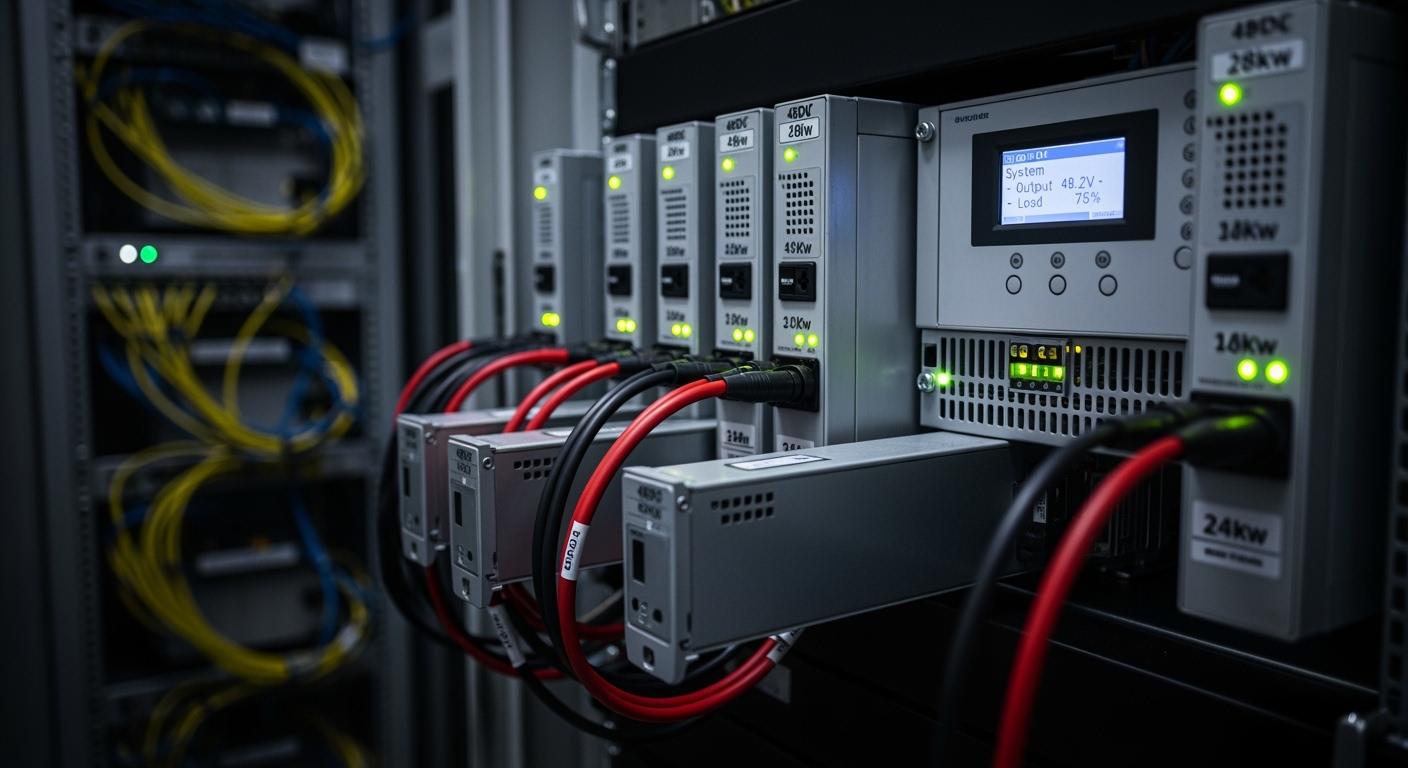
You rely on modular 3–24kW 48VDC rectifiers to keep your Telecom Power System running smoothly. These rectifiers convert alternating current to direct current, supporting stable power for your network equipment. Modularity lets you expand or replace units easily. Scalability helps you adapt to growing demands. Efficiency reduces energy costs and improves reliability. ESTEL provides trusted rectifier solutions that deliver consistent performance in challenging environments.
Key Takeaways
Modular 48VDC rectifiers provide flexibility, allowing easy expansion or replacement without system downtime.
High efficiency rates of modular rectifiers reduce energy costs and improve reliability for telecom networks.
Intelligent monitoring features enable real-time tracking of system performance, supporting proactive maintenance.
Hot-swap capability allows for quick module replacement, ensuring continuous operation during upgrades or repairs.
Choosing the right rectifier involves assessing power needs, efficiency, and vendor support for long-term reliability.
What Are Modular 48VDC Rectifiers?
Core Functions in Telecom
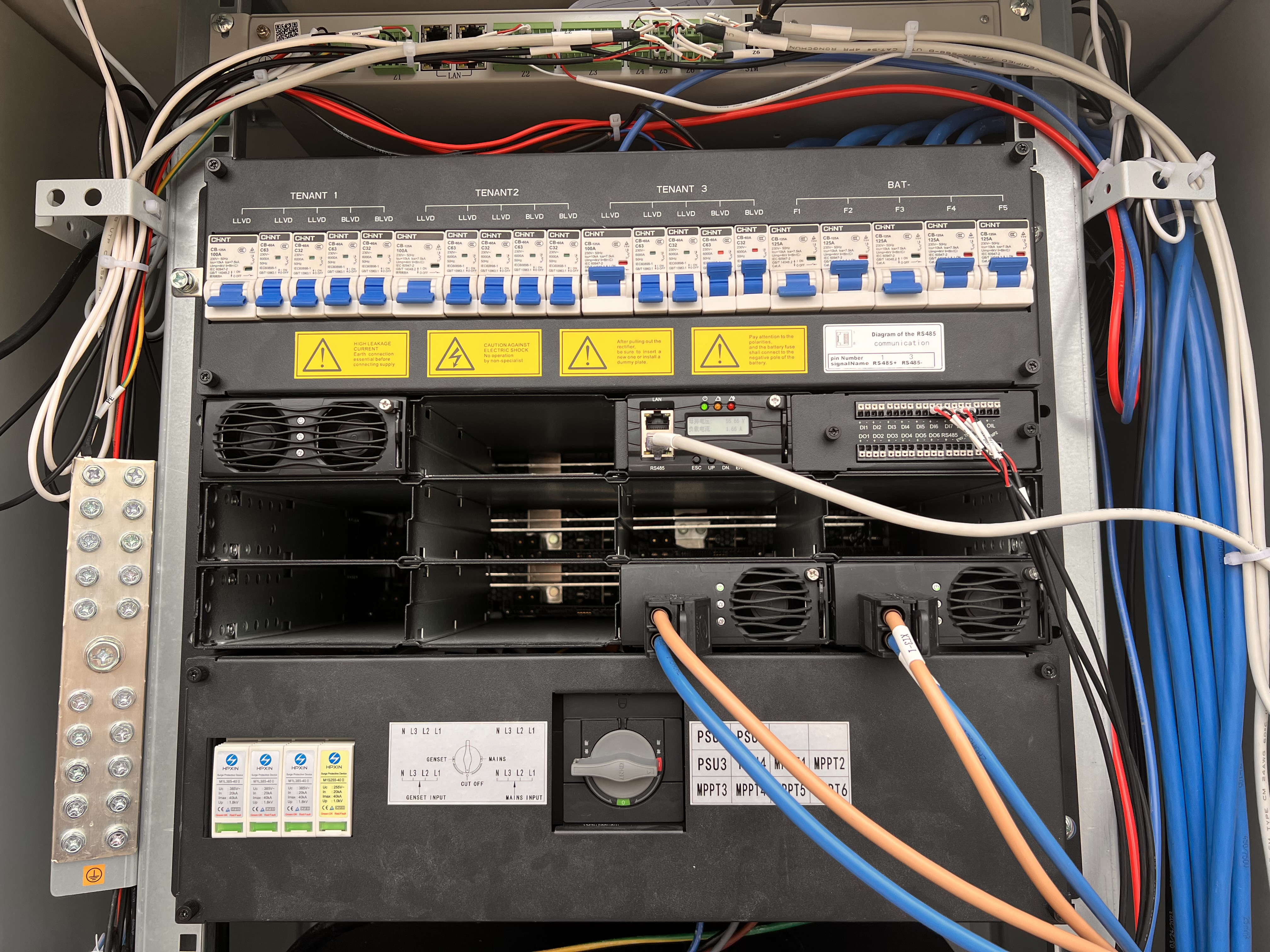
You depend on modular 48VDC rectifiers to power your Telecom Power System. These devices convert AC power from the grid into stable DC power, which your telecom equipment needs to operate. You find these rectifiers in cell towers, data centers, and local cable TV vaults. They support both wired and wireless services. You can use them in railway and metro networks, where reliable communication is critical.
Here is a table showing common use cases for modular 48VDC rectifiers:
Use Case | Description |
|---|---|
Telecom | Powers telecom equipment for reliable communication services. |
Data Center | Provides efficient power for data processing and storage systems. |
Railway | Supplies power for signaling and communication in railway networks. |
Metro | Powers metro systems and supports urban transportation infrastructure. |
Other Devices | Supports various power supply needs across different sectors. |
You benefit from the modular design because it allows you to expand your Telecom Power System as your network grows. You can add or replace modules without shutting down the entire system. This flexibility keeps your network running smoothly, even during maintenance or upgrades.
You also gain from advanced features like intelligent monitoring. With remote management, you can check system status and performance from anywhere. The wide input voltage range helps your system adapt to different grid conditions, which is important in areas with unstable power.
Here are some key technical specifications that define modular 3–24kW 48VDC rectifiers in telecom applications:
Specification Type | Details |
|---|---|
AC input rated voltage | Single-phase 220Vac / three-phase 380Vac |
AC-input voltage range | 176Vdc~300Vac |
AC input maximum current | 40A |
AC input voltage frequency | 45~65Hz (Typical value 50 / 60Hz) |
AC power factor | >=0.99 |
Rectifier output voltage range | -43.2Vdc~ -57.6Vdc (typical -53.5Vdc) |
Rectifier output max power | 18kW |
Voltage stabilization accuracy | <=±1% |
Output ripple & noise | <=200mVp-p |
Rectifier module efficiency | >=93% |
Startup time | 3~10S |
Dynamic response | Overshoot range <=±5% |
Temperature coefficient | <=±0.02%/°C |
AC input overvoltage protection | 300Vdc |
Operating temperature | -40°C to +45°C |
Humidity | 5% to 95% |
Altitude | 4000m |
Cooling method | Module forced air cooling |
You see that these rectifiers deliver high efficiency, accurate voltage regulation, and strong environmental adaptability. This makes them ideal for your Telecom Power System, especially in challenging outdoor conditions.
Tip: You can use modular 48VDC rectifiers to ensure continuous operation of your telecom network, even during power fluctuations or maintenance.
How Rectifiers Work
You use rectifiers to convert alternating current (AC) from the utility grid into direct current (DC) for your telecom equipment. This process is essential because most telecom devices require stable DC power, usually at -48V, to function reliably.
The basic working principle involves two main types of rectifiers:
Half-wave rectifiers allow current to flow in only one direction. They are less efficient and not commonly used in modern Telecom Power System setups.
Full-wave rectifiers use both halves of the AC waveform. They provide more efficient and stable conversion, which is necessary for sensitive telecom equipment.
You can break down the operation of a modular 48VDC rectifier into several main components:
Rectifier module: Converts AC to DC for proper voltage supply.
Batteries: Provide backup power during outages.
Controller: Monitors system performance and status.
Distribution system: Delivers power to telecom devices.
Enclosure: Protects the system from environmental hazards.
You benefit from high efficiency, sometimes reaching up to 96%. This reduces energy consumption and operating costs. The modular design lets you install or replace modules quickly, which minimizes downtime. Intelligent monitoring and battery management help you maintain stable DC power delivery across your Telecom Power System.
Note: By using modular rectifiers, you ensure your telecom network receives steady, reliable power, which is vital for uninterrupted communication services.
Benefits for Telecom Power System
Scalability and Flexibility
You need a power solution that grows with your network. Modular rectifiers give you this advantage. You can add or remove modules as your Telecom Power System expands. This design lets you attach only the cables you need, which keeps your setup clean and improves airflow. In high-density environments, such as telecom racks or data centers, this flexibility makes a big difference.
You can scale your system quickly to match business growth.
You replace or add rectifier units without shutting down the system, so your network stays online.
Plug-and-play features make installation and upgrades fast and simple.
N+1 redundancy means you can swap out a failed module while the rest keep working.
Tip: Modular rectifiers reduce installation time and complexity. You spend less time on setup and more time focusing on your core operations.
Efficiency and Reliability
You want your Telecom Power System to run efficiently and reliably. Modular rectifiers deliver high efficiency rates, which means less energy wasted and lower costs for you. Here is a table showing typical efficiency rates for modular 48VDC rectifiers:
Efficiency Rate | Condition |
|---|---|
>=93% | Rated load |
>=94% | 100% load rate |
>=95% | Rated load |
>=96% | Rated load |
High efficiency helps you save on electricity bills and reduces heat output, which protects your equipment. Reliability is just as important. Modular rectifiers support easy upgrades and expansion. They offer redundancy, so if one module fails, others take over. You avoid single points of failure and keep your network running.
Feature | Modular Rectifiers | Traditional Rectifiers |
|---|---|---|
Scalability | Easy upgrades and expansion | Limited scalability |
Redundancy | Compensates for module failure | Single point of failure |
Maintenance | Quick replacement, no downtime | Longer downtime during repairs |
Note: With modular rectifiers, you get a Telecom Power System that adapts to your needs and keeps your services reliable.
Maintenance and Monitoring
You need to keep your power system healthy with minimal effort. Modular rectifiers make maintenance simple. You can upgrade or repair individual modules quickly. Integrated monitoring tools let you track system health in real time. Automated alerts notify you of faults right away, so you can act before problems grow.
Remote monitoring lets you check performance from anywhere.
Intelligent monitoring features help you plan proactive maintenance.
Real-time tracking supports predictive maintenance and early fault detection.
You can adjust power distribution dynamically, which extends equipment life.
Alert: Proactive maintenance scheduling reduces costs and extends the life of your Telecom Power System assets.
You benefit from a system that is easy to manage, reliable, and ready for future growth. Modular rectifiers, like those from ESTEL, give you the tools to keep your network strong and efficient.
Key Features of ESTEL Rectifier Systems
Modularity and Hot-Swap
You benefit from ESTEL’s modular design, which lets you expand or upgrade your power system as your network grows. You can replace faulty modules without shutting down the entire system. This hot-swap capability keeps your telecom operations running without interruption. The table below shows how hot-swapping reduces downtime and improves reliability:
Feature | Benefit |
|---|---|
Hot-Swap Capability | Replace modules without system shutdown |
Modular Design | Simplifies upgrades and repairs |
Rapid Replacement | Ensures continuous power for telecom operations |
Tip: Hot-swappable modules help you maintain service continuity, even during maintenance or repairs.
Input and Output Flexibility
You can deploy ESTEL rectifiers in many environments because they support a wide input voltage range and stable output. This flexibility means you do not need to worry about local grid standards. The table below highlights the supported voltage ranges:
Input Voltage Range | Output Voltage Range |
|---|---|
90~285 Vac | -43.2~-57.6 Vdc |
You can use these systems in remote locations, urban centers, or harsh outdoor conditions. The rectifiers withstand temperature changes, dust, and moisture, so you get reliable power delivery wherever you need it.
Wide voltage input range enables deployment in diverse environments.
Scalability supports network growth in various locations.
Reduced downtime ensures reliable service.
Rack-Mount and Compact Design
You save space with ESTEL’s rack-mount and compact design. You install the rectifiers easily in standard 19-inch racks or telecom cabinets. This design optimizes airflow and simplifies cable management. You can integrate the system into existing setups without major changes.
Note: Compact rack-mount systems help you maximize space in crowded telecom facilities.
Advanced Control and Safety
You control and monitor your power system with advanced features. ESTEL rectifiers offer large digital displays, multiple communication ports, and real-time monitoring. You get protection against short loads, overloads, battery voltage issues, over current, and over temperature. Surge arresters intercept electrical surges before they reach sensitive equipment, and regular checks maintain system reliability.
Feature Description | Details |
|---|---|
Display | Large LCD, LED indicators |
Communication Ports | RS232, RS485, SNMP (optional) |
Protection Features | Surge arresters, overload, over/under voltage |
Monitoring | Real-time status, audible/visual alarms |
Auto Functions | Self-test, soft start, auto switch, bypass |
Type 1 surge arresters intercept surges at entry points.
Type 2 arresters reduce voltage spikes within the network.
Built-in surge protection safeguards individual devices.
Alert: Advanced safety features protect your telecom infrastructure from electrical faults and surges, ensuring reliable operation in any environment.
Deployment in Telecom Power System

Installation and Integration
You want a power system that installs easily and integrates smoothly with your existing telecom setup. ESTEL modular rectifiers fit standard 19-inch racks, which means you can mount them inside outdoor telecom cabinets without special tools. You connect the system to 220VAC mains power, then link the 48VDC rectifier and battery. This process keeps your installation straightforward and efficient.
Specification | Details |
|---|---|
Size | |
Installation | Mounted on 19” rail inside outdoor telecom cabinet |
Connection | 220VAC mains power, 48VDC rectifier, 48VDC battery |
You should verify voltage and current requirements of your devices before installation. Proper ventilation and grounding help maintain safety and performance. ESTEL’s design supports quick integration, so you can upgrade your power system with minimal disruption.
Tip: Always create an inventory of your current systems to identify compatibility gaps before adding new rectifiers.
Environmental Adaptability
You face harsh conditions at many telecom sites. ESTEL rectifiers meet international standards for quality and safety, including ISO9001, UL, RoHS, CE, and VDE certifications. These certifications show that your rectifiers will perform reliably in outdoor and challenging environments.
Certification | Description |
|---|---|
ISO9001 | Ensures consistent manufacturing processes for quality assurance. |
UL | Guarantees compliance with electrical safety standards. |
RoHS | Addresses environmental impact and safety. |
CE | Ensures compliance with health, safety, and environmental protection standards. |
VDE | Validates electrical safety and performance standards. |
You can trust these systems to withstand temperature swings, humidity, and dust. ESTEL’s experience with outdoor deployments means you get equipment built for real-world telecom challenges.
Compatibility and Expansion
You need your power system to grow with your network. ESTEL modular rectifiers offer scalability and flexibility, so you can expand your system as your needs change. The hot-swappable design lets you add or replace modules without shutting down your network.
Feature | Benefit |
|---|---|
Scalability | Adapts to changing network requirements |
Flexibility | Supports easy expansion of telecom systems |
Hot-swappable design | Minimizes downtime during maintenance/updates |
You should check that your rectifiers match the standard -48VDC voltage and interface protocols of your existing equipment. ESTEL rectifiers support standard rack installation and management integration, making upgrades simple. This approach helps you future-proof your telecom power system and ensures reliable service as your network grows.
Choosing the Right Rectifier
Assessing Power Needs
You must start by understanding your network’s power requirements. This step helps you select a rectifier that matches your equipment and site conditions. Review the following criteria before making your decision:
Criteria | Description |
|---|---|
Output Voltage and Current | Choose a rectifier that delivers -48V DC and enough current for your highest load. |
Efficiency Rating | Select units with efficiency of 90% or higher to save energy and reduce heat. |
Input Voltage Range | Pick systems with a wide AC input range (such as 85–264V AC) for stable operation during grid changes. |
Redundancy Support | Look for N+1 redundancy to keep your system running if one module fails. |
Thermal Management | Consider cooling methods that fit your environment. Fanless designs work well for quiet sites. |
Digital Monitoring & Communication | Make sure the rectifier supports remote monitoring through SNMP or Modbus. |
Surge and Overvoltage Protection | Check for built-in protection, especially for outdoor installations. |
Mechanical Form Factor | Confirm the rectifier fits your rack or cabinet and meets weight limits. |
Tip: Always measure your peak load and plan for extra capacity to handle unexpected surges.
Planning for Growth
You should think about your network’s future. Telecom networks often expand quickly. Modular rectifiers let you add more power modules as your needs grow. This approach saves you money and avoids early equipment replacement. You can start with a smaller system and scale up without downtime. Hot-swappable modules make upgrades and repairs fast and easy. This flexibility keeps your network reliable as you add new services or users.
Add modules as your network grows.
Upgrade without shutting down your system.
Avoid costly overhauls by planning ahead.
Vendor and Support Factors
You need a partner who stands behind their products. Reliable vendor support ensures your rectifier system stays up and running. Modular systems with redundant architecture allow you to swap out faulty modules without stopping your network. This design reduces downtime and keeps your services available. Choose a vendor with a strong track record, responsive technical support, and clear warranty terms. ESTEL offers high-quality rectifier systems, expert guidance, and ongoing support. You gain peace of mind and long-term value by working with a trusted provider.
Note: Evaluate vendor support and service options as carefully as you assess technical features.
You see how modular 3–24kW 48VDC rectifiers help you solve challenges in your Telecom Power System. You gain efficiency, scalability, and reliability for your network. You should review key features and plan deployment based on your site needs. If you want expert advice or a custom solution, you can contact ESTEL for support.
Review your system requirements.
Choose rectifiers that match your growth plans.
Reach out to ESTEL for tailored recommendations.
FAQ
What is the main advantage of modular rectifiers in telecom power systems?
You gain flexibility and scalability. You can add or replace modules as your network grows. This design helps you reduce downtime and keep your system running efficiently.
How do you maintain ESTEL rectifier systems?
You use hot-swappable modules. You replace faulty units without shutting down your network. You monitor system health with built-in digital displays and remote management tools.
Can you install ESTEL rectifiers in outdoor environments?
Yes, you can. ESTEL rectifiers meet international standards like ISO9001 and CE. You use them in harsh conditions, including outdoor cabinets, remote sites, and areas with extreme temperatures.
What input voltage ranges do ESTEL rectifiers support?
Model Type | Input Voltage Range |
|---|---|
Standard | 90–285 Vac |
High Power | 176–300 Vac |
You choose the model that matches your local power grid.
How do you monitor system performance?
You track performance using digital displays and remote monitoring features. You receive alerts for faults and can check system status from anywhere. This helps you prevent issues and plan maintenance.
See Also
Integrating Solar Inverters and Batteries for Telecom Power Solutions
Calculating Power Systems and Battery Needs for Telecom Cabinets
Ensuring Consistent Power Supply for Telecom Cabinet Operations
Solar Energy Storage Solutions for Telecom Cabinet Power Needs
Essential Insights on Features of Telecom Power Supply Systems
CALL US DIRECTLY
86-13752765943
3A-8, SHUIWAN 1979 SQUARE (PHASE II), NO.111, TAIZI ROAD,SHUIWAN COMMUNITY, ZHAOSHANG STREET, NANSHAN DISTRICT, SHENZHEN, GUANGDONG, CHINA
