One-Click Fault Troubleshooting of Telecom Power Systems: Practical Tool for O&M Staff to Quickly Locate Issues

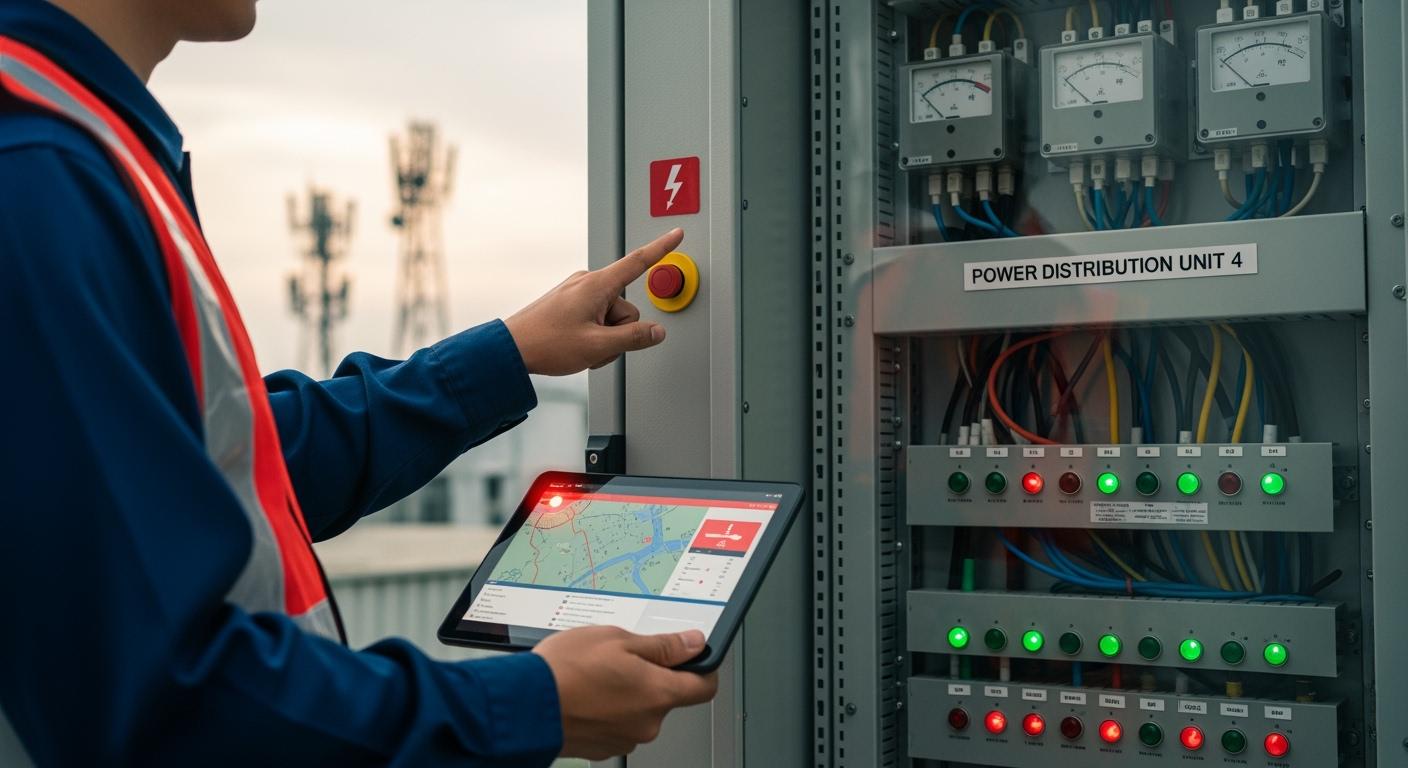
You face constant pressure to keep telecom networks running without interruption. One-click fault troubleshooting tools give you the power to quickly pinpoint and resolve issues in your Telecom Power System. Industry operators report a 25% reduction in fault response times after switching to AI-powered automation.
Faster detection and resolution boost reliability.
Automated alerts minimize downtime and manual effort.
ESTEL delivers advanced solutions that help you achieve speed, simplicity, and confidence in every maintenance task.
Key Takeaways
One-click troubleshooting tools reduce fault response times by 25%, improving network reliability.
These tools detect physical, logical, and operational faults quickly, saving time and effort.
Automated diagnostics and real-time alerts help prevent downtime and manual checks.
ESTEL's systems offer seamless integration and scalability, enhancing fault management.
Predictive maintenance and modular design support long-term operational success.
One-Click Fault Location Explained
Core Concept and Advantages
You need fast and accurate solutions when faults disrupt your Telecom Power System. One-click fault location technology gives you instant access to diagnostic results with a single action. This tool uses advanced algorithms to scan your network, identify the exact point of failure, and display actionable information. You can resolve issues without spending hours on manual checks or guesswork.
One-click troubleshooting tools detect a wide range of faults. You can spot physical defects in cables and routers, logical errors in software, and operational problems such as latency or packet loss. The following table shows the most common types of faults detected:
Type of Defect | Description |
|---|---|
Physical | Issues affecting hardware components like cables and routers. |
Logical | Problems with software components such as applications and databases. |
Operational | Defects impacting system functionality, including latency and packet loss. |
You gain several advantages with one-click fault location. You save time, reduce downtime, and improve accuracy. You also increase testing flexibility, allowing you to adapt to different scenarios. These benefits help you maintain a reliable Telecom Power System and deliver consistent service.
Comparison with Traditional Troubleshooting
Traditional troubleshooting methods require manual inspection, step-by-step testing, and trial-and-error approaches. You often spend valuable time tracing cables, checking connections, and running diagnostic programs. Results vary depending on your experience and the complexity of the fault.
One-click fault location changes this process. You receive immediate fault detection, distance measurement, and path tracing. The following table highlights the differences between one-click fault location and manual troubleshooting:
Feature | One-Click Fault Location | Manual Troubleshooting |
|---|---|---|
Fault Detection | Yes | No |
Distance Measurement | Yes | No |
Path Tracing | Yes | No |
Testing Flexibility | High | Low |
Time Efficiency | Significant Reduction | Lengthy Process |
Accuracy | High | Variable |
You can see that one-click fault location offers measurable improvements in speed, flexibility, and reliability. You spend less time resolving faults and more time focusing on network performance.
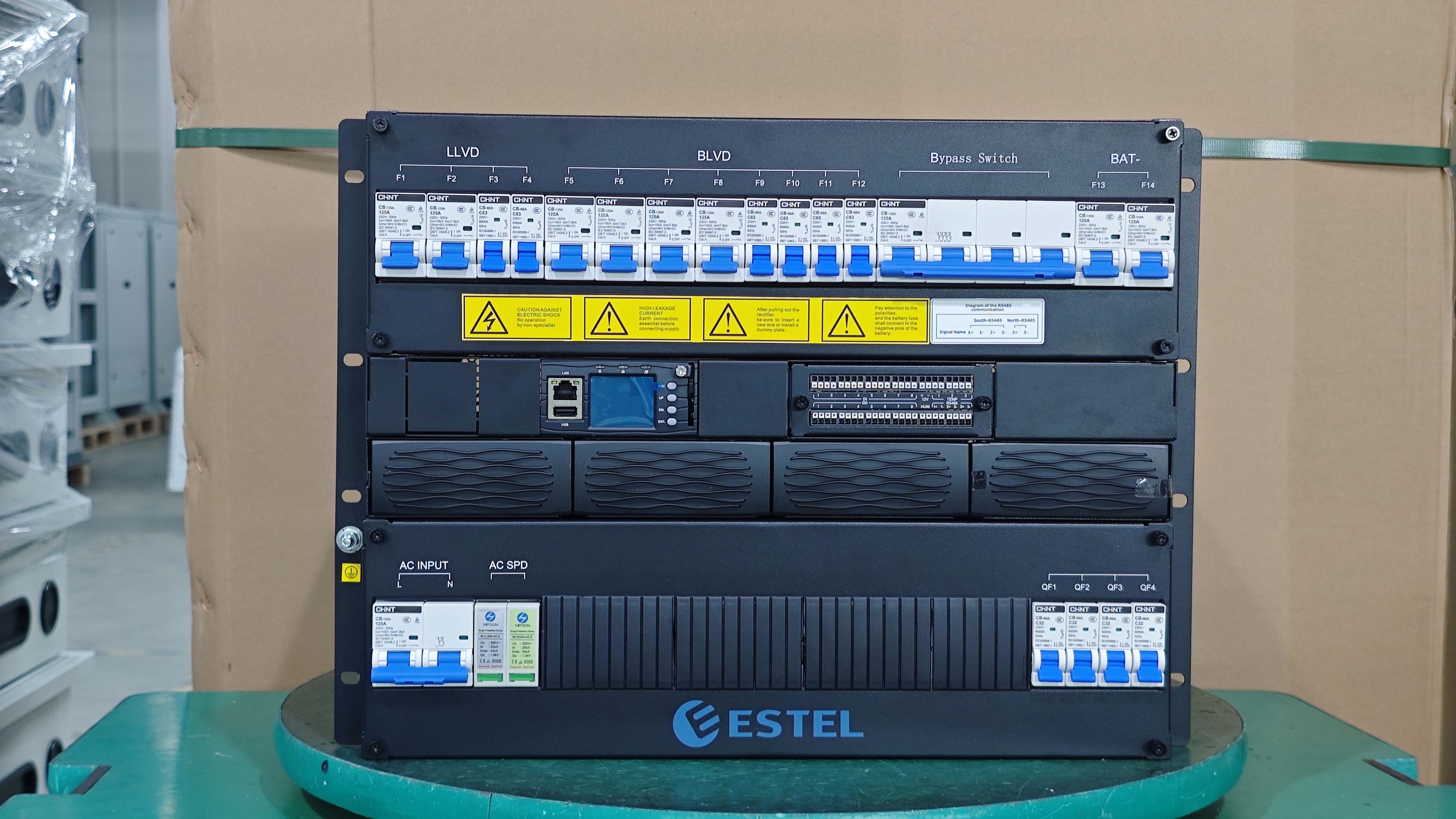
Key Features of ESTEL Telecom Power System
Automated Diagnostics and Real-Time Alerts
You need a Telecom Power System that delivers instant, actionable insights. ESTEL equips you with automated diagnostics and real-time alerts, transforming how you manage faults. The system monitors performance continuously, detecting anomalies before they escalate. You receive immediate notifications for critical issues such as power failures or overheating, allowing you to respond quickly and minimize downtime.
Real-time monitoring provides up-to-the-second data, helping you spot irregularities early.
Remote access lets you control and monitor the system from any location, saving time and reducing operational costs.
Alarm notifications alert you to urgent problems, ensuring you never miss a critical event.
Incident response automation can cut resolution time in half, reducing it from four hours to just over two. AI-powered triage filters daily alerts, so you only see genuine threats. Automated diagnostics eliminate half the time spent on manual checks. Continuous monitoring and auto-remediation handle common issues instantly, resolving problems that previously took hours in seconds.
The wide input voltage range enables the Telecom Power System to manage grid fluctuations and unstable conditions. You maintain reliable output in both urban and rural environments, even when power stability varies. High efficiency in AC to DC conversion keeps operating costs low and reduces heat generation, supporting system stability during peak loads.
Integration with ESTEL Rectifier System
You benefit from seamless integration between the Telecom Power System and ESTEL Rectifier System. This combination enhances fault troubleshooting efficiency and boosts overall reliability. Advanced monitoring simplifies issue identification, while real-time alerts enable faster responses to faults. Self-diagnostic systems improve reliability, ensuring your network stays operational.
Feature | Benefit |
|---|---|
Advanced Monitoring | Simplifies identification of issues |
Real-time Alerts | Enables quicker responses to faults |
Self-diagnostic Systems | Improves overall system reliability |
The modular design of the Telecom Power System allows you to add or remove power modules independently. You scale your infrastructure as your needs grow, without service disruptions. Maintenance tasks become easier, and you avoid unnecessary downtime. New outlets and configurations can be added while keeping your network reliable.
Feature | Benefit |
|---|---|
Scalability | Easy upgrades or expansions as power needs grow. |
Reduced Downtime | Maintenance tasks can be performed without disrupting operations. |
Natural cooling technology in the Telecom Power System increases energy efficiency and reliability. In regions like Northern Europe, you see a 30% drop in energy costs and fewer equipment failures due to stable temperatures. In desert areas, reduced fan usage extends equipment life, especially during cooler nights.
Advanced control features support predictive maintenance. Remote management enables you to monitor and adjust power settings from anywhere. Intelligent monitoring modules deliver precise energy consumption reports and predictive insights, helping you make informed maintenance decisions. Real-time monitoring allows you to respond immediately to issues, improving predictive maintenance accuracy.
Tip: You can rely on ESTEL’s advanced control and modular architecture to keep your Telecom Power System running smoothly, even as your network expands.
Quick Fault Resolution Process
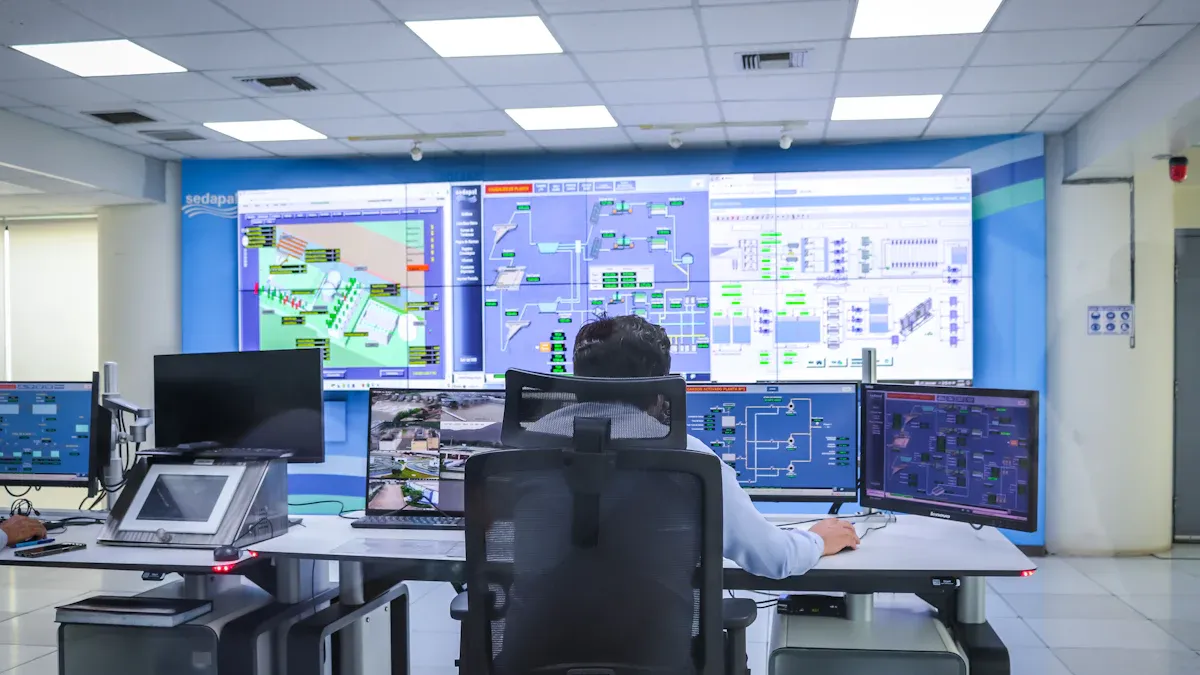
Step-by-Step Workflow for O&M Staff
You need a clear and efficient process to resolve faults in your Telecom Power System. A structured approach helps you minimize downtime and ensures consistent results. The four-step localization method guides you through each stage of troubleshooting. Follow these steps to quickly identify and fix issues:
Visual Inspection
Start by checking for visible damage. Look for loose connections, burnt components, or signs of overheating. Make sure all parts are secure and in good condition.Power Verification
Measure input and output voltages. Confirm that the system receives and delivers the correct power levels. Use calibrated instruments to avoid errors.Component Isolation
Identify the faulty component. Disconnect and test individual modules to prevent further damage. Replace or repair the affected part as needed.System Validation
After repairs, validate the entire system. Run performance tests to ensure everything meets operational standards. Document your findings for future reference.
Tip: Consistent documentation during each step improves future fault resolution and supports compliance with industry standards.
Using Flowcharts and Prediction Models
You can speed up fault identification by using flowcharts and predictive models. Flowcharts provide a visual guide, helping you follow logical steps and avoid missing critical checks. Prediction models analyze system data and forecast potential faults before they occur.
The following table compares the effectiveness of popular predictive models for fault localization in telecom power systems:
Model | MSE | MAPE |
|---|---|---|
LSTM | 0.001 | 2.528 |
Hybrid CNN-LSTM | 0.001 | 2.843 |
CNN | 0.223 | 2.843 |
LSTM and Hybrid CNN-LSTM models deliver high accuracy with low error rates. You can integrate these models into your monitoring tools to predict faults and take proactive action. Flowcharts combined with predictive analytics help you resolve issues faster and maintain reliable service.
Benefits for O&M Staff and Operations
Time Savings and Reduced Downtime
You face constant pressure to keep telecom networks running smoothly. ESTEL’s one-click fault troubleshooting tools help you respond faster and minimize service interruptions. Automated diagnostics and real-time alerts allow you to identify issues before they escalate. You can resolve faults in minutes instead of hours.
You experience a 15% reduction in downtime across telecom operations after implementing ESTEL’s solutions.
Automated processes eliminate repetitive manual checks, freeing up your time for more critical tasks.
Intelligent power input management ensures stable operation, even during grid fluctuations.
Enhanced remote control lets you address faults without traveling to the site, saving valuable hours.
Tip: Quick fault localization means you spend less time searching for problems and more time optimizing network performance.
Improved Reliability and Ease of Use
You need systems that work reliably and simplify your daily workflow. ESTEL’s telecom power systems deliver advanced features that make your job easier and improve overall network stability.
Real-time monitoring lets you track voltage, current, and power usage from any location.
Remote management gives you the ability to reboot devices or cycle power without being physically present.
Open APIs support seamless data exchange with third-party O&M platforms, increasing operational visibility.
Proactive monitoring and AI-driven anomaly detection help you catch issues early, reducing maintenance costs.
Predictive maintenance extends equipment life and lowers mean time to repair.
Centralized control and multi-role collaboration simplify management, allowing your team to work together efficiently.
Automated workflows reduce manual intervention and speed up response times.
Note: ESTEL’s user-friendly interface and modular design make it easy for you to scale your infrastructure and adapt to changing requirements.
You gain confidence knowing your telecom power system supports your operations with reliable performance and intuitive controls. These benefits translate into higher service quality and greater customer satisfaction.
Real-World Success with ESTEL Solutions
Case Study: ESTEL Telecom Power System in Action
You want to see real results before you trust a solution. ESTEL’s Telecom Power System has delivered measurable improvements for operators worldwide. The following table highlights two recent case studies that showcase the impact of ESTEL’s technology:
Case Study Description | Outcome |
|---|---|
Rural telecom operator in Southeast Asia using ESTEL’s hybrid power systems | 35% reduction in operational costs and improved service reliability |
European telecom provider upgrading to 5G with ESTEL’s rectifier systems | 20% improvement in network uptime and reduced maintenance costs |
Operators in Southeast Asia achieved a 35% drop in operational costs after deploying ESTEL’s hybrid systems. You can see similar benefits when you upgrade your infrastructure. In Europe, a major provider improved network uptime by 20% during their 5G rollout. These results show that you can rely on ESTEL for both cost savings and performance.
You also gain operational improvements with ESTEL’s smart technology. The system uses advanced features for easy maintenance and energy savings. Cabinet PDUs help you save up to 20% on energy, making your network more eco-friendly. Load balancing prevents overloads, so your systems run longer without interruption.
O&M Staff Feedback and Testimonials
You value feedback from peers who use the same solutions. O&M staff consistently report high satisfaction with ESTEL’s products:
"ESTEL's rectifier modules have transformed our operations. The energy savings and reliability are unmatched."
"Maintenance is much easier now. We spend less time troubleshooting and more time optimizing our network."
"The Telecom Power System from ESTEL keeps our network stable, even in harsh environments."
You can trust ESTEL to deliver durable, efficient, and reliable solutions. High efficiency rates—over 95%—mean you save energy and reduce costs. The robust design ensures your equipment lasts, even in challenging conditions. When you choose ESTEL, you join a community of satisfied professionals who value operational excellence.
You gain a powerful advantage with ESTEL’s one-click fault troubleshooting and telecom power solutions. These tools streamline fault management and boost your operational efficiency. The table below highlights how automation, predictive maintenance, and modular design support your long-term success:
Feature | Benefit |
|---|---|
Automation | Fewer manual inspections, faster resolution |
Predictive Maintenance | Early detection, reduced downtime |
Modular Design | Simple upgrades, easier maintenance |
You improve reliability and simplify integration. Explore ESTEL’s solutions to strengthen your telecom infrastructure.
FAQ
How does one-click fault troubleshooting work in ESTEL’s Telecom Power System?
You activate the diagnostic tool with a single click. The system scans for faults, pinpoints the issue, and displays clear results. You can act immediately, reducing downtime and manual checks.
Can you integrate ESTEL’s power systems with existing telecom infrastructure?
Yes, you can install ESTEL’s systems on standard 19-inch racks or inside cabinets. Multiple communication ports ensure seamless integration with your current network setup.
What maintenance tasks can you automate with ESTEL’s solutions?
You can automate diagnostics, real-time alerts, and performance monitoring. The system handles routine checks, so you focus on critical tasks and reduce manual intervention.
What should you do if the system detects a fault?
Always follow the four-step localization method: inspect visually, verify power, isolate components, and validate the system. Document each step for future reference and compliance.
See Also
Ensuring Consistent Power Supply For Telecom Cabinets
Introductory Guide To Telecom Power Supply Systems
Key Features Of Telecom Power Supply You Should Know
CALL US DIRECTLY
86-13752765943
3A-8, SHUIWAN 1979 SQUARE (PHASE II), NO.111, TAIZI ROAD,SHUIWAN COMMUNITY, ZHAOSHANG STREET, NANSHAN DISTRICT, SHENZHEN, GUANGDONG, CHINA
