Passive Heat Dissipation Optimization of Smart PDUs in Telecom Cabinets: Noise Reduction in Low-Noise Data Centers

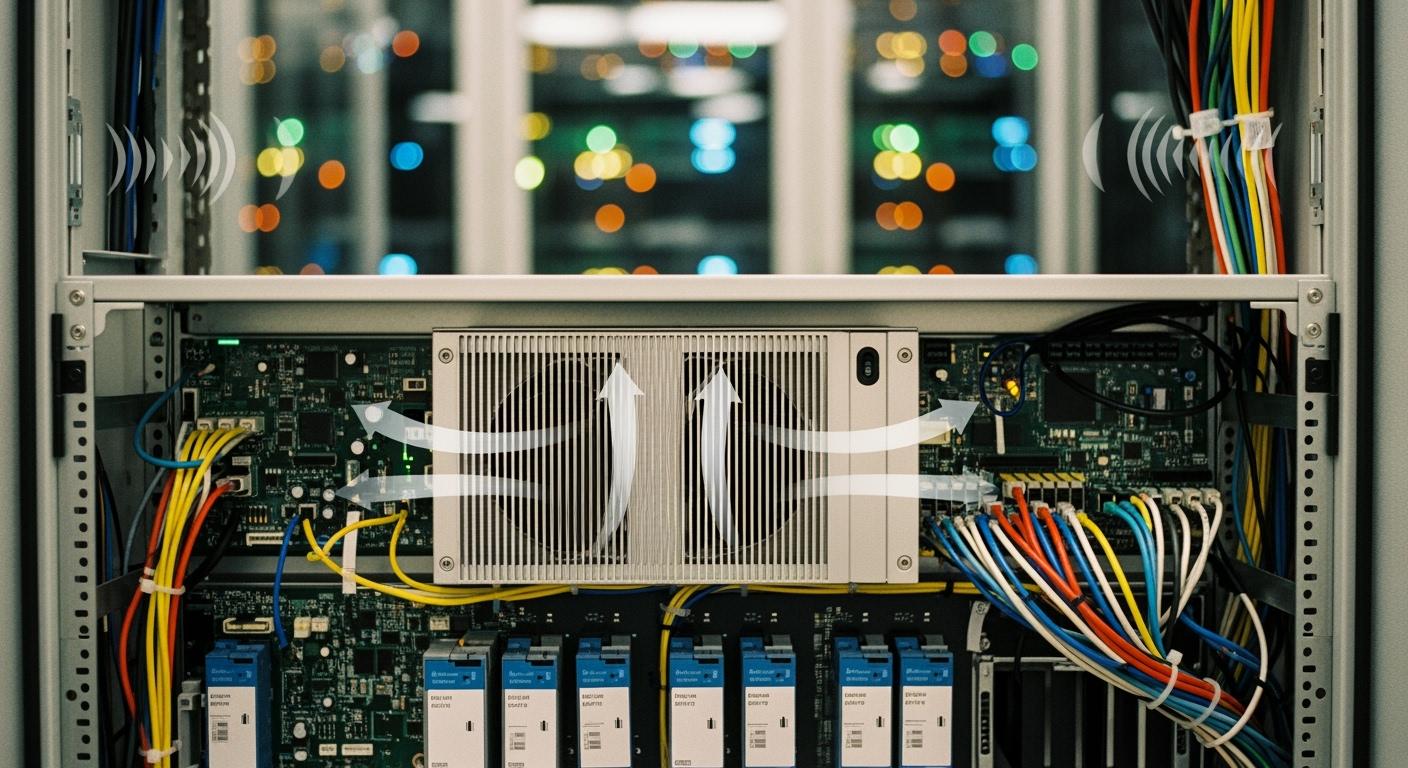
You can achieve quieter telecom cabinets by optimizing passive heat dissipation in your Smart Power Distribution Unit. This approach supports low-noise data centers and improves both energy efficiency and reliability. ESTEL’s dedication to innovative passive cooling solutions ensures you benefit from advanced designs that lower operational costs and enhance acoustic performance.
Client / Case Study | Performance Metrics and Cost Savings Reported |
|---|---|
Leading Telecom Provider | Energy efficiency up to 97.8%; early issue detection |
GreenConnect | 30% reduction in energy use; 25% reduction in downtime |
Key Takeaways
Optimize passive heat dissipation in Smart Power Distribution Units to reduce noise and improve energy efficiency.
Implement natural convection and smart cabinet designs to manage heat without noisy fans, creating a quieter work environment.
Regular maintenance and monitoring of telecom cabinets enhance performance and extend equipment life while ensuring compliance with industry standards.
Consider retrofitting existing cabinets with passive cooling features to lower energy costs and improve reliability.
Choose advanced materials and designs to enhance thermal management and noise reduction in telecom infrastructure.
Heat and Noise Challenges in Telecom Cabinets
Sources of Heat in Smart Power Distribution Units
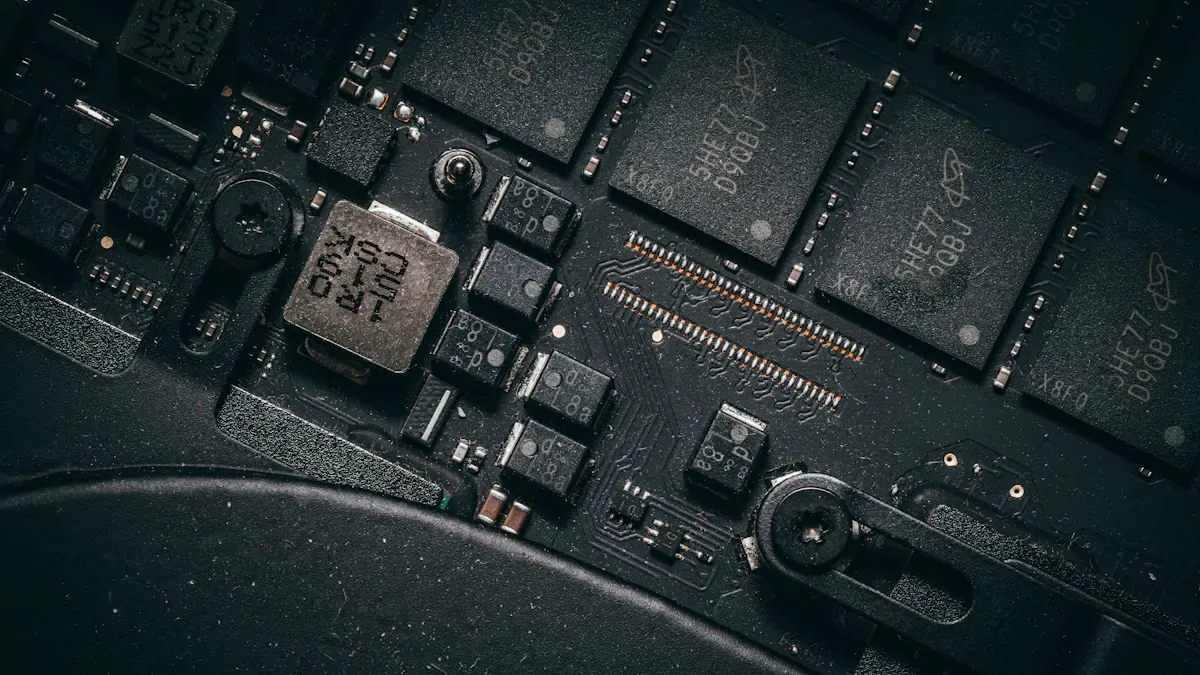
You often find that heat builds up quickly inside telecom cabinets. The Smart Power Distribution Unit manages power for your equipment, but it also generates heat during operation. Advanced filtering, shielding, and grounding techniques help control electromagnetic interference (EMI). However, EMI can still cause extra heat inside the cabinet. High-quality components and innovative materials in the Smart Power Distribution Unit help reduce noise emissions, but the heat from power conversion and distribution remains a challenge. When you add more devices or increase power loads, the temperature inside the cabinet rises even faster.
Noise Impact in Low-Noise Data Centers
Noise can disrupt your work environment and affect sensitive equipment. In low-noise data centers, you need to keep sound levels as low as possible. Fans, compressors, and other active cooling devices often create unwanted noise. Even the hum from power distribution equipment can add to the overall sound level. You want to ensure that your Smart Power Distribution Unit operates quietly to maintain a peaceful and productive space. Lower noise levels also help protect your staff’s health and improve concentration.
Tip: Reducing noise in your telecom cabinets can improve both equipment performance and workplace comfort.
Limitations of Active Cooling
Active cooling systems, such as fans and air conditioners, help control temperature but come with several drawbacks. You may notice that these systems require constant power, which increases your operational costs. The following table highlights some common limitations of active cooling in telecom cabinets:
Aspect | Description |
|---|---|
Continuous Power Requirement | Fans and air conditioners need constant energy, raising electricity bills. |
Heat sinks may not handle high heat flux densities in compact cabinets. | |
Coefficient of Performance | Air conditioners often have a COP of 2.5 to 3.5, showing energy inefficiency. |
You also face challenges with maintenance, especially in remote locations. ESTEL’s outdoor telecom cabinets address these issues by using advanced thermal management and corrosion-resistant materials. These features help you manage heat and noise, even in harsh environments.
Heat management systems prevent overheating from internal and external sources.
Cabinets withstand extreme weather, reducing the risk of equipment failure.
Anti-corrosion treatments protect your investment in coastal or industrial areas.
By understanding these challenges, you can make better decisions about cooling and noise control in your telecom infrastructure.
Passive Cooling Principles for Smart Power Distribution Unit
Natural Convection and Heat Exchange
You can use natural convection to manage heat in your telecom cabinets. When the Smart Power Distribution Unit operates, it generates heat. This heat causes the air around the unit to warm up and rise. Cooler air then moves in to take its place. This cycle helps move heat away from the equipment without using fans or other active devices.
Convection heat transfer moves thermal energy through air, driven by temperature differences.
Heated air rises because it becomes less dense, creating a flow that spreads heat.
The surface of the heatsink exchanges heat with the surrounding air. As the air heats up, it rises and cooler air replaces it, which improves heat dissipation.
This process keeps your equipment at a safe temperature and reduces the need for noisy cooling fans.
Material and Design Considerations
You should pay attention to the materials and design of your telecom cabinets. Good materials and smart design help heat move away from the Smart Power Distribution Unit. Metals like aluminum and steel conduct heat well. Large surface areas and special shapes, such as fins, increase the amount of heat that can escape.
Insulated cabinet designs with double walls and integrated insulation help keep the inside temperature stable. These features reduce the need for active cooling and help maintain a quiet environment.
ESTEL’s Approach to Passive Cooling
ESTEL uses advanced features to improve passive cooling in its telecom cabinets. Environmental sensors monitor temperature, humidity, airflow, and power use. These sensors help you keep conditions within safe limits. By controlling humidity, you avoid problems like corrosion and static electricity. Optimized airflow reduces hot spots and saves energy.
Method | Description |
|---|---|
Closed-loop heat exchangers transfer heat efficiently and keep out dust and pollutants. | |
Insulated Cabinet Designs | Double-wall construction and insulation keep the internal environment stable and reduce cooling needs. |
With these innovations, you can improve uptime by up to 20% and cut energy use by about 15%. ESTEL’s Outdoor Telecom Cabinets support passive heat dissipation, which leads to lower maintenance costs and longer equipment life.
Passive Cooling Strategies and Optimization
Surface Area and Cabinet Layout
You can improve passive heat dissipation by focusing on the surface area and layout of your telecom cabinets. Start by positioning racks away from heat sources. This step helps you avoid hot spots. Maintain a clearance of 2–3 feet around cooling units and rack air intakes or exhausts. This space allows air to flow freely and keeps temperatures balanced.
Plan your cabinet layout to support consistent airflow. Design cabinets for front-to-back airflow. Use doors with high perforation rates to let more air pass through. Manage cables carefully to prevent them from blocking airflow. Align cabinet rows to create hot aisle and cold aisle configurations. This setup keeps hot and cold air from mixing, which improves cooling efficiency.
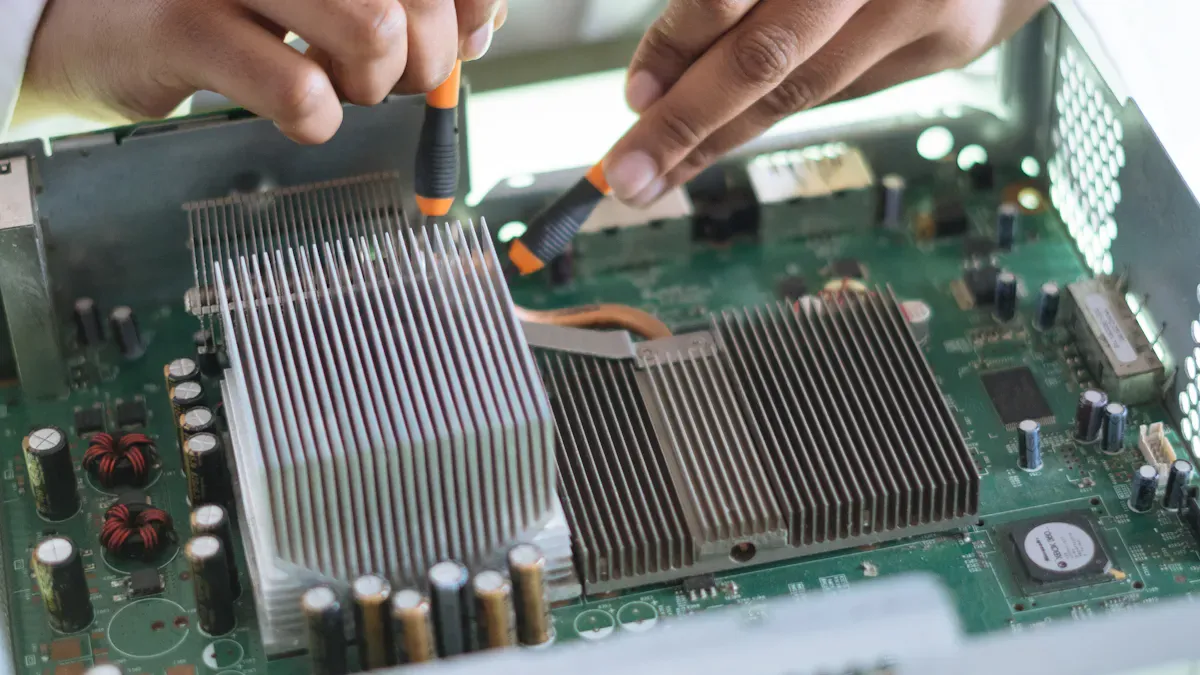
Modern heat sink designs in the Smart Power Distribution Unit also play a key role. These heat sinks have modular structures. You can adjust them based on your equipment load. This flexibility increases the surface area for heat transfer and helps keep temperatures stable.
Tip: A well-planned cabinet layout not only improves cooling but also makes maintenance easier.
Airflow Management Without Fans
You can manage airflow in your cabinets without using fans. Good airflow design reduces the need for mechanical fans, which helps lower noise levels in your data center. Passive heat dissipation removes heat without moving parts, so you avoid extra noise.
When you improve passive cooling, you also lower energy use. This approach prevents overheating and extends the life of your equipment. You create a quieter and more efficient environment by relying on natural airflow paths and smart cabinet design.
Place vents and perforations in strategic locations.
Use baffles or guides to direct airflow where it is needed most.
Avoid blocking air paths with cables or equipment.
Thermal Interface Enhancements
You can maximize passive cooling efficiency by using advanced thermal interface techniques. The right materials and designs help transfer heat away from your equipment faster. The table below shows some recommended enhancements:
Recommendation | Description |
|---|---|
Advanced Thermal Interface Materials | These materials improve heat transfer efficiency, crucial for passive cooling in Smart Power Distribution Units. |
Optimized Airflow Designs | Designs that enhance airflow can significantly improve cooling efficiency by facilitating heat dissipation. |
Modular Systems | Systems that integrate both passive and active cooling methods can adapt to varying thermal loads effectively. |
You can also use heat sinks and thermal spreaders. Heat sinks dissipate heat using natural convection. Thermal spreaders move heat from components to the environment. Both techniques help maintain safe temperatures and improve reliability.
Integration with ESTEL Outdoor Telecom Cabinet
ESTEL’s Outdoor Telecom Cabinet supports passive cooling through smart design and material choices. The cabinets use absorbent material in the ceiling, which can decrease noise by up to 0.2 dB. Filling cavities between panels can further reduce noise by 0.2 to 0.5 dB. These features help you achieve lower noise levels while maintaining efficient cooling.
ESTEL designs cabinets with passive noise attenuation in mind. If you consider these features early in your planning, you can reach your required noise levels and keep your equipment cool. The cabinets also use double-wall construction and insulation to stabilize internal temperatures. You get a solution that protects your equipment, reduces noise, and saves energy.
Note: ESTEL’s passive cooling strategies help you meet strict noise requirements without sacrificing performance.
Noise Reduction and Operational Benefits
Quantifying Noise Reduction
You can measure noise reduction in your telecom cabinets by tracking decibel levels before and after passive cooling upgrades. When you use passive cooling, you remove the need for fans and compressors. This change leads to a quieter environment. Many data centers report a drop of 2–5 dB in cabinet noise after switching to passive cooling methods. Even a small reduction in decibels can make a big difference in comfort and concentration. Lower noise levels also help protect sensitive equipment from vibration and acoustic interference.
Note: A quieter workspace improves staff focus and reduces stress, which can boost productivity.
Energy Efficiency and Cost Savings
Passive cooling not only reduces noise but also cuts energy costs. You do not need to power fans or air conditioners as often. This approach saves you money every month. The following table shows how passive cooling impacts energy use and costs in real-world settings:
Example | Description | Outcome Metrics |
|---|---|---|
Fanless Cooling Towers | Used in data centers to reduce energy and noise | 15-20% reduction in energy costs; lower noise |
Improves energy efficiency and equipment reliability | 15% less energy use; 20% better equipment uptime |
You can see that passive cooling strategies deliver both immediate and long-term savings. Lower energy bills and fewer breakdowns mean you spend less on maintenance and repairs.
Case Studies with ESTEL Smart Power Distribution Unit
Many telecom operators have already seen the benefits of ESTEL solutions. One leading provider reported a 15% drop in energy consumption after installing ESTEL’s Smart Power Distribution Unit in their outdoor cabinets. Another customer, GreenConnect, achieved a 25% reduction in downtime and a 30% cut in energy use. These results show that you can improve both reliability and efficiency by choosing advanced passive cooling designs.
You can trust ESTEL’s products to deliver measurable improvements. With better noise control and lower operating costs, your data center becomes a more efficient and comfortable place to work.
Implementation Best Practices
Retrofitting Existing Cabinets
You can upgrade your current telecom cabinets to improve passive heat dissipation and noise reduction. Start by selecting modular Smart Power Distribution Units (PDUs) for flexibility and scalability, especially in cabinets with limited space. Vertical installation of PDUs helps you optimize space and enhance airflow. Always secure the mounting of PDUs to prevent movement and keep cables organized. Before installation, clean and vacuum the area, check for site-specific challenges, and confirm that the flooring can support the equipment’s weight. These steps help you avoid downtime and ensure efficient power management.
Tip: Regularly review your cabinet layout to identify opportunities for better airflow and cooling.
Design for New Installations
When you plan new telecom cabinet installations, you should prioritize passive cooling and robust protection. Follow these key design considerations:
Use passive cooling methods, such as heat exchangers, to recirculate hot air and cool equipment without mixing air streams.
Choose cabinets that handle extreme weather. Secure all connections and protect electronics from outdoor elements.
Select cabinets with effective ventilation and heat dissipation features. Design ventilation systems to manage the heat generated by your communication equipment.
These steps help you maintain optimal temperatures and extend the life of your equipment.
Maintenance and Monitoring
Consistent maintenance and monitoring keep your passive cooling systems working at their best. Use the following table as a guide for essential routines:
Maintenance Task | Frequency | Description |
|---|---|---|
Visual Inspection | Monthly | Check for frayed cables, loose terminals, and signs of arcing. Replace defective components. |
Cleaning | Weekly | Remove dust buildup to prevent insulation of heat and potential component failure. |
Temperature Monitoring | Ongoing | Use infrared thermometers to identify hot spots indicating overload or poor contact. |
Humidity Checks | Monthly | Inspect the environment for high humidity that can cause corrosion and short-circuit risks. |
Surge Protection | As needed | Use external surge protectors to guard against voltage spikes. |
Firmware Updates (Smart PDUs) | Regularly | Update firmware for new features and improved monitoring accuracy. |
Maintenance Log | Ongoing | Track inspections, cleaning, and repairs for troubleshooting and compliance. |
Note: Keeping a detailed maintenance log helps you troubleshoot issues quickly and ensures compliance with industry standards.
You improve efficiency and create quieter telecom cabinets when you optimize passive heat dissipation in your Smart Power Distribution Units. Passive cooling uses heat sinks and natural convection, so you avoid noise from moving parts and reduce energy use. You support low-noise data centers with reliable performance and lower costs. Consider ESTEL’s passive cooling solutions for sustainable noise and thermal management.
Actionable Steps for Passive Cooling Implementation | Description |
|---|---|
Evaluate Noise Mitigation Techniques | Assess methods for reducing noise, focusing on passive controls. |
Implement Acoustic Barriers | Use barriers to block sound transmission. |
Optimize Design for Noise Reduction | Design installations to minimize noise at the source. |
Maintain Operational Efficiency | Ensure noise mitigation does not compromise cooling. |
Adhere to Regulatory Standards | Stay compliant with local noise ordinances. |
FAQ
What is passive heat dissipation in telecom cabinets?
Passive heat dissipation uses natural airflow and materials to remove heat from your equipment. You do not need fans or compressors. This method keeps your cabinet cool and quiet.
How does passive cooling reduce noise in data centers?
Passive cooling eliminates moving parts like fans. You hear less mechanical noise. Your workspace stays quieter, which helps you concentrate and protects sensitive equipment.
Can you retrofit passive cooling solutions into existing cabinets?
You can upgrade your current cabinets with passive cooling features. Add heat sinks, improve airflow paths, and use thermal interface materials. These steps boost cooling and lower noise.
What maintenance does a Smart Power Distribution Unit require?
You should inspect cables, clean dust, and monitor temperature regularly. Update firmware for new features. Keep a maintenance log to track issues and repairs.
Why choose ESTEL for passive cooling solutions?
ESTEL offers durable cabinets and smart PDUs with advanced passive cooling designs. You get reliable performance, energy savings, and lower noise. ESTEL supports your telecom needs with quality and innovation.
See Also
Exploring Various Cooling Techniques for Telecom Equipment Cabinets
Effective Strategies for Reducing Noise in Server Cabinets
Selecting the Ideal Cooling Solution for ESTEL Telecom Units
Maintaining Ideal Temperature in Outdoor Telecom Equipment Cabinets
Enhancing Outdoor Cabinets Through Power, Cooling, and Monitoring
CALL US DIRECTLY
86-13752765943
3A-8, SHUIWAN 1979 SQUARE (PHASE II), NO.111, TAIZI ROAD,SHUIWAN COMMUNITY, ZHAOSHANG STREET, NANSHAN DISTRICT, SHENZHEN, GUANGDONG, CHINA
