Remote monitoring essentials for -48V DC power plants


If you want to keep your -48V DC power plant running smoothly, you need a remote monitoring setup that gives you real-time data, instant alerts, and reliable control. You count on this system to boost reliability, improve safety, and let you catch problems before they turn into outages. ESTEL delivers integrated solutions that help you manage your 48V telecom power system with confidence and ease.
Key Takeaways
Implement a remote monitoring system to gain real-time data and alerts, enhancing reliability and safety in your -48V DC power plant.
Utilize high-precision sensors to monitor voltage, current, temperature, and environmental conditions, allowing for early detection of potential issues.
Choose centralized monitoring software to analyze data trends, schedule maintenance, and manage your power system efficiently from anywhere.
Set up instant alerts for critical parameters like voltage and battery health to ensure quick responses to any anomalies.
Follow best practices for installation and maintenance, including regular checks and calibrations, to keep your monitoring system accurate and reliable.
Remote monitoring system components
Keeping your -48V DC power plant running at its best means you need the right mix of technology. Let’s break down the main components you’ll rely on for a solid remote monitoring setup.
Sensors and data acquisition
You start with sensors. These devices act as your eyes and ears on-site. They track everything from voltage and current to temperature and humidity. For example, ESTEL’s Environment Monitoring System uses high-precision sensors to watch over temperature, humidity, smoke, and water leaks. You get real-time data, so you can spot issues before they become problems.
Here’s a quick look at how sensors help in different areas:
Application Area | Key Monitoring Features | Benefits |
|---|---|---|
Telecommunications | Voltage, current, temperature, fault conditions | Early anomaly detection, fewer outages |
Power Backup | Battery status, charge/discharge cycles | Prevents overcharging, extends battery life |
You can trust these sensors to keep you informed about power performance, battery health, and environmental changes.
Communication interfaces
Once your sensors collect data, you need a way to send that information to your monitoring center. Communication interfaces make this possible. ESTEL’s systems support a range of protocols, so you can connect easily with your existing setup.
Communication Protocols | Description/Notes |
|---|---|
SNMP (v2, v3) | Secure, reliable, supports proxies |
HTTP/HTTPS | Standard and secure web access |
RS232/RS485 | Built-in ports for remote control |
Ethernet/IPv4/IPv6 | Network connectivity |
Modbus | Common for rectifier monitoring |
Dry Contacts | Alarm integration |
You get flexibility and security, whether you’re using ESTEL’s Telecom Power System or Smart Power Distribution Unit.
Centralized monitoring software
All your data needs a home. Centralized monitoring software pulls everything together. With ESTEL’s integrated solutions, you see real-time diagnostics for voltage, current, and temperature. The software helps you spot trends, schedule predictive maintenance, and manage your site from anywhere. You can optimize energy use, cut costs, and scale up as your needs grow.
Tip: When you combine sensors, smart communication, and powerful software, you create a monitoring system that’s proactive, reliable, and ready for anything.
Key parameters for DC power plants
When you set up remote monitoring for your -48V DC power plant, you want to keep an eye on the most important parameters. These are the numbers and signals that tell you if everything is working as it should—or if you need to take action fast. Let’s walk through the essentials you should always track.
-48V bus voltage monitoring
You can’t run a DC power plant without stable voltage. The -48V bus is the backbone of your system. If the voltage drops or spikes, your equipment could shut down or get damaged. That’s why you need sensors that watch the bus voltage 24/7. ESTEL’s monitoring solutions give you real-time voltage data, so you can spot dips or surges before they cause trouble. You’ll know right away if something’s off, and you can fix it before it affects your network.
Tip: Set up your system to send instant alerts if the voltage goes outside safe limits. This helps you react quickly and keep your site running smoothly.
Battery health and status
Your batteries are your backup when the main power fails. If you don’t monitor them, you risk losing power when you need it most. You should always check:
Battery voltage and temperature
Charge and discharge cycles
Estimated backup duration
Cycle life and performance standards
Industry standards say you should track battery cycle life and set clear criteria for battery health. This helps you compare performance over time and replace batteries before they fail. ESTEL’s systems make it easy to see battery status at a glance, so you never get caught off guard.
Load current tracking
Load current tells you how much power your equipment is using. If the current gets too high, you might have an overload or a short circuit. If it drops too low, something might have shut down unexpectedly. By tracking load current, you can:
Spot abnormal power use
Prevent overloads and outages
Plan for future upgrades
You’ll get a clear picture of your power plant’s performance and can make smart decisions about maintenance and expansion.
Temperature and environmental sensors
Environmental conditions can make or break your power plant. High temperatures, humidity, smoke, or water leaks can damage your equipment and cause failures. ESTEL’s Environment Monitoring System covers all these bases. It uses high-precision sensors to track:
Temperature and humidity
Smoke and water presence
Dust and power surges
Continuous temperature monitoring keeps your site safe. If equipment starts to overheat, the system triggers an alarm. You can act fast to prevent fires or equipment damage. Early detection of gradual temperature increases helps you fix problems before they get serious.
Alarms and event notifications
You need to know about problems the moment they happen. That’s where alarms and event notifications come in. The best systems use a mix of:
Audible warning sirens and speakers for immediate alerts
Visual notifications on your monitoring dashboard
Automated messages with clear instructions
Some setups, like the WPS2900, combine tone alerts, voice messages, and step-by-step directions. This makes sure everyone on site knows what’s happening and what to do next. ESTEL’s monitoring solutions also let you customize alarms for different events—like voltage drops, high temperatures, or unauthorized access. Real-time alerts keep your team ready to respond, so you avoid downtime and keep your operation safe.
Note: Real-time alerts are your best friend. They help you catch issues early, reduce outages, and keep your power plant running at its best.
Here’s a quick checklist of what you should monitor:
Battery status (voltage, temperature, backup time)
Environmental conditions (temperature, humidity, smoke, water)
Site security (door control, intrusion detection)
When you cover these key parameters, you set yourself up for reliable, efficient, and safe operation—no matter what comes your way.
Best practices for implementation
Setting up remote monitoring for your -48V DC power plant doesn’t have to be complicated. If you follow a few best practices, you’ll get a system that’s reliable, accurate, and easy to manage. Let’s break down what you need to know.
Installation guidelines
You want your monitoring system to work right from day one. Start by choosing ISO9001-certified products like those from ESTEL. This certification means every step, from design to delivery, follows strict quality standards. You get fewer surprises and more peace of mind.
Here’s a quick table of installation best practices:
Best Practice | Description |
|---|---|
Building Access Systems | Use electronic door controls and intrusion detection to secure your site. |
Environmental Monitoring | Track temperature, humidity, and other factors to protect your equipment. |
Comprehensive Battery Monitoring | Regularly check battery health for better reliability and safety. |
Tip: Pick scalable systems, like ESTEL’s Telecom Rectifier System, so your monitoring can grow as your network expands.
Data accuracy and calibration
Accurate data is your best friend. If your sensors aren’t calibrated, you might miss early warning signs. Make sure you:
Calibrate sensors before installation and check them regularly.
Use compatible protocols to avoid data errors.
Standardize hardware across sites for easier management.
Managing multiple sites can get tricky. Standardizing your equipment and keeping everything calibrated helps you avoid headaches down the road.
Alert configuration
You don’t want to get flooded with false alarms. Set your alert thresholds carefully. For example, using a threshold that balances precision and recall—like an F1-score of 0.80—can help you catch real issues without too many false positives.
Here’s a simple checklist for alert setup:
Clean and preprocess your data.
Select only the most important features to monitor.
Test and adjust your alert thresholds regularly.
Note: Well-configured alerts keep your team focused and ready to act when it matters most.
By following these best practices, you’ll build a monitoring system that’s accurate, secure, and ready for anything.
Integration with 48V telecom power system
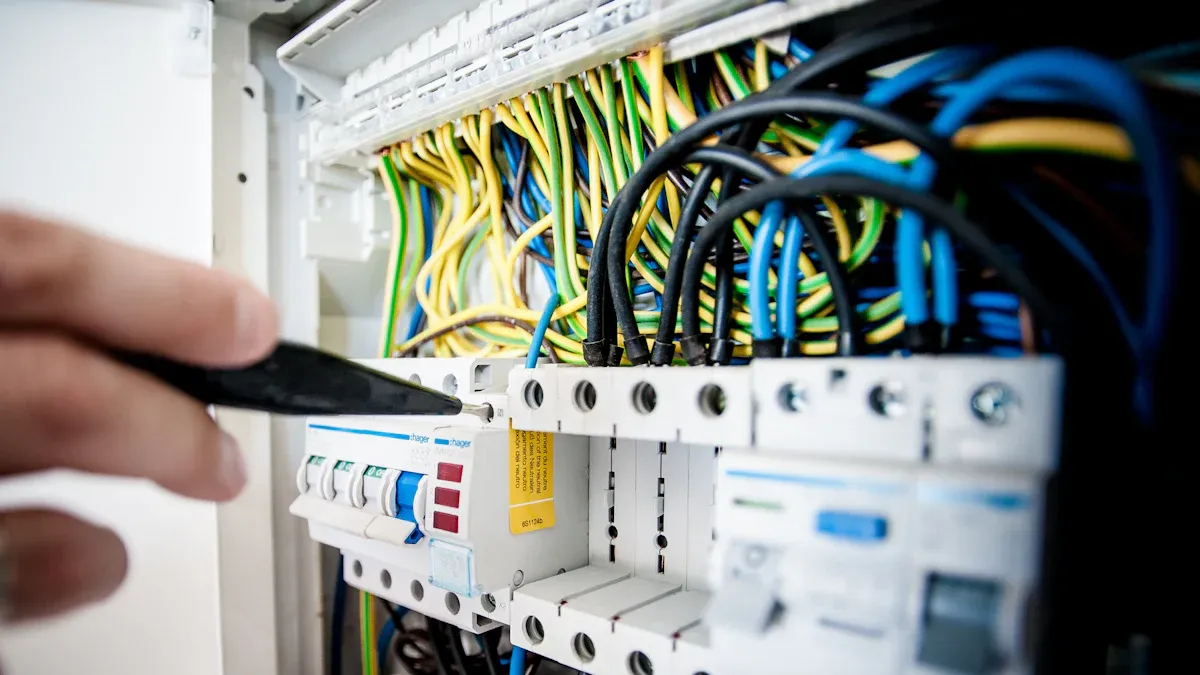
Seamless integration is the secret to getting the most out of your 48V telecom power system. You want your monitoring tools to work hand-in-hand with your existing setup, so you can manage everything from one place. Let’s look at how you can make this happen with ESTEL’s advanced solutions.
Compatibility with existing infrastructure
When you upgrade or expand your 48V telecom power system, you might run into a few bumps. Legacy devices sometimes don’t match modern voltage standards. Older systems may use different interface protocols or connectors. Some rectifiers even operate at different voltage levels, which can make integration tricky. Plus, if your legacy system lacks a modular design, adding new management software can get complicated.
ESTEL’s Telecom Rectifier System makes things easier. Take a look at how it helps you integrate with your current 48V telecom power system:
Feature | Benefit |
|---|---|
Modular Design | Simplifies installation and future upgrades across multiple sites. |
Standardized Power Shelves | Provides a uniform platform for rectifier modules, reducing training time and errors. |
Compatibility with Standards | Ensures seamless integration with existing 48V systems in telecom. |
You get a smoother transition and less downtime, even when working with older equipment.
Remote access and control
Remote access changes the way you manage your 48V telecom power system. You can monitor lithium backup power solutions from anywhere, which means you don’t have to send someone on-site for every little issue. This saves time and keeps your operations running smoothly.
Here’s what you gain with remote access and control:
Hassle-free monitoring and management from any location.
24/7 device monitoring with automatic alerts when conditions go out of range.
Quick remote rebooting of equipment and servers, which reduces downtime.
Protection for mission-critical equipment and faster response to problems.
With ESTEL’s Smart Power Distribution Unit, you can even control power distribution remotely and keep an eye on every outlet.
Data logging and reporting
You need clear records to make smart decisions about your 48V telecom power system. Data logging lets you track trends, spot issues early, and prove compliance with industry standards. ESTEL’s solutions give you detailed logs and easy-to-read reports, so you always know what’s happening at your site.
You can:
Review historical data for voltage, current, and environmental conditions.
Generate reports for audits or maintenance planning.
Use the data to optimize performance and prevent future problems.
When you combine compatibility, remote access, and robust reporting, you get a 48V telecom power system that’s ready for anything.
Reliability and security measures
When you manage a -48V DC power plant, you want to know your remote monitoring system will always have your back. ESTEL puts quality, innovation, and customer satisfaction at the heart of every solution. Let’s look at how you can keep your system reliable and secure, so you never miss a beat.
Redundancy and failover
Redundancy is your safety net. If one part fails, another steps in right away. You can use automatic transfer switches (ATS) to switch between power sources without interruption. Redundant circuit paths keep power flowing, even if a cable has trouble. Software-defined power management lets you shift resources where they’re needed most. Many sites use dual redundancy—two identical components ready to take over instantly. You might also see setups like N, N+1, or 2N, which all help eliminate single points of failure.
Automatic transfer switches (ATS) for seamless power source switching
Redundant circuit paths to prevent single cable failures
Software-defined power management for dynamic resource allocation
Dual redundancy and N+1 configurations for continuous uptime
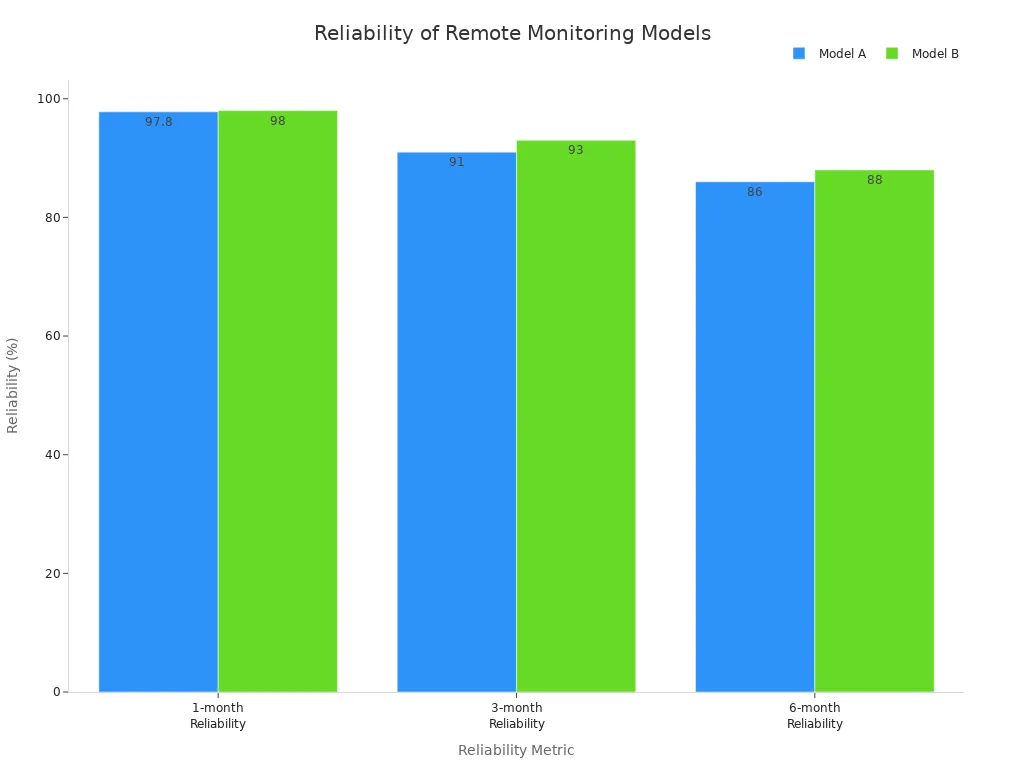
Check out how reliability stacks up over time:
Reliability Metric | Model A | Model B |
|---|---|---|
1-month Reliability Index | 97.8% | 98% |
3-month Reliability | 91% | 93% |
6-month Reliability | 86% | 88% |
Cybersecurity for remote monitoring
You can’t overlook cybersecurity. Remote monitoring systems need strong protection. Remote code attestation checks that only approved code runs on your devices. Network separation—like using DMZs or virtual networks—limits what attackers can reach. Intrusion detection systems watch for suspicious activity and alert you fast.
Remote code attestation for device integrity
Network separation to block lateral movement
Intrusion detection systems for early warnings
Tip: Regularly update passwords and review access logs to keep your system safe.
Regular maintenance and system checks
Routine checks keep your system healthy. You should schedule visual inspections every month. Clean dust from vents every three to six months. Test your backup systems every quarter. This simple routine helps you catch small issues before they become big problems.
Maintenance Task | Frequency |
|---|---|
Visual inspections | Monthly |
Clean dust from vents | Every 3–6 months |
Test backup systems | Quarterly |
Stay proactive. When you follow these steps, you boost reliability, extend equipment life, and keep your -48V DC power plant running strong with ESTEL’s trusted solutions.
You want your -48V DC power plant to stay reliable and safe. Start with real-time monitoring, smart alerts, and regular maintenance. Choose ESTEL’s certified solutions for proven reliability and easy upkeep. Users report fewer outages and praise the durability of ESTEL’s systems. Remember, continuous monitoring and strong security help you catch issues early and protect your site. Increased connectivity means you need to stay alert for data risks. Keep your system updated and secure for peace of mind.
FAQ
How often should you check your remote monitoring system?
You should check your system at least once a month. Regular checks help you catch small issues before they grow. If you run a critical site, consider weekly inspections.
Can you add ESTEL’s monitoring solutions to an existing power plant?
Yes, you can. ESTEL’s systems work with most setups. The modular design makes upgrades and integration simple. You don’t need to replace your whole system.
What happens if a sensor fails?
If a sensor fails, your monitoring software will alert you right away. You can swap out the sensor quickly. This keeps your system running without long downtime.
Do you need special training to use ESTEL’s monitoring software?
No, you don’t. The software uses a user-friendly dashboard. You can learn the basics in a short time. ESTEL also provides support if you need help.
See Also
Strategies for Effective Monitoring of Outdoor Telecom Cabinets
Ensuring Adequate Voltage Levels in Communication Cabinets by ESTEL
Guaranteeing Consistent Power Supply for Telecom Cabinets
A Detailed Overview of Telecom Cabinet Battery Risk Assessment
Understanding System Integration for ESTEL's Outdoor Cabinet Supervision
CALL US DIRECTLY
86-13752765943
3A-8, SHUIWAN 1979 SQUARE (PHASE II), NO.111, TAIZI ROAD,SHUIWAN COMMUNITY, ZHAOSHANG STREET, NANSHAN DISTRICT, SHENZHEN, GUANGDONG, CHINA
