How Smart PDU Local Processing Optimizes Telecom Cabinets

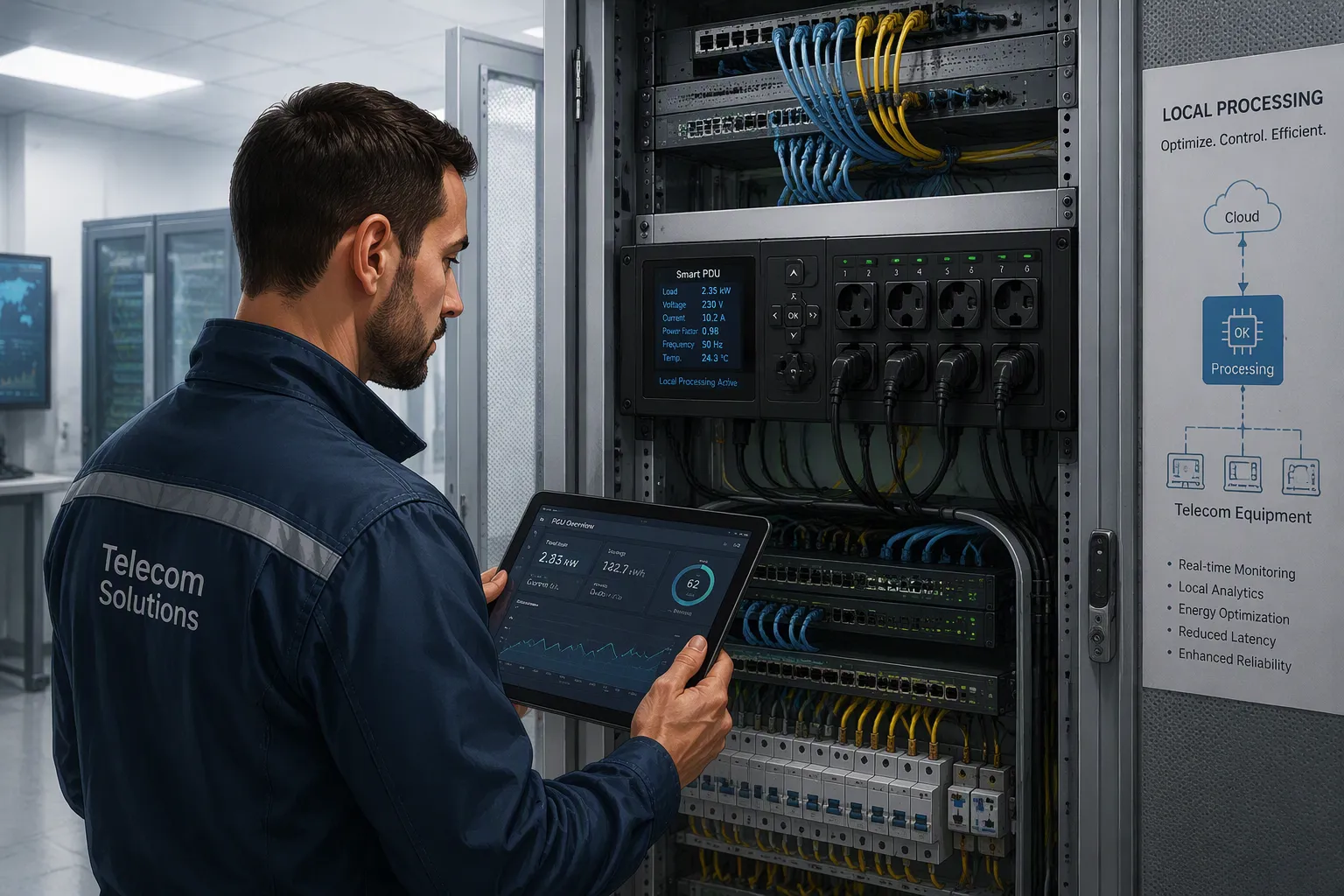
Smart PDU local processing handles critical monitoring and control directly on the device. This design cuts cloud round-trip latency and enables faster response in your telecom cabinets. Cloud-dependent PDUs react more slowly to power events, consume bandwidth, and expose your site to network outages. Local processing does not replace the cloud. Edge functions handle time-sensitive tasks, while the cloud supports analytics and fleet reporting. ESTEL's edge-enabled Smart Power Distribution Unit shows this architecture in practice. It brings remote management, LCD monitoring, and intelligent protocols to your telecom infrastructure, so you gain responsive power control without losing cloud oversight.
Key Takeaways
Local processing in smart PDUs enables faster responses to power events by handling monitoring and control directly on the device.
Edge computing improves reliability and reduces bandwidth costs by keeping critical functions local and sending only summaries to the cloud.
A hybrid design combines edge autonomy for time-sensitive tasks with cloud oversight for analytics and fleet reporting.
Deploy smart PDUs by mapping loads, enabling alerts, and running a pilot before scaling to ensure smooth integration.
ESTEL's Smart PDU offers practical local processing features like LCD monitoring and remote management for telecom cabinets.
Smart PDU Local Processing Architecture
On-Device Functions and Data Flow
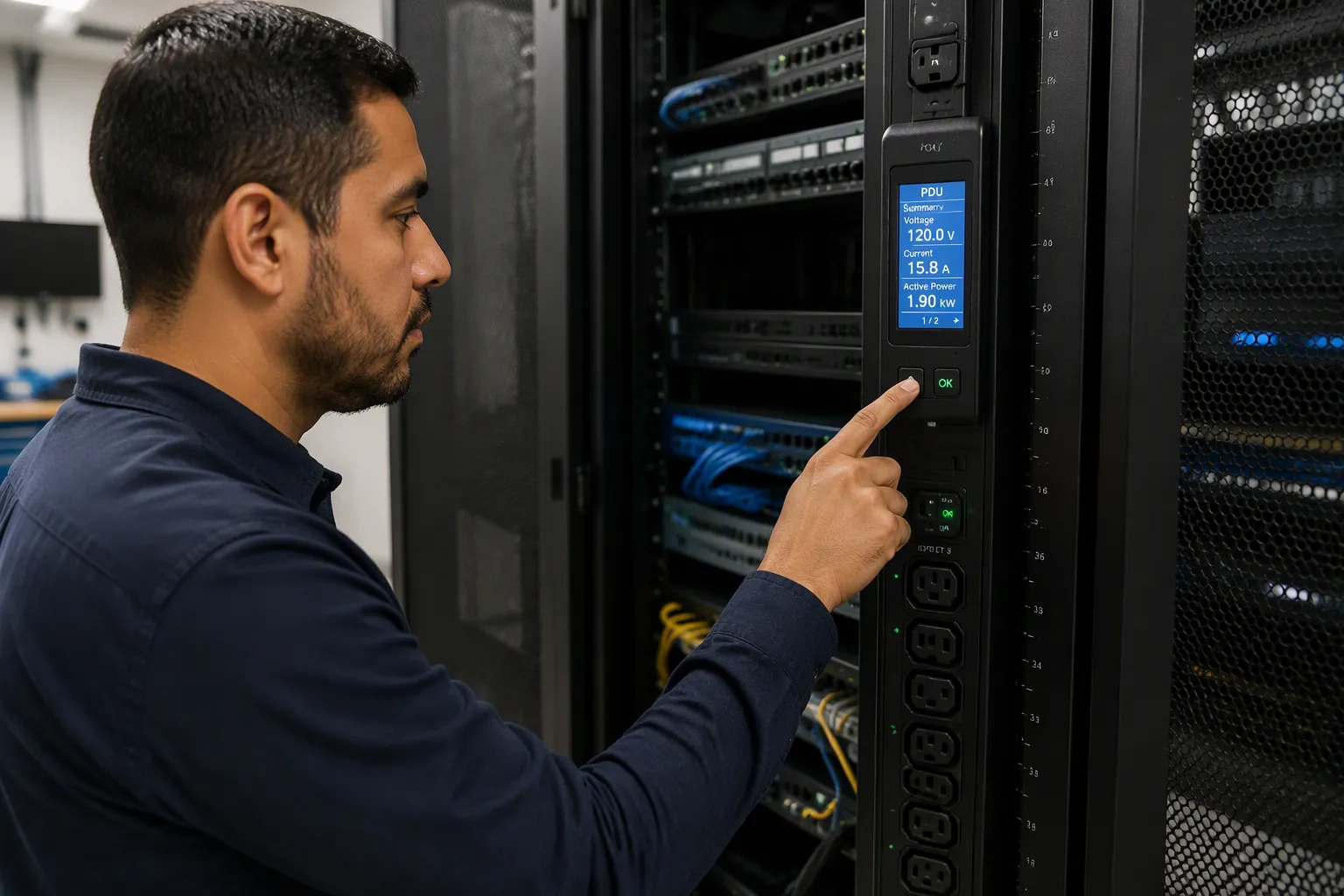
Local processing means the smart PDU makes decisions on the device itself. On-device monitoring, threshold logic, alarm handling, and control execution all happen without a cloud round trip. You get answers at the rack, not after a network journey.
The architecture starts with sensors. They measure operating information at the PDU level, such as RMS volts and current. A local controller reads those signals and applies threshold logic. When a reading crosses a limit, the device raises an alarm and acts on its own. Intelligent protocols carry data to serial or network ports for optional cloud sync of non-critical information.
The table below shows what stays on the device.
Function Category | On-Device Capability | Purpose / Benefit |
|---|---|---|
Local Monitoring | Smart LCD display with menu control showing PDU operating information at the rack | Lets on-site technicians inspect status without relying on remote management; serves as backup when network access is unavailable |
Local Control | Individual outlet ON/OFF switching via local interface | Enables power cycling or de-energizing a single load without interrupting the whole rack |
Local Access Use Cases | Installation, commissioning, maintenance, troubleshooting, network configuration, electrical inspections | Supports field work directly at the rack |
Metered power distribution units measure power at the PDU level and display it locally. Switched pdus add controlled on/off switching of individual outlets plus load metering. Outlet-level switching enables remote power recycling, delayed power sequencing, and outlet use management. ESTEL's Smart Power Distribution Unit applies these local processing capabilities through remote management, LCD monitoring, and intelligent protocols.
How It Differs from Cloud-Dependent Models
A cloud-dependent PDU sends every decision upstream. Each reading travels to a remote server, waits for analysis, and returns as a command. That loop adds delay to every action.
Local decision-making removes the loop for time-sensitive tasks. Your intelligent power distribution units handle alarms and switching at the edge. The cloud still receives non-critical data for analytics and fleet reporting. This split keeps real-time monitoring and control responsive in osp cabinets, where a slow reaction to a power event costs uptime.
The contrast is clearest in three areas. First, response time: on-device logic reacts immediately, while upstream transmission waits on the network. Second, resilience: local processing continues during an outage, and cloud models do not. Third, data volume: you send summaries instead of every sample, which trims bandwidth costs.
For telecom sites, this architecture supports real-time consumption data at the cabinet and feeds power systems with clean inputs. Over time, the collected history enables predictive maintenance across your fleet. You keep cloud oversight for the big picture and edge autonomy for the moments that matter.
Edge Computing Gains for OSP Cabinet Monitoring
Latency, Reliability, and Bandwidth Benefits
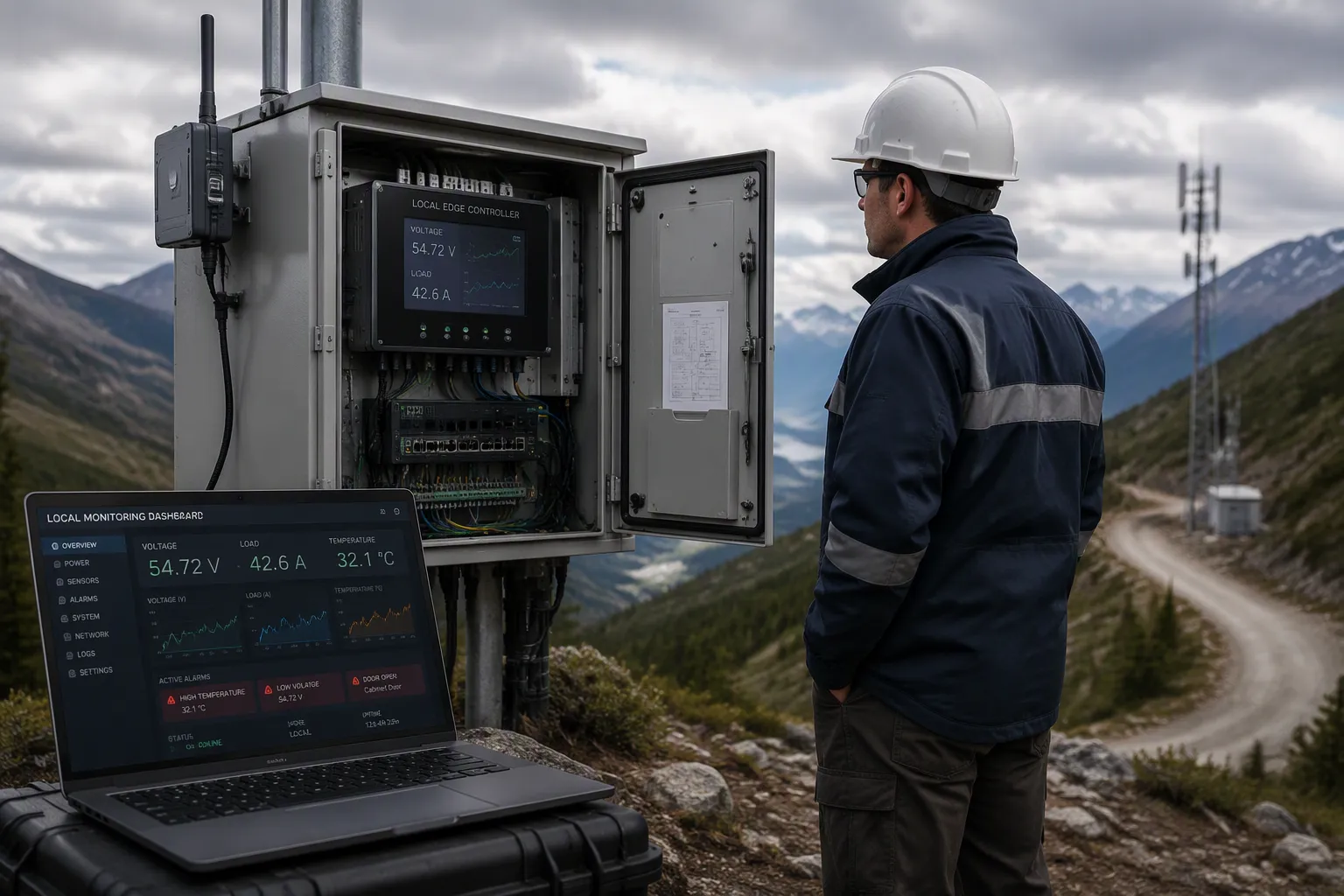
Edge computing moves decision-making close to the equipment. For monitoring outside plant (OSP) cabinets, this proximity changes how fast you react to supply events. A local controller reads sensor data and triggers an alarm without a cloud round trip. A cloud-dependent path sends that same reading upstream and waits for a response. You gain real-time visibility into voltage swings, load changes, and fault conditions at the cabinet. That speed matters when a breaker trips or a load draws too much current. A slow response lets a small fault grow into a site outage.
Reliability improves in a direct way. OSP cabinets often sit at remote roads, mountains, and other challenging environments. Network links to those sites can fail. Local processing keeps alarms and outlet control working during an outage. You remove the upstream server as a single point of failure for time-sensitive functions. The cabinet keeps protecting itself. A technician at the site can read the LCD and act without waiting for the network to return. That independence keeps OSP cabinets serviceable when the backhaul link drops.
Bandwidth savings follow the same logic. You send summaries and event logs instead of every sample. That matters as 5G, IoT, and edge computing push more devices into distributed telecom infrastructure. Each site generates more data. Local filtering trims the stream before it reaches the network. You pay for less backhaul and keep the link free for other traffic. You also reduce the risk of congestion during peak events, when many sites report at once. The savings compound across a large fleet of OSP cabinets.
Security and Data Privacy Improvements
Keeping sensitive data local reduces exposure. Load readings, outlet states, and alarm histories stay on the device by default. You decide what leaves the cabinet and what stays. A smaller data footprint means fewer interception points across the network. Edge intelligence also supports faster incident response. A local rule can de-energize an outlet or flag an anomaly without waiting for a remote command. You keep audit trails at the site for compliance reviews. Cloud analytics still receive the non-critical summaries you choose to share.
These gains fit OSP cabinet monitoring use cases well. Remote sites benefit most from local autonomy. Central offices can lean on cloud dashboards for fleet views. Edge computing and distributed intelligence give you both options. You match the architecture to the site. A hybrid design keeps OSP cabinet monitoring responsive and still feeds long-term reporting.
The same logic extends to power and cooling systems. Local logic watches temperature and current at the cabinet. It feeds power systems with clean inputs for predictive maintenance. A local threshold rule can flag a failing fan or a rising cabinet temperature before it becomes a service call. Over time, your team sees patterns across the fleet. You plan service before a failure takes a site down.
Telecom infrastructure keeps growing. Distributed sites need responsive control. Edge logic delivers that response at the rack. Cloud oversight remains valuable for reporting and long-term analysis. The two layers work together to keep every site visible.
Local vs. Cloud for Outside Plant (OSP) Cabinets
Performance, Compliance, and Cost Trade-offs
You face a real choice when you design monitoring for outside plant (OSP) cabinets. Local processing and cloud-dependent models differ on four measures. The table below sets them side by side.
Measure | Local Processing | Cloud-Dependent Model |
|---|---|---|
Latency | Decisions at the device, no round trip | Decisions wait on upstream transmission |
Reliability | Alarms and control continue during link loss | Functions pause when the network fails |
Compliance | Sensitive data stays on site | Data crosses the network by default |
Cost of ownership | Lower backhaul cost, higher device logic | Lower device cost, higher bandwidth and server cost |
Local logic wins on speed and resilience. Cloud models win on centralized storage and cross-site reporting. Neither approach is wrong. Your site conditions decide the fit.
Matching Architecture to Deployment Scenarios
Local processing suits time-sensitive power control. A remote site in harsh outdoor environments needs fast reaction to a fault. Edge computing keeps that reaction at the rack. Distributed OSP sites also benefit, because a dropped link does not blind the cabinet.
Cloud oversight fits fleet analytics and long-term reporting. You collect history across many sites and run predictive maintenance on the patterns. Real-time analytics and decision-making at the edge feed clean data into that cloud layer.
A hybrid design serves most telecom infrastructure. Local logic guards power at each cabinet. The cloud aggregates results for planning. You gain responsive control and fleet-wide insight from one architecture.
Deploying Smart PDU Local Processing with ESTEL
Integration and Deployment Considerations
ESTEL's Smart Power Distribution Unit gives you a practical starting point. It accepts a 16A input and comes in configurations with 8 to 19 outlets. Surge protection guards connected equipment, and a dehumidifying function helps hold a stable internal cabinet temperature. The cable plug system complies with IEC60309 standards, so it fits common site wiring.
Plan the integration around your management stack. Check which electrical parameters the unit measures and whether monitoring works at the PDU, branch, or outlet level. Confirm remote switching support and the communication protocols on offer. Verify DCIM compatibility, environmental sensor support, and alarm configuration. When smart PDU data reaches your DCIM platform, you can correlate power information with rack assets, cooling conditions, and capacity for a fuller operational view.
Deployment in outside plant (OSP) cabinets rewards a few habits. Map the load first and baseline per-cabinet power profiles. Right-size breakers and metering to avoid nuisance trips. Enable telemetry and alerts, then run a pilot zone before you scale. Keep cables organized for airflow, schedule routine inspections, and replace worn parts promptly. Always de-energize equipment before testing.
Balancing Edge Autonomy with Cloud Oversight
A hybrid model serves most telecom sites well. Local inference handles time-sensitive tasks at the cabinet, and centralized analytics covers fleet-wide reporting. Send only approved summaries upstream. This trims bandwidth, keeps operations running when the WAN link drops, and supports local data residency rules.
Set clear rules for automation. Low-risk actions can run automatically after validation. High-impact actions should keep human authorization. Protect the edge layer with device authentication, network segmentation, role-based access control, and encrypted firmware updates. Because physical access at osp cabinets is slower than at central facilities, secure remote administration matters. Local logic also feeds power and cooling systems with clean data, which supports predictive maintenance across your fleet. Review your latency-sensitive functions, then let ESTEL's unit anchor the edge layer of your power systems.
Local processing in smart PDUs keeps critical functions at the edge. You gain faster response time, higher reliability, and better efficiency in your telecom cabinets. The cloud still matters. It supports analytics and fleet-wide reporting, so the two layers work as one system.
Evaluate which functions in your osp cabinets need an immediate response. Then consider ESTEL's Smart Power Distribution Unit as a starting point. Its local power monitoring and control give you a practical edge layer. That foundation also feeds clean data into predictive maintenance programs across your sites.
FAQ
What does local processing actually do inside a smart PDU?
The device monitors its own sensors, applies threshold logic, raises alarms, and executes control actions on its own. You get a response at the rack without a cloud round trip. ESTEL's Smart Power Distribution Unit pairs this with LCD monitoring and intelligent protocols.
Does local processing replace cloud management?
No. The two layers serve different jobs. Edge logic handles time-sensitive functions at the cabinet. The cloud collects summaries for analytics and fleet reporting. You keep both, and each one covers what the other does not.
Why does edge logic matter for osp cabinets?
Remote sites often sit in harsh outdoor environments where network links can fail. Local logic keeps alarms and outlet control working during an outage. That independence keeps osp cabinets serviceable and protects uptime when the backhaul link drops.
How does local data support predictive maintenance?
Local logic feeds clean power and cooling data into your reporting layer. Over time, you see patterns across the fleet. Your team can plan service before a failure takes a site down, which supports predictive maintenance across many telecom sites.
What should you check before deploying a smart PDU?
Map the load and baseline per-cabinet power profiles first. Confirm the measured parameters, remote switching support, and DCIM compatibility. Then run a pilot zone before scaling. ESTEL's unit offers a 16A input, 8 to 19 outlets, surge protection, and IEC60309-compliant plugs.
See Also
A Guide to Understanding the Various Uses of Telecom Cabinets
Methods for Ensuring a Reliable Power Supply in Telecom Cabinets
Exploring ESTEL PDUs and Their Role in Data Center Cabinets
An Overview of Photovoltaic Energy Storage Power Systems for Telecom Cabinets
CALL US DIRECTLY
86-13752765943
3A-8, SHUIWAN 1979 SQUARE (PHASE II), NO.111, TAIZI ROAD,SHUIWAN COMMUNITY, ZHAOSHANG STREET, NANSHAN DISTRICT, SHENZHEN, GUANGDONG, CHINA
