How Surge and Lightning Protection of Smart PDUs Ensures Power Safety in High-Altitude Base Stations

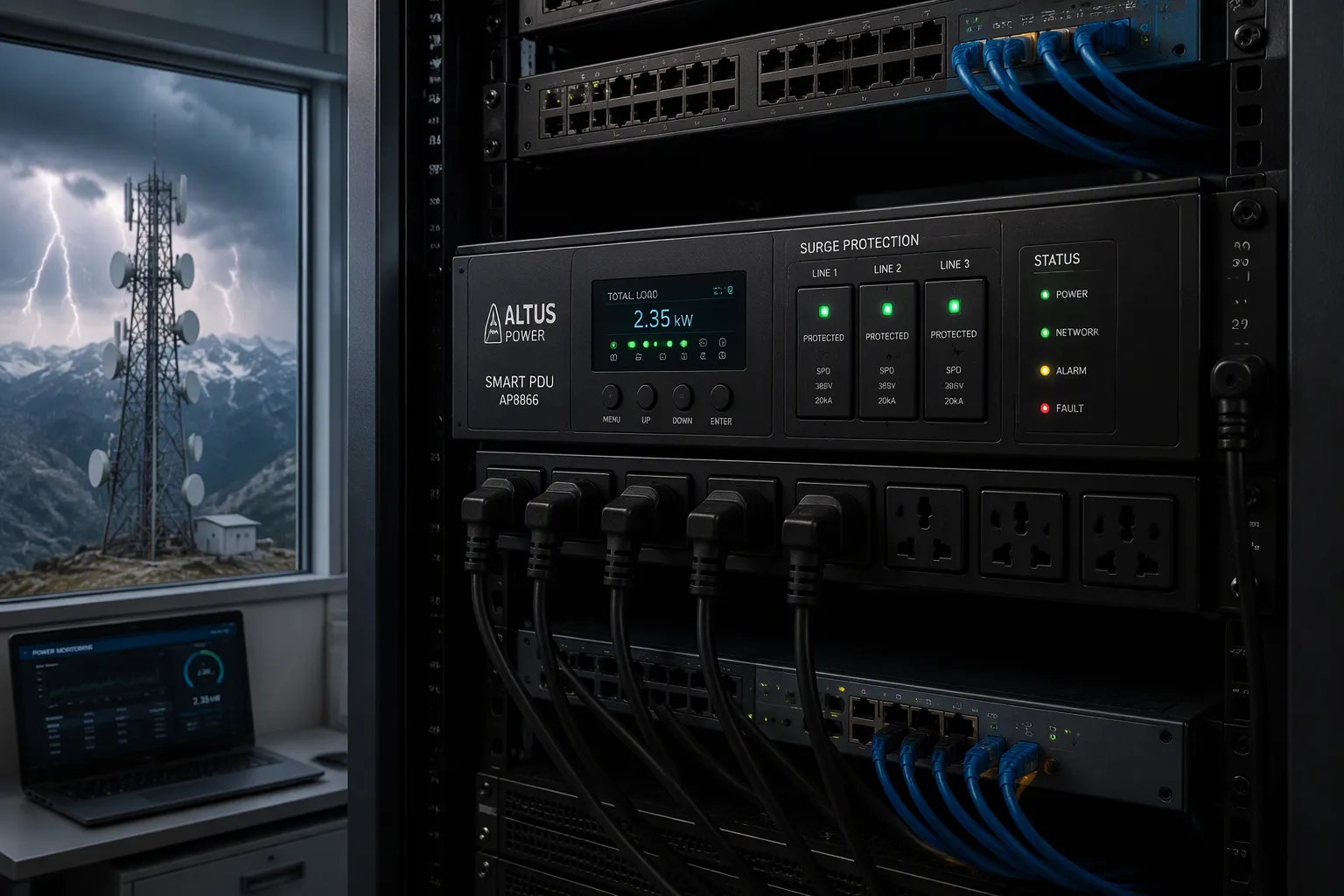
A smart PDU with integrated surge and lightning protection keeps high-altitude base stations safe through three layers. Multi-stage surge protective devices clamp transient overvoltages. Robust grounding carries excess current into the earth. Intelligent monitoring detects abnormal events and triggers a response. Together, these functions prevent equipment damage and costly downtime.
Altitude raises the stakes. High-altitude sites see elevated lightning frequency and higher ground flash density than lowland locations. Every strike couples energy into the power feed, so your surge protection must handle repeated stress. A Smart PDU with surge protection and intelligent features meets these power safety requirements directly. It combines suppression hardware with real-time intelligence inside one rack-mounted unit. This protection matters more as base station power loads grow.
Key Takeaways
Multi-stage surge protective devices clamp voltage spikes to keep equipment safe.
Robust grounding carries excess current into the earth to prevent damage.
Intelligent monitoring detects problems and responds quickly to protect power.
Automatic disconnection and reconnection keep brief outages from becoming long downtime.
Smart PDUs reduce maintenance costs and meet safety standards like IEC 61643-11.
High-Altitude Power Risks and Lightning Exposure
Elevated Ground Flash Density
Altitude changes the electrical behavior of the atmosphere around your site. Air thins as elevation rises, and thinner air offers less insulation between cloud charge centers and the ground. This reduced dielectric strength lets strikes form more readily and reach the surface more often. The result is a higher ground flash density than you would measure at sea level.
Mountain terrain adds a second effect. Ridgelines and peaks sit closer to storm clouds and present a sharp, elevated point that attracts discharges. A base station on such a site becomes a preferred target for direct or indirect lightning strikes. Each event couples high peak voltages into the power supply feed, and repeated exposure wears down components that were never stressed this hard at lower elevations. You need lightning protection that assumes frequent, energetic events rather than occasional ones.
Environmental Stress on Base Station Power
Temperature swings compound the electrical risk. Daytime heat and nighttime cold cycle the enclosure and the wiring inside it. Materials expand and contract with each cycle, and joints loosen over time. A loose connection raises resistance, and resistance under load produces heat. That heat degrades insulation and creates a path where surges can do more damage.
Humidity and corrosion complete the picture. Moist air condenses on cold metal surfaces, and moisture combined with airborne salts and pollutants accelerates corrosion on terminals and grounding points. A corroded ground path cannot carry fault current away efficiently, so protection coordination weakens. Smart PDUs help here because they monitor the environment as well as the power. Built-in sensing and a dehumidifying function keep the rack interior drier, and that supports the safety of every connected load. Treat environmental stress and surge risk as one problem, not two.
Surge Protection Inside the Power Distribution Unit
Multi-Stage SPDs and Surge Suppression Fuses
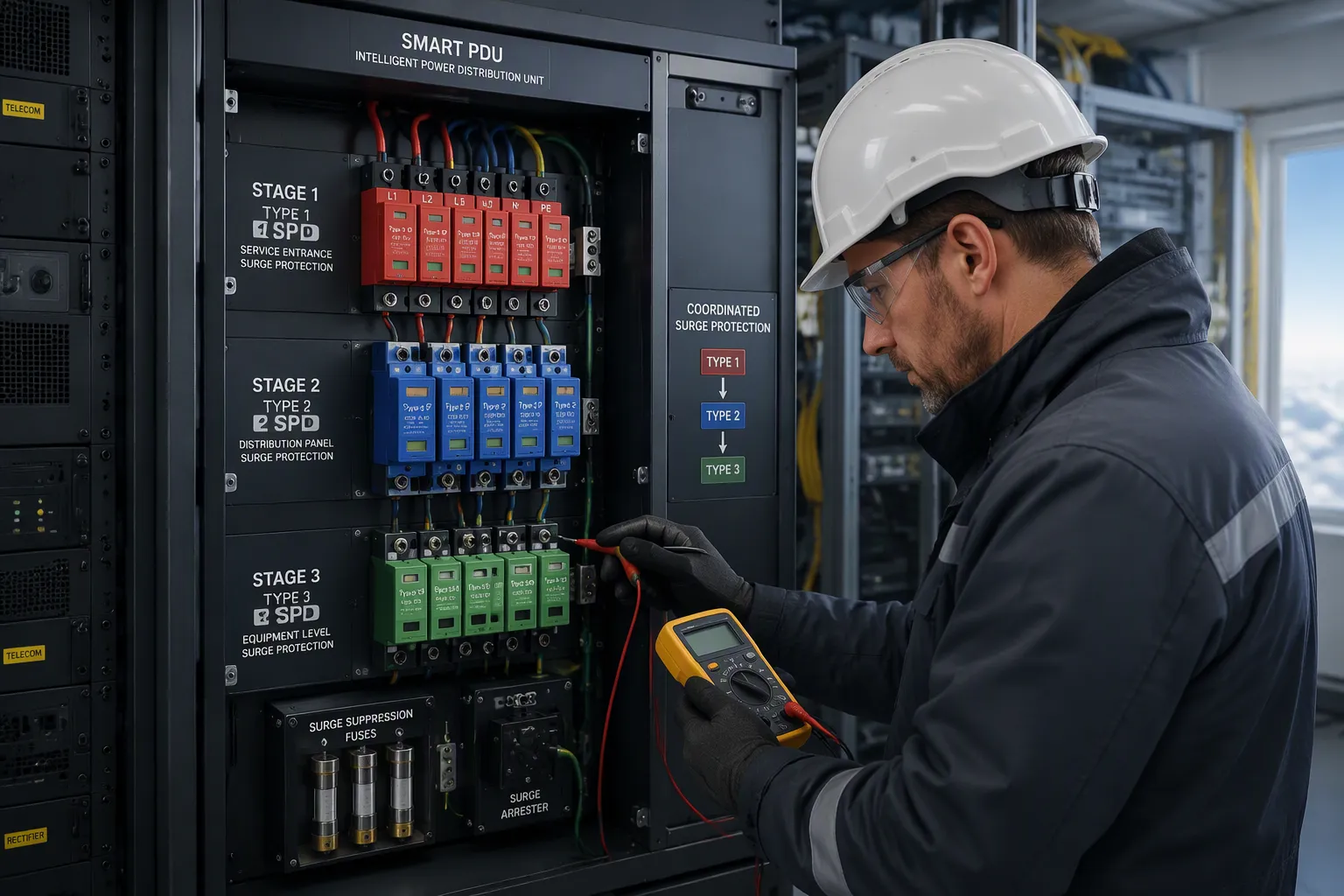
A single protective device cannot absorb the full energy of a strike. Coordinated defense spreads that energy across several stages. Each stage clamps the voltage lower than the one before it. This approach keeps residual voltage at the equipment terminals below a safe level.
The table below shows how each stage contributes to that reduction.
SPD Type | Voltage Protection Level (Up) | Response Time | Typical Technology |
|---|---|---|---|
Type 1 | 2.5–4.0 kV | 100 ns+ | Spark gaps |
Type 2 | 1.5–2.5 kV | 25–100 ns | MOVs / combined |
Type 3 | < 1.5 kV | < 10 ns | MOVs, TVS diodes |
Voltage selectivity makes this work. Each downstream SPD must have a lower protection voltage level than the upstream device. Impedance separation ensures proper activation sequencing. Recommended cable distances are 10–15 m from Type 1 to Type 2 and 5–10 m from Type 2 to Type 3. Decoupling inductors of 1–5 μH create artificial separation when you cannot maintain those distances.
Sequential operation matters. Type 1 activates first for bulk energy. Type 2 handles the reduced residual surge. Type 3 performs final clamping. Without this coordination, devices may trip simultaneously and lower-rated units could fail. Your equipment would then face a higher residual voltage.
A surge suppression fuse sits on the input of the surge protection circuit. It must withstand a surge without opening. The fuse protects the circuit from follow current and fault conditions. It does not interrupt the brief event itself. Choose a fuse rated for the current waveform your site expects. A fuse that opens during a strike leaves the circuit unprotected for the next event.
Arresters complete the coordinated defense at the site level. They divert the bulk of strike energy before it reaches the rack. The arresters and the SPDs inside the unit then work as one system.
ESTEL's smart pdu builds surge protection modules directly into the unit. You get this layered defense inside one rack-mounted chassis. The design removes the need to wire separate devices at the rack. Installation stays simple, and the protection travels with the unit.
Rack PDU Filtering and Coordinated Defense
Dehn Type 3 surge protection installed at the PDU level provides the final fine clamping. These devices restrict voltage spikes by channeling excess energy away from sensitive equipment. The rack pdu filters what remains and passes a clean supply to your loads. This stage handles the small residual spikes that pass the upstream devices.
Wiring practice decides how well this works. Route SPD conductors in parallel and keep them as short and straight as possible. This reduces inductive effects. Connect the SPD grounding terminal to the earth busbar with a short, thick, direct conductor. Surge energy then discharges efficiently to earth. Long, looped conductors add impedance and raise the residual voltage at the load.
A surge protection pdu also manages current and load. ESTEL's multi-functional industrial/smart pdus include overload protection and pdu power sockets in configurations from 8 to 19 outlets. The 16A input and IEC60309 plug suit base station racks. Built-in surge protection modules handle the transient side, and the intelligent controller handles the operational side. Together they form a complete lightning surge protection chain inside the rack.
How Smart PDU Monitoring Detects and Responds
Remote Monitoring and Real-Time Alerts
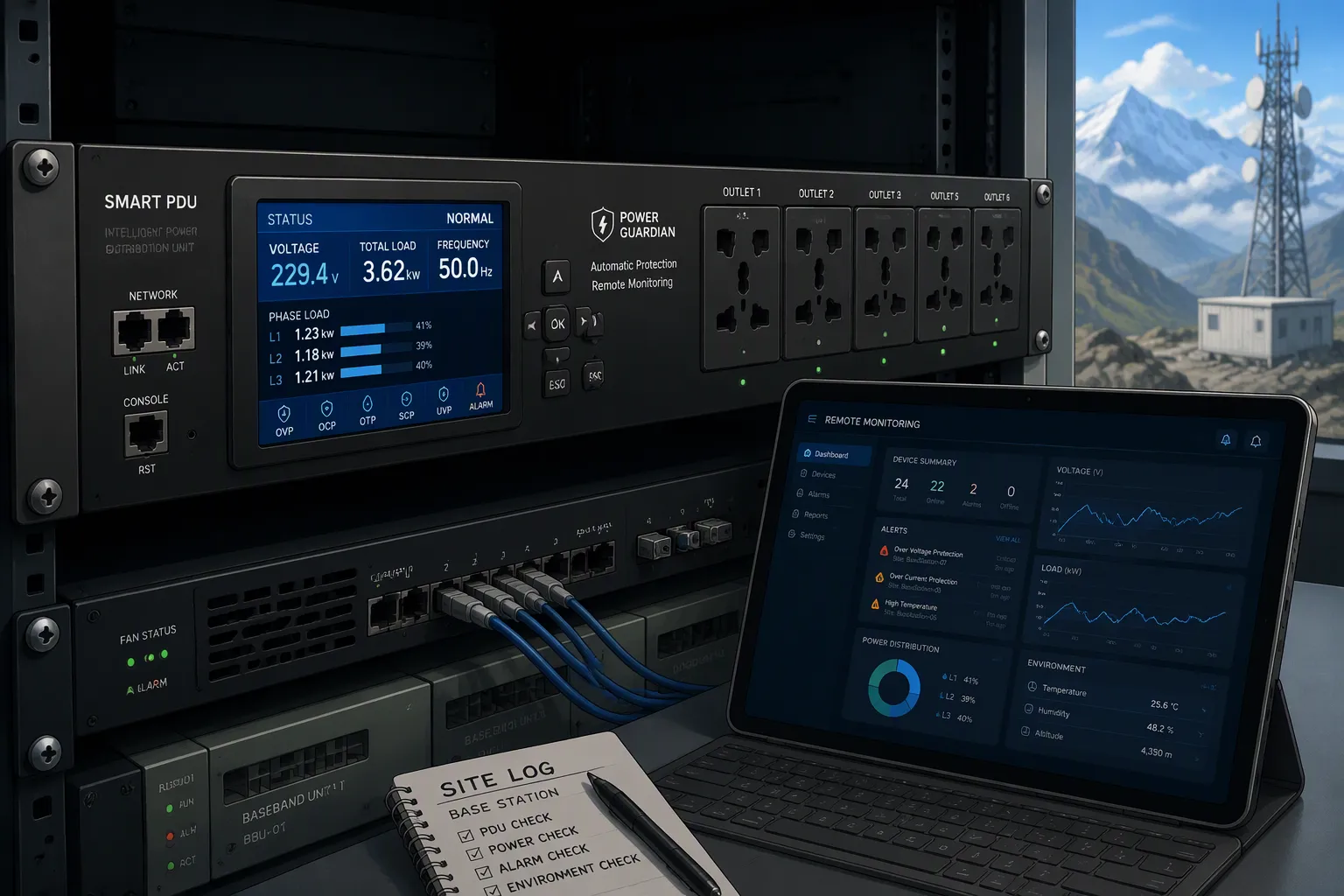
Hardware alone cannot tell you what happened after a strike. You need visibility into the event and its aftermath. ESTEL's smart pdu adds that layer through intelligent protocols and an LCD display. The screen shows real-time readings of voltage, load, and operating status at the rack. You read the condition of your power supply without opening the cabinet.
Remote management extends that visibility beyond the site. You monitor and control the unit from a distance through its intelligent protocols. This capability matters in high-altitude locations. A mountain site may sit hours from the nearest technician, and a road closure can delay a visit by days. Remote access lets you check the unit the moment an alert arrives. You confirm whether the load survived the event and whether the protection circuit still functions.
Alerts turn raw data into action. The unit flags abnormal conditions and reports them to your management platform. You then decide the response: dispatch a team, switch a circuit remotely, or log the event for trend analysis. Repeated alerts across a season reveal a pattern. A site that trips often needs a closer look at its grounding or its arrester coordination. This feedback loop supports power stability over the long term, and it turns protection from a passive barrier into an active process.
Automatic Disconnection and Reconnection
The controller also acts on its own. When a surge event drives voltage or current beyond safe limits, the unit disconnects the affected circuit. This step isolates sensitive equipment from the disturbance. The load then rides through the event without damage. Disconnection happens fast, and it happens without a technician on site.
Reconnection follows a defined logic. The unit waits for the supply to return to normal, then restores the circuit. A brief disturbance causes only a brief outage. The load comes back online automatically, and service resumes. This behavior protects equipment and keeps the site running. It also reduces truck rolls to remote locations, and that lowers maintenance costs.
The dehumidifying function rounds out the environmental safeguards. Moisture inside a rack corrodes terminals and weakens insulation. The unit removes excess humidity and keeps the interior dry. A dry rack supports the safety of every connected device. It also preserves the integrity of the grounding path, which the whole protection chain depends on.
Think of the pdu in networking terms as the intelligent node at the rack. It senses, decides, and reports. The pdu power sockets carry the load, and the controller watches over them. A stable power supply is the outcome you get when sensing, switching, and environmental control work as one system.
Grounding, Reliability, and Cost Benefits of PDU Protection
Equipotential Bonding and Controlled Discharge Paths
Grounding gives transient energy a deliberate route to earth and supports power safety at the rack. Bonding conductors equalize potential between metal bodies and the lightning protection system. Down conductors carry current from roof terminations to the electrodes. A ground loop installed within 12 ft (3.6 m) vertically of the structure base ties every electrode together. This loop matters because electrode resistances vary, even on one structure. A shared loop compensates for those differences and spreads the discharge across many paths.
Combined grounding completes the chain. Foundation electrodes interconnect with dedicated electrodes, including tower grounding, to form one shared grid. Protective ground, functional ground, and enclosure ground then share a single reference potential. You connect the rack pdu to that same reference. Surge protection depends on this path. The surge protection pdu clamps the transient, and the ground carries the energy away. Neither half works alone. A low-impedance path also limits sideflash to nearby metal, which protects your equipment and your team.
Reduced Downtime and Standards Compliance
Reliable protection cuts operating cost and protects power quality. A site that rides through storm season needs fewer site visits, fewer replacement modules, and fewer trips to remote ridges. Automatic disconnection and reconnection keep brief disturbances brief. Your maintenance budget shifts from emergency repairs toward scheduled inspection.
Standards compliance anchors that reliability. IEC 61643-11 governs SPD performance and supports CE marking. IEEE C62.41 recommends Type II SPDs for commercial facilities, and UL 1449 Type 2 is widely accepted as its equivalent. ESTEL builds its pdus under ISO9001 quality control, so each unit ships with documented consistency. The smart pdu line covers 8 to 19 outlets with a 16A input and an IEC60309 plug, a fit for base station racks. These safe power distribution pdus deliver safe power through pdu power sockets that carry the load. Choose a unit rated for your site, and the protection chain stays complete. That combination of safety and uptime is the payoff.
Multi-stage SPDs clamp the voltage spike. Surge suppression fuses ride through the strike. Grounding carries the current to earth. Intelligent monitoring watches every event and responds. These layers work as one chain, and that chain keeps your high-altitude site safe.
You gain uptime, lower maintenance costs, and compliance with standards like IEC 61643-11. ESTEL's smart pdu delivers this package in one rack unit, with pdu power sockets ready for your loads. As high-altitude telecom infrastructure expands, intelligent protection in pdus will matter more, not less.
FAQ
How do multi-stage SPDs inside a smart PDU protect my base station equipment?
Each stage clamps the voltage lower than the one before it. Type 1 absorbs bulk strike energy, Type 2 handles the reduced residual surge, and Type 3 performs final fine clamping at the rack. This coordination keeps residual voltage at your equipment terminals below a safe level.
Why does the surge suppression fuse matter if the SPD already handles the strike?
The fuse protects the surge protection circuit from follow current and fault conditions. It must ride through a lightning surge without opening. A fuse that opens during a strike leaves the circuit unprotected for the next event, so you lose the defense you installed.
What happens to my loads during a surge event?
The controller disconnects the affected circuit when voltage or current exceeds safe limits. Your equipment rides through the disturbance without damage. The unit then waits for the supply to return to normal and restores the circuit automatically, so brief disturbances cause only brief outages.
Can I check on a remote high-altitude site without sending a technician?
Yes. Intelligent protocols and remote management let you monitor voltage, load, and operating status from a distance. The LCD shows real-time readings at the rack. Alerts flag abnormal conditions, so you confirm whether the load survived an event before you dispatch a team.
Which configurations suit a base station rack?
ESTEL's smart pdus cover 8 to 19 outlets with a 16A input and an IEC60309 plug, a fit for base station racks. The pdu power sockets carry your loads, and built-in surge protection handles the transient side. Each unit ships under ISO9001 quality control, with SPD performance governed by IEC 61643-11.
See Also
Ways to Guarantee Consistent Power for Telecom Cabinet Systems
Solar Energy Storage Power Solution for Telecom Cabinet Operations
Methods to Safeguard Equipment Using Outdoor Telecom Cabinet Enclosures
New Developments Shaping the Future of Outdoor Telecom Cabinets
ESTEL's Complete Guide to Assessing Telecom Cabinet Battery Risks
CALL US DIRECTLY
86-13752765943
3A-8, SHUIWAN 1979 SQUARE (PHASE II), NO.111, TAIZI ROAD,SHUIWAN COMMUNITY, ZHAOSHANG STREET, NANSHAN DISTRICT, SHENZHEN, GUANGDONG, CHINA
