Smart PDU-5G Small Cell Collaboration: Precise Power Supply & Monitoring for Low-Power Devices

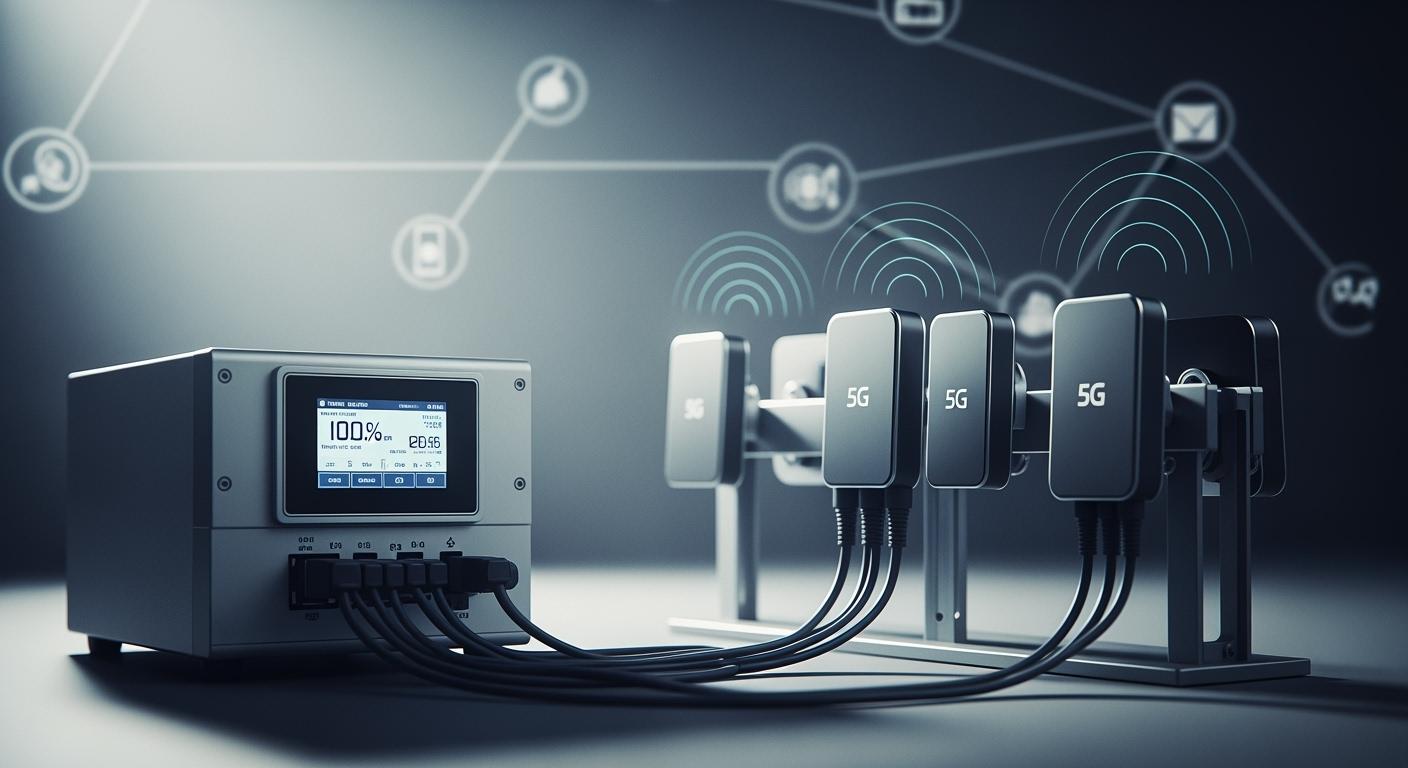
You experience greater control and reliability in telecom networks when smart power distribution units work together with 5G small cells. This collaboration gives you real-time monitoring, remote management, and environmental protection for your equipment. Features like surge protection, modular design, and intelligent monitoring support stable power delivery and help you avoid downtime. ESTEL leads the way with advanced solutions, ensuring your network stays efficient and meets strict international standards.
Key Takeaways
Smart power distribution units enhance telecom networks by providing precise power supply and real-time monitoring.
Real-time data helps prevent overloads and ensures stable power delivery, improving network reliability.
Advanced features like automated load balancing and predictive analytics optimize energy use and reduce downtime.
Remote management capabilities allow for quick responses to issues, increasing safety and reducing maintenance costs.
Adopting smart power solutions can lead to significant energy savings and lower operational costs in telecom networks.
Collaboration for Precision Power Supply
Smart Power Distribution Units in 5G Small Cells
You see the future of telecom networks when smart power distribution units work together with 5G small cells. This collaboration creates a foundation for precise power supply and monitoring, especially for low-power devices. You need compact solutions that fit into small environments like utility poles and traffic lights. The smart power distribution unit from ESTEL meets these needs with a design that saves space and supports advanced heat dissipation. You do not have to worry about overheating because the unit uses innovative heat exchange mechanisms instead of traditional fans.
You also gain protection against blackouts and voltage spikes. The smart power distribution unit includes backup capabilities and surge protection. This ensures your telecom equipment stays safe and operational, even during unexpected events. You benefit from envelope tracking, which adjusts voltage in real time to maintain efficiency and reduce waste heat in RF power amplifiers. This feature supports dynamic bandwidth-power matching, which is essential for 5G small cells that must adapt to changing network demands.
ESTEL’s smart power distribution unit stands out for its robust construction and intelligent protocols. You can trust its reliability in harsh outdoor conditions, which is critical for telecom infrastructure. The unit’s modular design allows you to scale your network easily as your needs grow.
Here is a summary of the main technical mechanisms that enable precise power supply for low-power devices in 5G small cell environments:
Mechanism | Description |
|---|---|
Compactness | Power supplies must fit in small environments like traffic lights and utility poles. |
Heat Dissipation | Advanced heat exchange mechanisms are required as internal power supplies cannot always use fans. |
Blackout and Anomaly Protection | Power supplies need backup capabilities to handle outages and protect against voltage spikes. |
Envelope Tracking | Continuously adjusts voltage to maintain efficiency and reduce waste heat in RF power amplifiers. |
You see how each mechanism supports the optimization of power distribution and energy efficiency in your telecom network.
Real-Time Monitoring and Control
You need real-time traffic monitoring and control to keep your telecom network efficient and reliable. The smart power distribution unit from ESTEL gives you instant access to power usage data. You can track fluctuations and respond quickly to any changes. This real-time monitoring helps you avoid overloads and ensures stable power delivery to every device.
You also benefit from automated load balancing. The smart power distribution unit distributes power efficiently across all connected devices. This prevents overloads and supports precise power delivery, which is vital for 5G small cells and low-power devices. Energy optimization features reduce waste and improve uptime, so your network stays operational even during high demand.
IoT integration allows you to use advanced analytics and predictive analytics for proactive maintenance. You receive continuous updates and alerts, which help you detect minor power fluctuations before they become major issues. AI-driven insights analyze current and historical data, so you can manage network health and reduce downtime.
Here is a table that shows how smart power distribution units ensure stable and precise power delivery in 5G small cell networks:
Feature | Description |
|---|---|
Real-time Monitoring | Enables operators to track power usage and fluctuations instantly, ensuring stability. |
Automated Load Balancing | Distributes power efficiently across devices, preventing overloads and ensuring precise delivery. |
Energy Optimization | Reduces waste and enhances efficiency, crucial for maintaining uptime in 5G networks. |
IoT Integration | Allows for advanced analytics and predictive maintenance, addressing issues before they escalate. |
High Demand Applications | Essential for telecom and IT sectors, particularly for powering 5G equipment and core networks. |
You can see how real-time data supports early detection, proactive monitoring, and predictive maintenance:
Evidence Type | Description |
|---|---|
Early Detection | Real-time data allows for the identification of minor power fluctuations before they escalate into major issues. |
Proactive Monitoring | Continuous updates and alerts facilitate quick responses to potential problems, enhancing network reliability. |
Predictive Maintenance | AI-driven insights help manage network health by analyzing current and historical data, reducing downtime and improving efficiency. |
ESTEL’s smart power distribution unit gives you remote management, surge protection, and a dehumidifying function. You can monitor and control your telecom power distribution from anywhere, which increases safety and reduces maintenance costs. This level of innovation ensures your network remains efficient, reliable, and ready for future demands.
Integration and Features of ESTEL Smart Power Distribution Unit
Key Features for Telecom Network Efficiency
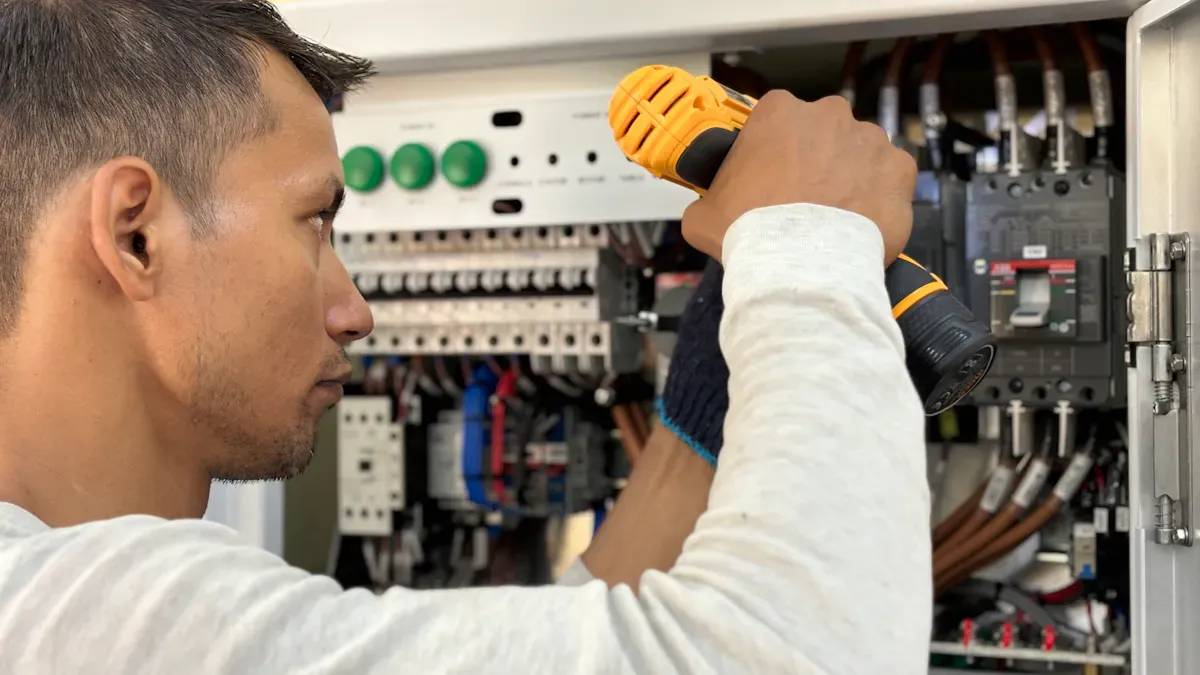
You can achieve seamless integration between the smart power distribution unit and 5G small cells by using intelligent protocols and direct connections to SDN networks. This setup lets you adjust power allocation in real time based on network traffic patterns. The smart power distribution unit links to SDN controllers, which gives you flexibility and efficiency in your telecom power system. You can support dynamic bandwidth-power matching, which is essential for modern telecom networks.
The smart power distribution unit offers several features that boost efficiency and energy optimization in your telecom environment:
Environmental monitoring tracks temperature, humidity, and power usage in real time. This helps you prevent inefficiencies and maintain energy efficiency.
Real-time monitoring gives you insights into energy consumption at both rack and outlet levels.
Hot-swappable components allow you to perform maintenance without shutting down the system, reducing downtime.
Outlet-level control enables you to manage power for each device precisely.
Remote connectivity lets you monitor and troubleshoot from anywhere.
These features work together to improve telecom network efficiency, reduce downtime, and ensure your equipment operates under optimal conditions. You benefit from energy optimization and predictive analytics, which help you plan for future needs and maintain high performance.
Remote Management and Safety
You gain advanced remote management with the smart power distribution unit. You can control and monitor your telecom power distribution from any location. This reduces operational risks and increases safety. The unit uses encrypted connections and strong authentication to protect your network. You can set up automated alerts and dashboards for real-time updates.
Aspect | Benefit |
|---|---|
Temporal Alignment | Faster, more accurate misoperation detection |
Rule Screening | Safer, compliant operations |
You should schedule regular visual inspections and monitor sensor data to keep your telecom network safe. Real-time monitoring with threshold alerts ensures you never miss critical events. You can customize alert thresholds for temperature, humidity, power fluctuations, and security breaches. This approach helps you avoid alert fatigue and focus on important incidents.
The smart power distribution unit includes surge protection and a dehumidifying function. These features protect your telecom equipment and maintain stable power distribution. You support innovation and optimization in your telecom network by using smart solutions that adapt to changing demands.
Efficiency and Adaptive Resource Allocation
Traffic Awareness and Predictive Analytics
You can boost efficiency in your telecom network by using a smart power distribution unit with advanced traffic awareness and predictive analytics. Real-time traffic monitoring gives you clear visibility into network performance. You see which devices use the most power and when demand peaks. This information helps you make informed decisions about resource allocation.
Predictive analytics uses AI to forecast future load conditions. You can plan energy-saving strategies before demand spikes. Dynamic bandwidth-power matching lets your telecom power system adjust power distribution as network needs change. This smart approach ensures you use resources efficiently and avoid waste.
Real-time traffic monitoring provides instant feedback on network activity.
Predictive analytics helps you anticipate and prepare for future power needs.
Dynamic bandwidth-power matching keeps your power distribution flexible and responsive.
You gain more control over energy use and reduce unnecessary power consumption. This level of optimization supports both efficiency and reliability in your telecom network.
Optimizing Telecom Network Efficiency
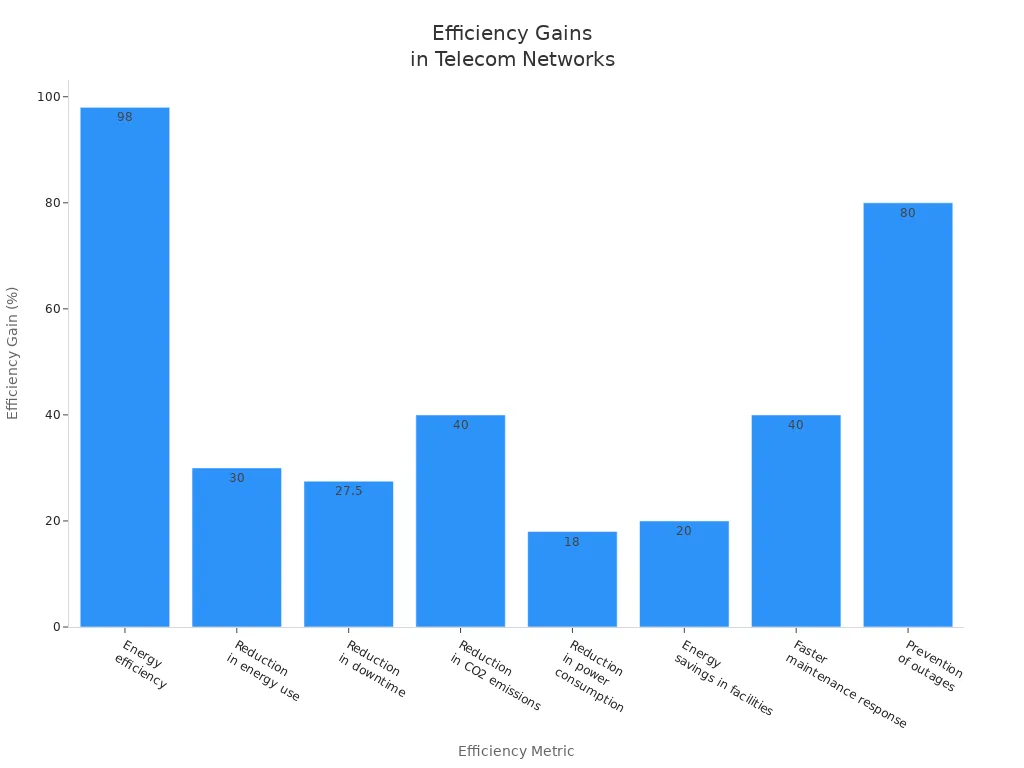
You see measurable gains when you use smart power distribution units for adaptive resource allocation. The smart power distribution unit increases energy efficiency and reduces downtime. You also lower your energy costs and carbon footprint. The table below shows the improvements you can expect:
Metric | Measurable Efficiency Gain |
|---|---|
Energy efficiency | Nearly 98% |
Reduction in energy use | 30% |
Reduction in downtime | 25-30% |
Reduction in CO2 emissions | 40% |
Reduction in power consumption | 18% |
Annual cost savings | Approximately $120,000 |
Energy savings in facilities | Up to 20% |
Faster maintenance response | 40% |
Prevention of outages | Up to 80% |
You can track key performance indicators to measure the impact of smart power distribution units on your telecom network:
Key Performance Indicator | Explanation |
|---|---|
Dependability Ratio | Shows how reliable your resource allocation is. |
Power Efficiency | Measures how well your system uses power. |
Throughput | Tracks the amount of data sent over your network. |
Latency | Measures delays in communication and resource allocation. |
Accuracy Ratio | Reflects how precise your resource allocation decisions are. |
Scalability | Tests your system’s ability to handle more network load. |
Latency Reduction | Shows improvements in response times. |
Spectrum Utilization Efficiency | Measures how well you use available spectrum for resource allocation. |
You improve network reliability and uptime with smart power distribution units. These units support innovation in telecom by making your power distribution smarter, safer, and more efficient.
Practical Applications and Challenges
Real-World Deployments with ESTEL
You can see the impact of smart power distribution units in real telecom networks across the globe. When you deploy a smart power distribution unit in your telecom power system, you gain more than just reliable power. You improve efficiency, reduce costs, and support uninterrupted service. For example, telecom operators in Africa have reported a 40% reduction in energy expenses after installing these units. In India, you can maintain uninterrupted connectivity in rural areas, even when the environment is harsh. European operators have seen a 30% decrease in carbon footprint, showing how smart solutions help you meet sustainability goals. In South Sudan, you can cut fuel costs by 30%, which makes your network more affordable and efficient.
Here is a summary of the benefits reported by telecom operators using ESTEL smart power distribution units:
Region | Benefit Description | Percentage/Value |
|---|---|---|
Africa | Reduction in energy expenses | 40% |
India | Uninterrupted connectivity in rural areas | N/A |
Europe | Decrease in carbon footprint | 30% |
South Sudan | Reduction in fuel costs | 30% |
General | Energy savings and enhanced network reliability | Up to 41% |
General | Maintenance costs drop | 7% of previous levels |
General | Repair times decrease | From 4.8 to 3.1 hours |
You can use these results to guide your own deployment strategy and maximize efficiency in your telecom network.
Addressing Scalability and Security
You face several challenges when you scale up your telecom power distribution. As your network grows, you must ensure that your smart power distribution units remain interoperable with different devices and systems. You also need to protect your network from security threats. Smart power distribution units help you address these concerns with advanced features.
To keep your telecom network secure, you should:
Regularly update PDU firmware to patch known vulnerabilities.
Isolate PDUs from public networks and limit access to authorized personnel.
Implement strong authentication and role-based access to PDU interfaces.
Use real-time monitoring tools to detect unusual activity or environmental anomalies.
Maintain logs of all access and configuration changes for forensic analysis.
You can rely on smart monitoring, predictive analytics, and dynamic bandwidth-power matching to optimize your power distribution as your network expands. These features help you maintain high efficiency, adapt to changing demands, and keep your telecom power system resilient.
Future Trends in Smart Power Distribution
Evolving Standards and Innovation
You will see rapid changes in the smart power distribution unit landscape as telecom networks evolve. Industry standards now focus on interoperability, security, and real-time data processing. These standards help you integrate devices from different manufacturers and ensure your telecom power system operates smoothly. The table below highlights how new standards shape the future of power distribution in telecom:
Aspect | Description |
|---|---|
Interoperability | New protocols improve device compatibility across manufacturers, easing integration. |
Dynamic bandwidth-power matching | Power distribution adapts in real time to network demands, enhancing efficiency and flexibility. |
Security | Enhanced encryption and authentication protect against cyber threats in 5G-connected devices. |
Compliance | Standards like IEEE 1588v2 and IEC 62368-1 set safety and performance benchmarks. |
Real-time data processing | Enables smarter, more efficient power management aligned with 5G network needs. |
Innovation drives the next generation of smart power distribution units. You benefit from digital electricity, which creates a flexible architecture for wireless densification and data center growth. Power Monitoring Units (PMUs) analyze environmental and power data, helping you optimize cooling and extend equipment life. Wireless battery monitoring ensures you can quickly diagnose and replace failing batteries, keeping your telecom network reliable.
Integration of AI and IoT in power distribution units can reduce energy use by 30%.
Real-time synchronization and instant monitoring improve operational efficiency.
Predictive maintenance features help you avoid downtime and manage resources better.
The Future of Telecom Power Management
You will notice several trends shaping the future of smart power distribution in telecom. The adoption of IoT technology enhances monitoring and control, giving you more insight into your network. Companies seek sustainable solutions, so you will see a greater focus on efficient energy distribution and green practices. Edge computing continues to grow, requiring innovative power management for decentralized data processing.
Trend/Factor | Description |
|---|---|
Growth Rate | Projected at 7.9% CAGR from 2026 to 2033 |
Adoption of IoT Technology | Enhances monitoring and control features in power management systems. |
Demand for Sustainable Solutions | Organizations are seeking more efficient energy distribution methods due to green energy trends. |
Proliferation of Edge Computing | Necessitates innovative power management solutions to support decentralized data processing. |
Integration of AI and Machine Learning | Provides predictive maintenance and automates power management tasks, attracting companies. |
Artificial intelligence and machine learning will play a key role in the future. You will use AI to optimize energy transmission and ensure reliable power supply. Machine learning will analyze data in real time, allowing you to adjust power distribution instantly. AI will also help you integrate renewable energy sources, matching output to demand and weather conditions.
You can expect smart power distribution units to become even more intelligent, adaptive, and secure. These advances will help you manage your telecom power system efficiently, reduce energy waste, and support the growth of 5G and beyond.
You gain precise power supply and monitoring when you combine smart power distribution with 5G small cells in your telecom network. ESTEL solutions help you achieve higher energy efficiency, lower operational costs, and improved reliability. You face ongoing challenges, such as high initial costs and cybersecurity threats, as shown below:
Challenge | Description |
|---|---|
High Initial Costs | Significant investment for new power technologies |
Integration Complexity | Merging with legacy telecom infrastructure is difficult |
Standardization Needs | Lack of common standards for power distribution |
Battery Degradation | Reliability affected by battery life |
Cybersecurity Threats | Increased risk to telecom power management systems |
Investment vs. Expenses | Balancing upfront costs with long-term energy savings |
Industry analysts recommend that you:
Use adaptive power systems for flexibility in telecom energy management.
Integrate smart solutions and sensor networks to reduce costs.
Prepare your telecom cabinets for future energy sources.
Apply predictive maintenance to extend equipment life and minimize outages.
Choose proven deployment strategies for better operational efficiency.
You can future-proof your telecom infrastructure by choosing ESTEL smart power distribution units.
FAQ
What is a smart power distribution unit and how does it help telecom networks?
A smart power distribution unit manages and monitors power for telecom equipment. You use it to ensure stable power delivery, prevent outages, and support efficient telecom operations. It helps you reduce downtime and maintain reliable network performance.
How does remote management improve telecom power systems?
Remote management lets you monitor and control power systems from anywhere. You can quickly respond to issues in your telecom network. This feature helps you save time, reduce maintenance costs, and keep your power supply stable.
Why is real-time power monitoring important for telecom sites?
Real-time monitoring gives you instant data on power usage. You can spot problems early and take action before they affect your telecom services. This keeps your network running smoothly and protects your equipment from power issues.
Can smart power distribution units handle harsh outdoor telecom environments?
Yes, you can rely on smart power distribution units for outdoor telecom sites. These units have strong protection against weather and environmental hazards. They keep your power supply safe and stable, even in tough conditions.
What are the main benefits of using ESTEL smart power distribution units in telecom applications?
You gain precise power control, energy savings, and improved reliability. ESTEL units help you optimize power use in telecom networks. You also get advanced features like surge protection and real-time monitoring for better network performance.
See Also
Ensuring Consistent Power Supply for Telecom Cabinet Systems
Innovative Energy Storage System for Telecom Cabinets Using Microgrid
Enhancing Outdoor Telecom Cabinets with Power and Cooling Solutions
Achieving Effective Monitoring for Outdoor Telecom Cabinet Systems
Solar Energy Storage Solutions for Telecom Cabinet Power Needs
CALL US DIRECTLY
86-13752765943
3A-8, SHUIWAN 1979 SQUARE (PHASE II), NO.111, TAIZI ROAD,SHUIWAN COMMUNITY, ZHAOSHANG STREET, NANSHAN DISTRICT, SHENZHEN, GUANGDONG, CHINA
