Visualized Power Trend Prediction of Smart PDUs in Telecom Cabinets: Graphical Display of 72-Hour Load Changes

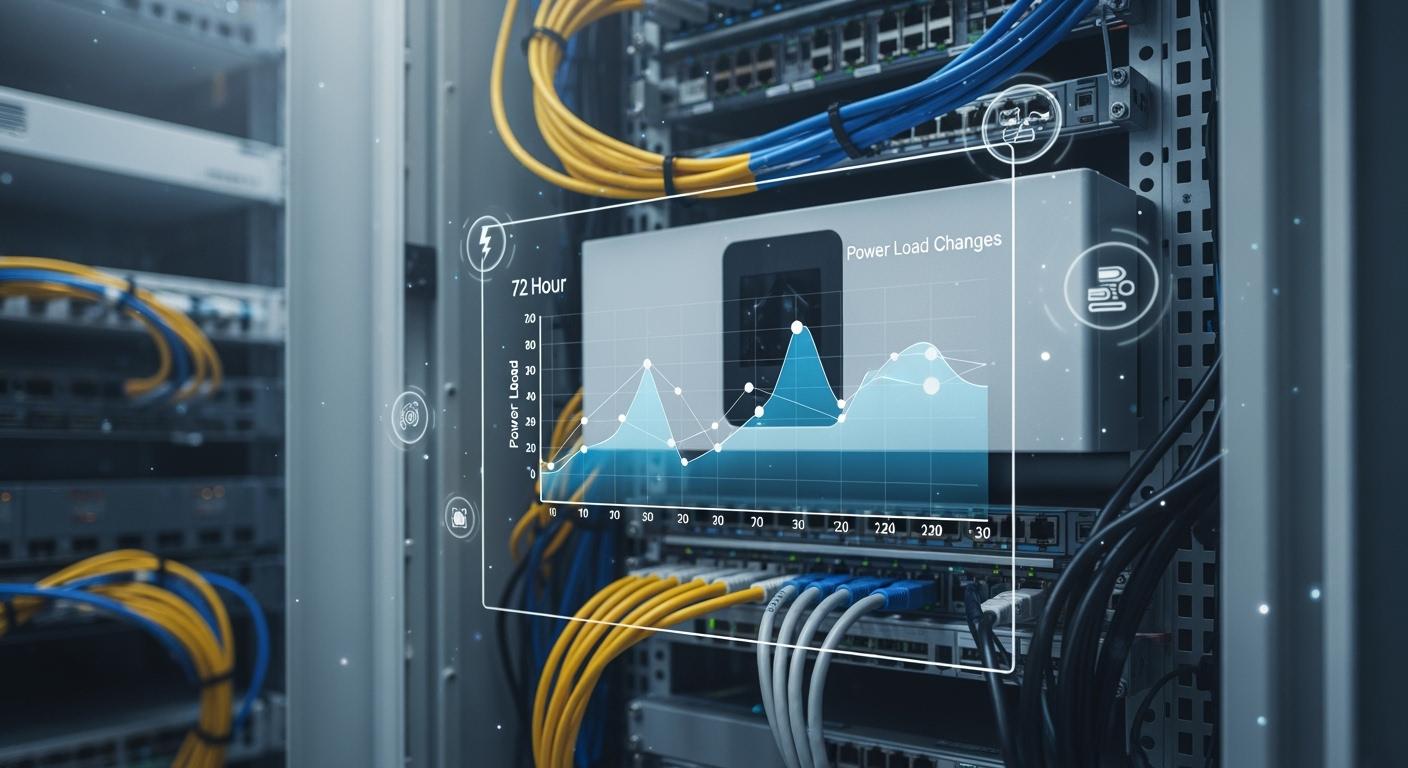
You need reliable power management in telecom cabinets to keep your network running smoothly. Unplanned outages and inefficient upgrades can disrupt service and increase costs. As a telecom operator, you face challenges like managing fluctuating loads and preventing downtime. ESTEL delivers innovative solutions such as the Smart Power Distribution Unit, which helps you monitor and control power more efficiently. Predicting power trends over 72 hours allows you to detect problem areas early, budget for future demand, and lower the risk of outages.
Technology | Impact on Downtime |
|---|---|
AI-driven Predictive Maintenance | |
Environmental Monitoring Sensors | Reduces downtime by up to 20% |
Detect problem areas early and fix them before they become material
Avoid unnecessary upgrades to your power infrastructure
Lower the risk of unplanned outages
Budget for future demand effectively
Key Takeaways
Real-time monitoring helps prevent outages by spotting issues early.
Predictive analytics allow for better planning and reduced downtime.
Remote management saves time and reduces the need for site visits.
Smart PDUs improve energy efficiency and lower operational costs.
Visualization tools make data easy to understand and act upon.
Power Trend Visualization in Telecom Cabinets
Real-Time Monitoring Benefits
You gain a clear advantage when you use real-time monitoring in telecom cabinets. You see power usage as it happens, which helps you spot problems before they grow. Real-time notifications alert you to sudden changes, so you can act quickly and prevent outages. You protect your assets and keep your network stable.
Centralized visibility gives you a faster mean time to repair. You respond to issues 31% quicker because you see all the data in one place. Remote management tools let you fix problems without being on-site. You save time and reduce travel costs. Maintenance teams improve their response by 40% when they use real-time monitoring. Backup power systems increase operational reliability by 25%.
Here is a summary of the impact:
Evidence Type | Statistic |
|---|---|
Improvement in maintenance response | 40% improvement |
Increase in operational reliability | 25% increase with backup power |
You also benefit from visual tools that make data easy to understand. Voltage trend charts show you if the power drops or spikes. Load heatmaps highlight areas with high temperature or uneven power use. Alarm timelines track critical events, so you know when and where problems happened.
Predictive Analytics for Load Forecasts
You can plan ahead with predictive analytics. These tools use historical data and smart algorithms to forecast future power loads. You see patterns that help you avoid overloads and downtime. Predictive analytics let you schedule maintenance before issues occur.
You use several visualization techniques to make sense of the data:
Visualization Technique | Description |
|---|---|
Voltage Trend | Displays real-time and historical voltage data, helping to identify sudden drops, spikes, or gradual changes in voltage. |
Load Heatmap | Visualizes power and environmental factors like temperature and humidity, allowing for quick identification of high temperatures or uneven power loads. |
Alarm/Event Timeline | Tracks critical events and alarms, providing a chronological record of power or environmental issues for better understanding and prevention of future problems. |
Predictive analytics help you budget for future demand.
You avoid unnecessary upgrades by knowing exactly when and where to invest.
You keep your network running smoothly by acting before problems arise.
You make smarter decisions and keep your telecom cabinet reliable with these visualization and forecasting tools.
Smart Power Distribution Unit by ESTEL
Key Features and Advantages
You want a power solution that adapts to your telecom cabinet’s needs. ESTEL brings decades of experience and a strong commitment to quality and innovation. The Smart Power Distribution Unit stands out with its advanced technology and robust design. You benefit from real-time monitoring, branch circuit management, and flexible scalability. These features help you optimize energy use and keep your equipment safe.
Core Technology | Description |
|---|---|
Smart Monitoring | Tracks electrical parameters in real time for better management. |
Branch Circuit Management | Oversees individual circuits to optimize performance. |
Flexible Scalability | Adapts to changing power distribution needs. |
Precision Energy Optimization | Improves efficiency by monitoring and managing power usage. |
Smart Circuit Breakers | Uses sensors for real-time monitoring and fault detection. |
Intelligent Monitoring Modules | Analyzes data with AI for predictive maintenance. |
You also get a modular design, adjustable mounting brackets, and a wide range of input/output compatibility. Compared to other brands, ESTEL offers integrated real-time monitoring and high reliability, even in harsh conditions.
Remote Management and Control
You can manage your Smart Power Distribution Unit from anywhere. The system supports secure protocols like HTTPS, SSH, and SNMP v3, which use strong encryption to protect your data.
Protocol | Encryption Type |
|---|---|
HTTPS | TLS 1.2, TLS 1.3 with AES 128/256-bit |
SSH | Public key authentication |
SNMP v3 | Multiple SHA and AES encryption options |
StartTLS | User credentials encryption |
TLS | Secure communication with remote servers |
CHAP | RADIUS authentication security |
You receive instant alerts for temperature spikes or power issues. You can update firmware and change configurations remotely, which saves you time and reduces the need for on-site visits.
Tip: Use the user-friendly interface to access real-time data and make quick decisions.
Safety and Efficiency Enhancements
You need equipment that meets strict safety and environmental standards. The Smart Power Distribution Unit holds certifications like ISO9001, UL, RoHS, CE, and VDE. These certifications ensure consistent manufacturing, electrical safety, and reduced environmental impact.
Certification/Compliance | Description |
|---|---|
ISO9001 | Ensures consistent manufacturing processes. |
UL Certification | Guarantees compliance with safety standards. |
RoHS | Reduces environmental impact. |
CE | Verifies safety and performance. |
VDE | Emphasizes electrical safety. |
You gain peace of mind knowing your telecom cabinet operates safely and efficiently. The unit’s surge protection, dehumidifying function, and robust build help you maintain reliable performance in any environment.
Value of Visualized Power Trends
Operational Efficiency Gains
You improve operational efficiency when you visualize power trends in telecom cabinets. You see real-time data and historical patterns. This helps you make quick decisions and avoid delays. You identify areas with high power usage and adjust your strategy. You reduce unnecessary site visits because remote monitoring gives you instant access to cabinet conditions. You optimize resource allocation and focus your maintenance efforts where they matter most. You keep your network stable and minimize downtime.
Benefit | Description |
|---|---|
Faster Decision-Making | Access to clear data speeds up your actions. |
Reduced Downtime | Early detection prevents service interruptions. |
Targeted Maintenance | You send teams only where needed. |
Energy Savings and Sustainability
You save energy and support sustainability goals by using visualized power trend solutions. You monitor load changes and adjust equipment operation during off-peak hours. You activate deep sleep modes and shut down radio equipment when not needed. These actions lower your energy bills and reduce your carbon footprint.
Power savings can reach up to 27.72% during off-peak hours in multi-layer deployments.
Extreme deep sleep mode reduces energy consumption by a factor of eight compared to standard deep sleep modes.
Shutting down radio equipment during idle times leads to substantial cost savings for telecom operators.
Tip: Use automated scheduling to maximize savings and minimize manual intervention.
Proactive Maintenance Strategies
You strengthen your maintenance strategy with visualized power trends. Digital twins create virtual models of your telecom power assets. These models update in real time with data from IoT sensors. You visualize asset conditions and spot trends before problems occur. You predict the Remaining Useful Life (RUL) of equipment and schedule maintenance based on actual conditions. This approach reduces unexpected failures and helps you allocate resources efficiently. You keep your infrastructure reliable and extend the lifespan of your equipment.
72-Hour Load Prediction Process

Data Collection and Sensors
You start the prediction process by gathering accurate data from your telecom cabinet. Smart sensors measure voltage, current, temperature, and humidity in real time. These sensors connect directly to your Smart Power Distribution Unit, which acts as the central hub for data acquisition. You collect historical load data and environmental readings every minute. This continuous stream of information helps you build a reliable foundation for forecasting.
You use sensors that detect even small fluctuations in power usage. These sensors send alerts when they notice abnormal patterns. You also monitor environmental factors, such as humidity, because they affect equipment performance. You store all sensor data securely, making sure only authorized personnel can access it.
Tip: Regular calibration of sensors ensures you get the most accurate readings for your prediction models.
Analysis and Modeling Techniques
You analyze the collected data using advanced modeling techniques. You rely on time series analysis to understand how power loads change over hours and days. Deep learning methods, especially Long Short-Term Memory (LSTM) networks, give you highly accurate short-term forecasts. LSTM networks use input, memory, and output gates to extract features from time series data. This approach helps you avoid common problems like gradient explosion and vanishing, which often occur in traditional Recurrent Neural Networks.
You can enhance your predictions by combining LSTM with other methods. For example, integrating empirical modal decomposition and self-attention mechanisms improves accuracy. Some systems use a Global Context Transformer module with LSTM to reduce prediction errors. You may also use one-dimensional Convolutional Neural Networks (CNNs) and Gated Recurrent Units (GRUs). CNNs excel at pattern extraction, while GRUs offer efficient time series forecasting. Studies show that a one-dimensional CNN model achieved a 2.21% mean absolute percentage error for 24-hour-ahead predictions.
You face several challenges during implementation. The table below summarizes the most common issues:
Challenge | Description |
|---|---|
Integration with Legacy Systems | Difficulty merging new predictive systems with outdated infrastructure. |
Data Management | Need for strong encryption and access controls to protect confidential data. |
Training | Importance of staff training to interpret predictive alerts correctly. |
You address these challenges by choosing compatible hardware, using secure data protocols, and providing ongoing training for your team.
Graphical Display Methods
You visualize the 72-hour load predictions using clear and interactive graphical tools. Line charts show you how power loads change hour by hour. Heatmaps highlight periods of high or low usage, making it easy to spot trends. You use dashboards that combine multiple visualizations, such as voltage trends and alarm timelines, for a complete overview.
Decision-makers benefit from these graphical displays. You see patterns at a glance and make informed choices quickly. You can compare predicted loads with historical data to validate your models. You also set up alerts that trigger when forecasts exceed safe thresholds.
Note: Well-designed visualizations help you communicate complex data to your team and stakeholders, improving collaboration and response times.
You use these methods to ensure your telecom cabinet operates efficiently and reliably. The Smart Power Distribution Unit supports these visualization tools, giving you the insights needed for proactive management.
ESTEL Case Studies and Applications
Real-World Telecom Deployments
You see the impact of ESTEL Smart Power Distribution Units in telecom cabinets across the globe. Operators in Southeast Asia, Europe, and other regions have reported major improvements in efficiency and reliability. The following table highlights key results from recent deployments:
Case Study | Key Results | Impact on Energy Consumption |
|---|---|---|
Southeast Asia Mobile Operator | Reduced site visits by 38%, mean time to repair dropped by 8 hrs | Significant energy savings and improved efficiency |
European Tower Company | Improved system uptime by 22%, cut emergency trips by half | Enhanced reliability and reduced energy waste |
Telecom Power Systems | Energy use reduced by 25-30% with efficient power supplies | Lower bills and less cooling needed |
You benefit from reduced downtime, lower maintenance costs, and improved energy efficiency. Equipment safety also increases, with no damage from surges or overloads.
Performance Optimization Examples
You optimize your telecom operations by choosing smart PDUs over basic models. Smart PDUs give you advanced power control, live monitoring, and remote management. You track power use in real time and automate responses to anomalies. The table below compares basic and smart PDUs:
Feature | Basic PDUs | Smart PDUs |
|---|---|---|
Power Sharing | Simple power sharing | Advanced power control with live monitoring |
Monitoring | No monitoring | Tracks power use in real time |
Control | Manual only | Remote control and automation |
You use real-time monitoring, remote management, and environmental tracking to keep your network stable. Alert systems notify you of any issues, so you can act quickly. You see enhanced reliability, improved scalability, and proactive maintenance that prevents problems before they escalate.
Lessons and Best Practices
You learn valuable lessons from telecom deployments in Africa, India, and Pakistan. Operators in Kenya reduced energy expenses by 40% using solar-powered cell towers. Rural areas in India improved connectivity and lowered carbon emissions with photovoltaic systems. Off-grid solar energy in Pakistan brought clean water and economic benefits to communities.
You notice that the return on investment for installing ESTEL Smart Power Distribution Units is typically within one year. You gain immediate and long-term savings, making smart PDUs a strategic choice for your telecom infrastructure.
Tip: Regularly review your power data and automate alerts to maximize efficiency and safety in your telecom cabinets.
You gain clear advantages when you use the Smart Power Distribution Unit in your telecom cabinets. You see real-time power data and make fast decisions. You reduce energy costs and improve reliability. The table below shows the main benefits reported by telecom operators:
Benefit Description | Impact |
|---|---|
Real-time monitoring of power usage | Enables quick response to changes and prevents downtime |
Data-driven power management | Leads to significant energy savings, with reductions of up to 41% in energy consumption |
You can boost your network’s reliability and efficiency. For more details or to request a consultation, visit the ESTEL website.
FAQ
What is a Smart Power Distribution Unit (PDU)?
A Smart PDU lets you monitor and control electrical power in telecom cabinets. You get real-time data, remote management, and safety features. This helps you keep your network reliable and efficient.
How does the 72-hour load prediction help you?
You use 72-hour load predictions to spot future power spikes or drops. This lets you plan maintenance, avoid outages, and save energy. You make smarter decisions for your telecom cabinet.
Tip: Review prediction graphs daily to catch trends early.
Can you manage the Smart PDU remotely?
Yes, you can control and monitor the Smart PDU from anywhere. Secure protocols protect your data. You update settings, check power status, and receive alerts without visiting the site.
Remote Feature | Benefit |
|---|---|
Real-time alerts | Faster response |
Firmware updates | Improved performance |
What safety features does the Smart PDU offer?
You get surge protection, dehumidifying functions, and compliance with international safety standards. These features protect your equipment and keep your telecom cabinet running safely.
Who should use ESTEL Smart PDUs?
Telecom operators, IT managers, and infrastructure providers benefit most. You improve reliability, save energy, and reduce maintenance costs by using ESTEL Smart PDUs in your network.
See Also
Telecom Cabinets: Photovoltaic Energy Storage Solutions
Understanding ESTEL PDUs in Data Center Cabinets
Ensuring Consistent Power Supply in Telecom Cabinets
Calculating Power Systems and Batteries for Telecom Cabinets
Amperage Requirements for Communication Cabinet Power Supplies
CALL US DIRECTLY
86-13752765943
3A-8, SHUIWAN 1979 SQUARE (PHASE II), NO.111, TAIZI ROAD,SHUIWAN COMMUNITY, ZHAOSHANG STREET, NANSHAN DISTRICT, SHENZHEN, GUANGDONG, CHINA
