Encrypted Transmission of Smart PDU Power Data: Dual Security with AES-256+SSL/TLS

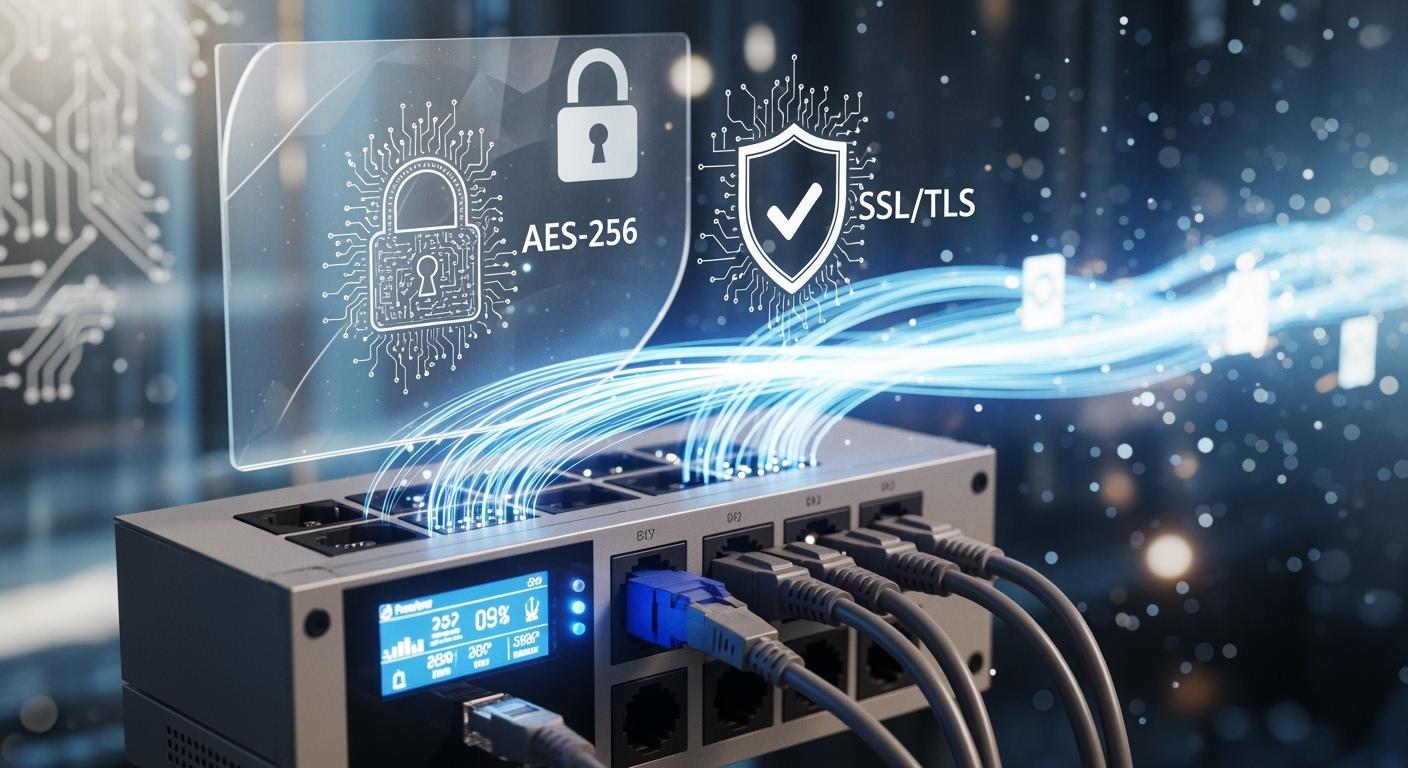
You face increasing risks when transmitting power data in modern telecom and data center environments. Attackers target sensitive information every day. By using AES-256 with SSL/TLS, you gain dual-layered security that protects your Smart Power Distribution Unit data against threats. This approach supports compliance, reduces risk, and gives you operational peace of mind. ESTEL stands as a trusted provider, delivering secure and reliable solutions for your critical infrastructure needs.
Key Takeaways
Use AES-256 encryption to protect stored power data. This strong encryption standard keeps your information safe from unauthorized access.
Implement SSL/TLS protocols for secure data transmission. These protocols ensure your data remains confidential and authentic while moving across networks.
Combine AES-256 and SSL/TLS for dual-layered security. This approach provides a robust defense against cyber threats, enhancing your overall data protection.
Follow industry standards for compliance. Using dual-layered security helps you meet regulations like ISO/IEC 27001 and GDPR, building trust with customers.
Regularly update your security features and monitor your systems. This practice helps you stay ahead of potential threats and maintain operational reliability.
Dual Security for Smart Power Distribution Unit Data
AES-256 Encryption Overview
You need strong encryption to protect sensitive power data in your network. AES-256 stands out as one of the most trusted encryption standards available today. It uses a 256-bit key, which makes it extremely difficult for attackers to break. You benefit from its high processing speed and energy efficiency, which means your Smart Power Distribution Unit can handle large volumes of data and real-time operations without slowing down. Many industries, including cloud storage and encrypted communications, rely on AES-256 because it offers both strong security and reliable performance. In telecom and data center environments, you often see AES-256 used to secure data at rest, ensuring that stored information remains protected even if someone gains physical access to your equipment.
SSL/TLS for Data Transmission
When you send power data across networks, you face risks like interception and tampering. SSL/TLS protocols help you address these threats by securing data in motion. These protocols provide several important features:
Authentication: Only trusted devices can connect and communicate, which blocks unauthorized access.
Encryption: Your data stays confidential during transmission, so attackers cannot read or alter it.
Public Key Infrastructure (PKI): This system verifies identities and builds a chain of trust, making sure your Smart Power Distribution Unit communicates only with approved endpoints.
SSL/TLS has become the industry standard for securing data as it moves between devices, servers, and cloud platforms. You can trust that your power data remains private and authentic from the moment it leaves your device until it reaches its destination.
Why Use Both Methods?
You achieve the highest level of protection when you combine AES-256 and SSL/TLS. AES-256 secures your data at rest, while SSL/TLS protects it during transmission. This dual-layered approach matches current industry practices in telecom and data centers, where regulatory requirements and the need for robust security drive widespread adoption. You also benefit from hybrid deployment models and advanced features like machine learning for anomaly detection, which further strengthen your defenses.
By using both encryption methods, you create a defense-in-depth strategy. If one layer faces a threat, the other continues to protect your Smart Power Distribution Unit data. ESTEL implements this dual security model to help you meet compliance standards and ensure the resilience of your critical infrastructure. You gain peace of mind knowing your power data is safe, whether it is stored, processed, or transmitted across your network.
Understanding ESTEL Smart Power Distribution Unit
Key Features and Benefits
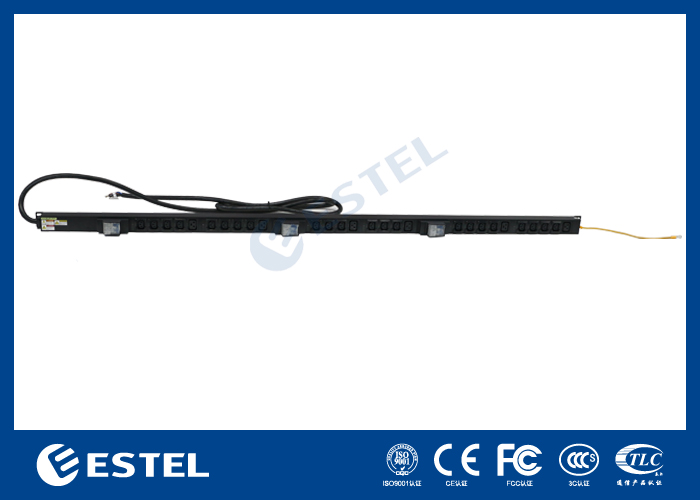
You want a power management solution that delivers reliability and efficiency. ESTEL’s Smart Power Distribution Unit stands out with advanced safety features and intelligent design. You get overload protection, surge suppression, and real-time environmental monitoring through built-in sensors. These features help you maintain safe operations and prevent equipment damage.
Here are some of the most valued features:
Feature | Description |
|---|---|
Reduces energy waste and can help you achieve up to 30% energy savings. | |
Advanced Monitoring | Offers real-time power monitoring and outlet-level metering for detailed insights. |
Scalability | Modular design lets you expand easily without replacing the entire unit. |
Robust Safety Standards | Meets UL, CE, IEC 60950-1, and IEC 62368-1 safety standards. |
Customizable Solutions | Adapts to different setups, from small installations to large enterprises. |
Intelligent Design | Focuses on energy efficiency and sustainability for telecom operations. |
You benefit from a solution that combines safety, flexibility, and efficiency.
Security Needs in Telecom Environments
You handle sensitive power data every day. In telecom environments, you must protect this data to keep your network running smoothly. Industry standards such as IEC 62351-1 and IEC 62351-7 highlight the need for strong security in power system operations. These standards focus on securing communication protocols and managing network operations to prevent unauthorized access.
You need to follow these standards to ensure end-to-end security. This helps you avoid data breaches and maintain trust with your customers.
Common Threats to Power Data
You face many threats when managing power data in telecom and data center settings. Attackers use methods like DDoS attacks, phishing, ransomware, and network intrusions. For example, DDoS attacks can overwhelm your network, causing outages. Phishing tricks employees into revealing sensitive information. Ransomware can lock your systems and demand payment, while advanced persistent threats may target your organization for months.
Operational disruptions are costly. Over half of serious outages cost more than $100,000, and one in five can exceed $1 million. Even small outages can break service agreements and harm your reputation. You need a Smart Power Distribution Unit that helps you defend against these risks and keeps your operations reliable.
Implementing AES-256 and SSL/TLS in ESTEL Smart PDUs
Deployment Steps
You can deploy dual-layered encryption in your network by following a clear process. First, configure AES-256 encryption on your Smart Power Distribution Unit to secure all stored data. Next, enable SSL/TLS protocols for all data transmissions. This step ensures that your power data remains confidential as it moves across the network. You should also set up digital certificates to verify device identities and prevent unauthorized access. Regularly update your firmware to keep your security features current. Remote monitoring tools help you track system status and receive alerts about any unusual activity. These steps create a strong foundation for secure power management.
Best Security Practices
You need to maintain robust security over time. The following table outlines essential practices for protecting your Smart Power Distribution Unit:
Security Feature | Description |
|---|---|
UL2900-1 Certification | Ensures rigorous cybersecurity for network-connected equipment. |
Secure Communication Protocols | Protects data during transmission. |
Strong Access Control | Prevents unauthorized access with robust management. |
Regular Security Updates | Maintains security against evolving cyber threats. |
Data Encryption | Uses industry-leading methods for all data. |
IP-Based Access Control Lists (IP ACL) | Controls network access based on IP addresses. |
Role-Based Access Control (RBAC) | Manages user permissions based on roles. |
Digital Certificates | Verifies device identities securely. |
Secure Boot Features | Ensures firmware integrity during the boot process. |
You should also use strong passwords and update them often. Regular audits and security reviews help you find and fix vulnerabilities quickly.
ESTEL’s Approach to Secure PDUs
You benefit from ESTEL’s commitment to quality and innovation. ESTEL designs each Smart Power Distribution Unit with isolated circuits for independent operation. This design reduces risks from shared power sources. Advanced sensors provide real-time data on temperature and humidity, helping you prevent equipment failures. AI algorithms support predictive maintenance, sending alerts before problems occur. ESTEL follows international standards like ISO/IEC 27001 and GDPR to protect your data. You receive enhanced security through access controls, regular audits, and real-time intrusion detection. These features ensure your infrastructure stays reliable and compliant with industry requirements.
User Benefits of Dual-Layered Security
Defense in Depth
You want to protect your power data from every angle. Dual-layered security gives you a strong defense in depth. AES-256 encryption locks your data at rest. SSL/TLS shields your data as it moves across networks. Attackers face two barriers instead of one. If one layer fails, the other stands strong. You reduce the risk of data breaches and unauthorized access. This approach matches best practices in cybersecurity.
Tip: Always enable both encryption layers to maximize your protection.
Compliance and Trust
You must meet strict industry regulations. Dual-layered security helps you achieve compliance with standards like ISO/IEC 27001 and GDPR. Auditors look for strong encryption and secure data transmission. When you use AES-256 and SSL/TLS, you show that you take security seriously. Your customers and partners trust you more when they know you protect sensitive data. You avoid fines and penalties by following these requirements.
Here is how dual-layered security supports compliance and trust:
Benefit | How It Helps You |
|---|---|
Regulatory Compliance | Meets global standards for data security |
Customer Confidence | Builds trust with clients and partners |
Audit Readiness | Simplifies the process for passing security audits |
Operational Reliability
You need your network to run smoothly. Dual-layered security keeps your Smart Power Distribution Unit reliable. Encrypted data prevents tampering and disruption. You avoid downtime caused by cyberattacks. Real-time monitoring and alerts help you respond quickly to threats. You save money by reducing outages and maintenance costs.
You keep your operations stable.
You protect your reputation.
You ensure business continuity.
Note: Reliable security means fewer surprises and more control over your infrastructure.
You gain peace of mind knowing your power data stays safe, your systems stay compliant, and your operations stay reliable.
You gain strong protection for your power data with dual-layered security. ESTEL leads the industry by delivering reliable Smart Power Distribution Units. The table below shows how clients benefit from energy savings and reduced downtime:
Client / Case Study | Performance Metrics and Cost Savings Reported |
|---|---|
Leading Telecom Provider | Energy efficiency up to 97.8%; early issue detection |
GreenConnect | 30% less energy use; 25% less downtime; 40% less CO₂ |
To enhance your security, you should:
Use strong encryption standards like AES-256.
Manage encryption keys securely.
Enable end-to-end encryption for all data.
You can trust ESTEL to keep your infrastructure secure and efficient.
FAQ
What is dual-layered security in Smart PDUs?
You use dual-layered security when you combine AES-256 encryption with SSL/TLS protocols. This approach protects your power data both when stored and during transmission.
How do I enable AES-256 and SSL/TLS on my ESTEL Smart PDU?
You access your PDU’s management interface. You select the security settings. You activate AES-256 for stored data and SSL/TLS for network communication.
Why should I secure power data in telecom environments?
You protect sensitive information from cyber threats. You also meet industry regulations. Secure power data helps you avoid costly outages and builds trust with your clients.
Does dual security affect PDU performance?
You experience minimal impact. ESTEL Smart PDUs use efficient hardware and software. You still get fast data processing and reliable operation.
Who can help if I have questions about ESTEL Smart PDUs?
You can contact ESTEL’s support team by email at info@estel.com.cn or call +86-13752765943. You get expert help for setup, troubleshooting, and security advice.
See Also
Essential Advice for Protecting Communication Cabinets in Risky Locations
Effective Methods to Enhance Anti-Theft Features of Cabinets
Understanding ESTEL PDUs and Their Importance in Data Centers
Ensuring Consistent Power Supply for Telecom Equipment Cabinets
Solar Energy Storage Solutions for Telecom Equipment Cabinets
CALL US DIRECTLY
86-13752765943
3A-8, SHUIWAN 1979 SQUARE (PHASE II), NO.111, TAIZI ROAD,SHUIWAN COMMUNITY, ZHAOSHANG STREET, NANSHAN DISTRICT, SHENZHEN, GUANGDONG, CHINA
