AI Empowerment of Smart Power Distribution Units in Telecom Cabinets: Dynamic Adjustment Strategies Based on Load Prediction

You can now use AI to adjust your Smart Power Distribution Unit in real time inside telecom cabinets. AI predicts power demand and helps you avoid unexpected failures. Predictive load analysis gives you a clear view of your network’s needs and lets you act before problems happen. See how this approach improves efficiency:
Evidence Description | Impact on Operational Efficiency |
|---|---|
Predictive maintenance schedules reduce the need for emergency repairs. | This leads to significant cost savings and extends the life of network equipment. |
Accurate demand forecasting allows for efficient resource allocation. | Investments can be directed towards areas with the highest potential return, optimizing costs. |
Proactive management of network resources enhances customer service. | This results in increased customer satisfaction and loyalty, improving overall operational efficiency. |
AI-driven anomaly detection and real-time network monitoring. | These strategies improve network performance and reliability, ensuring a better experience for customers. |
ESTEL leads this field by delivering solutions that meet international standards and focus on innovation.
Key Takeaways
AI enhances power management in telecom cabinets by predicting demand, allowing for proactive adjustments and preventing overloads.
Smart Power Distribution Units provide real-time monitoring, which helps detect issues early and reduces downtime by up to 80%.
Automated power allocation optimizes energy use, leading to significant cost savings and improved operational efficiency.
Implementing predictive maintenance can lower maintenance costs by up to 40%, ensuring your equipment runs smoothly and reliably.
Choosing ESTEL’s solutions means benefiting from advanced features, robust design, and dedicated support, making your telecom operations more efficient.
Smart Power Distribution Unit in Telecom Cabinets
Key Features and Functions
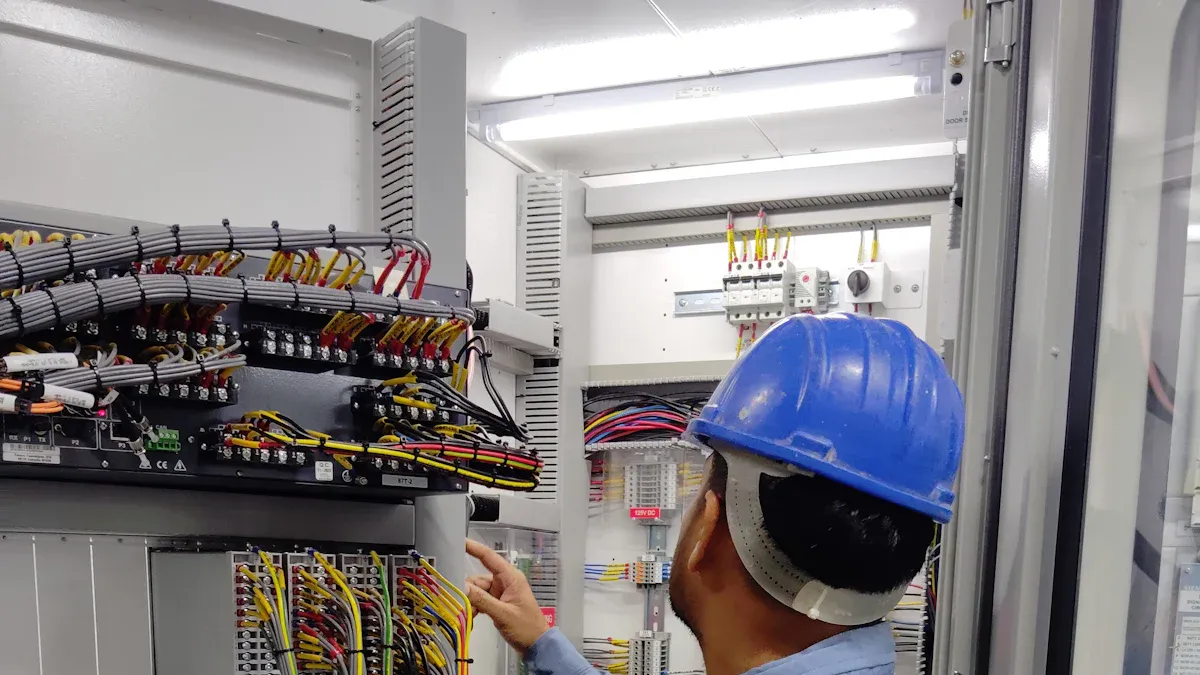
You need reliable power management in your telecom cabinets. A Smart Power Distribution Unit gives you advanced control and monitoring. You can see exactly how much energy your equipment uses and adjust settings to match your needs. The table below shows the main functions of different types of PDUs you might find in telecom environments:
Type of Smart PDU | Core Functions |
|---|---|
Smart PDU | Precise monitoring and control of energy consumption, helps in right-sizing power infrastructure. |
Monitored PDU | Provides a comprehensive view of power usage, remote monitoring, and alarming capabilities for power threshold breaches. |
Switched PDU | Allows remote control of power at each outlet, ideal for preventing overloads and managing power usage effectively. |
With these features, you can prevent overloads, reduce downtime, and keep your network running smoothly.
Role in Telecom Infrastructure
You play a key role in keeping telecom networks stable. A Smart Power Distribution Unit helps you manage power for all your critical devices. You can monitor power usage in real time and respond quickly to any changes. This technology supports remote sites, urban networks, and high-density data centers. You get the flexibility to scale your infrastructure as your network grows.
ESTEL’s Product Advantages
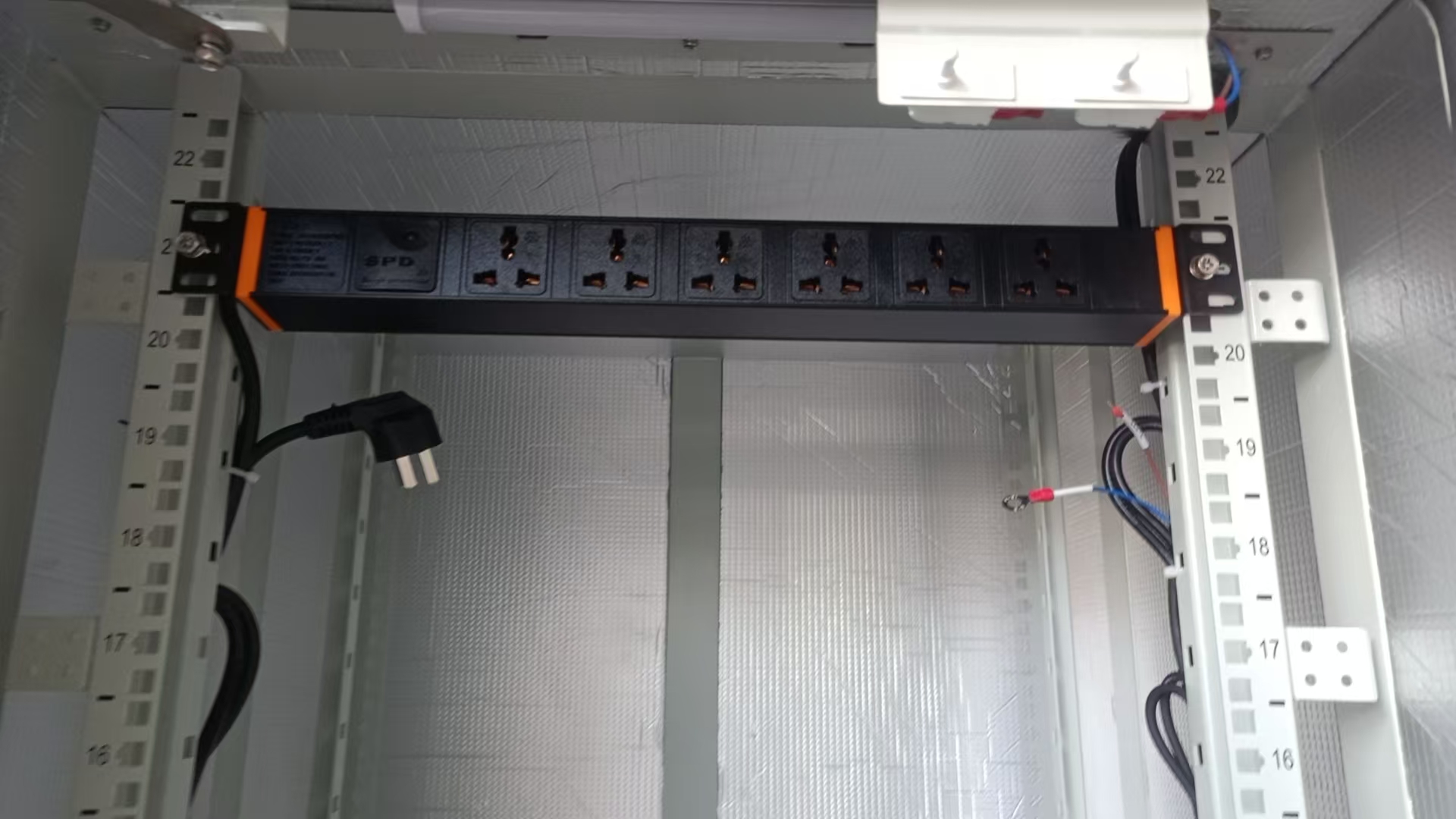
When you choose ESTEL, you get more than just a standard power unit. You benefit from a robust build that stands up to harsh environments. Overload protection keeps your equipment safe. The compact design saves space in your racks. You can power multiple devices at once and install the unit easily, no matter your experience level. ESTEL offers customizable solutions to fit your specific needs and provides dedicated customer support for ongoing maintenance.
You also gain advanced environmental monitoring. Sensors track temperature, humidity, and power usage in real time. ESTEL’s Smart Power Distribution Unit complies with ISO/IEC 30134 standards, which helps you reduce costs and improve reliability. Real-time monitoring lets you spot inefficiencies and optimize energy use, making your telecom operations more efficient.
AI Integration for Power Optimization
Data Analysis and Load Prediction
You can use AI to analyze both historical and real-time data to predict power demand in your telecom cabinets. AI systems process large datasets from different regions and climates. These datasets include information about electricity usage patterns, seasonal changes, and cyclical trends. By studying this data, you can anticipate when your network will need more or less power. This helps you plan ahead and avoid sudden overloads.
Here is a table showing the types of datasets AI uses for load prediction:
Dataset Name | Source | Key Features |
|---|---|---|
National Grid Electricity Load | State Grid of China | Covers multiple years, includes urban and rural data, analyzes seasonal and cyclical changes. |
Canadian Electricity Load | Canadian government and utilities | Covers multiple years, includes diverse climates across provinces, analyzes seasonal changes. |
U.S. Electricity Load | U.S. Energy Information Administration | Covers many years, includes diverse climates across states, analyzes seasonal and cyclical changes. |
International Electricity Load | International Energy Agency and companies | Combines data from various countries, providing a global perspective on electricity load conditions. |
You benefit from this analysis because AI can spot trends that humans might miss. For example, you can see how weather or time of year affects your power needs. This lets you make smarter decisions about resource allocation.
Real-Time Monitoring and Control
You gain a major advantage when you use real-time monitoring in your Smart Power Distribution Unit. Sensors track power usage, temperature, and humidity every second. You receive instant alerts if something goes wrong. This means you can act quickly to prevent equipment failures or outages.
The following table shows how real-time monitoring improves performance:
Evidence Description | Impact |
|---|---|
40% | |
Increase in operational reliability with backup power configurations | 25% |
Proactive monitoring can prevent outages | 80% |
Predictive maintenance reduces mean time to repair | N/A |
You also get these benefits:
Early detection of issues helps prevent downtime.
Real-time monitoring provides detailed power usage metrics to identify trends.
Immediate alerts allow for quick intervention to prevent equipment failures.
You can monitor your cabinets from anywhere. The dashboard gives you access to historical data and lets you set threshold alerts. This interface makes it easy to learn and use, so you spend less time on training and more time on operations.
AI-Driven Efficiency
You can achieve higher efficiency by letting AI manage your power distribution. AI-driven optimization means your Smart Power Distribution Unit can adjust power allocation automatically. This reduces waste and ensures each device gets the energy it needs. You save money and extend the life of your equipment.
ESTEL has adopted intelligent protocols and remote management solutions to support you:
You can monitor cabinets and set threshold alerts.
The dashboard provides easy access to historical data.
Real-time monitoring and equipment protection keep your network safe.
Data collection from sensors improves operational performance by 25% and boosts energy efficiency by up to 20%.
You can scale your deployment as your network grows, thanks to modular design.
AI-driven predictive power management optimizes energy allocation.
You can manage cabinet PDUs from virtually anywhere, responding to issues before they escalate.
You get a system that not only protects your equipment but also adapts to changing conditions. This makes your telecom infrastructure more reliable and future-ready.
Dynamic Adjustment Strategies
Predictive Analytics
You can use predictive analytics to make your telecom power systems smarter and more responsive. These analytics rely on advanced AI-driven algorithms and convex optimization methods. You gain the ability to forecast power demand and adjust your system before issues arise. This approach works well in high-density environments where power needs can change quickly.
AI-driven algorithms help you spot patterns in your power usage data.
Convex optimization methods let you find the best way to distribute power across your network.
These models adapt to new data, so your system stays efficient and reliable.
You benefit from predictive analytics because you can plan for peak loads, avoid overloads, and reduce the risk of downtime. Your network becomes more stable, and you can serve your customers better.
Automated Power Allocation
Automated power allocation lets you distribute energy where it is needed most. You do not have to guess or rely on manual adjustments. Instead, your system uses real-time data to make smart decisions. This strategy leads to lower energy consumption and better performance.
Recent case studies show how automated power allocation impacts energy use:
Case Study | Key Results | Impact on Energy Consumption |
|---|---|---|
Southeast Asia Mobile Operator | Reduced site visits by 38%, mean time to repair dropped from 12 hours to 4 hours, annual O&M costs fell by $500,000 | Significant energy savings through reduced maintenance and improved operational efficiency |
European Tower Company | Improved system uptime by 22%, cut emergency maintenance trips by half | Enhanced reliability and reduced energy waste during outages |
Telecom Power Systems | Energy consumption reduced by 25-30% with 80Plus certified power supplies | Lower electricity bills and reduced heat output, leading to less cooling needs |
You can also see these benefits when you upgrade to 80Plus certified power supplies:
You reduce energy consumption by up to 30%.
Your electricity bills go down.
Less heat output means you spend less on cooling and maintenance.
Many operators report a faster return on investment after making these upgrades.
Automated power allocation helps you run a more efficient and cost-effective network.
Adaptive Cooling and Environmental Control
You need to keep your telecom equipment at the right temperature to ensure reliability. Adaptive cooling and environmental control systems use real-time data to adjust cooling based on current needs. This approach saves energy and extends the life of your equipment.
Studies show that modeling and simulation can optimize air conditioning clusters for intelligent load management. Energy use changes with outside temperature, economic factors, and how users behave. By adjusting set temperatures, you can manage loads more precisely and save energy.
Evidence Type | Description |
|---|---|
Modeling and Simulation Analysis | Models help optimize air conditioning cluster response for better load management in distribution networks. |
Energy Consumption Insights | Simulations reveal that energy use varies with temperature, economic traits, and user behavior. |
Set Temperature Adjustments | Adjusting set temperatures allows for precise load management and supports energy savings in distribution networks. |
You can use these strategies with a Smart Power Distribution Unit to create a stable and efficient environment for your telecom cabinets. Your system will respond to changes in real time, keeping your equipment safe and your energy costs low.
Implementation with ESTEL Solutions
Integration Steps
You can integrate AI with your Smart Power Distribution Unit by following a clear process. Start by installing IoT-enabled PDUs in your telecom cabinets. These units let you monitor power usage remotely and provide real-time insights into energy consumption. Next, connect your PDUs to an AI system that predicts power needs and optimizes distribution using predictive analytics. Intelligent PDUs automate power settings, adjusting them dynamically to match your system’s demands. This integration gives you better control and helps you avoid overloads.
Install IoT-enabled PDUs for remote monitoring.
Connect PDUs to AI systems for predictive analytics.
Enable automated power settings for dynamic adjustment.
Required Technologies
You need several technologies to ensure successful AI integration. Higher voltage distribution systems improve efficiency and reduce costs. Smart load balancing distributes power among AI clusters. Harmonic mitigation strategies maintain power quality. Transient voltage protection shields sensitive hardware from spikes. Isolated power domains reduce risks from faults. High-efficiency power converters minimize energy loss. Uninterruptible power supplies (UPS) keep your systems running during outages. Energy storage systems balance supply and demand. Smart grid technologies support predictive maintenance and real-time monitoring. Advanced cooling solutions manage heat from AI hardware. Intelligent power distribution units and dynamic load balancing systems optimize energy use and prevent overloads.
Tip: Use high-efficiency power converters and UPS systems to protect your equipment and keep operations stable.
Deployment Best Practices
You should follow best practices to get the most from your deployment. Routine preventative maintenance prevents costly outages and extends the lifespan of your equipment. Annual testing of switches and breakers ensures smooth operation. Daily monitoring keeps your telecom infrastructure ready for any issue.
Maintenance Step | Importance |
|---|---|
Routine preventative maintenance | Prevents costly outages and extends the lifespan of critical power supplies, including PDUs. |
Annual testing of switches and breakers | Ensures smooth operation and reliability of telecom systems. |
Daily monitoring and checks | Maintains performance and readiness of telecom infrastructure against potential issues. |
Keep your documentation updated to reflect any changes in your cabinet’s configuration. Use intelligent PDUs with remote monitoring to simplify performance checks and improve energy efficiency. ESTEL’s product ecosystem supports you with real-time monitoring and predictive analytics, helping you identify issues before they become problems.
Benefits and Outcomes
Efficiency and Cost Savings
You can achieve significant cost savings when you use AI-driven Smart Power Distribution Units in your telecom cabinets. These units help you manage energy more efficiently and reduce unnecessary expenses. You can see the main ways these systems save money in the table below:
Aspect | Impact on Cost Savings |
|---|---|
Energy Efficiency | Significant operational cost reductions |
Downtime Reduction | Lower operational costs |
Predictive Maintenance | Maintenance costs lowered by up to 40% |
Remote Management | Saves time and resources |
AI helps you predict when equipment needs maintenance, so you avoid expensive emergency repairs. You also spend less on energy because the system only uses what you need. Remote management lets you control your cabinets from anywhere, which saves both time and travel costs.
Reliability and Uptime
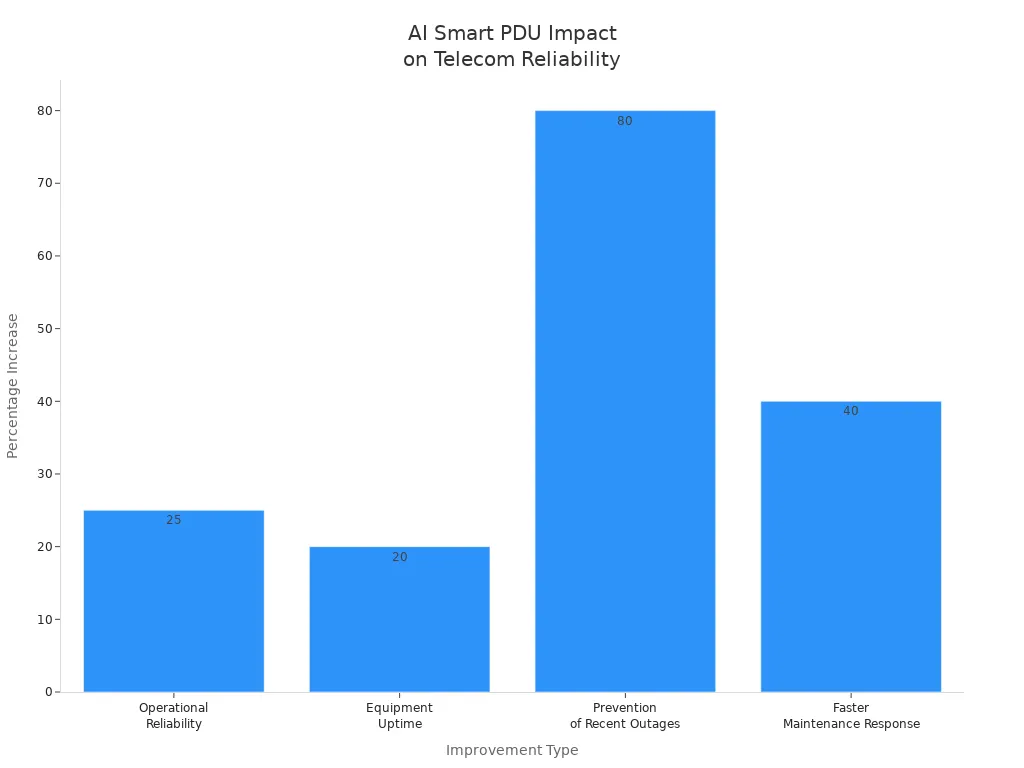
You can rely on AI-powered Smart Power Distribution Units to keep your network running smoothly. These systems monitor your equipment in real time and alert you to problems before they cause outages. You get faster response times and fewer disruptions. The chart below shows how much you can improve your network’s reliability and uptime:
Improvement Type | Percentage Increase |
|---|---|
Operational Reliability | 25% |
Equipment Uptime | 20% |
Prevention of Recent Outages | 80% |
Faster Maintenance Response Times | 40% |
AI-driven monitoring lets you detect issues early. You can prevent up to 80% of recent outages and boost your equipment uptime by 20%. Intelligent load management keeps your devices safe and stable.
Environmental Impact
You help the environment when you use AI-driven Smart Power Distribution Units. These systems lower your carbon footprint and reduce energy waste. Here are some ways you make a positive impact:
You cut carbon emissions and energy waste by over 12%.
Automated power management optimizes energy use and supports sustainability goals.
You can schedule power usage to match demand, which increases efficiency.
Lower operational costs and better energy use help you meet environmental standards.
By choosing smart power solutions, you support a greener future for telecom operations.
Challenges and Solutions
Data Quality and Security
You face several challenges when you bring AI into telecom power distribution. High-quality and comprehensive data is essential for effective AI systems. Poor data can lead to unreliable results and extra costs. You must also address security risks. Unauthorized access and data breaches can expose sensitive information. These incidents may result in legal penalties and damage your company’s reputation. If data integrity or confidentiality is compromised, you risk losing customer trust and brand loyalty. You need to ensure your data is accurate, secure, and compliant with regulations.
High-quality data is necessary for reliable AI outputs.
Data integration can be complex and time-consuming.
Security vulnerabilities in AI systems can lead to unauthorized access.
Data breaches may expose sensitive information and cause legal issues.
Loss of data integrity can harm your reputation and customer trust.
Integration Barriers
You may encounter barriers when integrating AI-powered Smart Power Distribution Units. These barriers include technical, operational, and regulatory challenges. AI can help you predict energy needs up to 60% more accurately, which supports smarter planning. Improved voltage control can boost reliability by 30-50%. IoT devices give you live data, making it easier to track energy use and prevent grid problems. To overcome integration barriers, you should:
Establish clear standards for microgrid projects to improve interoperability and reduce costs.
Use AI for dynamic energy management to increase efficiency and reliability.
Integrate IoT technologies for smarter power distribution and real-time data management.
Tip: Setting clear standards and using IoT devices can make your integration process smoother and more effective.
ESTEL’s Approach
You can rely on ESTEL to address data security and integration challenges. ESTEL uses advanced locking mechanisms, such as biometric and electronic locks, to restrict access and provide audit trails. Motion-activated security cameras monitor activity only when movement is detected, saving resources and enabling quick responses. Alarms connect to centralized monitoring systems, giving you real-time notifications and reducing false alarms. Regular staff training and security audits help identify vulnerabilities and ensure prompt corrective actions. With these measures, you can trust ESTEL to protect your data and support seamless AI integration.
Case Studies
Telecom Cabinet Deployments
You see real results when you deploy ESTEL’s Smart Power Distribution Units in telecom cabinets. Many operators focus on energy efficiency to cut operational costs and reduce environmental impact. You can scale these PDUs as your network grows, which helps you avoid downtime. Reliability stands out because ESTEL’s units meet certifications like ISO9001 and UL. These certifications guarantee consistent performance. Advanced monitoring features let you spot inefficiencies and optimize energy use.
Energy efficiency lowers your costs and supports sustainability.
Scalability prepares your network for future growth.
Reliability comes from international certifications.
Advanced monitoring helps you use energy wisely.
Operational Improvements
You gain several operational improvements by using AI-powered Smart Power Distribution Units. The table below highlights key benefits:
Improvement Type | Description | Impact |
|---|---|---|
Automation Benefits | Optimize load balancing, power distribution, and cooling systems. | Reduces downtime and energy waste. |
Remote Monitoring | Cloud-based AI solutions enhance maintenance response times. | Improves operational efficiency. |
Environmental Integration | Sensors enable proactive cooling management. | Prevents equipment failure. |
Capacity Planning | AI supports workload optimization and dynamic power management. | Contributes to sustainable operations. |
You can see these improvements in real-world examples. A data center in Asia reduced energy consumption by 15% after installing AI-driven PDUs. A telecom company improved equipment uptime by 20% with intelligent PDUs that offer outlet-level monitoring.
Lessons Learned
You can learn valuable lessons from these deployments:
Establish a governance model before you implement AI. This step ensures accountability and transparency.
Educate your workforce about AI technologies. Training helps your team feel confident and understand new systems.
Standardize protocols and data schemes. This practice makes it easier for different devices and software to communicate.
These lessons help you achieve smoother integration and better results with AI-powered Smart Power Distribution Units.
You can transform your telecom cabinets with AI-driven Smart Power Distribution Units. These strategies give you real-time monitoring, early fault detection, and intelligent load balancing, which boost operational efficiency and reliability. ESTEL’s solutions deliver proven benefits for telecom operators:
Benefit | Description |
|---|---|
Enhanced Efficiency | AI speeds up processes and improves network performance. |
Lower Costs | Automation reduces expenses by up to 40%. |
Predictive Maintenance | You avoid downtime with early issue detection. |
24/7 Support | Consistent, reliable outcomes for your network. |
ESTEL leads with energy-saving, hybrid, and smart monitoring technologies. You prepare your network for the future by adopting these innovative solutions.
FAQ
What is a Smart Power Distribution Unit?
You use a Smart Power Distribution Unit to manage and monitor power in telecom cabinets. It gives you real-time data, remote control, and protection for your equipment. This technology helps you keep your network stable and efficient.
How does AI improve power management in telecom cabinets?
AI predicts your power needs by analyzing data. You get automatic adjustments, which reduce energy waste and prevent overloads. This makes your network more reliable and cost-effective.
Can you monitor and control the PDU remotely?
Yes, you can. ESTEL’s Smart Power Distribution Unit supports remote monitoring and control. You access real-time data and manage settings from anywhere, which saves you time and improves response speed.
What safety features does ESTEL’s Smart PDU offer?
You get surge protection, dehumidifying functions, and robust construction. These features protect your equipment from electrical faults and harsh environments.
Is the Smart Power Distribution Unit easy to install?
You can install the unit quickly. The compact design and clear instructions make setup simple, even if you have limited experience.
See Also
Ensuring Consistent Power Supply for Telecom Cabinet Systems
Calculating Power Systems and Battery Needs for Telecom Cabinets
Utilizing Solar Energy Storage for Telecom Cabinet Power
Smart Energy Storage Solutions for Telecom Cabinets by ESTEL
CALL US DIRECTLY
86-13752765943
3A-8, SHUIWAN 1979 SQUARE (PHASE II), NO.111, TAIZI ROAD,SHUIWAN COMMUNITY, ZHAOSHANG STREET, NANSHAN DISTRICT, SHENZHEN, GUANGDONG, CHINA
