Deep Integration of Smart PDUs with AIoT Platforms: End-Edge-Cloud Collaborative Analysis of Cabinet Power Data

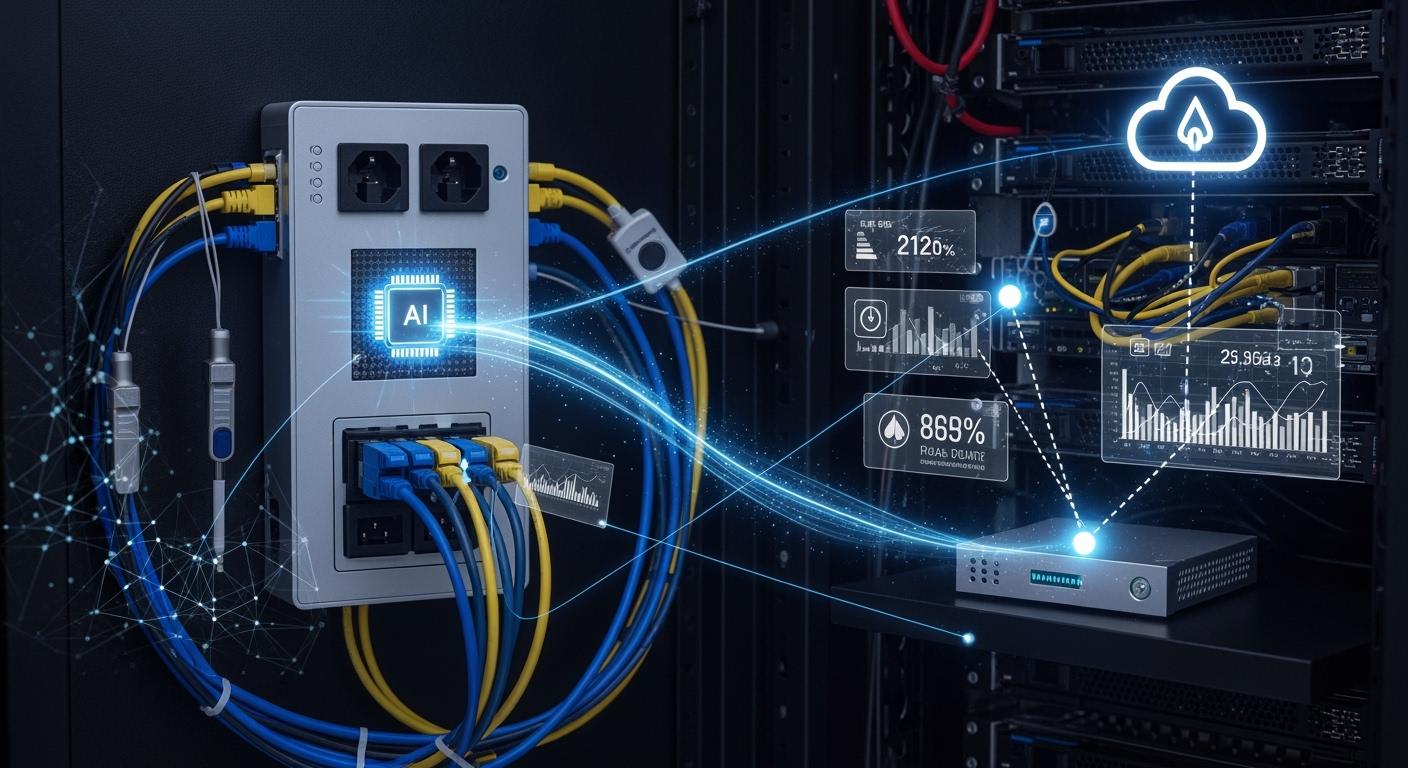
When you integrate a Smart Power Distribution Unit with an AIoT platform, you gain the ability to monitor and control cabinet power data at every level—end, edge, and cloud. ESTEL, a leader in telecom cabinet solutions, brings this advanced technology to your infrastructure. You see immediate improvements in operational efficiency and reliability.
Feature | Benefit |
|---|---|
Centralized power management | Enhances control and efficiency in monitoring power across various devices. |
Real-time monitoring | Provides immediate insights into power usage, aiding in quick decision-making. |
Historical data analysis | Supports predictive modeling and trend analysis for better capacity planning. |
Configurable alerts | Helps in risk reduction by notifying users of anomalous conditions. |
Visibility into power connectivity | Ensures understanding of power dependencies for hardware, improving reliability. |
You benefit from real-time insights, predictive maintenance, and reduced risk, making your cabinet power management smarter and more reliable.
Key Takeaways
Integrating Smart PDUs with AIoT platforms enhances power management by providing real-time monitoring and control, leading to improved operational efficiency.
Utilizing edge computing allows for faster data processing and immediate responses to power issues, reducing latency and enhancing reliability.
Predictive maintenance through historical data analysis helps prevent equipment failures, saving costs and minimizing downtime.
Configurable alerts notify users of anomalies, allowing for quick action to mitigate risks and maintain system stability.
Choosing ESTEL’s Smart PDU ensures robust performance in harsh environments, with features like surge protection and remote management for optimal power distribution.
Integration of Smart Power Distribution Unit with AIoT
Collaborative Data Analysis Across End, Edge, and Cloud
You can unlock new possibilities in cabinet power management when you connect a Smart Power Distribution Unit to an AIoT platform. This integration lets you collect, process, and analyze power data at three levels: the end device, the edge gateway, and the cloud. Each layer plays a unique role in making your operations smarter and more efficient.
At the end layer, the Smart Power Distribution Unit gathers real-time power data directly from your equipment. The edge layer processes this data locally, allowing for quick responses to changes or issues. The cloud layer stores large amounts of data and runs advanced analytics, helping you spot trends and plan for the future.
Here is how this collaborative approach benefits your operations:
Benefit | Description |
|---|---|
Integration of end, edge, and cloud layers allows for streamlined data processing. | |
Reduced Load on Edge Devices | Offloading query workloads to the cloud alleviates pressure on edge devices during high demand. |
Improved Query Execution | Dynamic resource allocation enhances the execution of queries in real-time. |
Cloud-edge collaboration introduces a distributed model that enhances data processing capabilities. | |
Preliminary Data Processing | Edge computing allows for initial data processing, reducing the burden on central data centers. |
Reduced Network Transmission | The architecture minimizes network load by processing data closer to the source. |
You gain faster insights, lower network costs, and better use of your resources. This structure also helps you respond quickly to power issues while keeping your data secure and organized.
ESTEL’s Approach to Smart PDU Integration
ESTEL designs its Smart Power Distribution Unit to work seamlessly with AIoT platforms. You can connect the unit to your network using standard protocols, which ensures smooth communication between devices, gateways, and cloud services. The unit’s intelligent features, such as remote monitoring and real-time alerts, give you full control over your cabinet’s power environment.
You benefit from a system that supports both local and remote management. The Smart Power Distribution Unit processes critical data at the edge, so you can act on urgent issues without waiting for cloud analysis. At the same time, the cloud platform stores historical data and runs advanced analytics, helping you predict maintenance needs and optimize energy use.
ESTEL’s solution stands out because it combines robust hardware with intelligent software. You can monitor power usage, set up automated alerts, and even control outlets remotely. This deep integration means you always have the right information at the right time, whether you are on-site or managing multiple locations from a central dashboard.
Tip: By using ESTEL’s integrated approach, you can reduce downtime, improve reliability, and make smarter decisions about your telecom infrastructure.
Challenges of Cloud-Only Power Management
Latency and Reliability Issues
You face several challenges when you rely only on the cloud for power management in telecom cabinets. Real-time monitoring becomes difficult because data must travel from your site to distant servers. This delay can slow down your response to critical events. You need to act fast when power loads change or when equipment faces risks.
Multi-operator loads create fluctuating power demands. You must monitor these changes in real time to prevent overloads.
Power distribution inefficiencies can waste energy and cause equipment failures. Uneven power distribution puts your devices at risk.
Environmental risks, such as temperature swings and humidity, can damage sensitive equipment. You need robust climate control to protect your assets.
Maintenance coordination becomes complex with multiple operators. You must communicate effectively to avoid service disruptions.
Aging components, especially batteries, reduce reliability. You need close monitoring to prevent unexpected failures.
Manual maintenance increases downtime. Technicians must travel to the site for inspections and repairs, which leads to longer outages and higher costs.
You see that cloud-only solutions can slow your response and make your system less reliable. Local processing and edge intelligence help you overcome these problems.
Security and Privacy Concerns
You must also consider security and privacy risks when you use cloud-only power management. Sensitive data travels over networks and sits in remote servers. This creates more opportunities for threats.
Risk Type | Description |
|---|---|
Unauthorized Access | The risk of unauthorized individuals gaining access to sensitive data and systems. |
Data Breaches | Incidents where sensitive data is accessed or disclosed without authorization. |
Compliance Issues | Challenges in adhering to legal and regulatory requirements regarding data protection. |
IoT Device Challenges | Increased vulnerabilities due to the growing number of IoT devices connected to telecom networks. |
You must protect your system from unauthorized access and data breaches. You also need to follow strict rules for data protection. As you add more IoT devices, you face new security challenges. You need a balanced approach that combines cloud benefits with strong local controls.
Edge Computing Advantages for Smart PDUs
Real-Time Response and Local Processing
You gain a major advantage when you use edge computing with your Smart Power Distribution Unit. Edge computing lets you process data right where it is generated. You do not need to wait for information to travel to the cloud and back. This approach gives you faster response times and improves operational efficiency.
Evidence Description | Key Benefit |
|---|---|
Local processing of data reduces latency, leading to faster response times. | Faster response times |
Immediate action on data detected by smart PDUs without waiting for cloud response. | Improved operational efficiency |
Real-time data access allows for instant decision-making. | Enhanced reliability and stability |
You see the impact in real-world benchmarks. Edge-enabled systems show prediction accuracy with MAPE less than 8.5%. System latency averages 145 milliseconds. Bandwidth consumption drops by 81.2%. Energy efficiency improves by 23.6% in monitored environments.
Metric | Improvement |
|---|---|
Prediction Accuracy | MAPE < 8.5% |
System Latency | Average 145 ms |
Bandwidth Consumption | Reduction of 81.2% |
Energy Efficiency | 23.6% reduction in monitored environments |
You make decisions instantly. You reduce network traffic. You save energy and resources. Edge computing transforms your cabinet power management.
Enhanced Security and Efficiency
You protect your data and improve efficiency when you process information close to its source. Edge computing enhances data security and privacy. You minimize risks because sensitive information does not travel across networks to remote servers. This approach reduces the chance of data breaches.
Edge computing enhances data security and privacy.
Processes information close to the source, reducing transmission risks.
Processing data closer to its source reduces latency, enabling faster insights and decision-making.
Minimizes reliance on centralized data centers, enhancing operational efficiency.
Supports new AI and IoT initiatives, improving customer experiences through localized services.
Ideal for industries handling sensitive information and adhering to strict data privacy regulations.
You rely less on centralized systems. You gain faster insights. You support advanced AI and IoT features. You meet strict privacy standards. Edge computing gives you control and confidence in your Smart Power Distribution Unit operations.
Tip: Edge computing helps you respond quickly, protect your data, and optimize your cabinet power management.
Infrastructure Overview: ESTEL Solutions
Intelligent Features of Smart Power Distribution Unit
You gain a clear advantage when you use ESTEL’s Smart Power Distribution Unit in your telecom infrastructure. This unit stands out with intelligent monitoring, fast maintenance response, and efficient power management. These features help you reduce energy waste, improve response times, and ensure stable power even in high-density environments.
Feature | Benefit |
|---|---|
Intelligent Monitoring | |
Maintenance Response Times | Improves response times by 40% |
Efficient Power Management | Ensures stable power distribution in high-density environments |
You can manage power remotely, which means you control your equipment from anywhere. Switched PDUs let you control each outlet, so you reduce downtime by 15%. The unit meets strict safety standards, including UL, CE, and IEC certifications. These certifications show that you use equipment designed for safety and reliability.
Feature | Significance |
|---|---|
Remote Power Management | Enables control from anywhere, improving efficiency and troubleshooting speed |
Switched PDUs | Control individual outlets, reducing downtime by 15% |
Certification/Standard | Description |
|---|---|
UL Listed Mark | Ensures products are free from risks of electric shock and fire |
CE Mark | Indicates compliance with EU safety regulations |
IEC 60950-1, IEC 62368-1 | Standards for IT and communications equipment safety |
Connectivity and Environmental Controls
You need equipment that works in harsh outdoor environments. ESTEL’s Smart Power Distribution Unit uses surge protection technology to guard against voltage spikes. Real-time monitoring lets you track power metrics instantly, so you can address issues before they cause problems. The unit’s durable design ensures consistent performance, even in tough conditions.
Feature | Description |
|---|---|
Surge Protection Technology | Detects and neutralizes voltage irregularities before they reach equipment |
Real-Time Monitoring | Enables instant tracking of power metrics |
Durability | Withstands harsh conditions for consistent performance |
You also benefit from advanced connectivity and environmental controls. The unit offers real-time tracking of power usage, which helps you maintain connectivity and minimize downtime. Cooling solutions, such as cabinet-mounted fans, keep your telecom equipment at the right temperature.
Feature | Description |
|---|---|
Monitoring Capabilities | Real-time tracking of power usage to maintain connectivity |
Cooling Solutions | Cabinet-mounted fans regulate temperature for optimal conditions |
Tip: When you choose ESTEL, you get a solution built for reliability, safety, and efficiency in any telecom environment.
Benefits & Use Cases
Reduced Downtime and Cost Savings
You can achieve significant reductions in downtime and operational costs by deploying advanced power management solutions. Real-time monitoring and remote management allow you to make quick adjustments, which keeps your network running smoothly. Programmable settings help you control energy use, while hot-swappable breakers let you perform maintenance without shutting down critical systems.
Feature | Benefit |
|---|---|
Real-time monitoring | Enables immediate insights into power distribution, allowing for quick adjustments to enhance reliability. |
Remote management | Reduces the need for onsite maintenance, thus lowering operational costs. |
Programmable settings | Allows precise control over energy allocation, optimizing consumption and reducing costs. |
Hot-swappable breakers | Minimizes downtime during maintenance, ensuring continuous operation of critical loads. |
Integration with Smartpack | Facilitates comprehensive oversight and control from a distance, improving operational efficiency. |
After you implement these solutions, you may see a 30% decrease in downtime incidents.
Annual energy expenses can drop by $50,000.
Identifying and removing unused equipment, like 'zombie servers,' can save 15-30% on energy in affected facilities.
Many organizations report operational cost reductions of 15-25% through optimized power distribution and predictive maintenance.
Improved Reliability and Predictive Maintenance
You improve reliability when you use real-time power data and fast decision-making tools. Visualized power trends and digital twins help you predict equipment conditions and schedule maintenance before problems occur. Predictive analytics using historical data lets you forecast future power loads, which helps you avoid overloads and downtime.
Evidence Description | Contribution to Reliability and Predictive Maintenance |
|---|---|
Real-time power data and fast decision-making | Enhances reliability by allowing operators to respond quickly to issues. |
Visualized power trends and digital twins | Helps predict equipment conditions and schedule maintenance, reducing unexpected failures. |
Predictive analytics using historical data | Forecasts future power loads to avoid overloads and downtime, enabling proactive maintenance. |
You can reduce equipment failure risk by up to 30%. Troubleshooting time drops by 30%. Battery failure rates have decreased by 98% in recent years. Early detection tools extend equipment lifespan and keep your network stable.
Real-World Applications with ESTEL
You find real-world success stories across the globe. In Thailand, telecom providers upgraded their infrastructure with ESTEL’s solutions, leading to seamless digital transformation. In Kenya, solar-powered cell towers equipped with ESTEL units achieved a 40% reduction in energy expenses and smooth network operation. In India, smart PDUs support photovoltaic systems in rural areas, improving connectivity and lowering carbon emissions.
Region | Case Study Description | Impact |
|---|---|---|
Thailand | Telenor-DTAC upgraded telecom infrastructure with ESTEL’s VMS. | Seamless digital transformation and improved management. |
Kenya | ESTEL units installed in solar-powered cell towers. | 40% reduction in energy expenses, smooth network operation. |
India | Smart PDUs support photovoltaic systems in rural regions. | Better connectivity, lower carbon emissions. |
Pakistan | Off-grid solar energy systems power telecom cabinets. | Social benefits and improved access to clean water. |
Note: A leading data center in Asia reduced energy consumption by 15% and improved equipment uptime by 20% after implementing ESTEL’s Smart Power Distribution Unit.
Technical Considerations for Integration
Scalability and Flexibility
You must plan for growth when you integrate advanced power management into your telecom infrastructure. As your network expands, you face new challenges in device management, data processing, and cost control. The following table highlights common scalability challenges you may encounter:
Challenge | Description |
|---|---|
Device Management | Monitoring and maintaining thousands of devices requires robust systems. |
Data Processing Capacity | Analytics platforms must handle growing data volumes without performance degradation. |
Network Bandwidth | Communication infrastructure must accommodate increasing data traffic. |
Cost Management | Hardware, software, and maintenance expenses can grow unexpectedly at scale. |
You can address these challenges by choosing flexible deployment options. Here are several strategies you can use:
Scale your system to meet growing demands.
Customize features to enhance efficiency.
Build in reliability and redundancy for critical operations.
Simplify maintenance and upgrades to reduce downtime.
Focus on cost-effectiveness for long-term savings.
You ensure your power management solution adapts to changing needs and supports future expansion.
Data Management and Analytics
You generate large volumes of power data every day. To make sense of this information, you need best practices for data management and analysis. The table below outlines effective tools and methods:
Best Practice | Description |
|---|---|
Branch Circuit Monitors | Measure current load on circuits and alert you when nearing capacity, preventing overloads. |
Data Center Environmental Aggregators | Gather and analyze power and environmental data, helping you make informed decisions about power consumption. |
Intelligent PDUs | Monitor power use at the device level, identify underutilized equipment, and control loads remotely. |
You can use advanced analytics tools to extract actionable insights from your data. These tools help you identify hidden patterns, predict future trends, and improve decision-making. You may use algorithms such as clustering, correlation, classification, and regression. Analytics can be descriptive, diagnostic, predictive, or prescriptive, depending on your operational goals.
Tip: When you combine strong data management with powerful analytics, you gain a clear view of your network’s health and can act before problems arise.
You gain real advantages when you integrate Smart Power Distribution Units with AIoT platforms. ESTEL leads this field with reliable products and intelligent features. You see better efficiency, stronger reliability, and smarter decision-making. Looking ahead, you will notice these trends shaping the industry:
The market for power distribution cabinets will grow with smart grid and renewable energy innovations.
Energy efficiency will become more important as people focus on sustainability.
Cabinets will offer real-time monitoring and dynamic power management using live data.
You can expect smarter, more adaptive cabinet power management in the future.
FAQ
What is a Smart Power Distribution Unit (PDU)?
A Smart PDU lets you monitor and control power for your telecom or data center equipment. You can track energy use, set alerts, and manage outlets remotely. This helps you improve efficiency and reduce downtime.
How does AIoT integration benefit my power management?
AIoT integration gives you real-time data and remote control. You can spot problems early, automate responses, and use advanced analytics. This leads to better reliability, lower costs, and smarter energy use.
Can I use ESTEL’s Smart PDU outdoors?
Yes, you can. ESTEL’s Smart PDU has a robust design. It resists harsh weather, dust, and humidity. You can trust it for outdoor telecom sites and challenging environments.
What security features protect my power data?
You get surge protection, secure protocols, and local processing. These features keep your data safe from unauthorized access and reduce risks during network transmission.
How do I manage multiple cabinets with ESTEL’s solution?
You can use remote management tools. These tools let you monitor, control, and analyze many cabinets from one dashboard. You save time and improve network reliability.
See Also
Understanding ESTEL PDUs And Their Importance In Data Centers
Innovative Energy Storage Solutions For Telecom Cabinets
Enhancing Outdoor Cabinets Through Power, Cooling, And Monitoring
Solar Energy Storage Solutions For Telecom Cabinet Efficiency
CALL US DIRECTLY
86-13752765943
3A-8, SHUIWAN 1979 SQUARE (PHASE II), NO.111, TAIZI ROAD,SHUIWAN COMMUNITY, ZHAOSHANG STREET, NANSHAN DISTRICT, SHENZHEN, GUANGDONG, CHINA
