Smart Power Distribution Unit and Air Conditioning Linkage: Collaborative Optimization of Heat Dissipation and Power Supply in High-Density Cabinets
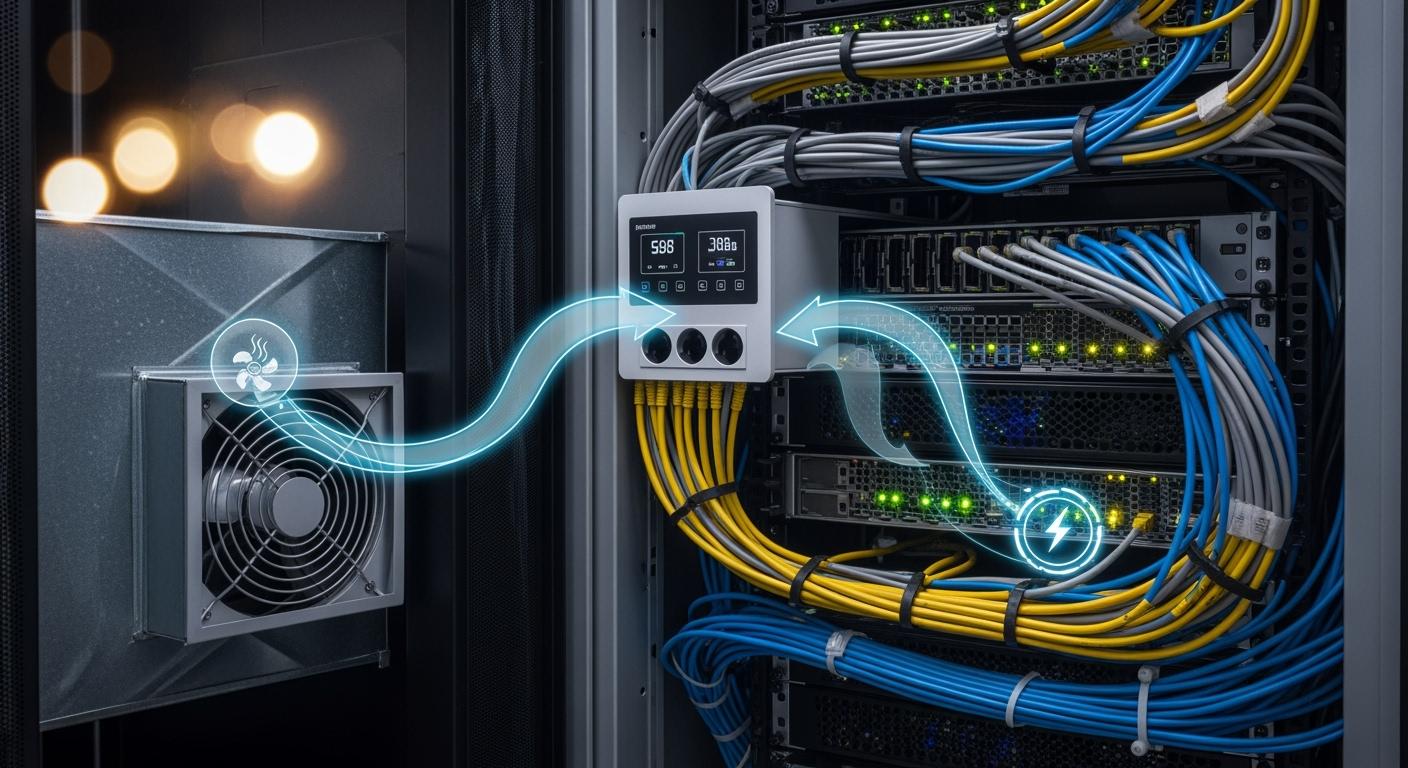
You can achieve collaborative optimization of heat dissipation and power supply in high-density cabinets by integrating a smart power distribution unit with advanced air conditioning systems. Real-time monitoring and intelligent control offer you clear benefits:
Real-time alerts help you respond quickly, reducing downtime and improving reliability.
Automation can deliver energy savings of up to 30%, making your power management more efficient.
Remote monitoring ensures you always have control, even from a distance.
ESTEL delivers these advanced solutions, ensuring your telecom environment stays safe and efficient.
Key Takeaways
Integrating smart power distribution units with advanced air conditioning improves heat dissipation and power supply in high-density cabinets.
Real-time monitoring allows for quick responses to issues, reducing downtime and enhancing reliability.
Automation can lead to energy savings of up to 30%, making power management more efficient.
Using predictive maintenance helps anticipate equipment failures, minimizing unexpected downtime and maintenance costs.
Combining AI-driven thermal management with direct liquid cooling optimizes energy efficiency and maintains power continuity.
High-Density Cabinet Challenges
Heat Dissipation Issues
You face significant heat dissipation challenges when you manage high-density cabinets. Traditional air-cooling systems often cannot keep up with the thermal output of modern equipment. As you add more servers, especially those used for AI and high-performance computing, the amount of heat generated increases sharply. For example, modern AI servers can produce five to six times more heat than standard servers, which usually generate about 1.5kW of heat.
Note: Effective thermal management is essential. If the temperature inside your cabinet rises by just 10 degrees Celsius, the lifespan of your equipment can be cut in half. This makes it critical to control both temperature and airflow.
You can use advanced cooling technologies to address these issues. Liquid cooling enclosures and direct-to-chip cooling methods transfer heat more efficiently than air cooling. These solutions help prevent system failures and keep your data centre infrastructure management on track.
Common heat dissipation challenges include:
Inadequate performance from traditional air-cooling systems
The need for advanced cooling as rack densities rise
Increased risk of overheating with AI and HPC workloads
Power Supply Demands
You must also address rising power supply demands in high-density environments. The average rack density now ranges from 7 to 10 kW, but high-density setups can require up to 30 kW or more. In AI and high-performance computing applications, power consumption can exceed 100 kW per rack.
Context | Power Requirement |
|---|---|
Average rack density | 7-10 kW |
High-density setups | Up to 30 kW or more |
AI and high-performance computing | 100+ kW per rack |
Power supply fluctuations can disrupt your operations. Sensitive equipment may experience downtime, data loss, or even damage. You need modern UPS and redundant power systems to ensure continuous operation and stable power distribution. Effective load management helps you balance demand and avoid overloads, keeping your infrastructure reliable and efficient.
Smart Power Distribution Unit Features by ESTEL
Intelligent Monitoring and Real-Time Control
You need a smart power distribution unit that gives you more than just basic power delivery. ESTEL’s solution stands out with advanced features that help you manage your infrastructure with confidence. You get real-time monitoring at both the unit and outlet level, which means you can track exactly how much power each device uses. This helps you balance loads and avoid overloads.
Outlet-level metering and switching for precise control
Remote management capabilities for flexible operation
Customizable solutions for different cabinet setups
Modular design that grows with your needs
Branch circuit metering for better load balancing
Real-time remote visibility and control
You can see the impact of real-time control in your daily operations. The table below shows how these features improve reliability and uptime:
Evidence Description | Contribution to Uptime |
|---|---|
Smart PDUs let you monitor load distributions and spot issues early. | You prevent failures and keep your systems running. |
You set thresholds and receive alerts by email, text, or SNMP. | You act before problems cause downtime. |
Intelligent PDUs notify you about potential overloads. | You address issues before they become critical. |
You can reboot servers remotely from anywhere. | You restore service quickly and boost productivity. |
Warning thresholds alert you to overloads. | You avoid failures and maintain reliability. |
Safety, Efficiency, and Remote Management
You want your smart power distribution unit to meet the highest safety standards. ESTEL’s units comply with ISO9001, UL, and RoHS certifications. They also meet FCC Part 15 Class A, TUVus, and IEC 62368 standards. This ensures your equipment stays safe in critical environments.
Remote monitoring gives you control over your entire network, no matter where you are. You can respond to power issues right away, reducing downtime. Predictive maintenance features help you fix problems before they cause disruptions. Automated alerts keep you informed and support operational efficiency. Cloud management platforms let you monitor multiple sites, analyze trends, and make adjustments without being on-site. This streamlines your workflow and supports fast decision-making.
Tip: Use remote monitoring to keep your infrastructure reliable and efficient, even as your network grows.
Integration of Power and Cooling Systems

System Architecture and Communication
You need a robust system architecture to achieve seamless integration between your power and cooling resources. ESTEL Smart Power Distribution Units work together with advanced air conditioning systems to create a unified environment. This integration allows you to manage both heat dissipation and power redundancy in high-density cabinets.
You can connect your power and cooling resources using intelligent controllers. These controllers act as the brain of your system. They collect real-time data from sensors inside your cabinets. The sensors measure temperature, humidity, and power consumption. The controllers then use this real-time data to adjust cooling output and balance power loads.
Communication protocols play a key role in seamless integration. You can use Modbus and SNMP to link your power and cooling systems. These protocols allow devices to share real-time data and commands. The table below shows how each protocol supports integration:
Protocol | Description |
|---|---|
Modbus | A communication protocol used for monitoring and controlling devices in industrial environments. |
SNMP | A protocol for network management that allows for monitoring and controlling network devices. |
You can achieve seamless integration by using these protocols. They help you automate responses and maintain system reliability. You also gain the ability to monitor and control your infrastructure from a central platform.
Uninterruptible Power Supply (UPS) units and supercapacitor energy storage systems add another layer of redundancy. You can rely on these systems to keep your power and cooling resources running during outages. Supercapacitors respond quickly and require little maintenance. This combination ensures that your integration strategy supports both reliability and redundancy.
Real-Time Data Sharing and Automation
You benefit from real-time data sharing when you integrate your power and cooling resources. Sensors inside your cabinets collect real-time data on temperature, humidity, and power usage. The system sends this real-time data to a central controller. You can then use this information to automate cooling and power adjustments.
Automation helps you optimize energy use and maintain redundancy. For example, if your sensors detect a rise in temperature, the system can increase cooling output automatically. If a power spike occurs, the controller can redistribute loads to maintain power redundancy. This process keeps your equipment safe and extends its lifespan.
You can also use remote monitoring to track real-time data from anywhere. This feature lets you respond quickly to issues and make informed decisions. You reduce downtime and improve reliability across your network.
UPS and supercapacitor systems play a vital role in maintaining continuous operation. You can count on these systems to provide backup power during outages. They ensure that your power and cooling resources remain active, even when the main supply fails. Supercapacitors offer ultra-fast response times and long operational life. You spend less time on maintenance and more time focusing on your core operations.
Here are some key benefits of integrating UPS and supercapacitor energy storage into your system:
You maintain continuous operation during power outages.
You enhance the safety and reliability of your infrastructure.
Supercapacitors provide fast response and long life with minimal maintenance.
You achieve seamless integration by combining real-time data sharing, automation, and redundancy. This approach allows you to manage power redundancy and cooling redundancy together. You create a resilient environment that supports high-density cabinets and demanding workloads.
You can see the impact of integration in your daily operations. You reduce energy waste, prevent overheating, and ensure that your power and cooling resources work together efficiently. You also gain peace of mind knowing that redundancy protects your critical equipment at all times.
Linkage Optimization Strategies
Automated Response and Predictive Maintenance
You can achieve high reliability and minimize downtime in your high-density cabinets by using automated response strategies and predictive maintenance. These approaches help you anticipate problems before they occur, allowing you to maintain power continuity and optimize your system’s efficiency.
Automated response systems use real-time monitoring to track temperature, humidity, and load conditions. When sensors detect abnormal readings, the system can adjust cooling or redistribute load automatically. This linkage between power and cooling resources ensures that your equipment stays protected and your operations remain stable.
Predictive maintenance uses advanced analytics and machine learning to forecast failures. You can schedule maintenance only when necessary, which reduces unnecessary interventions and helps you minimize downtime. The table below highlights the most effective strategies for predictive maintenance in integrated power and cooling systems:
Strategy | Description | Application Example |
|---|---|---|
Condition-Based Maintenance | Monitors equipment conditions in real-time, triggering maintenance only when indicators show abnormal wear. | Aerospace manufacturing for turbine blade vibrations. |
Machine Learning-Driven Maintenance | Analyzes historical and live data to forecast failures, adapting to changing conditions for better accuracy. | Automotive manufacturers predicting robotic arm faults. |
Rule-Based Predictive Maintenance | Uses predefined limits for parameters to prompt maintenance actions, suitable for assets with known failure modes. | Food processing plants monitoring equipment temperatures. |
Time-Based Predictive Maintenance | Schedules maintenance based on machine usage metrics rather than fixed intervals, reducing over-maintenance risks. | Packaging manufacturers aligning maintenance with workload. |
Reliability-Centered Maintenance | Focuses on critical assets, combining risk assessments with condition monitoring to prioritize maintenance efforts. | Semiconductor manufacturers maintaining climate control systems. |
You benefit from predictive maintenance in several ways:
You anticipate equipment failures and prevent unexpected downtime.
You reduce maintenance costs by performing interventions only when needed.
You improve operational efficiency and enhance equipment performance.
Tip: Use predictive maintenance to minimize downtime, maintain production schedules, and prevent delays to market. This strategy is essential for modern telecom and data center environments.
Energy Efficiency and Peak Load Management
You can optimize energy efficiency and manage peak load conditions by leveraging AI-driven thermal management and direct liquid cooling. These technologies help you balance load, reduce energy waste, and maintain power continuity even during high-demand periods.
AI-driven thermal management uses algorithms to predict cooling needs and adjust output dynamically. You achieve significant energy savings and improve overall efficiency. For example, Google’s DeepMind reduced cooling energy use by 40% and improved Power Usage Effectiveness by 15%. Meta lowered fan energy consumption by 20%. NTT America saved $630,000 annually by using AI for thermal management. These results show how AI can transform your energy efficiency and capacity optimization strategies.
Direct liquid cooling offers another powerful solution for high-density cabinets. You can choose from several best practices:
Enclosed cabinets use fans and air-to-water heat exchangers to control cooling water usage and minimize heat escape.
Rear-door heat exchangers cool hot exhaust air with circulating cold water, making the system room-neutral.
Conduction methods use thermal blocks and micro channel heat exchangers for efficient heat transfer.
CPU cold plates replace standard heat sinks and interface directly with processors.
Immersion cooling submerges electronics in dielectric fluid, allowing efficient cooling without compressors and supporting high-temperature coolant rejection.
These cooling methods help you maintain optimal load conditions, reduce downtime, and ensure power continuity. You can combine AI-driven monitoring with direct liquid cooling to achieve maximum efficiency and reliability.
Note: ESTEL’s smart power distribution units support remote monitoring and real-time data sharing, which enhance your ability to manage load and optimize linkage between power and cooling systems.
Troubleshooting Tips for Linkage Optimization
You may encounter challenges when optimizing linkage between power and cooling systems. Effective troubleshooting helps you resolve issues quickly and maintain system reliability. Consider these steps:
Establish rod length constraints to address kinematic defects in mechanical linkage systems.
Use penalty functions to detect complex forms during calculations.
Identify defect types using the Jacobian matrix of mechanism constraints.
Add rods or rod groups to achieve comprehensive designs for multi-bar mechanisms.
Employ optimization algorithms to minimize kinematic errors and achieve integrated optimization.
You should also monitor system parameters regularly and use remote monitoring tools to detect anomalies early. Automated alerts and predictive analytics help you respond to issues before they cause downtime. ESTEL’s approach to linkage optimization combines intelligent controllers, real-time monitoring, and advanced cooling technologies to deliver reliable, efficient, and resilient infrastructure.
Alert: Regularly review system logs and sensor data to ensure your linkage optimization strategies remain effective. Quick response to alerts helps you minimize downtime and maintain power continuity.
You can see the benefits of these strategies in your daily operations. You reduce downtime, improve efficiency, and maintain power continuity across your network. By focusing on linkage optimization, you create a robust environment that supports high-density workloads and future growth.
ESTEL Case Study: Real-Time Optimization in Action
Project Overview and Implementation
You can see how ESTEL’s smart power distribution units and air conditioning systems work together in a real-world project. The team faced several challenges during implementation. You may encounter similar issues if you manage remote or high-security environments. Common obstacles included:
High rates of chronic and infectious diseases among users compared to the general population.
Limited access to medical professionals and equipment due to remote locations.
Mistrust between staff and users, often caused by past experiences.
Insufficient staffing, resources, and funding, which led to delays in treatment and care.
Balancing user needs with safety concerns, especially during procedures involving sharp tools.
You can overcome these challenges by using real-time monitoring and remote monitoring. These tools help you track system health, respond quickly to alerts, and maintain reliability. The project team used sensors and intelligent controllers to automate cooling and power adjustments. You benefit from a system that adapts to changing conditions and keeps your equipment safe.
Measurable Results and Key Takeaways
You can measure the impact of real-time optimization through clear improvements in power management and energy efficiency. The table below shows the results observed after installing ESTEL’s solutions:
Improvement Type | Description | Impact |
|---|---|---|
Enhanced Power Management | Smart PDUs ensure reliable electricity supply and reduce downtime. | Reduced downtime |
Increased Energy Efficiency | Significant energy savings, with reductions of up to 20% in operational costs. | Lower operational costs |
Improved Equipment Uptime | Equipment uptime improved by 20% through outlet-level monitoring. | Extended equipment life |
Reduced Energy Consumption | Many data centers reduced energy consumption by 15% after installation. | Lower energy costs |
You gain several key takeaways from this project:
The study highlights the importance of collaboration between different teams.
You need to focus on know-how, materials, and concepts to structure successful projects.
Participatory observation and interviews help you understand project dynamics.
You can use actionable recommendations to improve future implementations.
Active participation empowers you to influence your career path and project outcomes.
Tip: Use real-time data and remote monitoring to maintain reliability and optimize energy use in your high-density cabinets.
You can address both heat and power challenges in high-density cabinets by integrating smart power distribution units with advanced air conditioning. This combination uses real-time monitoring to maintain optimal conditions and enhance reliability. ESTEL’s solutions offer robust designs, remote monitoring, and modular options that scale with your needs. You benefit from lower costs, improved uptime, and energy efficiency. As future trends move toward AI-driven tools and intelligent sensors, you can trust ESTEL to help you stay ahead. Consider ESTEL for your next infrastructure upgrade.
FAQ
What is a Smart Power Distribution Unit (PDU)?
A Smart PDU lets you monitor and control power in your cabinets. You can track energy use, set alerts, and manage outlets remotely. This helps you keep your equipment safe and your network running smoothly.
How does real-time monitoring improve reliability?
You get instant updates on temperature, humidity, and power loads. If something goes wrong, you receive alerts right away. This quick response helps you prevent downtime and protect your equipment.
Can you manage ESTEL’s Smart PDU remotely?
Yes, you can. You use remote management tools to monitor, control, and adjust power settings from anywhere. This feature saves you time and reduces the need for on-site visits.
Why should you integrate power and cooling systems?
You create a balanced environment for your equipment. Integration helps you automate cooling and power adjustments. This reduces energy waste and keeps your cabinets at safe temperatures.
See Also
Enhancing Outdoor Cabinets Through Power, Cooling, And Oversight
Exploring Various Cooling Techniques for Telecom Cabinet Applications
Selecting The Optimal Cooling Solution For ESTEL Telecom Cabinets
Benefits Of ESTEL Cabinet Cooling Solutions In Industrial Settings
The Importance Of Air Conditioning In Outdoor Communication Cabinets
CALL US DIRECTLY
86-13752765943
3A-8, SHUIWAN 1979 SQUARE (PHASE II), NO.111, TAIZI ROAD,SHUIWAN COMMUNITY, ZHAOSHANG STREET, NANSHAN DISTRICT, SHENZHEN, GUANGDONG, CHINA
