Carbon Emission Tracking Function Smart PDU Solution for Quantifying Carbon Reduction Goals in Telecom Cabinets

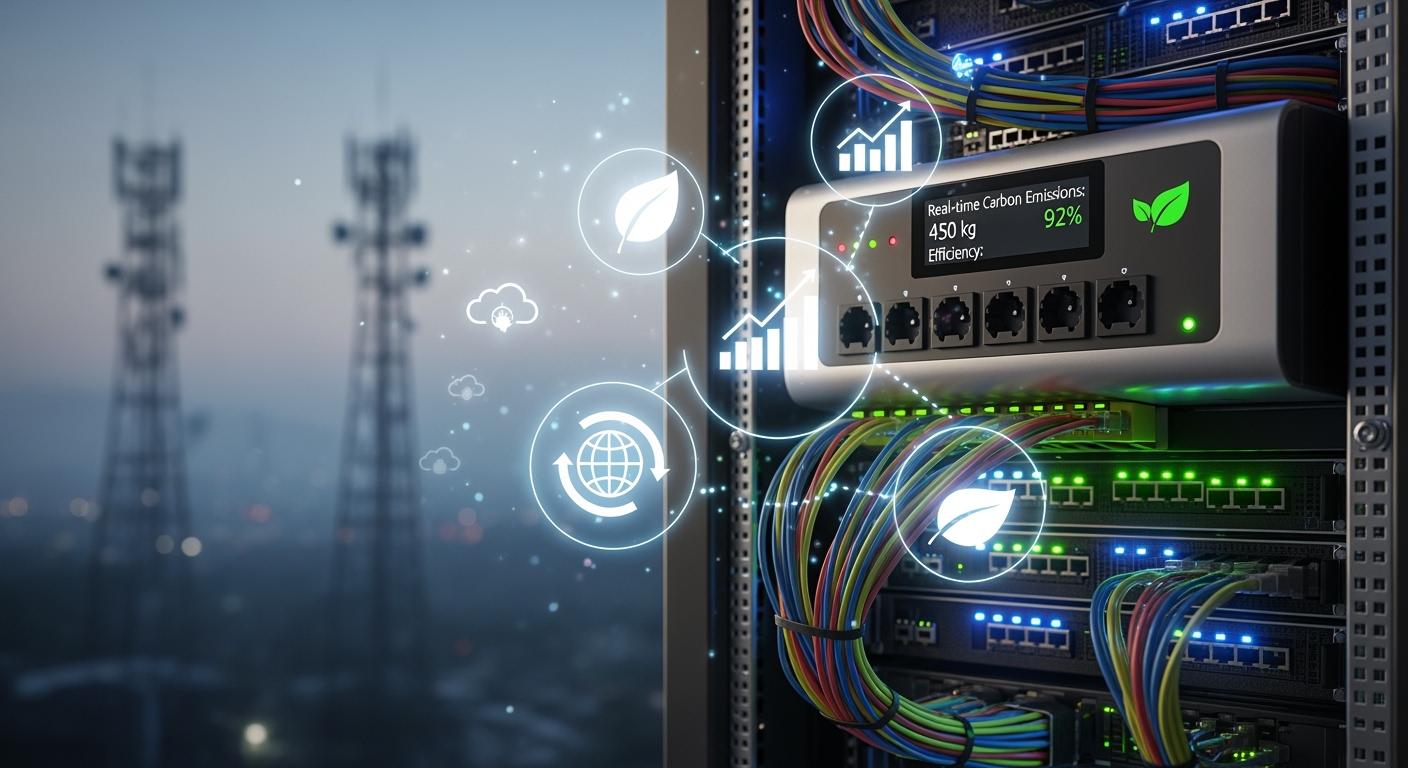
You can track carbon emissions in telecom cabinets in real time. This data lets you set clear carbon reduction goals and measure your progress. ESTEL’s Smart Power Distribution Unit gives you actionable information for sustainability. Advanced power management and monitoring help you make better decisions and improve your telecom infrastructure.
Key Takeaways
Track carbon emissions in real time to set clear reduction goals and measure progress effectively.
Use ESTEL’s Smart Power Distribution Unit for real-time monitoring, which can lead to energy savings of up to 41%.
Identify emissions hotspots in your telecom network to focus efforts on high-impact areas for sustainability.
Regularly monitor power consumption and perform routine maintenance to optimize energy efficiency and reduce costs.
Integrate renewable energy sources with ESTEL solutions to lower carbon emissions and enhance operational efficiency.
Challenges in Carbon Emission Tracking

Measuring Emissions in Telecom Cabinets
You face several challenges when you try to measure carbon emissions in telecom cabinets. Telecom cabinets contain many devices that use electricity. Each device adds to the total energy consumption and carbon footprint. You need to track the power usage of each device to get accurate emission data. This process can become complex, especially when you manage multiple sites.
Regulatory requirements add another layer of difficulty. Authorities in the UK and Europe require you to meet strict audit standards. If you do not comply, you risk financial penalties and damage to your reputation. The table below shows some of the main compliance issues:
Issue | Description |
|---|---|
Difficulties in meeting mandatory audits required by regulatory authorities. | |
Costly Non-Compliance Risks | Potential financial penalties and negative impact on reputation. |
You also need to identify which parts of your network produce the most emissions. This helps you focus your efforts where they matter most. By improving your visibility, you can boost your company’s standing on sustainability indexes and meet the demands of investors and customers who want transparency.
Emissions hotspots identification helps you target high-impact areas.
Enhanced visibility improves your sustainability reputation.
Meeting stakeholder demands builds trust with investors and customers.
Data Accuracy and Sustainability Goals
Accurate data is essential if you want to achieve your sustainability goals. You must collect reliable information about energy use and emissions. Many telecom operators, like Verizon, use advanced platforms to track carbon emissions and optimize renewable energy use. These tools help you ensure that your data is precise and trustworthy.
Industry standards guide you in maintaining data accuracy. The Green Telecom Layered Framework focuses on energy efficiency and greenhouse gas management in telecom networks. When you lack specific data, you can use standard emission factors, as suggested by Scope 3 Emission Factor Selection. The table below summarizes these methods:
Method Description | Key Focus |
|---|---|
Green Telecom Layered Framework | Enhances energy efficiency and manages GHG concentration. |
Scope 3 Emission Factor Selection | Uses standard emission factors for accurate carbon assessment. |
You need to follow these standards to make sure your carbon tracking supports your sustainability targets. Reliable data lets you set realistic goals and measure your progress with confidence.
ESTEL Smart Power Distribution Unit Solution

Key Features for Carbon Tracking
You need a reliable way to track carbon emissions in telecom cabinets. ESTEL’s Smart Power Distribution Unit gives you real-time power monitoring. You can see exactly how much energy each device uses. This helps you identify areas where you can reduce consumption and lower emissions.
The Smart Power Distribution Unit stands out because it offers remote management capabilities. You can control and monitor your cabinet from anywhere. This feature saves you time and helps you respond quickly to any issues. The unit also provides high energy efficiency. Some users report up to 30% energy savings. Real-time monitoring can lead to even greater reductions, with some companies achieving up to 41% energy reduction.
You benefit from a modular design. You can customize the unit to fit your specific needs. Many other solutions use fixed designs, which limit flexibility. The table below shows how ESTEL’s Smart Power Distribution Unit compares to other carbon emission tracking solutions:
Feature | ESTEL PDUs | Other Solutions |
|---|---|---|
Real-time power monitoring | Yes | Varies |
Remote management capabilities | Yes | Limited |
Energy efficiency | High (up to 30% savings) | Varies |
Modular design | Yes | Often fixed |
Tip: Real-time monitoring with ESTEL’s Smart Power Distribution Unit can help you achieve significant energy savings and reduce your carbon footprint.
Integration with Telecom Infrastructure
You can integrate the Smart Power Distribution Unit seamlessly into your telecom infrastructure. The unit works well with ESTEL’s Telecom Power System and Environment Monitoring System. These products support efficient power management and environmental monitoring.
You gain real-time data on energy use and environmental conditions. The Smart Power Distribution Unit connects with battery management systems. This integration reduces carbon emissions in telecom cabinets. You get lower operational costs and improved efficiency. The telecommunications sector produces more CO2 emissions than the aviation industry. You need solutions that help you manage and reduce these emissions.
You can install the Smart Power Distribution Unit in standard racks or cabinets. The unit supports remote control and intelligent protocols. You monitor power distribution and environmental factors from a central location. This setup helps you meet regulatory requirements and sustainability goals.
Note: Integrating ESTEL’s Smart Power Distribution Unit with other ESTEL systems gives you a complete solution for carbon tracking and reduction in telecom cabinets.
Real-Time Monitoring and Analytics
Data Collection and Visualization
You need accurate data to manage carbon emissions in telecom cabinets. Real-time monitoring technology gives you this data. Smart PDUs, like those from ESTEL, collect information on power usage, temperature, humidity, and equipment status. You can see this data instantly on dashboards or LCD displays. This visibility helps you spot trends and react quickly to any issues.
Many telecom operators use IIoT-based remote monitoring solutions. These systems use 4G connectivity to send data from multiple sites. You get continuous updates on power generation, fuel usage, and environmental conditions. Automated reports show you hourly, daily, or monthly performance. This makes it easy to compare sites and track progress.
Feature | Description |
|---|---|
Technology | IIoT-Based Remote DG Monitoring Solution |
Functionality | Control and monitor Diesel Generators, Battery Management, and Rectifiers across sites |
Data Transmission | 4G connectivity for continuous visibility and alarms |
Operational Data Captured | Power, fuel, temperature, humidity, switching status |
Reporting | Automated, with benchmarking and optimization |
Environmental Impact | Reduces fuel use and carbon emissions |
Real-time monitoring also supports new energy sources like solar power. The system can calculate how much standard coal you save and how much CO₂ you avoid emitting. When you use smart PDUs, you can achieve up to 41% energy savings and reduce greenhouse gas emissions by over half a million metric tons.
Actionable Insights for Carbon Reduction
You can turn real-time data into practical steps for carbon reduction. Analytics tools help you find patterns in energy use. For example, you can see when demand is low and adjust power settings to save energy. Dynamic power management lets you make these changes instantly.
Machine learning solutions take this further. They predict network traffic and adjust energy use before demand changes. Efficient cooling systems respond to temperature data, using less energy and extending equipment life.
Application | Contribution to Carbon Reduction |
|---|---|
Dynamic Power Management | Real-time adjustments in power usage, saving energy during low-demand periods |
Network Traffic Forecasting | Preemptive management of energy use based on traffic patterns |
Efficient Cooling Systems | Dynamic cooling, conserving energy and protecting equipment |
You benefit from these insights by lowering costs and meeting sustainability goals. Some organizations have saved $163 million each year and improved equipment uptime by 20%. Real-time analytics help you make smarter decisions and show your progress to stakeholders.
Achieving Carbon Reduction Goals
Setting and Tracking Targets
You need clear targets to reduce carbon emissions in telecom cabinets. Start by monitoring power consumption regularly. This practice helps you spot inefficiencies and take action to improve energy efficiency. Balanced loads in your cabinets prevent overheating and reduce cooling needs. You save energy and protect your equipment.
Routine maintenance is important. Cleaning and inspecting your Smart Power Distribution Unit keeps it working well. Upgrading to intelligent PDUs gives you real-time monitoring. You can optimize power distribution and increase system reliability.
Monitor power consumption regularly.
Balance loads to minimize cooling demands.
Perform routine maintenance and inspections.
Upgrade to intelligent PDUs for real-time optimization.
Tip: Setting measurable targets and tracking progress helps you achieve your sustainability goals faster.
Process Optimization with ESTEL Solutions
You can optimize your processes by using ESTEL solutions. Many telecom operators use solar and wind energy systems to power remote sites. These renewable systems provide reliable electricity, especially where solar or wind conditions are favorable. Operators report lower carbon emissions and reduced long-term costs from renewable-powered installations.
ESTEL’s advanced energy storage solutions help you improve operational efficiency. Integrating renewable energy sources with ESTEL’s rectifier systems lowers your carbon footprint and supports global sustainability goals.
Hybrid renewable energy systems lead to fewer complaints from local communities.
Improved public health outcomes result from reduced noise and air pollution.
Optimization Method | Benefit |
|---|---|
Renewable energy integration | Lower emissions, cost savings |
Advanced energy storage solutions | Enhanced efficiency, sustainability |
Hybrid systems | Community satisfaction, health |
Note: Process optimization with ESTEL solutions supports your carbon reduction targets and delivers measurable environmental benefits.
Implementation and Benefits
Deployment Best Practices
You can achieve the best results by following a structured approach when deploying advanced power management solutions in your telecom cabinets. Start by assessing your current infrastructure. Identify cabinets with the highest energy use and prioritize them for upgrades. Plan the installation during scheduled maintenance to avoid service interruptions.
Use remote monitoring features to set up instant alerts for power issues. Train your maintenance team to respond quickly to these alerts. Regularly review energy consumption data and adjust settings to optimize performance. Integrate environmental monitoring systems to track temperature and humidity. This integration helps you fine-tune cooling and reduce unnecessary energy use.
Tip: Schedule routine inspections and keep firmware updated to maintain system reliability.
Operational and Environmental Impact
You will see measurable improvements after deploying intelligent power management systems. Many telecom operators report significant energy savings, lower costs, and fewer outages. The table below shows the impact on key operational metrics:
Key Metric | Outcome |
|---|---|
Downtime Reduction | |
Energy Consumption | 15% lower energy use |
Operational Cost Savings | 20–30% reduction |
Energy Efficiency | Up to 41% less consumption |
You also support environmental goals. Operators have documented a 10–15% drop in cooling costs by using environmental data for adjustments. Power waste can decrease by up to 30%. These improvements help you comply with regulations such as RoHS and e-waste management rules, which require responsible equipment use and disposal.
Compliance Aspect | Description |
|---|---|
RoHS Compliance | Ensures no hazardous substances in equipment |
E-Waste Management Rules | Aligns with responsible disposal and environmental regulations |
Many organizations have saved over $163 million each year and reduced greenhouse gas emissions by more than 596,000 metric tons. You can expect better network uptime, lower maintenance costs, and a stronger sustainability profile.
You gain measurable results when you deploy ESTEL solutions in telecom cabinets. Operators report lower O&M costs, fewer maintenance visits, and higher system uptime. Real-time data and integration help you track carbon emissions, water use, and waste diversion. The chart below shows improvements in operational and environmental benefits.
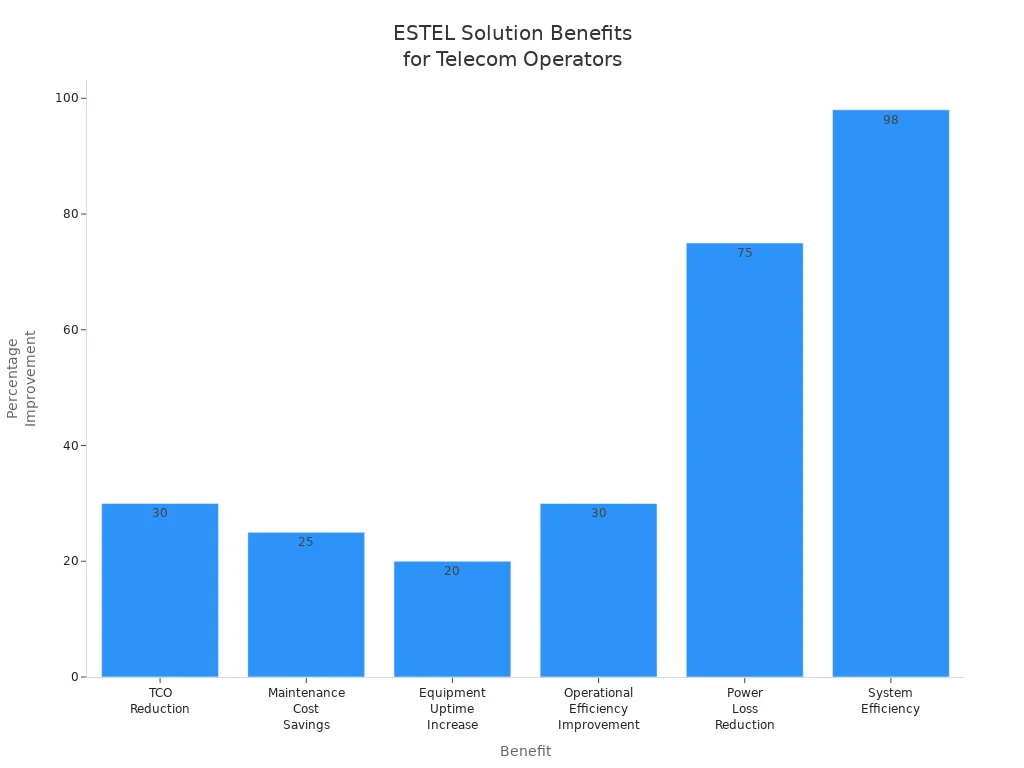
Metric | Impact |
|---|---|
Energy Consumption | 30% lower |
Equipment Uptime | 25% higher |
Maintenance Costs | 40% less |
You can achieve sustainability goals and improve efficiency by adopting advanced ESTEL solutions.
FAQ
What is a Smart Power Distribution Unit (PDU)?
A Smart PDU lets you monitor and control power in telecom cabinets. You get real-time data on energy use. This helps you manage equipment efficiently and reduce carbon emissions.
How does real-time monitoring help reduce carbon emissions?
You see energy usage instantly. You can spot waste and take action fast. This leads to lower energy consumption and fewer carbon emissions.
Can you integrate ESTEL’s Smart PDU with other systems?
Yes. You can connect the Smart PDU with ESTEL’s Telecom Power System and Environment Monitoring System. This integration gives you a complete solution for power and environmental management.
What are the main benefits of using ESTEL’s Smart PDU?
You gain better energy efficiency, lower costs, and improved equipment uptime. You also meet regulatory requirements and support your company’s sustainability goals.
Is remote management possible with ESTEL’s Smart PDU?
Yes. You can control and monitor your power distribution from anywhere. This feature helps you respond quickly to issues and optimize your system.
See Also
Telecom Cabinets Powered By Photovoltaic Energy Storage Solutions
Understanding ESTEL PDUs And Their Importance In Data Centers
Tips For Effective Monitoring Of Outdoor Telecom Cabinets
Telecom Cabinet Energy Storage With ESTEL Smart Microgrid Integration
CALL US DIRECTLY
86-13752765943
3A-8, SHUIWAN 1979 SQUARE (PHASE II), NO.111, TAIZI ROAD,SHUIWAN COMMUNITY, ZHAOSHANG STREET, NANSHAN DISTRICT, SHENZHEN, GUANGDONG, CHINA
