Real-Time Synchronization of Smart Power Distribution Units with Digital Twin Platforms

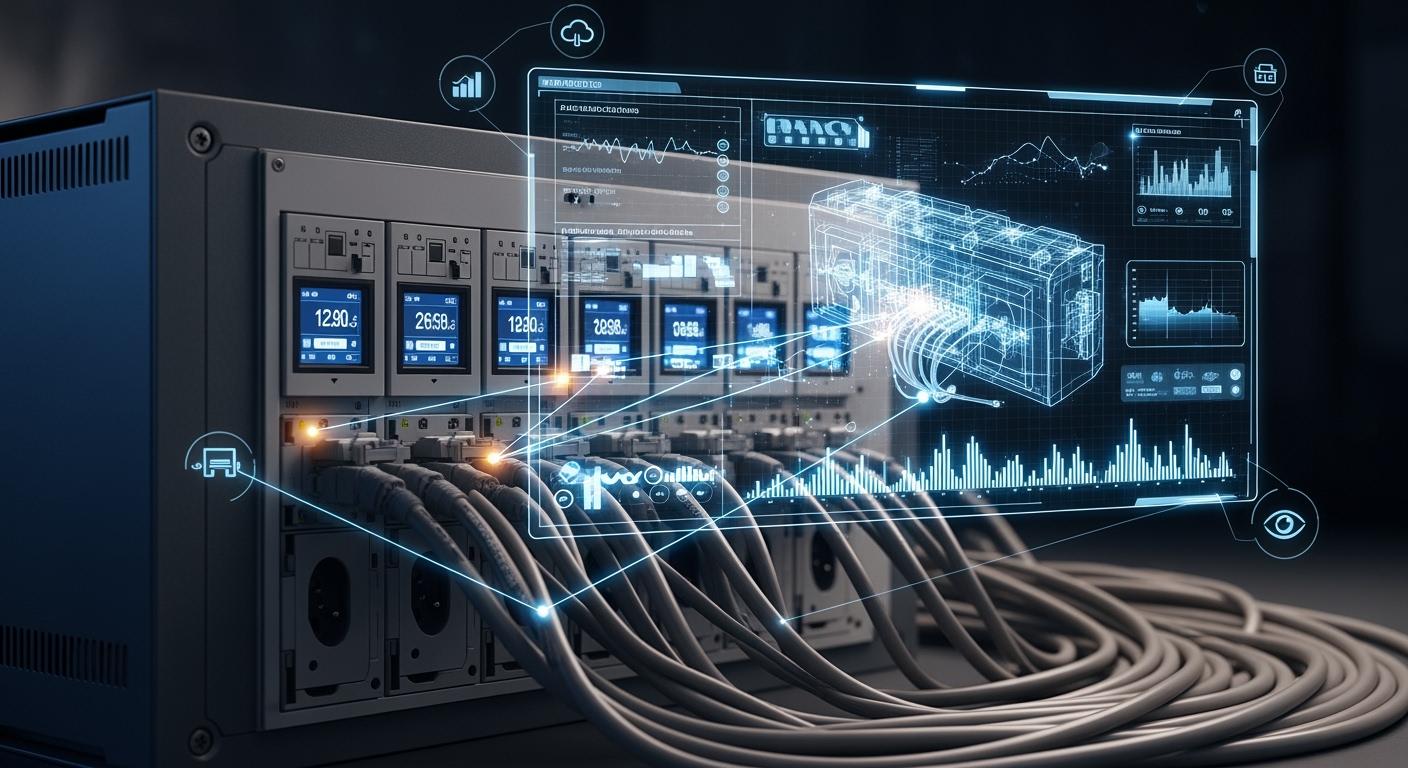
You see the impact of real-time synchronization when your telecom or data center operations run smoothly and efficiently. Connecting a Smart Power Distribution Unit with a digital twin platform lets you monitor, control, and optimize power usage instantly. This integration boosts reliability and speeds up decision-making. ESTEL stands out in this field, earning industry awards and helping major telecom providers achieve higher network reliability and sustainability.
Key Takeaways
Real-time synchronization connects physical equipment with digital models, enabling quick and confident decision-making.
Using ESTEL's Smart Power Distribution Unit can reduce energy costs by up to 41% and maintenance costs by 75%, leading to significant operational savings.
Predictive maintenance through real-time alerts helps avoid emergency repairs, reducing downtime incidents by 45% and increasing fleet uptime by 5%.
Energy optimization allows for instant adjustments to power loads, supporting sustainability goals and improving overall efficiency.
Implementing robust communication protocols ensures secure and reliable data exchange, which is crucial for maintaining system integrity.
Real-Time Synchronization Overview
Smart Power Distribution Unit and Digital Twin Basics
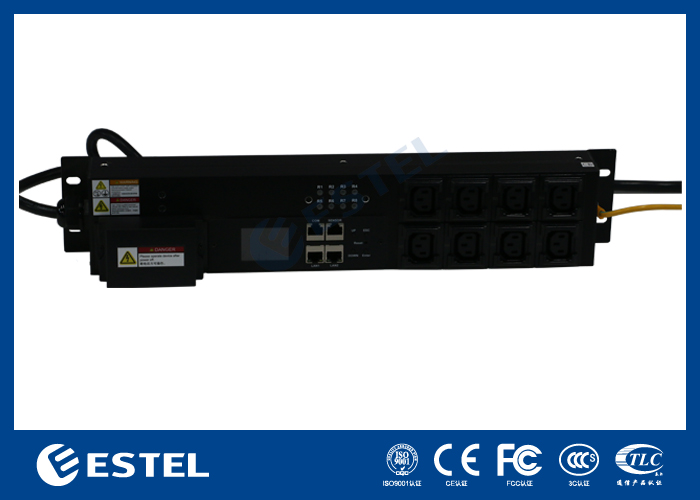
You need to understand the basics before you can see the value of real-time synchronization. A Smart Power Distribution Unit manages and distributes electrical power to your telecom or data center equipment. It gives you features like remote monitoring, surge protection, and real-time data through an LCD display. ESTEL designs these units to be reliable and easy to use, even in harsh environments. You can trust their focus on quality and innovation.
A digital twin is a virtual model of your physical infrastructure. It mirrors your real-world assets, such as a Smart Power Distribution Unit, in a digital environment. This model updates instantly as your equipment changes. You can use the digital twin to monitor, analyze, and predict the performance of your systems. ESTEL’s approach ensures that your digital twin receives accurate, real-time data from your power distribution units.
Why Synchronization Matters
You benefit from real-time synchronization because it connects your physical equipment with its digital counterpart. This link lets you make decisions quickly and with confidence. Real-time synchronization uses several mechanisms:
Edge AI processes data instantly at the source.
Federated Learning adapts and improves system performance.
The Functional Mock-up Interface (FMI) standard keeps all nodes in sync.
You see a constant flow of data between your Smart Power Distribution Unit and the digital twin. This flow gives you real-time updates and insights. You can spot issues early, optimize energy use, and plan maintenance before problems occur. In telecom and data center environments, this means fewer outages and better efficiency. ESTEL’s solutions help you achieve these results by supporting dynamic updates and adaptive decision-making.
Tip: Real-time synchronization is not just a feature. It is a core part of modern digital infrastructure. You gain better control, faster response, and higher reliability.
Key Benefits for Power Distribution
Operational Efficiency
You see immediate improvements in operational efficiency when you use real-time synchronization with a Smart Power Distribution Unit. You gain the ability to monitor and control power distribution across your telecom or data center infrastructure. This technology reduces downtime and streamlines your workflow. You can rely on accurate data to make quick decisions. The following table shows measurable improvements after implementing ESTEL's Smart Power Distribution Unit:
Improvement Type | Percentage Reduction/Increase |
|---|---|
Energy Costs | |
Maintenance Costs | 75% |
Downtime | 25% |
Overall Cost Savings | Up to 20% |
Power Waste | 30% less |
Efficiency Improvement | 30% |
Failure Costs | 30% |
Nonstop Operation | 365 days |
You notice that your operational expenses drop and your equipment runs more reliably. You can achieve nonstop operation throughout the year.
Predictive Maintenance
You benefit from predictive maintenance when your Smart Power Distribution Unit connects with a digital twin platform. You receive real-time alerts and analytics that help you schedule maintenance before failures occur. You avoid emergency repairs and reduce downtime incidents. The table below highlights improvements seen in telecom and data center environments:
Metric | Before | After | Improvement |
|---|---|---|---|
Maintenance Costs | $3.0M/year | $2.1M/year | -30% |
Downtime Incidents | 80/year | 44/year | -45% |
Emergency Repairs | 30/month | 12/month | -60% |
Fleet Uptime | 92% | 97% | +5% |
You see fewer emergency repairs and higher uptime. You can plan maintenance activities with confidence.
Energy Optimization
You optimize energy use by leveraging real-time synchronization. You track power consumption and adjust loads instantly. You reduce operational costs and improve sustainability. The following table summarizes short-term and long-term impacts:
Benefit Description | Short-term Impact | Long-term Impact |
|---|---|---|
Operational Cost Reductions | Up to 15% | Cumulative ROI exceeding 200% |
Annual Savings from Small-scale Deployments | $20,000 | N/A |
Reduction in Annual Operational Expenses | 25% | N/A |
Cost of Enterprise-wide Solutions | $500,000 | Multi-million dollar efficiency gains |
You achieve significant cost reductions and long-term efficiency gains. You support your organization’s sustainability goals and improve decision-making. Real-time synchronization ensures precise coordination among components, which is critical for reliability and event management. You respond quickly to incidents and maintain grid stability.
Tip: You maximize your investment by choosing ESTEL’s Smart Power Distribution Unit for your telecom and data center applications.
Core Technologies and Components
Smart Power Distribution Unit Features
You gain a range of advanced features when you use ESTEL’s Smart Power Distribution Unit. These features help you achieve real-time synchronization and reliable power management. The table below highlights the most important capabilities:
Feature/Capability | Description |
|---|---|
Monitoring Capabilities | Identify issues at each outlet and optimize load balancing. |
User-Definable Alerts | Customize alerts for overloads to mitigate risks proactively. |
Intelligent Monitoring | Monitor equipment status in real-time to prevent failures. |
Fast Response Times | Immediate response to power surges to safeguard the network. |
You can monitor every outlet, set custom alerts, and respond quickly to any power event. These features ensure your equipment stays protected and your operations remain efficient.
Digital Twin Platform Architecture
You benefit from a digital twin platform that supports seamless integration with your power distribution systems. The architecture provides several advantages:
Real-time monitoring and predictive maintenance keep your infrastructure running smoothly.
Enhanced operational control and visibility help you optimize your telecom operations.
Built-in power metering and remote diagnostics make it easy to manage and analyze your power distribution.
You see how these features work together to give you a complete view of your power systems. You can make informed decisions and act quickly when issues arise.
Communication Protocols
You rely on robust communication protocols to connect your Smart Power Distribution Unit with digital twin platforms. These protocols ensure secure and reliable data exchange. Common standards include Modbus, SNMP, and IEC 61850. You use these protocols to transmit real-time data, receive alerts, and control your equipment remotely. Secure communication keeps your network safe and your data accurate.
Note: Choosing the right protocols and ensuring compatibility with your existing systems will help you achieve smooth integration and reliable performance.
Synchronization Process
Data Acquisition and Transmission
You start the synchronization process by collecting data from your power distribution equipment. Sensors inside your Smart Power Distribution Unit monitor voltage, current, temperature, and humidity. These sensors send real-time data to your network. You use advanced techniques to keep your system synchronized:
Real-time processing lets you act on data as soon as it is created.
Incremental synchronization uses Change Data Capture (CDC) to transfer only the data that has changed, which reduces the load on your system.
Chip-Scale Atomic Clocks (CSAC) and network time protocols help you achieve precise timing across your distributed systems.
In telecom and data center environments, you often use GNSS or PTP grandmaster clocks to keep all devices in sync.
You rely on secure communication protocols like Modbus, SNMP, and IEC 61850 to transmit this data. These protocols ensure that your information moves quickly and safely between your Smart Power Distribution Unit and your digital twin platform.
Tip: Always use encrypted channels and strong authentication to protect your data during transmission.
Integration and Visualization
You integrate your power distribution data with a digital twin platform to create a unified digital view of your infrastructure. This integration gives you a real-time dashboard that displays the status of every cabinet and device. IoT sensors continuously update the digital twin, so you always see the actual conditions of your equipment.
Aspect | Description |
|---|---|
Unified Digital View | Virtual mapping provides a comprehensive digital view of the telecom cabinet network, showing real-time status on a dashboard. |
Real-Time Monitoring | IoT sensors continuously send data to the digital twin, ensuring the virtual map reflects the actual conditions of the cabinets. |
Data Analytics | Real-time data is utilized to manage asset conditions, schedule maintenance, and plan upgrades, enhancing equipment lifespan. |
You use analytics tools to manage assets, plan maintenance, and schedule upgrades. This approach extends the life of your equipment and helps you avoid unexpected failures. You also benefit from seamless integration with existing monitoring platforms, which makes it easier to manage your entire network.
Note: When you plan for integration, consider scalability and flexibility. This helps you manage growth and control costs as your network expands.
Feedback and Continuous Improvement
You improve your system by using feedback mechanisms that help you learn from every event. When your system detects an anomaly, it identifies and resolves the issue, which strengthens the model’s learning. You combine unsupervised learning with supervised models to create a scalable framework for predictive maintenance.
You retrain your models regularly with updated data. This allows your system to adapt to new power consumption patterns. Reviewing false positives and negatives helps you fine-tune your detection thresholds. You also gather feedback from operators and facility managers, which gives you valuable insights for further optimization.
To ensure secure and reliable integration, you should follow these best practices:
Best Practice | Description |
|---|---|
Use standards-based solutions | Ensure the synchronization solution is designed for your specific needs. |
Configure appropriate clock sources | Utilize GNSS or PTP grandmaster clocks for accurate timekeeping. |
Set up necessary protocols | Implement PTP, NTP, or synchronous Ethernet as required. |
Design for phase synchronization | Optimize time error budgets and use boundary clocks to minimize errors. |
Reduce the number of hops | Limit the distance between time sources to maintain accuracy. |
Avoid centralizing synchronization | Distribute synchronization signals to prevent inaccuracies across the network. |
Design for change by implementing real-time visibility and automated alerts.
Align your synchronization strategy with your business goals to enhance value.
Use reusable pipeline templates to improve scalability and avoid technical debt.
Tip: Regularly review your integration process to ensure it meets security standards and adapts to new challenges.
Challenges and Best Practices
Latency and Security
You face significant challenges with latency and security when synchronizing smart power distribution units in real time. Even microsecond timing discrepancies can cause major issues. For example, financial institutions risk losing millions from small timing errors. In telecom, precise timing is essential for 5G networks. Cloud service providers often receive customer complaints about reliability due to latency, making up nearly 30% of all issues. The energy sector must also protect grid stability and defend against cyber threats.
You can encounter problems like API rate limits, which restrict the number of data requests and may lead to lost updates or data corruption. Constant monitoring and manual intervention become necessary to keep systems running smoothly. To reduce these risks, ESTEL’s Smart Power Distribution Units use advanced synchronization technologies, such as Chip-Scale Atomic Clocks (CSACs), and support secure communication protocols. You should always use encrypted channels and strong authentication to protect your data.
Tip: Regularly update your security protocols and monitor for unusual activity to maintain a resilient network.
Interoperability and Scalability
You need your power distribution system to work seamlessly with other equipment and scale as your network grows. Interoperability challenges arise when integrating new devices with existing timing systems. Scalability becomes complex when you manage multiple data centers or high-density clusters. The table below shows strategies that help you address these issues:
Strategy | Benefits |
|---|---|
Transition to 800 VDC power distribution | Improves efficiency and supports high-power needs |
Integration of energy storage solutions | Increases reliability and supports performance growth |
Simplified architecture | Reduces complexity and improves system reliability |
You should design your system with open standards and flexible protocols. ESTEL’s solutions support industry-standard interfaces, making integration easier and future upgrades more manageable.
System Architecture and Monitoring
You must build a robust system architecture to ensure reliable synchronization. Start by understanding your actual API usage patterns. Implement graceful degradation so your core functions continue even if you reach system limits. Design your synchronization process to resume from any point of failure. Proactive monitoring and alerting help you track latency and API consumption.
Use a hybrid clock system with both SyncE and PTP for better phase synchronization.
Reduce network hops to improve timing accuracy.
Continuously monitor your deployment to catch issues early.
Note: Periodic calibration and maintenance are essential. Plan these activities to minimize downtime and keep your system performing at its best.
Real-World Use Cases

ESTEL in Telecom Infrastructure
You can see the impact of ESTEL’s Smart Power Distribution Unit in many telecom networks. When you use these units, you gain better control and reliability. Many telecom companies have already improved their operations with ESTEL’s solutions.
A leading data center in Asia installed smart PDUs and achieved a 15% reduction in energy use.
Another telecom company improved uptime by 20% using intelligent PDUs for outlet-level monitoring. This also lowered maintenance costs.
AI-driven monitoring in these units helps you detect issues early. This can prevent up to 80% of outages.
Many organizations report energy savings of up to 41% and annual cost reductions of $163 million.
You can trust these results. They show that real-time monitoring and smart control make a difference in telecom infrastructure.
Data Center Applications
You can also use ESTEL’s Smart Power Distribution Unit in data centers. These units help you manage energy and improve efficiency. Facility managers often report lower costs and better performance.
Advanced energy management can lower your energy consumption by up to 20%.
Facility managers report up to 30% lower maintenance costs.
You can see a 25% boost in operational performance.
Here is a summary of measurable outcomes:
Impact Type | Measurement |
|---|---|
Power Reduction | 8–14% less power used |
Return on Investment | Payback in under two years |
Energy Waste Reduction | Higher efficiency, less waste |
You can achieve these results by using real-time data and smart analytics in your data center.
Future Trends
You will see more changes as technology advances. The integration of AI and IoT in power distribution units can reduce your energy use by 30%. You can also decrease downtime by 25%. Real-time monitoring and predictive maintenance will give you even more control over your operations.
Tip: Stay updated with new trends in digital twin platforms and smart power management. This will help you keep your telecom and data center infrastructure efficient and reliable.
You achieve real-time synchronization by combining smart monitoring, instant data flow, and remote control. This approach lets you detect faults, spot power fluctuations, and respond quickly to emergencies. To integrate ESTEL’s Smart Power Distribution Unit with a digital twin, follow these steps:
Collect and aggregate grid data.
Install and configure the unit.
Test real-time data flow.
Train your team.
Choosing ESTEL means you benefit from certified quality, AI-driven monitoring, and proven reliability.
Certification | Description |
|---|---|
ISO9001 | Consistent quality assurance |
UL | Electrical safety compliance |
RoHS | Environmental safety |
CE | Health and safety standards |
VDE | Performance validation |
Explore ESTEL’s solutions to boost your power management efficiency.
FAQ
What is a Smart Power Distribution Unit?
You use a Smart Power Distribution Unit to manage and monitor electrical power in your telecom or data center equipment. It gives you real-time data, remote control, and advanced safety features. ESTEL’s units help you keep your systems running efficiently and safely.
How does real-time synchronization improve reliability?
You gain instant updates on your power systems. This lets you spot issues early and respond quickly. Real-time synchronization helps you avoid downtime and maintain stable operations. You can trust your equipment to work when you need it most.
Can you integrate ESTEL’s Smart Power Distribution Unit with any digital twin platform?
Yes, you can. ESTEL’s Smart Power Distribution Units support industry-standard protocols like Modbus and SNMP. This makes integration with most digital twin platforms straightforward. You get flexibility and compatibility for your existing infrastructure.
What data can you monitor with ESTEL’s Smart Power Distribution Unit?
Data Type | Description |
|---|---|
Voltage | Tracks power supply levels |
Current | Monitors electrical flow |
Temperature | Checks for overheating |
Humidity | Detects moisture in the cabinet |
You see all this data in real time, which helps you make informed decisions.
Do you need special training to use ESTEL’s Smart Power Distribution Unit?
Tip: You do not need advanced training. ESTEL designs its units with user-friendly interfaces and clear instructions. You can set up and operate the system with basic technical knowledge.
See Also
Innovative Energy Storage Solutions for Telecom Cabinets
Understanding ESTEL PDUs and Their Importance in Data Centers
Ensuring Consistent Power Supply for Telecom Cabinet Operations
Overview of ESTEL Power Systems for Telecom Cabinets
Solar Energy Storage Solutions for Telecom Cabinet Efficiency
CALL US DIRECTLY
86-13752765943
3A-8, SHUIWAN 1979 SQUARE (PHASE II), NO.111, TAIZI ROAD,SHUIWAN COMMUNITY, ZHAOSHANG STREET, NANSHAN DISTRICT, SHENZHEN, GUANGDONG, CHINA
