Power Load Balancing Algorithm of Smart PDUs: Distributed Scheduling to Avoid Single-Cabinet Overload

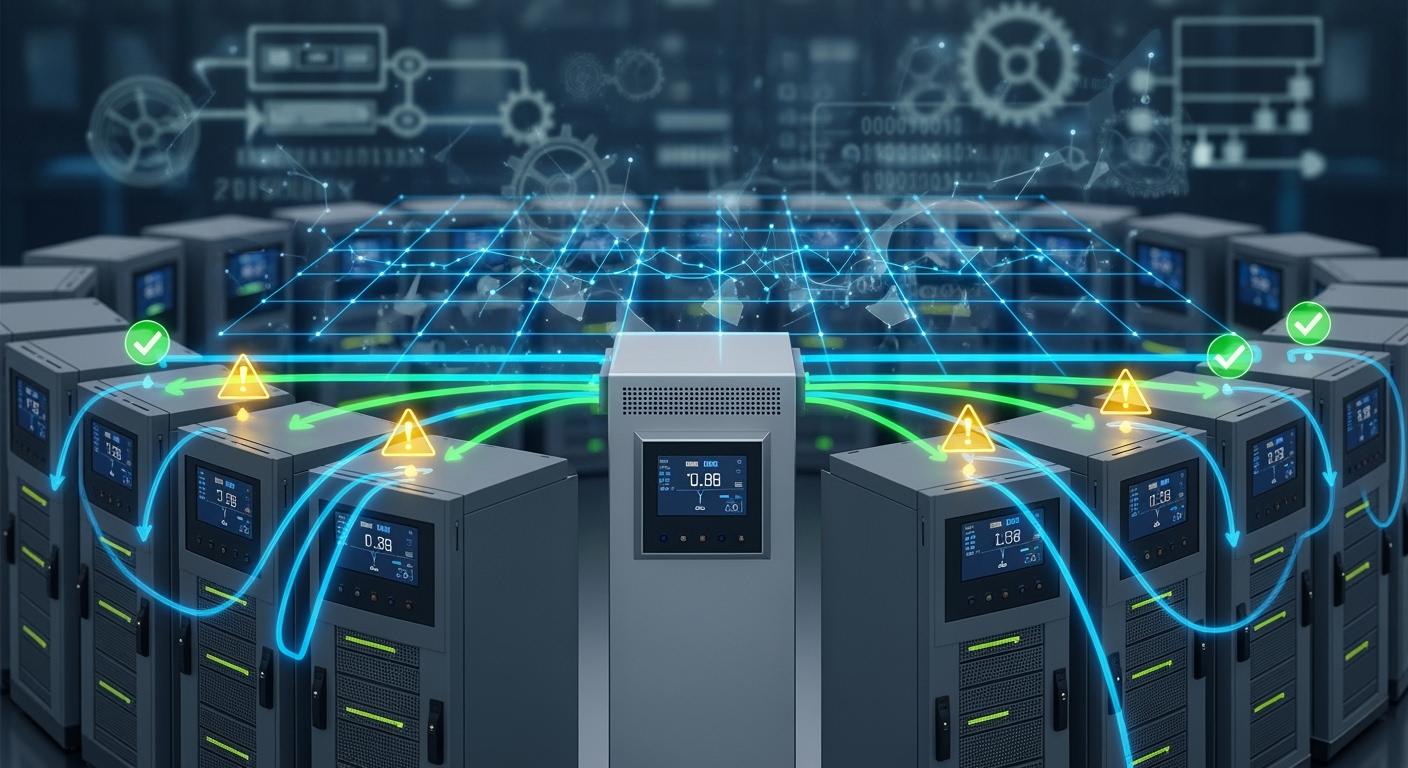
You face constant challenges in managing power within data centers. ESTEL’s Smart Power Distribution Unit uses distributed scheduling algorithms that balance power loads and prevent single-cabinet overload. These advanced control schemes support dynamic reconfiguration, which reduces power loss and keeps voltage stable. Automated load control tracks consumption and adjusts loads automatically, helping you optimize surplus power from renewable sources. Adaptive load balancing predicts power needs by analyzing real-time data, so your system adjusts distribution before issues arise. These features enhance reliability and efficiency in your operations, making them essential for IT managers and data center engineers.
Key Takeaways
Monitor power draw in each cabinet to prevent overload risks and ensure safety.
Use distributed scheduling to adapt power management to changing workloads, enhancing efficiency.
Implement real-time data collection for immediate insights into power consumption and early issue detection.
Automate load shifting to optimize energy use and support renewable energy integration.
Regularly review and update your power management strategies to maintain reliability and efficiency.
Single-Cabinet Overload Risks
What Is Single-Cabinet Overload
You manage many cabinets in a data center. Each cabinet holds servers, switches, and other critical equipment. When you connect too many devices to a single cabinet, the total power demand can exceed the cabinet’s safe capacity. This situation is called single-cabinet overload.
Single-cabinet overload can cause several problems. You may see circuit breakers trip, which leads to sudden shutdowns. Equipment inside the cabinet can overheat, reducing its lifespan or causing permanent damage. In severe cases, overload can even create fire hazards. You want to avoid these risks to keep your data center safe and reliable.
Tip: Always monitor the power draw of each cabinet to spot overload risks early.
Why Traditional Methods Fail
You might think that traditional power management methods can prevent overload. However, these methods often fall short in modern data centers. Traditional approaches usually rely on static resource allocation. This means you assign a fixed amount of power to each cabinet, regardless of changing workloads.
Let’s look at the main limitations of traditional methods:
Limitation | Description |
|---|---|
Static resource allocation | Fixed power distribution does not adapt to dynamic workloads. |
Real-time performance challenges | Difficulty in optimizing performance in real time can lead to overload situations. |
Task migration difficulties | Moving tasks between cabinets is often slow or inefficient, increasing overload risks. |
Lack of adaptability | Traditional systems do not adjust well to changing cloud workloads. |
You face unpredictable workloads in today’s data centers. Static allocation cannot keep up with rapid changes. Real-time optimization is hard with older systems, so you may not spot overloads until it is too late. Migrating tasks between cabinets can be slow, which increases the risk of one cabinet becoming overloaded. Traditional methods lack the adaptability you need for modern, cloud-driven environments.
By understanding these risks and limitations, you can see why advanced solutions like ESTEL’s Smart Power Distribution Unit are essential for safe and efficient operations.
Distributed Scheduling with ESTEL Smart Power Distribution Unit
How Distributed Scheduling Works
You need a flexible approach to manage power in your data center. Distributed scheduling gives you that flexibility. This method spreads the decision-making process across multiple cabinets and devices. Each cabinet monitors its own power usage and communicates with others. You avoid single points of failure and reduce the risk of overload.
The core principles of distributed scheduling in smart PDUs include:
Temporal and spatial flexibility: You can schedule jobs based on when and where power is available. Some tasks run immediately, while others wait for the right moment.
Data-driven decisions: The system uses real-time data to estimate power needs. You do not rely on guesses or fixed schedules.
Tuning robustness: You set performance targets and reliability levels. The system balances these goals for different types of workloads.
Co-design of virtual control centers and scheduling strategy: The system places jobs in the best locations, reducing wait times and improving efficiency.
Grid requirements: The algorithm considers grid codes and demand response needs, making your data center more adaptable.
You benefit from a system that adapts to changing conditions. Distributed scheduling helps you keep your cabinets safe and your operations efficient.
Load Balancing Algorithm Steps
ESTEL’s Smart Power Distribution Unit uses advanced algorithms to balance loads across cabinets. Here is how the process works:
Step 1: Real-Time Monitoring
Each unit tracks the power consumption of connected devices. You see live data on the LCD display or through remote management tools.Step 2: Data Analysis
The system analyzes usage patterns. It identifies cabinets that approach their maximum safe load.Step 3: Predictive Adjustment
The algorithm predicts future demand based on current trends. It prepares to shift loads before overload occurs.Step 4: Automated Load Shifting
The Smart Power Distribution Unit automatically redistributes power. It moves non-critical loads to underutilized cabinets. You do not need to intervene manually.Step 5: Continuous Optimization
The system repeats this process, learning from new data. You get ongoing protection against overload and improved energy efficiency.
This approach ensures that no single cabinet becomes a weak link in your power chain.
Example of Power Load Balancing
You can see the impact of distributed scheduling in real-world projects. Many organizations have improved their energy management by using ESTEL’s Smart Power Distribution Unit. The table below shows several examples:
Example | Impact Description | Energy Savings/Cost Reduction |
|---|---|---|
Telenor-DTAC, Thailand | Upgraded telecom infrastructure and improved network management. | N/A |
Nigeria | Enhanced telecom services, making them more accessible and convenient. | N/A |
IBM | Reported 30% energy savings in data centers after using ESTEL’s monitoring. | 30% energy savings |
U.S. General Services | Saved $13.5 million annually and cut energy use by 41%. | $13.5 million, 41% reduction |
Kenya | Switching to solar-powered towers led to a 40% reduction in energy expenses. | 40% reduction |
Europe | 30% drop in carbon footprint with modular solar plants. | 30% reduction |
South Sudan | Reduced fuel costs by 30% with solar energy solutions. | 30% reduction |
You can visualize these savings in the chart below:
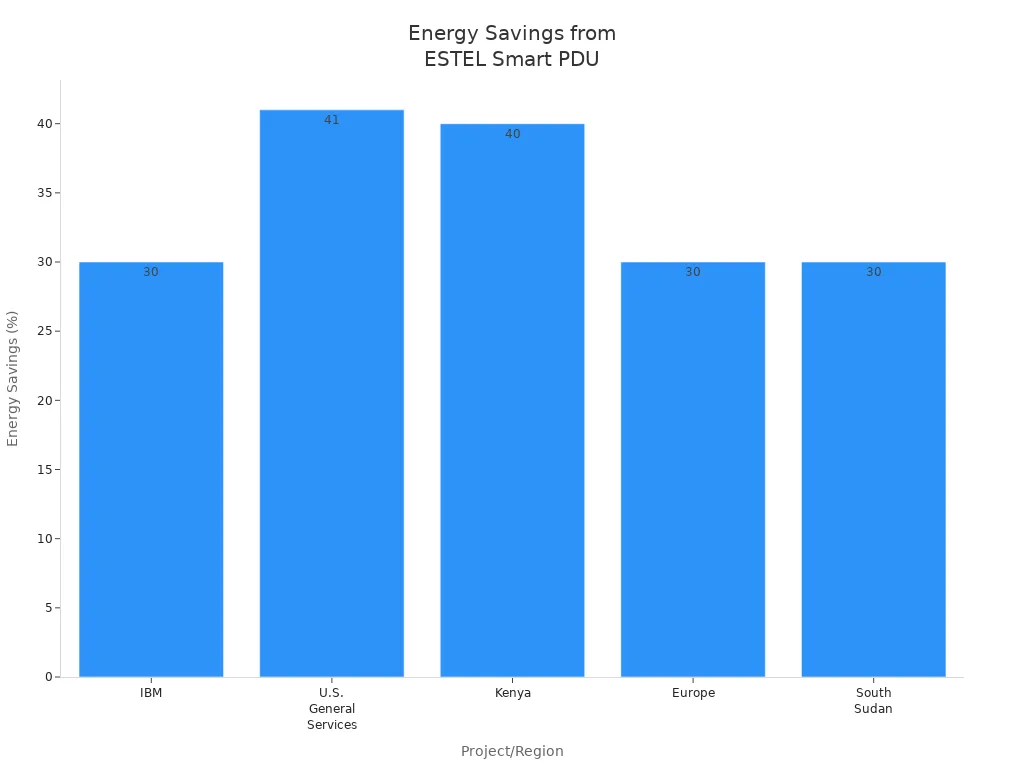
These results show that you can achieve significant energy savings and cost reductions. By using distributed scheduling and the Smart Power Distribution Unit, you make your data center more reliable and efficient.
Key Features and Monitoring
Real-Time Data Collection
You gain immediate insights into your data center’s power consumption when you use real-time data collection. The Smart Power Distribution Unit tracks voltage and current for each cabinet. You can monitor these critical parameters remotely, which helps you spot issues before they become problems. Sensor nodes and IoT technologies gather and process data efficiently. This approach improves energy efficiency and allows you to manage resources proactively.
Key Benefits of Real-Time Energy Monitoring | Description |
|---|---|
Immediate insights into power consumption | Enables quick understanding of energy usage patterns. |
Remote monitoring of critical parameters | Allows tracking of voltage and current from a distance. |
Early detection of anomalies | Helps prevent outages by identifying issues promptly. |
Note: Real-time monitoring helps you detect anomalies early, reducing the risk of outages.
Predictive Analytics and Thresholds
You use predictive analytics to anticipate power needs. The Smart Power Distribution Unit analyzes historical and real-time data to forecast demand. You set thresholds for each cabinet, so the system alerts you when loads approach unsafe levels. This feature helps you avoid overloads and maintain stable operations. You can adjust thresholds based on your equipment and workload patterns. Industry certifications like ISO9001, VDE, UL Listed, CE Mark, and IEC CB Scheme validate the performance and safety of your monitoring system.
Certification | Description |
|---|---|
ISO9001 | Ensures consistent manufacturing processes for quality assurance. |
VDE | Validates electrical safety and performance standards. |
UL Listed | Must meet safety standards to ensure low risk of hazards. |
CE Mark | Must comply with EU safety standards for consumer and workplace. |
IEC CB Scheme | Conform to IEC 60950-1 and IEC 62368-1 standards for international recognition. |
Automated Load Shifting
You benefit from automated load shifting, which keeps power distribution optimal. The system reschedules non-essential tasks to periods with lower energy demand. This practice flattens demand curves and reduces peak loads. You support renewable energy integration and make your data center more responsive. Automated load shifting turns your facility into a flexible resource, acting as a shock absorber for the power grid.
Automated load shifting reschedules non-essential tasks to low-demand periods.
It supports renewable energy integration and enhances grid responsiveness.
Your data center becomes a flexible resource for the power grid.
Implementation in Data Centers
Assessing Current Power Loads
You need to understand your current power usage before you deploy new equipment. Start by calculating the total power consumption of all devices in your data center. Add a buffer to account for future expansion. Use continuous AC sampling to capture both peak and minimum power readings. Make sure your measurements have billing-grade accuracy, ideally within ±0.5%. Always verify that your metering tools comply with IEC 61557-12 standards. Following these steps ensures you have a clear picture of your energy needs:
Calculate total device power consumption.
Add a buffer for future expansion.
Use continuous AC sampling for peak and minimum readings.
Ensure billing-grade metering accuracy (±0.5%).
Verify compliance with IEC 61557-12.
Integrating ESTEL Smart Power Distribution Unit
When you integrate the Smart Power Distribution Unit into your existing setup, you may face some challenges. You want to maintain high efficiency and low standby power. Heat generation can threaten your equipment, so you need effective cooling solutions. Protection for input, output, and temperature is also essential. The table below outlines common challenges and how ESTEL addresses them:
Challenge | Description | How It Is Addressed |
|---|---|---|
Efficiency | Need for higher efficiency and low standby power | Integrated control ICs and optimized switching |
Heat Generation | Heat loss can damage components | Heatsinks, cooling fans, advanced switching systems |
Protection | Input, output, and temperature protections required | Built-in protection functions in control ICs |
Monitoring and Optimization
After installation, you must monitor and optimize your power distribution. Real-time monitoring tools give you actionable insights for efficient management. Overload detection features help you spot issues before they escalate. Set up alarms and notifications to stay informed about system performance. Use advanced monitoring tools for real-time insights into energy usage and overload detection. Configure specific limits for current, voltage, and power to receive alerts before problems arise.
Real-time monitoring identifies and mitigates power quality issues.
Advanced load forecasting algorithms predict future energy demand.
Demand response strategies help you balance energy supply and demand.
Edge computing enables high-frequency monitoring and timely corrective actions.
Scheduled reports and data visualization simplify complex information.
Tip: Regularly review your monitoring data and adjust your system settings to keep your data center running efficiently.
Benefits and Best Practices
Reliability and Uptime
You want your data center to run without interruption. ESTEL’s Smart Power Distribution Unit gives you tools to achieve this goal. Remote power management lets you solve problems quickly, even from a distance. Redundant systems keep your servers running if one part fails. The Automatic Transfer Switch (ATS) moves power to backup sources in seconds, which boosts reliability by 25%. Facilities using ATS PDUs report fewer outages and smoother operations.
Feature | Benefit |
|---|---|
Remote Power Management | Quick problem resolution, better uptime |
Redundancy | Keeps systems running during failures |
Automatic Transfer Switch (ATS) |
Facilities using ATS PDUs see a 25% improvement in reliability.
Preventing Overload Failures
You can prevent overload failures by using smart load balancing. The Smart PDU spreads power evenly across all cabinets. This reduces the risk of tripped breakers and equipment damage. You also get real-time alerts when loads approach unsafe levels. Remote control of individual outlets allows you to reboot devices without shutting down the whole system. These features help you avoid costly downtime.
Energy Efficiency and Savings
You save money and energy with ESTEL’s Smart PDU. A leading data center in Asia reduced energy use by 15% after installing these units. Many organizations report up to 20% lower energy bills, with some saving $50,000 each year. Smart scheduling and automated load shifting help you use less power during peak times. This supports green initiatives and lowers your operational costs.
15% reduction in energy consumption at a major Asian data center
Up to 20% energy savings reported by many organizations
$50,000 annual savings for mid-sized data centers
Algorithm Updates and Staff Training
You keep your system running smoothly by updating algorithms and training your staff. Regular updates ensure your PDU uses the latest load balancing strategies. Staff training helps your team respond quickly to alerts and manage power efficiently. Intelligent features like remote monitoring and control make maintenance easier and reduce the need for on-site visits.
Scalability for Growth
You can grow your data center without worry. The modular design of ESTEL’s Smart PDU lets you add or upgrade units as your needs change. Load balancing distributes power evenly, preventing overloads as you expand. Future-proofing features support new technologies, so your infrastructure stays adaptable.
Scalability Feature | Description |
|---|---|
Modular Design | Easy upgrades and expansions |
Load Balancing | Prevents overloads during growth |
Future-Proofing | Supports advanced technologies for long-term use |
The plug-and-play architecture allows you to add or replace modules without disrupting operations.
You see how distributed scheduling and ESTEL’s Smart Power Distribution Unit protect your data center from single-cabinet overload. These solutions improve reliability and efficiency. You can build a robust operation by following practical steps:
Deploy machine learning models to analyze power data.
Set up monitoring frameworks for real-time alerts.
Schedule regular analysis of incoming data.
Enable automated notifications for anomalies.
Create dashboards to track power trends.
Implement logging for system actions.
Review performance to maintain accuracy.
Take these steps to strengthen your infrastructure and ensure safe, efficient power management.
FAQ
How does the Smart Power Distribution Unit help prevent single-cabinet overload?
You get real-time monitoring and automated load balancing. The unit shifts non-critical loads to other cabinets before overload happens. This keeps your equipment safe and your data center running smoothly.
Can you manage the Smart PDU remotely?
Yes, you can. The Smart PDU supports remote monitoring and control. You can check power usage, set thresholds, and even reboot devices from anywhere using the management interface.
What safety features does the Smart PDU include?
The Smart PDU offers surge protection, temperature monitoring, and a dehumidifying function. These features protect your equipment from electrical faults and environmental risks.
What certifications does the Smart Power Distribution Unit have?
Certification | Purpose |
|---|---|
ISO9001 | Quality assurance |
VDE | Electrical safety |
UL Listed | Hazard prevention |
CE Mark | EU safety compliance |
IEC CB Scheme | International recognition |
Is the Smart PDU suitable for expanding data centers?
You can scale your setup easily. The modular design lets you add more units as your needs grow. Load balancing ensures new cabinets do not become overloaded.
See Also
Understanding ESTEL PDUs and Their Importance in Data Centers
Ensuring Consistent Power Supply for Telecom Cabinet Systems
Enhancing Outdoor Cabinets Through Power, Cooling, and Monitoring
Solar Energy Storage Solutions for Telecom Cabinet Power Needs
Calculating Power Systems and Battery Needs for Telecom Cabinets
CALL US DIRECTLY
86-13752765943
3A-8, SHUIWAN 1979 SQUARE (PHASE II), NO.111, TAIZI ROAD,SHUIWAN COMMUNITY, ZHAOSHANG STREET, NANSHAN DISTRICT, SHENZHEN, GUANGDONG, CHINA
