Dynamic Energy Efficiency Algorithm of Smart Power Distribution Units: Adaptive Power Allocation Based on Load Fluctuations

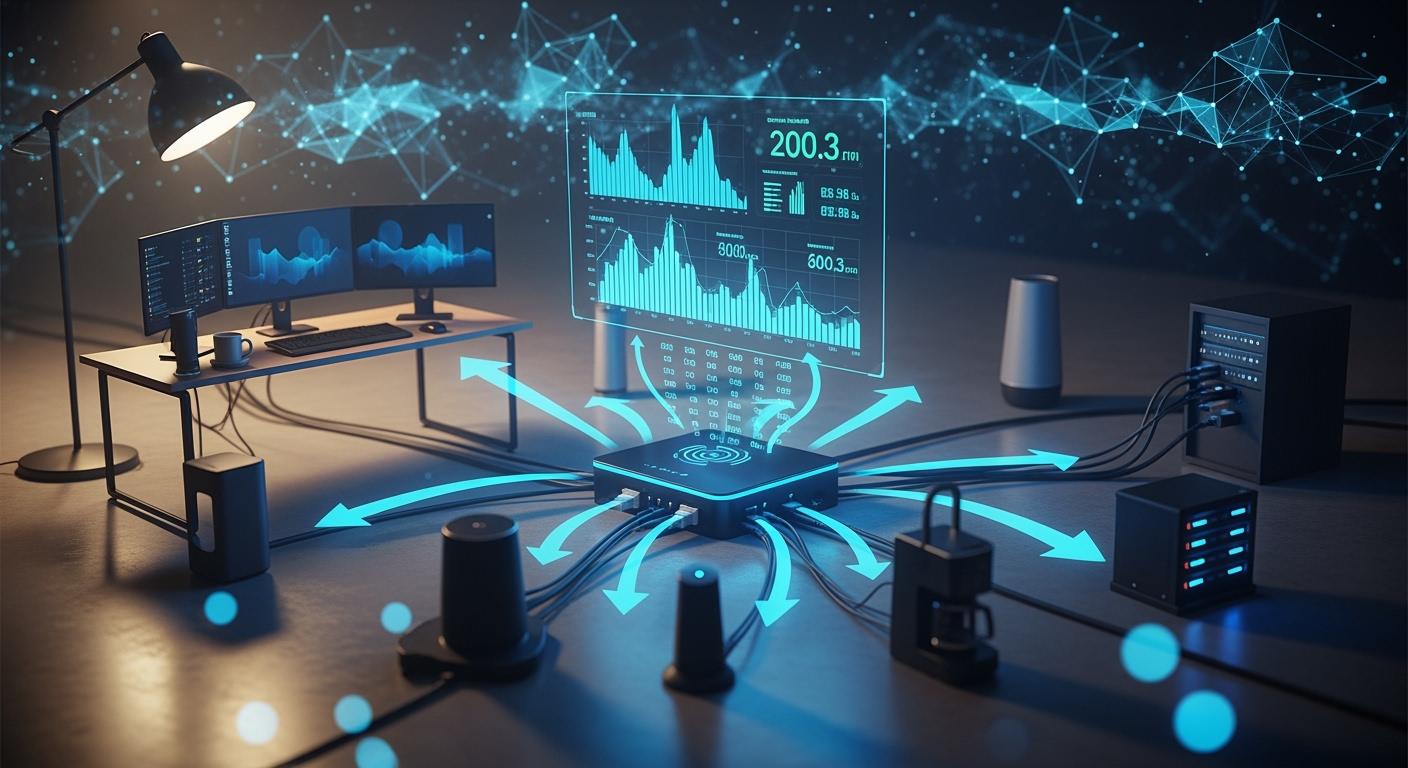
You can achieve efficient power allocation in your network by using dynamic energy efficiency algorithms. These systems respond quickly to load fluctuations and help you avoid energy waste. ESTEL’s Smart Power Distribution Unit gives you real-time control and helps you optimize energy use. You benefit from improved reliability, especially in demanding environments like telecom and data centers. AI and machine learning further enhance your experience by automating processes, predicting energy needs, and improving operational outcomes.
Improvement Type | Description | Impact |
|---|---|---|
Optimize load balancing, power distribution, and cooling systems. | Reduces downtime and energy waste. | |
Remote Monitoring | Cloud-based AI solutions enhance maintenance response times. | Improves operational efficiency. |
Environmental Integration | Sensors enable proactive cooling management. | Prevents equipment failure. |
Capacity Planning | AI supports workload optimization and dynamic power management. | Contributes to sustainable operations. |
Energy efficiency goals drive the adoption of advanced power distribution.
Integration of renewable energy sources is increasing, especially solar.
Many regions focus on improving grid reliability and smart infrastructure.
Key Takeaways
Dynamic energy efficiency algorithms optimize power allocation, reducing energy waste and improving reliability.
Real-time monitoring allows you to track power usage and address issues before they cause downtime.
Upgrading to intelligent Smart Power Distribution Units can lead to significant cost savings and enhanced operational efficiency.
AI and machine learning enhance energy management by predicting needs and automating processes.
Implementing best practices in energy management supports sustainability goals and reduces environmental impact.
Smart Power Distribution Unit Overview
Key Features and Functions
You want a power solution that adapts to your needs and keeps your equipment safe. ESTEL stands out as a trusted provider in the telecom industry. The company values quality, innovation, and customer satisfaction. You benefit from their commitment to international standards and reliable performance.
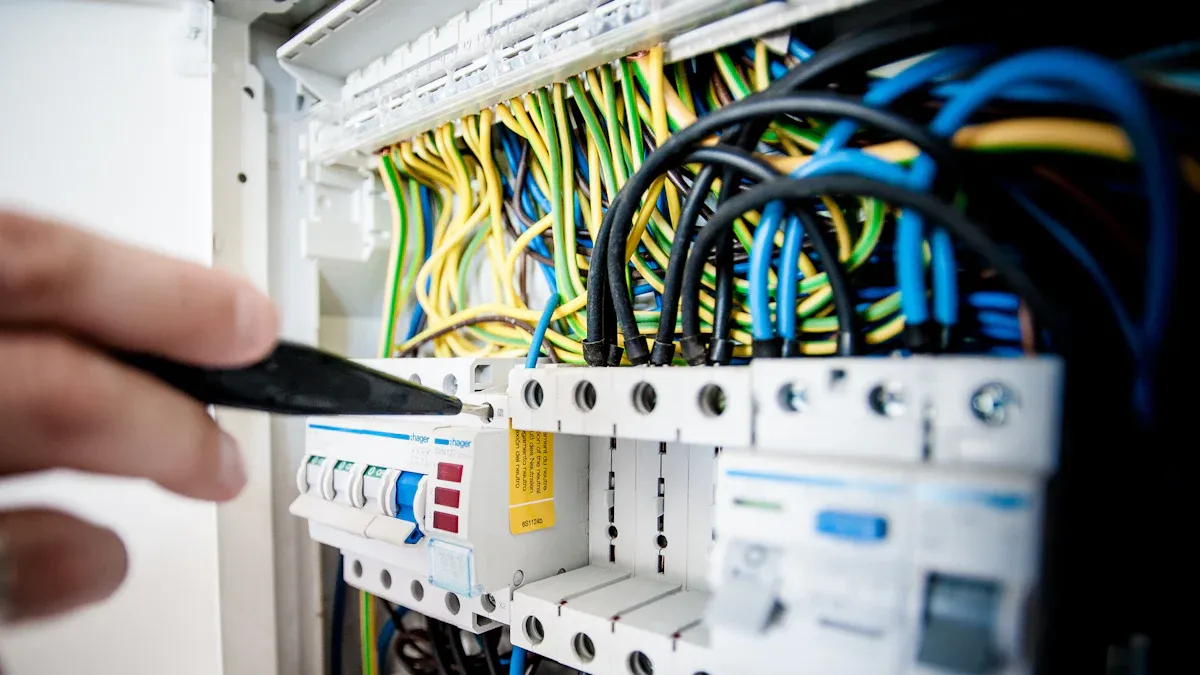
The Smart Power Distribution Unit offers advanced features that make your job easier. You can monitor and control power remotely, which means you do not need to be on-site to manage your network. Real-time data on power usage, temperature, and humidity helps you make informed decisions. You can address issues before they cause downtime.
Here are some of the main features you will find:
Real-time power monitoring and remote management
Customizable outlet configurations for different setups
Compliance with safety standards like UL Listed Mark and CE Mark
Energy efficiency that can save you up to 30% on power costs
Tip: You can control individual outlets remotely, which gives you flexibility and helps you respond quickly to changes in your network.
The following table compares ESTEL’s Smart Power Distribution Unit with a leading competitor:
Feature | ESTEL PDUs | Schneider Electric PDUs |
|---|---|---|
Modular design | Yes, highly adaptable | Limited |
Adjustable mounting | Yes | No |
Input/output compatibility | Wide range | Standardized |
Pre-configured models | No | Yes |
ESTEL’s Product Advantages
You gain several advantages when you choose ESTEL. The Smart Power Distribution Unit has a robust build that ensures reliability, even in tough environments. You get essential safety features like overload protection and surge suppression. Installation is straightforward, so you can set up quickly and start managing your power distribution right away.
Here are some unique selling points:
Unique Selling Points | Description |
|---|---|
Robust Build | Reliable in demanding environments, minimizing downtime |
Essential Safety Features | Overload protection safeguards equipment |
Ease of Installation | Simple setup for users of all experience levels |
Budget-Friendly Pricing | Excellent value for money without compromising quality |
You also benefit from ESTEL’s strong reputation. The company has a proven track record and offers comprehensive warranty coverage. These factors give you confidence in your investment and help you meet your operational goals.
Dynamic Energy Efficiency Algorithms
Adaptive Power Allocation Mechanisms
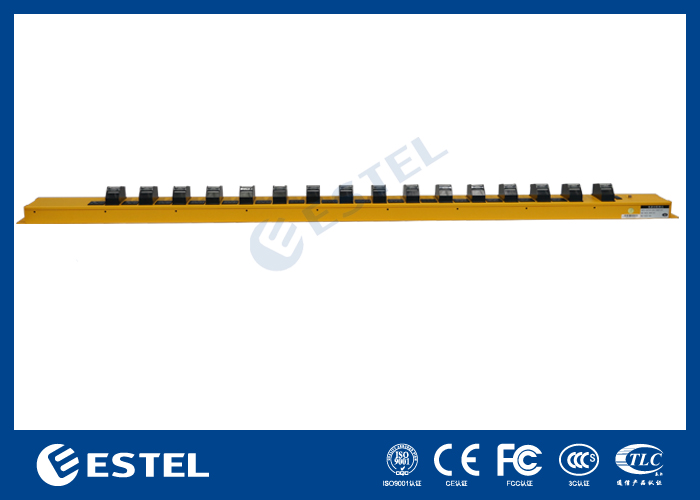
You need a system that can adjust power distribution as your network demands change. Dynamic energy efficiency algorithms make this possible. These algorithms analyze real-time data and adapt power allocation to match the current load. This approach helps you avoid energy waste and ensures that your equipment always receives the right amount of power.
You can see how these mechanisms work in practice:
Mechanism Description | Purpose |
|---|---|
Dynamic transmission of energy function | Optimizes power flow by stabilizing voltage and adjusting system settings. |
Adaptive allocation of power | Uses predictive modifiers to keep the grid stable and reduce energy loss. |
Management function for optimizing performance | Changes system settings to improve flexibility and minimize costs. |
You benefit from these advancements in several ways. For example, adaptive power allocation can reduce frequency deviations by 15%, boost energy efficiency by over 6%, and extend battery lifespan by 8%. These improvements help you protect your infrastructure and lower your operational costs.
Recent studies show that combining smart adaptive algorithms with reinforcement learning leads to even better results. These systems learn from historical data and user behavior. They optimize appliance scheduling, which reduces costs and improves energy efficiency. You can trust that these advanced methods outperform traditional approaches.
Note: When you use a Smart Power Distribution Unit with dynamic algorithms, you gain the ability to respond instantly to load changes. This means less downtime and more reliable service for your network.
Real-Time Load Monitoring
You need accurate, up-to-the-minute information about your power usage. Real-time load monitoring gives you this visibility. With a Smart Power Distribution Unit, you can track key metrics such as current, voltage, and power factor. This data helps you spot inefficiencies and address problems before they lead to outages.
Here are some of the main benefits you can expect:
Benefit | Description |
|---|---|
Immediate insights | See real-time data on power consumption. |
Remote monitoring | Track voltage and current from anywhere. |
Early detection of issues | Identify anomalies before they cause downtime. |
Enhanced control | Manage power usage for each device or outlet. |
Energy savings | Facilities report up to 20% savings with improved monitoring. |
In real-world deployments, organizations have seen an 18% reduction in power consumption, saving about $120,000 each year. Facilities using intelligent PDUs often report energy savings of up to 20%.
You also benefit from advanced analytics powered by AI and machine learning. These technologies improve the accuracy of load forecasting and energy optimization. For example, companies like Austin Energy have saved millions by using forecast APIs in their energy management systems. Battery operators have increased revenue by using AI to optimize charging times.
Aspect | Description |
|---|---|
Role of AI and ML | AI and machine learning improve the accuracy and adaptability of load prediction models. |
Models Used | Methods include LSTM networks, GRUs, and ensemble models. |
Challenges | Data quality and model complexity can affect results. |
Future Directions | Hybrid models and reinforcement learning offer new ways to boost performance. |
You can use real-time dashboards and alerts to monitor your system. These tools help you respond quickly to any issues and keep your network running smoothly. Metrics like average response time, CPU usage, and error rates give you a complete picture of your system’s health.
When you combine dynamic algorithms with real-time monitoring, you create a powerful solution for energy management. You get better efficiency, lower costs, and a more reliable network.
Implementation Strategies and Best Practices
Technologies for Real-Time Data Analysis
You need accurate and timely data to manage your power systems effectively. IoT technologies play a key role in real-time data analysis. These technologies help you collect and control data from your power distribution network. When you use IoT with advanced encoding and privacy-preserving methods, you improve both the speed and security of your data processing. The PSDA scheme, which combines these elements, allows you to analyze power distribution quickly and with less communication overhead. This approach gives you a strong foundation for making smart decisions in your telecom or data center environment.
Integration with ESTEL Smart Power Distribution Unit
You can follow several actionable steps to deploy dynamic energy efficiency algorithms in your facility. Start by assessing your current infrastructure and identifying areas where you can improve energy management. Upgrade to intelligent PDUs that support real-time monitoring and adaptive power allocation. Regularly monitor your power consumption to spot inefficiencies and take corrective actions. Balance your loads to maintain energy efficiency and reduce the risk of overheating.
Tip: Upgrading to intelligent PDUs helps you optimize power distribution and respond quickly to changes in demand.
When you choose ESTEL, you gain several advantages:
Real-time monitoring and advanced power management features increase reliability.
Scalable design lets you expand your IT infrastructure without replacing equipment.
Investing in ESTEL reduces downtime costs and optimizes energy usage for future-proof operations.
You may face some challenges during integration. The table below highlights common issues and their descriptions:
Integration Challenge | Description |
|---|---|
Connection to legacy telecom cabinets | Older designs may not support easy integration. |
Cost and time of upgrades | Upgrades can require significant investment and time. |
Adding or swapping breakers | This process can be complex and affect efficiency. |
Inadequate monitoring | Poor monitoring increases the risk of downtime. |
By following best practices and using the Smart Power Distribution Unit, you can achieve optimal energy management and support the growth of your telecom or data center operations.
Benefits and Solutions
Efficiency and Cost Savings
You can achieve significant efficiency improvements and cost savings by using advanced power management. Many organizations have reported measurable results after deploying ESTEL’s solutions. For example, a leading telecom provider reached energy efficiency levels of up to 97.8%. GreenConnect reduced energy use by 30%, downtime by 25%, and CO2 emissions by 40%. These results show how smart energy management can transform your operations.
Client / Case Study | Performance Metrics and Cost Savings Reported |
|---|---|
Leading Telecom Provider | Energy efficiency up to 97.8%; early issue detection; seamless network expansion |
GreenConnect | 30% reduction in energy use; 25% reduction in downtime; 40% reduction in CO2 emissions |
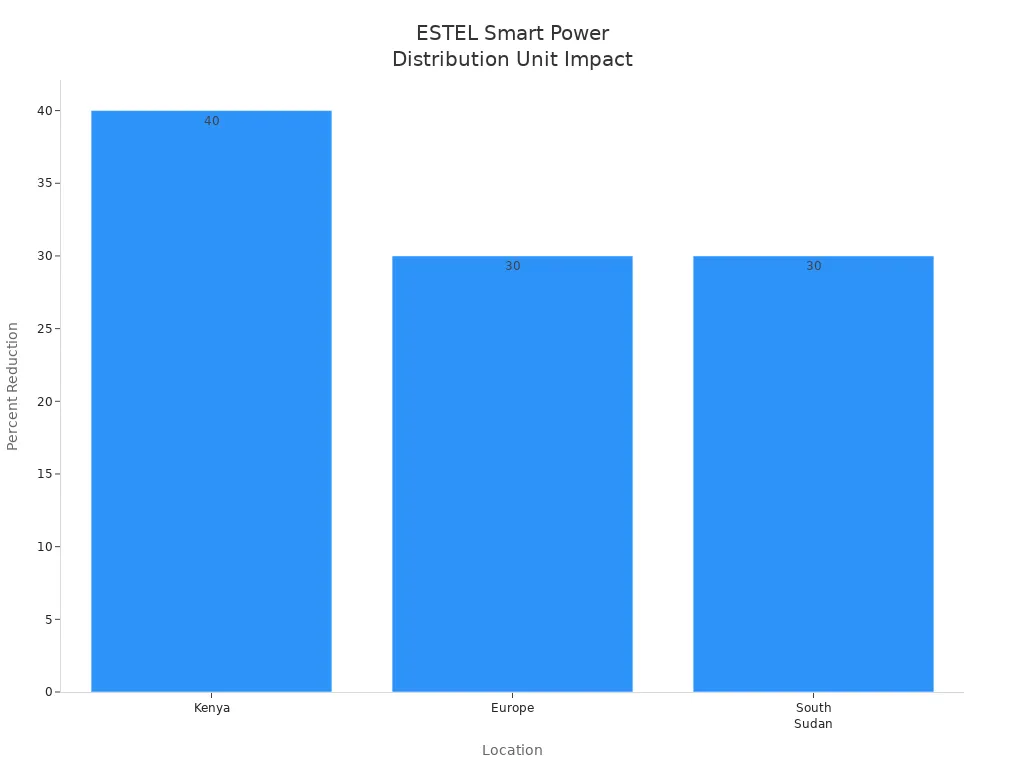
You can see similar outcomes in different regions:
Location | Outcome |
|---|---|
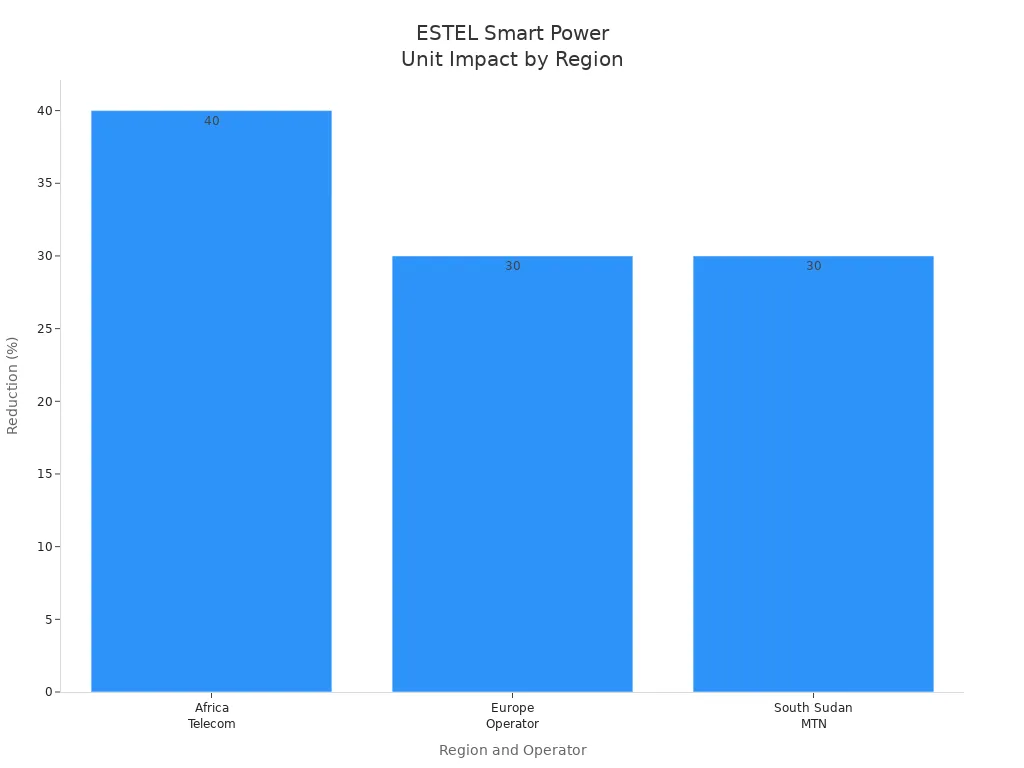
Kenya | 40% reduction in energy expenses after switching to solar-powered towers. |
Europe | 30% reduction in carbon footprint after implementing ESTEL’s modular solar plants. |
South Sudan | 30% reduction in fuel costs after implementing solar energy solutions. |
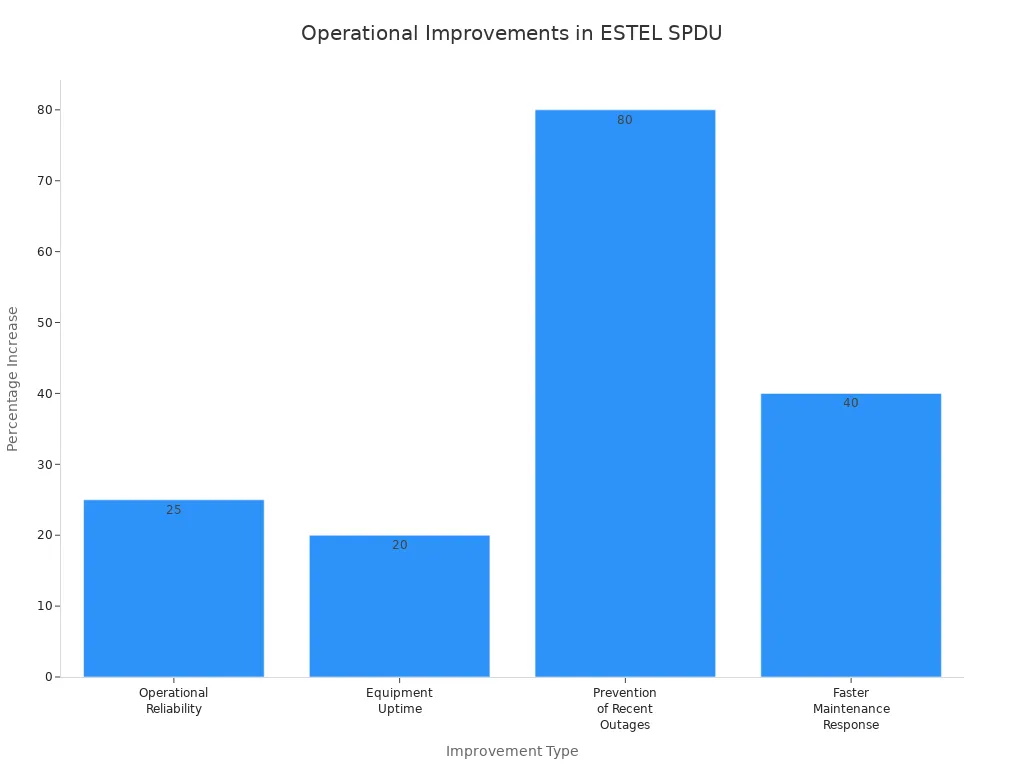
Operators also report a 30% decrease in downtime incidents and 40% faster maintenance response times. You can prevent up to 80% of power-related outages with smart PDUs.
Reliability and Environmental Impact
You improve reliability when you use intelligent monitoring and remote management. For example, a data center in Asia reduced energy consumption by 15% and supported green initiatives. A telecom company improved equipment uptime by 20% and lowered maintenance costs. Advanced monitoring prevents equipment failures and ensures timely maintenance. Real-time monitoring of cooling systems helps you optimize energy use and reduce your environmental footprint.
You can control individual outlets remotely and monitor Power Usage Effectiveness (PUE). This helps you use energy where it is needed most and cut unnecessary costs.
Addressing Common Challenges
You may face challenges such as high initial costs, complex setup, or integration issues. ESTEL’s Smart Power Distribution Unit addresses these with user-friendly features and advanced technology.
Challenge | Impact on Operations |
|---|---|
High Initial Cost | Budget planning becomes critical |
Complex Setup | Requires skilled technicians |
Maintenance Needs | Increases workload |
Space Limitations | May restrict upgrades |
Integration Issues | Can delay deployment |
You benefit from outlet-level monitoring, a rich LCD display, and reliable connectivity options. AI and machine learning help you predict demand and balance loads. Optimization algorithms and modular design make upgrades easy and cost-effective.
Tip: Use remote outlet control to turn off unused equipment and save even more energy.
Real-World Applications
ESTEL Case Studies
You can see the impact of ESTEL solutions in real telecom and data center environments. Operators in Kenya installed ESTEL units in solar-powered cell towers. This change led to a 40% reduction in energy expenses. In India, ESTEL Smart PDUs support photovoltaic systems in rural areas. These systems enhance connectivity and help reduce carbon emissions. Pakistan uses ESTEL units in off-grid solar energy systems. These units power telecom cabinets and water pumps, improving access to clean water.
Kenya: 40% reduction in energy expenses for solar-powered cell towers
India: Improved rural connectivity and lower carbon emissions
Pakistan: Better access to clean water with solar-powered telecom cabinets
You benefit from operational improvements when you deploy ESTEL solutions. The table below shows key results from recent case studies.
Case Study | Key Results | Impact on Energy Consumption |
|---|---|---|
Southeast Asia Mobile Operator | Reduced site visits by 38%, mean time to repair dropped from 12 hours to 4 hours, annual O&M costs fell by $500,000 | Significant energy savings through reduced maintenance and improved operational efficiency |
European Tower Company | Improved system uptime by 22%, cut emergency maintenance trips by half | Enhanced reliability and reduced energy waste during outages |
Telecom Power Systems | Energy consumption reduced by 25-30% with 80Plus certified power supplies | Lower electricity bills and reduced heat output, leading to less cooling needs |
Industry Success Stories
You can measure customer satisfaction through real-world outcomes. In Africa, a leading telecom provider reduced operational costs and improved service reliability. India’s operators solved energy challenges in rural areas, providing uninterrupted connectivity and lowering carbon emissions. European operators cut their carbon footprint by 30%. Southeast Asian telecom companies improved network reliability in off-grid areas. MTN South Sudan reduced fuel costs by 30%.
Region | Operator/Project | Benefit Description | Metric/Outcome |
|---|---|---|---|
Africa | Leading telecom provider | Reduced operational costs and improved service reliability | 40% reduction in energy expenses |
India | Various operators | Addressed energy challenges in rural areas | Uninterrupted connectivity, reduced carbon emissions |
Europe | European operator | Reduced carbon footprint | 30% reduction in carbon emissions |
Southeast Asia | Telecom company | Improved network reliability in off-grid areas | N/A |
South Sudan | MTN South Sudan | Reduced fuel costs | 30% reduction in fuel costs |
You gain reliable performance, lower costs, and improved sustainability when you choose the Smart Power Distribution Unit for your telecom or data center operations.
You can improve your energy management with ESTEL’s Smart Power Distribution Unit. This advanced system uses dynamic energy efficiency algorithms to adapt power allocation as your network load changes. You gain higher efficiency, better reliability, and support for sustainability goals. Explore ESTEL’s solutions to keep your telecom or data center running smoothly and cost-effectively.
FAQ
What is a Smart Power Distribution Unit?
A Smart Power Distribution Unit (PDU) lets you monitor and control power for your equipment. You can manage outlets remotely, track energy use, and protect devices from surges. This helps you keep your network running smoothly.
How do dynamic energy efficiency algorithms work?
These algorithms analyze real-time data from your network. They adjust power allocation based on load changes. You save energy and reduce costs because the system only uses what you need.
Can I integrate ESTEL’s Smart PDU with existing infrastructure?
Yes, you can integrate ESTEL’s Smart PDU with most telecom and data center setups. The unit supports standard connections and offers flexible mounting options. You can upgrade your power management without major changes.
What are the main benefits of using ESTEL’s Smart PDU?
You gain real-time monitoring, remote management, and surge protection. The system helps you lower energy costs, improve reliability, and extend equipment life. You also support sustainability goals.
Tip: Use the remote outlet control feature to turn off unused devices and save even more energy.
See Also
Innovative Energy Storage Solutions for Telecom Cabinet Integration
In-Depth Analysis of High-Efficiency Air Conditioning Units
Solar-Powered Energy Storage Solutions for Telecom Infrastructure
Strategies for Maintaining Consistent Power in Telecom Cabinets
Enhancing Outdoor Cabinets Through Power, Cooling, and Monitoring
CALL US DIRECTLY
86-13752765943
3A-8, SHUIWAN 1979 SQUARE (PHASE II), NO.111, TAIZI ROAD,SHUIWAN COMMUNITY, ZHAOSHANG STREET, NANSHAN DISTRICT, SHENZHEN, GUANGDONG, CHINA
