EMI Shielding of Smart Power Distribution Units: Dual Protection with Metal Housing and Grounding Optimization

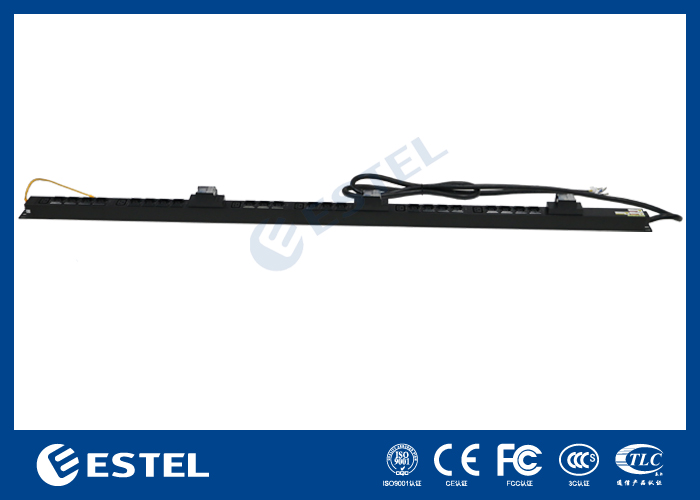
You need strong protection against electromagnetic interference in your Smart Power Distribution Unit. Metal housing blocks unwanted signals. Grounding optimization sends stray currents safely away. ESTEL uses both strategies to give you reliable performance and safety in demanding environments.
Key Takeaways
Metal housing acts as a strong barrier against electromagnetic interference, ensuring reliable performance of your Smart Power Distribution Unit.
Grounding optimization safely directs stray currents to earth, reducing noise and preventing equipment interference.
Combining metal housing with optimized grounding provides dual protection, enhancing energy savings and reducing downtime.
EMI Challenges in Smart Power Distribution Units
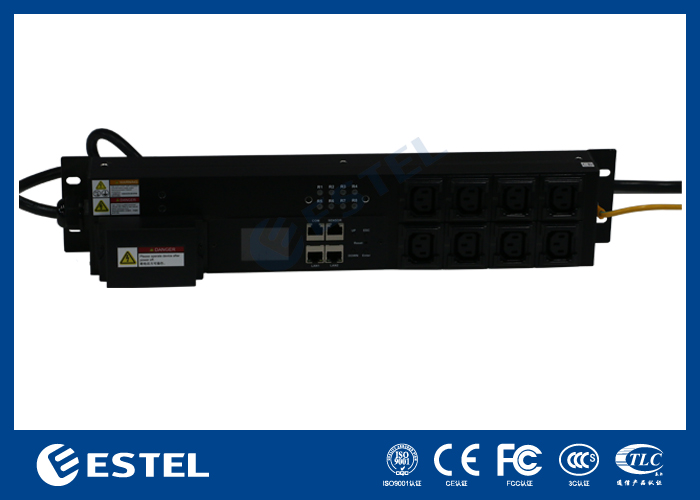
Understanding Electromagnetic Interference
You face electromagnetic interference (EMI) every day in modern telecom and data center environments. EMI comes from many sources that surround your equipment.
5G networks increase electromagnetic exposure because they use many small cells.
The Internet of Things (IoT) brings billions of devices that emit low-power radio signals.
Devices like smart meters and virtual assistants send out electromagnetic waves all the time.
You also need to watch for lightning strikes, switching operations, and power faults. These events can cause sudden voltage spikes and transient currents that disrupt your systems.
Impact on Smart Power Distribution Unit Performance
Your Smart Power Distribution Unit must handle high-frequency noise from power electronics. Switched-mode power supplies and variable frequency drives create interference that can lead to equipment malfunctions.
When EMI enters your Smart Power Distribution Unit, you may see:
Malfunctioning or degraded performance
Connectivity loss between devices
Increased energy consumption as devices work harder
Overlapping signals that complicate operations
As you add more automation and connected devices, the risk of EMI grows. High-frequency noise from nearby equipment can quickly affect your power distribution.
Why EMI Shielding Matters for ESTEL Solutions
You need robust EMI shielding to keep your Smart Power Distribution Unit reliable and compliant. ESTEL uses 360° EMC/EMP shielding gaskets to seal enclosures. This design blocks water, dust, and electromagnetic interference.
You may operate in harsh environments. The table below shows how different conditions can challenge EMI shielding:
Environmental Condition | Impact on EMI Shielding |
|---|---|
High levels of EMI | Disrupts electronic trip units in MCCBs |
Voltage fluctuations | Can affect performance and reliability |
Humidity, dust, shock | Compromise the integrity of shielding materials |
You protect your equipment and ensure stable operation when you choose advanced EMI shielding from ESTEL.
Dual Protection: Metal Housing and Grounding Optimization
Metal Housing for EMI Shielding
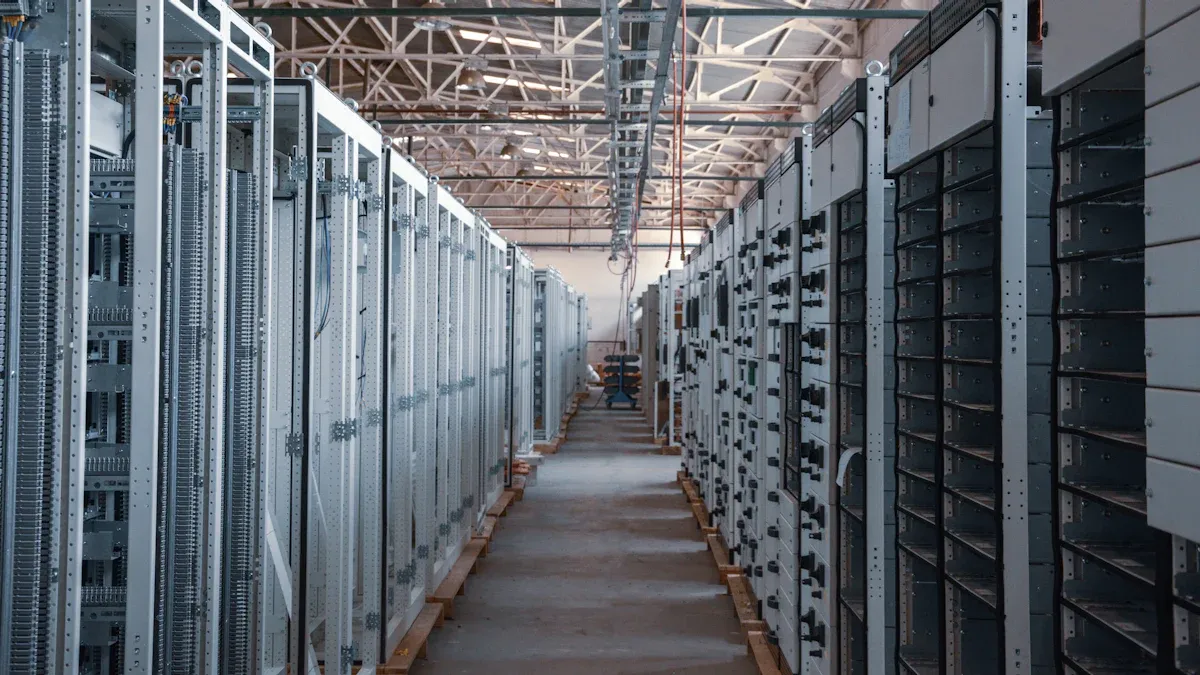
You need a strong barrier to block electromagnetic interference. Metal housing acts as this shield. It surrounds your Smart Power Distribution Unit and stops unwanted signals from entering or leaving. This design follows the Faraday cage principle, which uses a conductive enclosure to confine electromagnetic fields.
You can choose from several materials for metal housing. Each material offers different benefits for EMI shielding. The table below shows common options:
Material Type | Description |
|---|---|
Thermoplastics | Enhanced with conductive fillers like carbon fibers or metal particles. |
Conductive Coatings | Injection-molded housings coated with nickel or copper for better shielding. |
MXenes | Highly effective due to exceptional conductivity and flexibility. |
You should also consider the properties of each metal. Look at cost, weight, corrosion resistance, and how well the material blocks interference. Plating options like tin, nickel, silver, or gold can improve both shielding and corrosion resistance. Make sure your material choice fits the environment where you will use the Smart Power Distribution Unit.
Grounding Optimization Techniques
Grounding gives stray currents a safe path to earth. This step is critical for reducing EMI in your Smart Power Distribution Unit. You can use several grounding techniques, each suited for different frequencies and setups. The table below explains common methods:
Grounding Technique | Description |
|---|---|
Single-point grounding | Works best for low frequencies. Minimizes common-mode impedance coupling. |
Multipoint grounding | Ideal for high frequencies. Provides a low-impedance path to reduce EMI. |
Ground impedance minimization | Uses ground bus, plane, or grid to lower impedance and improve signal integrity. |
Isolation of grounds | Separates grounds by signal type, level, and frequency to prevent interference. |
Use of filters and ferrites | Limits common-mode currents and suppresses EMI. |
Optical isolators | Blocks common-mode EMI, especially in digital circuits. |
You should implement single-point grounding by connecting the common node of input filter capacitors to a single high-current AC return point. Use wide ground traces or copper pours, at least 3 mm wide, to keep impedance low. Keep power and signal grounds separate until they meet at a designated point. This practice helps minimize noise.
Synergy in ESTEL Smart Power Distribution Units
You get the best EMI protection when you combine metal housing with optimized grounding. The metal enclosure blocks external interference. Grounding sends any stray currents safely away. In ESTEL Smart Power Distribution Units, these two strategies work together to create a robust shield.
You also benefit from design features like 360-degree cable shield terminations. This ensures continuity and prevents noise from entering or leaving the enclosure. ESTEL integrates PCB-level shields and connects the PCB ground to the chassis through capacitors. This setup provides a low-impedance path for high-frequency noise.
You can trust that ESTEL follows strict design standards. The company uses advanced materials and proven grounding methods. This approach ensures your Smart Power Distribution Unit operates reliably, even in harsh environments.
Best Practices for Implementation
You can maximize EMI shielding by following these best practices:
Evaluate the properties of different metals. Balance cost, weight, corrosion resistance, and shielding effectiveness.
Use plating options like tin, nickel, silver, or gold to enhance performance and prevent corrosion.
Match your material choice to the environmental conditions of your installation.
Choose materials with high electrical conductivity and magnetic permeability.
Determine the right wall thickness based on the frequency of EMI you expect.
Minimize the number and size of openings in your enclosure.
Implement shielding to confine electromagnetic fields. Create conductive barriers that act as Faraday cages.
Shield all cables that enter or exit the enclosure. Use 360-degree terminations for continuity.
Connect PCB ground to the chassis through capacitors at mounting points.
Use wide ground traces or copper pours for low impedance.
Keep power and signal grounds separate until a designated connection point.
Regularly inspect and maintain all connections. Clean and check for corrosion or loose fittings.
Tip: Avoid common pitfalls like overloading power sources, misconfigurations, and neglecting maintenance. Regularly test your Smart Power Distribution Unit to ensure all protection features work as intended.
By following these steps, you ensure your Smart Power Distribution Unit delivers reliable performance and strong EMI protection.
You gain dual protection with metal housing and grounding optimization. This approach improves energy savings, reduces downtime, and boosts operational efficiency.
Measurable Benefit | Description / Impact |
|---|---|
Energy Cost Savings | Up to 20% reduction in energy consumption |
Downtime Reduction | Up to 30% decrease in downtime incidents |
You also benefit from new EMI shielding technologies:
MXene–carbon hybrids
Innovative fabrication methods
ESTEL delivers reliable, advanced solutions for your power distribution needs.
FAQ
What is the main advantage of using metal housing for EMI shielding?
You block unwanted electromagnetic signals with metal housing. This creates a strong barrier that protects your Smart Power Distribution Unit from external interference.
How does grounding optimization improve EMI protection?
You direct stray currents safely to earth with grounding optimization. This reduces noise and prevents interference from affecting your equipment.
Can you combine metal housing and grounding in harsh environments?
You can combine both methods for maximum protection. This dual approach ensures reliable operation, even in challenging outdoor or industrial settings.
See Also
Understanding The Safety Features Of Custom Telecom Cabinets
Strategies For Safeguarding Equipment In Outdoor Telecom Cabinets
Innovative Energy Storage Solutions For Telecom Cabinets
Ensuring Consistent Power Supply For Telecom Cabinet Operations
Utilizing Solar Energy Storage For Telecom Cabinet Efficiency
CALL US DIRECTLY
86-13752765943
3A-8, SHUIWAN 1979 SQUARE (PHASE II), NO.111, TAIZI ROAD,SHUIWAN COMMUNITY, ZHAOSHANG STREET, NANSHAN DISTRICT, SHENZHEN, GUANGDONG, CHINA
