Interface Design of Smart PDUs with Energy Storage Batteries in Telecom Cabinets: Electricity Optimization Under Peak-Valley Pricing

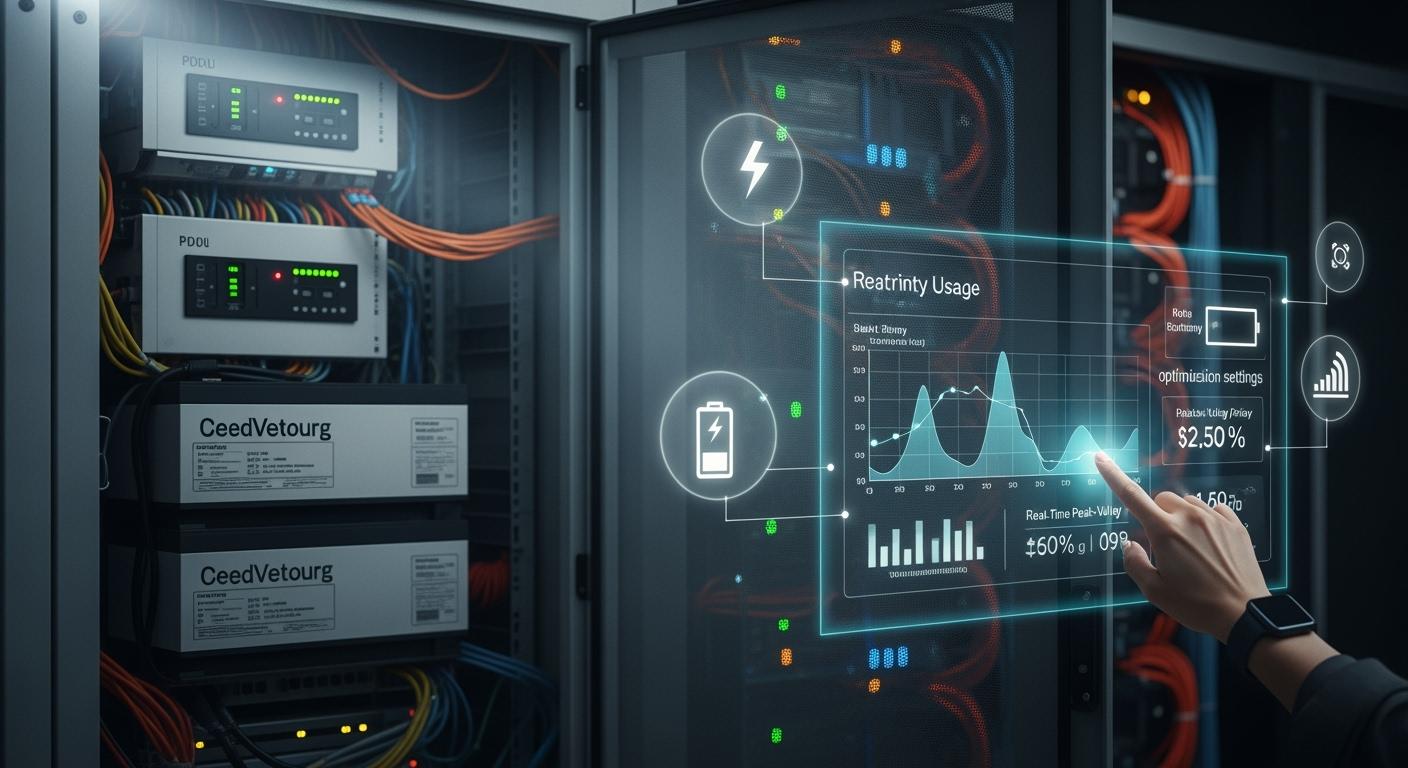
You face rising energy costs and reliability concerns in telecom operations. Interface design in a Smart Power Distribution Unit with energy storage batteries lets you optimize electricity use under peak-valley pricing. With a user-friendly interface, you can monitor energy consumption in real time and adjust load distribution for maximum efficiency.
A telecom operator in eastern China wasted 150,000 kWh annually, losing nearly ¥200,000 due to hidden electricity losses.
Smart PDUs help you track energy trends, shut down inactive components, and spot inefficiencies quickly.
ESTEL stands out as a leader in providing these advanced solutions for telecom cabinets.
Key Takeaways
Smart PDUs enable real-time monitoring and control of energy use, helping you reduce costs and improve efficiency.
Integrating energy storage batteries allows you to charge during low-cost periods and use stored energy during peak times, saving money.
Advanced interfaces in Smart PDUs provide immediate insights into power consumption, helping you spot inefficiencies quickly.
Upgrading to modular designs allows for flexible power management, adapting to changing network demands without costly downtime.
Choosing ESTEL’s solutions can lead to significant long-term savings and improved reliability in your telecom operations.
Smart Power Distribution Unit Integration
Key Features for Telecom Cabinets
You need reliable and efficient power management in your telecom cabinets. A Smart Power Distribution Unit brings advanced features that traditional PDUs cannot match. You can see the difference in the table below:
Feature | Smart PDUs (ESTEL) | Traditional PDUs |
|---|---|---|
Remote Monitoring | Yes | No |
Outlet-Level Control | Yes | No |
Real-Time Data Analysis | Yes | No |
Energy Efficiency Management | Advanced capabilities | Basic capabilities |
With a Smart Power Distribution Unit, you gain remote monitoring and outlet-level control. You can analyze real-time data and manage energy efficiency with advanced tools. These features help you respond quickly to changes in power demand and spot inefficiencies before they become costly problems.
You can also benefit from intelligent protocols and surge protection. The LCD display gives you instant feedback on power status. The dehumidifying function keeps your equipment safe in harsh outdoor environments. These features make your telecom cabinets more robust and reliable.
Energy Storage Benefits
When you integrate energy storage batteries with your Smart Power Distribution Unit, you unlock new ways to save energy and money. You can charge batteries during low-price periods and use stored energy when electricity prices rise. This strategy helps you reduce your overall energy expenses.
Charge batteries during low electricity price periods.
Use stored energy when prices rise to reduce costs.
Utilize intelligent peak staggering technology to actively manage energy needs.
Energy storage batteries also improve the reliability of your telecom operations. They provide backup power during outages, which keeps your network running even if the main grid fails. Lithium-ion batteries offer high efficiency, a long lifespan, and fast recharge times. These qualities support continuous operation and help you meet sustainability goals.
Benefit | Description |
|---|---|
Cost Efficiency | Reduces the need for standalone backup systems at every site, lowering operational costs. |
Shared Resources | Allows for optimized energy distribution through centralized energy reserves. |
Stability During Peak Demand | Provides uninterrupted power during natural disasters or outages, ensuring network reliability. |
You can rely on energy storage systems to absorb excess energy and release it when needed. This ability creates a stable and reliable telecom infrastructure.
ESTEL’s Innovative Solutions
ESTEL leads the way in integrating Smart Power Distribution Units with energy storage batteries for telecom cabinets. You get products designed for extreme outdoor conditions, with features like IP55 protection, anti-theft locks, and energy-efficient cooling systems. ESTEL’s solutions support modular and customizable layouts, so you can match your specific needs.
You benefit from advanced interface design. You can monitor and control your power system remotely, which reduces maintenance costs and downtime. ESTEL’s Smart Power Distribution Unit uses intelligent protocols and real-time data analysis to help you optimize energy use under peak-valley pricing.
You also gain long-term savings. Over ten years, you can reduce energy-related expenses by up to 25%. Maintenance costs drop, and component life extends by as much as 40%. ESTEL’s focus on quality, innovation, and customer satisfaction ensures you receive reliable and future-proof telecom energy solutions.
Tip: Choose a Smart Power Distribution Unit with integrated energy storage to maximize cost savings and network reliability in your telecom cabinets.
Overcoming Traditional Power Allocation Limits
Cost and Efficiency Challenges
You often face limits with traditional power allocation in telecom cabinets. These systems struggle to keep up with changing network demands and rising energy costs. You may find that older cabinets lack flexibility, making upgrades expensive and time-consuming. When your network grows, you need to add or swap breakers, but legacy designs slow you down. You also risk downtime when you cannot monitor power or environmental conditions in real time.
Modern solutions address these challenges with features that boost efficiency and reduce costs. Take a look at how new designs improve your operations:
Feature | Description |
|---|---|
Allows for adding, removing, or swapping breakers as needed to adapt to network demands. | |
Flexibility | Adjusts to changing power needs in evolving telecom facilities. |
Fast Deployment | Prefabricated sections can be quickly shipped, connected, and commissioned. |
Future-proofing | Supports multiple technology refresh cycles, allowing upgrades without replacing the entire unit. |
Reduced Downtime | Remote monitoring and automated power management can cut downtime by up to 25%. |
Real-time Insights | Provides insights into power, temperature, and humidity to prevent outages. |
Integration with Existing Systems | Offers easy integration and real-time energy tracking to improve efficiency. |
You gain the ability to deploy new equipment quickly and keep your network running smoothly. You also benefit from real-time insights that help prevent outages and reduce maintenance costs.
Note: Upgrading to modular and flexible systems lets you respond faster to network changes and avoid costly downtime.
Need for Advanced Interfaces
You need advanced interfaces to manage power distribution efficiently. With a Smart Power Distribution Unit, you can track power usage and environmental conditions from anywhere. You get immediate insights into consumption and spot potential issues before they affect your network. Enhanced control lets you manage power across multiple devices, while adaptability ensures efficient distribution as demands change.
Feature | Benefit |
|---|---|
Remote Monitoring | Enables tracking of power usage and environmental conditions from anywhere |
Real-time Data Access | Provides immediate insights into power consumption and potential issues |
Enhanced Control | Allows for management of power distribution across multiple devices |
Adaptability | Adjusts to changing power demands for efficient distribution |
You see the difference advanced interfaces make in your daily operations. You can adjust settings remotely, analyze data instantly, and optimize your energy use. These capabilities help you save money and keep your telecom cabinets reliable.
Tip: Choose systems with advanced interfaces to maximize efficiency and stay ahead of network demands.
Peak-Valley Pricing Strategy
Concept and Implementation
You can lower your telecom energy costs by understanding peak-valley electricity pricing. This pricing model sets different rates for electricity during high-demand (peak) and low-demand (valley) hours. Utilities charge more when demand is high, usually in the afternoon and evening. They offer lower rates late at night or early morning when demand drops.
Telecom operators use this strategy to save money. You can program your system to charge batteries during valley hours when electricity is cheap. During peak hours, you use stored energy instead of drawing expensive power from the grid. This approach helps you avoid high charges and keeps your network running smoothly.
Many telecom companies have seen real savings with this method. You can see the results below:
Telecom operators have reported a 20-25% reduction in annual energy costs by optimizing energy management through peak-valley pricing strategies.
Real-time monitoring and intelligent power management have led to a reduction in energy consumption by up to 20%, contributing to significant financial savings.
Note: You can achieve these savings by combining smart scheduling with real-time data analysis.
Interface Design for Optimization
You need a well-designed interface to make the most of peak-valley pricing. The interface in your Smart Power Distribution Unit gives you the tools to control and monitor your energy use in real time. You can analyze your cabinet’s power consumption patterns using live data. You check your local utility’s pricing schedule to find low and high-cost hours. You set up battery charging schedules to take advantage of low-cost periods and use stored energy when prices spike.
Here is how you can optimize electricity usage step by step:
Analyze your energy usage with real-time data from your cabinet.
Identify electricity price fluctuations by checking your utility’s schedule.
Set up battery charging schedules for low-cost periods.
Integrate your Smart Power Distribution Unit to manage power flow precisely.
Apply AI optimization to predict demand and adjust charging and discharging.
Monitor and adjust your system using real-time feedback.
Your interface should include key elements that make control and monitoring easy. You can use the following features:
Key Element | Description |
|---|---|
Voltage Trend | Track voltage levels over time to spot anomalies quickly. |
Load Heatmap | See a visual map of load distribution to find hotspots and inefficiencies. |
Alarm/Event Timeline | View events in order, with color coding for severity, so you can respond faster. |
You get instant feedback and clear visuals. You can spot problems before they grow. You adjust your system to match demand and pricing changes. This approach helps you save money and keeps your telecom cabinets reliable.
Tip: Use interfaces with real-time monitoring and smart scheduling to maximize your savings under peak-valley pricing.
Benefits of Smart PDUs in Telecom Cabinets
Cost Savings and ROI
You can see real financial benefits when you upgrade your telecom cabinets with smart technology. Smart PDUs help you cut energy costs and improve your return on investment. Here are some results you can expect:
You can reduce annual energy costs by 20–25% by optimizing energy use.
Scheduling battery charging during off-peak hours lowers your electricity bills.
Real-time monitoring lets you spot energy waste and turn off unused equipment.
A leading data center in Asia saw a 15% drop in energy consumption after installing smart PDUs.
One telecom company improved equipment uptime by 20% and reduced maintenance costs.
These savings add up quickly. You get a faster payback period and more value from your investment.
Reliability and Sustainability
Smart PDUs make your network more reliable and support your sustainability goals. You can manage power more efficiently and protect your equipment from damage. The table below shows how different features improve your operations:
Feature | Benefit |
|---|---|
Efficient power distribution | Keeps your network running smoothly |
Overload protection | Prevents damage and failures |
Real-time monitoring | Detects power issues immediately |
Remote control | Manages power from anywhere |
Trend reporting | Spots problems before they escalate |
Intelligent monitoring | Tracks temperature and humidity |
Real-time alerts | Warns about risks early |
Surge protection | Shields devices from voltage spikes |
Remote management | Speeds up maintenance by up to 40% |
You also help the environment. Smart PDUs optimize energy use, reduce waste, and extend equipment life. Many operators report lower carbon emissions and a smaller environmental footprint.
Tip: Using smart PDUs with hybrid solar systems can cut CO2 emissions by over 50%.
ESTEL Case Example
ESTEL’s Smart Power Distribution Unit stands out in real-world deployments. You benefit from improved reliability, energy savings, and easier maintenance. ESTEL’s customers have seen:
Faster response to power demand changes with real-time data monitoring.
Fewer equipment failures due to load balancing and predictive maintenance.
Lower energy bills and reduced maintenance costs.
Flexible expansion for future network growth.
You can trust ESTEL to deliver solutions that support your business and sustainability goals.
You can achieve electricity optimization under peak-valley pricing by using smart interface design in Power Distribution Units with energy storage batteries.
Charge batteries during low-cost hours and use stored energy when prices rise.
Intelligent peak staggering and AI planning improve efficiency and reliability.
Automation and modular designs help you adapt to future telecom needs.
Consider ESTEL’s advanced solutions for future-proof energy management. Start by evaluating your current system and explore smart upgrades to boost efficiency and reduce costs.
FAQ
How does a Smart Power Distribution Unit help you save energy?
You can monitor and control power use in real time. Smart PDUs let you schedule battery charging during low-cost hours. You reduce waste by shutting down unused equipment. This approach lowers your electricity bills.
What makes ESTEL’s Smart PDU interface user-friendly?
You get an LCD display with clear data. Remote management lets you adjust settings from anywhere. The interface uses simple menus and real-time alerts. You can spot issues quickly and take action.
Can you integrate energy storage batteries with existing telecom cabinets?
Yes, you can add energy storage batteries to most modern cabinets. ESTEL’s modular designs support easy upgrades. You improve backup power and optimize energy use without replacing your whole system.
What maintenance does a Smart PDU require?
You need to check connections and clean the unit regularly. Use the remote monitoring feature to spot problems early. Schedule routine inspections to ensure reliable operation.
See Also
Telecom Cabinets Powered By Photovoltaic Energy Storage Solutions
Battery Systems And Inverters For Grid-Connected Telecom Cabinets
Integrated Energy Storage Solutions For ESTEL Telecom Cabinets
ESTEL Telecom Cabinets Equipped With Advanced Energy Storage Batteries
Calculating Power Systems And Battery Needs For Telecom Cabinets
CALL US DIRECTLY
86-13752765943
3A-8, SHUIWAN 1979 SQUARE (PHASE II), NO.111, TAIZI ROAD,SHUIWAN COMMUNITY, ZHAOSHANG STREET, NANSHAN DISTRICT, SHENZHEN, GUANGDONG, CHINA
