High Power Factor Correction Smart PDU Solution for Efficient Grid Capacity Utilization in Telecom Cabinets

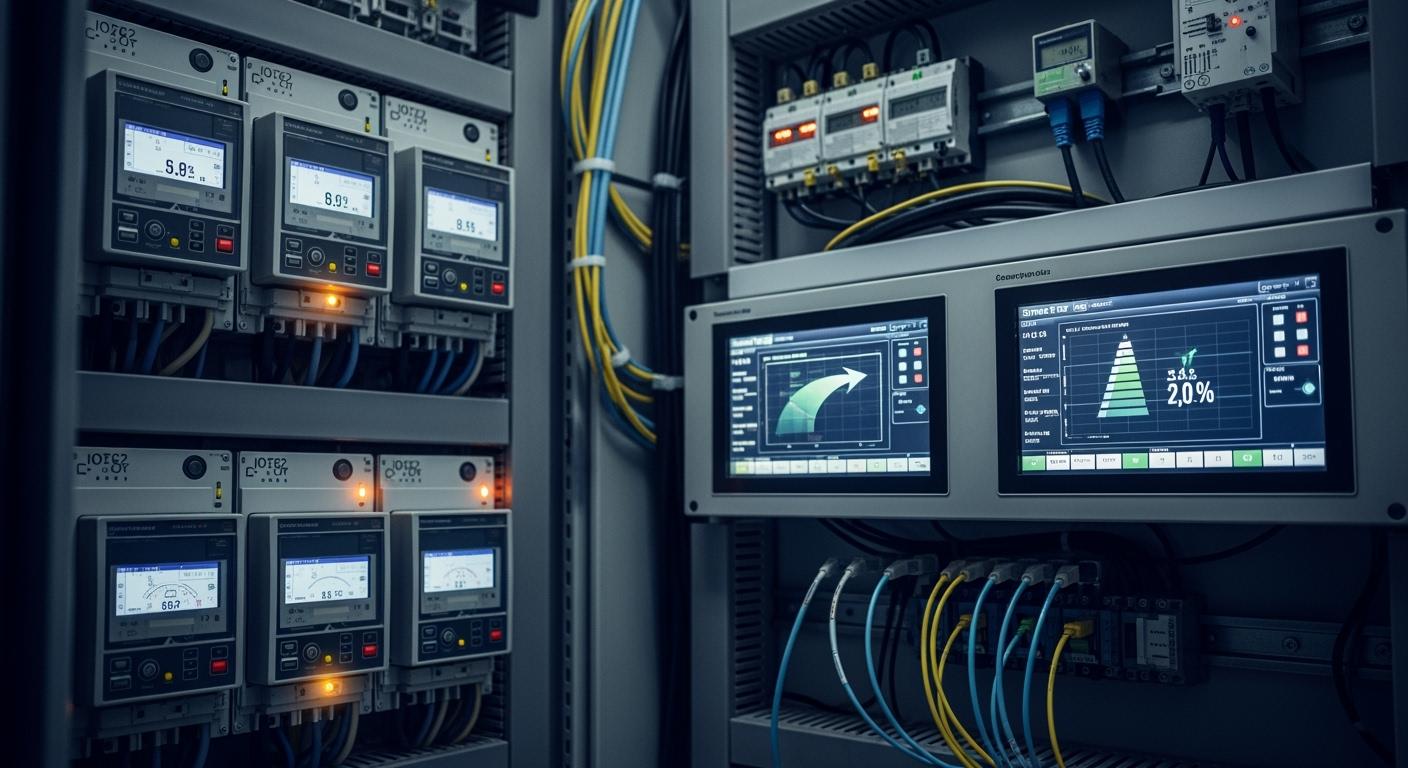
You can boost the performance of your telecom cabinets by using advanced power factor correction. When you install a Smart Power Distribution Unit, you increase the amount of usable grid capacity for your network. Improved power factor means your equipment draws power more efficiently, so you save energy and reduce costs. Smart PDUs help you monitor energy usage in real time, right-size your power setup, and prevent overloads before they happen. This leads to greater reliability and smoother operations for your telecom sites.
Key Takeaways
Improve energy efficiency by using Smart Power Distribution Units, which optimize power usage and reduce electricity costs.
Monitor energy consumption in real time to prevent overloads and enhance reliability in telecom cabinets.
Implement predictive maintenance to lower operational costs and minimize downtime, leading to better service quality.
Utilize advanced features like remote control and environmental monitoring to quickly address issues and protect equipment.
Achieve significant savings, with operators reporting up to 41% reduction in energy expenses and improved system uptime.
Power Factor in Telecom Cabinets
What Is Power Factor?
You may wonder what power factor means in your telecom cabinet. Power factor measures how well your system uses electrical power. It shows the relationship between real power, which does the actual work, and apparent power, which is the total power supplied to your equipment. When your power factor is close to 1, your system uses electricity efficiently. If the value drops, your system wastes more energy. In telecom cabinets, a high power factor helps you get the most out of every unit of electricity.
Impact on Grid Capacity
Power factor has a direct effect on how much usable capacity you get from the grid. If your power factor is low, your equipment draws more current than needed. This leads to higher energy losses and increased electricity costs. You also risk overloading your circuits, which can cause reliability issues.
A high power factor means you use electricity more efficiently. Modern telecom rectifiers can reach a power factor of 0.99, so almost all the power goes to useful work. When you improve your power factor, you reduce heat, lower energy losses, and prevent overloads. This helps you save money and keep your telecom cabinets running smoothly.
You can use a Smart Power Distribution Unit to monitor and correct your power factor. This device helps you manage your power usage, avoid unnecessary losses, and make the most of your grid connection. By focusing on power factor correction, you ensure your telecom cabinets operate at peak efficiency.
Grid Utilization Challenges
Common Issues in Telecom Cabinets
You face several challenges when managing grid utilization in telecom cabinets. Many cabinets rely on manual monitoring, which increases the risk of human error. You may not detect problems quickly, leading to delays in fixing faults. Limited remote control slows your response time and raises operational costs. Frequent downtime disrupts your network and affects service quality. Safety risks also threaten your equipment and personnel, especially in harsh environments.
Note: You can reduce these risks by using smart monitoring and automation. This approach helps you detect issues early and respond faster.
Here is a summary of the most common grid utilization challenges:
Limitation | Impact on Energy Efficiency |
|---|---|
Manual Monitoring Issues | Increases risk of human error and delays in problem detection. |
Limited Remote Control | Slows response time and increases operational costs. |
Frequent Downtime | Disrupts network and affects service quality. |
Safety Risks | Threatens equipment and personnel due to environmental factors. |
You also see differences between urban and rural telecom sites. In urban areas, you need high energy efficiency and reliability for dense networks and advanced technologies like 5G. In rural areas, you often deal with unreliable power supply and limited access to traditional energy sources. Smart microgrid systems and advanced energy storage can help you overcome these challenges.
Effects of Poor Power Factor
Poor power factor creates several operational issues in your telecom cabinets. Electrical failures become common because rectifier modules wear out from repeated stress. You may notice thermal failures, as excessive heat causes capacitors to swell and circuits to warp. Environmental challenges, such as temperature swings, lead to condensation and corrosion inside your cabinets. Integration issues arise when incompatible modules or poor installation disrupt performance. Human factors, like skipped maintenance or missing documentation, delay fault detection.
Here is a table that outlines these issues:
Operational Issue | Description |
|---|---|
Electrical Failures | Rectifier modules wear out from repeated stress, reducing power conversion efficiency. |
Thermal Failures | Excessive heat causes capacitors to swell, solder joints to crack, and circuits to warp. |
Environmental Challenges | Temperature swings in outdoor units create condensation that corrodes internal boards. |
Integration Issues | Incompatible modules or poor installation disrupt cabinet performance. |
Human Factors | Inadequate training, skipped maintenance, or missing documentation delay fault detection. |
You can see that poor power factor not only wastes energy but also increases the risk of equipment failure and service interruptions. By addressing these challenges, you improve the reliability and efficiency of your telecom infrastructure.
Smart Power Distribution Unit by ESTEL

Intelligent Features & Monitoring
You need reliable power management in your telecom cabinets. ESTEL’s Smart Power Distribution Unit gives you advanced features that help you keep your network running smoothly. You can control outlets remotely, monitor energy use in real time, and automate important tasks. These features let you respond quickly to problems and reduce the risk of downtime.
Here is a table that shows the intelligent features you get:
Feature | Description |
|---|---|
Redundant Power Supplies | Backup power sources minimize downtime if one fails. |
Dual-Source PDUs | Two independent power sources switch automatically when one fails. |
High Uptime Availability | Maintains 99.999% uptime for continuous power. |
Remote Outlet Control | Manage devices from anywhere. Reboot or restore service without visiting. |
Automation Capabilities | Automate reboots, schedule power-downs, and trigger actions on conditions. |
Environmental Monitoring | Track temperature and humidity to prevent equipment damage. |
Security Measures | Locking systems and anti-tamper designs protect against theft and damage. |
Energy Efficiency | Optimize power usage and reduce costs. |
Customization | Modular socket systems provide flexibility for your needs. |
You can see how these features help you manage your power system better. Real-time monitoring lets you track energy use and spot inefficiencies. Environmental sensors alert you to risks like high temperature or humidity. You get detailed power data, which helps you make smarter decisions for your network.
The Smart Power Distribution Unit also supports predictive maintenance. With smart monitoring, you can lower maintenance costs, reduce downtime, and cut emergency repairs. The chart below shows how predictive maintenance improves your operations:
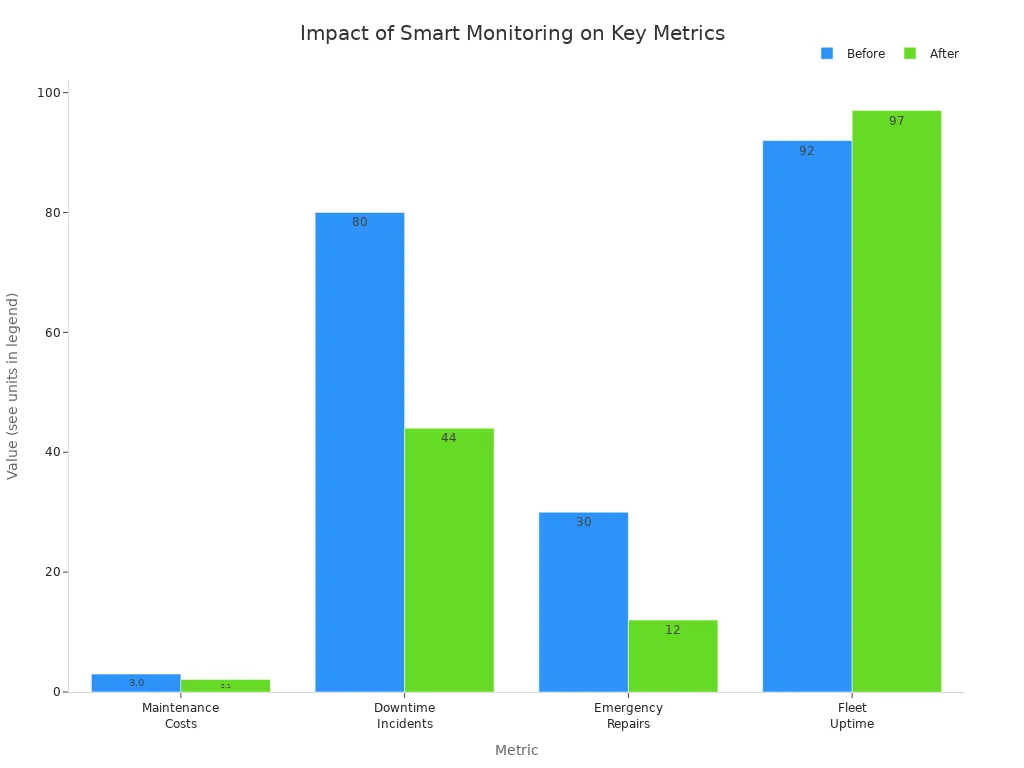
You can see a 30% drop in maintenance costs and a 45% reduction in downtime incidents. Emergency repairs go down by 60%, and fleet uptime rises from 92% to 97%. These improvements show how smart monitoring makes your telecom cabinets more reliable and efficient.
The monitoring system gives you real-time data at both the rack and outlet levels. You can identify minor power fluctuations before they become major issues. Continuous updates and alerts help you respond quickly to potential problems. AI-driven insights analyze current and historical data, so you can manage network health and maximize grid capacity usage. You also increase safety and lower operational costs by controlling and monitoring your system from anywhere.
Integration with Telecom Power System
You want your power system to work together smoothly. ESTEL’s Smart Power Distribution Unit integrates easily with your existing telecom power systems. The modular design allows you to scale up as your network grows. Plug-and-play installation means you can use the unit with both new and older devices. You can connect the unit to sensor networks for better monitoring and control.
Here are some ways you can integrate the Smart Power Distribution Unit with your telecom power system:
Unified control of cabinets across different regions
Streamlined monitoring for all your sites
Support for predictive maintenance
Modular design for easy scalability
Plug-and-play installation for compatibility with new and legacy devices
Integration with IoT platforms for streamlined operations
Receive instant alerts for temperature, humidity, or power anomalies
Use automated systems to pinpoint faulty sockets or components
Integrate with robotic inspection tools for targeted maintenance
You should evaluate your current infrastructure and identify the features you need. Check your existing systems for compatibility with smart PDUs and environmental sensors. Set up secure network configurations and choose protocols like SNMP or MQTT for communication. Configure the system to collect telemetry from sensors and visualize key metrics for proactive management.
ESTEL’s Smart Power Distribution Unit supports integration with management systems and meets industry standards for safety and reliability. You get real-time monitoring, remote management, environmental sensing, and overload protection. These features help you optimize grid capacity and keep your telecom cabinets running at peak performance.
Benefits for Telecom Operators
Energy Efficiency & Cost Savings
You can achieve significant energy savings by deploying advanced power management in your telecom cabinets. When you use ESTEL’s Smart Power Distribution Unit, you optimize how your equipment draws power. This leads to lower electricity bills and less wasted energy. Many operators have seen their energy expenses drop by up to 41%. In Africa, energy expenses fell by 40%. In South Sudan, fuel costs dropped by 30%. European operators reduced their carbon footprint by 30%.
Here is a table that shows the improvements you can expect:
Region | Improvement Type | Percentage Improvement |
|---|---|---|
Africa | Energy Expenses | 40% |
Europe | Carbon Footprint | 30% |
South Sudan | Fuel Costs | 30% |
N/A | Energy Savings | Up to 41% |
N/A | Efficiency Improvements |
You also benefit from lower operational costs. For example, GreenConnect reduced energy use by 30% and downtime by 25%. A Southeast Asia operator cut site visits by 38% and saved $500,000 each year. These savings add up quickly and help you recover your investment in less than two years. Some small-scale units reach payback in just over six months.
Here are some real-world results:
Case Study | Key Results |
|---|---|
GreenConnect | 30% less energy use, 25% less downtime |
Southeast Asia Operator | 38% fewer site visits, $500,000 saved yearly |
You can also see improvements in energy efficiency and maintenance costs. A leading telecom provider achieved energy efficiency up to 97.8%. Another operator reduced mean time to repair from 12 hours to 4 hours. European tower companies improved system uptime by 22% and cut emergency maintenance trips by half.
Client / Case Study | Performance Metrics and Cost Savings Reported |
|---|---|
Leading Telecom Provider | Energy efficiency up to 97.8%; early issue detection |
GreenConnect | 30% reduction in energy use; 25% reduction in downtime |
Southeast Asia Mobile Operator | Reduced site visits by 38%, mean time to repair dropped |
European Tower Company | Improved system uptime by 22%, cut emergency trips by half |
Tip: You can track your annual savings from reduced electricity and maintenance costs. Many operators see operational expenses decrease by 25-35%. These savings can offset your initial investment and boost your return on investment.
Reliability & Performance
You need reliable power to keep your telecom network running. ESTEL’s Smart Power Distribution Unit gives you advanced protection and monitoring. Surge protection intercepts power surges before they reach your equipment. This prevents damage and keeps your network safe. Overcurrent protection detects abnormal current levels and disconnects power instantly. This stops overheating, fires, and equipment damage.
You receive real-time alerts and can monitor power usage at all times. This helps you spot problems early and respond quickly. You also reduce the risk of equipment failure by up to 30%. Battery failure rates have dropped by 98% from 2018 to 2024. Maintenance costs fell by up to 25%. Operational efficiency improved by 30%. Mean Time to Repair (MTTR) decreased from 4.8 hours to 3.1 hours.
Advanced surge protection intercepts surges before they reach sensitive equipment.
Prevents immediate and irreversible damage to electronic components.
Minimizes downtime and operational disruptions.
Ensures continuity and longevity of equipment.
Overcurrent protection mechanisms detect abnormal current levels and respond instantly.
Disconnects the power supply to prevent overheating, fires, and equipment damage.
Provides real-time alerts and monitoring for power usage.
Equipment failure risk reduced by up to 30%.
Battery failure rates decreased by 98% from 2018 to 2024.
Maintenance costs fell by up to 25%.
Operational efficiency improved by 30%.
Mean Time to Repair (MTTR) reduced from 4.8 hours to 3.1 hours.
You can see these benefits in your daily operations. Your network stays online longer, and you spend less time and money on repairs. You also protect your investment and extend the life of your equipment. This means you deliver better service to your customers and keep your business competitive.
Implementation Steps
Deployment in Telecom Cabinets
You can deploy advanced power management in your telecom cabinets by following a clear process. Start by assessing your cabinet’s space and power requirements. This helps you choose the right equipment for your needs. Next, inspect all incoming and outgoing wires at the PDU panel. Secure connections prevent faults and improve safety. Pay special attention to PE cables to avoid electrical issues.
Use a resistance meter to test insulation. Aim for values above 0.5MΩ to ensure safety. Run a no-load test and check different load scenarios. This confirms that your system works reliably under all conditions. Mount the unit vertically to optimize cable management and airflow. Connect sensors and interfaces, then ground the equipment. Finally, configure your monitoring platform for real-time data.
Tip: Careful installation reduces the risk of faults and extends the life of your equipment.
You may face some challenges during deployment. The table below shows common issues and how you can address them:
Challenge | Description |
|---|---|
Heat Management | Excessive heat can cause failures. Use effective cooling solutions. |
Power Reliability | Unstable power sources disrupt operations. Install backup systems. |
Environmental Risks | Temperature swings and humidity damage equipment. Use protective measures. |
Proactive Maintenance | Regular checks prevent failures and keep performance high. |
Monitoring & Maintenance
You need to monitor your system daily to keep it running smoothly. Start by evaluating the number and location of your cabinets. Check for environmental risks like temperature swings, humidity, or water leaks. Make sure your setup meets standards such as NEMA, IP ratings, and NEBS.
Choose intelligent PDUs that support real-time monitoring and remote management. Use sensors to track both power and environmental conditions. Schedule routine maintenance, including annual testing of switches and breakers. Organize cables for better airflow and train your staff for regular checks.
Regular maintenance leads to fewer service calls and less downtime. The table below highlights the benefits:
Evidence Type | Description |
|---|---|
Maintenance Impact | Fewer maintenance calls and reduced downtime save costs and boost reliability. |
Environmental Resistance | Advanced materials improve resistance to stress and ensure long-term performance. |
Testing Standards | Rigorous testing ensures units withstand harsh conditions and stay reliable. |
Note: Consistent monitoring and maintenance help you prevent problems before they affect your network.
You can solve grid capacity challenges in your telecom cabinets by choosing ESTEL’s advanced solution. Operators see real results:
Metric | Outcome |
|---|---|
Energy Cost Reduction | |
Maintenance Savings | 75% less |
Uptime | 365 days nonstop operation |
Failure Cost Drop | 30% less |
You gain higher efficiency, longer equipment life, and reliable service. For the best results, select a smart, modular system that grows with your network.
FAQ
How does ESTEL’s Smart Power Distribution Unit improve energy efficiency?
You monitor power usage in real time. The unit optimizes energy flow and reduces waste. You see lower electricity bills and less downtime. Smart features help you maintain efficient operations.
Can you control the Smart PDU remotely?
Yes, you access remote control features. You reboot devices, monitor power, and receive alerts from anywhere. This helps you respond quickly to issues and maintain network reliability.
What safety features protect your equipment?
Surge protection and overcurrent detection keep your devices safe.
The unit includes locking systems and anti-tamper designs.
You prevent overheating, fires, and equipment damage.
Is the Smart PDU compatible with existing telecom cabinets?
Compatibility Feature | Benefit |
|---|---|
Modular Design | Easy integration |
Plug-and-Play | Works with old and new |
Standard Protocols | Supports SNMP, MQTT |
You install the unit without major changes to your setup.
See Also
Innovative Energy Storage Solutions for Telecom Cabinet Power
Ensuring Consistent Power Supply for Telecom Cabinet Operations
Smart Energy Storage Systems for Telecom Cabinets by ESTEL
Photovoltaic Inverter and Battery Solutions for Telecom Cabinets
Understanding ESTEL PDUs and Their Importance in Data Centers
CALL US DIRECTLY
86-13752765943
3A-8, SHUIWAN 1979 SQUARE (PHASE II), NO.111, TAIZI ROAD,SHUIWAN COMMUNITY, ZHAOSHANG STREET, NANSHAN DISTRICT, SHENZHEN, GUANGDONG, CHINA
