Lifecycle Cost Analysis of Smart PDUs in Telecom Cabinets: Economic Comparison for Long-Term O&M

Telecom operators see clear economic advantages when they choose smart PDUs, such as ESTEL's Smart Power Distribution Unit, for long-term operation and maintenance in telecom cabinets. Industry data shows that smart PDUs can prevent up to 80% of power-related outages and improve energy efficiency by as much as 20%. The table below highlights key performance metrics:
Metric | Value |
|---|---|
Percentage of downtime caused by power outages | 33% |
Percentage of outages preventable by PDUs | 80% |
Improvement in operational performance | 25% |
Energy efficiency increase with metered PDUs | Up to 20% |
ESTEL stands out in the telecom sector for its leadership and innovation:
Recognized as a leader in the telecom cabinet fan market
Noted for reliable, energy-efficient, and smart cooling solutions
Highlighted in 2025 for unmatched performance and smart features
Lifecycle cost analysis plays a critical role in guiding telecom infrastructure investments. ESTEL continues to set industry benchmarks with advanced power management solutions.
Key Takeaways
Smart PDUs can prevent up to 80% of power-related outages, enhancing network reliability.
Investing in smart PDUs leads to energy efficiency improvements of up to 20%, reducing operational costs.
Lifecycle cost analysis helps telecom operators make informed purchasing decisions, avoiding unexpected expenses.
Remote management features of smart PDUs minimize downtime and reduce the need for on-site visits.
Operators can achieve significant long-term savings by adopting smart PDUs, improving overall service quality.
Lifecycle Cost Analysis Basics
What Is Lifecycle Cost Analysis?
Lifecycle cost analysis examines the total cost of owning and operating equipment throughout its entire lifespan. This approach considers not only the initial purchase price but also ongoing expenses such as installation, maintenance, energy use, and eventual replacement. In telecom infrastructure, this method provides a comprehensive view of financial commitments over time.
The following table highlights the main differences between lifecycle cost analysis and traditional cost analysis methods:
Aspect | Lifecycle Cost Analysis | Traditional Cost Analysis |
|---|---|---|
Focus | Total cost of ownership over the entire lifecycle | Initial acquisition costs or short-term expenses |
By focusing on the total cost of ownership, telecom operators can avoid unexpected expenses and make informed decisions about investments in equipment like a Smart Power Distribution Unit.
Why It Matters in Telecom Cabinets
Telecom cabinets play a critical role in network reliability and service quality. Operators must evaluate every cost associated with these cabinets to ensure long-term efficiency and performance. Lifecycle cost analysis helps organizations understand the true cost of their assets, leading to smarter purchasing and maintenance strategies.
Key reasons why lifecycle cost analysis matters in telecom cabinets include:
It evaluates the total cost of owning an asset over its entire lifecycle.
Understanding long-term costs enables organizations to make smarter purchasing and maintenance decisions.
Lifecycle management can prevent overbilling, excess services, and early termination fees.
Evaluating telecommunications networks at every stage can streamline communication processes and improve overall service.
By applying lifecycle cost analysis, telecom operators can reduce total expenditures, minimize downtime, and extend the life of critical equipment. This approach supports better planning and resource allocation, especially when deploying advanced solutions such as a Smart Power Distribution Unit.
Cost Breakdown for PDUs
Acquisition and Installation
Telecom operators often compare the upfront costs of basic PDUs, metered PDUs, and switched PDUs before making a decision. Basic PDUs offer the lowest initial investment, but advanced models like the Smart Power Distribution Unit require a higher upfront cost due to their intelligent features. However, these advanced units provide greater value over time. The table below summarizes the typical acquisition and installation costs:
Cost Factor | Basic PDUs | Metered/Monitored PDUs | Switched PDUs |
|---|---|---|---|
Upfront Acquisition | Low initial purchase and installation costs | Higher than basic due to monitoring features | Highest due to advanced remote control features |
Higher due to lack of monitoring and management | Reduced by visibility into power usage and remote management | Further reduced by remote outlet control and energy optimization | |
Downtime Costs | Potentially higher due to lack of remote troubleshooting | Lower due to monitoring and early alerts | Lowest due to ability to remotely reboot and manage devices |
Note: While smart PDUs require a larger initial investment, they help reduce operational and downtime costs over the product lifecycle.
Operations and Energy Use
Operational costs play a significant role in the total cost of ownership. Smart PDUs, with their advanced monitoring and management capabilities, enable operators to optimize energy consumption. In fact, smart PDUs can deliver up to 41% energy savings compared to traditional models.
Type of PDU | Energy Savings (%) |
|---|---|
Smart PDU | Up to 41% |
Traditional PDU | N/A |
Operators benefit from real-time data, which allows them to identify inefficiencies and reduce unnecessary power usage.
Maintenance and Downtime
Maintenance and downtime costs can quickly add up in telecom environments. Basic PDUs offer limited features, which can lead to higher maintenance expenses and longer downtimes. In contrast, smart PDUs provide remote management, early alerts, and the ability to troubleshoot issues without physical intervention.
PDU Type | Initial Investment | Long-term Benefits |
|---|---|---|
Basic PDUs | Low | Limited features, no monitoring |
Smart PDUs | High | Energy savings up to 30%, improved management, reduced downtime costs |
Remote management features help minimize service interruptions and reduce the need for on-site visits.
Upgrades and Replacement
Upgrade and replacement cycles differ significantly between smart and traditional PDUs. Smart PDUs offer modular upgrades, minimal downtime, and support for future technology refreshes. Traditional PDUs often require complete replacement and scheduled maintenance windows, which disrupt network operations.
Feature | Smart PDUs | Traditional PDUs |
|---|---|---|
Upgrade Flexibility | Modular upgrades without system downtime | Complete replacement needed for upgrades |
Downtime Impact | Minimal downtime, service remains online | Significant downtime during upgrades |
Maintenance Scheduling | No need for scheduled maintenance windows | Requires scheduling, disrupting network |
Future-Proofing | Supports multiple technology refresh cycles | Often requires full replacement for new tech |
Cost Implications | Saves time and money in the long run | Costly downtime and operational risks |
A Smart Power Distribution Unit helps telecom operators future-proof their infrastructure, reduce upgrade costs, and maintain high service availability.
Smart Power Distribution Unit vs. Traditional PDU
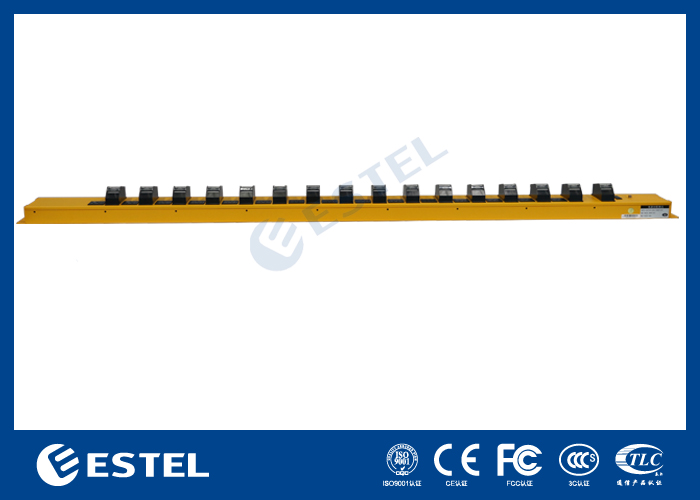
Key Features and Benefits
Smart PDUs deliver a range of advanced features that set them apart from traditional power distribution units. Operators gain access to remote monitoring, environmental sensors, and outlet-level control. These features enable precise power management and real-time oversight of telecom cabinets.
Feature | Benefit |
|---|---|
Remote Monitoring | Quick identification and resolution of issues, reducing downtime |
Environmental Sensors | Real-time tracking of temperature, humidity, and power usage |
Outlet-Level Control | Precise power management for each connected device |
Operators using smart PDUs experience improved energy management and reduced downtime. They can perform remote actions such as outlet-level power cycling and load balancing. Real-time monitoring of power usage allows for proactive management, preventing overloads and optimizing operations.
Smart PDUs help telecom operators maintain network reliability and extend equipment life by preventing inefficiencies before they escalate.
Cost Analysis: Quantitative and Qualitative
Smart PDUs offer significant cost advantages over traditional PDUs throughout the telecom cabinet lifecycle. The following table compares key cost-related features:
Feature | Traditional PDUs | Energy-Efficient PDUs (Smart PDUs) |
|---|---|---|
Energy Consumption | High | Low |
Monitoring Capabilities | Limited | Real-time energy metering |
Environmental Impact | Significant | Minimal |
Cost Efficiency | Moderate | High |
Operators who deploy smart PDUs can lower electricity costs by up to 21% each year. These units optimize power usage, which leads to reduced operational costs over the lifespan of the telecom cabinet.
Smart PDUs reduce energy consumption, resulting in lower utility bills.
Real-time monitoring and remote management decrease the need for on-site maintenance.
Improved power distribution prevents overloads and equipment failures, reducing repair costs.
Smart Power Distribution Unit solutions provide both immediate and long-term savings, making them a strategic investment for telecom infrastructure.
ESTEL Case Study and Real-World Data
ESTEL's Smart Power Distribution Unit has demonstrated measurable benefits in real-world telecom deployments. Leading telecom providers have reported substantial improvements in energy efficiency, reliability, and operational flexibility.
Client / Case Study | Performance Metrics and Cost Savings Reported |
|---|---|
Leading Telecom Provider | Energy efficiency up to 97.8%; early issue detection; seamless network expansion |
GreenConnect | 30% reduction in energy use; 25% reduction in downtime; 40% reduction in CO2 emissions |
Case Study | Location | Key Benefits |
|---|---|---|
Telenor-DTAC | Thailand | Upgraded telecom infrastructure with improved management |
ESTEL’s recharge cards | Nigeria | Enhanced telecom services and greater customer satisfaction |
Customer outcomes further highlight the value of ESTEL's solutions:
Location | Outcome |
|---|---|
Kenya | 40% reduction in energy expenses after switching to solar-powered towers. |
India | Addressed energy challenges in rural areas, ensuring uninterrupted connectivity. |
Europe | 30% reduction in carbon footprint after implementing ESTEL’s modular solar plants. |
Southeast Asia | Improved network reliability in off-grid areas using ESTEL’s hybrid systems. |
South Sudan | 30% reduction in fuel costs after implementing solar energy solutions. |
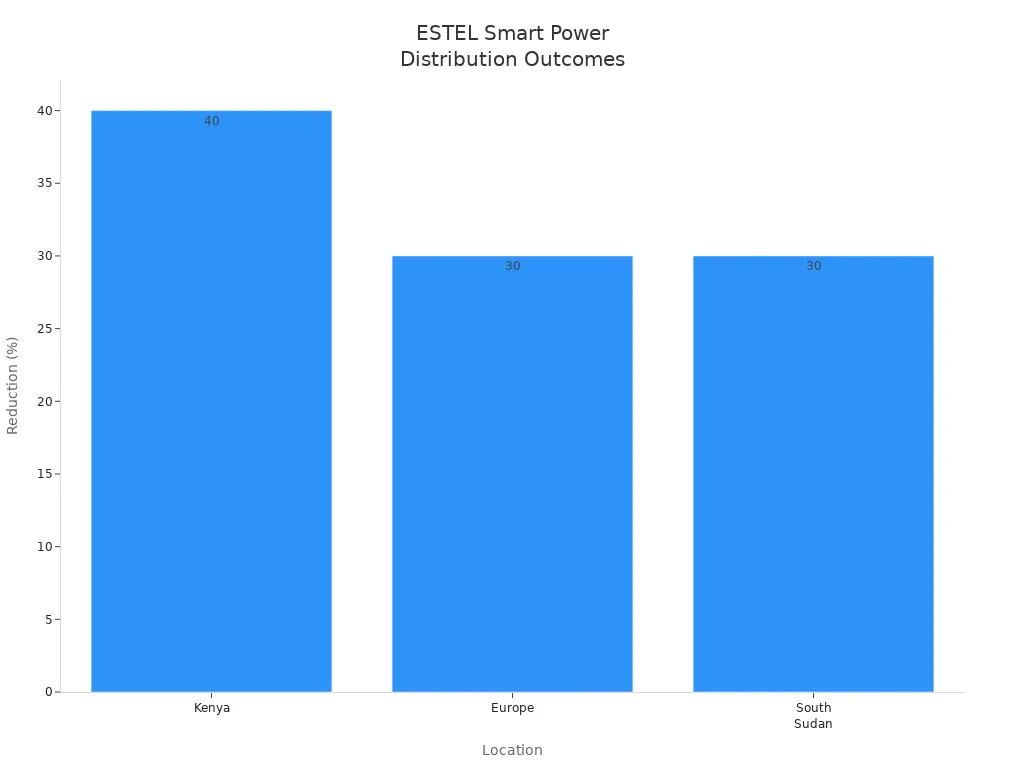
Operators who choose ESTEL's Smart Power Distribution Unit benefit from advanced remote management, significant energy savings, and improved reliability. These outcomes translate into lower operational costs, reduced environmental impact, and enhanced service continuity.
Long-Term Economic Impact
O&M Savings Opportunities
Smart PDUs deliver substantial operation and maintenance savings for telecom operators. Several advanced features contribute directly to cost reductions. The following table highlights the most impactful features:
Feature | Contribution to Cost Reduction |
|---|---|
IP Aggregation | Reduces deployment costs by allowing multiple devices to share a single IP address, minimizing the need for additional IPs. |
Environmental Monitoring | Proactively monitors conditions to prevent equipment damage, eliminating the need for separate monitoring solutions. |
Remote Connectivity | Enables remote access for monitoring and management, reducing the need for on-site visits and potential downtime. |
Functionality | Allows for real-time energy management, optimizing usage and supporting capacity changes, leading to cost savings. |
Operators who deploy smart PDUs experience fewer site visits, lower energy bills, and reduced equipment replacement costs. These savings accumulate over the product lifecycle, improving the overall return on investment.
Risk Reduction and Reliability
Smart PDUs enhance reliability and minimize risks in telecom cabinets. They provide real-time monitoring, remote control, and environmental sensors. Operators receive alerts for unsafe conditions, enabling timely corrective actions. The following list summarizes the reliability benefits:
Real-time monitoring and remote control capabilities.
Environmental sensors track temperature, humidity, and airflow.
Alerts for unsafe conditions allow for immediate response.
Remote power management enables rebooting and scheduling power cycles.
Trend reporting identifies potential issues before escalation.
A comparison table illustrates the difference between smart and traditional PDUs:
Feature | Smart PDUs | Traditional PDUs |
|---|---|---|
Real-time Monitoring | Yes | No |
Remote Control | Yes | No |
Environmental Sensors | Yes | No |
Alerts for Unsafe Conditions | Yes | No |
Centralized Management | Yes | Limited |
Energy Efficiency | Advanced features for optimization | Basic monitoring only |
Operators report a 30% decrease in downtime incidents and 40% faster maintenance response times after adopting smart PDUs. Efficient power distribution and overload protection further enhance reliability.
Total Cost of Ownership Summary
Smart PDUs, such as the Smart Power Distribution Unit from ESTEL, reduce lifecycle costs and maximize ROI for telecom operators. Energy efficiency improvements, reduced downtime, and extended equipment life all contribute to lower total cost of ownership. Operators prevent up to 80% of power-related outages and achieve up to 20% higher energy efficiency. These benefits ensure that telecom cabinets remain reliable and cost-effective throughout their operational life.
Smart PDUs represent a strategic investment for telecom infrastructure, delivering measurable savings and improved network stability.
Smart PDUs, such as ESTEL's Smart Power Distribution Unit, deliver clear economic advantages over traditional PDUs in telecom cabinets. Operators benefit from improved energy efficiency, real-time monitoring, and predictive maintenance, which reduce operational costs and downtime. Industry experts recommend adopting smart PDUs for enhanced reliability and better capacity planning. Telecom operators should evaluate their infrastructure, prioritize remote management, and implement robust security when deploying smart power solutions. These steps ensure long-term savings and network stability.
FAQ
What is a Smart Power Distribution Unit?
A Smart Power Distribution Unit manages and distributes electrical power in telecom cabinets. It offers advanced features like remote monitoring, energy management, and surge protection. Operators use it to improve reliability and reduce operational costs.
How does remote management benefit telecom operators?
Remote management allows operators to monitor and control power distribution from any location. This feature reduces site visits, speeds up troubleshooting, and minimizes downtime. Operators save time and resources.
What safety features does ESTEL’s Smart PDU provide?
ESTEL’s Smart PDU includes surge protection, a dehumidifying function, and real-time monitoring. These features protect equipment from electrical faults and environmental hazards.
Can smart PDUs help reduce energy costs?
Yes. Smart PDUs provide real-time energy usage data. Operators can identify inefficiencies and optimize power consumption. This leads to lower electricity bills and improved sustainability.
Where can telecom operators find more information about ESTEL’s Smart PDU?
Operators can visit ESTEL’s official website for detailed product specifications, case studies, and contact information.
See Also
Understanding The Design And Expenses Of Telecom Cabinets
Solar Energy Storage Solutions For Telecom Cabinet Power
Ensuring A Consistent Power Supply For Telecom Cabinets
Exploring ESTEL PDUs And Their Importance In Data Centers
Evaluating Various Cooling Techniques For Telecom Cabinet Use
CALL US DIRECTLY
86-13752765943
3A-8, SHUIWAN 1979 SQUARE (PHASE II), NO.111, TAIZI ROAD,SHUIWAN COMMUNITY, ZHAOSHANG STREET, NANSHAN DISTRICT, SHENZHEN, GUANGDONG, CHINA
