Liquid Cooling Adapted Smart PDU Solution for Thermal-Electrical Synergistic Control in High-Density Telecom Cabinets

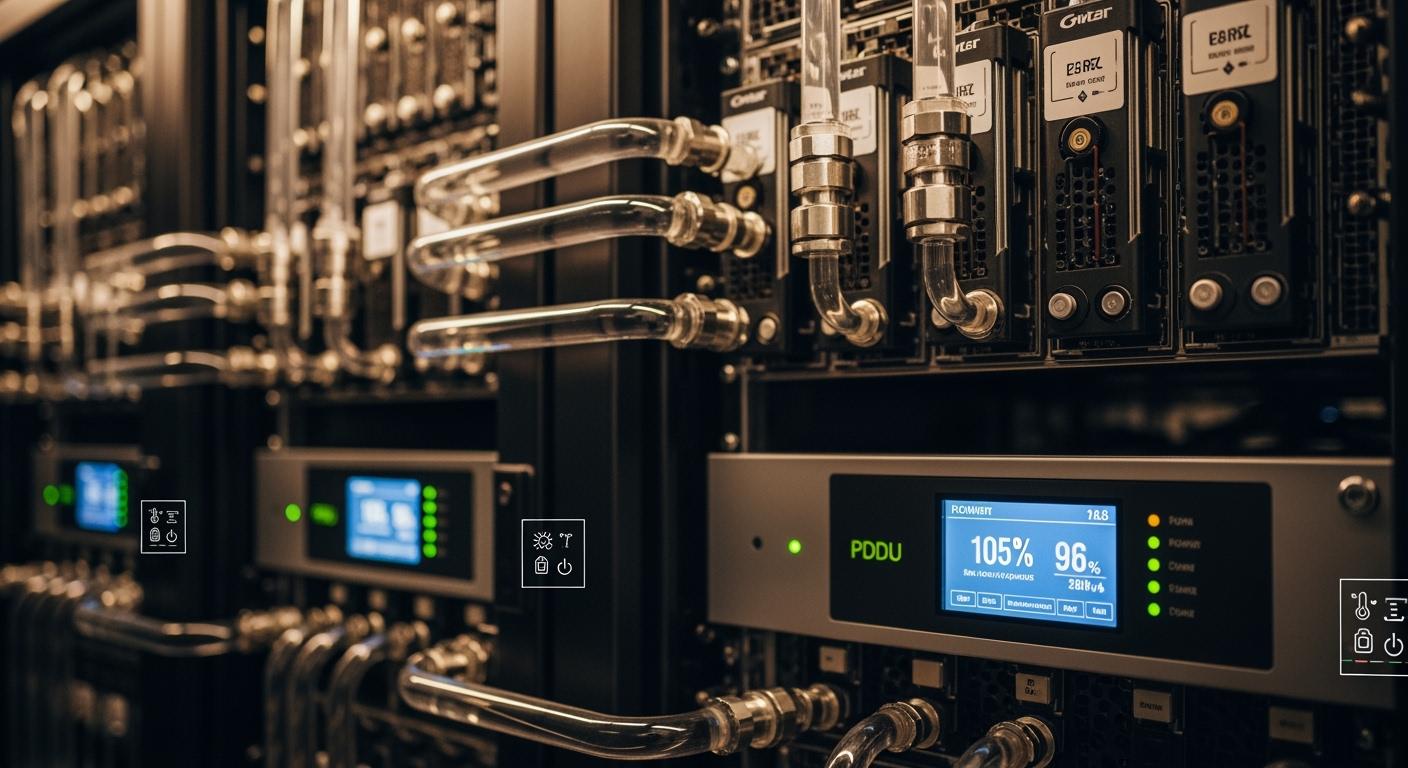
You can achieve efficient thermal and electrical control in high-density telecom cabinets by using ESTEL’s liquid cooling-adapted Smart Power Distribution Unit. The global critical power and cooling market is valued at USD 32.6 billion in 2024 and is projected to reach USD 51.2 billion by 2030. Telecommunications account for 22% of this market, showing strong demand for reliable solutions. You benefit from outlet-level metering, branch circuit monitoring, and built-in sensors that track temperature and humidity, protecting your equipment and improving performance.
Feature | Benefit |
|---|---|
Outlet-level metering | Improved efficiency |
Outlet-level switching | Enhanced reliability |
Branch circuit metering | Equipment protection |
Intelligent power management | Reliable performance |
Key Takeaways
Utilize ESTEL's Smart Power Distribution Unit for efficient thermal and electrical management in high-density telecom cabinets.
Implement real-time monitoring to quickly detect and address issues, reducing maintenance visits and improving reliability.
Adopt liquid cooling systems to effectively manage heat, achieving better temperature control and extending equipment lifespan.
Leverage advanced features like dynamic power adjustment and centralized monitoring for seamless integration and optimal performance.
Follow best practices for installation and configuration to ensure a reliable and efficient telecom cabinet system.
Synergistic Control in High-Density Cabinets
Thermal and Electrical Coordination
You face unique challenges when managing high-density telecom cabinets. As equipment density increases, both heat and electrical loads rise. You must coordinate thermal and electrical systems to keep your equipment safe and reliable. If you ignore this balance, you risk overheating, equipment failure, and costly downtime.
The Smart Power Distribution Unit helps you maintain this balance. It distributes power efficiently and monitors temperature and humidity. This coordination keeps your equipment within safe temperature limits and prevents electrical faults. You can see the impact of thermal and electrical coordination in the table below:
Evidence Description | Impact on Performance |
|---|---|
Electrical components are designed to operate within specific temperature rise limits. | Maintaining these limits ensures normal and reliable operation of telecom cabinets. |
Prolonged high temperatures cause insulation to dry out and lose strength. | This shortens the lifespan of components, affecting overall cabinet performance. |
Heat causes metal parts to expand and contract, leading to loose connections. | Loose connections increase resistance and heat, creating a cycle that can lead to failures. |
Higher operating temperatures increase maintenance needs. | More frequent inspections and replacements lead to higher operational costs and downtime. |
Poor cooling can weaken insulation and increase the risk of electrical faults. | This reduces reliability and can lead to unexpected failures. |
You can use several metrics to evaluate how well your cabinet manages both heat and electricity. These include the carbon-footprint ratio, reliability index, and coefficient of variation. Each metric gives you insight into energy use and system reliability.
Metric Name | Description |
|---|---|
Carbon-Footprint (CF) | Ratio of climate control energy consumption to telecommunication energy consumption. |
Reliability Index (RI) | Evaluates the reliability of energy consumption over time. |
Coefficient of Variation | Assesses the reliability of energy measurements. |
When you use a Smart Power Distribution Unit, you gain access to real-time data on these metrics. This helps you make informed decisions and maintain optimal performance.
Real-Time Monitoring and Adjustment
You need real-time monitoring to keep your telecom cabinets running smoothly. Modern technology gives you powerful tools for this task. The Smart Power Distribution Unit integrates with sensors and controllers to track temperature, humidity, and power usage. You can see the main technologies that enable real-time monitoring in the table below:
Technology Type | Description |
|---|---|
IoT Integration | Connects sensors, controllers, and devices for real-time data collection on environmental conditions. |
Centralized Platforms | Unifies monitoring data from various sensors into a single dashboard for streamlined operations. |
Environmental Monitoring | Uses sensors to track temperature, humidity, and airflow for proactive maintenance. |
Advanced Power Distribution Units | Enhances power management and monitoring capabilities in telecom cabinets. |
With these technologies, you can respond to problems before they become serious. Real-time monitoring reduces the need for frequent site visits. For example, you can cut site visits from four to one per year at remote locations. You also improve reliability by tracking dozens of alarm points and monitoring multiple power sources. This helps you prevent failures, even during harsh weather.
Tip: Real-time alerts let you act quickly. You can detect anomalies instantly and respond before issues escalate.
Metric / Feature | Description / Impact on Response Time |
|---|---|
Polling Interval Duration | Near real-time alerts minimize detection delay compared to 1-5 min polling intervals. |
Response Time Reduction | Teams respond immediately, drastically reducing time between issue and action. |
Anomaly Detection Speed | Instant anomaly detection prevents escalation during polling windows. |
Predictive maintenance becomes possible when you have real-time data. You can lower operational costs and improve reliability. For example, some telecom operators use monitoring software to gain real-time visibility into energy use. This leads to better energy conservation and protects your equipment.
When you combine a Smart Power Distribution Unit with real-time monitoring, you create a powerful system. You can adjust cooling and power delivery instantly. This synergy keeps your telecom cabinets efficient, reliable, and ready for the future.
Smart Power Distribution Unit and Liquid Cooling Integration
ESTEL Smart Power Distribution Unit Features
You need a power management solution that adapts to the demands of high-density telecom cabinets. ESTEL’s Smart Power Distribution Unit gives you advanced features that make integration with liquid cooling systems seamless. You can see how these features support efficient operation in the table below:
Feature Description | Explanation |
|---|---|
Lets you shift power allocation based on cooling needs, boosting efficiency. | |
Real-time Monitoring | Delivers continuous oversight for both power and cooling systems. |
Uses Modbus and EtherNet/IP for smooth integration with cooling systems. |
You benefit from a design that emphasizes reliability, ease of use, and affordability. Many competing products, such as those from Schneider Electric and Eaton, offer advanced features but often come at a higher price. ESTEL’s Smart Power Distribution Unit includes essential safety features like overload protection, which you may not find in all competitor models. This focus on core functionality and safety makes it a practical choice for telecom operators who want robust performance without unnecessary complexity.
Liquid Cooling System Advantages
You face increasing heat loads as telecom cabinets become more compact and powerful. Liquid cooling systems give you a reliable way to manage this heat. These systems remove heat directly from the source, keeping your equipment at safe temperatures even in high-density environments. Air cooling often struggles to prevent hotspots, which can lead to failures and reduced performance.
Liquid cooling systems stand out for their efficiency. They can achieve heat transfer coefficients up to 10,000 W/m²K, while air-cooled systems usually range from 10 to 100 W/m²K. This means you get much better temperature control, even when your equipment generates a lot of heat. Liquid coolants absorb and release heat more effectively than air, so your system stays stable under heavy loads. You also notice less noise because liquid cooling uses fewer fans or runs them at lower speeds.
Scientific studies show that liquid cooling can lower equipment temperatures by up to 20°C compared to air cooling. This drop in temperature helps your equipment last longer and perform better. When you use liquid cooling in your telecom cabinets, you can see an 18.1% reduction in facility power and a 10.2% reduction in total data center power. Your energy costs may drop by 10% each year, and you help reduce carbon emissions. In high-density data centers, liquid cooling improves thermal management efficiency by more than 15%. These benefits make liquid cooling a smart investment for modern telecom infrastructure.
Note: Lower temperatures and better energy efficiency mean fewer breakdowns and lower maintenance costs for your telecom cabinets.
Data Exchange and Dynamic Control
You need your power and cooling systems to work together in real time. ESTEL’s Smart Power Distribution Unit supports this by using standard communication protocols like Modbus and EtherNet/IP. These protocols allow your power unit and liquid cooling system to share data instantly. You can see some of the most common protocols used for this integration in the table below:
Protocol/Standard | Description |
|---|---|
DLMS/COSEM | Used for energy meter data exchange. |
ANSI C12.22 | Supports data transport over IP networks. |
MODBUS | Popular in industrial energy management. |
MQTT | Lightweight and ideal for IoT applications. |
REST | Standardized communication with software. |
With real-time data exchange, you gain granular visibility into your system’s performance. You can monitor coolant temperature, flow rates, and power usage as they change. Advanced control systems use this data to adjust cooling and power delivery instantly. For example, if your equipment load increases, the system can boost coolant flow and shift power where it is needed most. This dynamic control helps you prevent downtime and extends the life of your assets.
Modern systems often use AI and machine learning to analyze data from your Smart Power Distribution Unit and liquid cooling system. These technologies predict potential issues and optimize performance automatically. You get precise control over coolant flow and temperature, which means your telecom cabinets stay in optimal condition even as workloads fluctuate.
Tip: Real-time integration between power and cooling systems gives you the flexibility to adapt to changing demands, ensuring reliable operation and energy savings.
Implementation with ESTEL Solutions
System Architecture Overview
You can build a reliable telecom cabinet system by following a clear architecture. Start by installing the Smart Power Distribution Unit in your cabinet or rack. Connect the cooling system’s sensors to the PDU using compatible cables and protocols. Set up the remote management interface and configure thresholds for temperature, humidity, and power allocation. Test the data exchange between the cooling system and the PDU to confirm real-time updates and automatic adjustments. Monitor the system using the LCD display and remote dashboard, making changes as needed for optimal performance.
The system uses advanced battery technologies to support efficiency and long life. For example, vanadium redox flow batteries offer high life cycles above 10,000 and operate at up to 90% efficiency at light loads. Zinc bromine batteries provide energy densities of 35–75 Wh/l and round-trip efficiency of 65–80%. These technologies help you maintain stable power and reduce maintenance needs.
Battery Technology | Characteristics | Efficiency | Life Cycle |
|---|---|---|---|
Vanadium Redox Flow | High life cycles, up to 90% efficiency | Up to 90% | >10,000 cycles |
Zinc Bromine | 35–75 Wh/l, 65–80% round trip efficiency | 65–80% | 10–20 years |
Installation and Configuration Steps
You can avoid common installation problems by following best practices.
Common challenges include loose screws, misaligned cabinets, and poor cable management. Check all mounting points for security, balance the cabinet’s weight, inspect wall studs or anchors, and manage airflow to prevent overheating.
Follow these steps for a smooth setup:
Securely mount the PDU and cooling system.
Connect all sensors and communication cables.
Configure the software interface for remote monitoring.
Test the system for real-time data exchange and response.
Adjust settings based on your site’s needs.
Compatibility and Scalability
You can expand your system as your network grows. The modular design of ESTEL rectifiers lets you add power modules for more capacity. Compact rectifiers fit easily into space-limited cabinets, making them ideal for urban sites. Intelligent monitoring systems provide real-time data, helping you spot and fix power issues quickly. This flexibility ensures your telecom cabinets stay reliable and efficient, even as demands change.
Benefits and Use Cases

Operational Efficiency and Reliability
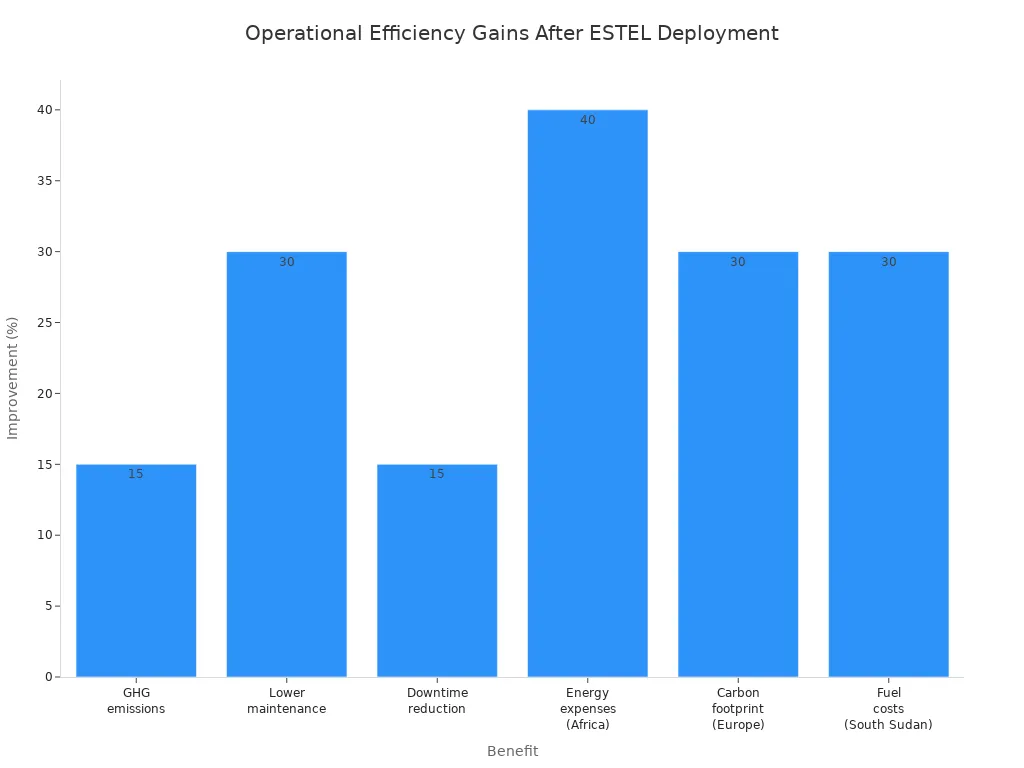
You gain measurable improvements in efficiency and reliability when you deploy ESTEL’s solutions. The Smart Power Distribution Unit helps you reduce greenhouse gas emissions by 15%. You lower maintenance costs by 30%. Downtime drops by 15%. Energy efficiency improves by up to 20%. You see cost savings of up to 20%. In Africa, energy expenses decrease by 40%. In Europe, carbon footprint shrinks by 30%. MTN South Sudan cuts fuel costs by 30%. You achieve general energy savings and reliability gains of up to 41%. Maintenance costs fall to 7% of previous levels. Repair times decrease from 4.8 to 3.1 hours.
Benefit Description | Measurement |
|---|---|
Reduction in greenhouse gas emissions | 15% |
Lower maintenance costs | 30% |
Downtime reduction | 15% |
Energy efficiency improvement | Up to 20% |
Cost savings | Up to 20% reduction |
Reduction in energy expenses (Africa) | 40% |
Decrease in carbon footprint (Europe) | 30% |
Reduction in fuel costs (South Sudan) | 30% |
General energy savings and reliability | Up to 41% |
Maintenance costs drop | 7% of previous levels |
Repair times decrease | From 4.8 to 3.1 hours |
Practical Applications in Telecom
You see ESTEL’s products in action across the globe. In Thailand, Telenor-DTAC upgraded telecom infrastructure with ESTEL’s VMS, leading to seamless digital transformation and better management. In Nigeria, multi-purpose recharge cards enhance telecom services, increasing convenience and customer satisfaction. In Kenya, ESTEL units installed in solar-powered cell towers deliver a 40% reduction in energy expenses and smooth operation. In India, Smart Power Distribution Unit supports photovoltaic systems in rural regions, improving connectivity and lowering carbon emissions. In Pakistan, off-grid solar energy systems power telecom cabinets, providing social benefits and improved access to clean water.
Region | Case Study Description | Impact |
|---|---|---|
Thailand | Telenor-DTAC upgraded telecom infrastructure with ESTEL’s VMS. | Seamless digital transformation and better management. |
Nigeria | Multi-purpose recharge cards enhanced telecom services. | Increased convenience and customer satisfaction. |
Kenya | ESTEL units installed in solar-powered cell towers. | 40% reduction in energy expenses, smooth operation. |
India | Smart PDUs support photovoltaic systems in rural regions. | Better connectivity, lower carbon emissions. |
Pakistan | Off-grid solar energy systems power telecom cabinets. | Social benefits and improved access to clean water. |
Addressing Challenges with ESTEL Products
You overcome common telecom cabinet challenges with ESTEL’s advanced solutions. You maintain stable temperatures using efficient cooling systems. You prevent overheating in high-density configurations. You benefit from reliable and easy installation of fans. You experience long-term value, which is crucial for high-density setups. You support the evolving needs of modern server racks. You prevent up to 80% of outages with proactive safety and environmental controls. You achieve near 97% efficiency in battery backup systems. You enhance energy efficiency and reliability by integrating smart battery management systems.
Evidence | Description |
|---|---|
Proactive safety and environmental controls can prevent a significant percentage of outages in telecom cabinets. | |
97% efficiency | ESTEL has deployed over 500,000 systems and 2,400,000 rectifier modules, achieving near 97% efficiency in battery backup systems. |
Smart BMS integration | Integrating smart battery management systems into telecom infrastructure enhances energy efficiency and reliability. |
Tip: You can rely on ESTEL’s solutions to address the toughest challenges in high-density telecom environments.
You improve both thermal and electrical performance in high-density telecom cabinets with ESTEL’s liquid cooling-adapted Smart Power Distribution Unit. You see faster cycle times, higher first-pass yields, and lower energy use:
Impact | Measurement |
|---|---|
Cycle time reduction | |
First-pass yield increase | 5-10% |
Energy consumption decrease | 15-20% |
You benefit from energy-efficient systems, advanced monitoring, and reliable operations. You prepare for future trends like AI-driven power needs and digital twin designs. For best results, upgrade to intelligent PDUs, plan capacity carefully, and tailor maintenance to your setup.
FAQ
What is a Smart Power Distribution Unit (PDU)?
A Smart PDU distributes electricity to telecom equipment. You monitor power usage, control outlets remotely, and protect devices from surges. The unit helps you manage energy efficiently and keeps your cabinet safe.
How does liquid cooling improve telecom cabinet performance?
Liquid cooling removes heat directly from your equipment. You maintain lower temperatures, reduce energy costs, and extend device lifespan. This method works better than air cooling in high-density setups.
Can you monitor and control the system remotely?
Yes, you access real-time data and control the system from anywhere. You use remote dashboards to adjust settings, check alarms, and optimize performance without visiting the site.
Is the ESTEL Smart PDU compatible with existing telecom cabinets?
You install the ESTEL Smart PDU in standard 19-inch racks or cabinets. The unit supports common communication protocols, making integration with your current infrastructure easy.
See Also
Exploring Various Cooling Techniques for Telecom Cabinet Efficiency
Selecting Optimal Cooling Solutions for ESTEL Telecom Cabinets
Solar Energy Storage Solutions for Telecom Cabinet Power Needs
Ensuring Consistent Power Supply for Telecom Cabinet Operations
Outdoor Communication Solutions with Specialized Telecom Cabinet Air Conditioning
CALL US DIRECTLY
86-13752765943
3A-8, SHUIWAN 1979 SQUARE (PHASE II), NO.111, TAIZI ROAD,SHUIWAN COMMUNITY, ZHAOSHANG STREET, NANSHAN DISTRICT, SHENZHEN, GUANGDONG, CHINA
