Load Density Optimization for Smart PDUs in High-Density Telecom Cabinets

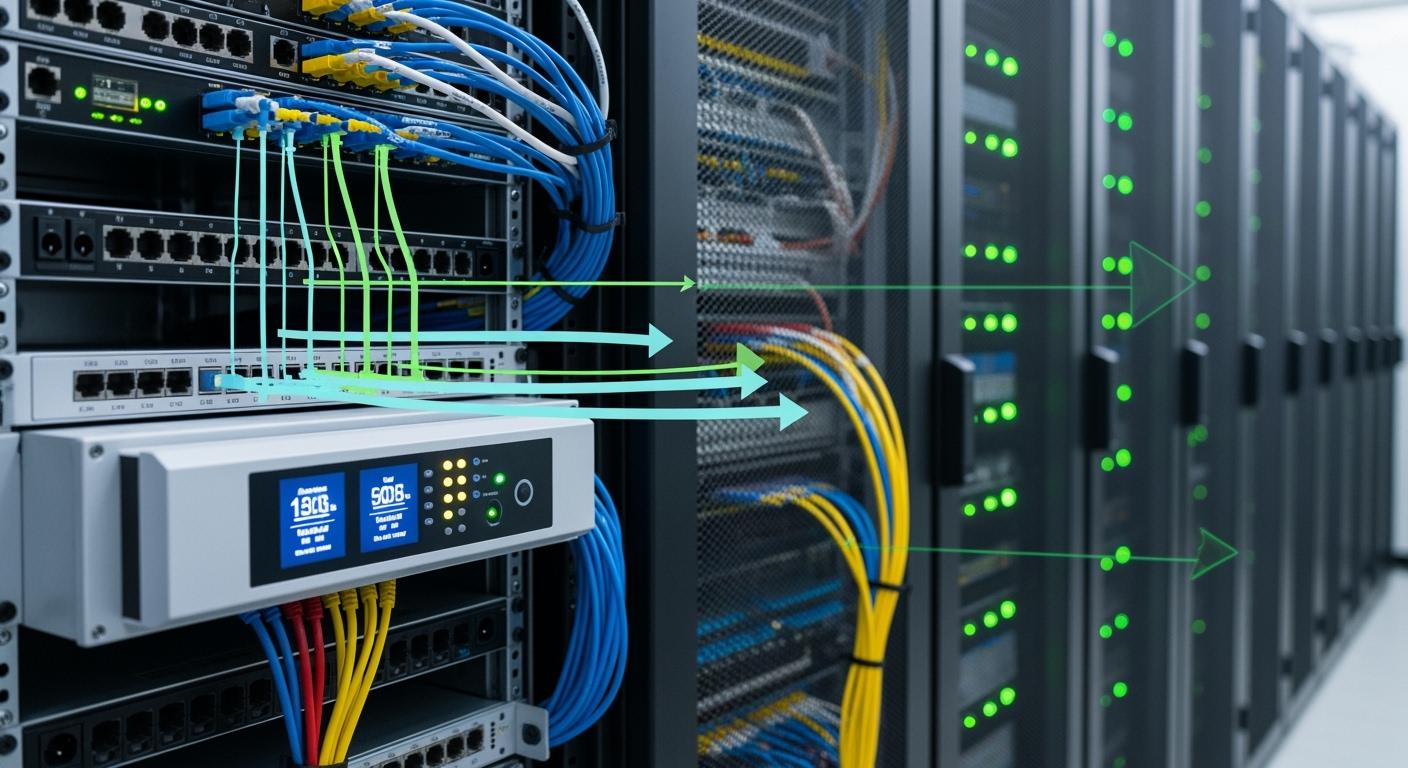
You face growing demands on your telecom cabinets as networks expand and technology evolves. High-density setups require you to optimize load density for better performance and safety. Efficiency, reliability, and scalability matter for every telecom site. ESTEL helps you meet these challenges with advanced solutions. The Smart Power Distribution Unit gives you precise control over power allocation and space management. You can achieve stronger and safer operations when you choose the right tools for your infrastructure.
Key Takeaways
Optimize load density to enhance telecom cabinet performance and prevent overloads. This keeps your network reliable and reduces downtime.
Utilize Smart Power Distribution Units for precise power management. These units offer real-time monitoring and remote control, improving safety and efficiency.
Implement modular cabinet designs to maximize space and support future growth. This flexibility allows for easy upgrades as technology evolves.
Address heat and cooling challenges with advanced solutions. Effective thermal management protects equipment and extends its lifespan.
Regularly monitor and maintain your systems to ensure optimal performance. Proactive management helps avoid costly repairs and downtime.
Load Density Optimization Explained
Definition and Importance
You need to understand load density optimization if you want to keep your telecom cabinets running smoothly. This process means managing how much electrical power each device or section uses inside your cabinet. When you optimize load density, you distribute power effectively. This step is critical because it prevents overloads and reduces downtime. You keep your equipment safe and your network reliable, even when demand spikes. Efficient power management also helps you avoid costly repairs and service interruptions.
Impact on Telecom Cabinets
Load density optimization brings measurable improvements to your telecom cabinets. You can see the benefits in several key areas:
Benefit Type | Quantified Improvement | Effect on Telecom Cabinet Reliability |
|---|---|---|
Downtime Reduction | Up to 50% decrease | Enhances network uptime and reduces service interruptions |
Maintenance Cost Savings | 30% reduction | Lowers operational expenses and supports proactive maintenance |
Network Outages | 25% fewer outages | Improves service continuity and customer satisfaction |
30% energy savings | Reduces cooling and electricity costs |
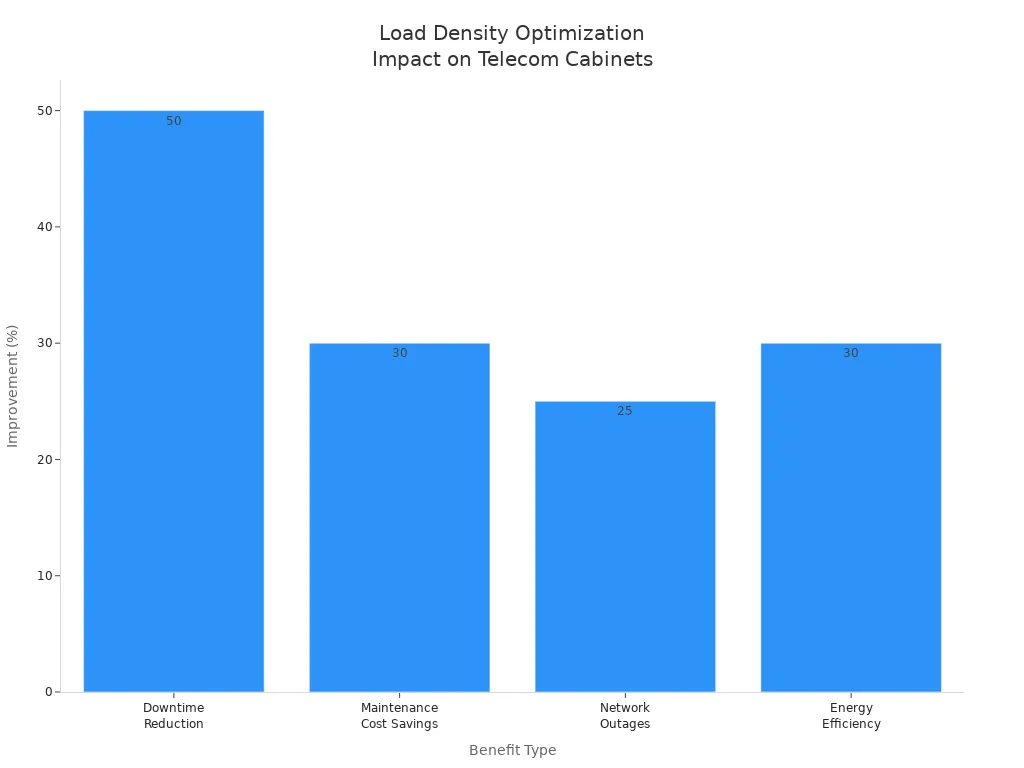
You can reduce downtime by up to half and cut maintenance costs by nearly a third. Fewer outages mean your customers stay connected. Improved energy efficiency lowers your electricity bills and helps you meet sustainability goals.
Role of Smart PDUs
A Smart Power Distribution Unit plays a key role in optimizing load density. You gain advanced features that help you manage power more precisely. These units offer dynamic load allocation, real-time monitoring, and load redistribution. The table below shows how these features benefit your operations:
Feature | Benefit |
|---|---|
Dynamic load allocation | Ensures equitable power distribution among operators, preventing overload. |
Real-time monitoring | Detects overloaded circuits and phase imbalances, enhancing stability. |
Load redistribution | Extends equipment lifespan and reduces maintenance needs. |
You also benefit from precise load allocation and the ability to identify phantom loads. These capabilities help you balance power, optimize availability, and improve sustainability.
Feature | Benefit |
|---|---|
Precise load allocation | Achieves balanced power distribution in cabinets. |
Identification of phantom loads | Optimizes power availability and improves sustainability. |
When you use a Smart Power Distribution Unit, you make your telecom cabinets safer, more efficient, and easier to manage.
Challenges in High-Density Cabinets
Heat and Cooling Issues
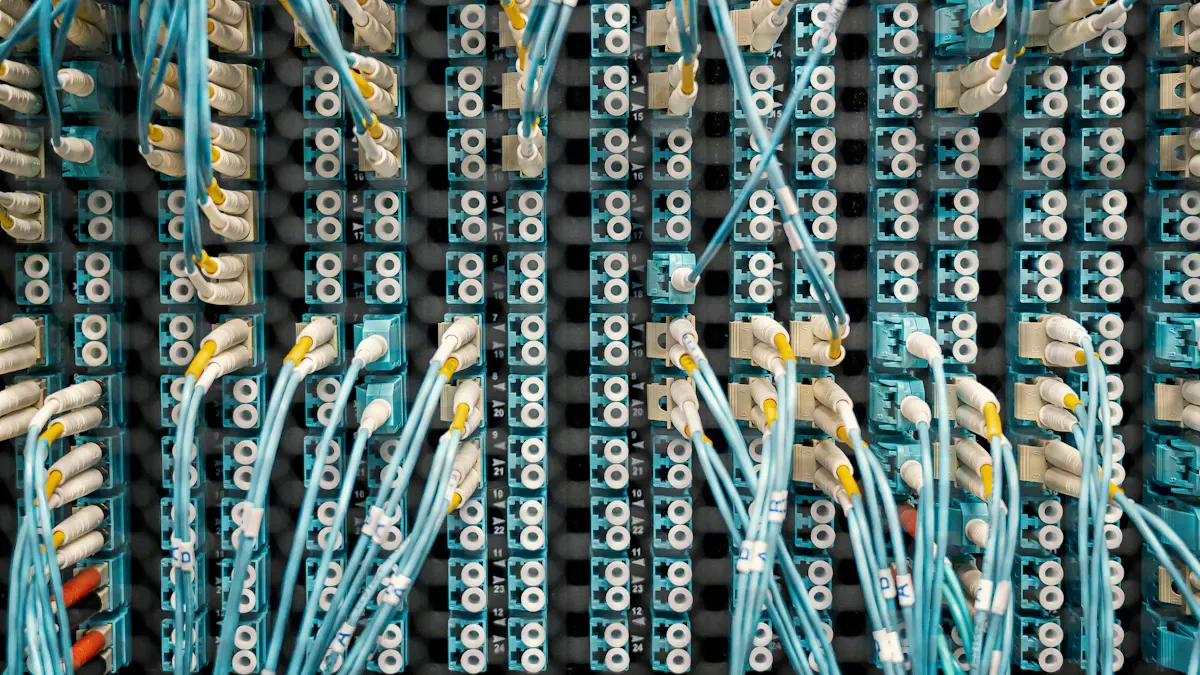
You face significant heat challenges in high-density telecom cabinets. High-density equipment generates more heat, and blocked airflow or failed fans can push temperatures above safe limits. This heat speeds up the breakdown of components. You might see swollen capacitors or cracked solder joints as a result. Even a small increase in temperature, such as 10°C above the ideal, can reduce efficiency by 5%. Prolonged exposure to high temperatures wears out critical parts, leading to failures and expensive repairs.
Common signs of heat problems include:
Equipment shutting down more often than expected
Fans running at high speeds all the time
Burned areas or bent edges on hardware
Monitoring systems sending frequent alerts
You can address these issues with advanced cooling solutions. DC air conditioners and air-to-air heat exchangers help maintain safe temperatures. Liquid cooling systems work well for very dense setups. Modular air quality systems let you expand cooling as your network grows. These modern solutions can save up to 40% in energy and improve reliability.
Space and Power Constraints
You must fit more equipment into smaller spaces, especially in urban 5G deployments. Cabinets often sit on poles, rooftops, or sidewalks. You need to manage dense cable layouts, advanced cooling, and backup batteries within a compact footprint. Strict safety and weatherproofing standards add to the challenge.
Key constraints include:
Limited space for new devices and cables
High power consumption from integrated circuits and opto-electronic devices
The need for effective thermal management
Compact DC/DC modules can save up to 90% of board space. Modular layouts improve airflow and let you customize each site. Flexible mounting options help you adapt to different locations.
Reliability and Scalability
You want your network to stay reliable as it grows. Overheating, security breaches, and space constraints can threaten reliability. Advanced cooling solutions and robust security measures help prevent these problems. Modular and wall-mounted designs solve space issues.
Without strong enclosure systems, even the best telecom hardware can fail. Modern outdoor telecom cabinets protect your equipment and support future growth. They are strategic investments that boost the longevity and adaptability of your network.
Optimization Strategies with ESTEL
Intelligent Load Balancing
You can achieve stable and efficient power distribution in your telecom cabinets by using intelligent load balancing. ESTEL’s Smart Power Distribution Unit gives you advanced features that help you monitor and control power at the outlet and branch circuit levels. This technology lets you manage each outlet separately, which reduces energy waste and prevents overloads. You can also switch off unused outlets remotely, saving energy and improving safety.
Feature | Benefit | Comparison to Industry Standards |
|---|---|---|
Enables detailed monitoring of power usage. | Aligns with industry standards. | |
Outlet-level switching | Allows remote control of unused outlets, reducing energy waste. | Exceeds industry standards. |
Branch circuit metering | Ensures effective load balancing and prevents overloads. | Exceeds industry standards. |
Intelligent power management | Distributes power evenly, maintaining reliability during fluctuations. | Aligns with industry standards. |
You can use these features to keep your equipment running smoothly, even during peak demand. This approach helps you avoid downtime and extends the life of your hardware.
Modular Cabinet Design
You can optimize space and support more equipment by choosing modular cabinet designs. ESTEL’s Outdoor Telecom Cabinets use modular racks that let you adjust the height and width to fit your needs. You can stack equipment vertically, which saves floor space and keeps your setup organized. This flexibility makes it easy to upgrade or expand your network as technology changes.
Evidence Type | Description |
|---|---|
High-Density Support | Modular racks support high-density setups, allowing more equipment per square foot. |
Vertical Space Utilization | By utilizing vertical space, modular cabinets reduce the physical footprint while maintaining scalability. |
Flexible Configurations | Adjust rack height and width to fit diverse server and hardware needs. |
You can combine modular cabinets with the Smart Power Distribution Unit for even better results. This combination gives you a scalable and reliable solution for high-density telecom environments.
Real-Time Monitoring
You can improve reliability and reduce risks by using real-time monitoring. ESTEL’s Smart Power Distribution Unit tracks power usage and environmental data at both the device and outlet levels. You can see exactly how much energy each device uses. High-accuracy metering helps you find areas where you can save energy. Remote monitoring lets you respond quickly to problems, which reduces downtime.
You can track power and environmental data in real time.
The system sends alerts if thresholds are breached.
You can monitor temperature and humidity with built-in sensors.
Remote monitoring and alerts help you act fast when issues arise.
You can use these tools to keep your network running smoothly and avoid unexpected failures.
Predictive Analytics
You can use predictive analytics to prevent problems before they happen. ESTEL’s Smart Power Distribution Unit uses real-time data and machine learning to detect unusual patterns. The system sends alerts if it finds something wrong, so you can fix issues early. This approach reduces unplanned downtime by 25% and lowers power outages by 15%. You can keep your network reliable and your customers satisfied.
Benefit | Impact |
|---|---|
Reduction in unplanned downtime | 25% |
Decrease in power outages | 15% |
Improved network uptime | Increased reliability |
You can also use predictive analytics to plan maintenance and optimize energy use. This strategy helps you meet decarbonization goals and lowers your environmental footprint.
Tip: Combine ESTEL’s Outdoor Telecom Cabinets with the Smart Power Distribution Unit for the best results. You will get energy optimization, improved reliability, and support for green initiatives.
Practical Steps for Telecom Engineers and IT Managers
Schedule regular checks to verify load balancing and extend equipment lifespan.
Perform routine maintenance by inspecting components and monitoring performance.
Troubleshoot issues using real-time monitoring data and check for tripped breakers.
Plan for scalability by evaluating your current setup and monitoring power and space use.
Choose modular PDUs for flexibility and easy upgrades.
You can also ensure your equipment meets industry voltage and power standards. ESTEL’s Telecom Rectifier System provides a consistent DC48V output, which is essential for most 5G infrastructure.
Smart Power Distribution Unit Solutions
Advanced Metering Features
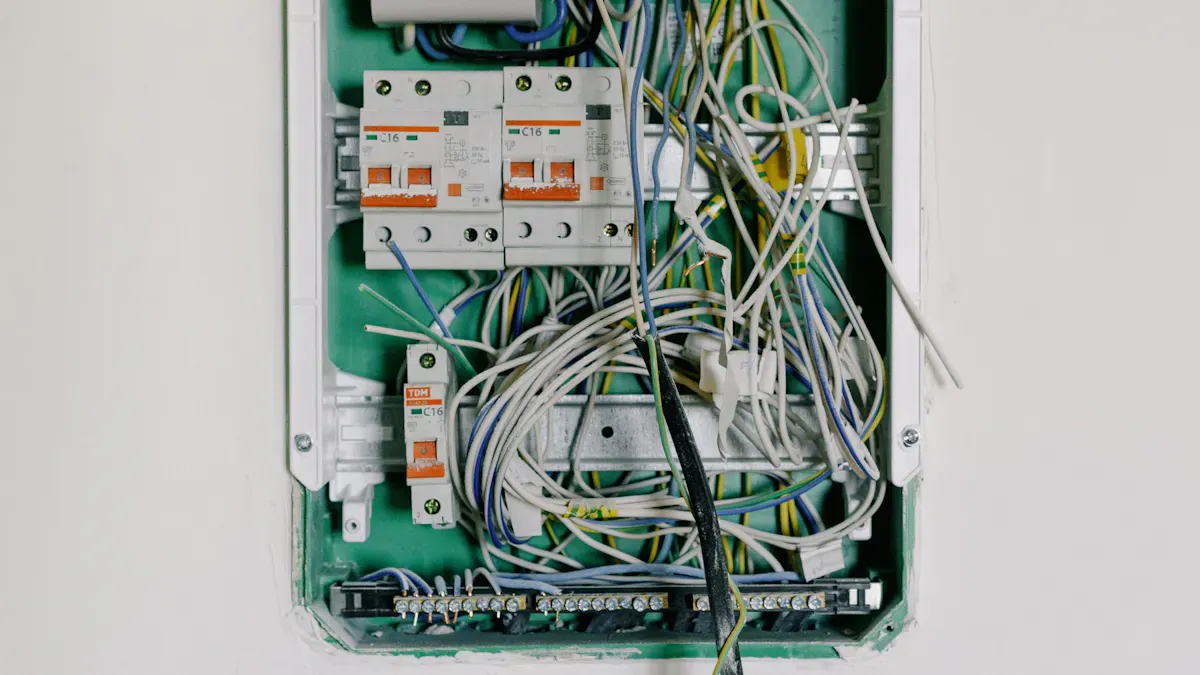
You need accurate data to manage your telecom cabinets. ESTEL’s Smart Power Distribution Unit gives you advanced metering features that help you track and control power use. You can monitor energy consumption in real time and review historical data for better decision-making. The unit includes environmental sensors that measure temperature and humidity. You receive email notifications if the system detects any issues. This helps you act quickly and avoid downtime.
Feature | Description |
|---|---|
Real-time monitoring | Track energy consumption and operational parameters in real time. |
Remote control capabilities | Manage power outlets from a distance, reducing downtime and improving efficiency. |
Environmental sensors | Monitor temperature and humidity to protect critical IT systems. |
Advanced metering | Get detailed insights into energy usage and optimize power distribution. |
Email notifications | Receive alerts about system status and issues. |
System log viewing | Review historical data for better management and troubleshooting. |
Remote Management
You can improve operational efficiency with remote management. The Smart Power Distribution Unit lets you monitor and control your power system from anywhere. You do not need to visit the site for every issue. This saves time and reduces costs. You can organize internal layouts for easy access during upgrades or repairs. Standard rack and mounting systems make installation faster. Remote monitoring also helps you perform proactive maintenance by tracking temperature, humidity, power status, and intrusion.
Feature | Benefit |
|---|---|
Organized internal layouts | Easy access for technicians during upgrades or repairs. |
Standard rack and mounting systems | Faster installation and lower labor costs. |
Proactive maintenance and fewer costly site visits. |
Surge Protection and Dehumidifying
You must protect your equipment from electrical and environmental risks. ESTEL’s Smart Power Distribution Unit includes surge protection devices that shield your telecom equipment from lightning strikes and electrical disturbances. The unit also features a dehumidifying function. This protects your devices from moisture, which can cause corrosion and short circuits. Environmental controls, such as thermal regulation and moisture sealing, help prevent premature equipment failure and extend the lifespan of your devices.
Note: Surge protection and dehumidifying functions are essential for reliable operation in harsh environments.
Integration with ESTEL Cabinets
You can easily integrate the Smart Power Distribution Unit with ESTEL’s Outdoor Telecom Cabinets. The cabinets support standard 19-inch rack equipment, so installation is simple. You benefit from a weatherproof enclosure that protects your power system from dust, water, and extreme temperatures. This combination works well in high-density environments. You get reliable power distribution, advanced monitoring, and strong protection for your network equipment.
Tip: Pairing ESTEL’s Smart Power Distribution Unit with Outdoor Telecom Cabinets gives you a complete solution for high-density telecom sites.
Best Practices for Implementation
Planning and Assessment
You should start with a clear plan before installing smart PDUs in your telecom cabinets. Follow these steps to ensure a strong foundation:
Identify all critical power loads and calculate total power needs.
Plan for future growth by adding a safety margin for unexpected load increases.
Check your power infrastructure, including UPS, generators, and PDUs, to confirm they meet your requirements.
Build in redundancy and use load balancing to improve reliability.
Monitor environmental factors like temperature and altitude, as these can affect power capacity.
Select energy-efficient components to reduce operational costs.
Simulate full load conditions to test system capacity.
Use real-time monitoring tools to track load and power quality.
Prepare emergency and failover plans for quick response during outages.
Make sure your setup follows industry safety and efficiency standards.
Tip: Careful planning helps you avoid costly mistakes and ensures your system can handle both current and future demands.
Testing and Validation
You need to test and validate your smart PDUs to guarantee safe and reliable operation. Use the following best practices:
Best Practice Aspect | Description |
|---|---|
Inspect PDUs regularly and replace worn parts with approved components. | |
Regular Inspections and Cleaning | Clean dust and debris using HEPA-filter vacuums and soft cloths. |
Testing Rectifiers and Circuit Protection | Test rectifiers and breakers often and keep spares ready. |
Monitoring Load Balancing and Power Usage | Track voltage, current, and load distribution with remote tools. Set alerts for issues. |
Grounding Verification | Securely connect wires and check continuity with a multimeter. |
Post-Repair Testing and Validation | Test under load and confirm integration with your equipment. |
Safety Precautions | Power down equipment before maintenance and use proper protective gear. |
Ongoing Management
You must manage your system actively to maintain performance. Schedule regular inspections and monitor power usage with real-time tools. Keep your firmware updated and review system logs for unusual activity. Train your team to respond quickly to alerts and perform preventive maintenance. Good management extends the life of your equipment and reduces downtime.
Avoiding Common Pitfalls
Watch out for these common mistakes when working with smart PDUs in high-density telecom cabinets:
Ignoring power quality issues like voltage fluctuations or harmonic distortions.
Plugging and unplugging devices too often, which can damage sockets.
Poor cable management that stresses PDU components.
Overlooking mechanical vibrations that loosen internal parts.
Skipping surge protection and environmental controls such as thermal regulation and moisture sealing.
Choosing PDUs that do not match the needs of your modular outdoor cabinets.
Failing to use remote power control for efficient device management.
Note: Addressing these pitfalls helps you protect your equipment and ensures reliable network performance.
You can optimize load density by planning carefully, using real-time monitoring, and choosing modular designs. ESTEL’s Smart Power Distribution Unit and Outdoor Telecom Cabinet help you achieve reliable and scalable telecom infrastructure. Advanced solutions give you flexibility, support for new technologies, and strong security.
You gain scalability, reliability, and support for emerging technologies.
You can read articles about code optimization for deeper insights.
For more information, contact ESTEL at info@estel.com.cn or use the website contact form.
FAQ
What is load density optimization in telecom cabinets?
You manage how much power each device uses in your cabinet. This process helps you prevent overloads, reduce downtime, and keep your network reliable. You also save energy and lower costs.
How does a Smart Power Distribution Unit improve reliability?
A Smart PDU gives you real-time monitoring, remote control, and surge protection. You can spot problems early and act fast. This keeps your equipment safe and your network stable.
Can you integrate ESTEL’s Smart PDU with any telecom cabinet?
Yes, you can. ESTEL’s Smart PDU fits standard 19-inch racks. You install it easily in most outdoor or indoor telecom cabinets, especially ESTEL’s modular designs.
What maintenance does a Smart PDU require?
Inspect connections monthly.
Clean dust from outlets.
Update firmware as needed.
Test surge protection yearly.
Regular checks help you avoid failures and extend the life of your equipment.
See Also
Ensuring Consistent Power Supply for Telecom Equipment Cabinets
Understanding ESTEL PDUs and Their Importance in Data Centers
Solar Energy Storage Solutions for Telecom Equipment Cabinets
Analyzing the Design and Expenses of Telecom Cabinets
Achieving Effective Monitoring for Outdoor Telecom Equipment Cabinets
CALL US DIRECTLY
86-13752765943
3A-8, SHUIWAN 1979 SQUARE (PHASE II), NO.111, TAIZI ROAD,SHUIWAN COMMUNITY, ZHAOSHANG STREET, NANSHAN DISTRICT, SHENZHEN, GUANGDONG, CHINA
