Multi-Zone Power Allocation Strategy of Smart PDUs: Dynamic Load Distribution by Priority Zones


You manage critical equipment in telecom or data centers. Power allocation becomes complex when multiple zones need different priorities. Multi-zone power allocation lets you assign power based on importance, making sure essential devices stay active. ESTEL’s Smart Power Distribution Unit gives you the tools to adjust loads dynamically, so you can maintain stability and efficiency even when demands change.
Key Takeaways
Implement priority zones to ensure critical equipment receives power first during high demand or emergencies.
Utilize real-time load adjustment features of Smart PDUs to prevent overloads and maintain equipment uptime.
Integrate monitoring systems with Smart PDUs for better tracking of power usage and early detection of issues.
Regularly review and adjust your power allocation settings to match the evolving needs of your facility.
Follow best practices for deployment and maintenance to maximize the benefits of multi-zone power allocation.
Understanding Priority Zones
What Are Priority Zones
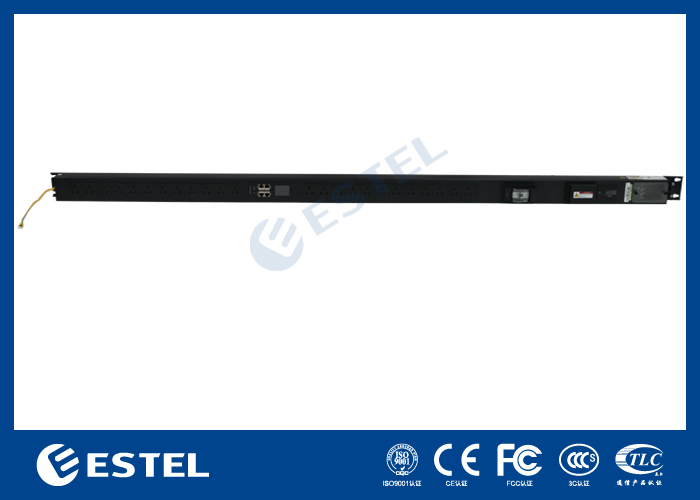
Priority zones help you organize and manage power distribution based on the importance of your equipment. You can think of each zone as a group of devices that share the same level of priority. For example, you might place core network switches in a high-priority zone and less critical devices in a lower-priority zone. This approach lets you make sure that essential systems always receive power, even during high demand or emergencies.
You can configure priority zones in several ways. Most smart PDUs, including ESTEL’s Smart Power Distribution Unit, support flexible methods for setting up these zones:
Subscription-related mechanisms: You can assign priority levels that always apply or only activate under certain conditions. For instance, you might set a zone to always have top priority or only when specific services run.
Invocation-related mechanisms: You can use these for services that start or stop based on events, such as calls or connectivity needs.
Message Priority Profiles: You can set different priority values for each interface or device, allowing you to tailor the power allocation to your exact needs.
This flexibility means you can adapt your power management strategy as your facility grows or changes.
Role in Power Management
Priority zones play a key role in keeping your operations stable and efficient. When you use a Smart Power Distribution Unit, you gain the ability to direct power where it matters most. If a sudden surge or outage occurs, the system can automatically reduce or cut power to lower-priority zones. This action protects your most important equipment from downtime.
You also benefit from easier monitoring and control. By grouping devices into zones, you can quickly see which areas use the most power and adjust your strategy as needed. This setup not only improves reliability but also helps you save energy and reduce costs over time.
Tip: Regularly review your priority zone settings to match your current operational needs. This habit ensures your power distribution remains optimized as your network evolves.
Dynamic Load Distribution Mechanisms
Real-Time Load Adjustment
You need to keep your equipment running smoothly, even when power demands change quickly. Smart PDUs, like ESTEL’s Smart Power Distribution Unit, help you do this by adjusting power loads in real time. This means you can avoid overloads and keep your most important devices powered at all times.
Here is how smart PDUs enable real-time load adjustment:
They track energy consumption continuously. This helps you spot inefficiencies and manage your energy resources better.
You get immediate insights into how much power each device uses. You can monitor these details remotely, which saves you time and effort.
The system detects problems early. If something unusual happens, you can act before it causes an outage.
Power gets distributed evenly across all connected equipment. This prevents overloads and reduces heat, which protects your devices.
Good load distribution also supports proper airflow. This keeps your equipment at safe temperatures.
ESTEL’s Smart Power Distribution Unit stands out in this area. You get advanced features that help you manage power more effectively. The table below shows how these features compare to industry standards:
Feature | Benefit | Comparison to Industry Standards |
|---|---|---|
Outlet-level metering | Enables detailed monitoring of power usage. | Aligns with industry standards. |
Outlet-level switching | Allows remote control of unused outlets, reducing energy waste. | Exceeds industry standards. |
Branch circuit metering | Ensures effective load balancing and prevents overloads. | Exceeds industry standards. |
Intelligent power management | Distributes power evenly, maintaining reliability during fluctuations. | Aligns with industry standards. |
With these tools, you can respond quickly to changes in your network. You can turn off outlets you do not need, balance loads, and keep everything running efficiently.
Integration with Monitoring Systems
Monitoring systems play a big role in dynamic load distribution. When you use a Smart Power Distribution Unit with advanced monitoring, you gain real-time tracking of power use. This helps you find and fix problems before they grow.
Key benefits of integrating monitoring systems include:
You can see detailed metrics like voltage, current, and power factor. This information helps you minimize energy use and maximize uptime.
Automated load balancing and power capping become possible. These features improve energy efficiency and support sustainability goals.
Intelligent monitoring can boost power efficiency by up to 20%. You can plan capacity and allocate resources more effectively.
You can oversee power and environmental conditions from a central interface. This makes it easier to manage large or complex sites.
For the best results, you should connect your Smart Power Distribution Unit with other systems, such as Uninterruptible Power Supplies (UPS). This integration ensures continuous power and gives you alerts if something goes wrong. The system adapts to load changes and helps prevent overloads. You also gain flexibility and scalability, which means you can adjust your setup as your needs change.
Note: Regular monitoring and integration with UPS systems help you maintain reliable operations and avoid costly downtime.
By using these mechanisms, you can keep your facility safe, efficient, and ready for any challenge.
Smart Power Distribution Unit Advantages
Operational Efficiency
You gain a clear advantage when you use a Smart Power Distribution Unit for multi-zone power allocation. The unit streamlines your operations by allowing you to monitor and control power remotely. You can respond to maintenance issues faster and reduce unnecessary energy consumption. The following table shows improvements documented in facilities using ESTEL’s Smart Power Distribution Unit:
Improvement Type | Percentage/Value | Description |
|---|---|---|
18% | Resulted in annual savings of approximately $120,000. | |
Energy Waste Reduction | Up to 20% | Significant decrease in energy waste. |
Maintenance Response Time | 40% | Improved response times for maintenance issues. |
Remote management lets you adjust power allocation instantly. You avoid delays and keep your equipment running efficiently.
Reliability and Safety
You protect your critical systems by choosing ESTEL’s Smart Power Distribution Unit. Real-time monitoring gives you continuous oversight of power usage. You can spot anomalies quickly and prevent outages. Operators report a 40% reduction in equipment failures after deploying smart PDUs. The table below compares key safety features:
Feature | ESTEL’s Smart PDU | Traditional PDUs |
|---|---|---|
Real-time monitoring | Yes | No |
Built-in surge protection | Yes | Limited |
Compliance with safety standards | Extensive certifications | Varies |
Circuit protection technology | Advanced circuit protection | Basic protection |
Reduction in equipment failures | Not specified | |
Power waste reduction | Up to 30% | Not specified |
Isolation barriers and triple insulation wire prevent electrical shocks and cross-zone faults. Hipot testing ensures no current leaks between circuits, making your environment safer.
Energy and Cost Savings
You see real savings when you implement multi-zone allocation with a Smart Power Distribution Unit. Facilities report energy savings between 15% and 30%. A mid-sized data center can save about $50,000 annually. You reduce your carbon footprint and avoid costly infrastructure upgrades. Remote management helps you identify inefficiencies and minimize downtime. Modular design supports scalability, so you can expand without major expenses.
Tip: Regularly review your power usage reports. This practice helps you maximize energy savings and maintain reliable operations.
Implementation and Best Practices
Deployment Steps
You can deploy a multi-zone power allocation strategy in a few clear steps. Start by assessing your facility’s power needs and mapping out which devices belong in each priority zone. Next, install the Smart Power Distribution Unit in your racks or cabinets. Connect your equipment according to the priority zones you defined. Configure the unit’s settings to match your operational requirements. Use the built-in LCD display and remote management features to monitor power usage and adjust allocations as needed. Schedule regular maintenance checks to ensure all connections remain secure and the system operates efficiently.
Common Challenges
You may face several challenges during implementation. The table below outlines the most common issues and their explanations:
Challenge | Explanation |
|---|---|
Environmental Factors | High temperature or humidity can damage components or cause malfunctions. |
Lack of Redundancy | Single points of failure can disrupt operations; redundant PDUs or backup systems help reduce this risk. |
Compatibility Issues | Devices must match the PDU’s power requirements and connectors to avoid connectivity problems. |
Lack of Monitoring | Without monitoring, you cannot easily track power consumption or identify issues; built-in monitoring is essential. |
Maintenance Needs | Regular inspections and proactive monitoring help resolve potential problems before they escalate. |
Tip: Address these challenges early to ensure a smooth and reliable deployment.
Best Practices for Facility Managers
You can maximize the benefits of multi-zone power allocation by following these best practices:
Leverage intelligent PDUs for advanced power management.
Gain rack-level power metering to monitor consumption accurately.
Increase power availability to enhance infrastructure efficiency.
Create customized configuration solutions for remote updates.
Maintain a consistent environment with sensors for temperature and humidity.
Extend asset security by using built-in security features.
Plan for future growth by optimizing resources and staying agile.
Ongoing training and support help you stay updated on new technologies. Use recommended tools such as sensors and monitoring software. Regular maintenance and calibration of sensors keep your system running smoothly.
Real-World Applications
Data Centers and Telecom Sites
You see the biggest impact of dynamic load distribution in data centers and telecom sites. These environments demand high reliability and quick response to changing loads. When you use ESTEL’s Smart Power Distribution Unit, you gain automated power allocation and intelligent load management. This technology increases operational reliability by 25% and boosts equipment uptime by 20%. Early detection and response reduce outages by 80%. Cloud-based monitoring speeds up maintenance response times by 40%.
Improvement Type | Description | Impact |
|---|---|---|
Operational Reliability | Automated power allocation | |
Equipment Uptime | Intelligent load management | 20% increase |
Prevention of Recent Outages | Early detection and response | 80% reduction |
Maintenance Response Times | Cloud-based monitoring | 40% improvement |
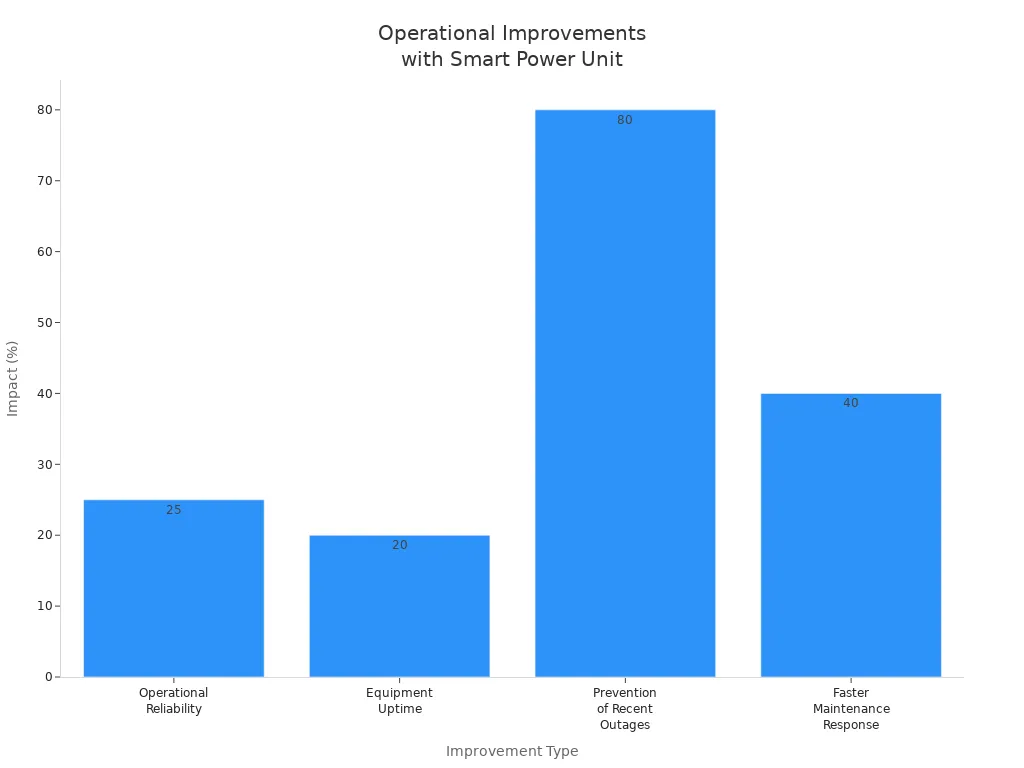
You can rely on these improvements to keep your network running smoothly, even during peak demand.
Industrial and Outdoor Use Cases
You face unique challenges in industrial and outdoor environments. Dust, rain, ice, and vibrations can threaten your equipment. You need PDUs that handle extreme temperatures and offer specialized connections. ESTEL’s solutions include surge suppression and EMI filters to clean up noisy power signals. You can provide both AC and DC power from a single source, which supports different types of equipment. Flexible connector options and advanced remote management features make these units ideal for harsh conditions.
Requirement | Description |
|---|---|
Specialized Connections | Custom designs with advanced controls |
Harsh Environment Handling | Withstands dust, rain, ice, and vibrations |
Temperature Management | Handles extreme heat or cold with internal heating or cooling |
Noise Mitigation | Surge suppression and EMI filters for clean power |
Multiple Power Forms | Supplies AC and DC power from one unit |
Enhanced Control Features | Complex circuits and remote management |
Flexible Connector Options | Wide variety of connectors for different applications |
You can trust these features to protect your assets and maintain uptime, even in the toughest locations.
ESTEL Success Stories
You can find real-world proof of these benefits in ESTEL’s deployments around the globe. Telenor-DTAC in Thailand upgraded its telecom infrastructure and improved network management. In Nigeria, ESTEL enhanced telecom services, making them more accessible and convenient. IBM reported 30% energy savings in its data centers after using ESTEL’s real-time monitoring. The U.S. General Services Administration saved $13.5 million annually and cut energy use by 41%. In Kenya, switching to solar-powered towers led to a 40% reduction in energy expenses. Europe saw a 30% drop in carbon footprint with modular solar plants. South Sudan reduced fuel costs by 30% with solar energy solutions.
Organization / Company | Impact / Result | Description |
|---|---|---|
Telenor-DTAC (Thailand) | Upgraded telecom infrastructure | Seamless digital transformation and better management |
ESTEL (Nigeria) | Enhanced telecom services | Greater convenience and user satisfaction |
IBM | Real-time monitoring reduced energy use | |
U.S. General Services Admin. | 41% energy savings, $13.5M saved | Improved efficiency and financial benefits |
New York City Underground Power | Enhanced reliability | Prevented power failures in critical infrastructure |
Vertiv (Fiji deployment) | Maintained IT/data center availability | Ensured telecom operations during outages |
GUDE | Up to 30% energy waste reduction | Supported sustainable energy use |
Kenya | 40% energy expense reduction | Solar-powered towers |
Europe | 30% carbon footprint reduction | Modular solar plants |
South Sudan | 30% fuel cost reduction | Solar energy solutions |
These stories show how you can achieve greater efficiency, reliability, and cost savings with ESTEL’s technology.
You optimize power management when you use a Smart Power Distribution Unit for multi-zone allocation. You improve operational efficiency, reliability, and safety in your facility. You gain real-time automation, modular designs, and compatibility with renewable energy sources. You benefit from predictive maintenance, enhanced safety, and flexible scaling. Future trends include microgrids, rapid deployment, and improved redundancy. You support sustainability and reduce energy waste. Consider this strategy to keep your infrastructure secure and efficient.
Advancements in automation and machine learning boost reliability.
Modular designs allow flexible capacity scaling.
Integration with renewable energy promotes sustainability.
You make a smart investment when you choose multi-zone power allocation for your facility.
FAQ
How do you set up priority zones with ESTEL’s Smart Power Distribution Unit?
You use the LCD display or remote management interface. Assign devices to zones based on their importance. Adjust settings to match your operational needs. The system saves your configuration for future use.
Can you monitor power usage in real time?
Yes. You see real-time data on the LCD display or through remote access. This helps you track consumption, spot issues, and optimize energy use.
What safety features protect your equipment?
ESTEL’s Smart Power Distribution Unit includes:
Surge protection
Circuit isolation
Dehumidifying function
These features keep your devices safe from electrical faults and harsh environments.
Is the Smart Power Distribution Unit suitable for outdoor or harsh environments?
Yes. The unit has a robust design. It resists dust, moisture, and temperature extremes. You can use it in outdoor telecom sites, industrial areas, or remote locations.
See Also
Understanding ESTEL PDUs and Their Importance in Data Centers
Solar Energy Storage Solutions for Telecommunications Cabinets
Enhancing Outdoor Cabinets Through Power, Cooling, and Monitoring
Ensuring Consistent Power Supply for Telecom Equipment Cabinets
Smart Microgrid Solutions for Telecom Cabinet Energy Storage
CALL US DIRECTLY
86-13752765943
3A-8, SHUIWAN 1979 SQUARE (PHASE II), NO.111, TAIZI ROAD,SHUIWAN COMMUNITY, ZHAOSHANG STREET, NANSHAN DISTRICT, SHENZHEN, GUANGDONG, CHINA
