Permission Isolation & Power Safety for Smart Power Distribution Units in Multi-Tenant Data Centers

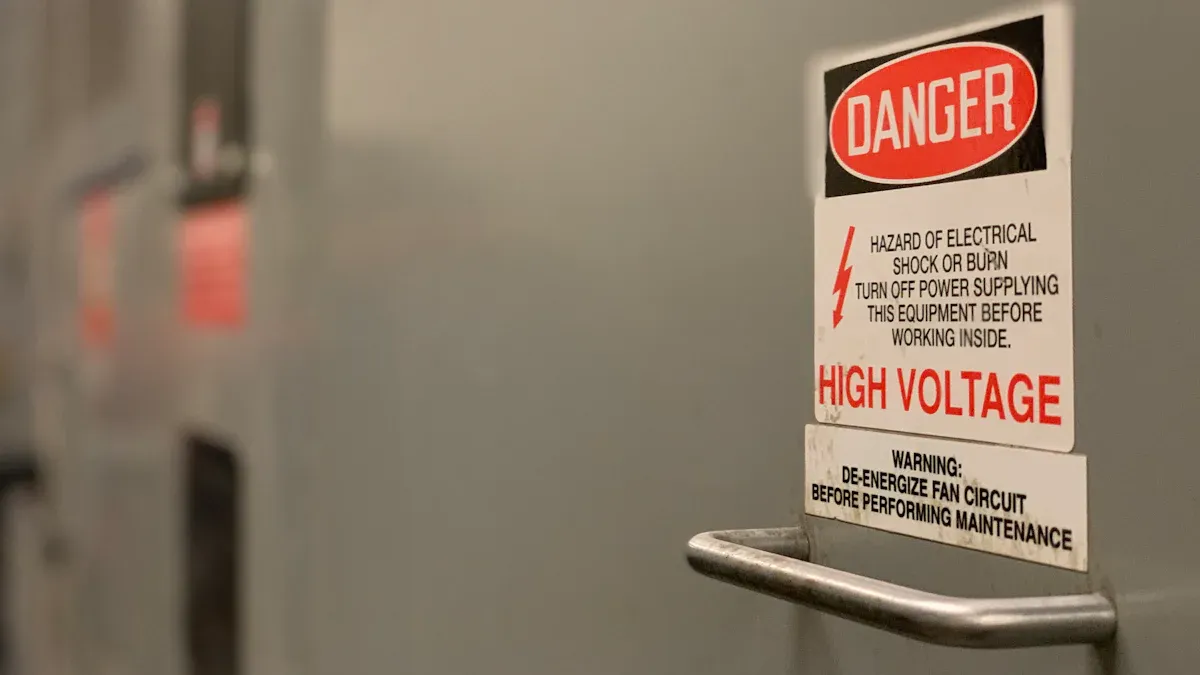
You need strong permission isolation and power safety to protect your data center. Secure access prevents unauthorized use and keeps operations reliable for every tenant. Smart Power Distribution Unit technology brings several advantages:
AI-driven energy management processes electrical readings on-site for better safety.
Real-time telemetry helps you adjust power quickly to meet safety standards.
Transparent billing builds trust by showing clear energy usage.
ESTEL delivers advanced Smart Power Distribution Units with robust safety and isolation features that support these needs.
Key Takeaways
Implement strong permission isolation to ensure each tenant only accesses their own resources. This protects your data center from unauthorized changes.
Utilize real-time monitoring and alerts to quickly respond to electrical hazards. This reduces downtime and protects your equipment.
Adopt network segmentation to enhance security. This limits the risk of attackers moving between systems and helps maintain compliance.
Regularly update access controls and authentication methods. This keeps your Smart Power Distribution Unit secure from unauthorized access.
Follow a detailed deployment checklist to ensure safe installation and operation of your Smart Power Distribution Unit. This helps maintain tenant trust and operational safety.
Permission Isolation in Multi-Tenant Data Centers
Isolation Principles for Smart Power Distribution Unit
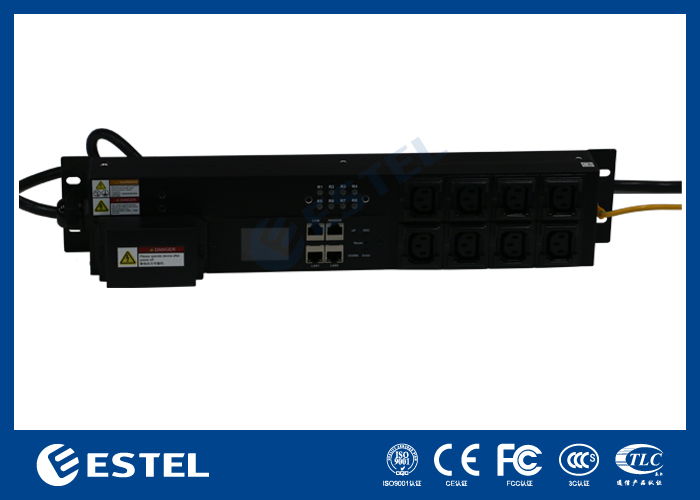
You need to ensure that each tenant in your data center has access only to their own resources. Permission isolation forms the foundation of secure operations. When you use a Smart Power Distribution Unit, you can assign access rights based on tenant roles. This means you can control who can monitor, manage, or modify power settings for each rack or device.
You should set up unique authentication credentials for every tenant. This prevents unauthorized users from accessing or changing power configurations. You can also use role-based access control to limit what each user can do. For example, a tenant may only view power usage, while an administrator can adjust settings or respond to alerts.
Network segmentation adds another layer of protection. By separating the management network for your Smart Power Distribution Unit from the tenant data networks, you reduce the risk of cross-tenant interference. You also make it easier to monitor and audit access events. These steps help you maintain a secure and reliable environment for all tenants.
Risks of Insufficient Isolation
If you do not set up strong isolation, you expose your data center to several risks. These risks can affect both security and stability. The table below shows some common risks you may face:
Risk Type | Description |
|---|---|
GPU-level security | GPUs lack tenant-level memory isolation, making them vulnerable to side-channel attacks and memory leakage. |
Container-breakout risks | Misconfigured containers can allow malicious workloads to escape their boundaries and compromise resources. |
Lateral movement | Compromised workloads can exploit shared network fabric to spread to other tenants' services. |
Namespace overreach | Improperly configured access can lead to accidental or malicious changes affecting cluster stability. |
You may see attackers move laterally across your network if you do not isolate permissions. Misconfigured containers can let malicious users break out and access other tenants' resources. Poor isolation can also lead to accidental changes that disrupt services for everyone. By using a Smart Power Distribution Unit with strong isolation features, you can reduce these risks and protect your infrastructure.
Power Safety Strategies for Smart Power Distribution Unit
Safety Mechanisms and Features
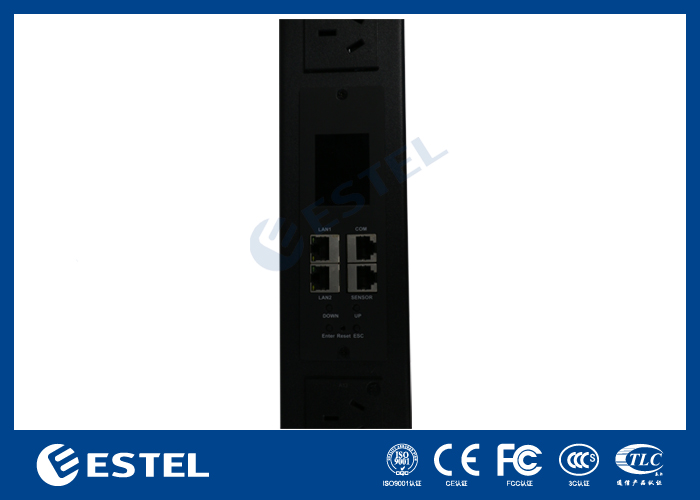
You need reliable safety mechanisms to protect your equipment and maintain stable operations. A Smart Power Distribution Unit offers several features that help you prevent electrical hazards:
Real-time monitoring tracks current, voltage, and temperature. You can spot abnormal readings before they cause problems.
Fault detection identifies issues quickly. This reduces the risk of equipment damage.
Alarm notifications alert your team when something goes wrong. You get visual and audible warnings for fast response.
Remote monitoring lets you access data from anywhere. You can check system status even when you are off-site.
Data logging and analysis record electrical events. You can review trends and improve your safety protocols.
Integration with building management systems centralizes control. You manage power alongside other critical systems.
Compliance and reporting help you meet safety standards. You generate reports for audits and inspections.
A Smart Power Distribution Unit continuously monitors electrical parameters using built-in sensors. Embedded algorithms analyze the data and flag abnormal conditions such as overheating or overloads. The system activates alarms and sends notifications to your maintenance team. Some units can shut down power automatically to prevent fire hazards.
Tip: Use remote monitoring and alarms to respond quickly to emergencies. This reduces downtime and protects your assets.
Operational Hazards and Mitigation
You face several operational hazards in a multi-tenant environment. The most common risks include data leakage, insider threats, compliance failures, performance bottlenecks, and noisy neighbors. The table below summarizes these hazards:
Risk | Description |
|---|---|
Data Leakage | Weak partitions in the multi-tenant database can expose tenant information. |
Insider Threats | Without clear access management, internal users can create vulnerabilities. |
Compliance Failures | Missed regulatory requirements lead to hefty fines and reputational damage. |
Performance Bottlenecks | Inefficient resource allocation can slow systems, impacting the user experience. |
Noisy Neighbors | Resource contention within a shared environment can disrupt performance for some tenants. |
You can mitigate these hazards with proven strategies:
Mitigation Strategy | Description |
|---|---|
Firmware Management | Regularly update PDU firmware to patch known vulnerabilities. |
Network Segmentation | Isolate PDUs from public networks and limit access to authorized personnel. |
Access Controls | Implement strong authentication and role-based access to PDU interfaces. |
Monitoring and Alerts | Use real-time monitoring tools to detect unusual activity or environmental anomalies. |
Audit Trails | Maintain logs of all access and configuration changes for forensic analysis. |
You improve safety and reliability by combining these strategies with the advanced features of a Smart Power Distribution Unit. You protect your tenants and ensure smooth operation in your data center.
Best Practices for Permission Isolation & Power Safety
Access Control and Authentication
You must control who can access your Smart Power Distribution Unit. Strong access control keeps your data center secure and prevents unauthorized changes. You can use different access control models to protect your equipment. The table below shows common methods:
Access Control Method | Description |
|---|---|
Something you have | An access card or key. |
Something you know | A password entered on a keypad. |
Something you are | Biometric authentication such as fingerprints or facial recognition. |
You should combine these methods for better security. For example, you can require both a password and a fingerprint. This makes it much harder for someone to break in.
Authentication protocols also play a big role in security. Protocols like SSL/TLS make sure only authorized devices can connect to your Smart Power Distribution Unit. These protocols use encryption to protect sensitive data during transmission. Public Key Infrastructure (PKI) helps verify identities and creates a secure channel between your PDU and trusted endpoints. When you use these tools, you reduce the risk of unauthorized access and data leaks.
Tip: Always update your authentication methods and review user permissions regularly. This helps you catch weak spots before attackers do.
Network Segmentation and Monitoring
You can improve permission isolation by dividing your network into smaller segments. Network segmentation separates systems and sensitive data. This makes it harder for attackers to move around if they get inside. You also reduce the number of endpoints that could be attacked.
Network segmentation enhances security by separating systems and sensitive data, which helps prevent breaches.
It reduces the attack surface, minimizing the number of endpoints vulnerable to threats.
Compliance with regulatory standards is facilitated by clearly defined network boundaries and restricted access.
Monitoring tools help you detect unauthorized access or unusual activity. Advanced Metering Infrastructure (AMI) lets you track who accesses your Smart Power Distribution Unit and when. AI-driven anomaly detection can spot irregularities in power usage or access patterns. These tools help you find problems early and respond quickly.
Advanced Metering Infrastructure (AMI) is crucial for monitoring unauthorized access and anomalies.
AI-driven anomaly detection techniques enhance the ability to identify irregularities in power distribution systems.
Various attack vectors such as physical tampering, software manipulation, and communication vulnerabilities pose significant risks to AMIs.
Note: Regularly review your network segments and monitoring logs. This helps you stay ahead of threats and keeps your data center safe.
Overload Protection and Alerts
You need overload protection to keep your equipment safe. Advanced Smart Power Distribution Units include several mechanisms to prevent damage:
Automatic disconnection of power activates when excessive current draw is detected. This stops damage and fire hazards.
In data centers, overload protection keeps servers and networking equipment running. It prevents overheating and hardware damage.
In industrial settings, these units manage heavy machinery loads and reduce the risk of electrical fires.
In healthcare, they protect life-support systems and medical equipment from overloads.
In telecommunications, PDUs ensure stable power for network equipment and support load balancing.
In emergency response systems, they maintain power for critical communication during emergencies.
Real-time alerts are also important for power safety. Continuous monitoring helps you detect threats early and respond faster. Timely alerts reduce the time it takes to fix problems. Centralized dispatch sends alerts to the right teams. The system can sort alerts by severity and prevent alert floods.
Aspect | Description |
|---|---|
Incident Response | Continuous monitoring enables earlier detection of threats, accelerating the incident response process. |
Operational Threats | Timely alerts help reduce Median Time to Resolution (MTTR) for incidents. |
The move to AI-first security in data centers improves both safety and efficiency. Intelligent surveillance and autonomous threat recognition help you respond to incidents more effectively.
Callout: Set up real-time alerts and automatic shutdowns. These features protect your assets and keep your data center running smoothly.
ESTEL Solutions for Smart Power Distribution Unit
Product Features and Advantages
You want a power solution that adapts to your data center’s needs. ESTEL’s Smart Power Distribution Unit gives you flexibility and safety. You can customize and expand your setup with modular designs. Daisy-chaining lets you manage several units efficiently, which is important when you have many tenants. Flexible voltage options help you adjust as your workloads change.
You can see the main features and benefits in the table below:
Feature | Benefit |
|---|---|
Modular and scalable designs | Easy customization and expansion for changing power needs |
Daisy-chaining capability | Efficient management of multiple PDUs, crucial for multi-tenant environments |
Flexible voltage options | Adaptation to new power requirements as workloads change |
Isolated designs | Safe maintenance and upgrades without affecting the entire system |
Advanced filtering and fault isolation | Reliable power quality, enhancing safety in multi-tenant data centers |
Automation and centralized administration | Streamlined operations, reducing overhead and improving visibility across the data center |
You get isolated designs that allow safe maintenance. Advanced filtering and fault isolation protect your equipment from electrical issues. Automation and centralized administration make your operations smoother and more visible.
Tip: Choose a solution that grows with your business and keeps your tenants safe.
Implementation Scenarios
You can use ESTEL’s Smart Power Distribution Unit in many situations. In a large data center, you might need to add new racks for a new tenant. The modular design lets you expand without downtime. If you manage several tenants, daisy-chaining helps you control power for each group separately.
For example, a telecom provider used ESTEL units to upgrade their multi-tenant facility. They added new racks and connected them with daisy-chained PDUs. Maintenance teams performed upgrades on one section without shutting down the whole system. This kept all tenants online and satisfied.
Another case involved a cloud service company. They needed to monitor power usage for each tenant. With ESTEL’s centralized administration, they tracked energy use and sent alerts for overloads. This improved safety and made billing more accurate.
You can rely on ESTEL to deliver reliable, scalable, and safe power distribution for your multi-tenant data center.
Deployment Checklist
Step-by-Step Guide
You need a clear deployment checklist to ensure your Smart Power Distribution Unit operates safely and remains isolated in a multi-tenant data center. Follow these steps to protect your equipment and maintain tenant trust.
Step-by-Step Installation Process:
Disconnect all power sources before you begin installation.
Prohibit any re-connection during the setup process.
Secure the installation area to prevent unauthorized access.
Earth and short the unit as needed to avoid electrical hazards.
Shroud any nearby live components to reduce risk.
Tip: Always double-check the installation area for hidden hazards before you start.
After you complete the installation, you need to verify that the unit is safe and correctly isolated. Use the following checklist:
Use a voltage tester to check the power source before turning on the unit.
Ensure the plug fits the outlet securely.
Distribute the power load evenly across all outlets.
Check that all connected devices receive power without interruption.
Task | Purpose |
|---|---|
Disconnect power sources | Prevent accidental shocks |
Secure installation area | Block unauthorized access |
Earth and short unit | Reduce electrical hazards |
Shroud live components | Protect from contact |
Voltage test | Confirm safe power flow |
Even load distribution | Avoid overloads |
Note: You should document each step and keep records for future audits. This practice helps you maintain compliance and improves operational safety.
You can use this checklist to guide your team through deployment. Careful preparation and verification keep your Smart Power Distribution Unit reliable and safe for every tenant.
You strengthen your data center by combining permission isolation with power safety. ESTEL’s Smart Power Distribution Units help you achieve this with advanced features and proven results. IT managers report energy savings up to 41%, faster responses, and lower maintenance costs. When you follow best practices, you improve security, reduce downtime, and boost efficiency. Industry trends show a focus on grid reliability, IoT, and cybersecurity:
Evidence Description | Key Points |
|---|---|
Enhanced grid reliability as a pivotal driver for smart power distribution systems. | Utilities are addressing aging infrastructure, extreme weather, and complexity in energy distribution. |
Integration of advanced technologies like IoT and automation. | These technologies improve outage performance and support the hosting of distributed energy resources. |
Focus on cybersecurity and interoperability. | Regulatory frameworks incentivize reliability gains and customer engagement outcomes. |
Prioritize integrated safety and isolation to protect your infrastructure and earn tenant trust.
FAQ
How does a Smart Power Distribution Unit improve tenant security?
You control access for each tenant. The unit uses role-based permissions and network segmentation. This setup prevents unauthorized users from changing power settings or viewing other tenants’ data.
What safety features should I look for in a Smart PDU?
You should check for these features:
Surge protection
Overload detection
Real-time monitoring
Alarm notifications
These features help you prevent electrical hazards and keep your equipment safe.
Can I monitor power usage remotely?
Yes, you can. ESTEL’s Smart Power Distribution Unit supports remote management. You view real-time data, receive alerts, and control power from anywhere with an internet connection.
How do I prevent overloads in a multi-tenant data center?
You distribute power loads evenly. Use the PDU’s monitoring tools to track usage. Set up automatic alerts for high current. This helps you act before problems occur.
Where can I find more information about ESTEL’s Smart Power Distribution Units?
Visit ESTEL’s official website for detailed product specifications, support, and contact details.
See Also
Understanding ESTEL PDUs and Their Importance in Data Centers
Ensuring Consistent Power Supply for Telecom Cabinet Systems
Exploring the ESTEL Power System for Telecom Cabinets
CALL US DIRECTLY
86-13752765943
3A-8, SHUIWAN 1979 SQUARE (PHASE II), NO.111, TAIZI ROAD,SHUIWAN COMMUNITY, ZHAOSHANG STREET, NANSHAN DISTRICT, SHENZHEN, GUANGDONG, CHINA
