Improving Predictive Maintenance Accuracy of Smart Power Distribution Units through Algorithm Iteration and Data Accumulation


You can greatly improve predictive maintenance for your Smart Power Distribution Unit by refining algorithms and gathering more quality data over time. This process lets you adjust predictive models as new information becomes available, which leads to earlier fault detection and less downtime. Accurate maintenance predictions bring real benefits:
Benefit | Description |
|---|---|
The network remains operational during power changes. | |
Lower Maintenance Costs | Fewer site visits and quicker repairs reduce expenses. |
Improved Energy Efficiency | Less wasted power leads to lower operating costs. |
Enhanced Equipment Safety | Sensitive equipment is protected from surges and overloads. |
Increased Operational Reliability | Predictive maintenance lowers operational costs and increases reliability. |
ESTEL stands as a leader in telecom infrastructure, focusing on quality and innovation. You should consider how advanced analytics and strong data strategies can transform your maintenance outcomes.
Key Takeaways
Refine predictive maintenance models by regularly updating algorithms with new data. This helps catch issues early and reduces downtime.
Collect diverse data types, such as voltage and temperature, to improve the accuracy of your predictive models. More data leads to better predictions.
Integrate AI to analyze sensor data and identify patterns. This technology helps you schedule maintenance before problems escalate.
Invest in staff training to ensure your team can interpret predictive alerts correctly. Proper training maximizes the benefits of predictive maintenance.
Combine advanced algorithms with comprehensive data collection for optimal maintenance strategies. This approach enhances reliability and lowers costs.
Smart Power Distribution Unit Overview
Key Features and Functions
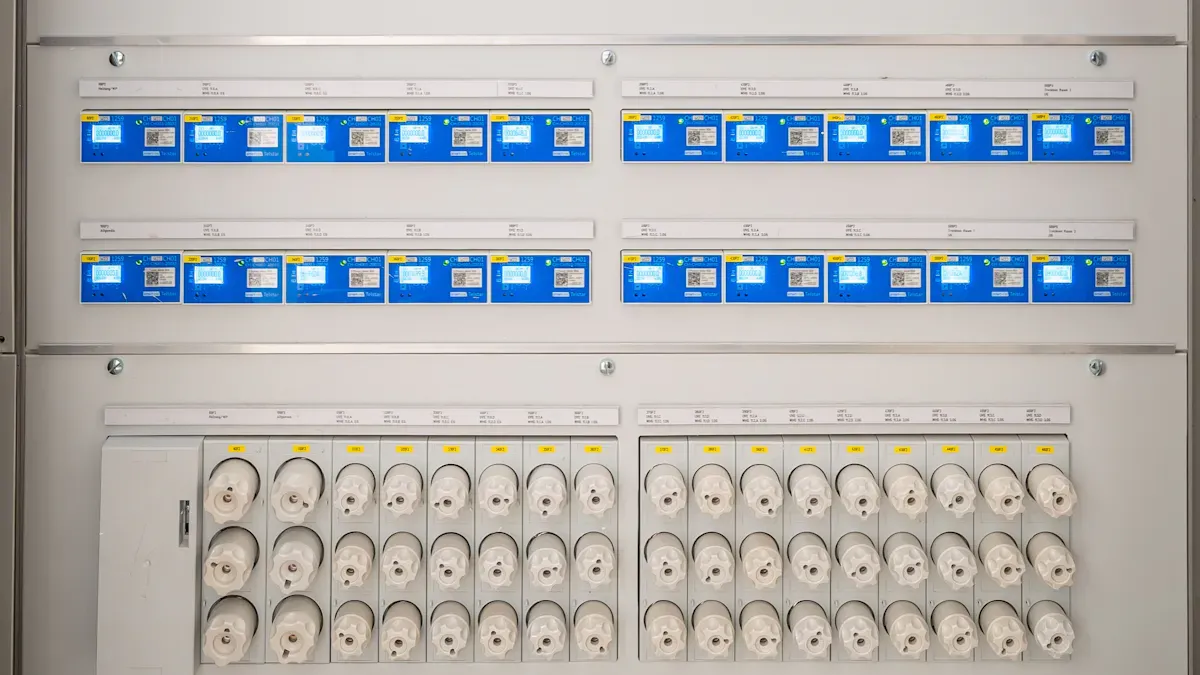
You rely on a Smart Power Distribution Unit to keep your telecom and data center operations running smoothly. This device manages and distributes electricity to critical equipment, helping you avoid disruptions and maintain stability. You can monitor power usage in real time, which lets you respond quickly to changes and prevent overloads. Advanced environmental monitoring tracks temperature and humidity, optimizing energy use and improving reliability. AI integration analyzes historical and real-time data, predicting power demand and helping you avoid sudden overloads.
Smart Power Distribution Units play a crucial role in supporting remote sites, urban networks, and high-density data centers. You gain the ability to right-size your power infrastructure and make informed decisions about upgrades.
Here is a comparison of core functions for different types of PDUs:
Type of Smart PDU | Core Functions |
|---|---|
Smart PDU | Precise monitoring and control of energy consumption, helps in right-sizing power infrastructure. |
Monitored PDU | Comprehensive view of power usage, remote monitoring, and alarming for power threshold breaches. |
Switched PDU | Remote control of power at each outlet, prevents overloads and manages power usage effectively. |
ESTEL’s Role in Telecom Solutions
ESTEL provides you with a Smart Power Distribution Unit that stands out for its reliability and advanced features. You benefit from scalability, which allows easy upgrades as your demands grow. Hot-swappable components let you perform maintenance without shutting down your system, ensuring continuous operation. Advanced monitoring tools give you real-time insights into energy consumption and environmental conditions, helping you mitigate risks.
You receive consistent electricity, preventing disruptions in telecom operations.
Real-time monitoring enables early detection of potential issues.
Remote management features allow quick resolution of faults, reducing downtime and maintenance costs.
Environmental monitoring optimizes energy usage based on actual needs.
Built-in safeguards like overload protection and thermal management ensure reliability.
You see measurable improvements in energy efficiency and sustainability. For example, energy consumption can drop by 15% in a data center, and equipment uptime can increase by 20%. ESTEL’s Smart Power Distribution Unit helps you achieve up to 30% energy savings with advanced technology.
Predictive Maintenance Challenges
Common Issues in Smart PDUs
You face several challenges when managing predictive maintenance for your Smart Power Distribution Unit. Operators often struggle to integrate new predictive systems with older infrastructure. This mismatch can create inefficiencies and limit the effectiveness of maintenance strategies. Data management also presents a major concern. You must secure sensitive information using encryption and access controls to protect confidentiality. Staff training is another critical issue. Without proper training, your team may misinterpret predictive alerts, leading to missed opportunities for early intervention.
Here is a summary of the most common challenges:
Challenge | Description |
|---|---|
Difficulty in merging new predictive maintenance systems with older infrastructure, causing inefficiencies. | |
Importance of securing data through encryption and access controls to maintain confidentiality. | |
Training | Necessity for training programs to help staff interpret predictive alerts effectively. |
Tip: You can address these challenges by investing in modern infrastructure, implementing robust cybersecurity measures, and providing ongoing staff education.
Importance of Accurate Predictions
You rely on accurate predictions to keep your telecom systems running smoothly. High accuracy in predictive maintenance ensures reliability and minimizes downtime. Timely maintenance actions help you avoid unexpected equipment failures, which prolongs the lifespan of your Smart Power Distribution Unit. When you achieve precise predictions, you boost operational efficiency and maintain consistent service.
Cost savings also play a significant role. Accurate predictive maintenance lowers maintenance costs by up to 40%. You save time and resources through remote management. Energy efficiency improvements reduce operational expenses. Downtime reduction leads to lower overall costs.
Aspect | Impact on Cost Savings |
|---|---|
Energy Efficiency | Significant operational cost reductions |
Downtime Reduction | Lower operational costs |
Predictive Maintenance | Maintenance costs lowered by up to 40% |
Remote Management | Saves time and resources |
You see that investing in predictive maintenance accuracy brings both performance and financial benefits. Reliable systems and reduced costs help you stay competitive in the telecom industry.
Algorithm Iteration for Maintenance Accuracy
Model Refinement Techniques
You can improve predictive maintenance accuracy by refining your models through algorithm iteration. This process starts with collecting data from your Smart Power Distribution Unit. You focus on key metrics such as voltage, current, and temperature. These measurements help you understand how your equipment performs under different conditions.
You build predictive models using this data. These models forecast potential failures and alert you before issues become critical. You do not stop at the initial model. You regularly test and adjust your models as new data arrives. This ongoing refinement ensures your predictions stay relevant and accurate.
Here are some effective techniques for model refinement:
Gather real-time and historical data from your equipment.
Develop algorithms that analyze the collected data.
Create predictive models to anticipate failures.
Continuously test and update models with fresh data.
Tip: You should always review your model’s performance and make adjustments based on the latest information. This approach helps you catch problems early and avoid unexpected downtime.
AI Integration in Smart PDUs
Artificial intelligence plays a key role in enhancing predictive maintenance. You use AI to analyze sensor data and spot patterns that indicate early signs of wear. These models process large amounts of information quickly, allowing you to detect issues before they become serious.
AI-driven analytics help you make proactive decisions. You can schedule maintenance at the right time, reducing unnecessary repairs and keeping your equipment running smoothly. By integrating AI, you gain deeper insights into your Smart Power Distribution Unit’s health and performance.
Note: AI models learn from every maintenance event and sensor reading. This learning process improves their accuracy over time, making your predictive maintenance strategy more effective.
Data Accumulation Impact

Types of Data Collected
You collect many types of data from your Smart Power Distribution Unit. This data helps you understand how your equipment works and how it changes over time. You gather information from sensors that measure voltage, current, and temperature. You also track humidity, power usage, and environmental conditions. You record maintenance logs and error reports. You monitor real-time events and historical trends.
Large amounts of data give you a complete view of machine operations.
Data comes from different sources, such as sensors, logs, and user reports.
You use diverse formats, including numbers, text, and graphs.
You need accurate data to make precise predictions. Timely data collection lets you respond quickly to problems. Complete data helps you train machine learning models more effectively.
Enhancing Model Performance
You improve predictive maintenance models by using more and better data. When you collect data from multiple sensors, you combine it to create a stronger model. This process is called data fusion. Data fusion reduces false alarms and makes your maintenance schedule more reliable.
You check the accuracy of your data to ensure your predictions are correct.
You collect data often so your models stay up to date.
You make sure your data covers all aspects of your equipment.
You see that data accumulation boosts the performance of your predictive maintenance models. You detect faults earlier and prevent unexpected downtime. You keep your Smart Power Distribution Unit running smoothly and extend its lifespan. You save money by reducing unnecessary repairs and improving operational reliability.
Tip: You should always collect as much relevant data as possible. This practice helps you build models that predict failures with greater accuracy.
Optimizing Predictive Maintenance
Combining Algorithms and Data
You can achieve optimal predictive maintenance by combining advanced algorithms with comprehensive data collection. Algorithms help you analyze patterns in equipment behavior. Data accumulation gives you a broader view of how your systems perform over time. When you use both together, you improve the accuracy of your predictions.
You start by collecting sensor readings, maintenance logs, and environmental data. Algorithms process this information and identify early warning signs. You refine these algorithms as you gather more data. This process lets you adapt to new conditions and equipment changes.
Here are the steps you can follow:
Gather real-time and historical data from your Smart Power Distribution Unit.
Use machine learning algorithms to analyze the data.
Update your models regularly with new information.
Validate predictions by comparing them with actual maintenance outcomes.
Note: You should always review your predictive models after each maintenance event. This practice helps you catch errors and improve future predictions.
You see several benefits when you combine algorithms and data:
Benefit | Description |
|---|---|
Early Fault Detection | Algorithms spot issues before they cause downtime |
Reduced Maintenance | Accurate predictions lower unnecessary repairs |
Improved Reliability | Data-driven models keep your systems running |
Cost Savings | Fewer failures mean lower operational expenses |
You build a maintenance strategy that adapts to your needs. You make decisions based on facts, not guesses. This approach helps you extend the lifespan of your equipment and maintain high performance.
ESTEL Case Study Example
You can look at ESTEL’s approach to see how combining algorithms and data works in practice. ESTEL deployed Smart Power Distribution Units in a large telecom network. The company installed sensors to monitor voltage, current, temperature, and humidity. Maintenance teams recorded every service event and equipment error.
ESTEL used machine learning algorithms to analyze the collected data. The models predicted when components would need attention. Maintenance teams received alerts before failures occurred. They scheduled repairs at the right time, avoiding unexpected downtime.
Here is a summary of the results:
Metric | Before Optimization | After Optimization |
|---|---|---|
Downtime (hours/year) | 120 | 40 |
Maintenance Costs ($) | 50,000 | 30,000 |
Equipment Uptime (%) | 95 | 99 |
Energy Savings (%) | 10 | 25 |
You see that ESTEL’s strategy led to a 67% reduction in downtime and a 40% decrease in maintenance costs. Equipment uptime improved by 4%. Energy savings increased by 15%. These results show the value of combining algorithm iteration and data accumulation.
Tip: You can apply these methods to your own operations. Start by collecting detailed data. Use predictive algorithms to analyze it. Update your models as you learn more. This process helps you achieve reliable, cost-effective maintenance.
You gain confidence in your maintenance strategy. You protect your equipment and reduce expenses. You ensure your telecom network stays operational and efficient.
You see that combining algorithm iteration with data accumulation leads to enhanced predictive maintenance accuracy for your Smart Power Distribution Unit. ESTEL’s commitment to innovation and reliability shows in features like real-time monitoring, remote management, and customizable service packages.
Strategy | Description |
|---|---|
Condition-Based Maintenance | Triggers maintenance based on real-time equipment status |
Machine Learning-Driven Maintenance | Forecasts failures using historical and live data |
Rule-Based Predictive Maintenance | Uses predefined limits for maintenance actions |
You can implement these strategies to optimize your operations. Industry trends show rapid growth in smart PDU technology and predictive analytics. Investing in these solutions helps you reduce downtime and improve network reliability.
FAQ
What data should you collect for predictive maintenance?
You should collect voltage, current, temperature, humidity, and error logs from your Smart Power Distribution Unit. This data helps you spot patterns and predict failures early.
How often should you update your predictive maintenance models?
You should update your models regularly. After each maintenance event or when you gather new data, review and refine your algorithms to keep predictions accurate.
Can you manage ESTEL’s Smart Power Distribution Unit remotely?
Yes, you can manage the unit remotely. Use the built-in remote control features to monitor, adjust, and troubleshoot your power distribution system from anywhere.
What are the main benefits of using AI in predictive maintenance?
AI helps you detect issues early, reduce downtime, and lower maintenance costs. You gain deeper insights into equipment health and can schedule repairs before failures happen.
How does predictive maintenance save you money?
Predictive maintenance lets you fix problems before they cause major damage. You avoid emergency repairs, reduce downtime, and extend equipment life, which lowers your overall costs.
See Also
Enhancing Outdoor Cabinets Through Power, Cooling, And Oversight
Calculating Power Systems And Battery Needs For Telecom Cabinets
Ensuring Consistent Power Supply For Telecom Cabinet Operations
A Complete Guide To Assessing Risks In Telecom Batteries
Solar Energy Storage Solutions For Telecom Cabinet Power Needs
CALL US DIRECTLY
86-13752765943
3A-8, SHUIWAN 1979 SQUARE (PHASE II), NO.111, TAIZI ROAD,SHUIWAN COMMUNITY, ZHAOSHANG STREET, NANSHAN DISTRICT, SHENZHEN, GUANGDONG, CHINA
