Reliability Verification of Smart Power Distribution Units in Extreme Temperatures (-40℃~75℃)

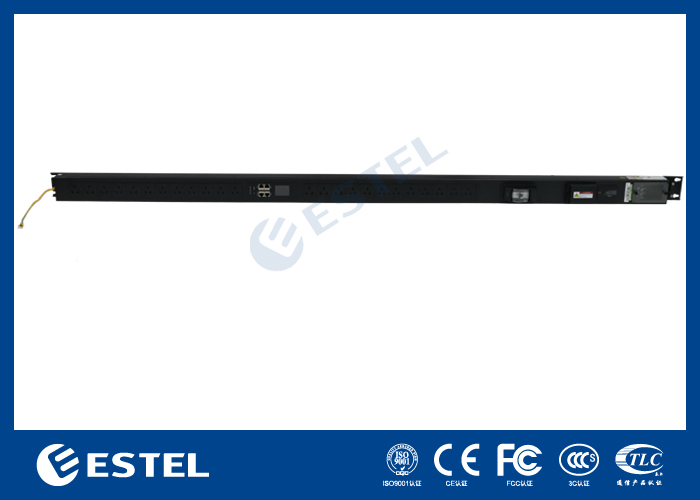
You face challenging environments when managing telecom and data center equipment. Smart Power Distribution Unit reliability testing ensures your systems perform well from -40℃ to 75℃. Engineers use temperature cycling, endurance, functional, and environmental stress tests to verify durability. Reliable power distribution remains critical for protecting sensitive equipment. ESTEL leads the industry by providing robust solutions that withstand harsh conditions.
Key Takeaways
Smart Power Distribution Units must be tested for reliability in extreme temperatures to ensure they protect sensitive equipment.
Temperature changes can cause damage to electronic parts, leading to increased downtime and reduced lifespan of equipment.
Look for industry certifications like UL and CE when selecting Smart Power Distribution Units to ensure safety and performance.
Regular testing methods, such as temperature cycling and endurance tests, help identify weaknesses in Smart Power Distribution Units.
Real-world success stories show that ESTEL units perform reliably in harsh environments, reducing maintenance needs and operational costs.
Importance of Reliability in Extreme Temperatures
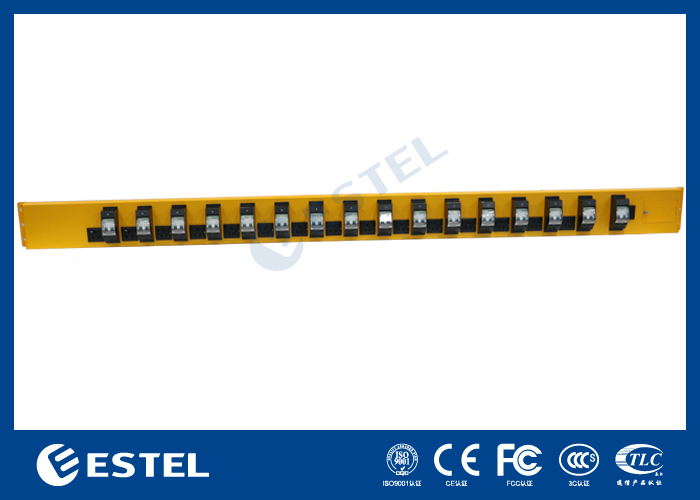
Risks for Smart Power Distribution Units
You rely on Smart Power Distribution Units to keep your telecom and data center equipment running smoothly. When these units face extreme temperatures, the risks increase. High heat can cause parts like capacitors to swell or circuits to warp. Cold can lead to condensation, which may result in corrosion. Overheating often causes more than 30% of energy losses in power distribution systems. If cooling is not managed well, the lifespan of components can drop by 20%. These risks show why you need to verify reliability before installing equipment in harsh environments.
Temperature Impact on Performance
Temperature changes can affect how well your Smart Power Distribution Unit works. When the temperature rises, you may see swelling in electronic parts and even warping of circuit boards. Moisture from condensation can build up when temperatures drop, leading to corrosion and possible electrical failures. Poor temperature control can shorten the life of your equipment and increase the chance of downtime. You want to avoid these problems to keep your systems safe and efficient.
Application Scenarios for ESTEL PDUs
You will find ESTEL Smart Power Distribution Units in many tough environments. These units work well in industrial IoT settings where dust and drift oil are common. Their strong enclosures, rated IP54 or higher, protect against dust, water, and humidity. In offshore communication platforms, these units use corrosion-resistant materials and advanced coatings. They also include environmental monitoring and remote management features. You can trust them to keep working in places with high salinity, wide temperature swings, and harsh marine conditions. ESTEL focuses on quality and durability, making sure your equipment stays reliable wherever you deploy it.
Standards and Requirements for Smart Power Distribution Unit Reliability
Industry Standards and Certifications
You need to know which standards matter most when you select a Smart Power Distribution Unit for critical environments. These international standards set the foundation for safety, quality, and performance:
UL: Recognized in North America, this standard ensures safety and reduces hazards.
CE: Required for sale in the European Union, it confirms compliance with EU safety rules.
IEC CB: Covers international safety standards like IEC 60950-1 and IEC 62368-1.
ISO9001: Focuses on consistent manufacturing processes and quality assurance.
VDE: Validates electrical safety and performance.
Certifications such as UL, CSA, CE, or TÜV build trust. They show that the product meets strict safety and performance requirements. You can feel confident that certified units have passed rigorous testing and help you avoid risks from non-compliant equipment.
ESTEL Compliance and Quality Control
You want a supplier who goes beyond the basics. ESTEL follows a strict quality control process and meets multiple certifications. The table below shows how ESTEL’s Smart Power Distribution Unit aligns with industry standards:
Certification | Description |
|---|---|
ISO9001 | Ensures consistent manufacturing processes for quality assurance. |
UL | Guarantees compliance with electrical safety standards. |
RoHS | Addresses environmental impact and safety. |
CE | Ensures compliance with health, safety, and environmental rules. |
VDE | Validates electrical safety and performance standards. |
ESTEL’s commitment to these certifications means you get reliable products that perform well in harsh conditions.
Performance Benchmarks
You should look for clear benchmarks when you evaluate reliability. These benchmarks help you measure how well a Smart Power Distribution Unit works in extreme temperatures:
Efficiency Metric | Description |
|---|---|
Power Input Redundancy | Monitors power sources and lets you select the preferred input |
Load Status | Reports current levels and alerts you when thresholds are reached |
Environmental Monitoring | Gives you real-time temperature and humidity readings |
Event Logging and Graphing | Logs power events for analysis and troubleshooting |
These benchmarks give you the data you need to make informed decisions and ensure your equipment stays safe and efficient.
Reliability Testing Methods for Smart Power Distribution Units
Temperature Cycling Tests
You need to know how temperature cycling tests work. These tests expose your Smart Power Distribution Unit to repeated changes between high and low temperatures. This process helps you see how well the unit handles thermal stress. Engineers use industry standards to guide these tests. The table below shows common standards and their details:
Standard | Temperature Range | Cycles | Application |
|---|---|---|---|
JESD22-A104 | Varies | 500-1000 | Consumer Electronics |
AEC-Q100 | -40°C to 125°C | Up to 1000 | Automotive |
IEC 60068-2-14 | Varies | 500-1000 | Consumer Electronics |
MIL-STD-883 Method 1010 | -65°C to 150°C | 1000-3000 | Military/Aerospace |
ESTEL follows IEC 60068-2-14 for telecom and data center applications. You can trust that each Smart Power Distribution Unit faces hundreds of cycles from -40℃ to 75℃. This process uncovers hidden weaknesses and ensures long-term reliability.
Endurance at High and Low Temperatures
You want your equipment to last. Endurance testing keeps your Smart Power Distribution Unit at extreme temperatures for long periods. This test checks if the unit can operate without failure during heat waves or cold snaps. ESTEL places units in climate chambers for up to 72 hours at both ends of the temperature range. Engineers monitor the unit for any drop in performance, such as voltage drift or display errors. If the unit passes, you know it can handle real-world conditions.
Functional Testing in Extreme Conditions
You need to see how your Smart Power Distribution Unit performs when it is working hard. Functional testing checks all features while the unit operates at high or low temperatures. You get real-time data from the LCD display, remote management system, and dehumidifying function. ESTEL uses Dynamic Thermal Ratings (DTR) to measure how much power the unit can safely handle as temperatures change. This method helps you avoid overloads and keeps your equipment safe. You can rely on these tests to confirm that every function works, even in harsh environments.
Environmental Stress Screening
You want to make sure your equipment survives more than just temperature swings. Environmental Stress Screening (ESS) combines temperature, humidity, vibration, and electrical load. This approach simulates the toughest field conditions. During ESS, engineers look for early failures and weak components. They use advanced models to include stress factors, such as:
Enhanced reliability models that consider multiple stress levels.
Identification of failure modes under different stress conditions.
Analysis showing that distributed systems, like those using Smart Power Distribution Units, perform better under stress than centralized systems.
ESTEL’s procedures ensure that each unit meets high standards before it leaves the factory. You get peace of mind knowing your equipment has passed the toughest tests.
Data Analysis and Reliability Metrics
Interpreting Test Results
You need to understand how engineers analyze test data to determine the reliability of your equipment. After each test, you get a large amount of data, including temperature readings, voltage levels, and operational logs. Engineers use several statistical methods to make sense of this information. These methods help you see if your Smart Power Distribution Unit meets reliability targets and performs efficiently.
Here are some common methods used in reliability analysis:
Method | Description |
|---|---|
Determines reliability targets and shows cost-efficiency for power distribution systems. | |
Neyer Method | Uses matrix math to optimize testing parameters and reduce the number of tests needed. |
Stress-Strength Method | Addresses multiple variables that affect device reliability when other methods are not enough. |
You can use these methods to compare test results, spot trends, and identify weak points. For example, Data Envelopment Analysis helps you find the most efficient units. The Neyer Method lets you use past test data to plan future tests better. The Stress-Strength Method helps you understand how different factors, like temperature and humidity, affect reliability.
Reliability Indices (SAIFI, SAIDI)
You can measure reliability using industry-standard indices. These indices give you a clear picture of how often and how long your customers might experience power interruptions. The two most common indices are SAIFI and SAIDI.
Index | Definition | Calculation Method |
|---|---|---|
SAIFI | System Average Interruption Frequency Index shows how often the average customer experiences a sustained interruption over a set period. | SAIFI = Ni / NT, where Ni is the number of interrupted customers and NT is the total number of customers served. |
SAIDI | System Average Interruption Duration Index shows the total duration of interruptions for the average customer during a set period. | SAIDI = Σ(ri) / NT, where ri is the restoration time for each sustained interruption event. |
You can use these indices to track performance over time. A lower SAIFI means fewer interruptions. A lower SAIDI means shorter outages. These numbers help you set goals and measure improvements in your power distribution system.
Pass/Fail Criteria for ESTEL PDUs
You want to know when a Smart Power Distribution Unit passes or fails reliability tests. ESTEL uses strict criteria to make this decision. Each unit must complete all temperature, endurance, and functional tests without critical errors. Engineers check for stable voltage output, accurate LCD readings, and proper remote management functions. The unit must also meet or exceed industry benchmarks for SAIFI and SAIDI.
You can see the pass/fail process in action:
The unit must operate without shutdowns or major faults during all test cycles.
All safety features, such as surge protection and dehumidifying functions, must work as designed.
The unit must maintain performance within set limits for voltage, current, and temperature.
Customer feedback and field data confirm that the unit performs well in real-world conditions.
Note: ESTEL reviews customer feedback and field performance data regularly. This process helps improve future designs and ensures that you get reliable products every time.
You can trust that ESTEL’s Smart Power Distribution Unit meets high standards for reliability, giving you confidence in your critical infrastructure.
Real-World Performance and Case Studies
ESTEL Smart Power Distribution Unit Success Stories
You can see the impact of reliability testing in real-world deployments. Telecom operators in northern China installed ESTEL Smart Power Distribution Units in outdoor cabinets where winter temperatures dropped below -35℃. The units continued to deliver stable power without interruption. In Southeast Asia, you find these units operating in remote base stations where humidity and heat reach challenging levels. The LCD display and remote management features allowed engineers to monitor performance and address issues before they became critical. These success stories show that you can trust the Smart Power Distribution Unit to perform in the toughest conditions.
Field Results in Harsh Environments
You want to know how these units perform over time. Field data shows that ESTEL’s nano-coated units resist corrosion much better than traditional models. You can review the table below to compare results after five years of operation:
Metric | Nano-Coated Units | Traditional Units |
|---|---|---|
< 2% | > 20% | |
Maintenance Calls Reduction | 60% | N/A |
Component Replacements Reduction | 40% | N/A |
You benefit from fewer maintenance calls and less downtime. These results mean you save on operational costs and keep your network running smoothly.
Lessons Learned and Best Practices
You can apply several best practices from field experience with ESTEL Smart Power Distribution Units:
Hybrid solar power systems help you reduce operational costs and improve service reliability.
Modular designs work well in extreme temperature conditions, making upgrades and repairs easier.
Remote monitoring proves essential for maintaining network performance, especially during system upgrades.
Tip: You should consider these strategies when planning your next deployment. They help you maximize uptime and extend the life of your equipment.
You should always verify Smart Power Distribution Unit reliability through temperature cycling, endurance, and functional tests. Rigorous testing and adherence to international standards protect your equipment in harsh environments. ESTEL stands out in the telecom industry for quality and innovation:
ESTEL delivers reliable PDUs with real-time monitoring and remote management.
The company focuses on operational efficiency and exceptional customer service.
Feature | Description |
|---|---|
Reliability | Secure power management for demanding environments. |
Remote Monitoring | Real-time oversight and control of power distribution. |
Energy Optimization | Improved efficiency and lower operational costs. |
Safety Assurance | Enhanced safety in challenging conditions. |
You should always prioritize reliability when selecting PDUs for your critical infrastructure.
FAQ
What is the operating temperature range for ESTEL Smart Power Distribution Units?
You can use ESTEL Smart Power Distribution Units from -40℃ to 75℃. This wide range ensures reliable performance in both very cold and very hot environments.
How do you monitor the status of your Smart Power Distribution Unit remotely?
You can use the built-in remote management system. This feature lets you check power status, environmental data, and event logs from any location with network access.
What safety features protect your equipment in harsh conditions?
You get surge protection, a dehumidifying function, and robust enclosures. These features help prevent electrical faults, moisture damage, and dust intrusion.
Which certifications should you look for when choosing a Smart Power Distribution Unit?
Certification | Purpose |
|---|---|
UL | Electrical safety |
CE | European compliance |
ISO9001 | Quality management |
RoHS | Environmental safety |
Tip: Always check for these certifications to ensure product reliability and safety.
See Also
Ensuring Consistent Power Supply for Telecom Equipment
How ESTEL Maintains Optimal Voltage in Communication Units
Exploring Global Standards for Communication Power Systems
Selecting the Optimal Cooling Solution for ESTEL Cabinets
Enhancing Outdoor Cabinets Through Power, Cooling, and Monitoring
CALL US DIRECTLY
86-13752765943
3A-8, SHUIWAN 1979 SQUARE (PHASE II), NO.111, TAIZI ROAD,SHUIWAN COMMUNITY, ZHAOSHANG STREET, NANSHAN DISTRICT, SHENZHEN, GUANGDONG, CHINA
