Integration of Smart Power Distribution Units with Robot Inspection to Guide Robotic Arms to Precisely Locate Faulty Sockets

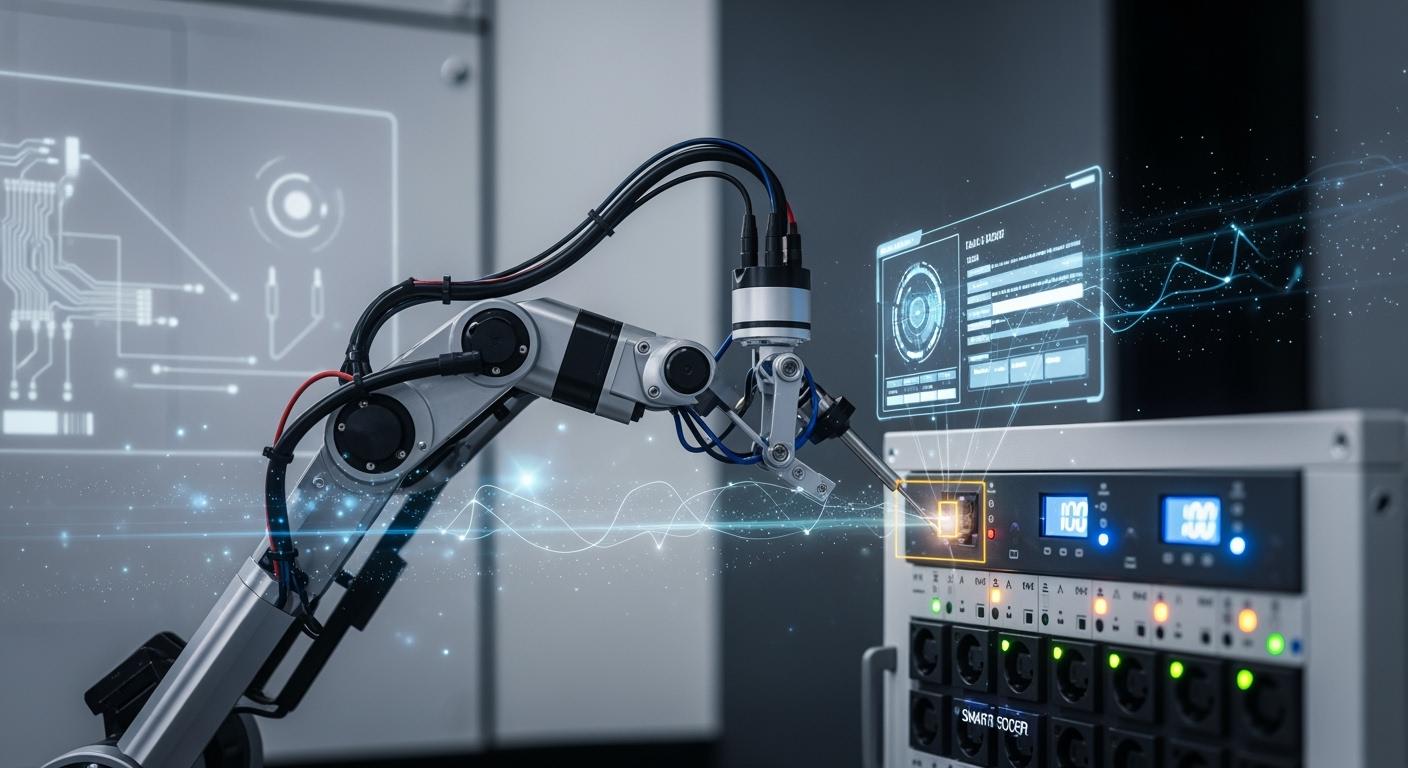
You use ESTEL’s Smart Power Distribution Unit with robotic inspection to guide robotic arms. The system helps you find faulty sockets quickly. You gain precise fault location and faster maintenance. ESTEL delivers reliable solutions that improve accuracy and minimize downtime. You experience innovation that supports your telecom or data center operations.
Key Takeaways
Utilize real-time monitoring to detect faults early. This helps you avoid costly outages and maintain network stability.
Automate fault identification with advanced sensors. This reduces manual checks and minimizes human error, saving you time.
Integrate robotic inspection with Smart Power Distribution Units for efficient maintenance. This combination streamlines workflows and enhances accuracy.
Leverage data-driven navigation for robotic arms. This allows for precise targeting of faulty sockets, reducing inspection time and errors.
Follow best practices for implementation. Planning, quality components, and regular monitoring ensure optimal performance and scalability.
Smart Power Distribution Unit Fault Detection
Real-Time Monitoring
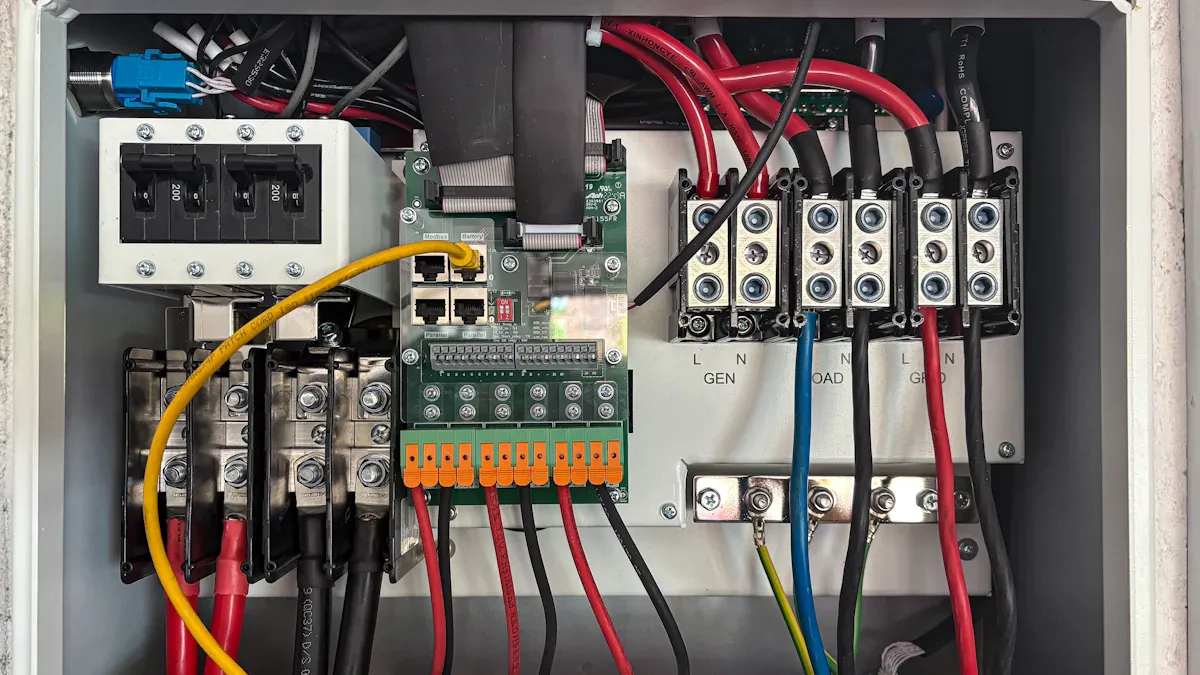
You need to keep your telecom or data center running smoothly. ESTEL’s Smart Power Distribution Unit gives you real-time monitoring, so you can see power usage and environmental conditions as they happen. This system lets you spot problems before they cause downtime. With real-time data, you can act quickly and avoid costly outages.
Real-time monitoring helps you manage energy and keep your network stable. You get rapid responses to changes, which means you find faults faster.
Immediate detection of issues allows the system to alert you before problems get worse. This improves your accuracy in finding faults.
Many telecom operators have seen lower maintenance costs and stronger networks after using real-time monitoring and alerts.
Automated Fault Identification
You do not have to rely on manual checks. The Smart Power Distribution Unit uses advanced sensors and intelligent protocols to identify faults automatically. The system checks each outlet and branch circuit, so you know exactly where a problem starts. This automation saves you time and reduces human error.
Here is a quick look at the technical capabilities that support advanced fault detection:
Performance Metric | Description |
|---|---|
Aggregate Metering | Collects overall power usage data. |
Outlet-Level Metering | Measures power usage at each outlet, helping you spot leaks or overloads. |
Outlet-Level Switching | Lets you control each outlet remotely. |
Branch Circuit Metering | Measures power for each branch, helping you balance loads. |
Real-Time Monitoring and Management | Gives you detailed, real-time data on power and environment. |
ESTEL PDU Features
ESTEL’s Smart Power Distribution Unit stands out because it adapts to your needs. You can use it in small server rooms or large data centers. The modular design lets you scale your power system as your business grows. You get a robust build, overload protection, and easy installation. Customization options help you meet specific power requirements.
Feature | ESTEL PDUs | Competitors |
|---|---|---|
Build Quality | Robust and reliable | Varies by brand |
Safety Features | Overload protection | Not always standard |
Installation | Easy and quick | May need more expertise |
Customization | Tailored solutions | Limited options |
Efficiency | High capacity | Varies significantly |
Tip: When you use ESTEL’s Smart Power Distribution Unit, you gain peace of mind knowing your equipment is protected and your operations stay efficient.
Robotic Inspection Integration
Accessing PDU Data
You can connect your robotic inspection system directly to the Smart Power Distribution Unit. The PDU collects real-time data about each socket and branch. Your robot receives this information through secure communication protocols. This data includes power usage, outlet status, and environmental readings. With this information, your robot knows exactly where to focus its inspection. You do not need to guess or check every socket manually.
Note: Real-time access to PDU data helps your robot make quick decisions and reduces the time needed for inspections.
Inspection Techniques
Your robot uses advanced sensors and cameras to inspect sockets and connections. It follows a guided path based on the data from the Smart Power Distribution Unit. The robot checks for signs of overheating, loose connections, or abnormal power readings. You can program the robot to use visual inspection, thermal imaging, or electrical testing. These techniques help you find faults that are not visible to the naked eye.
Visual inspection spots physical damage.
Thermal imaging detects hot spots.
Electrical testing checks for voltage drops or irregularities.
You get a complete picture of your power system’s health.
ESTEL Robotic Solutions
ESTEL offers robotic solutions that work seamlessly with their Smart Power Distribution Unit. You can integrate these robots into your telecom or data center environment. The robots use the PDU’s data to plan their inspection routes and actions. This synergy means you spend less time on manual checks and more time on important tasks. ESTEL’s robotic systems help you maintain high reliability and safety standards.
Tip: When you combine ESTEL’s robotic solutions with smart PDUs, you create an efficient and automated maintenance process.
Robotic Arm Guidance
Data-Driven Navigation
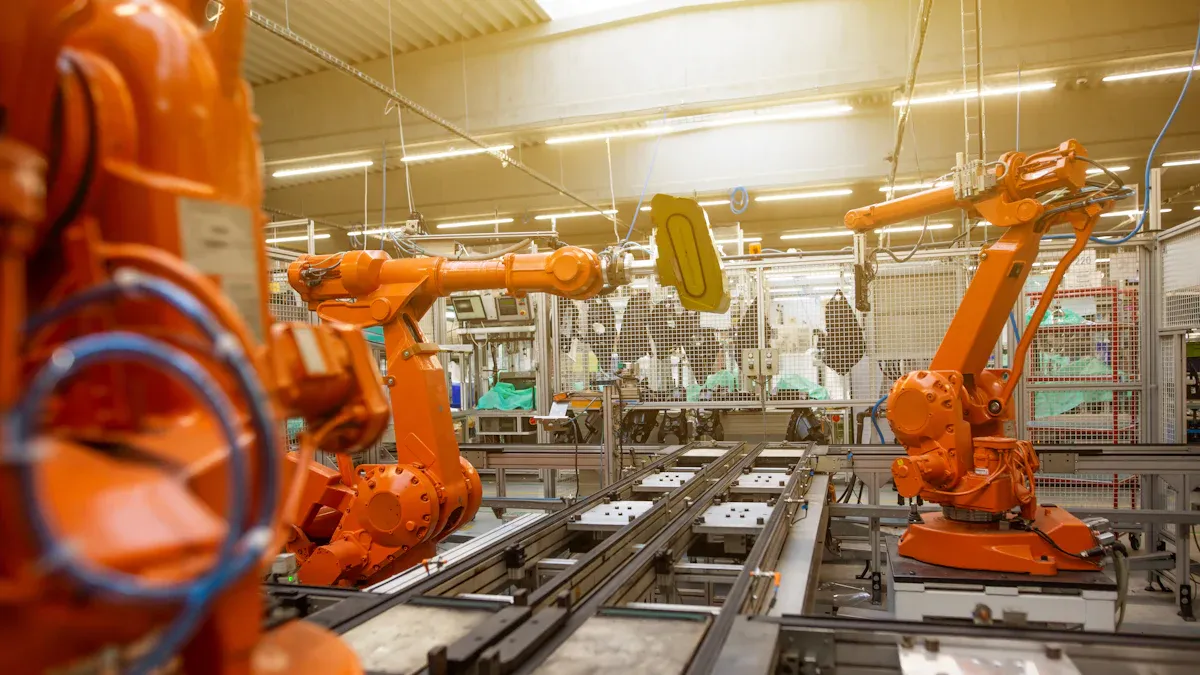
You guide robotic arms using real-time data from ESTEL’s Smart Power Distribution Unit. The system sends precise information about socket status and power flow. Your robotic arm receives this data and plans its route. You do not waste time searching for faults. Instead, you move directly to the problem area. This approach saves you time and increases your efficiency.
The robotic arm follows a digital map based on live PDU data.
You avoid unnecessary movements and reduce inspection time.
You can monitor the arm’s progress on your control dashboard.
Tip: Use the data-driven navigation feature to focus your maintenance efforts and improve your workflow.
Precision Targeting
You need accuracy when locating faulty sockets. The robotic arm uses sensors and cameras to pinpoint the exact location of each issue. You rely on the arm’s ability to align itself with the faulty socket. The system adjusts its position in real time, ensuring you reach the right spot every time.
Sensors detect socket conditions and guide the arm.
Cameras provide visual confirmation before any action.
The arm can perform tasks like tightening connections or replacing components.
You reduce the risk of errors and keep your equipment safe.
Modular Arm Design
You benefit from modular robotic arms in your inspection system. Modular design means you can adapt the arm for different tasks. You do not need to buy a new robot for every job. Instead, you swap out modules as needed. This flexibility helps you respond quickly to new challenges.
Here is how modular arm design supports your operations:
Advantage | Description |
|---|---|
Versatility | You reconfigure the arm for tasks like inspection, repair, or maintenance. |
Faster Deployment | You address new tasks quickly without extra robots. |
Easier Maintenance and Repair | You replace only the faulty module, making repairs simple. |
Scalability | You scale from small units to large arms using standard interfaces. |
Note: Modular arms help you save costs and keep your inspection system up to date with changing needs.
Integration Process
Step-by-Step Workflow
You start the integration process by connecting your Smart Power Distribution Unit to your robotic inspection system. The workflow follows a clear sequence. First, you monitor power and environmental data from the PDU. The system identifies faulty sockets and sends alerts to your control dashboard. Next, you deploy your robot to inspect the flagged area. The robot receives socket status and location data from the PDU. You guide the robotic arm to the exact spot using this information. The arm performs inspection or maintenance tasks, such as tightening connections or replacing components. You confirm the repair and update the system records.
Here is a simple workflow you can follow:
Monitor real-time data from the PDU.
Detect faults and receive alerts.
Send inspection instructions to the robot.
Guide the robotic arm to the faulty socket.
Perform maintenance or repair.
Verify the fix and log the results.
Tip: You can automate each step to reduce manual intervention and speed up maintenance.
System Coordination
You coordinate the entire system using secure communication protocols. The PDU and robot exchange data through Ethernet or wireless connections. You set up a central control dashboard to manage all devices. The dashboard displays real-time socket status, robot location, and inspection progress. You assign tasks to the robot based on PDU alerts. The robot follows a digital map generated from PDU data. You track the robot’s movements and actions on your dashboard.
You can use a table to organize system coordination tasks:
Task | Device Involved | Data Exchanged |
|---|---|---|
Fault Detection | PDU | Socket status, alerts |
Inspection Planning | Robot, PDU | Location, instructions |
Maintenance Execution | Robotic Arm | Action commands |
Status Reporting | Dashboard | Progress updates |
Note: You improve efficiency by coordinating all devices through a single interface.
Real-Time Feedback
You receive real-time feedback throughout the integration process. The PDU updates socket status instantly after each inspection. The robot sends live video and sensor data to your dashboard. You watch the robotic arm’s progress and confirm repairs as they happen. If the robot finds new issues, you get immediate alerts. You adjust the robot’s actions based on feedback without delay.
You benefit from real-time feedback in several ways:
You catch errors early and fix them quickly.
You verify repairs before closing maintenance tickets.
You optimize inspection routes based on live data.
Callout: Real-time feedback helps you maintain high reliability and reduce downtime in your telecom or data center environment.
Benefits of ESTEL Smart Power Distribution Unit and Robotic Inspection
Enhanced Accuracy
You improve fault detection accuracy when you use ESTEL’s Smart Power Distribution Unit with robotic inspection. The system gives you real-time data for every socket and branch. You do not need to guess where a problem starts. The robot receives exact information and moves directly to the faulty socket. Sensors and cameras confirm the issue before you take action. This process reduces errors and ensures you address the right problem every time.
Tip: Accurate fault location helps you avoid unnecessary repairs and keeps your network running smoothly.
Maintenance Efficiency
You save time and resources with automated maintenance. The Smart Power Distribution Unit sends alerts as soon as it detects a problem. Your robot receives instructions and begins inspection without delay. You do not need to send technicians to check every socket. The robot handles routine inspections and minor repairs. You can focus your team on more complex tasks. This approach streamlines your workflow and reduces manual labor.
Robots perform inspections faster than humans.
Automated alerts help you respond quickly.
You reduce the risk of human error.
Reduced Downtime
You keep your network online longer when you use smart automation. Early fault detection and rapid response prevent outages. The Smart Power Distribution Unit identifies issues before they cause major problems. Your robot fixes faults quickly, so you avoid long service interruptions. You maintain stable connections for your customers and reduce the cost of emergency repairs.
Callout: Reducing downtime protects your reputation and increases customer satisfaction.
Case Studies
You can see the real-world benefits of this integration in different environments. The following table shows how telecom and data center managers solved problems using ESTEL’s solutions:
Scenario | Problem Detected | Action Taken | Outcome |
|---|---|---|---|
Mountain base station | Voltage drop | Early alert, quick repair | No outage, stable connection |
Coastal outdoor cabinet | Water leak, overheating | Technician dispatched | Network uptime maintained |
Urban telecom hub | Fuse anomaly | Preventive maintenance | Reduced downtime, lower costs |
These examples show that you can prevent outages, maintain uptime, and lower costs by using ESTEL’s Smart Power Distribution Unit with robotic inspection.
Implementation Considerations
Practical Challenges
You may face several challenges when you implement ESTEL Smart Power Distribution Units and robotic inspection systems. These challenges can affect the reliability and performance of your setup. The table below highlights common issues and their descriptions:
Challenge | Description |
|---|---|
Heat Management | Excessive heat can lead to equipment failures and requires effective cooling solutions. |
Power Reliability | Unstable power sources can cause operational disruptions and necessitate backup systems. |
Environmental Risks | Temperature swings and humidity can damage sensitive equipment, requiring protective measures. |
Proactive Maintenance | Regular maintenance is essential to prevent failures and ensure optimal performance. |
You need to address these challenges early. Effective cooling, stable power, and environmental controls help you protect your investment. Regular maintenance keeps your system running smoothly.
Best Practices
You can improve your results by following best practices during implementation. Start by planning your layout to ensure easy access for both robots and technicians. Use high-quality cables and connectors to reduce the risk of faults. Monitor your system regularly using the real-time data from ESTEL’s Smart Power Distribution Unit. Schedule routine inspections and maintenance for both the PDU and robotic systems. Train your staff to respond quickly to alerts and system updates.
Tip: Document every step of your installation and maintenance process. Clear records help you troubleshoot issues and maintain high standards.
Scalability
You can scale your operations easily with ESTEL’s Smart Power Distribution Units and robotic inspection solutions. The market for DC Power Distribution Units is growing rapidly, driven by the need for efficient power management in expanding data centers and telecom sites. Modular designs and smart technologies make it simple for you to add new units or upgrade existing ones as your needs change. The rise of cloud computing and IoT increases the demand for reliable and scalable power solutions. ESTEL’s products support this growth, giving you flexibility for future expansion.
Note: You can future-proof your infrastructure by choosing scalable and modular solutions from ESTEL.
You gain faster and more accurate fault detection when you use ESTEL’s Smart Power Distribution Unit with robotic inspection. This integration helps you reduce downtime, lower costs, and improve network reliability.
You receive real-time alerts for abnormal conditions.
You make quick decisions with visual reports and live data.
You predict equipment failures by monitoring voltage, current, and temperature.
ESTEL continues to lead with innovative solutions that support your growth and ensure long-term reliability.
FAQ
How does the Smart Power Distribution Unit help you find faults faster?
You receive real-time alerts for abnormal power conditions. The system highlights the exact socket or branch with a problem. You can send your robot directly to the fault, which saves time and reduces guesswork.
Can you control the PDU remotely?
Yes, you can manage the Smart Power Distribution Unit from any location. You use remote control features to monitor, switch outlets, and respond to alerts without being on-site.
What types of robots work with ESTEL’s Smart PDU?
You can use inspection robots with modular arms, mobile robots, or fixed robotic systems. The Smart PDU supports integration with most industrial robots that accept standard communication protocols.
Is the system difficult to install?
You do not need advanced skills to install the Smart Power Distribution Unit. The design supports easy mounting and quick connections. You can follow the included instructions for a smooth setup.
What maintenance does the system require?
You should schedule regular inspections for both the PDU and robotic systems. Clean the units, check for loose connections, and update software as needed. Routine care helps you maintain high reliability.
See Also
Ensuring Consistent Power Supply for Telecom Equipment Cabinets
Understanding System Integration for ESTEL Outdoor Cabinets
Installing and Maintaining Smoke Detectors in Communication Cabinets
Enhancing Outdoor Cabinets Through Power, Cooling, and Monitoring
CALL US DIRECTLY
86-13752765943
3A-8, SHUIWAN 1979 SQUARE (PHASE II), NO.111, TAIZI ROAD,SHUIWAN COMMUNITY, ZHAOSHANG STREET, NANSHAN DISTRICT, SHENZHEN, GUANGDONG, CHINA
