Smart PDU-Sensor Network Integration in Telecom Cabinets: Linked Analysis of Environmental & Power Data

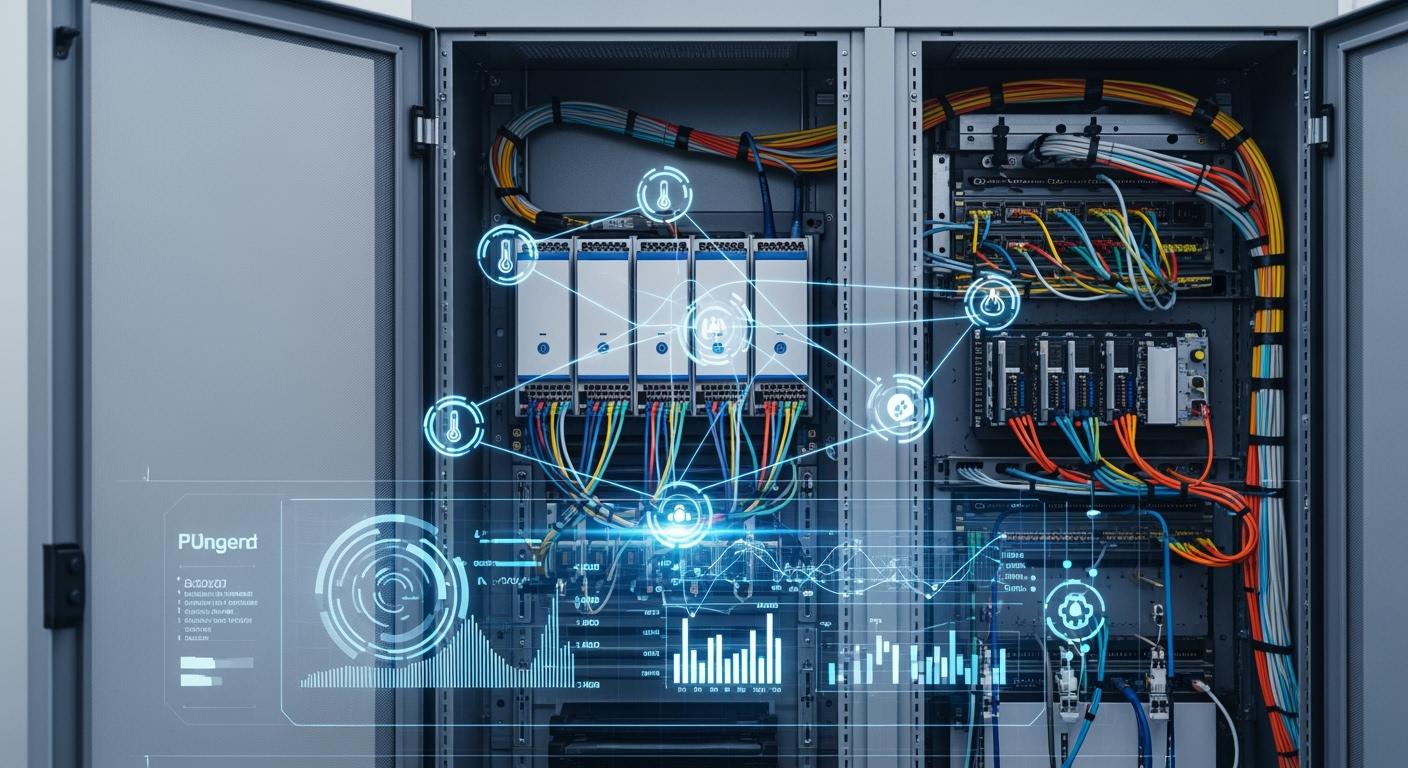
You can transform your telecom cabinet operations by integrating a Smart Power Distribution Unit with advanced sensor networks. This combination gives you unified, actionable data for both environmental and power conditions. Many organizations have seen up to a 30% drop in downtime incidents and a 15-25% reduction in operational costs by optimizing power and predicting maintenance needs. ESTEL’s dedication to innovation and quality ensures you get real-time monitoring, remote management, and improved reliability.
Key Takeaways
Integrating a Smart Power Distribution Unit with sensor networks can reduce downtime by up to 30% and operational costs by 15-25%.
Unified data streams from various sources enhance real-time monitoring, allowing for quicker issue detection and resolution.
Predictive maintenance can lower downtime by 25% and help avoid costly emergency repairs, leading to significant cost savings.
Real-time monitoring of environmental factors like temperature and humidity protects equipment from failures and extends its lifespan.
Remote access capabilities enable efficient management of telecom cabinets, allowing for quick responses to issues without on-site visits.
Linked Data Analysis in Telecom Cabinets
Unified Data Streams
You can manage telecom cabinets more efficiently when you bring together data from different sources. The main data streams come from several systems:
SCADA systems send real-time data from sensors and actuators. This helps you monitor and control equipment instantly.
IoT devices collect both real-time and historical data. These devices use wireless sensors to support advanced analytics and optimization.
ERP systems provide business and administrative data. This keeps your technical operations in line with your business goals.
You can unify these streams using advanced hardware and software platforms. Hardware interfaces connect to subsystems like power, security, and environmental sensors. Software platforms then gather all this information into one dashboard. This setup lets you monitor, control, and receive alerts in real time. You can also communicate with remote sites easily. When you use a Smart Power Distribution Unit, you get even more control over power and environmental data, making your cabinet smarter and more reliable.
Operational Value
When you analyze unified data from your telecom cabinets, you see clear benefits. You can make faster decisions and reduce costs. The table below shows how unified data analysis improves your operations:
Feature | Benefit |
|---|---|
Real-Time Visibility | Provides a unified view of remote assets, enabling quick detection and resolution of issues. |
Predictive Analytics and AI | Helps predict failures and optimize maintenance, reducing downtime and costs. |
Seamless Integration | Consolidates data from various sources for efficient management and reporting. |
Reduced Truck Rolls | Minimizes unnecessary site visits, ensuring field teams are dispatched only when needed. |
Scalability and Security | Supports secure deployment across multiple sites, ideal for rapid expansion. |
You can also measure the operational value with real numbers. Unified analysis can cut energy consumption by up to 30%. Downtime drops by 25%. Carbon emissions fall by 40%. Energy efficiency can reach nearly 98%, and equipment uptime increases by 20%. The chart below shows these improvements:
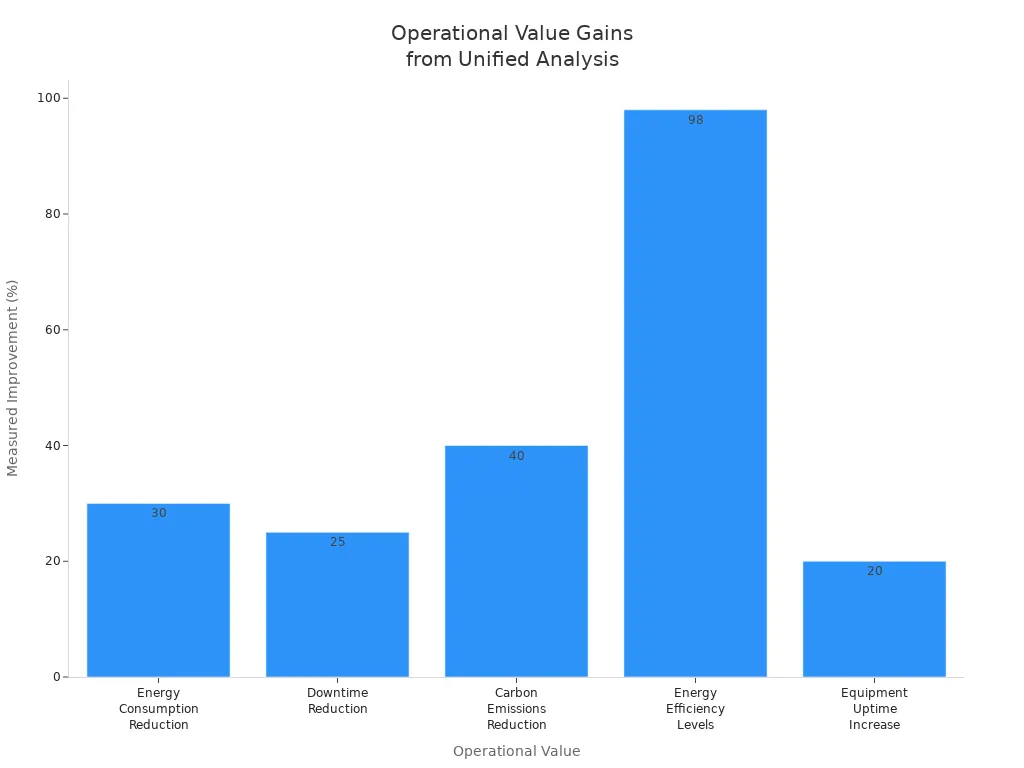
With these results, you can see why integrating unified data streams is essential for modern telecom operations.
Unified Insights from Environmental and Power Data
Key Environmental Metrics
You need to monitor several environmental factors to keep your telecom cabinets running smoothly. Temperature regulation stands out as one of the most important metrics. If the temperature rises too high or drops too low, your equipment can overheat or freeze, leading to failures. Moisture ingress is another critical factor. Water inside the cabinet can cause short circuits and rust, which can damage your hardware. Dust also poses a threat by blocking ventilation and causing overheating. You should also consider corrosion resistance. Using materials like powder-coated steel or aluminum helps your cabinets last longer in harsh environments. Surge protection shields your equipment from electrical spikes.
Environmental Metric | Description |
|---|---|
Temperature Regulation | Ensures optimal operating conditions for telecom equipment, preventing overheating or freezing. |
Moisture Ingress | Protects against water damage that can cause short circuits and rust. |
Dust | Prevents clogging of ventilation systems, which can lead to overheating. |
Corrosion Resistance | Utilizes materials like powder-coated steel or aluminum to withstand environmental wear. |
Surge Protection | Safeguards against electrical threats, reducing the risk of equipment failure due to surges. |
Power Data Monitoring
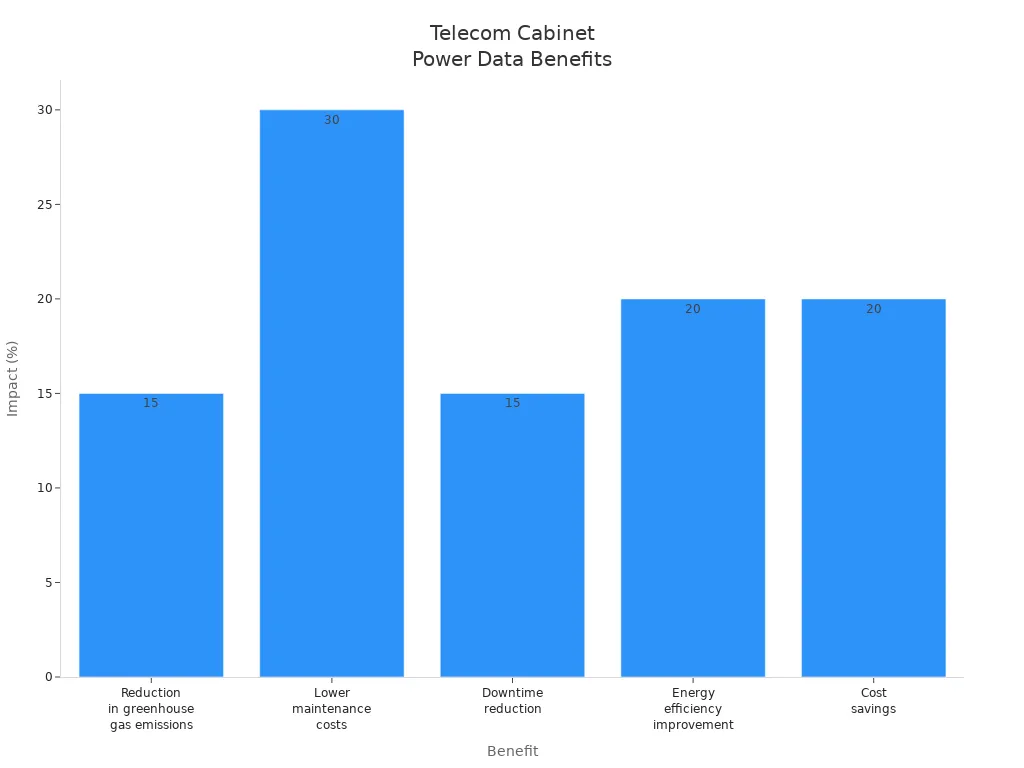
You gain valuable insights by tracking power usage in real time. Monitoring both input and output power helps you spot inefficiencies quickly. Effective power distribution reduces downtime, which is vital for keeping communication networks active. Improved energy efficiency not only saves money but also extends the life of your telecom equipment. You can see the impact of power data monitoring in the chart below, which highlights benefits such as lower maintenance costs, reduced greenhouse gas emissions, and increased energy efficiency.
Real-time monitoring of power usage helps you identify and fix inefficiencies.
Smart power distribution cuts downtime and boosts network reliability.
Energy efficiency improvements lead to cost savings and longer equipment life.
Combined Data Benefits
When you combine environmental and power data, you unlock even greater advantages. Real-time alerts allow your team to respond faster to problems, reducing downtime. Intelligent control features automate tasks, which lowers energy consumption. Predictive maintenance alerts help you fix issues before they cause failures. By analyzing both types of data, you can reduce cooling costs by 10-15% and cut power waste by up to 30%. Many organizations have seen energy cost avoidance between 28% and 50% by using these insights to adjust their operations. This approach not only saves money but also supports your sustainability goals.
Benefit | Measurement |
|---|---|
Cooling cost reduction | 10-15% drop when using environmental data for adjustments |
Energy waste reduction | Up to 30% reduction in power waste |
Tip: Integrating both environmental and power data gives you a complete picture of your telecom cabinet’s health, making your operations smarter and more sustainable.
Smart Power Distribution Unit Features and Integration
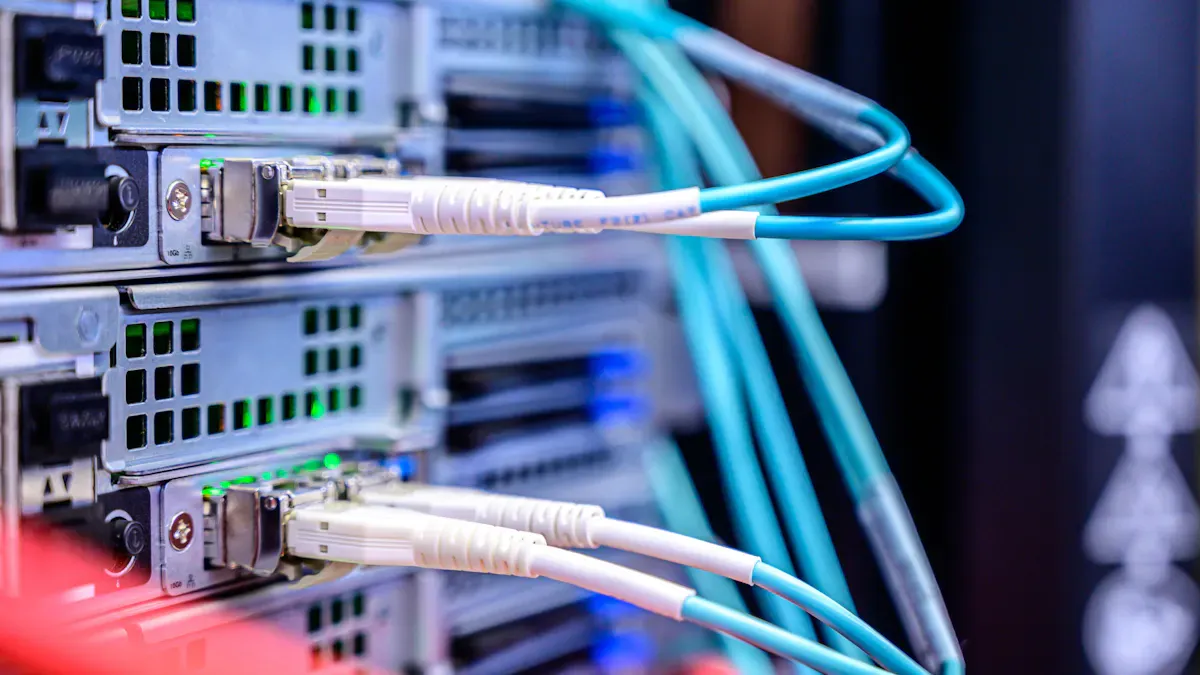
ESTEL Smart PDU Capabilities
You can achieve advanced control and reliability in your telecom cabinets with ESTEL’s Smart Power Distribution Unit. This device stands out due to its modular design, which lets you scale or upgrade as your needs change. You do not need to replace the entire unit when you want to add new features or outlets. The Smart Power Distribution Unit also provides intelligent monitoring. You can track energy usage in real time and receive alerts for abnormal conditions. This monitoring can help you reduce energy waste by up to 20% and improve your maintenance response times by 40%.
You will benefit from several built-in features:
Remote management: You can monitor and control power distribution from anywhere, which saves time and resources.
Surge protection: Your equipment stays safe from electrical spikes and surges.
Dehumidifying function: The unit helps maintain optimal humidity levels, protecting sensitive electronics.
LCD display: You get clear, real-time information about power status and environmental conditions.
Energy efficiency: The design focuses on reducing unnecessary power consumption and supporting sustainability goals.
Note: The modular and intelligent design of ESTEL’s Smart Power Distribution Unit helps you comply with environmental regulations and optimize your energy usage.
Sensor Network Integration
You can enhance your monitoring capabilities by integrating the Smart Power Distribution Unit with sensor networks. This integration gives you real-time data on both power and environmental conditions. You can detect faults early, which helps you avoid costly outages and maintain network stability. The system automates fault identification, so you do not need to rely on manual checks. This reduces human error and saves valuable time.
When you connect the Smart Power Distribution Unit to a sensor network, you can:
Receive instant alerts for temperature, humidity, or power anomalies.
Use automated systems to pinpoint faulty sockets or components.
Integrate with robotic inspection tools for targeted maintenance.
This unified approach streamlines your operations. You can focus your maintenance efforts where they are needed most, which increases efficiency and reduces downtime.
Comparison with Traditional Systems
You will notice clear differences when you compare smart and traditional power distribution systems. Traditional setups often lack advanced fault detection. This means you may experience longer outages because faults are harder to find and fix. Smart Power Distribution Units can detect faults locally with minimal delay, which greatly improves reliability.
Here is a quick comparison:
Feature | Traditional System | Smart Power Distribution Unit |
|---|---|---|
Fault Detection | Manual, slow | Automated, real-time |
Remote Management | Limited or none | Full remote access |
Power Distribution | Single-phase, basic | Three-phase, load balancing |
Component Replacement | Fixed, downtime required | Hot-swappable, minimal downtime |
Energy Optimization | Low | High, with real-time monitoring |
Adaptability | Rigid | Modular and scalable |
You can support three-phase power distribution with a Smart Power Distribution Unit, which increases power density and improves load balancing. You also gain features like hot-swappable components and adaptability to multiple input voltages. These advantages lead to energy optimization, reduced downtime, and cost savings. You will see improved operational efficiency and reliability in your telecom infrastructure.
Operational and Business Benefits
Real-Time Monitoring and Alerts
You gain a major advantage when you use real-time monitoring and alerts in your telecom cabinets. This technology helps you spot problems as soon as they happen. For example, if a device freezes, the system reacts quickly. Here is how the process works:
A device in your cabinet stops responding.
The intelligent system notices failed pings within minutes.
The Smart Power Distribution Unit automatically power-cycles the affected outlet.
The device restarts, and you receive an alert through SNMP or email.
This fast response reduces downtime and keeps your network running smoothly. You do not need to wait for manual checks or send technicians for every small issue.
Energy Efficiency
You can improve energy efficiency by using smart monitoring and control features. These systems track power usage in real time and help you find areas where you waste energy. You can adjust settings or schedule equipment to run only when needed. This approach lowers your energy bills and supports your sustainability goals. Many telecom operators have seen a drop in energy consumption and a boost in equipment lifespan by using these smart solutions.
Tip: Regularly review your energy data to spot trends and make informed decisions about equipment use.
Predictive Maintenance
You can prevent unexpected failures with predictive maintenance. Smart Power Distribution Units with real-time monitoring help you identify issues before they cause problems. This proactive approach means you fix small issues early, which keeps your network reliable. Studies show that predictive maintenance can reduce downtime by up to 25%. You also save money by avoiding emergency repairs and optimizing your maintenance schedule. Over time, this leads to lower operational costs and better service for your customers.
Integration Process and Best Practices
Communication Protocols
You need reliable communication protocols to connect your monitoring devices and power systems. Most telecom cabinets use RS485 or RS232 protocols. These protocols allow sensors and controllers to share data quickly and securely. When you use these standards, you can link temperature, humidity, and power sensors with your management software. This setup helps you collect accurate data and control your equipment remotely. You also ensure compatibility with both new and existing devices in your network.
Centralized Management
Centralized management gives you a single platform to monitor and control all your telecom cabinets. This approach improves efficiency and reduces the risk of missed issues. With centralized management, you can:
Monitor power usage in real time and detect problems early.
Measure power consumption and check battery health to avoid emergency repairs.
Remotely track environmental conditions, such as temperature and humidity, for better operational control.
Centralized management helps you respond faster to problems and keeps your network running smoothly.
Implementation Steps
You can follow these steps to integrate a Smart Power Distribution Unit and sensor network into your telecom cabinets:
Define your requirements. Set clear goals for monitoring and power distribution.
Select the right hardware. Choose intelligent PDUs with real-time monitoring and remote management.
Install sensors and PDUs. Use sensors for temperature, humidity, water leaks, vibration, dust, and security.
Test and maintain your system. Inspect and calibrate sensors regularly to ensure accuracy.
Use monitoring software. Analyze real-time data and set up predictive maintenance alerts.
ESTEL’s modular designs let you add or replace modules without stopping your operations. You can scale your system as your network grows. The plug-and-play architecture makes upgrades simple and fast. You can also install these units in standard 19-inch racks, which supports both new and older devices. Advanced monitoring features and real-time diagnostics help you track performance and respond quickly to any issues.
Feature | Benefit |
|---|---|
Modular Designs | Add or replace modules without interrupting operations. |
Scalability | Adjust power capacity as your network expands. |
Plug-and-Play Architecture | Upgrade quickly without costly downtime. |
Compatibility | Integrate with both new and legacy devices. |
By following these best practices, you create a reliable and future-ready telecom cabinet system.
Monitoring, Control, and Analytics
Actionable Insights
You gain powerful insights when you use smart monitoring and analytics in your telecom cabinets. Real-time data lets you detect and address issues before they become serious. You can track power usage, spot trends, and make informed decisions about equipment and energy management. Advanced analytics help you identify which devices use the most energy, so you can plan upgrades or maintenance more effectively.
Here is a summary of key features and their benefits:
Feature | Benefit |
|---|---|
Real-time monitoring | Detects and addresses issues before they escalate by providing insights into power usage. |
Integration with management software | Offers actionable insights and long-term trend analysis for efficient power allocation. |
Advanced analytics | Delivers measurable benefits for data centers, enhancing decision-making capabilities. |
Energy-intensive equipment identification | Supports proactive management and capacity planning through real-time visibility. |
You also benefit from predictive maintenance. By analyzing power data, you can schedule repairs before problems occur. This approach reduces downtime and saves costs. You avoid emergency repairs and keep your network running smoothly.
Smart PDUs offer more than just numbers. You receive automated alerts for power or environmental issues. Sensors track temperature, humidity, and other conditions. You can even replace controllers without shutting down your system. These features help you maintain a safe and efficient telecom environment.
Remote Access
Remote access changes how you manage your telecom cabinets. You can check the status of your power distribution units from anywhere. This flexibility means you do not need to be on-site to monitor or control your equipment.
You view real-time data on power usage and environmental conditions.
You receive SNMP traps and alerts for quick response to issues.
You use a secure web interface for easy management.
You reboot or shut down equipment remotely, improving operational responsiveness.
The table below shows how remote access features improve your management:
Feature | Benefit | Impact on Management |
|---|---|---|
Real-time monitoring | Provides immediate data on power usage | Helps spot problems early |
Load balancing | Distributes power evenly across circuits | Prevents outages, improves efficiency |
Remote control of outlets | Allows quick rebooting or shutdown of equipment | Enhances operational responsiveness |
Environmental sensors | Monitors temperature and humidity | Adds another layer of safety |
With remote access, you respond faster to problems, reduce downtime, and keep your telecom network reliable and secure.
Overcoming Integration Challenges
Data Security
You must protect your telecom cabinet data from threats. Smart Power Distribution Units and sensor networks collect and transmit sensitive information. Hackers may try to access this data or disrupt your network. You can reduce risks by following best practices for data security.
Use encrypted communication protocols like SSL or TLS. These protocols scramble your data so only authorized users can read it.
Set strong passwords for all devices. Change default credentials before you deploy new equipment.
Limit access to your management software. Only trusted staff should have control over your system.
Update firmware and software regularly. Manufacturers often release patches to fix security flaws.
Monitor your network for unusual activity. Set up alerts for unauthorized access attempts.
Tip: Regularly review your security policies. Train your team to recognize and respond to cyber threats.
A secure system keeps your network reliable and protects your business reputation.
Legacy System Compatibility
You may worry about integrating smart technology with older telecom equipment. Many legacy systems do not support advanced features out of the box. You can overcome this challenge with modern Smart Power Distribution Units.
Plug-and-play Smart PDUs allow for quick upgrades. You can install them without shutting down your network.
The design does not require special tools or advanced skills. Your team can handle the installation with basic training.
Advanced monitoring features work with both new and old devices. This improves reliability and efficiency across your network.
You minimize downtime and avoid major disruptions during the upgrade process.
Challenge | Solution with Smart PDU |
|---|---|
Outdated power controls | Plug-and-play installation |
Long installation times | Rapid deployment, minimal downtime |
Limited monitoring | Advanced, real-time data collection |
Need for special skills | Simple setup, accessible to all staff |
You can future-proof your telecom cabinets by choosing equipment that supports both legacy and modern systems. This approach helps you get the most value from your existing investments while preparing for new technology.
ESTEL Case Study: Measurable Outcomes
Implementation Example
Imagine you manage a network of remote telecom cabinets in a region with frequent weather changes. You decide to upgrade your sites with ESTEL’s Smart Power Distribution Unit and a network of environmental sensors. You install the system in several cabinets, connecting temperature, humidity, and power sensors to a centralized monitoring platform. You set up automated alerts for abnormal conditions, such as overheating or power surges. The system starts tracking all key metrics in real time. You receive instant notifications when something goes wrong, allowing you to act quickly. You no longer need to send technicians for routine checks, as the system provides accurate updates and predictive maintenance suggestions.
Results and Metrics
After several months, you notice clear improvements in your operations. The advanced monitoring software gives you real-time tracking of all network devices. Automated alerts help you respond to issues before they cause major problems. Predictive analytics and AI-driven automation forecast failures, so you can plan maintenance at the right time. You see a significant drop in downtime and maintenance workload. The table below shows the measurable outcomes from your deployment:
Metric | Improvement |
|---|---|
15-25% | |
Improved uptime | 22% |
Decrease in maintenance workload | Significant |
Cost savings | Significant |
You also notice that your team works more efficiently. You save money by reducing emergency repairs and unnecessary site visits. Your network becomes more reliable, and your customers experience fewer service interruptions. This case shows how integrating a Smart Power Distribution Unit with sensor networks can transform your telecom operations and deliver measurable business value.
Future Trends in Smart PDU Integration
AI and Analytics
You will see artificial intelligence change how you manage power in telecom cabinets. AI can process large amounts of data from your equipment. It helps you predict failures and optimize energy use. As more telecom sites use AI, the market for power distribution units will grow quickly. The table below shows how AI is shaping the future of power management:
Trend | Description |
|---|---|
Projected Growth Rate | The power distribution unit (PDU) market is expected to grow at a 15.1% CAGR from 2023 to 2028. |
Increased Power Consumption | Global data center energy use may double by 2030 as AI workloads need higher power capacities. |
Demand for Data Center Capacity | Global demand for data center capacity could rise from 19% to 22% annually, reaching up to 219 GW by 2030. |
You can use AI-powered analytics to spot patterns in your power and environmental data. This lets you act before problems occur. You will also improve energy efficiency and reduce costs. AI tools help you make better decisions about when to schedule maintenance or upgrade equipment.
Note: AI-driven systems can help you keep your telecom network reliable, even as power needs grow.
IoT and Edge Expansion
You will notice the Internet of Things (IoT) and edge computing expand the capabilities of your Smart Power Distribution Unit. IoT sensors collect real-time data from every part of your telecom cabinet. Edge computing processes this data close to where it is generated. This means you get faster alerts and can respond quickly to issues.
The table below highlights how IoT and edge technologies support reliability and predictive maintenance:
Feature Description | Contribution to Reliability and Predictive Maintenance |
|---|---|
Real-time power data and fast decision-making | Enhances reliability by allowing operators to respond quickly to issues. |
Visualized power trends and digital twins | Helps predict equipment conditions and schedule maintenance, reducing failures. |
Predictive analytics using historical data | Forecasts future power loads to avoid overloads and downtime. |
You can use digital twins to create a virtual model of your telecom cabinet. This helps you test changes before making them in the real world. Predictive analytics use historical data to forecast future power needs. You can avoid overloads and plan maintenance before problems happen.
Tip: Combining IoT, edge computing, and AI gives you a smarter, more reliable telecom infrastructure.
You gain many advantages by integrating a Smart Power Distribution Unit and sensor networks in your telecom cabinets. The table below highlights key benefits and their impact:
Benefit Description | Impact on Telecom Cabinets |
|---|---|
Enhances power management and monitoring capabilities | Maintains uptime and efficiency |
Real-time energy usage measurement and reporting | Optimizes energy and supports capacity changes |
Remote scheduling for unused equipment | Reduces energy waste and costs |
Right-sizing power infrastructure | Cuts unnecessary expenses |
Unified data analysis gives you a complete view of your infrastructure, enabling faster troubleshooting and better planning. ESTEL’s innovative solutions deliver high energy efficiency, modular scalability, and reliable performance. You can future-proof your telecom operations by choosing ESTEL for smarter, more resilient networks.
FAQ
What is a Smart Power Distribution Unit (PDU)?
A Smart PDU lets you monitor and control power in your telecom cabinet. You can track energy use, receive alerts, and manage outlets remotely. This helps you improve efficiency and reduce downtime.
How do sensor networks improve telecom cabinet management?
Sensor networks give you real-time data on temperature, humidity, and power. You can spot problems early and take action before equipment fails. This keeps your network reliable and safe.
Can you integrate ESTEL’s Smart PDU with existing equipment?
Yes, you can. ESTEL’s Smart PDU supports plug-and-play installation. You do not need to replace your current setup. The system works with both new and legacy devices.
What are the main benefits of remote monitoring?
Remote monitoring lets you check cabinet status from anywhere. You can receive instant alerts, control power, and schedule maintenance. This saves time, reduces site visits, and keeps your network running smoothly.
How does predictive maintenance help you save costs?
You use predictive maintenance to fix issues before they cause failures. This approach reduces emergency repairs and extends equipment life. You spend less on repairs and avoid costly downtime.
See Also
Understanding ESTEL PDUs And Their Function In Data Cabinets
Solar Energy Storage Solutions Designed For Telecom Cabinets
Steps To Guarantee Consistent Power Supply In Telecom Cabinets
Ensuring Effective Monitoring Systems For Outdoor Telecom Cabinets
Enhancing Outdoor Cabinets Through Power Cooling And Monitoring
CALL US DIRECTLY
86-13752765943
3A-8, SHUIWAN 1979 SQUARE (PHASE II), NO.111, TAIZI ROAD,SHUIWAN COMMUNITY, ZHAOSHANG STREET, NANSHAN DISTRICT, SHENZHEN, GUANGDONG, CHINA
