Full Lifecycle Cost Analysis Smart PDU Solution for TCO Optimization in Telecom Cabinets

You face increasing pressure to optimize total cost of ownership in your telecom cabinets. Choosing a smart power distribution unit helps you cut operational costs by up to 35%, minimize downtime by 25%, and boost energy efficiency close to 98%. Modern smart systems, powered by AI and IoT, enable real-time monitoring, predictive maintenance, and remote diagnostics. These features empower you to achieve reliable performance, reduce carbon emissions, and ensure your network operates at peak efficiency.
Key Takeaways
Smart power distribution units can reduce operational costs by up to 35% and downtime by 25%, enhancing overall efficiency.
Understanding total cost of ownership helps you make informed decisions about telecom cabinets, considering all expenses from acquisition to disposal.
Real-time monitoring and predictive maintenance features of smart PDUs help prevent issues, reduce unplanned downtime, and extend equipment lifespan.
Investing in smart PDUs leads to significant energy savings, with potential reductions of up to 20% in energy consumption and annual savings of $50,000.
Choosing modular and scalable PDUs allows for easy upgrades and adaptability to changing energy demands, ensuring long-term reliability.
Total Cost of Ownership in Telecom Cabinets
Defining Total Cost of Ownership
You need to understand total cost of ownership before making decisions about telecom cabinets. This concept covers every expense related to your equipment, from the moment you acquire it until the end of its life cycle. The table below shows the main components you should consider:
Component Type | Description |
|---|---|
Initial Acquisition Costs | Includes purchase price, shipping, and installation costs. |
Operating Costs | Encompasses power, cooling, and routine maintenance expenses. |
Procurement Costs | Covers procurement time, supplier management, and indirect procurement costs. |
Asset Depreciation | Accounts for the decrease in value of the asset over its lifespan. |
Capital Opportunity Cost | Reflects the potential returns lost by investing in the asset instead of alternative investments. |
Maintenance Costs | Differentiates between in-house versus outsourced maintenance costs and savings. |
Software Licenses | Costs associated with monitoring tools or software licenses. |
Intangible Costs | Includes reliability risk and service level impact. |
TCO Factors for Power Distribution Units
You must evaluate several factors when calculating the total cost of ownership for power distribution units. These units play a critical role in your telecom infrastructure. Consider the following:
Acquisition costs include the initial purchase price and installation.
Operational expenses cover ongoing maintenance, repair, and energy consumption.
Downtime costs reflect financial losses from equipment failures or outages.
End-of-life costs relate to disposal or replacement at the end of the unit’s life cycle.
Smart power distribution unit designs can reduce energy consumption by up to 20%. Integration with sensor networks lowers downtime by up to 30% and operational costs by 15-25%. Higher initial costs often lead to better durability and energy efficiency, which results in long-term savings. Robust build quality and energy-efficient designs help you minimize operational costs.
Why TCO Matters for Telecom Operators
You face strict regulatory requirements that emphasize energy efficiency and sustainability. Modern telecom racks must align with global environmental standards. Smart racks with monitoring systems support compliance with corporate sustainability goals. By focusing on total cost of ownership, you can make informed decisions that improve reliability, reduce risk, and maximize your investment. Power distribution units with advanced features help you meet these goals and maintain high service levels.
Tip: Prioritize smart solutions that offer real-time monitoring and predictive maintenance. These features help you optimize costs and enhance network reliability.
Power Distribution Units: Basic vs. Smart
Features of Smart Power Distribution Unit
You gain more control and visibility when you choose a smart power distribution unit for your telecom cabinet. Smart PDUs offer remote monitoring and control, real-time alerts, and environmental sensing. You can track temperature and humidity, manage individual outlets, and receive notifications for abnormal conditions. These features help you prevent overloads and optimize energy usage. You also benefit from programmable power sequencing, which allows you to manage device startup and reduce risks. Smart PDUs provide detailed data that helps you identify inefficiencies and improve operational performance.
Note: Smart PDUs enable you to reboot devices remotely and monitor power usage in real time. This capability reduces downtime and supports efficient maintenance.
ESTEL’s Smart PDU Advantages
ESTEL’s smart power distribution unit stands out for its reliability and robust design. You get essential safety mechanisms like overload protection, which prevents damage from electrical surges. The unit operates efficiently in challenging environments, minimizing downtime and lowering repair costs. You benefit from advanced features such as surge protection, dehumidifying functions, and compliance with international standards. ESTEL’s solution delivers stable power, enhances network performance, and supports seamless component swaps without service interruption. Operators report improved reliability and reduced operational costs after integrating ESTEL’s smart PDUs.
Comparing Basic and Smart PDUs
You need to understand the differences between basic and smart PDUs to make informed decisions. The table below highlights key distinctions:
Feature | Basic PDUs | Smart PDUs |
|---|---|---|
Power Capacity | Simple sharing | Advanced control with live monitoring |
Monitoring | None | Real-time tracking |
Control | Manual only | Remote and automated |
Extra Features | None | Environmental sensing and alerts |
Energy Efficiency | Low | High |
Scalability | Limited | Yes |
Operational Efficiency | Standard | Improved |
Smart PDUs deliver up to 20% energy efficiency improvement, reduce maintenance costs by 30%, and lower downtime by 15%. You achieve significant cost savings and enhanced performance by upgrading to smart solutions.
Lifecycle Cost Analysis for Smart PDUs
Acquisition and Installation Costs
You start your investment in a smart power distribution unit with acquisition and installation costs. ESTEL’s solution offers a streamlined installation process that reduces labor hours. You benefit from a modular design that fits seamlessly into outdoor telecom cabinets. This compatibility lowers the risk of unexpected expenses during setup. You also gain from a robust build that minimizes the need for additional accessories or modifications. When you select ESTEL’s smart power distribution unit, you invest in a product that meets international standards, ensuring long-term reliability and reducing future ownership costs.
Tip: Choose a power distribution unit that integrates easily with your existing infrastructure. This approach helps you avoid hidden installation costs and supports faster deployment.
Operational Efficiency and Maintenance
You achieve higher efficiency and lower maintenance expenses when you deploy a smart power distribution unit. Automation and scheduling features optimize power usage, leading to significant energy savings. Customized schedules for devices ensure efficient energy use in complex environments. Real-time monitoring and proactive alerts help you identify inefficiencies and prevent circuit overloads. Predictive maintenance allows you to monitor equipment health and anticipate failures, reducing unplanned downtime. You spend less time on routine checks and more time focusing on strategic operations. ESTEL’s smart power distribution unit delivers consistent performance, helping you control operational costs and maximize total cost of ownership.
Automation and scheduling optimize power usage.
Real-time monitoring identifies inefficiencies.
Predictive maintenance reduces unplanned downtime.
Proactive alerts extend equipment lifespan.
Downtime Reduction with Smart PDUs
You minimize downtime costs by leveraging the advanced features of ESTEL’s smart power distribution unit. Remote monitoring of power metrics enables technicians to cycle power and receive instant alerts from any location. This capability significantly reduces downtime during emergencies. Intelligent PDUs detect power failures and manage temperature, providing alerts for sudden power surges. You respond quickly to issues, preventing extended outages and protecting your equipment. Lower downtime costs translate to improved service reliability and higher customer satisfaction. You maintain network uptime and avoid costly disruptions.
Feature | Impact on Downtime |
|---|---|
Remote Monitoring | Faster response to issues |
Instant Alerts | Early detection of problems |
Power Cycling | Quick recovery during faults |
Temperature Management | Prevents overheating |
End-of-Life and Sustainability
You consider end-of-life and sustainability when evaluating total cost of ownership. ESTEL’s smart power distribution unit optimizes energy distribution, leading to lower energy consumption. You reduce energy usage by approximately 20%, which can result in annual savings of around $50,000 for a mid-sized data center. Outlet-level power monitoring and remote control capabilities facilitate integration with renewable energy sources. You support sustainability goals and minimize environmental impact. When the unit reaches the end of its lifecycle, you benefit from a design that simplifies recycling and disposal. You lower ownership costs and contribute to a greener telecom infrastructure.
Note: Sustainable power distribution units help you meet regulatory requirements and reduce long-term ownership costs.
Integrating Smart PDUs in Outdoor Telecom Cabinets
ESTEL Outdoor Telecom Cabinet Compatibility
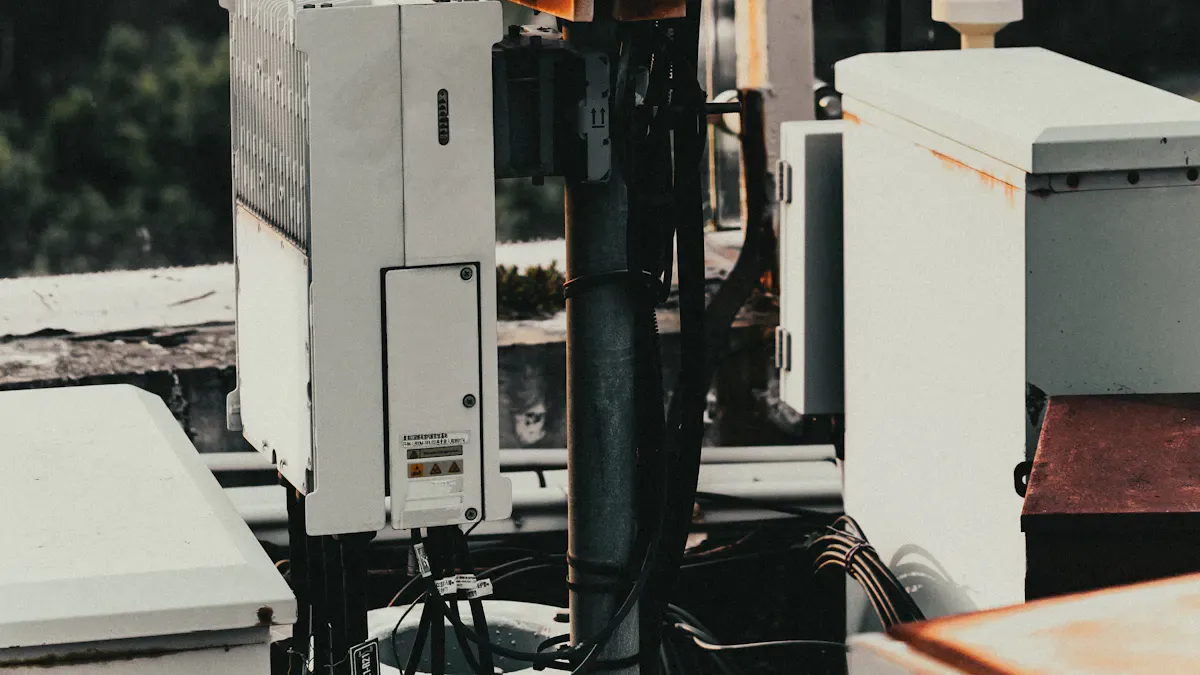
You need to ensure seamless integration when deploying a power distribution unit in your outdoor telecom cabinet. Physical and electrical checks play a crucial role. You should confirm that the unit fits the cabinet’s dimensions and that the cable plug system matches standards like IEC60309. Internal connecting lines must support safe and reliable power delivery. The table below highlights common compatibility issues you may encounter:
Issue Type | Description |
|---|---|
Compatibility Issues | Often arise only after installation, leading to unexpected operational failures. |
Outlet Types | Unique outlet types or plug standards may not match existing equipment, complicating integration. |
Deployment Delays | These mismatches can result in higher costs and longer deployment times. |
You can avoid these challenges by selecting ESTEL’s outdoor telecom cabinets, which support international standards and offer flexible configurations. This compatibility ensures that your smart power distribution unit operates efficiently from day one.
Implementation Best Practices
You should follow best practices to maximize performance and reliability. Start by utilizing the IEC 61850 standard for device interoperability. Implement Common Data Classes (CDCs) and align abstraction information with the Manufacturing Messaging Specification (MMS). Use Substation Configuration Language (SCL) for device configuration. Always ensure compliance with latency requirements for effective communication. These steps help you achieve smooth integration and reduce the risk of operational issues.
Tip: Validate software and remote management integration before deployment. Vendor-agnostic solutions allow you to manage power distribution across different devices from a single dashboard.
Monitoring and Remote Management
You gain significant benefits from remote monitoring and management. Smart PDUs enable you to access real-time power data, configure alerts, and prevent downtime. You can measure power consumption and transmit data to a central management system. This approach allows you to detect potential issues early and receive proactive notifications. As a result, you address critical conditions before they lead to failures. The chart below shows measurable improvements you can expect:
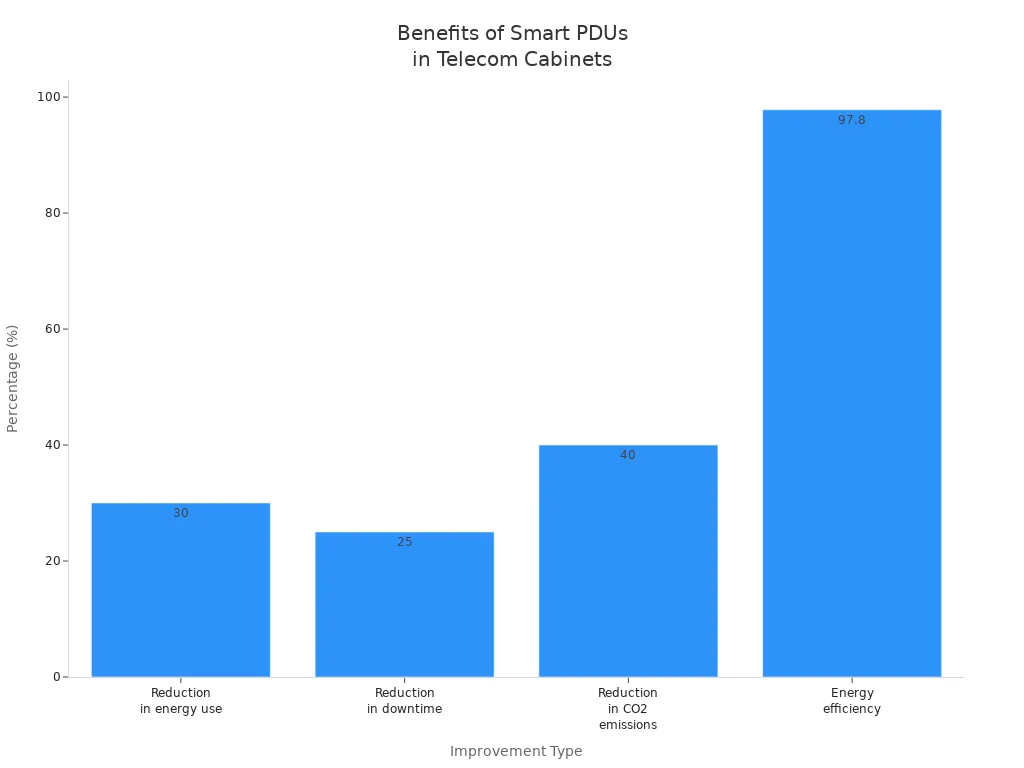
You can achieve up to 30% reduction in energy use, 25% less downtime, and 40% lower CO2 emissions. These features enhance the reliability and performance of your telecom cabinet infrastructure.
Optimizing TCO with Smart Solutions
Benchmarking Energy Usage
You can drive energy efficiency by benchmarking energy usage across your telecom cabinets. Smart power distribution units allow you to track consumption patterns and compare performance over time. This process helps you identify inefficiencies and set realistic targets for improvement. When you use real-time monitoring, you gain insights that lead to measurable cost-effectiveness. For example, benchmarking with smart PDUs can deliver an 18% reduction in power consumption and save approximately $120,000 annually. You also see improvements in equipment uptime and operational reliability.
Metric | Example/Impact |
|---|---|
Energy Savings Percentage | 18% reduction in power consumption |
Annual Cost Savings | |
Equipment Uptime | Minimized downtime through proactive alerts |
You can use these benchmarks to justify investments in advanced energy management solutions and support your sustainability goals.
Real-Time Monitoring and Control
You enhance efficiency and cost-effectiveness when you implement real-time monitoring and control. Smart PDUs provide continuous visibility into energy usage, allowing you to detect anomalies and respond quickly. Real-time monitoring enables predictive maintenance, which helps you address potential issues before they escalate. Automation reduces manual intervention, lowering operational expenses and minimizing human error. You can automate equipment monitoring and fault detection, which streamlines workflows and accelerates issue resolution. Your team can focus on strategic growth rather than routine maintenance.
Real-time monitoring enables predictive maintenance and early problem detection.
Automation reduces operational expenses and improves efficiency.
Continuous monitoring supports streamlined workflows and faster response times.
Long-Term Value of Smart PDUs
You secure long-term value by investing in smart power distribution units. Modular, plug-and-play designs allow for rapid retrofitting, saving time and reducing costs during upgrades. Advanced features improve access and management, enhancing network reliability. You can swap components without shutting down the system, which reduces downtime and supports uninterrupted service. Predictive maintenance and remote management lower repair expenses and optimize resource allocation. Over time, these benefits translate into significant cost-effectiveness and improved energy efficiency.
Evidence Description | Key Benefit |
|---|---|
Modular, plug-and-play systems save time and reduce costs for retrofitting. | Quick installation and minimal disruption |
Features improve access and management of telecom cabinets. | Enhanced reliability of the network |
Advanced design allows component swapping without system shutdown. | Reduced downtime during upgrades |
Predictive maintenance and remote management lower repair expenses. | Cost savings and efficient resource management |
You can see the impact of smart PDUs in real-world deployments. Operators have reported a 25% increase in operational reliability, a 20% improvement in equipment uptime, and an 80% reduction in outages. Maintenance response times improved by 40%, and predictive analytics identified issues weeks in advance.
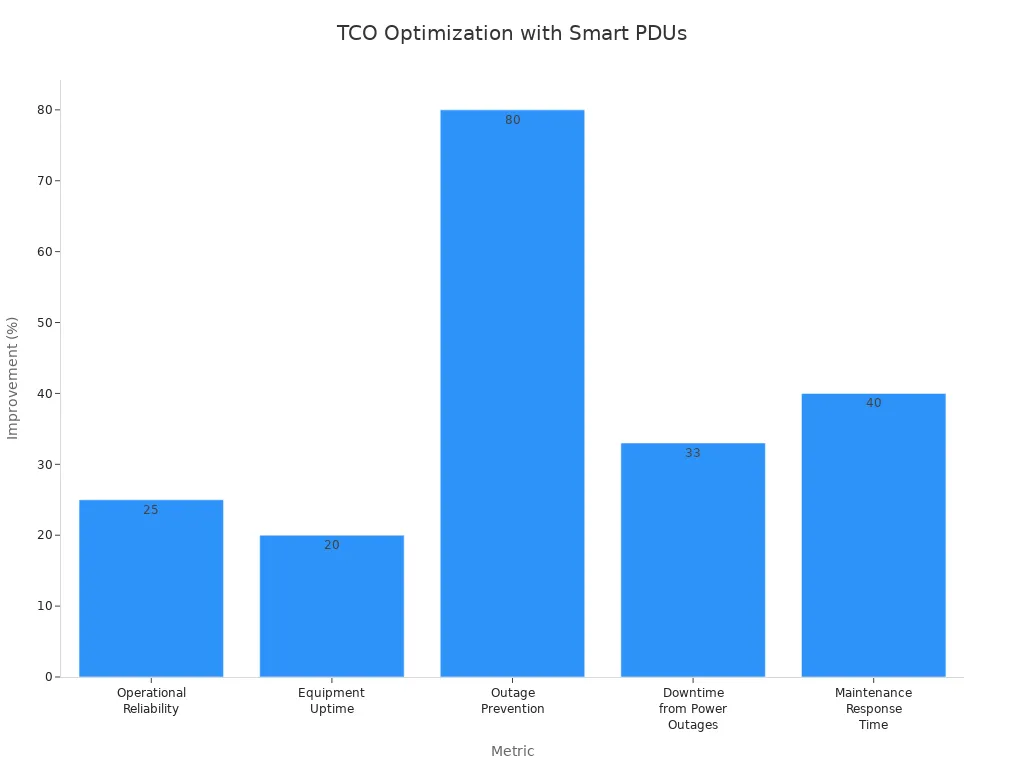
You achieve greater energy efficiency, lower operational expenses, and long-term value by choosing smart solutions for your telecom infrastructure.
You achieve substantial savings by deploying ESTEL’s Smart Power Distribution Unit in your telecommunications cabinets. Smart PDUs deliver up to 20% energy consumption reduction and $50,000 annual energy cost savings. You improve power usage effectiveness by about 20%.
Benefit | Value |
|---|---|
Energy consumption reduction | Up to 20% reduction |
Annual energy cost savings | $50,000 saved per year |
Power Usage Effectiveness | Improved by about 20% |
You monitor power usage, detect issues early, and receive real-time alerts for overloads or overheating. Hot-swappable connectors let you replace components without downtime. Modular designs allow you to expand power capacity as your telecommunications needs grow. Intelligent monitoring and remote management simplify oversight of multiple cabinets. Lifecycle cost analysis enhances asset management and supports optimized spending. You minimize unexpected costs and improve operational efficiency.
Evaluate your current infrastructure, identify areas for improvement, and consider smart upgrades to maximize savings and reliability in your telecommunications operations.
FAQ
What makes a modular pdu ideal for telecom cabinets?
You benefit from a modular pdu because it adapts to changing energy demands. Modular designs offer flexibility and scalability. You can expand capacity as your network grows. This approach improves reliability and supports efficient upgrades. Modular pdus simplify maintenance and reduce downtime.
How does a pdu improve reliability and energy efficiency?
You gain reliability by using a pdu with advanced monitoring. Real-time energy tracking helps you detect issues early. Automated alerts prevent overloads. You optimize energy use and reduce waste. Pdus with modular features enhance reliability and support energy-saving pdus for sustainable operations.
Can you measure power consumption with a modular pdu?
You can measure power consumption with a modular pdu. Integrated sensors provide accurate energy data. You monitor energy usage and identify inefficiencies. Power consumption measurement supports sustainability initiatives. Modular pdus help you track energy trends and improve reliability.
Why is scalability important for pdus in telecom cabinets?
You need scalability to handle growing energy requirements. Modular pdus allow you to add outlets and increase capacity. This flexibility ensures reliability as your infrastructure expands. Scalability supports sustainability initiatives and helps you maintain efficient energy management.
How do pdus contribute to sustainability in telecom operations?
You support sustainability by deploying pdus with energy-saving features. Modular pdus optimize energy distribution and reduce waste. You align with sustainability initiatives and improve reliability. Pdus help you lower energy consumption and promote sustainable practices in telecom cabinets.
See Also
Understanding The Design And Expenses Of Telecom Cabinets
Solar Energy Storage Solutions For Telecom Cabinet Systems
Ensuring Consistent Power Supply For Telecom Cabinets
Exploring ESTEL PDUs And Their Importance In Data Centers
Calculating Power Systems And Battery Needs For Telecom Cabinets
CALL US DIRECTLY
86-13752765943
3A-8, SHUIWAN 1979 SQUARE (PHASE II), NO.111, TAIZI ROAD,SHUIWAN COMMUNITY, ZHAOSHANG STREET, NANSHAN DISTRICT, SHENZHEN, GUANGDONG, CHINA
