Future Tech Evolution (e.g., Digital Twin) Reserved Interface Smart PDU Solution for Telecom Cabinet Upgrading

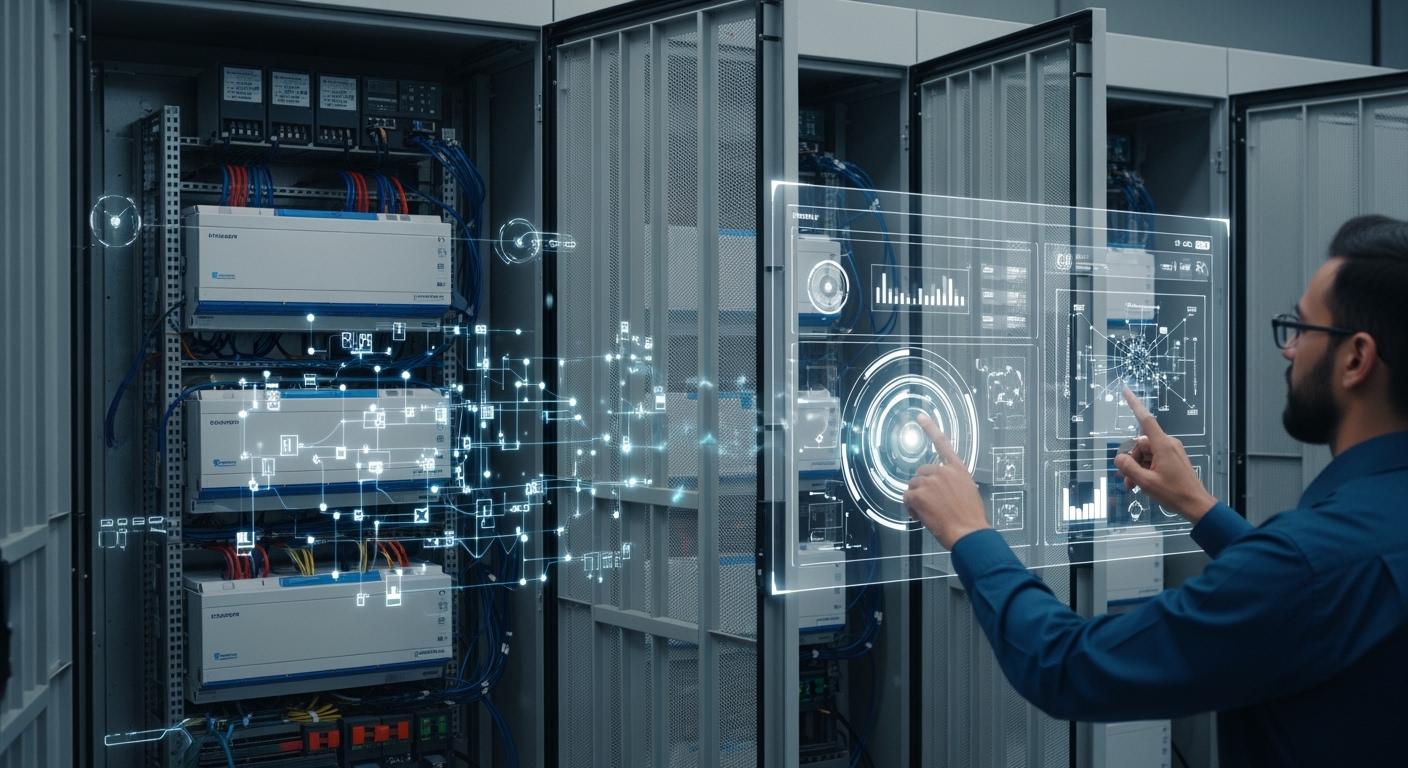
You face new demands in telecom infrastructure every year. ESTEL’s Smart Power Distribution Unit with reserved interfaces helps you upgrade telecom cabinets for the future. This solution boosts efficiency and reliability. You stay ready for digital transformation and advanced technologies like Digital Twin. ESTEL delivers quality, innovation, and products that meet international standards. You gain a future-proof system with trusted support.
Key Takeaways
Upgrade your telecom cabinets with ESTEL’s Smart Power Distribution Unit for improved efficiency and reliability.
Use reserved interfaces to easily integrate future technologies without replacing your entire system.
Implement remote monitoring to quickly detect issues and reduce maintenance costs by up to 40%.
Choose a modular design to simplify upgrades and adapt your power management as your network grows.
Invest in advanced power management solutions to achieve long-term savings and enhance network performance.
Power Management Challenges in Telecom Cabinets
Legacy System Limitations
You often encounter legacy systems that struggle to keep up with modern demands. These older cabinets face several issues that impact performance and reliability. The table below highlights common challenges:
Challenge Type | Description |
|---|---|
Poor Ventilation | Confined spaces with limited airflow cause heat buildup, reducing efficiency. |
Dust Accumulation | Blocked filters restrict air circulation, making cooling less effective. |
System Malfunction | Cooling systems that lack maintenance fail to keep temperatures stable. |
Environmental Factors | High external temperatures or direct sunlight increase heat risks. |
Power Issues | Outages or surges disrupt air conditioning, leading to rapid temperature changes. |
These problems make it difficult for you to maintain optimal conditions inside the cabinet. Equipment may overheat or malfunction, which can lead to service interruptions.
Downtime and Maintenance Issues
Legacy power distribution systems increase operational costs and downtime. You face frequent maintenance visits and unexpected repairs. Here are some key impacts:
Cabinets that prevent water intrusion, overheating, and electrical damage require fewer technician visits. You save money on maintenance and repairs.
Reliable cabinet protection ensures continued service availability. You avoid penalties for violating service level agreements.
Cabinets that regulate temperature and shield against surges extend the lifespan of your equipment.
You benefit from improved reliability and lower costs when you upgrade your power management systems.
Upgrade and Scalability Barriers
Older systems create barriers when you try to upgrade or scale your infrastructure. The table below outlines major limitations:
Limitation | Description |
|---|---|
Lower efficiency and power density | Traditional systems manage power less efficiently. |
Excessive heat generation | Older systems produce more heat, risking failures. |
Lack of modularity and scalability | Expansion is difficult with non-modular designs. |
Larger physical footprint | More space is needed, complicating installations. |
Inadequate cooling solutions | Cooling often fails to protect equipment. |
Inability to meet efficiency standards | Systems do not comply with modern requirements. |
You also face integration challenges. Unique voltage ratings and connector types from different brands complicate setup. Firmware mismatches and incomplete documentation make integration harder. Environmental factors like temperature and humidity affect signal quality. Crowded cabinets limit physical space, making wiring difficult.
Tip: Addressing these challenges early helps you build a more reliable and scalable telecom infrastructure.
Smart Power Distribution Unit with Reserved Interfaces
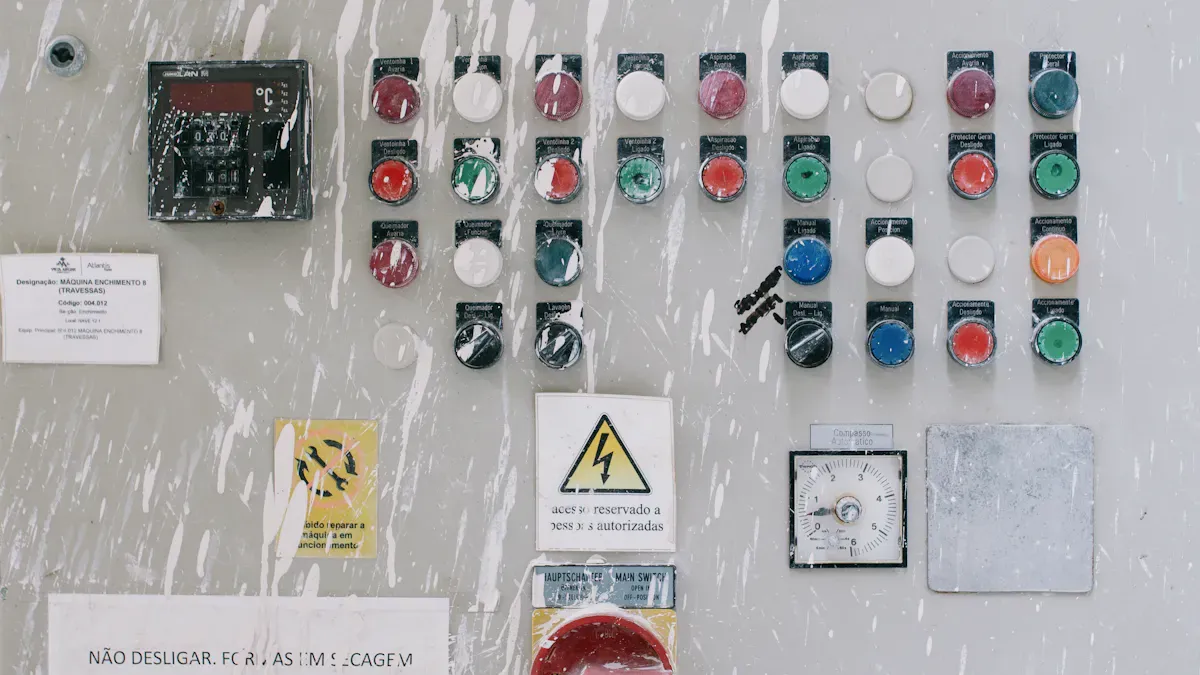
What Is a Smart Power Distribution Unit?
You need reliable power management in every telecom cabinet. A Smart Power Distribution Unit gives you advanced control over how electricity flows to your equipment. Unlike traditional power strips, this device monitors, manages, and protects your network hardware. You can track power usage, detect faults, and prevent overloads. The unit also helps you avoid downtime by responding quickly to electrical issues.
Here is a table showing the core specifications you should know:
Specification | Value |
|---|---|
Input Voltage Range | 90 - 290 Vac |
Input Frequency | 45 - 65 Hz |
Max. Input Current | 67 A |
Input Over-Voltage Protection | 300 Vac |
Input Undervoltage Protection | 85 Vac |
Input Undervoltage Recovery | 90 Vac |
You benefit from built-in safety features that protect your equipment:
Overload protection stops damage from excessive current.
Surge suppression shields your devices from voltage spikes.
Short-circuit prevention keeps electrical faults from spreading.
With these features, you gain peace of mind and reduce the risk of costly outages.
Reserved Interfaces for Future Tech
You want your telecom cabinets to stay relevant as technology evolves. Reserved interfaces in a Smart Power Distribution Unit make this possible. These interfaces act as connection points for future upgrades. You can add new sensors, controllers, or communication modules without replacing the entire unit.
This approach saves you time and money. You avoid major disruptions when you need to integrate new technologies. Reserved interfaces also support modular expansion. You can scale your power management system as your network grows.
Tip: Choose a Smart Power Distribution Unit with flexible reserved interfaces to ensure your infrastructure adapts to tomorrow’s needs.
Digital Twin Integration Potential
Digital Twin technology creates a virtual replica of your physical telecom cabinet. You use this digital model to monitor, analyze, and optimize your operations in real time. Integrating Digital Twin with a Smart Power Distribution Unit unlocks powerful capabilities.
You need certain technical requirements for seamless integration. The table below outlines these essentials:
Feature | Description |
|---|---|
Communication Protocols | Uses Modbus, SNMP, and IEC 61850 for secure data exchange. |
Real-Time Data Processing | Enables immediate action on data as it is generated. |
Incremental Synchronization | Uses Change Data Capture (CDC) to minimize system load. |
Precise Timing | Achieved through atomic clocks and network time protocols. |
You collect data from sensors that monitor voltage, current, temperature, and humidity. The Smart Power Distribution Unit transmits this data securely to your network. Real-time processing and incremental synchronization ensure your Digital Twin stays accurate and responsive.
With this setup, you can:
Predict equipment failures before they happen.
Optimize energy usage based on real-time conditions.
Reduce manual inspections and maintenance costs.
ESTEL’s Smart PDU Features
ESTEL’s Smart Power Distribution Unit stands out with features designed for telecom environments. You get real-time power monitoring, which lets you track energy consumption instantly. Remote management allows you to control power distribution from anywhere, improving your operational efficiency.
Here is a summary of what makes ESTEL’s solution unique:
Unique Feature | Description |
|---|---|
Real-time power monitoring | Track power usage instantly for better control. |
Remote management | Manage power distribution remotely to boost efficiency. |
Customizable solutions | Adapt the unit for both small and large setups. |
Energy efficiency | Achieve up to 30% energy savings, lowering your costs. |
Compliance with safety standards | Meets UL and CE certifications for safety and reliability. |
Modular design | Scale and adapt your system as your needs change. |
Outlet-level metering and switching | Control individual outlets for precise power management. |
You also benefit from outlet-level metering and switching. This feature lets you manage each device connected to the unit. ESTEL’s modular design means you can expand or reconfigure your setup easily. The unit’s compliance with international safety standards ensures your equipment stays protected.
By choosing ESTEL’s Smart Power Distribution Unit, you prepare your telecom cabinets for the future. You gain flexibility, efficiency, and peace of mind as your network evolves.
Key Benefits of ESTEL Smart PDU Solutions
Remote Monitoring and Control
You gain powerful remote monitoring and control features with ESTEL’s solution. These features help you manage your telecom cabinets more efficiently and reduce the need for on-site visits. The table below shows how each capability improves your daily operations:
Capability | Impact on Operational Efficiency |
|---|---|
Real-time monitoring of energy usage | Helps in optimizing power usage and preventing outages. |
Remote management of devices | Allows for quick decision-making and reduces site visits. |
Integrated alarms | Reduces maintenance response times by 40% and costs by 25%. |
Early detection of issues | Can prevent up to 80% of outages and lower battery failure rates by 98%. |
Surge protection | Protects equipment from voltage spikes, enhancing reliability. |
Dehumidifying features | Reduces risk of corrosion and electrical faults, improving equipment lifespan. |
You can monitor energy consumption in real time and receive alerts for any abnormal conditions. This early warning system helps you act quickly, preventing outages and equipment failures. You also save time and money by reducing the number of maintenance trips.
Tip: Remote management lets you make changes or reset devices without leaving your office, which keeps your network running smoothly.
Modularity and Scalability
ESTEL’s Smart Power Distribution Unit uses a modular design that makes upgrades and maintenance simple. You can swap socket modules or replace monitoring units without shutting down your system. This flexibility means you can:
Upgrade or maintain your system quickly, minimizing downtime.
Avoid complex rewiring or replacing entire units.
Add or change modules as your needs evolve.
You can also expand your system by connecting up to ten PDUs. This makes it easy to scale your operations as your network grows. You keep your infrastructure efficient and ready for future demands.
Enhanced Reliability and Safety
You improve reliability and safety when you use ESTEL’s solution. The advanced design protects your equipment and reduces the risk of failures. The table below compares the performance of nano-coated units to traditional units:
Metric | Nano-Coated Units | Traditional Units |
|---|---|---|
Surface Corrosion After 5 Years | < 2% | > 20% |
Maintenance Calls Reduction | 60% | N/A |
Component Replacements Reduction | 40% | N/A |
You benefit from less corrosion, fewer maintenance calls, and fewer component replacements. Hybrid solar power systems can also lower your operational costs and improve service reliability. The modular design works well in extreme temperatures, making upgrades and repairs easier. Remote monitoring helps you maintain network performance, especially during system upgrades.
Cost Efficiency and ROI
You see a strong return on investment when you choose ESTEL’s Smart Power Distribution Unit. Many telecom operators recover their investment in less than two years. Some small-scale units pay for themselves in just over six months. You save money through reduced maintenance, fewer site visits, and longer equipment life. Lower operational costs and improved efficiency help you achieve your financial goals faster.
Note: Investing in advanced power management solutions leads to long-term savings and better network performance.
Future-Proofing Telecom Cabinets
You prepare your telecom cabinets for future technologies with ESTEL’s solution. Reserved interfaces allow you to add new sensors, controllers, or communication modules as technology evolves. You do not need to replace the entire unit when you want to upgrade. This approach keeps your infrastructure flexible and ready for innovations like Digital Twin integration. You stay ahead of industry trends and ensure your network remains competitive.
By choosing ESTEL, you invest in a solution that grows with your needs and adapts to new challenges.
Implementation Steps for Smart PDU Upgrades
Infrastructure Assessment
Start by evaluating your current telecom cabinet setup. This step helps you identify what you need for a successful upgrade. Follow these steps:
Check compatibility. Review your existing power units for outlet types, mounting options, monitoring features, environmental ratings, and safety standards.
Assess cabinet space and power needs. Measure available space, inspect wiring, and test for reliability.
Confirm integration. Make sure voltage, firmware, and environmental conditions match ESTEL’s requirements.
Tip: A thorough assessment prevents installation issues and ensures a smooth upgrade process.
Selecting ESTEL Smart Power Distribution Unit
Choose the right unit by comparing key criteria. The table below outlines what to consider:
Criteria | Description |
|---|---|
Technical Specifications | Voltage, current, circuits, ingress protection, material, safety standards |
Industry Compliance Requirements | Certifications, smart features, grid interaction, local codes |
Performance Metrics | Energy accuracy, remote response, protocol reliability, overload protection |
Cost-Efficiency Factors | Ownership cost, installation, energy savings, durability |
Quality Assurance Considerations | Quality control, warranties, certifications, testing |
Integration Capabilities | Compatibility with smart systems, component integration |
After-Sales Support Evaluation | Technical support, documentation, firmware updates, supplier longevity |
Review these factors to select a unit that fits your needs and supports future upgrades.
Installation and Integration
Prepare your workspace before installation. Organize tools and clear clutter. Place the unit for optimal airflow and easy access. Secure it firmly to prevent movement. Avoid overcrowding the cabinet. Vertical mounting often saves space and improves cooling.
Connect sensors and reserved interfaces as needed. Ensure proper grounding for safety. Regularly inspect and clean the unit to prevent dust buildup. Monitor load balancing and replace any worn components promptly.
Note: Good installation practices extend equipment life and improve reliability.
Testing and Monitoring Setup
After installation, test and configure your monitoring system. Follow these steps:
Inspect all wiring for secure connections.
Test insulation resistance with a meter; values should exceed 0.5MΩ.
Power on the unit and check for steady operation.
Look for voltage drops or overheating.
Run no-load and load tests to confirm reliability.
Install and calibrate sensors for temperature, humidity, water leaks, vibration, dust, and security.
Document all results for future reference.
Set up your monitoring platform to track real-time data. Regularly review sensor readings and system alerts. Schedule routine maintenance to keep your system performing at its best.
Real-World Results and Use Cases
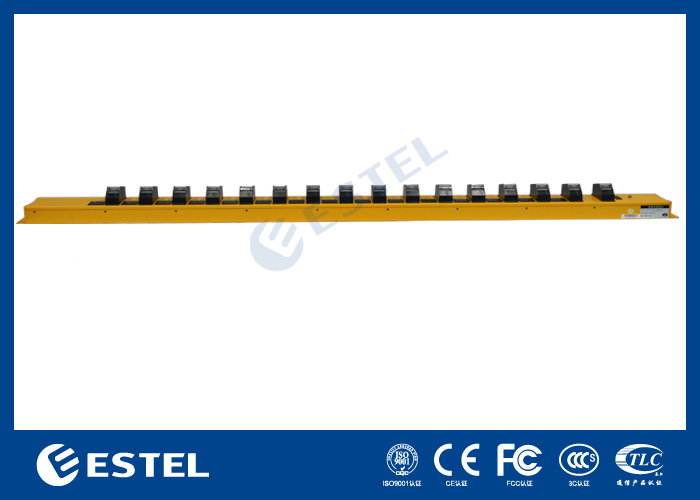
ESTEL Smart PDU in Action
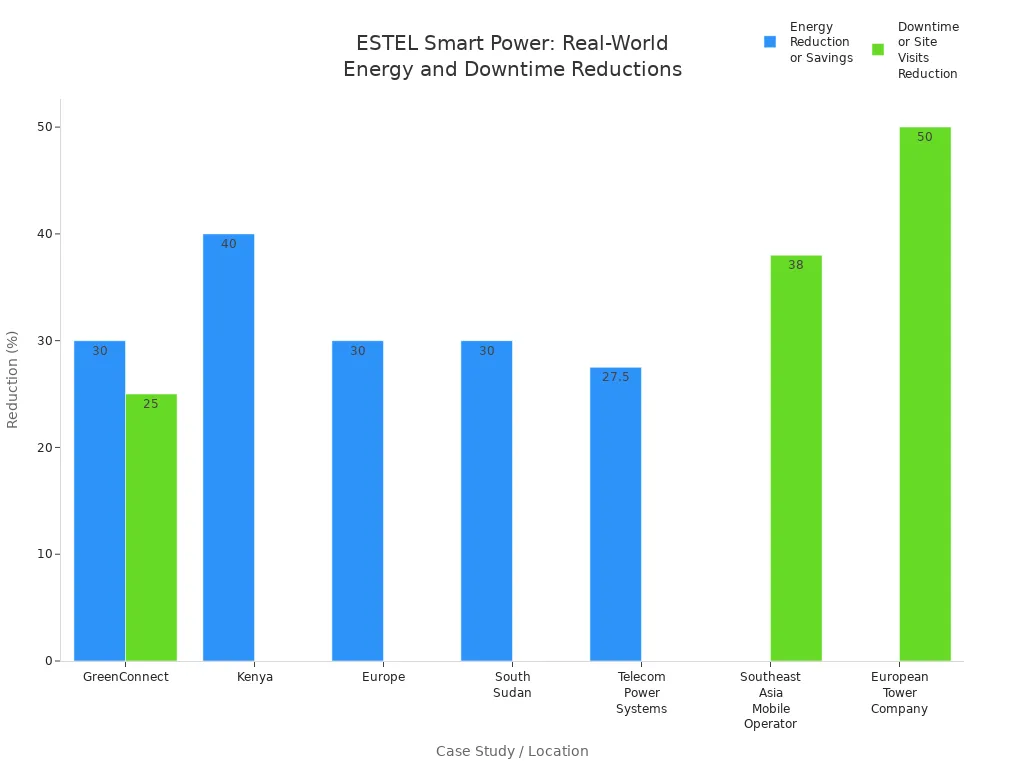
You can see the impact of ESTEL Smart Power Distribution Units through real-world deployments. Leading telecom providers and infrastructure companies have reported impressive results after upgrading their cabinets with ESTEL solutions. The table below highlights several case studies:
Client / Case Study | Performance Metrics and Cost Savings Reported |
|---|---|
Leading Telecom Provider | Energy efficiency up to 97.8%; early issue detection; seamless network expansion |
GreenConnect | 30% reduction in energy use; 25% reduction in downtime; 40% reduction in CO₂ emissions |
Southeast Asia Mobile Operator | 38% fewer site visits; mean time to repair dropped from 12 to 4 hours; $500,000 annual O&M savings |
European Tower Company | 22% improved system uptime; emergency maintenance trips cut by half |
You can also see regional outcomes. For example, telecom operators in Kenya achieved a 40% reduction in energy expenses after switching to solar-powered towers with ESTEL PDUs. In Europe, companies reduced their carbon footprint by 30% using modular solar plants.
Operational Improvements
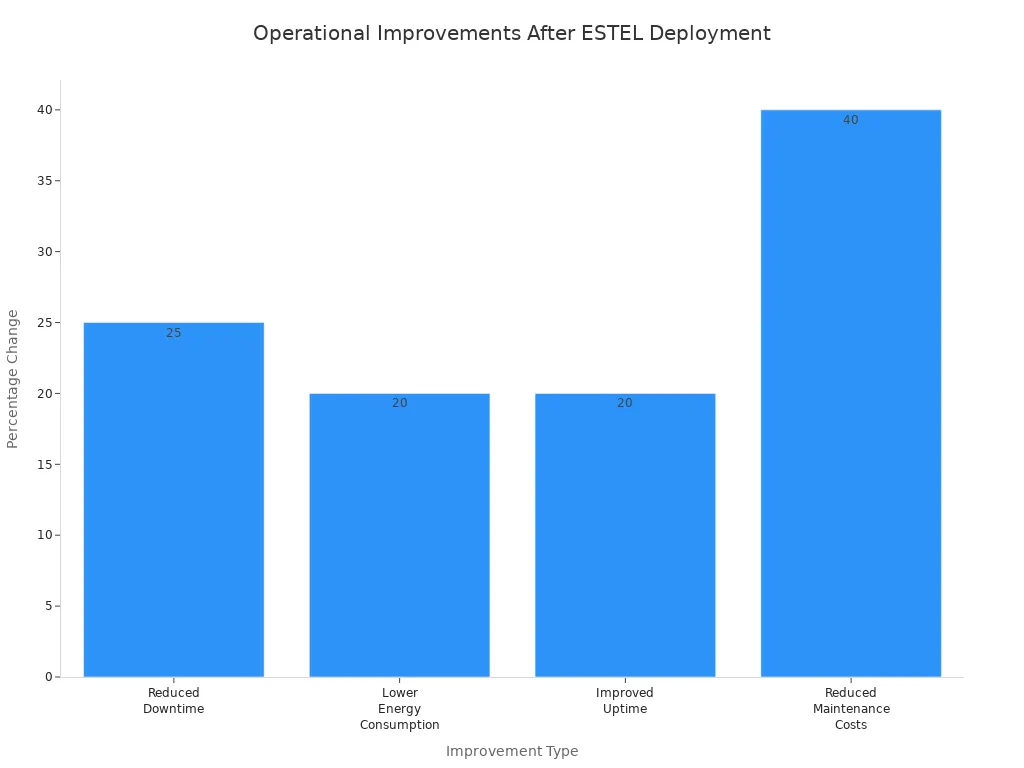
When you deploy ESTEL Smart PDUs, you gain measurable operational improvements. Many telecom operators have reported significant changes in key performance areas:
Improvement Type | Percentage Change | Source |
|---|---|---|
Reduced Downtime | 25% | Southeast Asia Provider |
Lower Energy Consumption | 20% | European Data Center Operator |
Improved Uptime | 20% | Telecom Company |
Reduced Maintenance Costs | 40% | Remote Monitoring System |
You benefit from fewer outages, lower energy bills, and less time spent on maintenance. Remote monitoring features help you detect issues early, so you can act before problems grow. This leads to smoother operations and more reliable service for your customers.
ROI and Long-Term Value
You achieve strong long-term value when you invest in ESTEL Smart PDUs. These units comply with industry standards like UL, CE, and IEC, which ensures safety and reliability. You track energy savings and uptime improvements to measure your return on investment. The table below summarizes how you benefit:
Value Area | Description |
|---|---|
Meets UL, CE, and IEC regulations for safety and reliability | |
Energy Savings | Lower energy use reduces costs and environmental impact |
Uptime Improvements | Higher system uptime boosts operational efficiency |
Better resource management and reduced maintenance needs |
By choosing ESTEL, you set your telecom infrastructure up for lasting success, lower costs, and a more sustainable future.
Best Practices and Considerations
System Compatibility
You need to ensure that your smart power distribution unit fits seamlessly with your existing telecom infrastructure. Mixed socket configurations allow you to connect both legacy and modern devices without adapters or rewiring. This flexibility supports efficient operation as your network grows. Plug-and-play installation reduces downtime and makes upgrades easier for your staff.
Challenge | |
|---|---|
Outdated power controls | Plug-and-play installation |
Long installation times | Rapid deployment, minimal downtime |
Limited monitoring | Advanced, real-time data collection |
Need for special skills | Simple setup, accessible to all staff |
Tip: Choose a unit that supports mixed socket configurations to simplify upgrades and maintain smooth operations.
Cybersecurity Measures
Protecting your telecom cabinet from threats is essential. Secure boot ensures only verified firmware runs on your device. Trusted modules prevent tampering and unauthorized updates. Surge protection diverts dangerous voltages during power disturbances. Advanced locking technologies and intrusion detection sensors provide physical security. Real-time monitoring offers alerts and audit trails for security incidents.
Mechanism | Description |
|---|---|
Secure Boot | Runs only verified firmware, blocking unauthorized changes |
Trusted Modules | Prevent tampering and unauthorized updates |
Surge Protection | Diverts dangerous voltages during power disturbances |
Intrusion Detection | Alerts for unauthorized access attempts |
Real-Time Monitoring | Provides alerts and audit trails for incidents |
Maintenance Strategies
Regular maintenance keeps your smart PDU reliable. You should perform visual inspections monthly. Dust removal and tightening connections every quarter help prevent faults. Annual infrared scans and firmware updates ensure optimal performance. Ongoing environmental control protects against dust and humidity. Upgrading components every three years extends the unit’s lifespan.
Maintenance Strategy | Frequency |
|---|---|
Visual inspections | Monthly |
Dust removal | Quarterly |
Tightening connections | Quarterly |
Testing circuit breakers | Quarterly |
Infrared scans | Annually |
Firmware updates | Annually |
Grounding checks | Annually |
Environmental control (dust/humidity) | Ongoing |
Component upgrades | Every three years |
Vendor Selection Tips
You should consider several factors when choosing a vendor for smart PDUs:
Operational efficiency
Compliance with safety standards
Scalability
Total cost of ownership
ESTEL supports you with quality assurance and post-installation services. Remote diagnosis resolves many issues within four hours. On-site support arrives within 24 hours for complex problems. Continuous 24/7 monitoring helps identify and fix issues before they affect your service.
Note: ESTEL’s commitment to quality and rapid support ensures your telecom cabinet stays reliable and future-ready.
You can modernize your telecom cabinets and prepare for future technologies with ESTEL’s solutions. The table below highlights why many operators choose this path:
Benefit/Feature | Description |
|---|---|
Real-time monitoring and control | Monitor energy use to cut costs and boost efficiency. |
Energy storage integration | Store energy during low-cost periods and use it during peak times. |
Modular design | Adapt quickly to changing power needs. |
Quick deployment | Add new equipment fast for smooth operations. |
Outage prevention | Use real-time insights to avoid outages and lower maintenance costs. |
Assess your current setup and consider ESTEL for a future-proof upgrade. Reach out to ESTEL for expert guidance on your next steps.
FAQ
What makes ESTEL’s Smart PDU different from traditional power units?
You get real-time monitoring, remote control, and modular design. Reserved interfaces let you add new tech easily. The unit meets international safety standards and supports future upgrades.
Can you install ESTEL’s Smart PDU in existing telecom cabinets?
Yes. You can install the unit in most standard cabinets. The modular design and mixed socket configurations make integration simple. You avoid rewiring and downtime.
How does remote monitoring work with ESTEL’s Smart PDU?
You access real-time data through a secure platform. The unit sends alerts for abnormal conditions. You can manage power distribution and reset devices from anywhere.
What maintenance does the Smart PDU require?
You should inspect the unit monthly. Remove dust and tighten connections every quarter. Update firmware annually. Replace components every three years for best performance.
Is the Smart PDU ready for Digital Twin integration?
Yes. Reserved interfaces and advanced communication protocols support Digital Twin technology. You can connect sensors and synchronize real-time data for virtual cabinet management.
See Also
Latest Developments in Outdoor Telecom Cabinet Technology
The Importance of Upgrading Telecom Cabinets by 2025
Exploring Various Applications of Telecom Cabinets
CALL US DIRECTLY
86-13752765943
3A-8, SHUIWAN 1979 SQUARE (PHASE II), NO.111, TAIZI ROAD,SHUIWAN COMMUNITY, ZHAOSHANG STREET, NANSHAN DISTRICT, SHENZHEN, GUANGDONG, CHINA
