Collaboration Between Smart Power Distribution Units and SDN Networks: Dynamic Bandwidth-Power Matching Based on Traffic Awareness

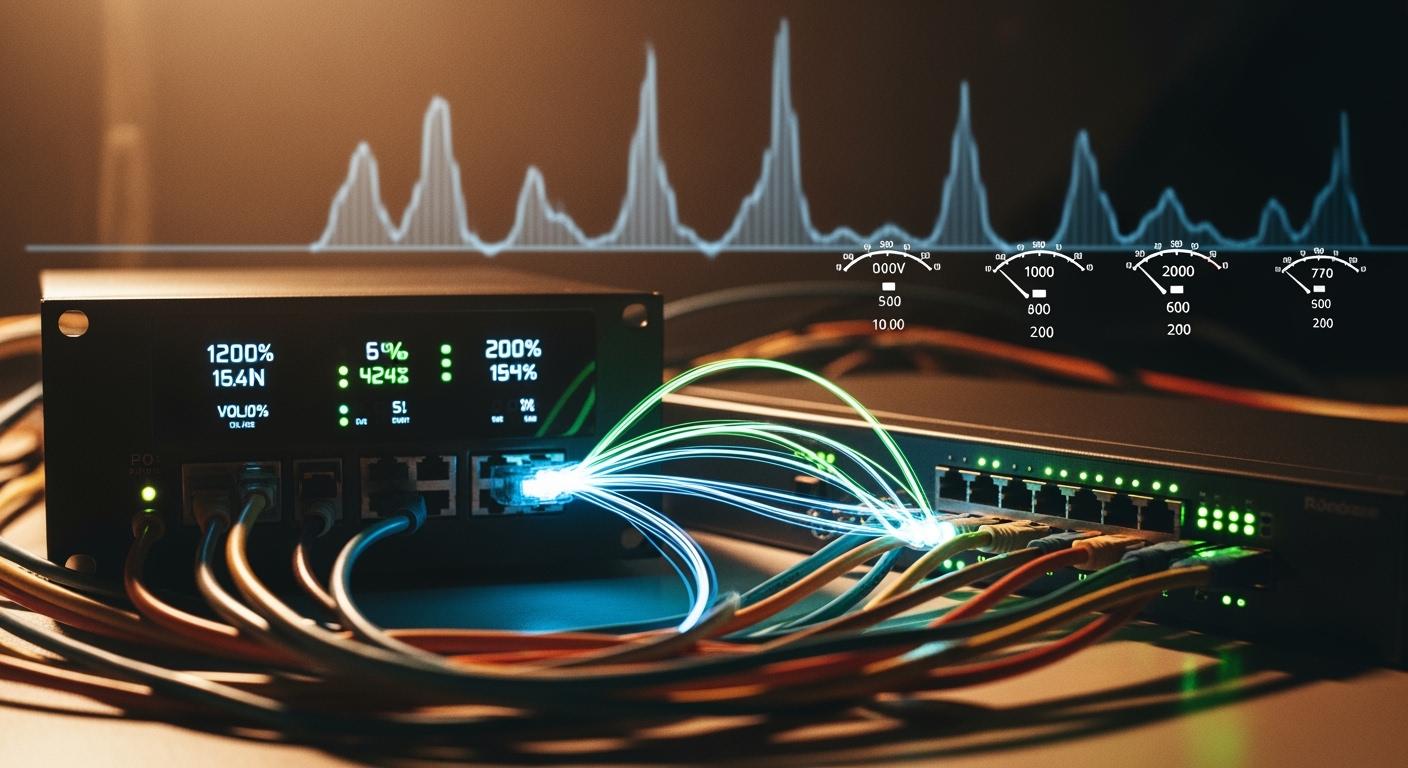
You can achieve dynamic bandwidth-power matching when you combine smart power distribution units with SDN networks. This collaboration uses real-time traffic awareness to optimize energy and network resources. Many telecom sites now use software-defined power and AI-driven load management, which helps you streamline operations and maximize uptime. ESTEL leads in innovation for smart power distribution solutions, especially with the Smart Power Distribution Unit Telecom Power System. You benefit from greater efficiency, reliability, and sustainability, as automation reduces manual work and improves accuracy.
Maximize uptime
Optimize operations
Lower costs
Key Takeaways
Combine Smart Power Distribution Units with SDN networks for real-time bandwidth and power optimization.
Use predictive analytics to forecast network demands and adjust energy strategies proactively.
Implement adaptive resource allocation to maximize efficiency and minimize energy waste.
Leverage remote management features for enhanced control and quick response to potential issues.
Prepare your telecom infrastructure for future challenges by adopting flexible and scalable solutions.
Collaboration Framework
Integration of Smart PDUs and SDN
You see a modern telecom site where network and power systems work together. The Smart Power Distribution Unit Telecom Power System connects directly to the SDN network. You control power distribution and network traffic from a single interface. This setup lets you match bandwidth and power needs in real time. You can adjust power allocation based on network traffic patterns. The architecture uses intelligent protocols that link the Smart Power Distribution Unit to SDN controllers. You gain flexibility and efficiency because the system responds quickly to changes in demand. You reduce energy waste and improve uptime. ESTEL’s solution fits into both new and existing telecom environments. You can upgrade your infrastructure without major disruptions.
Communication and Data Exchange
You rely on seamless communication between power and network systems for optimal performance. The Smart Power Distribution Unit Telecom Power System exchanges data with SDN controllers. You monitor power usage and network traffic together. This integration helps you make informed decisions and automate resource allocation. You face several challenges when connecting these systems:
Device compatibility issues can make upgrades difficult and costly.
Power consumption concerns for IoT devices may require redesigns to improve energy efficiency.
Interoperability issues with legacy systems can create technical barriers and inconsistent user experiences.
When you overcome these challenges, you achieve a unified management platform. You streamline operations and boost reliability. You also prepare your telecom site for future innovations.
Traffic Awareness in SDN Networks
Real-Time Traffic Monitoring
You need to understand what happens on your network at every moment. SDN networks give you this visibility by collecting and analyzing data from all connected devices. You see how much traffic flows through each part of your system. You also track which applications use the most bandwidth and when peak usage occurs. This information helps you make smart decisions about resource allocation.
SDN networks use several methods for real-time traffic monitoring:
Power consumption monitoring lets you analyze how much energy each network node uses. You can spot inefficiencies and adjust power distribution to save energy.
Radio duty cycle analysis helps you evaluate the average activity level of your network radios. You see when devices are active or idle, which helps you plan for energy savings.
Packet reception tracking allows you to monitor the number of packets received. You can measure how well your network transmits data and identify any bottlenecks.
You benefit from these tools because they give you a clear picture of network performance. SDN networks collect data on traffic patterns, application needs, and performance metrics. This data forms the foundation for dynamic resource allocation. Network monitoring tools within the SDN framework analyze these patterns and provide insights that help you optimize both bandwidth and power.
Predictive Analytics for Optimization
You can go beyond real-time monitoring by using predictive analytics. This technology uses AI to process network data and forecast future load conditions. In SDN-enabled telecom networks, predictive analytics works with AI to predict traffic patterns and network behavior. You can adjust your energy-saving strategies in real time based on these predictions.
The energy-saving model for 5G networks uses AI to predict load and adapt energy use.
Predictive analytics helps you match bandwidth and power by forecasting network congestion and adjusting routing paths.
You can take immediate action against potential security threats because AI can spot unusual patterns before they cause problems.
You maintain high quality of service while minimizing energy consumption. This approach makes your network more efficient and reliable. You stay ahead of demand and keep your telecom infrastructure running smoothly.
Dynamic Bandwidth-Power Matching

Adaptive Resource Allocation
You need a system that can adjust resources quickly as network demands change. Adaptive resource allocation lets you match bandwidth and power in real time. The Smart Power Distribution Unit Telecom Power System works with SDN networks to make this possible. You can use advanced algorithms that analyze network traffic and power usage. These algorithms help you get the most out of your equipment.
You see resource utilization rates go above 97%. This means you use almost all available resources, which saves energy and money.
In high-frequency bands, older methods often waste resources. The new approach works better, even when network conditions change.
The system responds faster than traditional methods. You notice less delay and smoother performance.
You can measure how well adaptive resource allocation works by looking at key performance metrics. Here is a table that shows what you should track:
Performance Metric | Description |
|---|---|
Dependability Ratio | Measures the reliability of resource allocation in telecom systems. |
Power Efficiency | Evaluates how effectively power is utilized in resource allocation. |
Throughput | Assesses the amount of data successfully transmitted over a network. |
Latency | Indicates the delay in resource allocation and communication. |
Accuracy Ratio | Reflects the precision of resource allocation decisions. |
Scalability | Evaluates the system's ability to handle increased loads. |
Latency Reduction | Measures improvements in response times due to adaptive allocation. |
Spectrum Utilization Efficiency | Assesses how effectively the available spectrum is used in resource allocation. |
You can use these metrics to see how the Smart Power Distribution Unit Telecom Power System improves your network. You get higher reliability, better power efficiency, and faster data transmission. You also see lower latency and better use of your network spectrum.
To make adaptive resource allocation work, you need smart control mechanisms. These include:
Self-tuning networks that use closed-loop automation to keep performance high.
Distributed sensors and monitoring agents that collect real-time data from across your network.
Centralized analytics platforms that use machine learning to find ways to optimize resources.
Traffic engineering algorithms that study traffic patterns and help you route data more efficiently.
With these tools, you can keep your network running smoothly, even as demands change.
Feedback Loops and Control
You want your system to react quickly and stay stable. Feedback loops help you do this. They let the Smart Power Distribution Unit Telecom Power System adjust power and bandwidth as soon as network conditions change. When you increase the loop gain, your system responds faster. You see quick adjustments to new traffic or power needs.
However, you must balance speed with stability. If you push the system too hard, it can become unstable. You need enough phase margin to keep the system from overreacting. Gain margin helps you avoid unwanted oscillations. With the right balance, your system stays stable and responsive, even at higher bandwidths.
You benefit from feedback loops because they:
Keep your network stable during sudden changes.
Allow for real-time adjustments without manual intervention.
Improve the overall reliability of your telecom power system.
The Smart Power Distribution Unit Telecom Power System uses these feedback and control methods to give you a network that is both efficient and dependable. You can trust your system to handle changing demands and keep your operations running smoothly.
Smart Power Distribution Unit in Telecom Power System
ESTEL Product Features and Advantages
You rely on advanced technology to keep your telecom site running efficiently. ESTEL’s Smart Power Distribution Unit Telecom Power System gives you a powerful solution for managing energy and network resources. This unit stands out because it combines intelligent features with robust design. You can see the difference when you compare it to basic PDUs. The table below highlights key features:
Feature | Smart PDU | Basic PDU |
|---|---|---|
Metering | Yes | No |
Network Interface | Yes | No |
Remote Management | Yes | No |
Environmental Sensors | Yes | No |
Firmware Updates | Yes | No |
SNMP Trap Notifications | Yes | No |
Security Management | Yes | No |
You achieve up to 41% reduction in energy costs when you use the Smart Power Distribution Unit Telecom Power System. Efficiency improves by up to 30%. Maintenance costs may drop by 75%. Some telecom sites report nonstop operation for a full year. You benefit from advanced metering, real-time monitoring, and intelligent control. These features help you optimize power distribution and network performance.
Remote Management and Safety
You gain control over your telecom power system from any location. Remote management lets you monitor and adjust power settings without visiting the site. This capability enhances operational efficiency and reduces downtime. You receive real-time alerts for overloads or overheating. You respond quickly to potential issues, which improves safety and keeps your equipment protected.
Advanced safety features such as overload protection and surge suppression maintain optimal conditions. Hot-swappable connectors allow you to replace components without shutting down operations. You keep your service running smoothly. The Smart Power Distribution Unit Telecom Power System integrates with SDN networks, so you match bandwidth and power dynamically. You maintain uptime and reliability, even as demands change.
You prepare your telecom site for future challenges by choosing a system that combines intelligent features, remote management, and robust safety.
Practical Applications and Case Studies
Data Center Optimization
You manage a data center that handles large amounts of network traffic every day. When you use the Smart Power Distribution Unit Telecom Power System, you gain real-time control over both power and bandwidth. You can monitor energy use and network load from a single dashboard. This helps you spot problems before they cause downtime. You can adjust power delivery based on traffic peaks, which keeps your servers running smoothly. Many data centers report up to 30% energy savings after switching to this system. You also see lower cooling costs because the equipment runs more efficiently.
Telecom Network Efficiency
You want your telecom network to stay reliable and cost-effective. With dynamic bandwidth-power matching, you reduce wasted energy and improve uptime. You can respond quickly to changes in network demand. This means fewer service interruptions for your customers. You also spend less on maintenance because the system alerts you to issues early. Many telecom operators see up to 50% less downtime and a 30% drop in maintenance costs. These improvements help you deliver better service and save money.
You can see the measurable benefits in the table below:
Benefit Type | Quantified Improvement | Effect on Telecom Cabinet Reliability |
|---|---|---|
Energy Efficiency | 30% energy savings | Reduces cooling and electricity costs |
Downtime Reduction | Up to 50% decrease | Enhances network uptime and reduces service interruptions |
Maintenance Cost Savings | 30% reduction | Lowers operational expenses and supports proactive maintenance |
ESTEL Solution Example
You may wonder how this works in the real world. One telecom operator upgraded their network with the Smart Power Distribution Unit Telecom Power System. After the upgrade, they noticed fewer outages and faster recovery times. Their maintenance team received instant alerts about power issues, so they fixed problems before they affected customers. The operator reported a full year of nonstop operation and significant savings on energy bills. You can achieve similar results by choosing a solution that combines smart power management with network awareness.
Challenges and Future Trends
Scalability and Interoperability
You face several challenges when scaling dynamic bandwidth-power matching solutions across large telecom networks. Network infrastructure must grow to support the rising demand from 5G and IoT. You need to deploy many new small cells—about ten for each existing LTE macro site—to manage traffic efficiently. Backhaul capacity requirements increase as 5G coverage expands, so you must improve connections for distributed Radio Access Network sites. Power consumption becomes a major concern, with projections showing that 5G networks could use over 2.1% of global electricity by 2030. Real-time data processing bottlenecks often occur because cloud-based systems struggle to handle live data streams from IoT devices. Device compatibility issues arise, especially when integrating legacy IoT devices with new 5G networks.
You can overcome these challenges by choosing solutions that support seamless integration and flexible scaling. ESTEL’s Smart Power Distribution Unit fits into both new and existing telecom environments, helping you adapt to future demands.
Security and Privacy
You must protect your network from evolving security and privacy threats. The separation of control and data functions in SDN architecture introduces unique risks. Programmable network settings can be exploited if unauthorized access occurs. You face threats such as:
Data manipulation from vulnerabilities in control and data planes
Compromised confidentiality, integrity, and availability of network management functions
Security and privacy challenges from dynamic IoT infrastructures
The need for encryption and access control during data transmission
You can address these risks by implementing strong encryption and access control mechanisms. Regular security audits and updates help you maintain a safe and reliable telecom environment.
Innovation in Telecom Power Systems
You see rapid innovation in telecom power systems that support dynamic bandwidth-power matching. AI integration enhances network reliability and energy efficiency. AI technologies optimize energy consumption and reduce maintenance costs through predictive maintenance. Automated power distribution improves reliability and reduces downtime. Dynamic power management for hybrid and renewable energy systems ensures optimal energy use. In March 2023, ZTE Corporation and China Mobile piloted 400G QPSK technology, demonstrating ultra-high-speed transmission over long distances. This development highlights the need for robust transmission technologies in telecom networks.
Industry standards continue to evolve. Modernization of grid operations supports the integration of smart power distribution units with SDN networks. Enhanced security, interoperability, and regulatory compliance drive this progress. IP-based networks enable new applications that improve grid security, control, and automation, aligning with industry standards.
You can transform your telecom operations by combining SDN networks with the Smart Power Distribution Unit Telecom Power System. This integration boosts efficiency, reliability, and economic performance, as recent studies show up to 62% improvement in operational efficiency. ESTEL offers flexible solutions, multiple outlet options, and strong customer support. You gain a future-ready infrastructure that adapts to changing demands and supports your growth.
FAQ
What is a Smart Power Distribution Unit?
You use a Smart Power Distribution Unit to manage and distribute electrical power in telecom cabinets. It offers intelligent features like remote monitoring, surge protection, and real-time control.
How does SDN improve power management?
SDN gives you real-time visibility into network traffic. You can adjust power allocation based on current demand. This helps you save energy and maintain reliable operations.
Can you control the Smart PDU remotely?
Yes, you can control the Smart Power Distribution Unit from any location. Remote management lets you monitor power usage, receive alerts, and make adjustments without visiting the site.
What benefits do you get from dynamic bandwidth-power matching?
You achieve higher efficiency, lower energy costs, and improved uptime. You also reduce maintenance expenses and keep your telecom network running smoothly.
See Also
Ensuring Consistent Power Supply for Telecom Equipment
Solar Energy Storage Solutions for Telecom Infrastructure
Essential Insights on Features of Telecom Power Supplies
Smart Energy Storage Systems for Telecom Cabinets Explained
Understanding ESTEL PDUs and Their Importance in Data Centers
CALL US DIRECTLY
86-13752765943
3A-8, SHUIWAN 1979 SQUARE (PHASE II), NO.111, TAIZI ROAD,SHUIWAN COMMUNITY, ZHAOSHANG STREET, NANSHAN DISTRICT, SHENZHEN, GUANGDONG, CHINA
