Temp-Humidity Linkage Control of Smart PDUs in Telecom Cabinets: Dual Optimization of Cooling & Power Efficiency

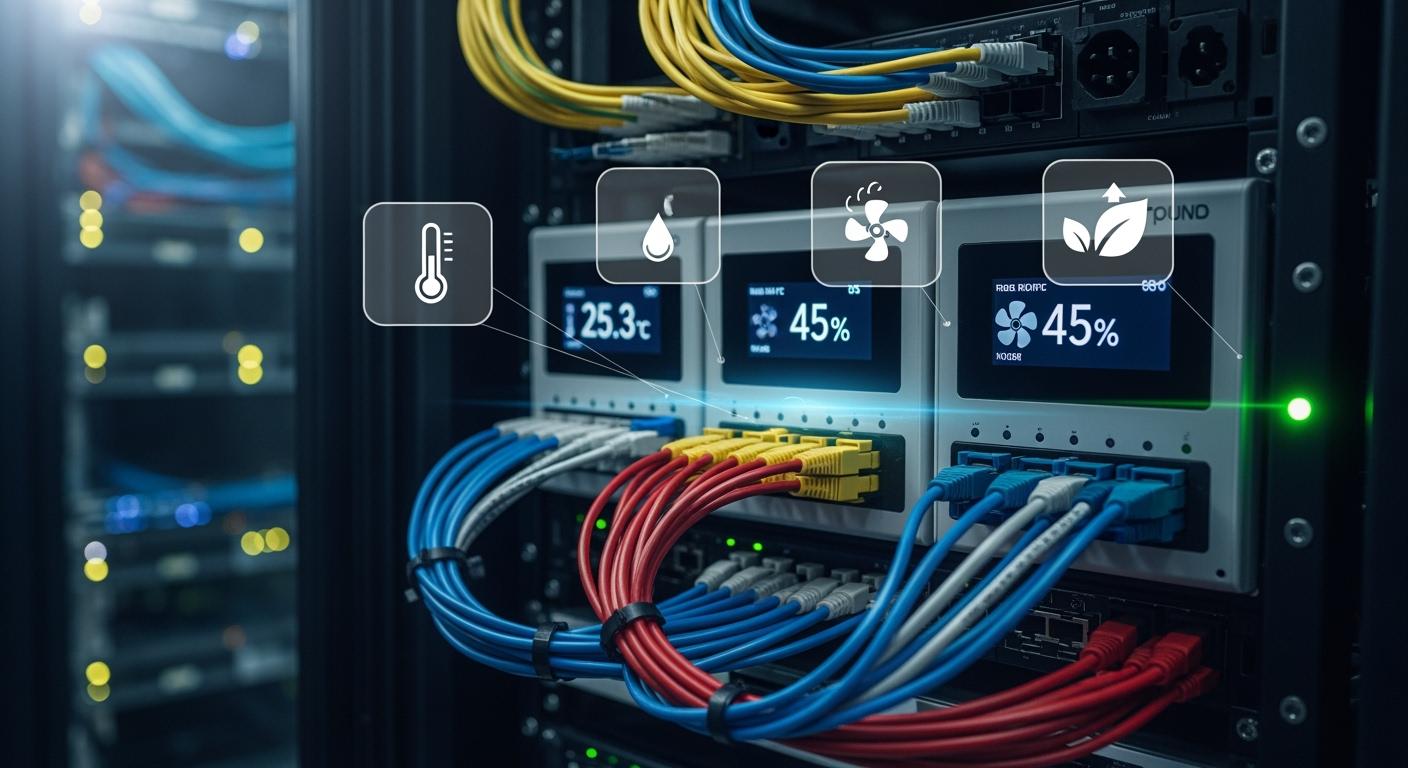
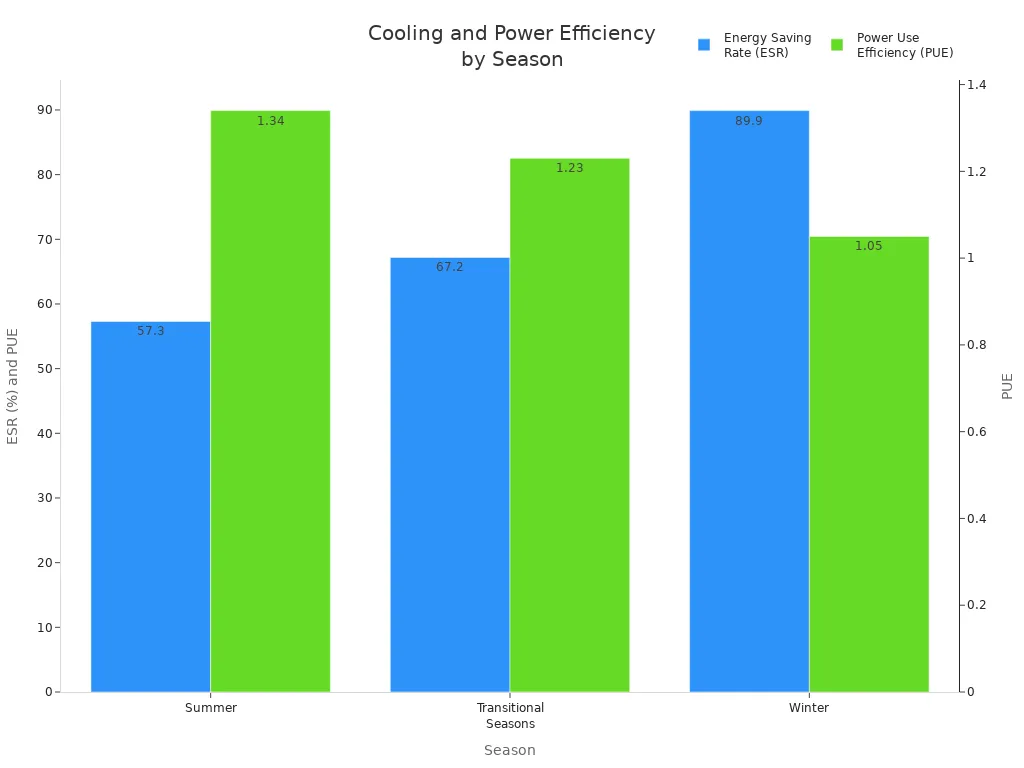
You can achieve remarkable improvements in cooling and power efficiency by using temp-humidity linkage control in your telecom cabinets. With a Smart Power Distribution Unit from ESTEL, you gain both real-time environmental monitoring and intelligent power management. This approach helps you reduce annual energy consumption by up to 68.5% and improves your equipment uptime by 20%. The following chart highlights energy saving rates and power use efficiency throughout the year:
ESTEL leads the industry with advanced technology and a strong commitment to quality, setting new standards for telecom infrastructure reliability.
Key Takeaways
Integrate temp-humidity linkage control to boost energy efficiency and protect equipment in telecom cabinets.
Utilize real-time monitoring to identify issues early, reducing downtime and maintenance costs significantly.
Adopt automated cooling and dehumidifying systems to maintain optimal conditions and extend equipment lifespan.
Choose modular designs for easy upgrades and quick component replacements, minimizing service interruptions.
Leverage ESTEL's Smart Power Distribution Unit for intelligent power management and enhanced operational reliability.
Environmental Challenges in Telecom Cabinets
Temperature and Humidity Risks
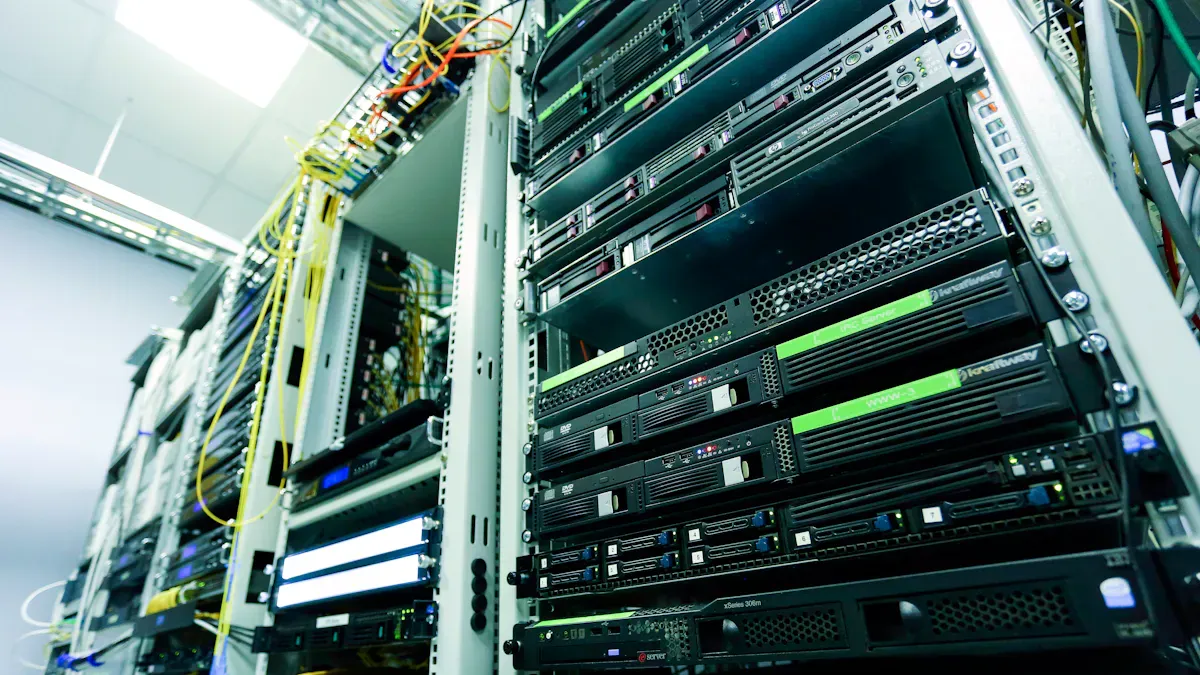
You face many environmental challenges when managing telecom cabinets. These cabinets operate in regions with extreme weather, from scorching heat to freezing cold. Temperature fluctuations stress your equipment and can cause rapid battery decay or rectifier derating. Humidity poses another threat. Moisture can lead to corrosion, short circuits, and performance loss. Dust and debris clog ventilation pathways, increasing the risk of overheating.
Here is a table showing common environmental challenges and their specific impacts:
Environmental Challenge | Specific Impact |
|---|---|
Typhoons & Heavy Rain | Grid outages, water ingress causing short circuits, tower collapse |
Snow & Ice Storms | Power line icing, battery failure, frost accumulation |
Heatwaves | Battery capacity decay, rectifier derating, air-conditioning overload |
Sandstorms & Salt Spray | Blocked ventilation, corrosion, decreased insulation |
Lightning | Surge damage, monitoring unit failure |
Humidity increases the risk of moisture buildup inside cabinets. Condensation forms on metal contacts, reducing conductivity and causing poor connections. Rapid changes in temperature and humidity make these issues worse. You must monitor these conditions closely to prevent equipment failures.
Impact on Equipment and Efficiency
Environmental stressors directly affect your equipment and power efficiency. Excessive heat overwhelms cooling systems, leading to shutdowns or permanent damage. High humidity causes corrosion and electrical faults. Smoke signals fire risk, which can destroy equipment and disrupt service.
Description | |
|---|---|
Component Breakdown | Heat accelerates breakdown, capacitors swell, circuits warp |
Overheating during Peak Demand | Cabinets overheat if cooling is inadequate, causing failures |
Corrosion from Condensation | Temperature swings create condensation, corroding internal components |
Reduced Equipment Life | Poor thermal management halves equipment lifespan |
Stress from Environmental Factors | High heat, humidity, and dust intrusion stress telecom equipment |
Maintaining a controlled environment is crucial. High temperatures increase cooling demands, while humidity leads to equipment failures. Dust blocks ventilation and causes overheating. You can use a Smart Power Distribution Unit to help manage these risks and maintain optimal conditions. This approach improves reliability and boosts energy efficiency.
Smart Power Distribution Unit Integration
Real-Time Monitoring and Control
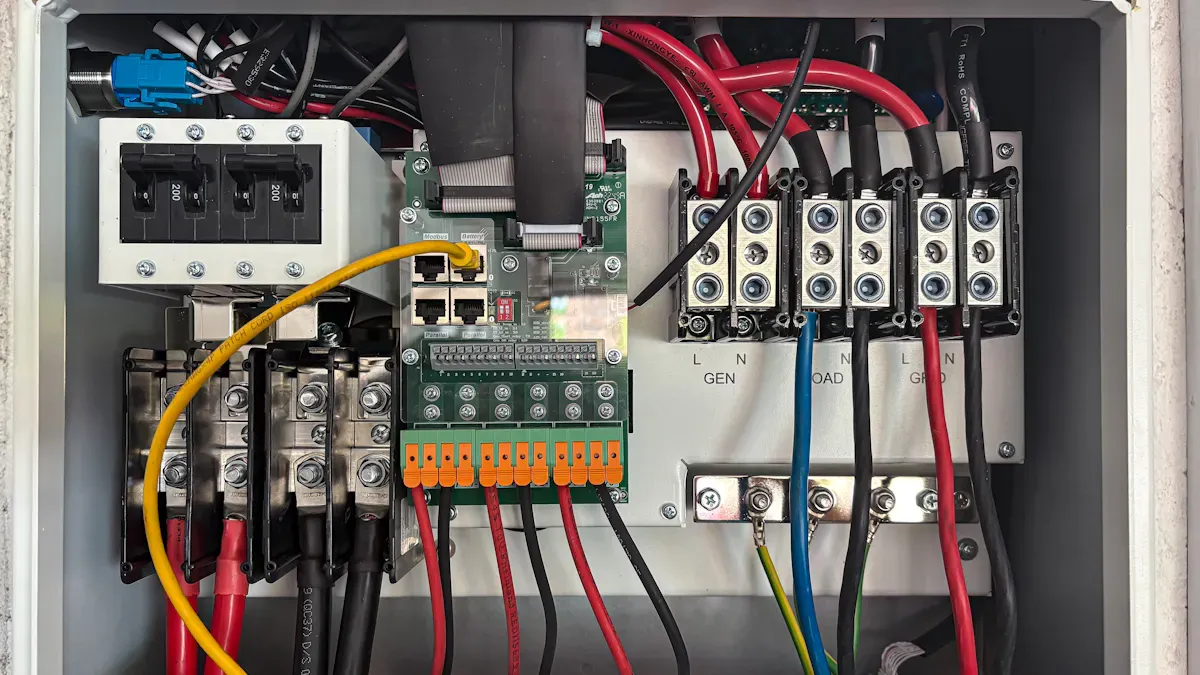
You need to keep your telecom cabinets running smoothly at all times. Real-time monitoring gives you the power to spot problems before they cause downtime. When you use a Smart Power Distribution Unit with an environment monitoring system, you gain instant access to data on temperature, humidity, and power usage. This information helps you make quick decisions and take action before issues escalate.
Real-time insights help you avoid failures and keep your network running smoothly. You track power consumption in real time, which lets you analyze trends and spot inefficiencies. Sensors measure temperature and humidity, so you can prevent overheating and moisture damage.
You can set up alerts for abnormal conditions. If the temperature rises or humidity spikes, the system notifies you right away. This early warning system lets you act fast, reducing the risk of equipment failure. Research shows that continuous monitoring could prevent up to 80% of telecom outages. You also benefit from centralized control, which means you can manage multiple cabinets from a single platform.
Here are some key benefits you get from integrating these systems:
Improved energy efficiency
Enhanced equipment uptime
Reduced maintenance costs
Remote power distribution management
Real-time monitoring and predictive maintenance
Automated Cooling and Dehumidifying
Automated cooling and dehumidifying functions are essential for maintaining optimal conditions inside your telecom cabinets. The Smart Power Distribution Unit works with the environment monitoring system to adjust cooling and dehumidifying based on real-time data. When sensors detect high temperatures or humidity, the system activates cooling fans or dehumidifiers automatically. This process keeps your equipment safe and extends its lifespan.
You see measurable results when you use automated environmental control:
Outcome | Measurement |
|---|---|
Energy efficiency | Improved up to 97.8% |
Reduction in energy use | 30% |
Reduction in downtime | 25% |
Decrease in CO₂ emissions | 40% |
Maintenance costs | Dropped to 7% of traditional systems |
Remote monitoring impact | Reduced site visits |
Battery life | Extended to 10 years |
Operational temperature range | 20°F to 110°F |
Payback period | Between 6 months and 3 years |
Automated systems also provide real-time alerts and predictive insights. You can schedule maintenance before problems occur, which streamlines your workflow and lowers expenses. Remote management capabilities mean you do not need to send technicians on-site as often, saving both time and money.
ESTEL Product Features
ESTEL’s Smart Power Distribution Unit stands out because of its advanced features and robust design. You get intelligent power management, which means you can monitor and control power usage in real time. The modular design allows you to upgrade or scale your system easily as your needs grow. Surge protection safeguards your equipment from unexpected power spikes, and the dehumidifying function keeps moisture at bay.
Feature/Benefit | Description |
|---|---|
Intelligent Power Management | Real-time monitoring of power usage. |
Modular Design | Easy upgrades and scalability. |
Energy Efficiency | Lower energy use and costs. |
Remote Monitoring | Control from a distance, less downtime. |
Equipment Protection | Safeguards devices against surges. |
You also benefit from overload protection, which prevents equipment damage. The Smart Power Distribution Unit helps you avoid unnecessary power consumption by allowing you to schedule battery charging during off-peak hours. Real-time monitoring lets you identify waste quickly, so you can shut down unused equipment and reduce operational expenses.
The environment monitoring system from ESTEL supports multiple communication protocols and includes high-precision sensors. You can monitor temperature, humidity, smoke, and water presence, ensuring a safe and efficient environment for your telecom equipment. The rugged design withstands harsh outdoor conditions, providing stable power supply and long-term reliability.
When you use ESTEL’s integrated solutions, you achieve:
Efficient power distribution for smooth network operations
Overload and surge protection for critical equipment
Predictive maintenance that extends equipment lifespan
Lower total ownership costs and improved sustainability
You gain full control over your telecom cabinets, reduce downtime, and optimize both cooling and power efficiency. This integrated approach helps you meet your operational goals and ensures your network stays reliable.
Implementation Strategies
Configuration and Calibration
You start by preparing your telecom cabinet for installation. Disconnect all power sources and charge backup batteries to ensure safety and accuracy. Use an analyzer or tester to measure battery capacity and establish a baseline. Controlled discharge helps you assess actual battery performance. Log amp-hours and voltage readings to track system health. Repeat the recharge and test process to confirm calibration. Replace weak batteries to keep the group balanced.
Step | Action | Purpose |
|---|---|---|
Prepare System | Disconnect and charge | Safety and accuracy |
Measure Capacity | Use analyzer/tester | Establish baseline |
Discharge Battery | Controlled discharge | Assess actual capacity |
Record Data | Log amp-hours, voltage | Track performance |
Recharge & Re-Test | Repeat process | Confirm calibration |
Balance Group | Replace weak batteries | Maintain consistency |
You must control temperature and humidity in your cabinet. Keep temperatures between 64°F and 81°F, and humidity between 40% and 60%. Automated systems help you respond quickly to changes, keeping your equipment safe.
Maintenance and Optimization
Regular maintenance keeps your system running efficiently. Inspect and clean ventilation systems to ensure proper airflow. Use filters to block dust and debris, which protects your equipment. Schedule routine checks for sensors and alarms. Integrate IoT sensors for real-time monitoring. This proactive approach helps you address issues before they become problems.
Tip: Design your cabinet layout for easy access. This makes maintenance faster and reduces downtime.
Avoiding Common Pitfalls
You can prevent configuration errors by combining ventilation with heat-resistant coatings. Position vents to ensure even airflow across all components. Use passive cooling methods to reduce costs and improve efficiency. Choose modular cabinets that allow for future expansion. Add backup systems for redundancy and reliability.
Regularly inspect ventilation to prevent overheating.
Use filters to keep out dust and debris.
Integrate IoT sensors for long-term reliability.
When you follow these strategies, your Smart Power Distribution Unit and environment monitoring system will deliver optimal performance and efficiency.
Case Study: ESTEL Solutions in Action
Project Overview
You can see how ESTEL solutions transform telecom cabinet operations in real-world projects. Many telecom operators face harsh environments and rising energy costs. ESTEL provides modular cabinets, hybrid power systems, and renewable energy integration. You gain energy savings of up to 75% with effective cooling systems. Hybrid setups reduce reliance on fossil fuels and lower operational costs. Modular designs allow you to upgrade easily as your network grows. Renewable energy sources help you reduce emissions and support sustainability.
Energy savings reach up to 75% with advanced cooling.
Hybrid systems cut fossil fuel use and operational expenses.
Modular designs make upgrades simple.
Renewable energy reduces emissions and supports green goals.
Operators in Kenya and Southeast Asia improved reliability and reduced costs by switching to solar-powered towers and hybrid systems. A European operator lowered its carbon footprint by 30% after installing ESTEL’s modular solar plants.
Measurable Efficiency Gains
You achieve measurable improvements when you deploy ESTEL’s Smart Power Distribution Unit. The following table shows key benefits and their impact:
Benefit | Measurement |
|---|---|
Reduction in greenhouse gases | 15% |
Lower maintenance costs | 30% |
Downtime reduction | 15% |
Energy efficiency improvement | Up to 20% |
Cost savings | Up to 20% reduction |
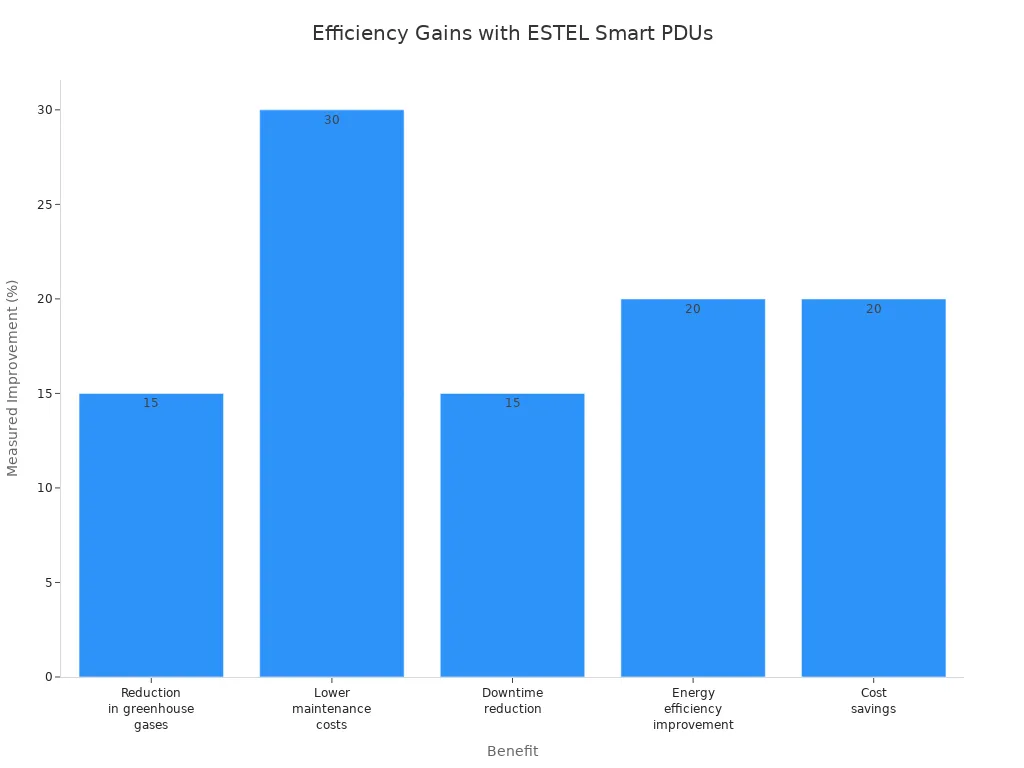
You see a 15% reduction in energy consumption and a 20% improvement in equipment uptime. Maintenance costs drop by 30%. Remote management minimizes downtime and enhances network reliability. The return on investment often occurs within one year.
Key Takeaways
You can apply lessons from ESTEL deployments to your own infrastructure. Modular designs enable quick component replacement, minimizing service interruptions. Advanced monitoring reduces maintenance costs by up to 40%. You save between $7,000 and $30,000 annually per 1000A load. ESTEL’s 10-year free replacement promise ensures long-term reliability.
Benefit | Description |
|---|---|
Cost Savings | Save $7,000–$30,000 annually per 1000A load |
Reduced Downtime | Modular design allows fast replacement, minimizing interruptions |
Predictable Maintenance | Advanced monitoring lowers maintenance costs by up to 40% |
Long-Term Reliability | 10-year free replacement promise supports critical components |
Tip: You improve network reliability and sustainability by integrating ESTEL’s Smart Power Distribution Unit and renewable energy solutions.
You gain two major benefits with temp-humidity linkage control in your telecom cabinets: higher energy efficiency and better equipment protection. Leading telecom providers have reached up to 97.8% energy efficiency and seamless expansion. GreenConnect saw a 30% drop in energy use and 25% less downtime.
Client / Case Study | Performance Metrics and Cost Savings Reported |
|---|---|
Leading Telecom Provider | Energy efficiency up to 97.8%; early issue detection; seamless expansion |
GreenConnect | 30% reduction in energy use; 25% less downtime; 40% less CO₂ emissions |
You can optimize your cabinets by integrating AI with rectifier systems, using real-time monitoring, and adopting energy-efficient rectifiers. These steps help you cut costs, improve reliability, and support sustainability goals.
FAQ
How does temp-humidity linkage control improve telecom cabinet efficiency?
You optimize cooling and power use by linking temperature and humidity sensors to automated controls. This reduces energy waste and protects equipment from environmental stress.
Can you monitor and manage cabinets remotely?
You access real-time data and control cabinet functions from anywhere. ESTEL’s Smart Power Distribution Unit supports remote management, which saves time and reduces site visits.
What maintenance steps should you follow for optimal performance?
You clean vents, check sensors, and schedule regular inspections. Use filters to block dust. Replace weak batteries and calibrate sensors to maintain efficiency.
Does the Smart Power Distribution Unit protect against power surges?
You get surge protection built into the unit. This feature shields your equipment from sudden voltage spikes and prevents costly damage.
What is the typical payback period for upgrading to ESTEL solutions?
You usually see a return on investment within six months to three years. Energy savings and reduced maintenance costs help you recover your investment quickly.
See Also
Exploring Various Cooling Techniques for Telecom Cabinet Efficiency
Selecting the Ideal Cooling Solution for ESTEL Telecom Cabinets
Enhancing Outdoor Cabinets Through Power, Cooling, and Monitoring
Maintaining Ideal Temperatures for Outdoor Telecom Cabinets Effectively
Solar Energy Storage Solutions for Telecom Cabinet Power Needs
CALL US DIRECTLY
86-13752765943
3A-8, SHUIWAN 1979 SQUARE (PHASE II), NO.111, TAIZI ROAD,SHUIWAN COMMUNITY, ZHAOSHANG STREET, NANSHAN DISTRICT, SHENZHEN, GUANGDONG, CHINA
